

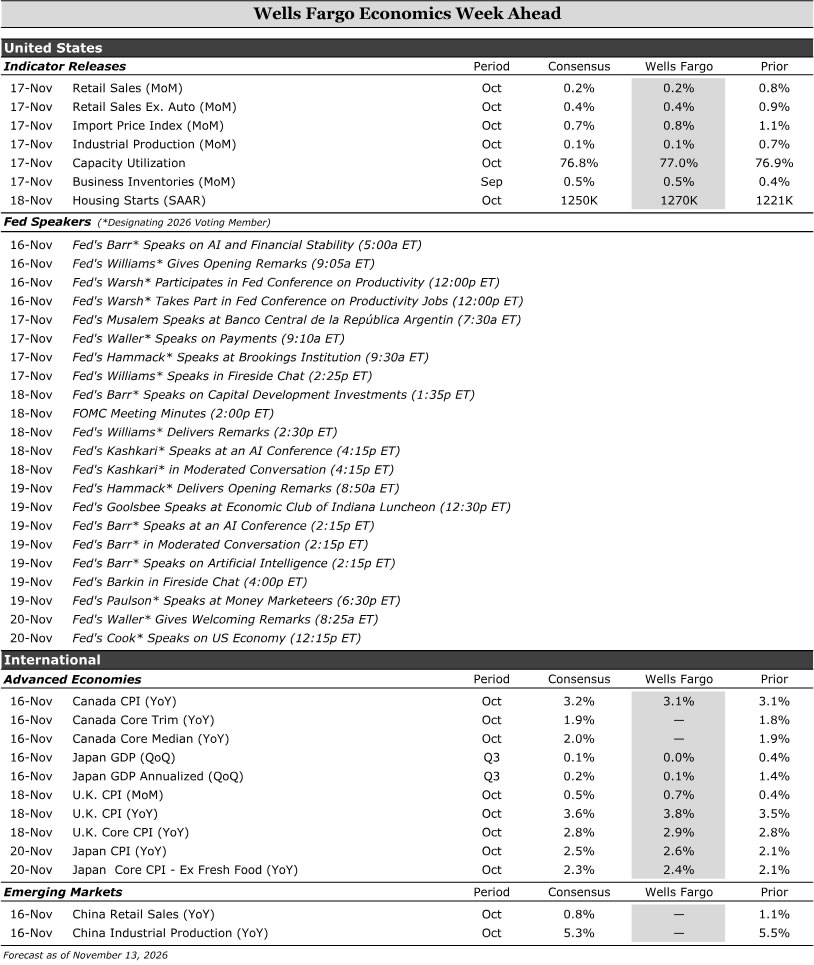
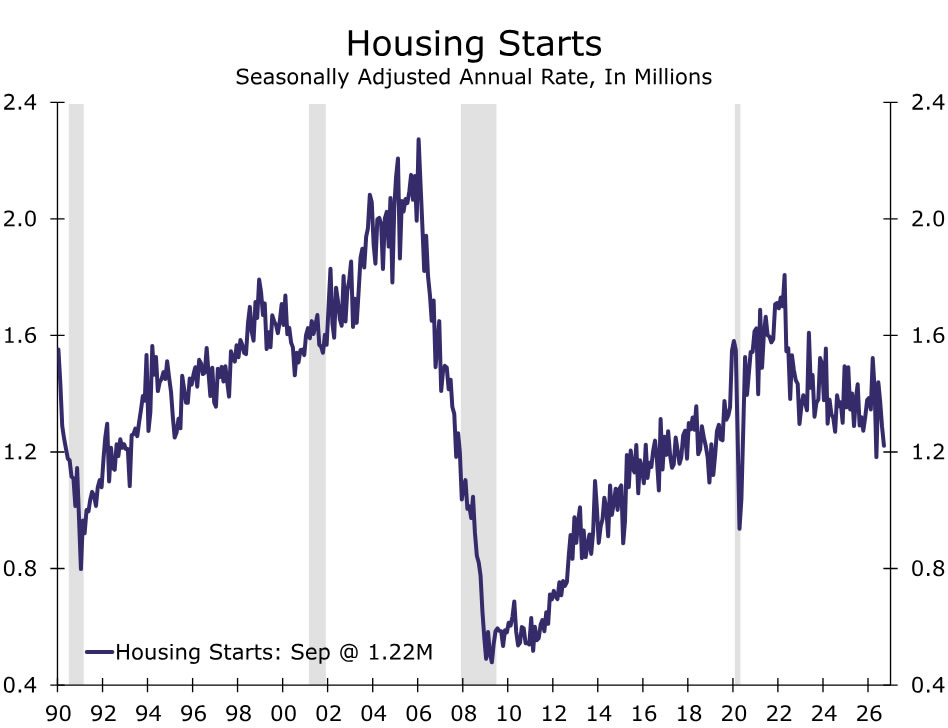
Next week’s U.S. data releases should point to continued resilience in consumer spending, with October retail sales expected to rise 0.2%, while housing activity remains constrained by high mortgage rates. We expect housing starts to rebound 4.0% to 1,270K after three consecutive declines.
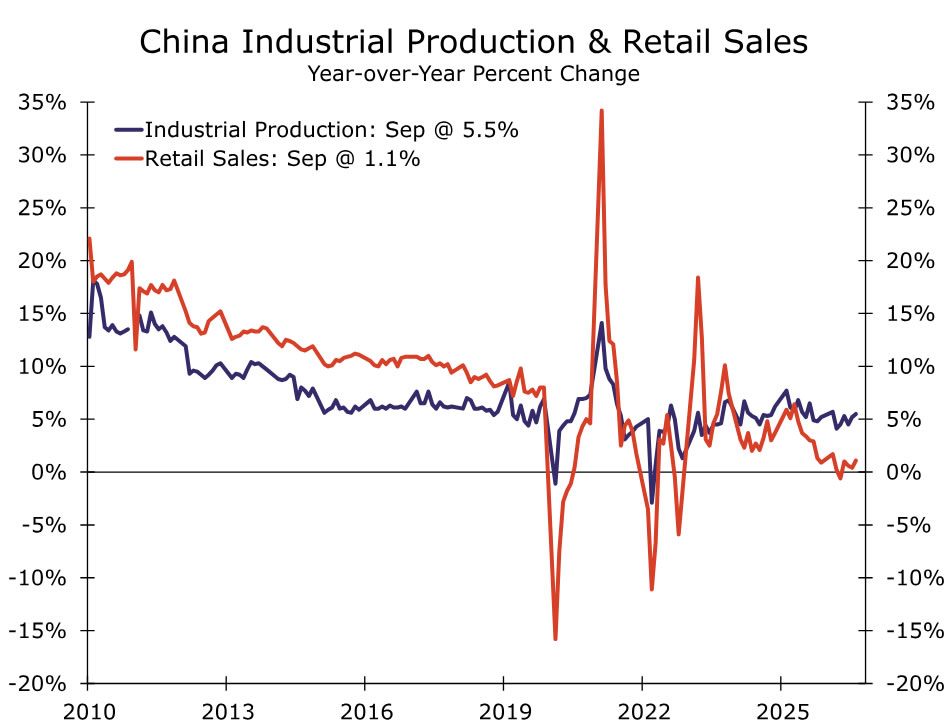
Abroad, inflation takes center stage, with firm readings across Canada, the U.K. and Japan likely to keep further tightening in play. Meanwhile, softer activity data in China should reinforce concerns around persistent weakness in domestic demand.
United States:
- Retail Sales (Tue.), Housing Starts (Wed.)
Advanced Economies:
- Canada CPI (Mon.), U.K. CPI (Wed.), Japan CPI (Fri.)
Emerging Markets:
- China Retail Sales & Industrial Production (Mon.)
U.S. Week Ahead
Retail Sales • Tuesday
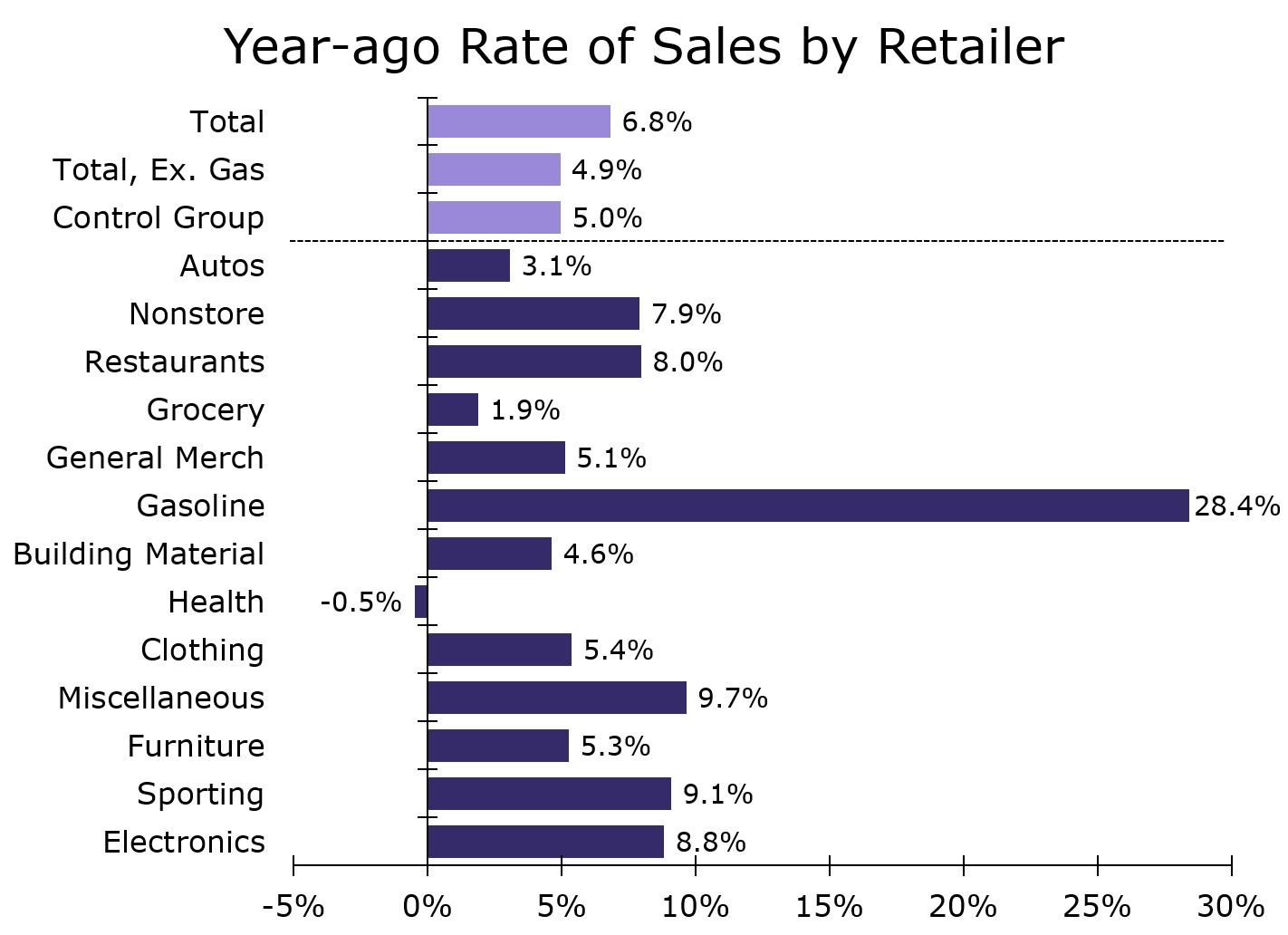
Retail sales have remained remarkably resilient this year, and we expect that trend to continue in October. We forecast headline sales to rise 0.2%, with control group sales slightly firmer. Gasoline, which has provided a meaningful boost to nominal sales in recent months, should be less supportive this time around. Average pump prices posted their largest decline in five months, while the more muted rise in CPI motor fuel prices points to a smaller contribution from gasoline station sales. Outside of gasoline, the 0.3% rise in broader goods prices should provide some lift to nominal spending, suggesting the gain in inflation-adjusted retail sales was more modest. Even so, strength in retail spending has been fairly broad-based over the past year.
Housing Starts • Wednesday
High interest rates are curbing residential construction. Housing starts have pulled back for three months in a row following a flattening in building permits. We see little scope for single-family construction to rebound while high mortgage rates depress sales traffic and builders continue to express trepidation ahead of the spring selling season. Apartment demand is more robust, but higher interest rates are also a headwind for multifamily developers. With all of this said, housing starts are highly volatile month-to-month and are probably due for a modest uptick in October. We estimate a 4.0% increase to 1,270K.
Advanced Economies Week Ahead
Canada CPI • Monday
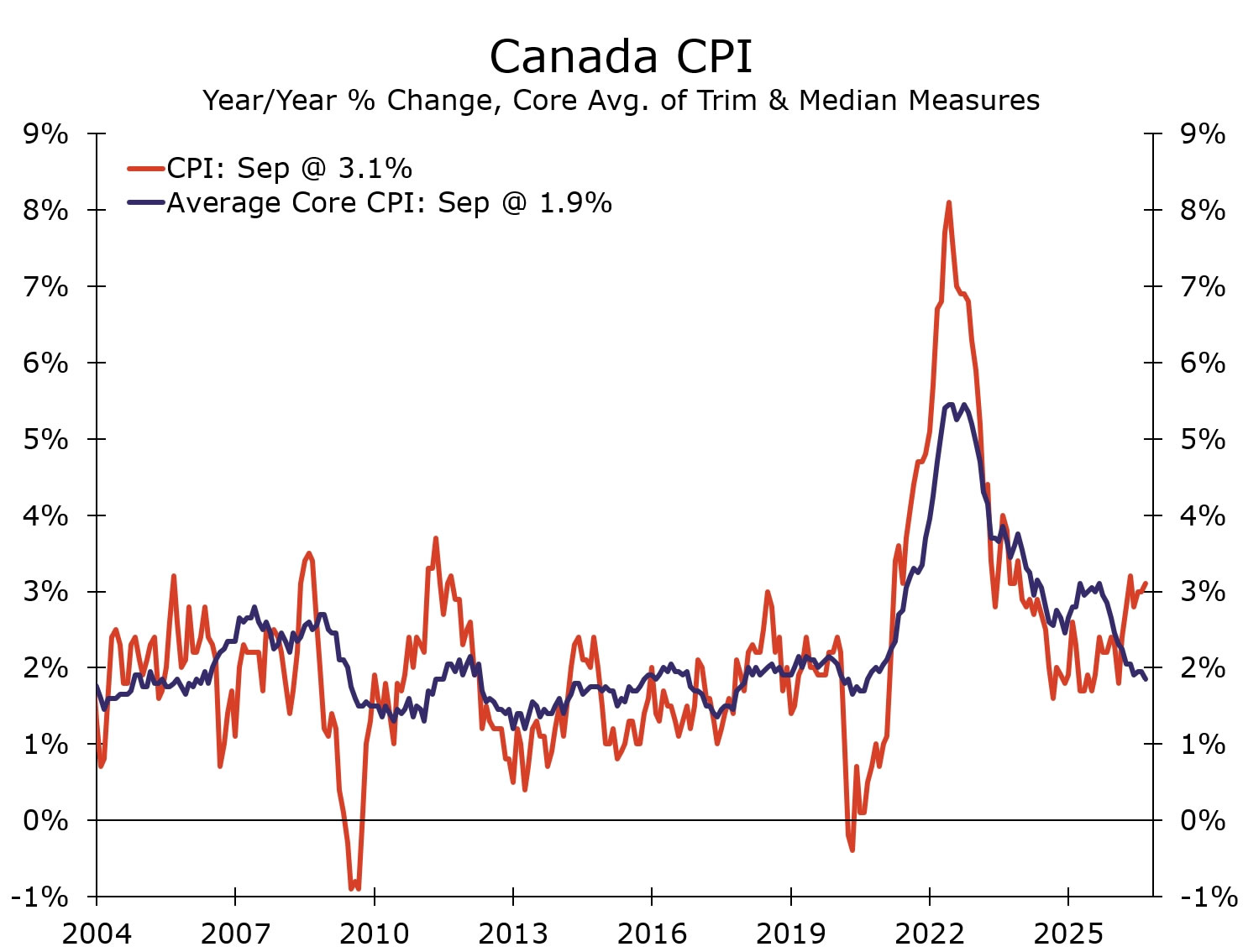
Canada’s October CPI report should carry more weight than usual. It is the final inflation reading ahead of the Bank of Canada’s (BoC) December policy meeting, and comes after policymakers raised rates 25 bps in October and adopted a considerably more hawkish posture toward inflation.
The tension remains the same: headline inflation has firmed, but there is still limited evidence that higher energy prices are generating broad-based price pressures. September CPI rose 3.1% year-over-year, yet inflation excluding gasoline slowed to 2.2% and core measures remained near 2%. Even so, the Bank has become more focused on the risk that elevated energy and import costs eventually pass through to a wider range of prices, and now expects inflation to remain above 3% through much of next year.
With oil prices moving higher in October, we see some modest upside risk to another headline CPI print of 3.1%. Another hot reading would likely keep a December hike firmly in play. We view another 25 bps hike in December as the base case, as the BoC continues moving policy back toward neutral.
U.K. CPI • Wednesday
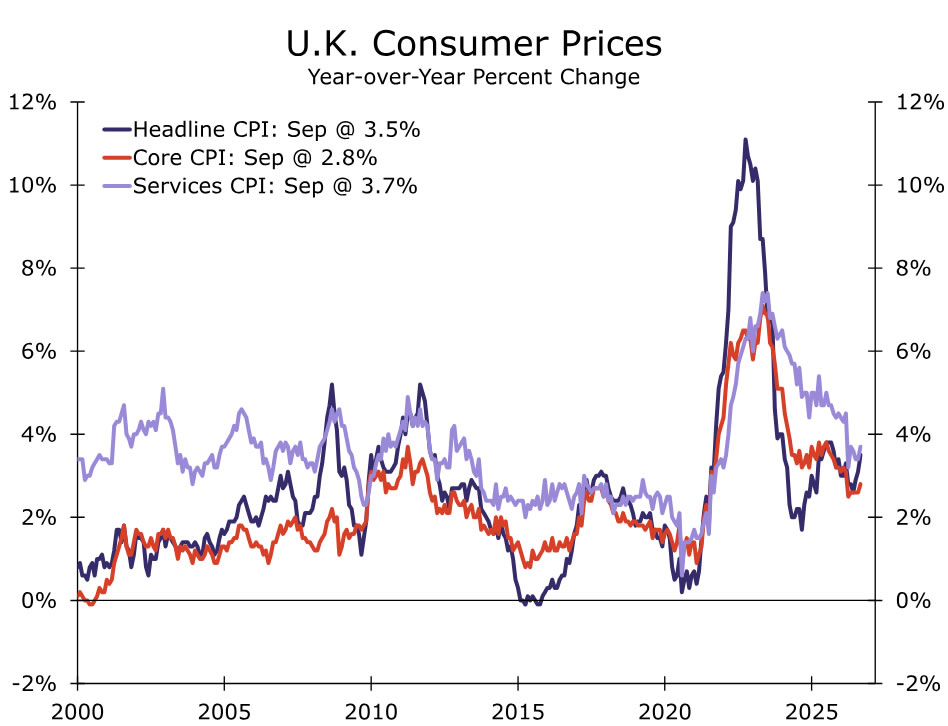
Next week’s U.K. CPI print will be closely watched after the Bank of England (BoE) delivered its first hike of the cycle earlier this month—and its first since the war in the Middle East began in late February—lifting the Bank Rate to 4.00%. Policymakers have emphasized that the path ahead will depend on how higher energy costs feed through to broader inflation and the economy. We expect headline CPI to rise from 3.5% to 3.8% year-over-year in October, slightly above consensus and the BoE staff forecast of 3.7%. We also expect core inflation to edge up from 2.8% to 2.9%, while services inflation should rise from 3.7% to 3.9%. Energy should remain a key source of upward pressure, as petrol and diesel prices were still sharply higher year-over-year in October despite some cooling later in the month.
Still, we think the BoE will want to see clearer evidence that inflation is broadening and feeding into underlying price pressures before picking up the pace of tightening. We expect rates to remain on hold through year-end, followed by another 25 bps hike in Q1-2027 to 4.25%. An upside CPI surprise, particularly relative to the BoE’s 3.7% forecast, could pull expectations for that next hike forward to December. Risks to our terminal rate remain tilted higher if inflation proves more persistent and growth continues to hold up.
Japan CPI • Friday
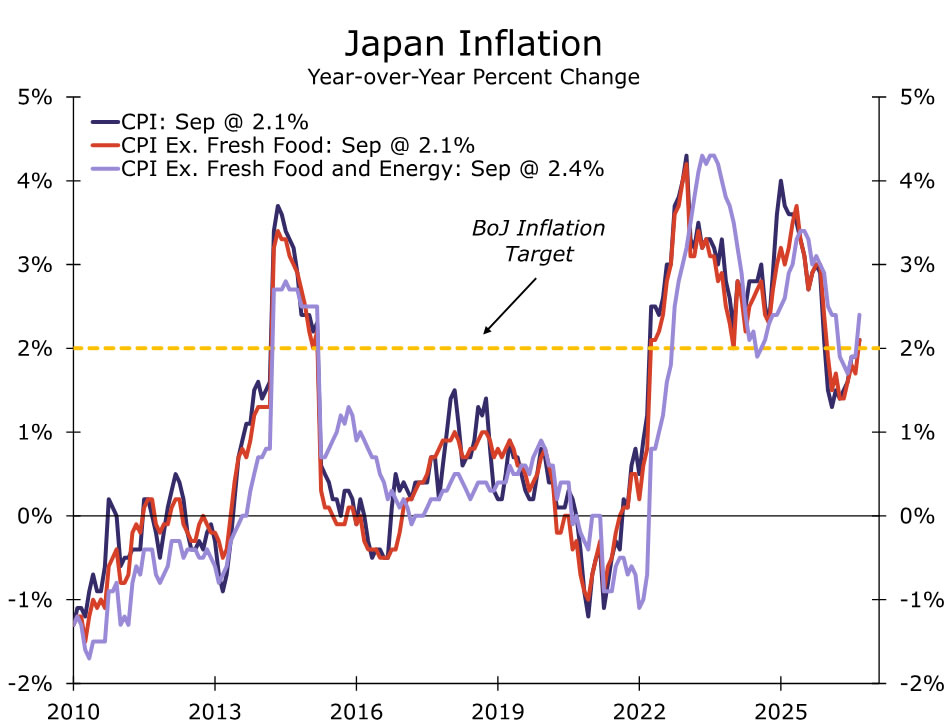
Japan’s October CPI report should keep the case for further Bank of Japan (BoJ) normalization alive. We expect headline inflation to accelerate from 2.1% to 2.6% year-over-year, with core CPI excluding fresh food rising to 2.4%. Energy should provide a growing boost as electricity and gas charges rise, while higher import costs and yen weakness continue to filter through to a wider range of prices.
Even so, another firm CPI print would strengthen the case for a December BoJ hike. Still, the growth backdrop calls for some caution. Q3 GDP growth is expected to slow sharply to 0.1% annualized from 1.4% in Q2, while the BoJ has pointed to signs that private consumption is losing momentum as higher prices weigh on real purchasing power. We therefore expect a gradual pace of tightening thereafter, with another hike in the second half of 2027 taking the terminal rate to 1.75%.
EM Week Ahead
China Retail Sales & Industrial Production • Monday
Next week’s industrial production and retail sales data will offer an early read on China’s momentum at the start of Q4. Industrial production rose 5.5% year-over-year in September, while retail sales increased just 1.1%. October’s PMIs point to a softer start to Q4, with the manufacturing PMI falling to 49.3 and the non-manufacturing PMI slipping to 49.7 as some of the pre-Golden Week boost faded. This, in our view, supports consensus expectations for industrial production growth to slow to 5.3% year-over-year and retail sales to ease to around 0.8%.
Persistent weakness in domestic demand remains the bigger concern and could extend into 2027. Still, stronger policy support and resilient exports led us to raise our GDP growth forecasts in our October Monthly Outlook to 4.6% for 2026 and 4.4% for 2027. Next week’s data should help show whether that support is gaining traction.