


Key takeaways
Macro tailwinds favour AUD: Improving China growth signals and still-elevated Australian inflation tilt the RBA toward a less dovish stance in early 2026, underpinning medium-term AUD/USD upside.
Medium-term uptrend firmly established: AUD/USD has broken its long-term downtrend, is holding above the rising 20-day MA, and remains supported by a widening AU–US 2Y yield differential, with 0.6590 as the key medium-term support.
Short-term bullish momentum constructive: A minor bullish breakout above 0.6720 opens scope for a push toward 0.6760–0.6800, as long as 0.6685 holds over the next 1–3 trading days.
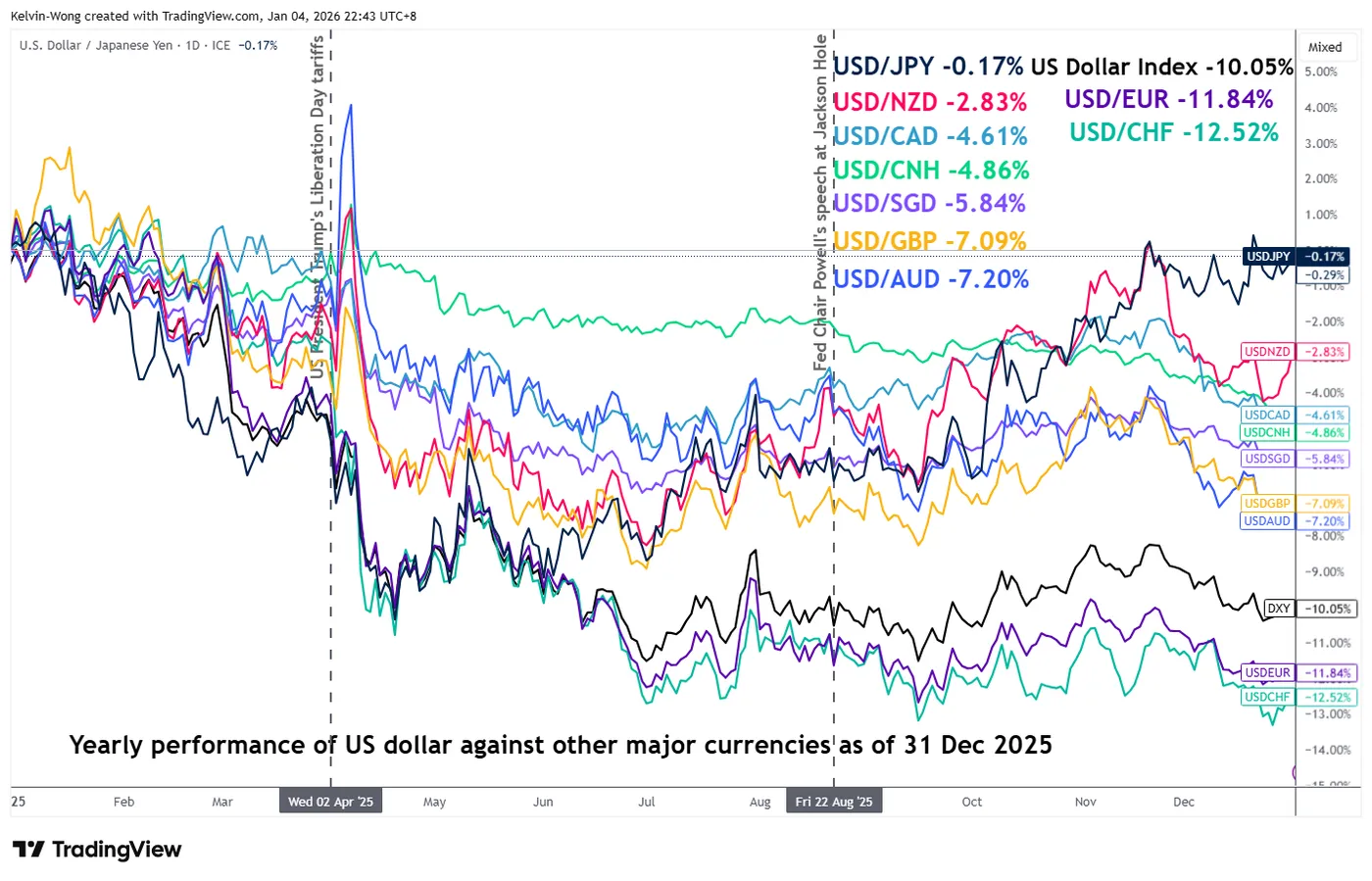
Fig. 1: Annual performance of the US dollar against major currencies as of 31 Dec 2025 (Source: TradingView)
The Australian dollar delivered a strong performance in 2025, finishing the year with a 7.2% gain against the US dollar. This placed it among the top-performing major currencies, trailing only the euro (+11.8%) and the Swiss franc (+12.5%) versus the greenback (see Fig. 1).
Since the 21 November 2025 low of 0.6421, the AUD/USD recorded a gain of close to 5% as of Tuesday, 6 January 2025, at the time of writing, to print an intraday value of 0.6730.
Twin drivers: China’s improving economic prospects and Australia’s rising inflation trend
The macro factors that are supporting the ongoing medium-term (multi-week) bullish momentum in the AUD/USD are, firstly, an improving economic backdrop in China, where the official NBS Manufacturing PMI unexpectedly rose to 50.1 in December 2025, surpassing both November’s reading and expectations of 49.2. It marked the first expansion in factory activity in China since March 2025
Secondly, Australia’s inflation trend has started to accelerate since June 2025, as the trimmed mean CPI jumped to 3.3% y/y in October 2025 from June’s print of 2.8% y/y and September’s print of 3.2%. Even though, the consensus for December 2025’s trimmed mean CPI that is released on Wednesday, 7 January, is expected to cool down slightly to 3.1% y/y but it is still higher that RBA’s desired long-term inflation target of 2%-3%.
Hence, an improving macro backdrop from China, which is Australia’s major trading partner and domestic inflation trend remains elevated, the odds are skewed towards a less dovish RBA’s monetary policy stance at least in the first quarter of 2026, which is likely going to be supportive for the AUD/USD to springboard to higher highs.
Let’s now dissect the directional bias of the AUD/USD from a technical analysis perspective.
AUD/USD medium-term uptrend supported by a bullish reversal from 20-day MA
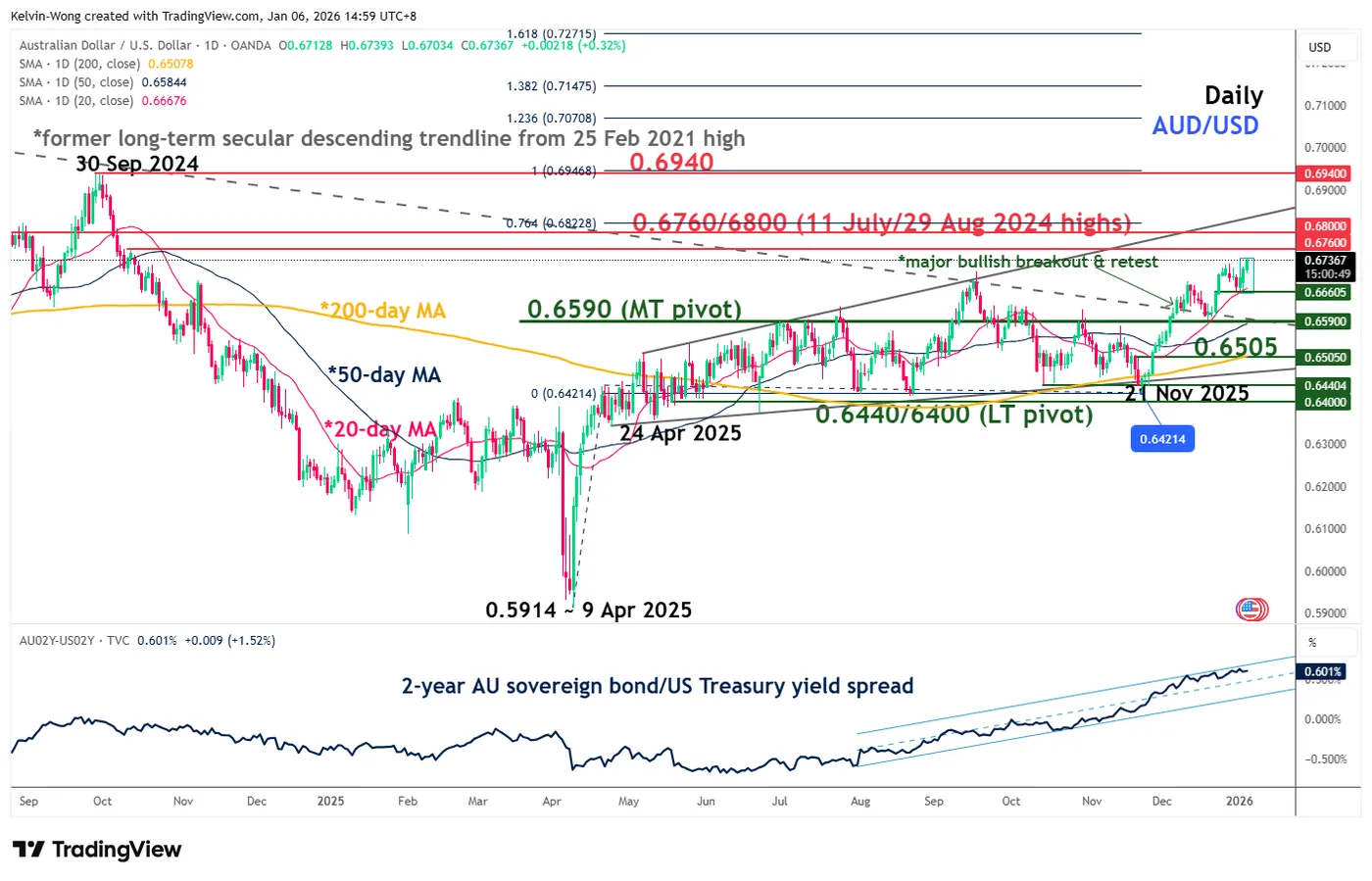
Fig. 2: AUD/USD medium-term & major trends as of 6 Jan 2026 (Source: TradingView)
The AUD/USD has staged a major bullish breakout on 5 December 2025 from its former long-term secular descending trendline that capped previous rallies since the 25 February 2021 high.
The positive developments have indicated that the medium-term range configuration from 24 April 2025 to 21 November 2025 is likely to have ended, and the AUD/USD’s trend has now transited to a medium-term up trend phase since the 21 November 2025’s key inflection low of 0.6421 (see Fig. 2).
The latest price actions of the AUD/USD have managed to trade above its rising 20-day moving average, which is acting as a key intermediate support at around 0.6660, where it staged a rebound on 2 January 2026 and on Monday, 5 January 2026.
In addition, the 2-year yield premium between Australian sovereign bonds and US Treasury notes has continued to widen to 0.60% at the time of writing from 0.10% printed on 19 November 2025.
These positive observations on the Australian dollar reinforce the ongoing medium-term uptrend phase for the AUD/USD with its key medium-term pivotal support at 0.6590.
AUD/USD minor bullish acceleration towards 0.6760 and 0.6800
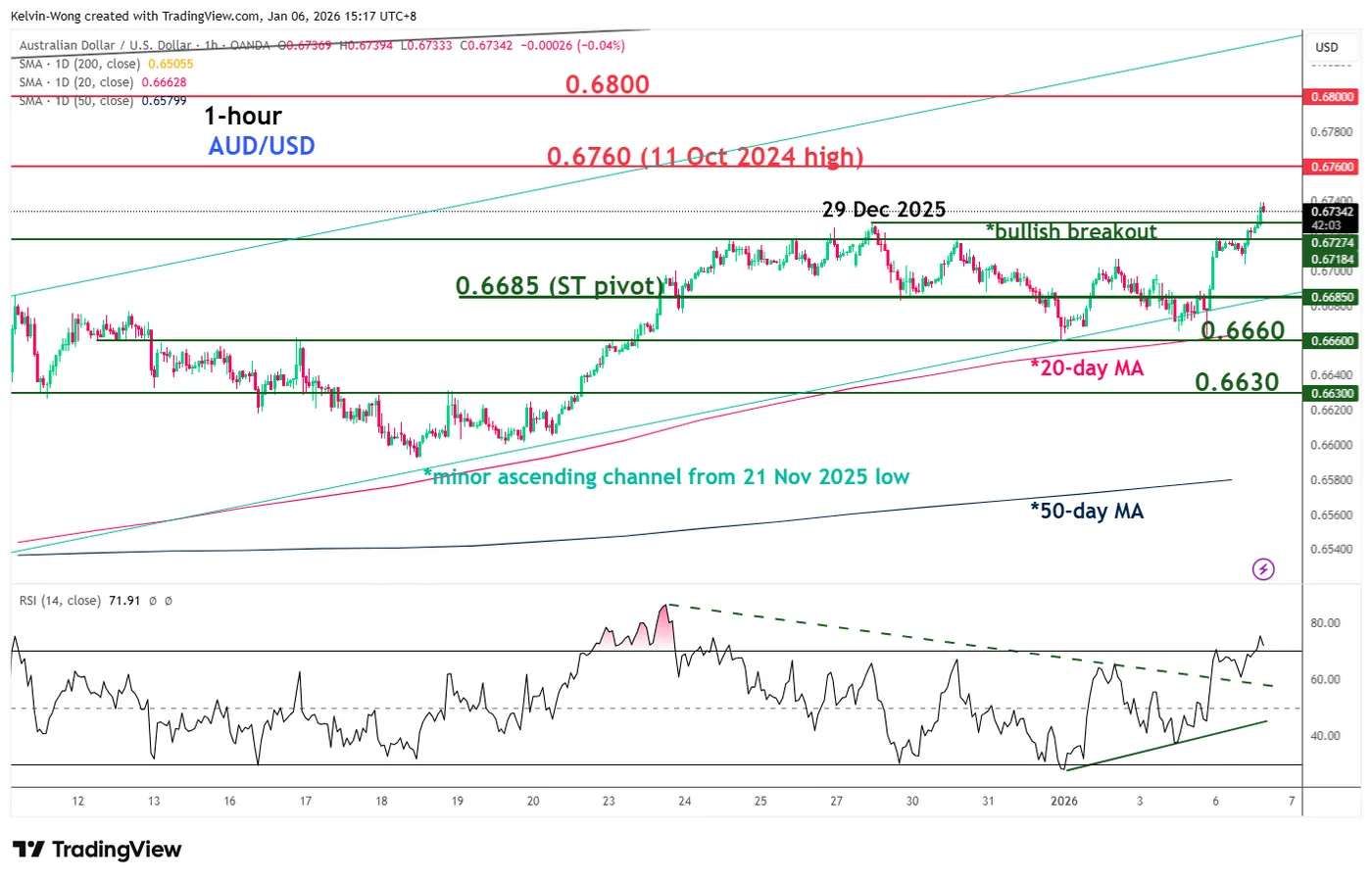
Fig. 3: AUD/USD minor trend as of 6 Jan 2026 (Source: TradingView)
We now turn to the key technical levels and short-term intraday signals to define the prevailing trend bias over the next one to three trading days.
Based on the hourly chart, the AUD/USD has just staged a bullish breakout from a former minor range resistance of 0.6718/0.6727 in place since 29 December 2025.
This minor bullish breakout is likely to have solidified the start of another potential leg of an impulsive up move sequence for the AUD/USD (see Fig. 3).
Watch the 0.6685 key short-term pivotal support (also the minor ascending channel support from 21 November 2025 low) to maintain the bullish bias on the AUD/USD for the next intermediate resistances to come in at 0.6760 and 0.6800 in the first step.
However, failure to hold at 0.6685 negates the bullish tone for a minor corrective slide to retest the 20-day moving average that is acting as the second-level key short-term support at 0.6660.

