


Japan’s service sector lost momentum sharply in May as rising costs linked to the Middle East conflict weighed on business activity and household spending. PMI Services (final) fell from 51.0 to 50.0, indicating stagnation after more than a year of continuous expansion. PMI Composite eased from 52.2 to 51.1. The figures suggest the strong growth seen in the first quarter, which was confirmed by recent GDP data, is beginning to fade as the economy enters the second quarter.
According to S&P Global’s Annabel Fiddes, the ongoing war in the Middle East is exerting increasing pressure on Japanese businesses through higher energy costs, supplier price hikes, labor expenses, and supply chain disruptions. She noted that price indicators pointed to a record increase in selling prices for goods and services alongside a near-unprecedented rise in business costs. Those higher prices are increasingly affecting demand, particularly in the services sector, as households face growing pressure on their budgets.
The survey suggests that overall private-sector growth is now being sustained primarily by manufacturing, where firms continue to build inventories as a precaution against future shortages and higher prices. However, Fiddes cautioned that this support may prove temporary once stockpiling activity fades. Looking ahead, she warned that much will depend on developments in the Middle East and their impact on global supply chains and inflation.
| Indicator | April | May |
|---|---|---|
| PMI Services Final | 51.0 | 50.0 |
| PMI Composite Final | 52.2 | 51.1 |
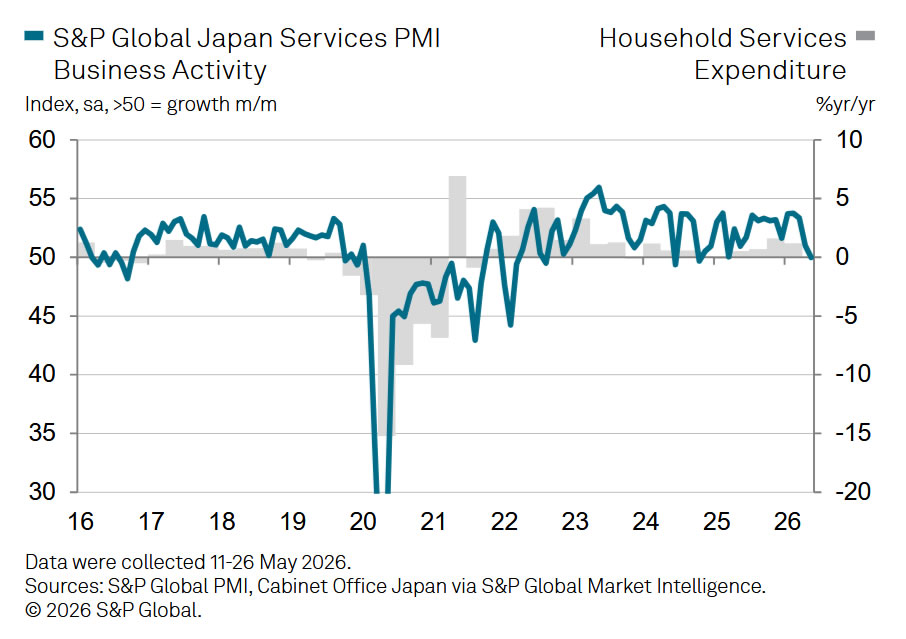





 fell from 51.0 to 50.0, indicating stagnation after more than a year of continuous expansion. PMI Composite eased from 52.2 to 51.1. The figures suggest the strong growth seen in the first quarter, which was confirmed by recent GDP data, is beginning to fade as the economy enters the second quarter.)