


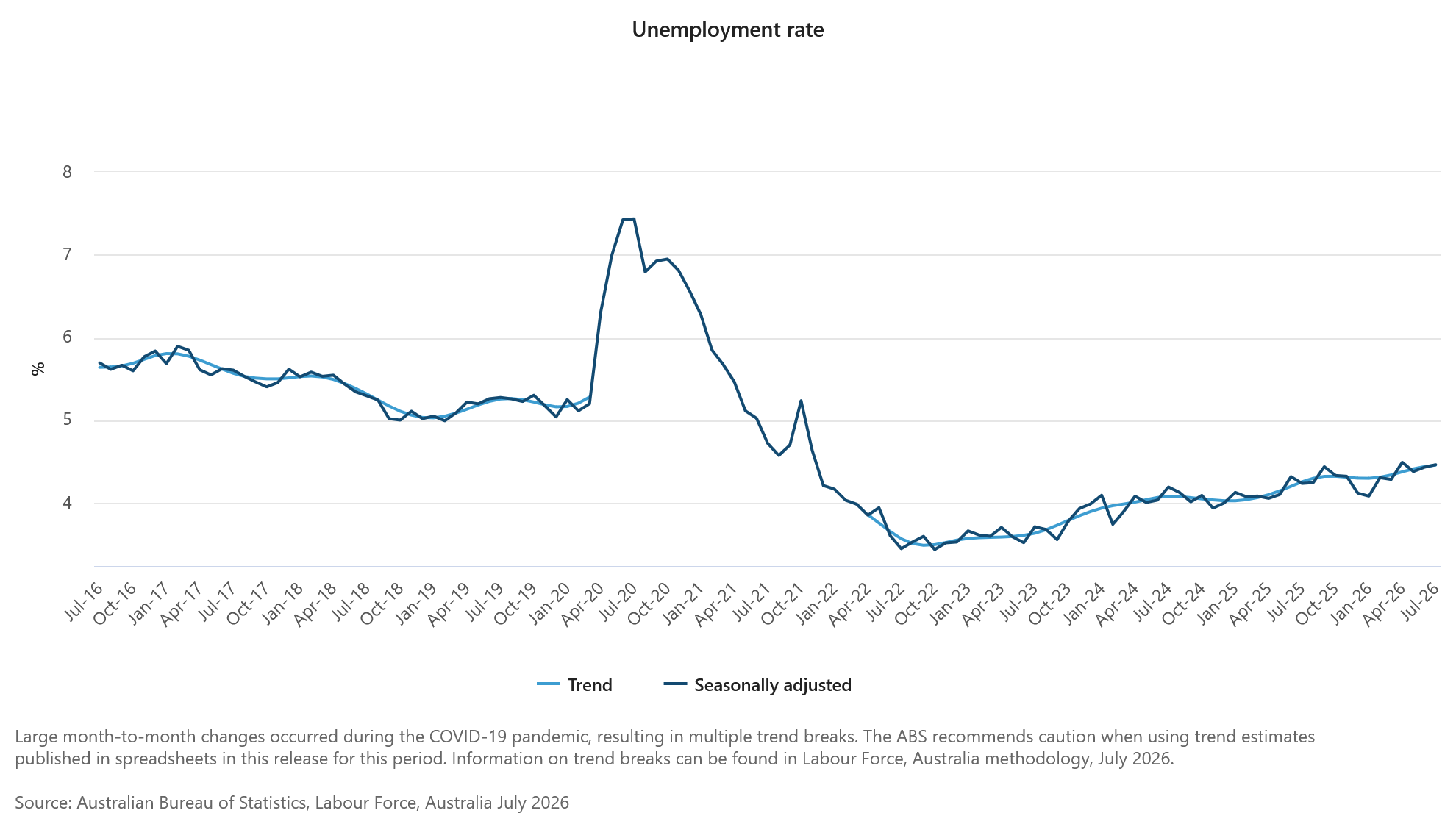
Australia’s labor market softened noticeably in July, with employment falling -15.8K after a revised 80.2K increase in June, missing expectations for an 11.4K gain. Unemployment rate rose from 4.4% to 4.5%, above 4.4% forecast. Weakness extended beyond headline: participation rate slipped from 67.0% to 66.9%, while employment-to-population ratio fell from 64.0% to 63.9%.
Hours worked reinforced cooling signal, dropping -0.6% m/m, or 12 million hours, from 2.010bn to 1.998bn. Employment losses were concentrated among males, down -11K, while female employment fell -5K. Female full-time employment actually rose 17K, but this was outweighed by a 22K decline in part-time positions. Underemployment rate held at 6.4%, suggesting labor-market deterioration is still measured rather than broad-based.
For RBA, report provides fresh evidence that tighter financial conditions are slowing employment after Deputy Governor Andrew Hauser said Wednesday Bank had already seen “a bit of a slowdown in consumption and employment growth, but needs to see more still.” July delivers more of that evidence, with employment, participation and hours worked all weakening together. It does not eliminate tightening risk while inflation and energy costs remain elevated, but it reduces urgency for another near-term hike and raises importance of upcoming inflation data in determining whether RBA’s hawkish bias survives.
Data Summary
| Indicator | Actual | Expected | Previous |
|---|---|---|---|
| Employment Change | -15.8K | +11.4K | +80.2K |
| Unemployment Rate | 4.5% | 4.4% | 4.4% |
| Participation Rate | 66.9% | — | 67.0% |
| Employment-to-Population Ratio | 63.9% | — | 64.0% |
| Underemployment Rate | 6.4% | — | 6.4% |
| Monthly Hours Worked | 1.998bn | — | 2.010bn |
Key Takeaways
- Australian employment fell 15.8K in July after a revised 80.2K increase in June, well below expectations for an 11.4K gain.
- Unemployment rate rose from 4.4% to 4.5%, exceeding consensus for no change.
- Weakness extended beyond headline employment, with participation rate falling from 67.0% to 66.9% and employment-to-population ratio slipping from 64.0% to 63.9%.
- Hours worked fell 12 million, or 0.6% m/m, providing another sign of softer labor utilization.
- Underemployment held at 6.4%, suggesting cooling has not yet turned into a broad deterioration.
- Male employment fell 11K, while female employment declined 5K despite a 17K increase in female full-time jobs.
- For RBA, July delivers more evidence of slowdown in employment that Deputy Governor Andrew Hauser said policymakers still needed to see.
- Report reduces urgency for another near-term hike, although inflation and oil-related upside risks mean RBA’s tightening option remains open.





