Australia’s labour market delivered a sharp downside surprise in September, with employment swinging from a gain of 39,500 to a loss of 39,300, against expectations for an increase of 20,000. The unemployment rate held at 4.7% after August’s reading was revised upward from 4.6%, leaving joblessness at its highest level in the post-pandemic period. Labour force participation declined from 67.0% to 66.8%, while the employment-to-population ratio fell from 63.9% to 63.6%. The combination of falling employment and lower participation suggests labour demand is weakening more than the unchanged headline unemployment rate alone indicates, raising concerns that the effects of slower economic growth and restrictive interest rates are becoming more visible.
The employment decline was driven entirely by part-time positions, while underlying trend estimates painted a more stable picture. Full-time employment increased by 34,400, but this was overwhelmed by a loss of 73,700 part-time jobs. The number of unemployed people rose by 8,900, while underemployment edged up from 6.2% to 6.3%. However, total hours worked increased marginally by 0.1%, providing some offset to the weak employment headline. Importantly, ABS trend estimates showed employment increasing by 15,700, with the trend unemployment rate unchanged at 4.6%. The ABS also cautioned that recent survey methodology changes could have influenced September’s seasonally adjusted figures. The report therefore signals cooling labour market conditions, but does not yet establish a sustained deterioration in underlying employment.
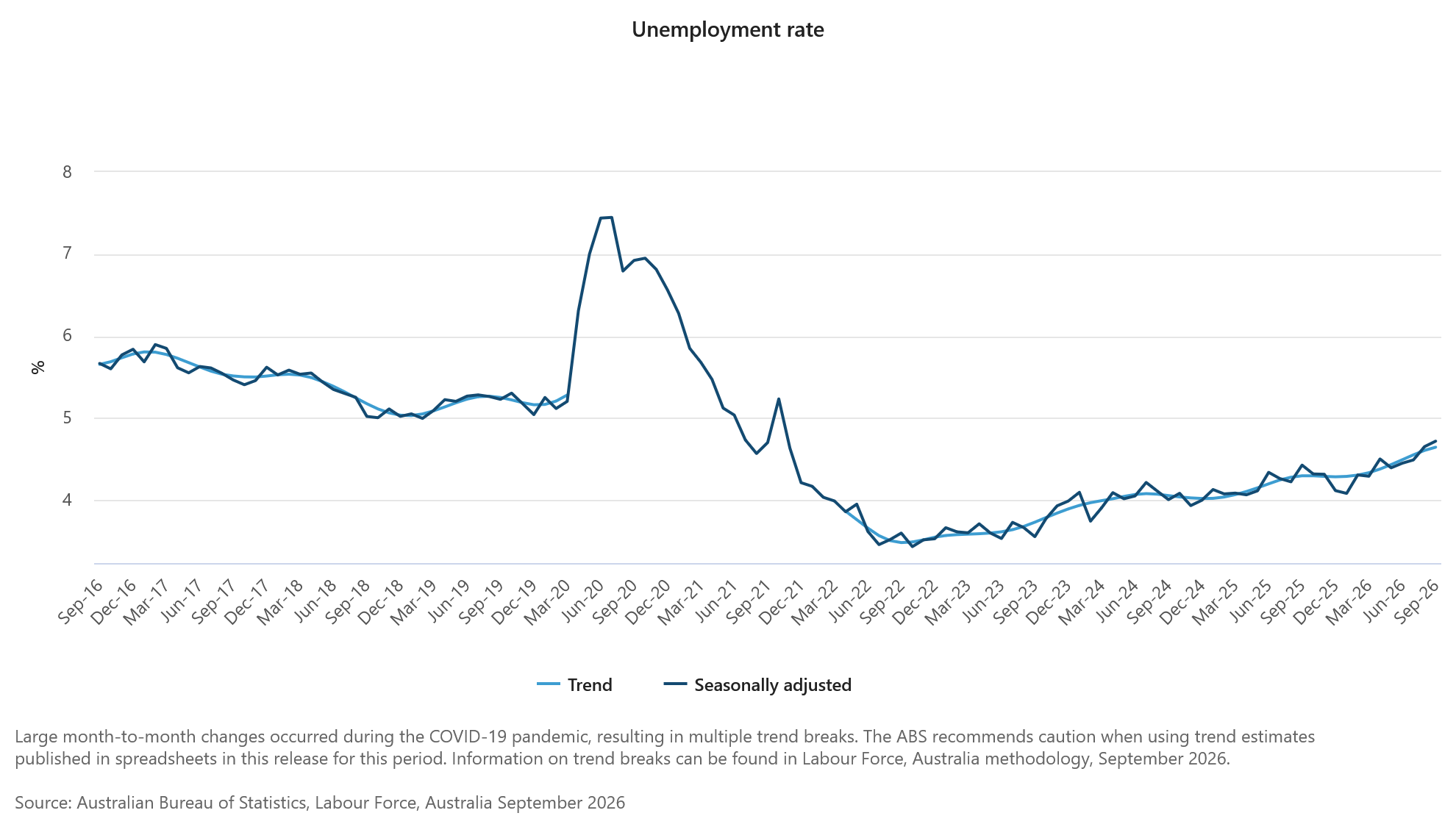
The weaker employment figures prompted financial markets to scale back expectations for another RBA rate hike at its November 3 meeting. According to Bloomberg pricing cited in local media, the probability of an increase fell from around 35% before the release to below 20% afterward. The reaction reflects growing uncertainty over whether the labour market can absorb further monetary tightening without a more pronounced slowdown. At its previous meeting, the RBA had characterized employment conditions as “broadly stable,” but the latest seasonally adjusted figures suggest that assessment may face increasing challenges. The September-quarter unemployment rate averaged 4.63%, already above the RBA’s forecast of 4.5% for the December quarter, adding to questions about the strength of labour demand.
Nevertheless, the weaker jobs report does not eliminate the possibility of further RBA tightening, given persistent inflation pressures and the resilience of underlying employment trends. The cash rate stands at 4.60%, following four increases this year, and policymakers must weigh signs of labour market cooling against the risk that inflation remains above target. September’s employment decline strengthens the argument for allowing more time to assess the effects of existing tightening, particularly as falling participation and weaker part-time hiring point to softer conditions. However, the relatively steady trend estimates suggest the labour market has not yet entered a decisive downturn. The immediate implication is a weaker case for a November hike, rather than confirmation that the RBA’s tightening cycle has ended. Incoming inflation and employment data will be critical in determining whether further action is warranted.
Data Summary — Australia September 2026 Employment
Headline Employment Data
| Indicator | August | September | Consensus |
|---|---|---|---|
| Employment Change | +39.5K | -39.3K | +20.0K |
| Unemployment Rate | 4.7% (revised) | 4.7% | 4.6% |
Labour Market Components
| Component | Reading |
|---|---|
| Full-Time Employment Change | +34.4K |
| Part-Time Employment Change | -73.7K |
| Participation Rate | 66.8% |
| Employment-to-Population Ratio | 63.6% |
| Underemployment Rate | 6.3% |
| Unemployed Persons | +8.9K |
| Monthly Hours Worked | +0.1% |
| Trend Employment Change | +15.7K |
| Trend Unemployment Rate | 4.6% |
Source: Australian Bureau of Statistics, September 2026 Labour Force report. August unemployment was revised from 4.6% to 4.7%. Consensus figures are from the supplied economic calendar.
Key Takeaways
- Employment delivers a sharp downside surprise: Australian employment swung from a gain of 39,500 to a loss of 39,300 in September, significantly missing expectations for 20,000 new jobs.
- Unemployment remains elevated as participation falls: The unemployment rate stood at 4.7%, following an upward revision to August. Participation declined from 67.0% to 66.8%, while the employment-to-population ratio dropped from 63.9% to 63.6%, suggesting softer labour market conditions.
- Part-time job losses drive the contraction: Full-time employment increased by 34,400, but this was overwhelmed by a decline of 73,700 part-time positions. Underemployment also edged higher to 6.3%.
- Underlying labour market trends remain more stable: ABS trend employment increased by 15,700, while trend unemployment held at 4.6%. The ABS cautioned that survey methodology changes could have influenced September’s seasonally adjusted estimates, arguing against treating one month’s decline as confirmation of a sustained downturn.
- RBA November hike expectations retreat: Financial markets reduced the probability of a November 3 rate increase from around 35% to below 20%. The employment surprise strengthens the case for patience, although persistent inflation pressures and relatively stable trend employment mean further tightening remains possible.