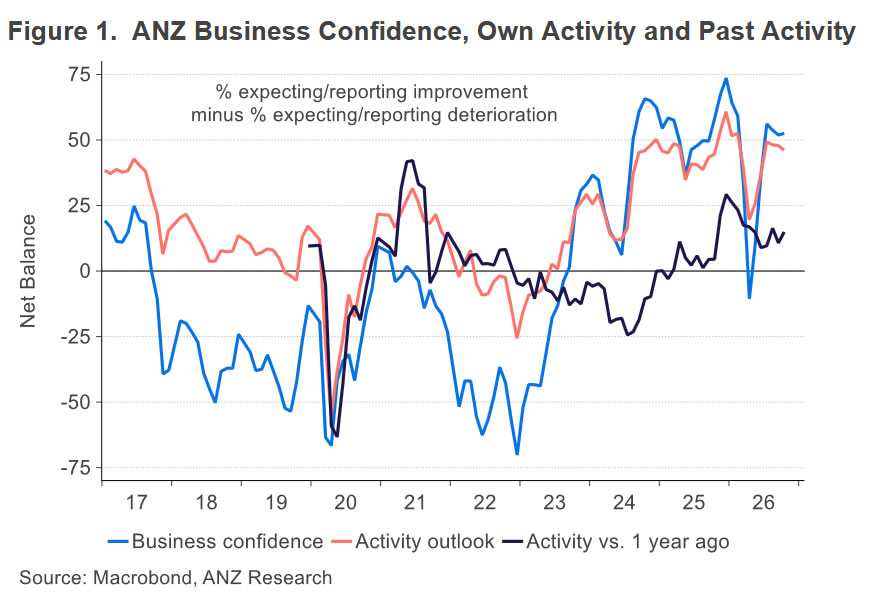
New Zealand’s ANZ Business Confidence Index edged up from 51.9 to 52.5 in October, showing continued resilience despite the renewed oil-price shock. Reported past activity improved from 10.8 to 15.0, indicating that more businesses experienced stronger activity than a year earlier, while expected own activity eased slightly from 47.9 to 46.2 but remained firmly positive. Export intentions also strengthened from 30.0 to 32.6, supported by a notable improvement in services, where export intentions reached a 25-year high of 48.7. However, investment intentions declined from 22.6 to 18.3, suggesting that businesses remain cautious about committing to further expansion despite the generally positive activity outlook.
Inflation pressures remained a key concern, with pricing intentions increasing from 48.4 to 52.2, their highest level since May. The average price increase firms expect over the next three months rose from 1.76% to 1.92%, the highest since June. Meanwhile, a net 81.9% of businesses continued to expect higher costs, unchanged from September, while the average anticipated cost increase rose from 2.64% to 2.79%. One-year inflation expectations edged up from 3.25% to 3.31%, while expected wage growth over the next 12 months eased from 2.83% to 2.79%. The combination suggests that businesses are increasingly considering passing higher input costs on to customers, even as broader inflation and wage expectations show limited movement.
The survey reinforces ANZ’s assessment that New Zealand’s recovery has remained resilient despite elevated energy prices, with the renewed oil shock failing to reproduce the sharp confidence deterioration seen in Q2. Stronger reported activity and exceptional services export intentions provide encouraging signals, although weaker investment intentions and subdued employment conditions point to an uneven recovery. For the RBNZ, which unexpectedly held rates at 2.75% yesterday, rising pricing intentions highlight the continuing risk of inflation persistence, particularly if businesses become more willing to pass on elevated costs. Nevertheless, relatively stable inflation expectations and limited wage pressure suggest that the survey alone does not establish the need for an immediate return to tightening.
Data Summary
ANZ New Zealand Business Outlook — October 2026
| Indicator | Sep | Oct |
|---|---|---|
| Business Confidence | 51.9 | 52.5 |
| Own Activity Outlook | 47.9 | 46.2 |
| Reported Past Activity | 10.8 | 15.0 |
| Export Intentions | 30.0 | 32.6 |
| Investment Intentions | 22.6 | 18.3 |
| Employment Intentions | 17.9 | 17.4 |
| Profit Expectations | 22.5 | 23.7 |
| Pricing Intentions (net %) | 48.4 | 52.2 |
| Expected Price Increase (3m) | 1.76% | 1.92% |
| Cost Expectations (net %) | 81.9 | 81.9 |
| Expected Cost Increase (3m) | 2.64% | 2.79% |
| Inflation Expectations (1y) | 3.25% | 3.31% |
| Wage Expectations (12m) | 2.83% | 2.79% |
Notable sector development: Services export intentions reached 48.7, their highest reading in 25 years, supported by a weaker NZD and optimism surrounding tourism bookings.
Source: ANZ Research, New Zealand Business Outlook, October 29, 2026. Survey balances are reported as net percentages unless otherwise indicated.
Key Takeaways
- Business confidence improves modestly: ANZ Business Confidence edged up from 51.9 to 52.5, indicating continued optimism despite the renewed oil-price shock.
- Reported activity strengthens: Past activity rose from 10.8 to 15.0, while expected own activity eased from 47.9 to 46.2 but remained firmly positive. The survey suggests that the economic recovery continues despite higher energy costs.
- Pricing intentions reach their highest level since May: A net 52.2% of firms expect to raise prices, up from 48.4%. The average expected price increase over the next three months rose from 1.76% to 1.92%, the highest since June.
- Cost pressures remain widespread: A net 81.9% of businesses expect higher costs, unchanged from September, while the average anticipated increase rose from 2.64% to 2.79%.
- Inflation expectations change little: One-year inflation expectations edged up from 3.25% to 3.31%, while expected wage growth eased from 2.83% to 2.79%. The broader inflation indicators did not show a uniform acceleration.
- Services exports provide a bright spot: Export intentions in the services sector reached a 25-year high of 48.7, supported by NZD weakness and stronger tourism forward bookings.
- Investment and employment remain cautious: Investment intentions declined from 22.6 to 18.3, while employment intentions eased from 17.9 to 17.4, highlighting uneven momentum beneath the resilient business outlook.
- RBNZ inflation risks remain in focus: Following the RBNZ’s unexpected hold at 2.75%, stronger pricing intentions reinforce concerns about future cost pass-through. However, relatively stable inflation and wage expectations do not establish that broader inflation pressures are already accelerating.