Sample Category Title
Eurozone PPI up 1.1% mom, 35.8% yoy in Jun
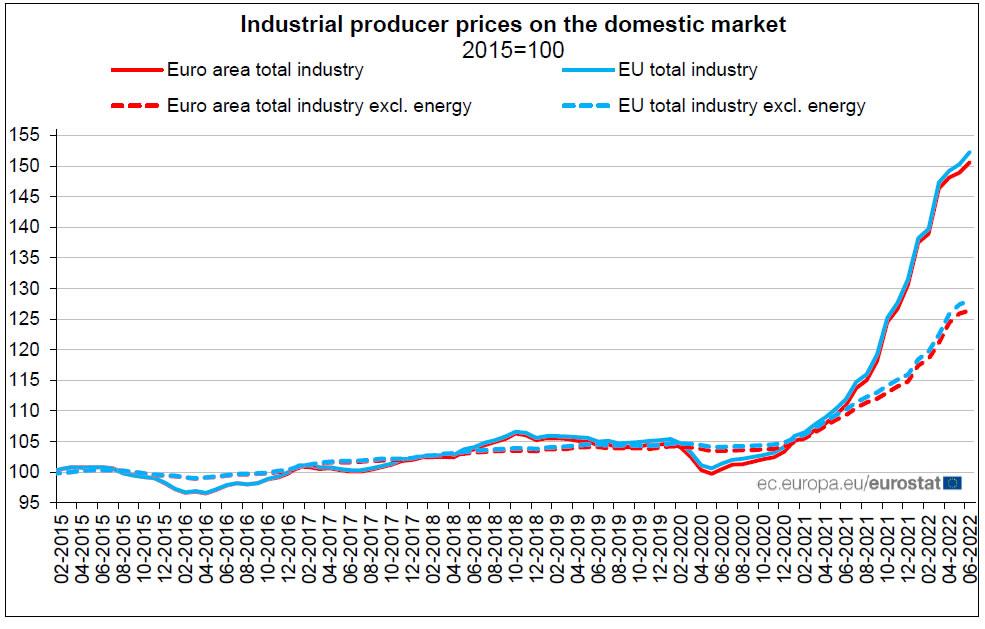
Eurozone PPI rose 1.1% mom, 35.8% yoy in June, versus expectation of 1.0% mom, 35.7% yoy. For the month, Industrial producer prices increased by 2.7% mom in the energy sector, by 0.7% mom for durable consumer goods and non-durable consumer goods and by 0.4% mom for intermediate goods and for capital goods. Prices in total industry excluding energy increased by 0.4% mom.
EU PPI rose 1.3% mom, 36.1% yoy. The highest monthly increases in industrial producer prices were recorded in Ireland (+13.2%), Lithuania (+5.2%) as well as Latvia and Finland (both +4.0%). Decreases were observed in Greece (-3.2%) and Luxembourg (-2.2%).
US-China Tensions Add to Market Unease
Risk assets are attempting to shake off the recent spike in US-China tensions, with Asian stocks and US futures looking to have found a more solid footing after a wobbly start to August.
As if there wasn’t enough to deal with already, amid persistent uncertainty over the pace of US rate hikes and global recession risks, markets now also have to contend with the resurgence in US-China tensions - a familiar nemesis to risk sentiment in recent years. The aggressive tone emanating out of Beijing in response to Pelosi’s visit to Taiwan has made for a classic safe haven play in recent sessions, with gold and Treasuries rising in tandem with the US dollar and the Japanese Yen.
If risk assets are to meaningfully extend their July gains, market participants need to be comforted knowing that US-China tensions would not result in measures that would further darken the global economic outlook. Until such jitters can substantially subside, this added layer of uncertainty may well translate into choppy market conditions in the interim. Though in a twisted way, further escalation in US-China tensions that raises global recession risks may give central bankers cause to pause their aggressive policy tightening, in turn offering a measure of relief for risk assets.
Surprise OPEC+ output hike may weaken floor below oil prices
Brent futures are trying to hang on to the psychologically important $100/bbl handle this morning, as traders await the outcome of today’s OPEC+ meeting. It remains to be seen how the group will respond to President Biden’s plea to Saudi Arabia last month to loosen the oil taps. A surprise OPEC+ deal to ramp up production in September could see oil benchmarks falter and unwind more of their year-to-date gains, which currently exceed 30% each for Brent and WTI. An escalation in US-China tensions that further sours risk appetite should also weaken the floor below oil prices, amid persistent fears over a global recession.
BoE Interest Rate Decision: Forecasters Can’t Make Up Their Minds
Ahead of tomorrow's BOE interest rate decision, a somewhat unique and interesting situation has cropped up. Most relevant for us traders is that it could mean there will be a strong reaction in the pound no matter what the BOE does.
According to the latest survey of economists by Reuters, the consensus is that the BOE will hike rates by just 25 basis points. That option won out by just a couple of votes against the alternative: that the BOE will raise rates by 50bps. Given the trajectory of the Bank so far, that makes sense.
Where the wrinkle rises
But a review of research analysts ranging from TD Ameritrade, ING and HSBC shows that a majority expect that the BOE will hike by 50bps. The market appears to be agreeing with the analysts over the economists, with forward yields close to 50bps ahead of target. Meaning that if the BOE fails to deliver, there could be a swing towards weakness in the pound.
The expectation for a "double" hike isn't all that firm, meaning the pound could firm up quite a bit if the BOE delivers on expectations. This kind of discrepancy is a classic set up for an erratic market following the rate decision as differing views on the outlook for the economy react differently.
What could be the deciding factor?
As has been the situation for months now, the BOE is in a very tight place. Inflation is at a multi-decade high, but business and consumer sentiment is posting the worst figures since the start of the post-covid recovery. If the BOE goes too fast, it could materialize what a lot of economists expect to be an impending recession. But if the BOE doesn't do enough to bring down prices, then that could lead to a recession. The BOE hasn't raised rates by more than 25 basis points since before it gained its independence in the 90s.
It might be that record inflation needs a record policy change to deal with it. Whether MPC members will agree with that is a different matter. The vote has been 3-6 several times now, with the dissenters pushing for a bigger rate hike. All they need is to convince just two members more.
It's about the future, too
But if there is a bare minimum majority 5-4 in favor of a "double" hike, then many traders could think it's just a one-off. That could undermine the tightening effect of the hike. Another possibility is that the vote is 4-5, and the "double" hike loses out by just one vote. That could raise hopes that at the next meeting there will be 50bps and undermine the dovish effect of a smaller rate hike.
While analysts and economists disagree on how much the rate hike at the next meeting will be, there is much broader agreement on the BOE raising rates through the rest of the year. Inflation is forecast to remain high, and economic growth to falter. So it's more a question of whether the BOE decides to take the pain now, or next month.
Elliott Wave Analysis: Correction on Kiwi Searching for a Support
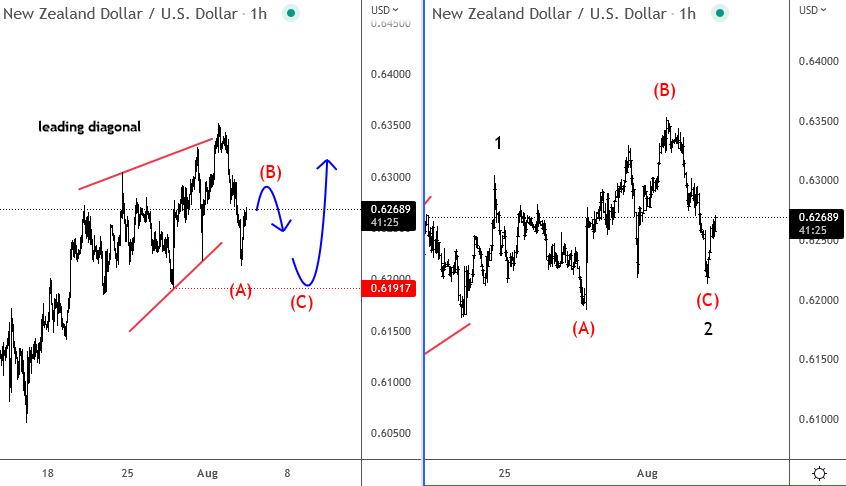
Stocks slowed down a bit this week after US House of Representatives Speaker Nancy Pelosi has landed in Taiwan, becoming the most senior US politician to visit the country in 25 years. There is some concern about US-China tensions, but in the end, it can be just another political game that can be forgotten by the markets on Friday when we get important US NFP data. Today there was a release of jobs data in New Zealand, with unemployment up to 3.3% from 3.2% last month. From an Elliott wave perspective, we see NZDUSD only in a temporary set-back, a corrective a-b-c formation that can cause more upside on the pair based on two different interpretations. The first support has been tested, while the second deeper one is at 0.6190.
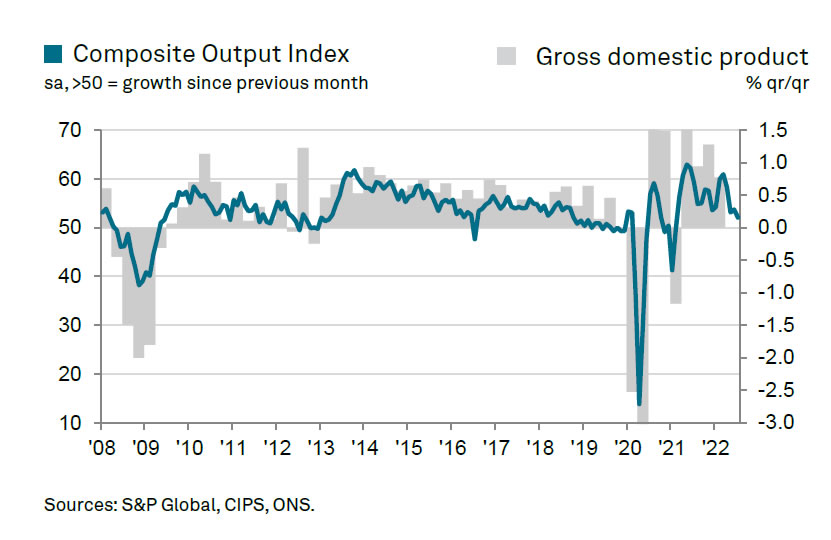
UK PMI services finalized at 52.6, composite at 52.1
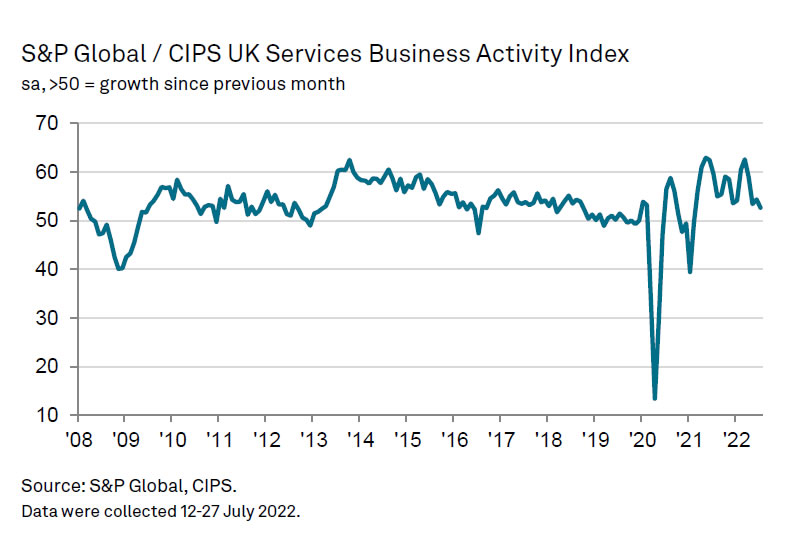
UK PMI Services was finalized at 52.6 in July, down from June's 54.3, worst reading in 17 months. PMI Composite was finalized at 52.1, down from 53.7 in June, the lowest rate of expectation since February 2021.
Tim Moore, Economics Director at S&P Global Market Intelligence: "UK service providers reported their worst month for business activity expansion since the national lockdown in February 2021. Reduced levels of discretionary consumer spending and efforts by businesses to contain expenses due to escalating inflation have combined to squeeze demand across the service economy. The near-term outlook also looks subdued, as new order growth held close to June's 16-month low and business optimism was the second weakest since May 2020..
USDJPY Pivots North But Don’t Get Excited Yet
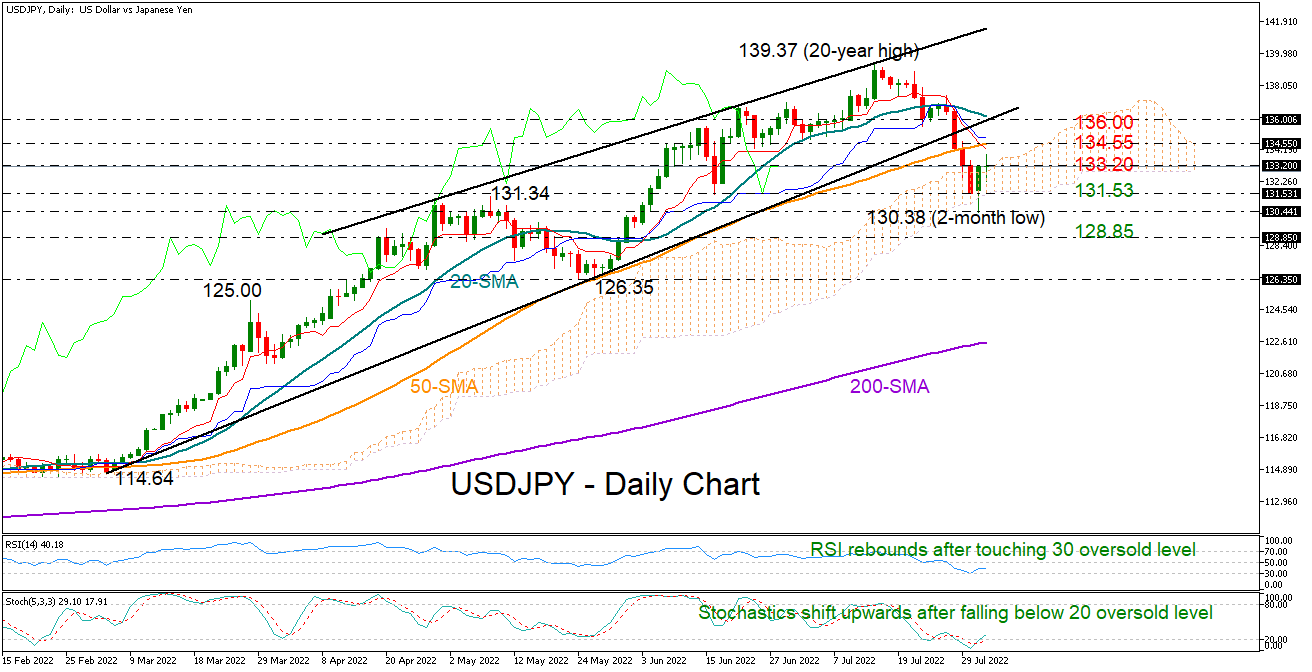
USDJPY turned green after its latest sharp bearish wave paused at an almost two-month low of 130.38 on Tuesday, with the price quickly recouping Monday’s losses in the aftermath.
While the RSI and the Stochastic oscillator are flagging oversold conditions as the indicators pivot northwards after tumbling to 30 and 20 respectively, there are several obstacles ahead, which could still ruin any additional bullish efforts.
First, the pair remains trapped within the Ichimoku cloud for the third consecutive day and below the 133.20 level, while not far above, the red Tenkan-sen line could also squeeze the pair with the help of the 50-day simple moving average (SMA) seen at 134.50. Higher, the bulls will need to successfully climb back above the broken tentative ascending trendline and the 20-day SMA at 136.00 in order to gain access to the 20-year high of 139.37.
On the downside, sellers will look for a close below the cloud at 131.53 and yesterday’s trough of 130.38 to drive the price towards the 128.85 handle. Beneath the latter, the next target will be May’s low of 126.35, where any violation would signal a bearish trend reversal in the big picture.
Summing up, USDJPY has not escaped the downward path despite showing an appetite for recovery. Unless it rallies back above 136.00, sellers may remain active in the market.
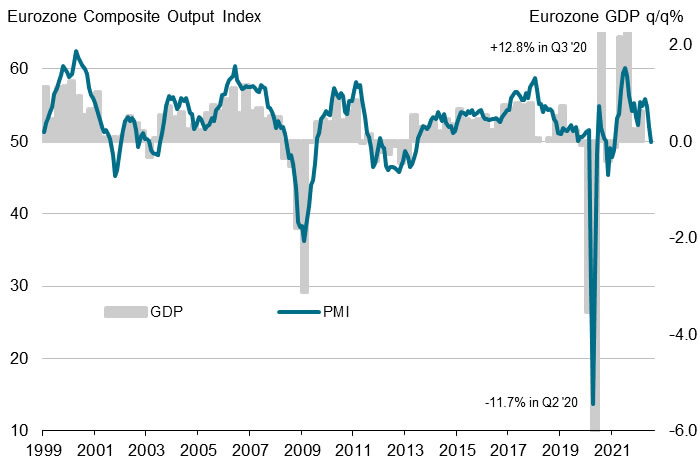
Eurozone PMI composite finalized at 49.9, outlook darkened, signalling July GDP contraction
Eurozone PMI Services was finalized at 51.2 in July, down from 53.0 in June. That's the lowest level in 6 months. PMI Composite was finalized at 49.9, down from 52.0 in June, a 17-month low.
Looking at some member states, Spain PMI Composite was finalized at 52.7 (6-month low), France at 51.7 (15-month low), Germany at 48.1 (25-month low), and Italy at 47.7 (18-month low).
Chris Williamson, Chief Business Economist at S&P Global Market Intelligence said: "The eurozone economic outlook has darkened at the start of the third quarter, with the latest survey data signalling a contraction of GDP in July. Soaring inflation, rising interest rates and supply worries – notably for energy – have led to the biggest drops in output and demand seen for a almost a decade, barring pandemic lockdown months.
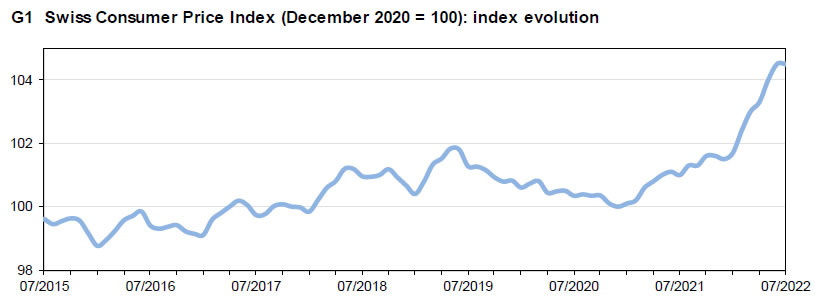
Swiss CPI unchanged at 3.4% yoy in Jul, core CPI ticked up to 1.8% yoy
Swiss CPI was unchanged at 3.4% yoy in July, below expectation of 3.6% yoy. Core CPI rose from 1.9% yoy to 2.0% yoy. Domestic products inflation rose from 1.7% yoy to 1.8% yoy. Imported products inflation dropped from 8.5% yoy to 8.4% yoy.
FSO said: "The stability of the index compared with the previous month is the result of opposing trends that counterbalanced each other overall. Prices for heating oil decreased, as did those for clothing and footwear due to seasonal sales. In contrast, prices for gas and supplementary accommodation increased."
NZDUSD Pauses Rebound But Retains Positive Bias
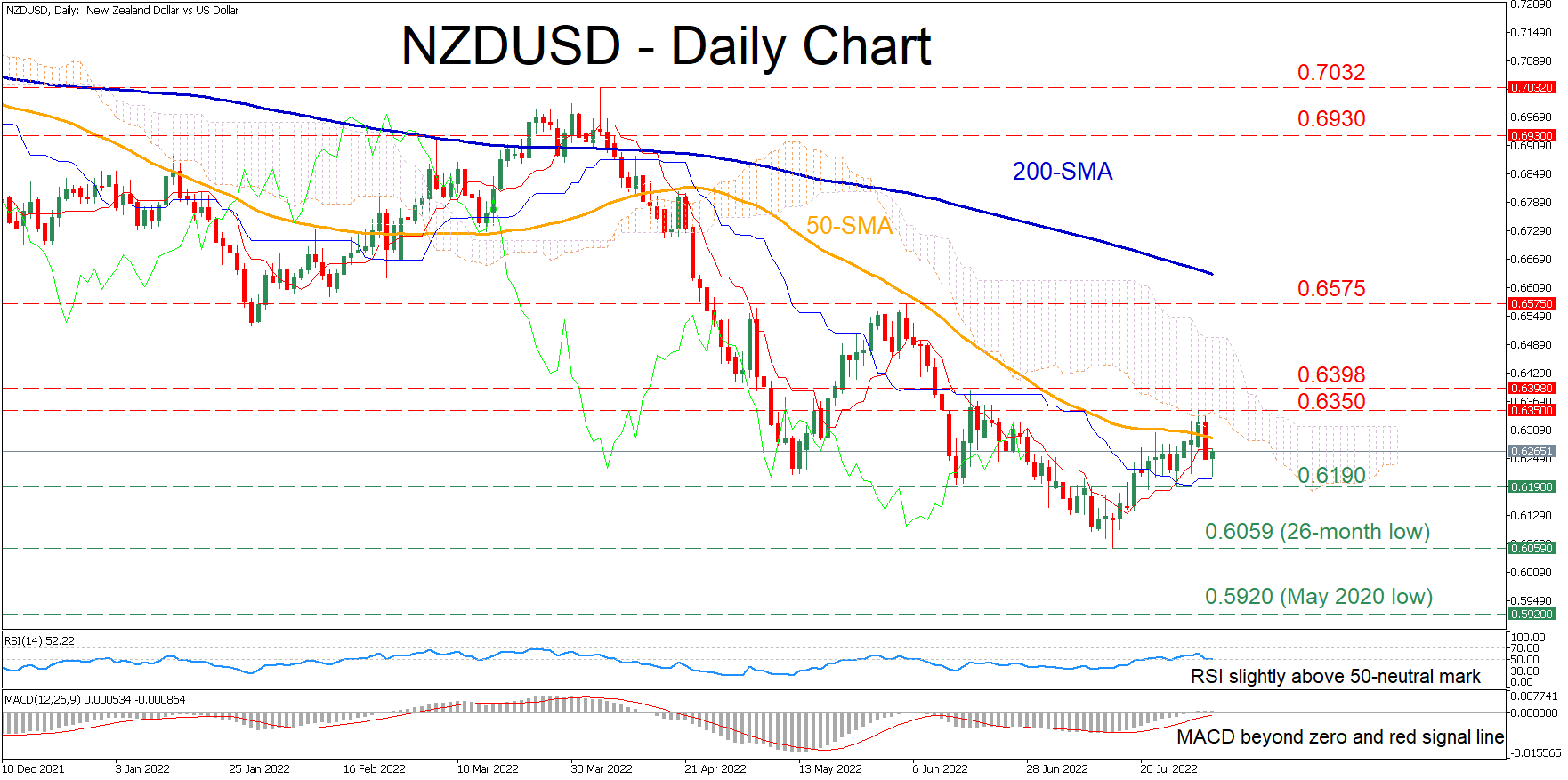
NZDUSD has been in a prolonged downtrend since March when it peaked at the 0.7032 region. Although the price has managed to regain some lost ground after its downfall ceased at the 26-month low of 0.6069, its latest rebound was recently rejected at the lower boundary of the Ichimoku cloud.
The short-term oscillators suggest that bullish forces remain in control, but positive momentum is waning. Specifically, the RSI is hovering slightly beyond the 50-neutral mark despite its latest drop, while the MACD histogram is found above both zero and its red signal line.
If buying interest intensifies, the recent peak of 0.6350, which overlaps with the lower limit of the Ichimoku cloud, could act as immediate resistance. Piercing through this region, the bulls could challenge 0.6398 before the spotlight turns to the June high of 0.6575. Conquering this barricade, the price might ascend to test the 0.6930 hurdle.
On the flipside, any downside moves could initially stall at 0.6190. Diving beneath that region, the 26-month low of 0.6059 may prove to be a tough obstacle for the bears to overcome. A violation of the latter could send the price to fresh multi-year lows, where the May 2020 low of 0.5920 could be the next support region.
Overall, even though NZDUSD’s short-term picture has been improving, its recovery seems to be running out of steam. Therefore, a clear break above the 0.6350 ceiling is needed to signal the resumption of the pair’s latest recovery.
Daily Technical Analysis
EUR/USD
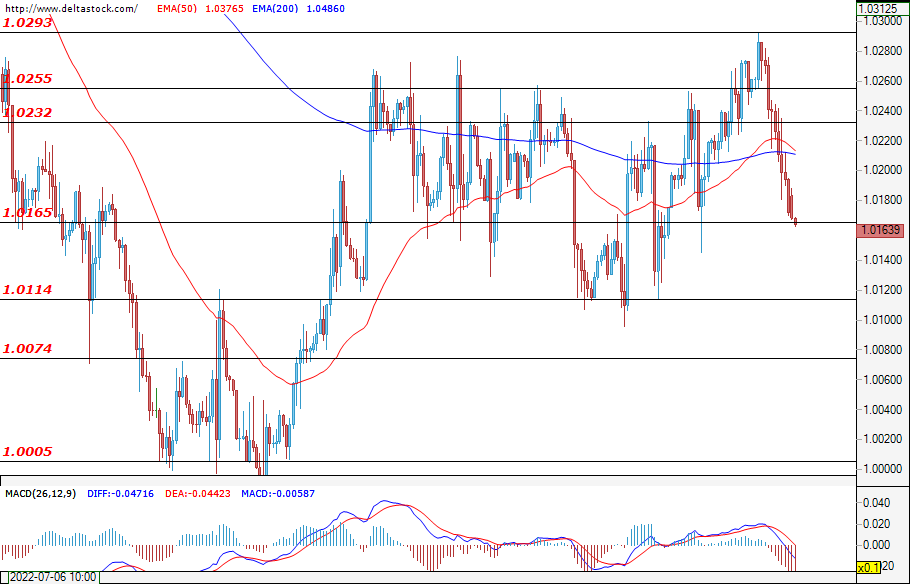
After reaching the support at 1.0293 in the early hours of yesterday, the currency pair started a convincing decline. The key level of 1.0232 could not hold the front and declines continued until the end of the day, breaking through all possible supports. The JOLTS data from the U.S., which we saw at 14:00 GMT, was positive for the dollar and it continued to weigh on the euro, with the EUR/USD ending the day nearly 130 pips lower – at around 1.0164. Today, there is a range of EU data due to be released between 06:00 GMT and 09:00 GMT. The results should be watched closely by traders, with pressure on the euro expected to continue to build up.
USD/JPY
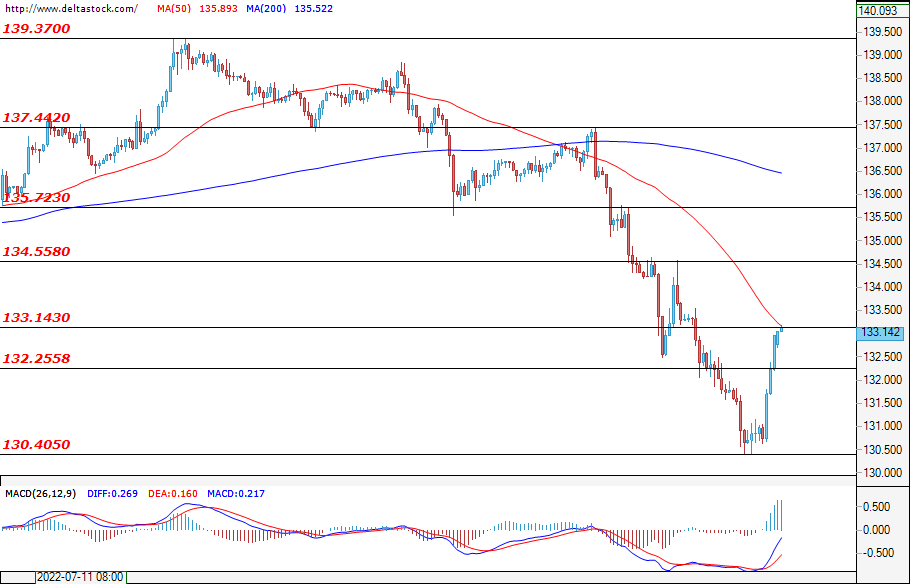
The currency pair managed to bounce back from the local low at 130.40 in the early hours of yesterday. The key level of 132.25 was breached and the gains continued. The day ended at values at around 133.15, a price that stopped the USD/JPY’s rally in its tracks. There is no data today that is expected to help the Ninja reverse the dollar's strength, but if the data at 14:00 GMT turns out to be negative, it could help the downtrend to continue with renewed strength. Of course, if the data is ruled out as positive for the dollar, then the recovery from the mentioned bottom could continue and the market may be looking to reach values at around 134.55.
GBP/USD
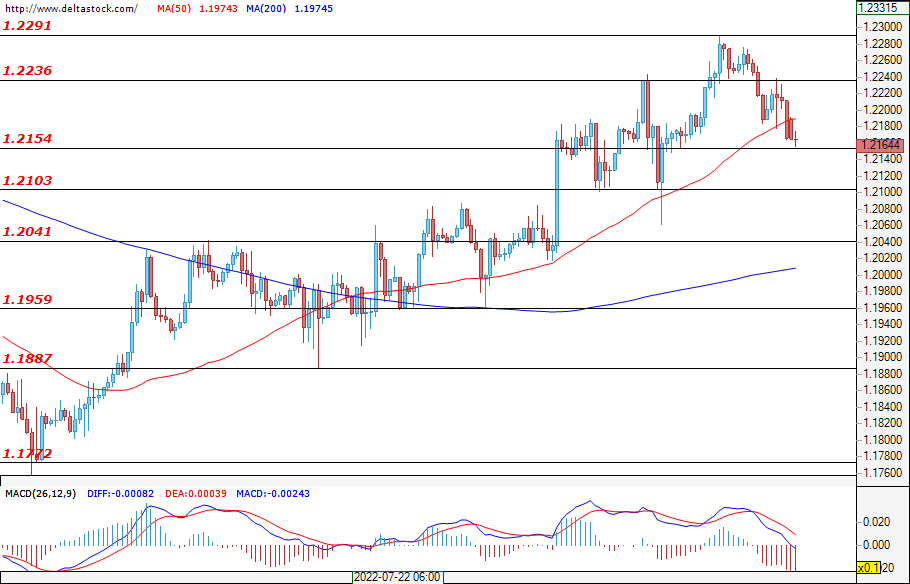
After the beginning of the decline on the previous day from the level at 1.2291, the correction continued and briefly found support, but after reaching the resistance of 1.2236 again, the pressure continued. The day ended above the support at 1.2155, where it managed to stabilise. Today, the Cable may be affected by data from the UK on the managers’ services assessment. If it is considered positive, then the currency pair could reach towards prices above 1.2235, but if we see a disappointing report, then prices can continue their correction towards the support at around 1.2100.
EUGERMANY40
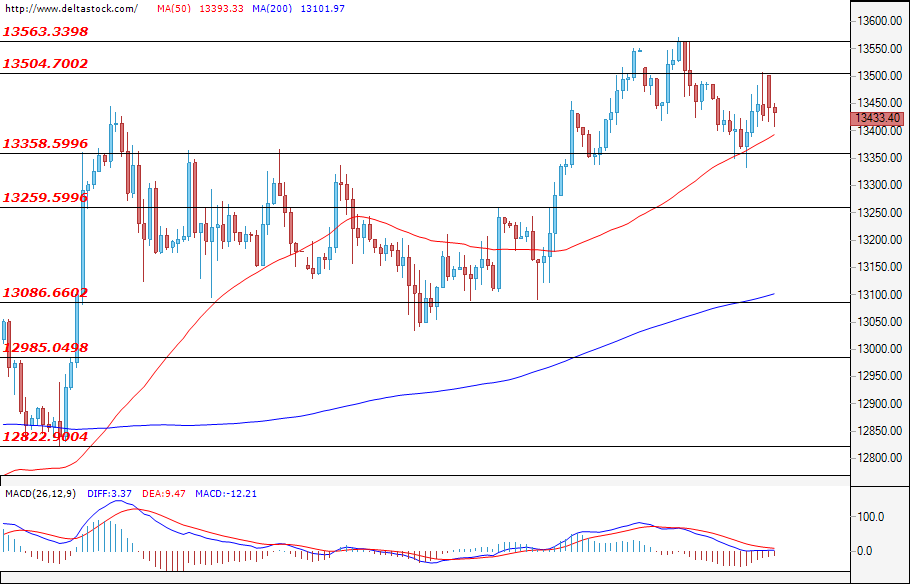
The German index is still locked in a tight range. The correction that started at the end of last week continued and we still cannot see prices going above 13563 for a whole week now. On Tuesday, after reaching the lower end of the range, namely 13358, the index bounced towards the resistance of 13504 and stopped its growth there once again. The day ended without much change in prices compared to Monday. Today, we may see some volatility following the release of the German trade balance data at 06:00 GMT and the managers’ services assessment report at 07:55 GMT. Whether the German index will be able to breach any of the levels of its range remains to be seen.
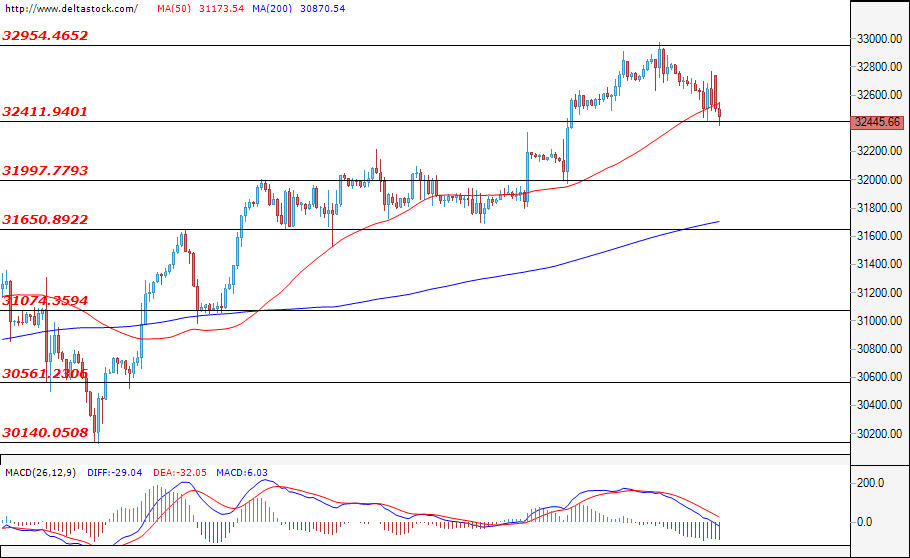
US30
The correction that started on Monday continues because of Nancy Pelosi's visit to Taiwan that sparked renewed tensions between the U.S. and China. The uncertainty surrounding China's aggression has traders trading timidly in the blue-chip index, with the US30 entering a 200-point range on Tuesday that it could not break free from. Among the more important data releases today is the U.S. services managers rating data at 14:00 GMT. For the index to continue its growth from last week, the data should be interpreted as positive and the risk surrounding the visit to Taiwan should be reduced. However, if we hear more threats and see a rise in fear-based volatility, then the index could head towards a crash.