Sample Category Title
Eurozone Sentix investor confidence rose to 15.2, lack of sustainable new growth drivers
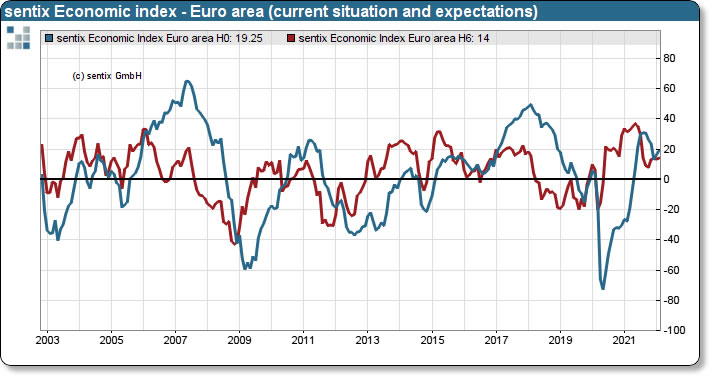
Eurozone Sentix Investor Confidence rose from 14.9 to 15.2 in February, above expectation of 15.2. Current situation index rose from 16.3 to 19.3. Expectations index rose from 13.5 to 14.0, highest since July.
Sentix said: "The economic situation in Euroland is stable in February 2022. The situation and expectations of the more than 1,200 investors surveyed by sentix signal a slight improvement. Thus, our assumption that we are in a "mid-cycle slowdown", i.e. a growth moderation in the middle of an economic cycle, which we have been expressing here for months, remains unchanged. However, this phase of moderation is not yet complete. There is a lack of sustainable new growth drivers. Above all, there is a lack of impetus from the international economy."
Bitcoin is Gaining Momentum
Bitcoin is up 9% over the past week, ending at around $41,700. Ethereum is up 15%. Altcoins also woke up from hibernation and grew stronger than the market: from 5.8% (Binance Coin) to 17.3% (Solana).
Over the same period, the total capitalization of the crypto market, according to CoinGecko, grew by 11.2%, up to $1.99 trillion.
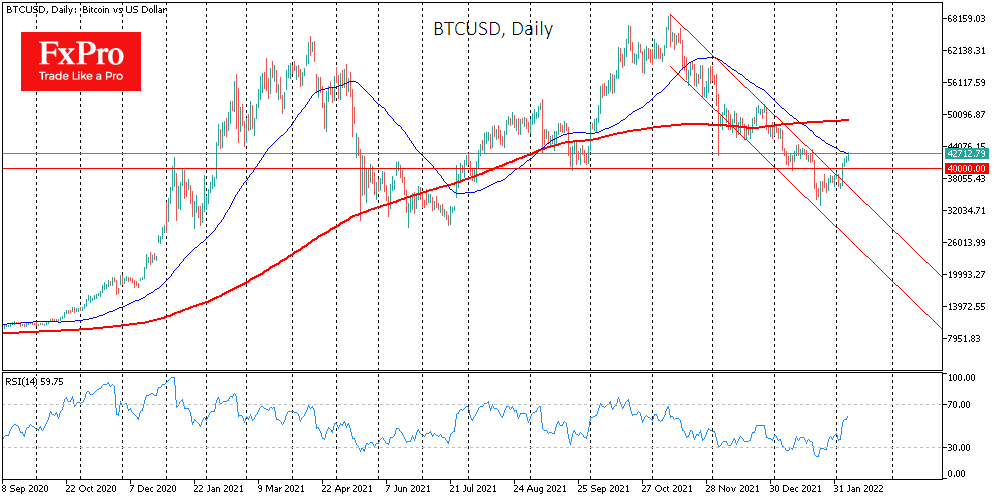
The primary growth of the crypto market last week came on Friday when bitcoin at the end of the day soared by 10% in a few hours. The increase was not prevented even by strong data on the US labour market, which came out a couple of hours before the jump.
It is worth noting that the Nonfarm Payrolls can force the Fed to move faster to tighten monetary policy. Against this background, the yield of 10-year Treasuries jumped above 1.93%, hitting new two-year highs, and this could soon lead to sales in the stock market. If cryptocurrencies manage to resist and continue to grow, this will be a serious trend reversal order. Just like on Friday, when investors decided to buy BTC in order to protect investments from inflation.
Since then, Bitcoin has already added 17%, moving into a phase of an active uptrend. Technically, the first cryptocurrency broke the resistance of the descending corridor. Accelerating growth and steady buying throughout the weekend indicate a strong bullish momentum. Cautious investors are now looking at the test of the 50-day moving average. Previously, repeatedly fixing above this line preceded a multi-month uptrend.
Potentially, this will also be lost now. Therefore, some players consider this impulse as an important first signal of a recovery in demand for risky assets, despite fears of a rate increase.
Meanwhile, billionaire Ray Dalio has warned that a number of governments could outlaw cryptocurrencies. The government of the Russian Federation is considering introducing a tax on miners of at least 15%. In the meantime, the Fed has presented the Digital Dollar White Paper, but the issue of its future launch has not yet been resolved.
EURUSD Takes a Rest after Remarkable Weekly Bounce
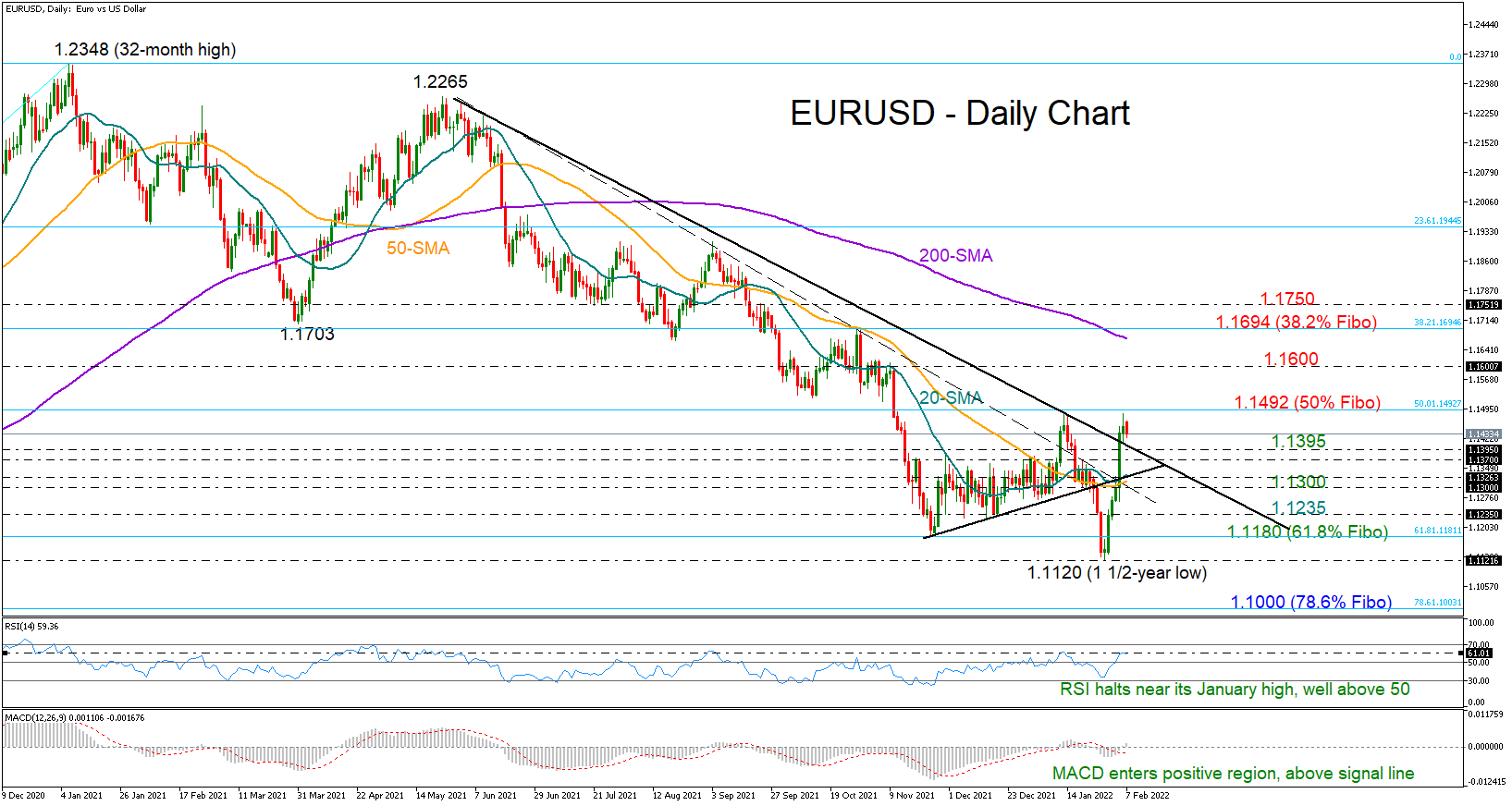
EURUSD started the month on the right foot last week, charting its fastest weekly rebound since March 2020 to advance from a 1½-year low of 1.1120 straight back into the 1.1400 zone.
Encouragingly, the bulls' fortunes have improved following the peak above the key resistance trendline drawn from May’s high of 1.2265, but downside risks have not fully evaporated since last week’s thrilling rally was not enough to drive the price above its previous high of 1.1492. Notably, that level is coinciding with the 50% Fibonacci retracement of the 2020 uptrend, which topped at a 32-month high of 1.2348.
Will the bulls continue to march higher in the coming sessions? Well, the technical picture is still favouring the case. Even though the RSI is currently struggling to surpass its January high, the indicator is comfortably above its 50 neutral mark, suggesting buying pressures may keep balancing any sharp declines. Likewise, the MACD remains positively charged above its zero and signal lines, while in trend indicators, the positive intersection between the 20- and 50-day simple moving averages (SMAs) is still valid.
A decisive close above the 1.1492 bar could push the price up to the 1.1600 hurdle. Claiming that area, the next crucial obstacle may emerge around the 200-day SMA and the 38.2% Fibonacci of 1.1694, while not far above, the 1.1750 level could be another barricade.
On the downside, the bears will need to squeeze the price back below the 1.1395 – 1.1300 territory of trendlines in order to regain command. Then, a forceful extension below the former support region of 1.1235 – 1.1180, which encapsulates the 61.8% Fibonacci, may threaten the resumption of the long-term downtrend below the 1.1120 bottom, bringing the 1.1000 number back into focus.
In brief, EURUSD is taking a breather following its recent impressive rebound. Although the bias remains titled to the upside, the bulls have another mission to accomplish before they declare victory. Particularly, they need to successfully close the gap with the 1.1492 barrier to dominate the market in the short term.
Gold Price Overcomes 200-Day SMA, Holding above 1,800
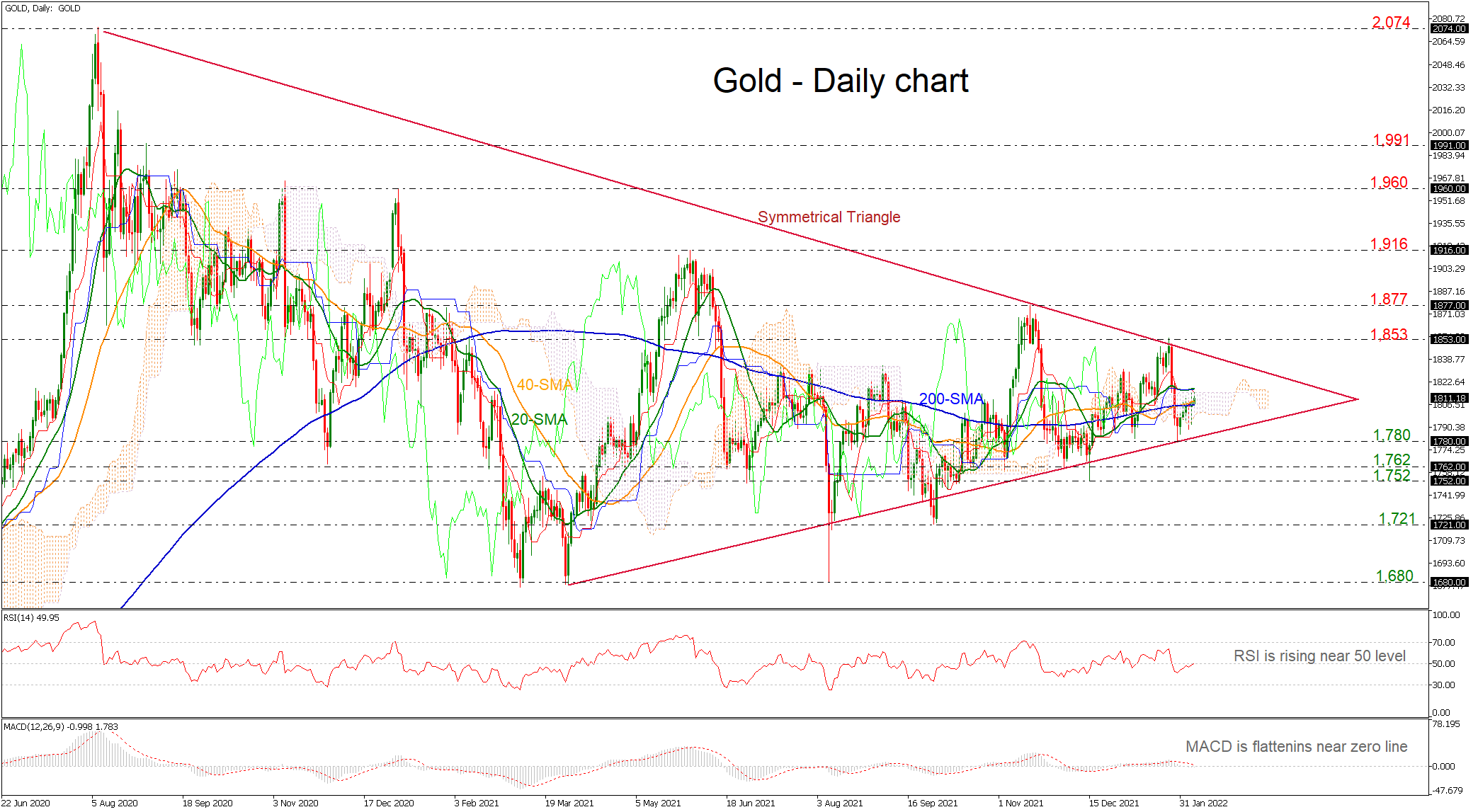
Gold prices have found a turning point at the 1,780 support level, which overlaps with the ascending trend line of the long-term symmetrical triangle. The price is currently testing the 40- and 200-day simple moving averages (SMAs), holding within the Ichimoku cloud in the short-term.
Technically, the RSI indicator is showing some positive signals as it is approaching the neutral threshold of 50 with stronger momentum than before. The MACD oscillator is edging sideways near its trigger and zero lines, failing to endorse any positive scenarios.
Should the price close comfortably above the 20-day SMA, which has been unbreakable over the past week, traders could add more momentum to the upside move, pushing the market up to 1,853. A move higher could reach the downtrend line at 1,836 ahead of the 1,853 resistance level. Penetrating these obstacles too, the market could switch the current outlook to positive, touching the recent 1,877 high and 1,960, registered in January 2021.
In the negative scenario the market could retest the bottom of 1,780. If this proves easy to overcome this time, the decline may next pause somewhere between 1,762-1,752, while even lower, investors could shift attention to the 1,721 number.
In brief, the yellow metal is in neutral mode in the short-term timeframe and any declines below the symmetrical triangle could endorse the bearish outlook. Otherwise, a climb above the downtrend line could add some fuel for positive move.
GER 40 Lacks Support
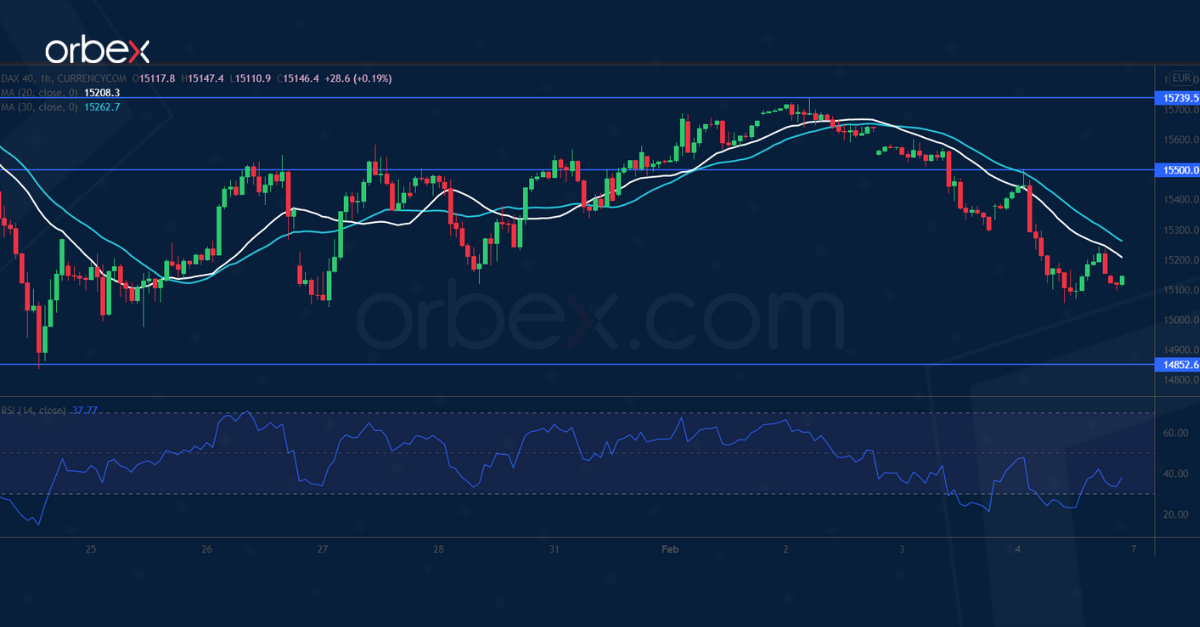
The Dax 40 drifts lower after the ECB’s hawkish turn. The recent rebound met stiff selling pressure at 15740. Then a fall below 15350 indicates a lack of commitment from the buy-side.
A bearish MA cross suggests an acceleration to the downside and may attract more bears. The demand area around 14850 is a critical floor on the daily chart. Its breach could trigger a bearish reversal in the medium term.
An oversold RSI may cause a limited bounce. The bulls need to reclaim 15500 in order to turn sentiment around.
USD/CAD Awaits Breakout
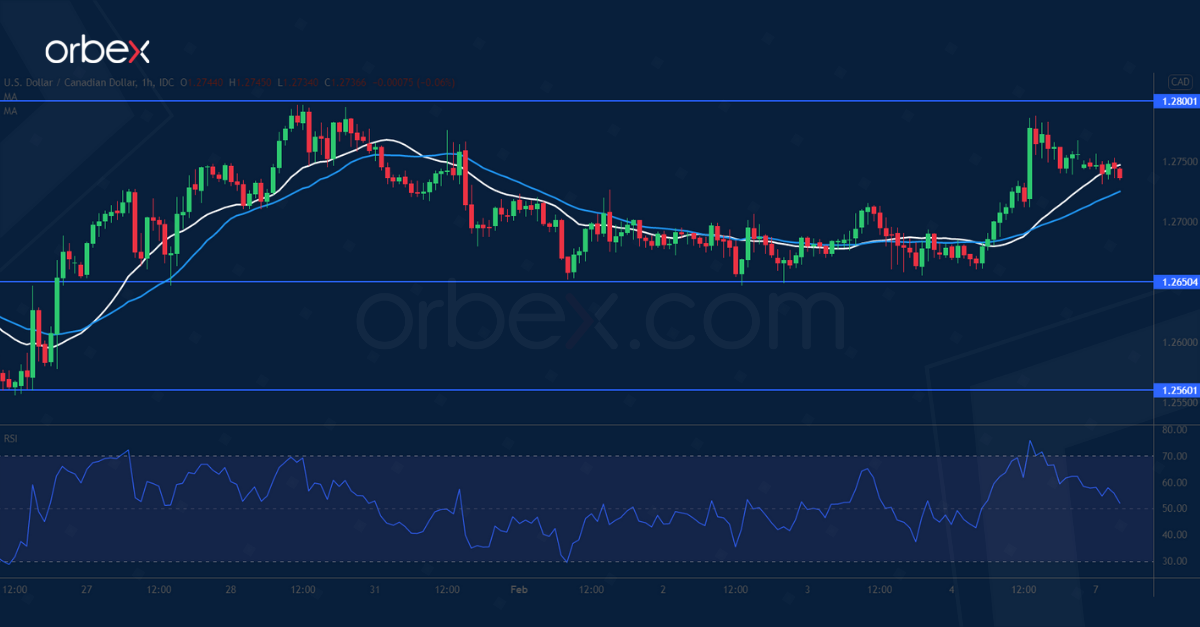
The loonie weakened after a rise in Canada’s unemployment rate in January. The greenback has previously come to a halt at the daily resistance (1.2800).
The retracement then found bids at the resistance-turned-support at 1.2650, suggesting traders’ strong interest in keeping the two-week-long rally intact. The RSI has inched into the overbought territory and may drive the price lower with short-term profit-taking.
A bullish breakout may extend the uptrend to December’s peak at 1.2950.
USD/CHF Bounces Higher
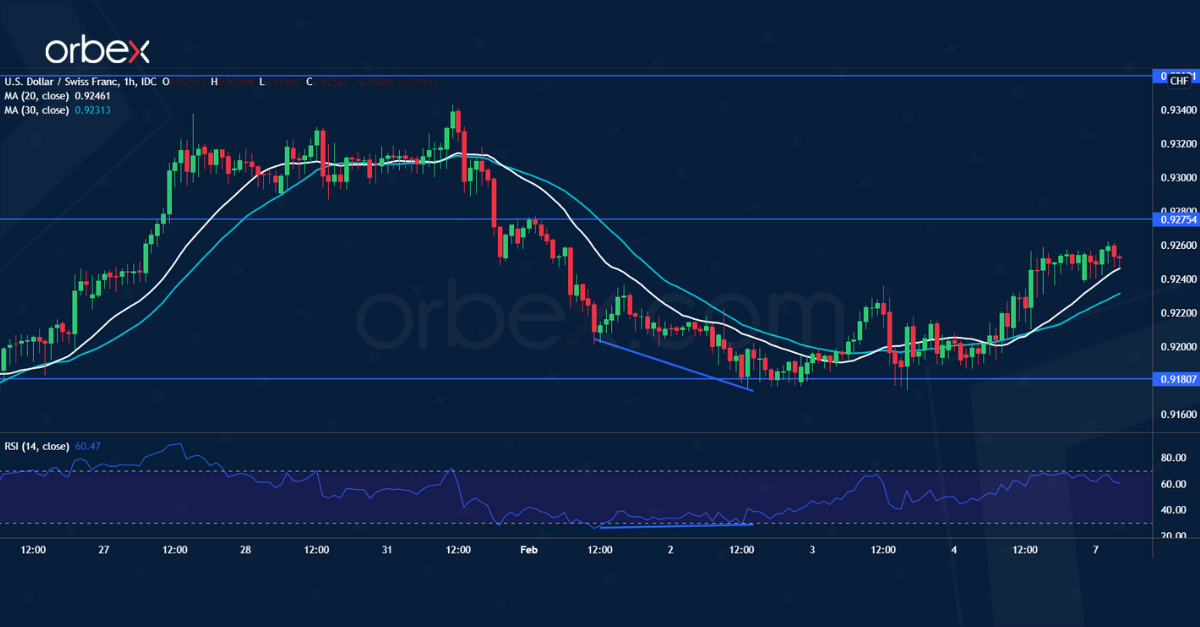
The US dollar rallied after January’s nonfarm payrolls exceeded expectations. The latest pullback found support near the previous low at 0.9180.
A bullish RSI divergence suggests a loss of momentum in the sell-off. A close above 0.9275 would force short-term sellers to cover and pave the way for a broader rebound.
Then the double top (0.9360) on the daily chart would be the next target. On the downside, a bearish breakout may send the pair to 0.9110.
Daily Technical Analysis
EUR/USD
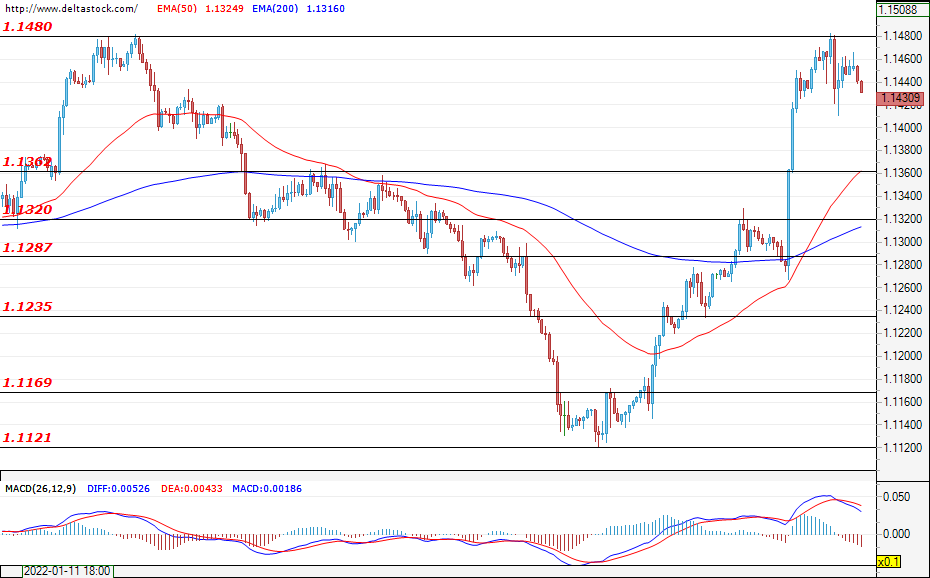
At the end of last week, the rally lost its momentum and the currency pair made an unsuccessful test of the important resistance level of 1.1480. The forecast is for the pair to consolidate in the zone between 1.1362 and 1.1480, before the bulls are to re-test the resistance at 1.1480. In the negative direction, the first support lies at 1.1362. Among the important news for traders this week is the U.S. core CPI data, as well as the U.S. initial jobless claims report. Both of them are to be announced on Thursday at 13:30 GMT.
USD/JPY
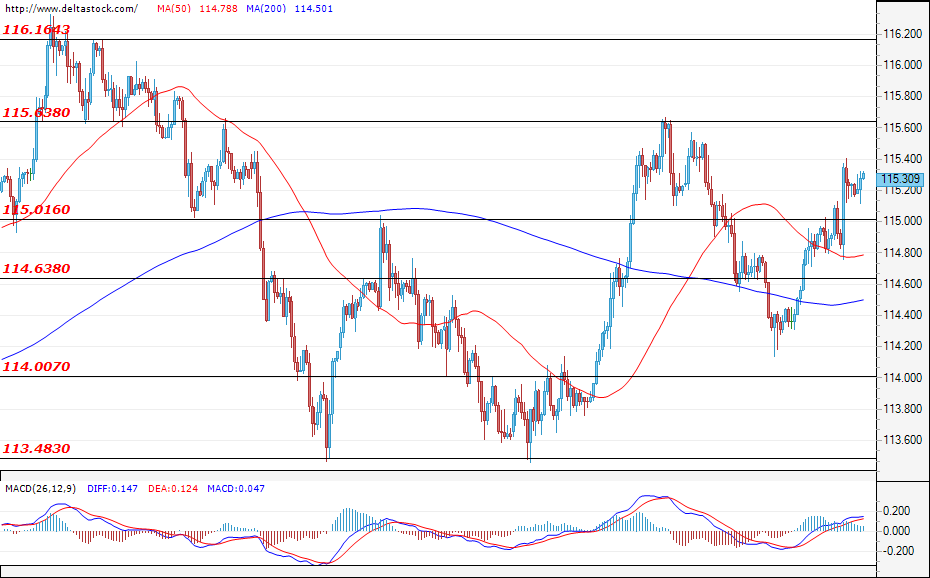
At the end of last week, the Ninja breached the resistance level of 115.00 and is now expected to continue rising towards the next resistance zone at 115.63. In case this zone is tested and violated, then the next target for the pair would be found at 116.16. In the negative direction, the former resistance at 115.00 is now acting as support.
GBP/USD
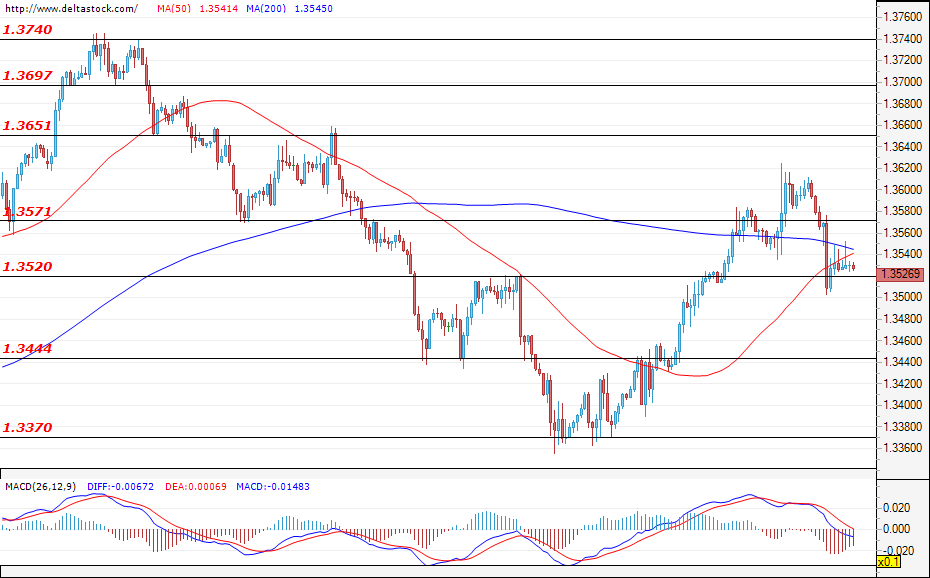
The appreciation of the British pound against the dollar was limited slightly below the resistance zone of 1.3650 and the pair subsequently failed to stay above 1.3570. The expectations are for the pair to continue losing ground and to consecutively test the support levels at 1.3444 and at 1.3370. In the positive direction, the first significant resistance lies at 1.3570. This week, increased trading activity can be expected around the announcement of the U.K. manufacturing production data and the U.K. GDP data. Both of them are to be announced on Friday at 07:00 GMT.
EUGERMANY40
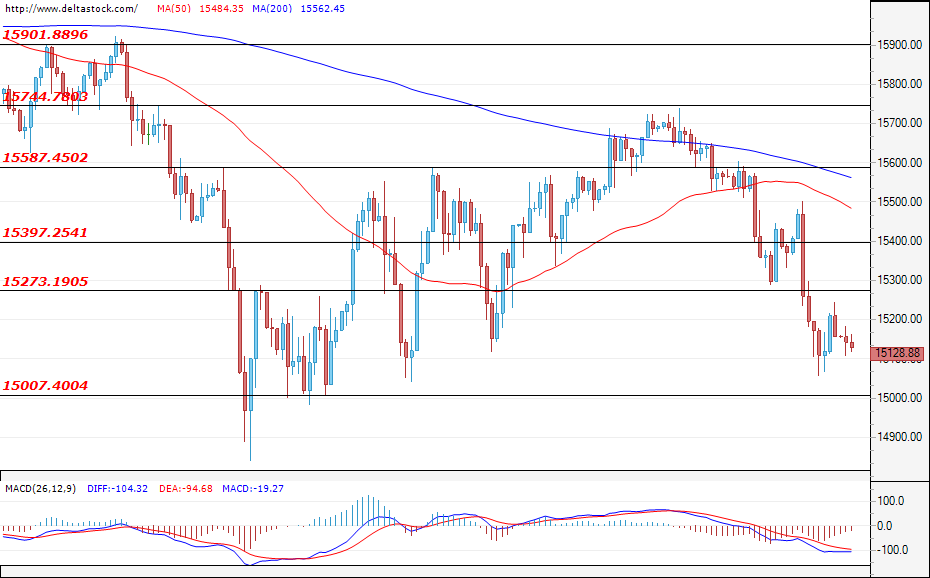
During the last trading session of the previous week, the German index breached the support level of 15273 and, at the time of writing the analysis, is consolidating in the zone between 15000 and 15273. The forecast is for the index to continue trading in this zone as it waits for a catalyst, which could help either the bulls or the bears prevail and determine the future direction of the EUGERMANY40.
US30
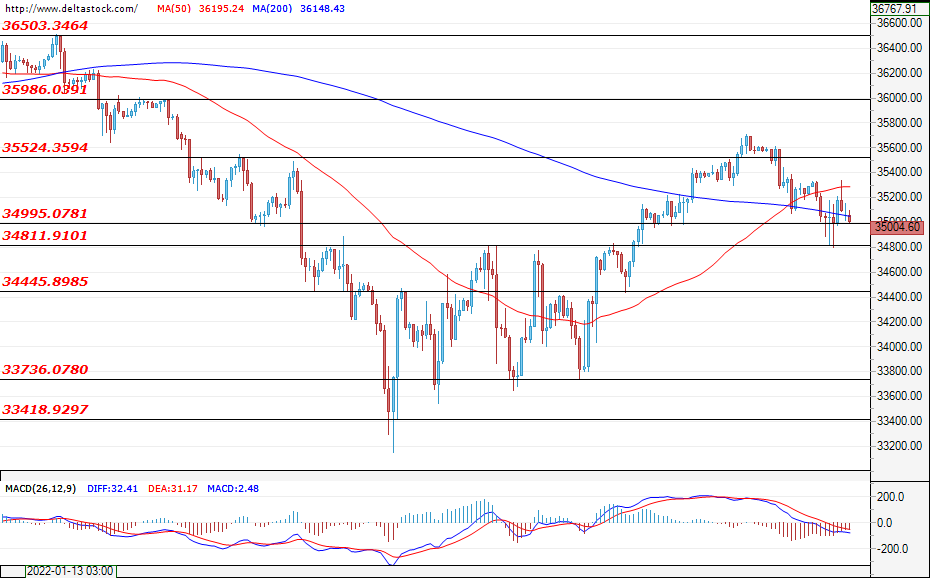
At the end of last week, the appreciation of the U.S. blue-chip stock index was limited around the resistance at 35524 and the index started to depreciate afterwards. At the time of writing, the US30 is headed towards a test of the support level at 34995. A possible breach of this support would deepen the retracement, pushing the US30 towards a test of 34445. If the support at 34995 withstands the bearish pressure, then the most likely scenario would be for the index to re-test the resistance at 35524. Among the important news for traders this week is the U.S. core CPI data, as well as the U.S. initial jobless claims report. Both of them are to be announced on Thursday at 13:30 GMT.
Lagarde’s U-turn Finally Restores Some Balance Between Euro and Dollar
Markets
Ahead of Friday’s US payrolls, at least part of the market cautioned for a soft interrupt in the labour market recovery as omicron potentially dampened contact sensitive economic activity. However, contrary to the ADP report, the pause in the job recovery wasn’t visible in the official labour market statistics. All sub-indicators point to a further US labour market tightening. January payrolls growth printed at a very strong 467 000 with an even more impressive 709 000 upward revision. Wage growth also accelerated 0.7% M/M and 5.7% Y/Y AHE. The unemployment rate rose from 3.9% to 4.0% but this was due to a higher participation rate (62.2 from 61.9%) that policy makers were hoping for.
Investors had every reason to believe Fed Powell’s warning that this tightening cycle will be different from previous ones. An initial stabilization/cautious decline in US yield was swapped for an astonishing bear flattening. The 2-y jumped another 11.4 bp with the 30-y rising ‘only’ 5.8 bps. The rise was entirely due to a higher real yield. The 2-y yield reached 1.32. The US 10-y also touched a new cycle top (1.93%). US interest rates rise post-payrolls outpaced EMU.
Even so, after Thursday’s inflation U-turn of ECB’s Lagarde, any dovish positioning left in the euro market was also further squeezed out with German yields rising between 9.1 bps (5-y) and 2.3 bps (30-y). Markets now discount that ECB policy rates might already leave negative territory by the end of this year.
The prospect of tightening financial conditions initially weighed on the equity markets with the EuroStoxx50 losing 1.31% at the close. However, US indices later found their composure finishing unchanged (Dow) to even with a gain of 1.58 % (Nasdaq).
Europe finally being perceived as joining a more anti-inflationary course limited post-payrolls gains of the dollar. EUR/USD after testing the 1.1483 January top before the payrolls finished marginally stronger at 1.1449. DXY closed at 95.48 (from 95.30). Underlying euro strength further propelled EUR/GBP to close at 0.8461.
This morning, Asian equities are mostly trading with modest losses. Mainly China markets are the exception to the rule after the reopen from the Lunar New year holidays. The PBOC fixed the yuan at a relatively weak level. Even so, yuan is holding resilient near 6.36. The dollar this morning is gaining a few ticks, both trade-weighted as against the euro (EUR/USD 1.143).
Today, the eco calendar is thin. ECB’s Lagarde gives an introductory statement at the hearing before the EU parliament. ECB’s Knot in press comments this weekend indicated that the ECB could raise interest rates as soon as Q4 as he expects EMU inflation above 4.0% for most of 2022.
Regarding this week’s data, the US January CPI release on Thursday takes center stage (headline expected at 7.30%, core at 5.9%). We also keep a close eye at comments from the ECB and the Fed. Are policy makers (still) happy with recent sharp market repricing or will they advocate some caution?
The Ukraine-Russia tensions remain an important source of uncertainty, with oil rising further (brent $ 93 b/p). For now, there is no reason to row against the hawkish global repricing, but the pace of the move might al least take a breather. This week’s US inflation might call some kind of a peak in the ‘inflation hype’.
On the currency markets, Lagarde’s U-turn finally restores some balance between the euro and the dollar. A break of EUR/USD beyond 1.1483 would improve the technical picture. Maybe some further clarification on the expected ECB path is needed for a protracted further euro comeback.
New Headlines
The EU is forging contingency plans should Russian/Ukrainian tensions erupt into a military conflict. Measures include shielding consumers and businesses from surging gas prices, a possible migratory crisis and cyber security threats. The Commission is a.o. examining how it could intervene temporarily to weaken the link between high gas prices and the cost of electricity. It is also exploring to secure more and diversified flows of LNG from big producing countries, including the US, Qatar, Azerbaijan and Nigeria.
Australian PM Morrison announced today the reopening of the country’s borders to international travelers. Since March 2020 borders were closed almost entirely for non-citizens to stem the spread of Covid, hurting the tourism sector which contributed about 3% to the economy prior to the pandemic. Morrison said that tourists and visa holders are allowed back in the country from February 21 provided they have been vaccinated twice.
Bitcoin, Nasdaq, and Oil Rally as Risk Sentiment Improves
The US dollar and the Nasdaq 100 index tilted higher on Friday after strong American jobs numbers. The data showed that the American economy added more than 467k jobs in January, in a sign that the economy was doing well. The number was better than the median estimates of less than 200k. On Wednesday, data by ADP estimated that the economy lost over 300k jobs in January. These numbers, coupled with the performance of real yields point to the fact that the Fed will likely start hiking interest rates in March this year.
Cryptocurrency prices continued their bullish rally during the weekend as sentiment improved. Bitcoin crossed the $40,000 level for the first time in almost three weeks. Other coins like Solana, Cardano, and Sandbox continued rallying. As a result, the total market capitalization of all cryptocurrencies tracked by CoinGecko jumped to more than $1.9 trillion. The rally is also because of the ongoing market activity in the industry. For example, last week, FTX announced that it was acquiring Liquid, a Japanese cryptocurrency exchange.
The economic calendar will be a bit muted today, meaning that investors will continue focusing on last week’s decisions by the ECB and the Bank of England. The two banks sounded hawkish, with the BOE hiking interest rates for the second straight meeting. In her press conference, Christine Lagarde refused to rule out that the bank will hike rates later this year. The only key numbers to watch today will be the Swiss unemployment rate and the Halifax house price index (HPI).
EURUSD
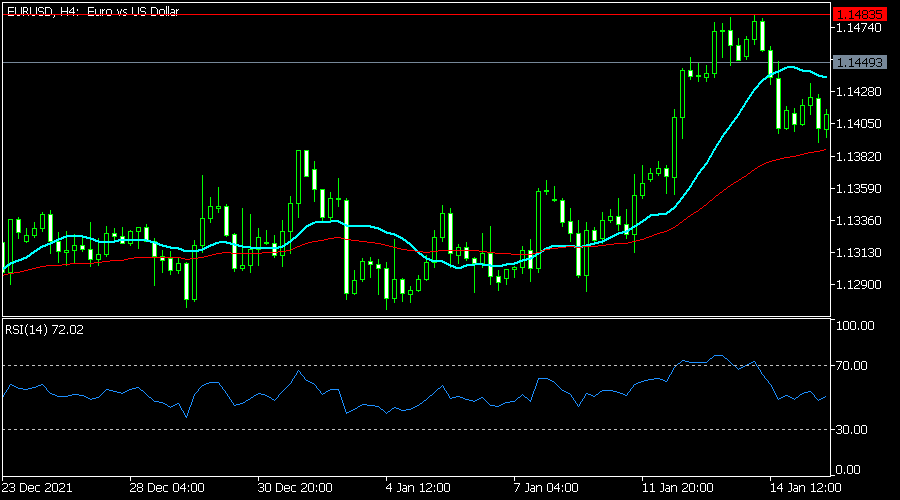
The EURUSD pair jumped to a high of 1.1483 after the ECB decision. This was a notable level in January this year. On the four-hour chart, the pair moved above the 25-day and 15-day moving averages while the Relative Strength Index (RSI) has moved above the overbought level. It is also above the dots of the Parabolic SAR. Therefore, the pair will likely retreat slightly as investors start taking profit.
USDCHF
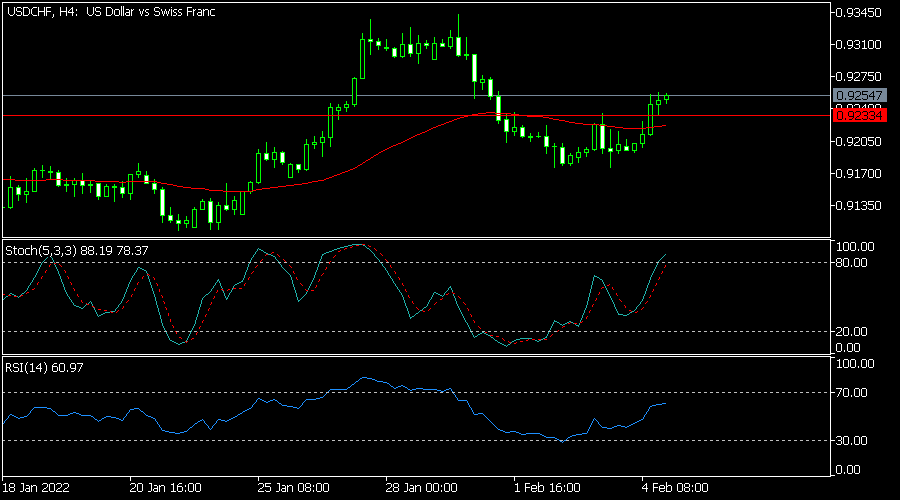
The USDCHF pair rallied ahead of the latest Swiss unemployment rate data. It is trading at 0.9255, which was the highest level since February 1. It has managed to move above the key resistance at 0.9233. It has moved above the 25-day moving average while the Relative Strength Index has moved above the overbought level. Therefore, the pair will likely keep rising as bulls target the key resistance at 0.9300.
EURJPY
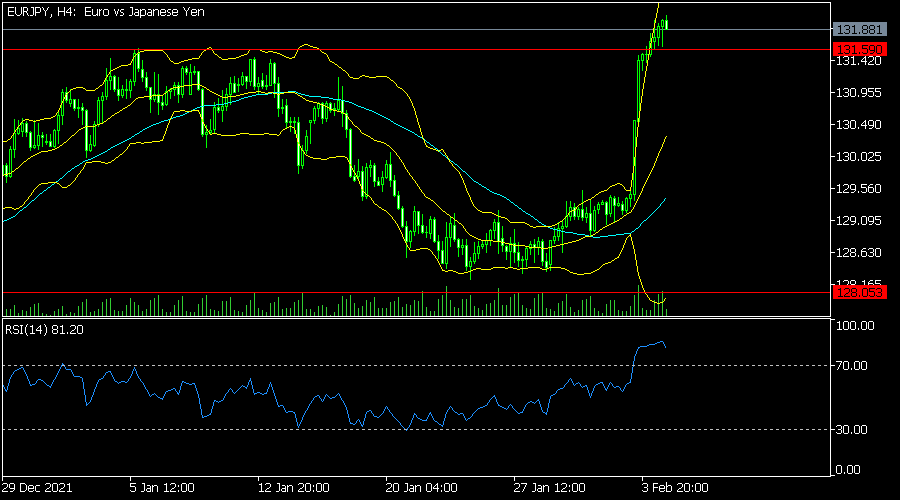
The EURJPY has been in a strong bullish trend as investors focus on the divergence between the ECB and the BOJ. It rose to a high of 132.10, which was the highest level in months. It has moved above the key resistance at 131.60, which was the highest level in January. It is also along the upper side of the Bollinger Bands while the Relative Strength Index (RSI) has been rising. Therefore, the pair may soon have a pullback on profit-taking.