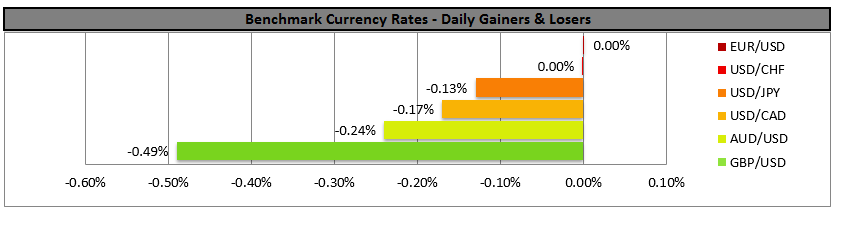
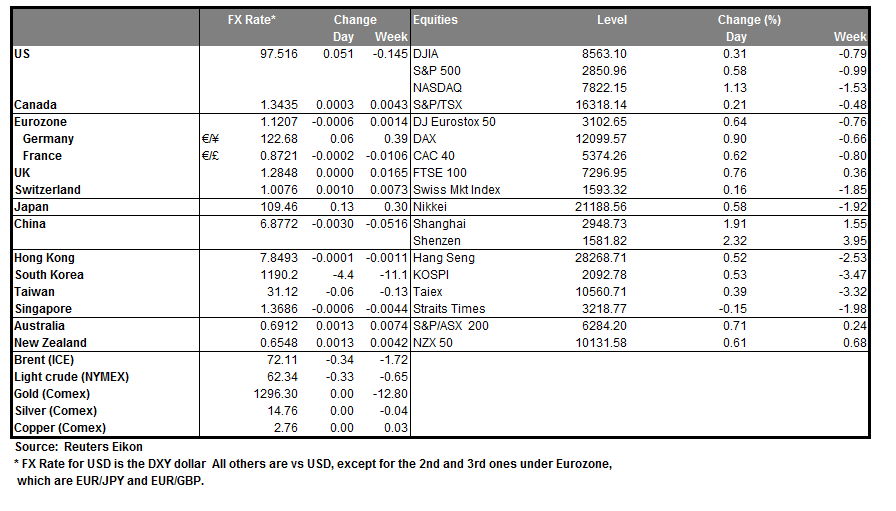
Sample Category Title
AUD/USD Outlook: Bears Are Positioning For Fresh Extension As Expectation Of Rate Cut Weigh
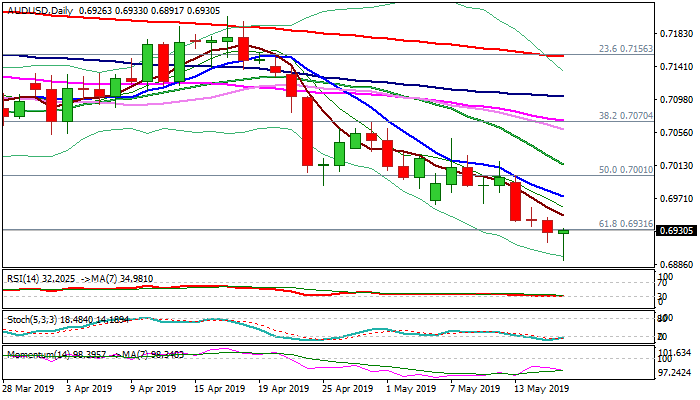
The Aussie dollar bounces from new low at 0.6891 (the lowest since 3 Jan) in corrective action as daily stochastic reverses from oversold territory.
Overall picture remains bearish on both, daily and weekly chart and favors further downside, as bears were boosted by Wednesday’s close below key Fibo support at 0.6931 (61.8% retracement of 0.6643/0.7295 rally).
Weak Australian jobs data (Unemployment rose to 5.2% in Apr from 5.1% and 5.0% f/c while 28.4K new jobs were created in Apr vs 30K f/c) increase expectations for rate cut, the earliest in June and Aug cut now being fully priced in.
Limited corrective action is seen as positioning for fresh downside, as bears look for confirmation on repeated close below broken 0.6931 Fibo support, which now acts as initial resistance (reinforced by the base of thick falling hourly cloud).
Falling 5SMA (0.6948) marks next barrier, reinforced by hourly cloud top, guarding falling 10SMA (0.6974), break of which would sideline bears and signal stronger recovery.
Res: 0.6931, 0.6948, 0.6974, 0.7000
Sup: 0.6915, 0.6891, 0.6845, 0.6800
GBPUSD Weakness Persists
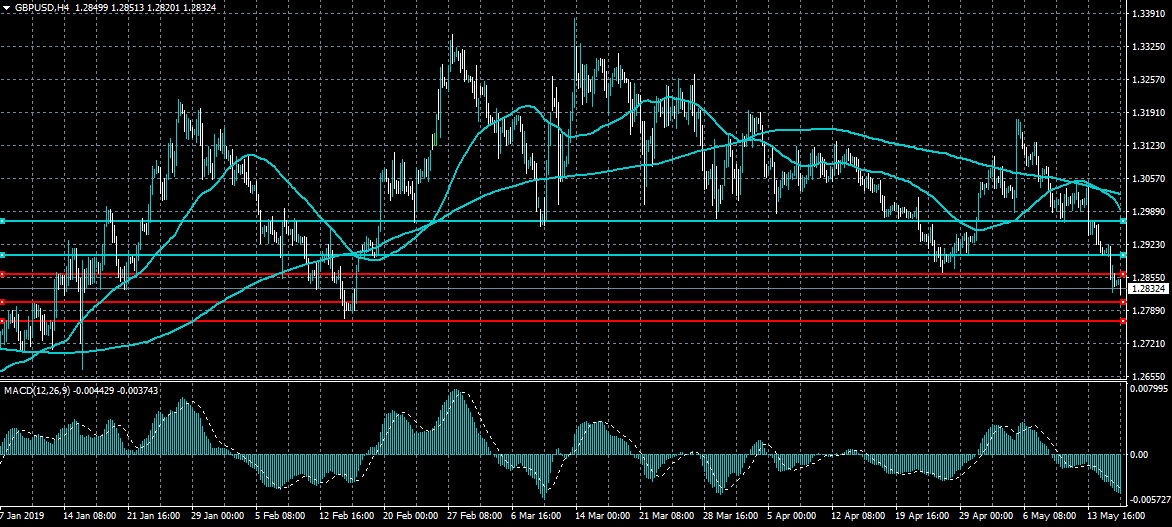
The British pound has continued to decline against the US dollar during the European trading session with the pair edging closer to the 1.2810 level. If sellers can move price under the 1.2810 level the GBPUSD pair is likely to test towards the February trading low. The four-hour time frame is now showing that a series of bearish head and shoulders pattern have started to form.
The GBPUSD pair is heavily bearish while trading below the 1.2866 level, key support remains at the 1.2810 and 1.2772 levels.
If the GBPUSD pair trades above the 1.2866 level, key intraday resistance is found at the 1.2890 and 1.2920 levels.
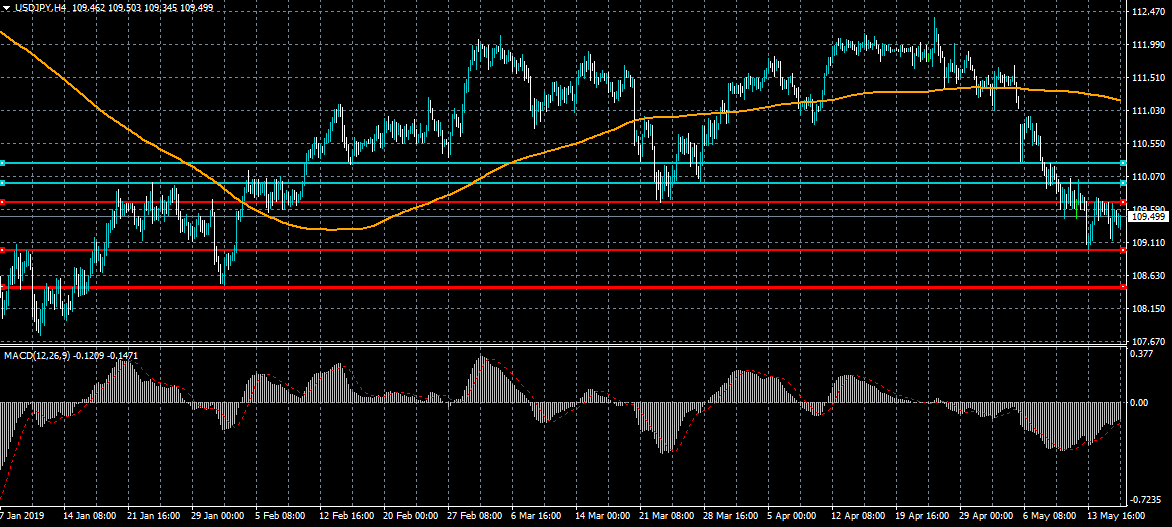
USDJPY Sellers Still In Control
The US dollar is still unable to move higher against the Japanese yen currency as risk-off trading sentiment remains at elevated levels. Bulls need to move price above the 109.66 level to encourage additional technical buying towards the 109.80 level. Overall, sellers remain in control of the USDJPY pair and may test towards the 108.40 level if the 109.00 support level is broken to the downside.
The USDJPY pair is heavily bearish while trading below the 109.66 level, key support is found at the 109.00 and 108.40 levels.
If the USDJPY pair trades above the 109.66 level, key intraday resistance is found at the 109.80 and 110.00 levels.
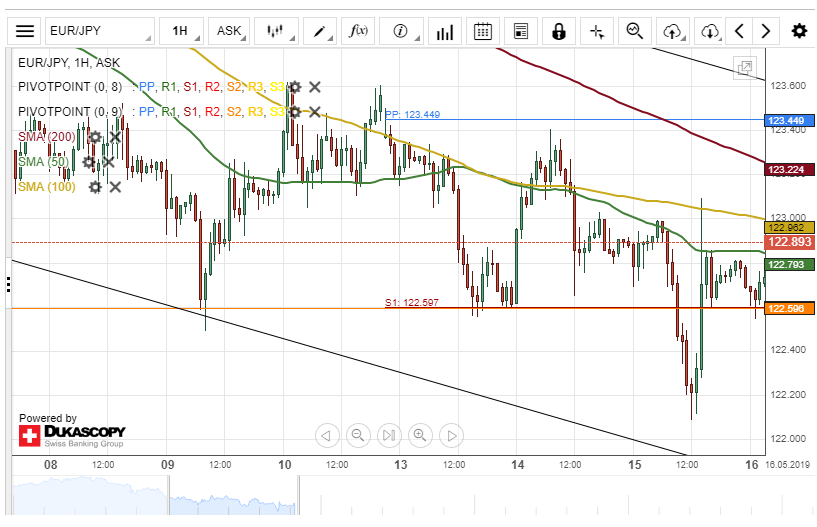
EUR/JPY Moving Towards 122.00
During the first part of yesterday's trading session, the EUR/JPY currency pair depreciated about 90 base points. However, the single European currency regained some of its lost positions at the end of the session.
Everything being equal, it is likely that the exchange rate will continue its bearish momentum today. The possible target will be near a psychological support level at the 122.00 mark.
Although, the currency exchange rate could edge higher towards a resistance line at 122.97 before bear retakes the momentum.
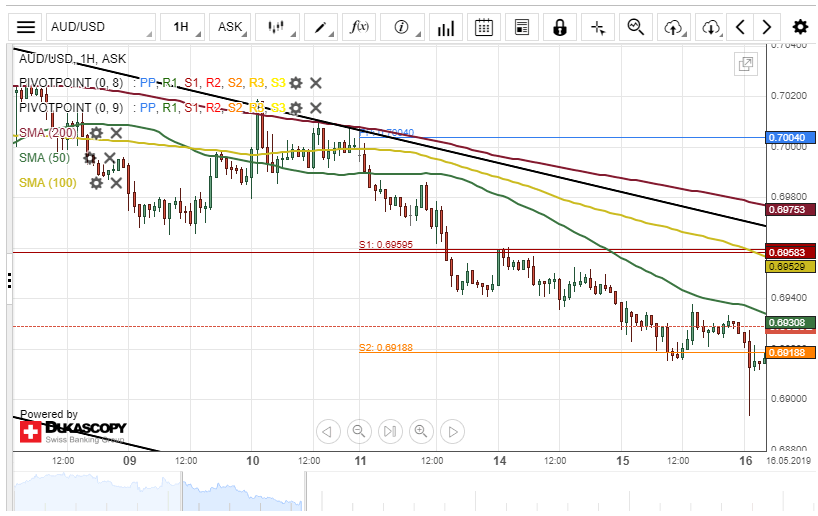
AUD/USD Targets At 0.9568
The Australian Dollar depreciated about 41 base points against the US Dollar on Wednesday. The currency pair breached a support level formed by the weekly S2 at 0.6918 during yesterday's session.
By and large, the AUD/USD exchange rate is likely to continue its downside movement today. Bears could target a support cluster set by the weekly and the monthly pivot points at 0.6874.
Although, the currency exchange rate could make an upside movement today and aim for a mini swing high of 0.6959 during the following trading session.
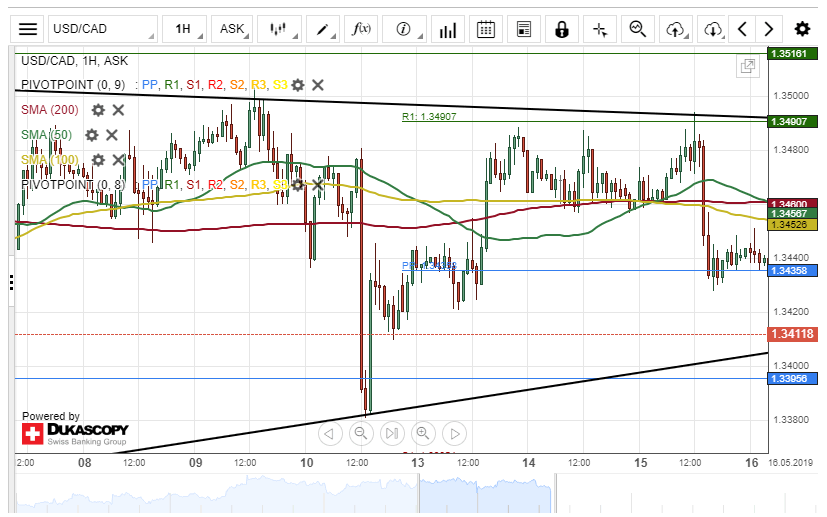
USD/CAD Slight Decline Possible
The US Dollar depreciated about 63 base points against the Canadian Dollar on Wednesday. The currency pair breached the 50-, 100– and 200-hour SMAs during yesterday's trading session.
The exchange rate is gradually moving towards the lower boundary of an ascending channel pattern at 1.3395.
If the support level formed by the bottom border of the channel pattern holds, a potential upside reversal could come into play.
However, if the currency exchange rate passes the channel pattern, the Greenback might end this week's trading session on a bear market.
NZD/USD Likely To Aim For 100-Hour SMA
The Decline of the New Zealand Dollar against the US Dollar continued during yesterday's trading session. The currency pair depreciated about 30 base points during Wednesday's session.
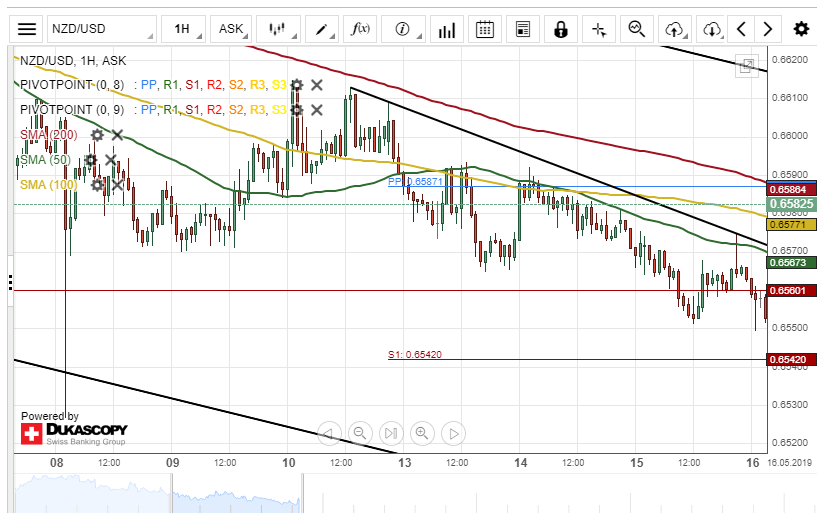
As for the near future, it is likely that the NZD/USD exchange rate makes a retracement towards a resistance level formed by the 100-hour simple moving average at 0.6577.
However, the currency exchange rate could encounter a resistance line set by the upper boundary of a downtrend line at 0.6567.
NZDUSD Eyes Descending Line Following Touch On 1-Week Low
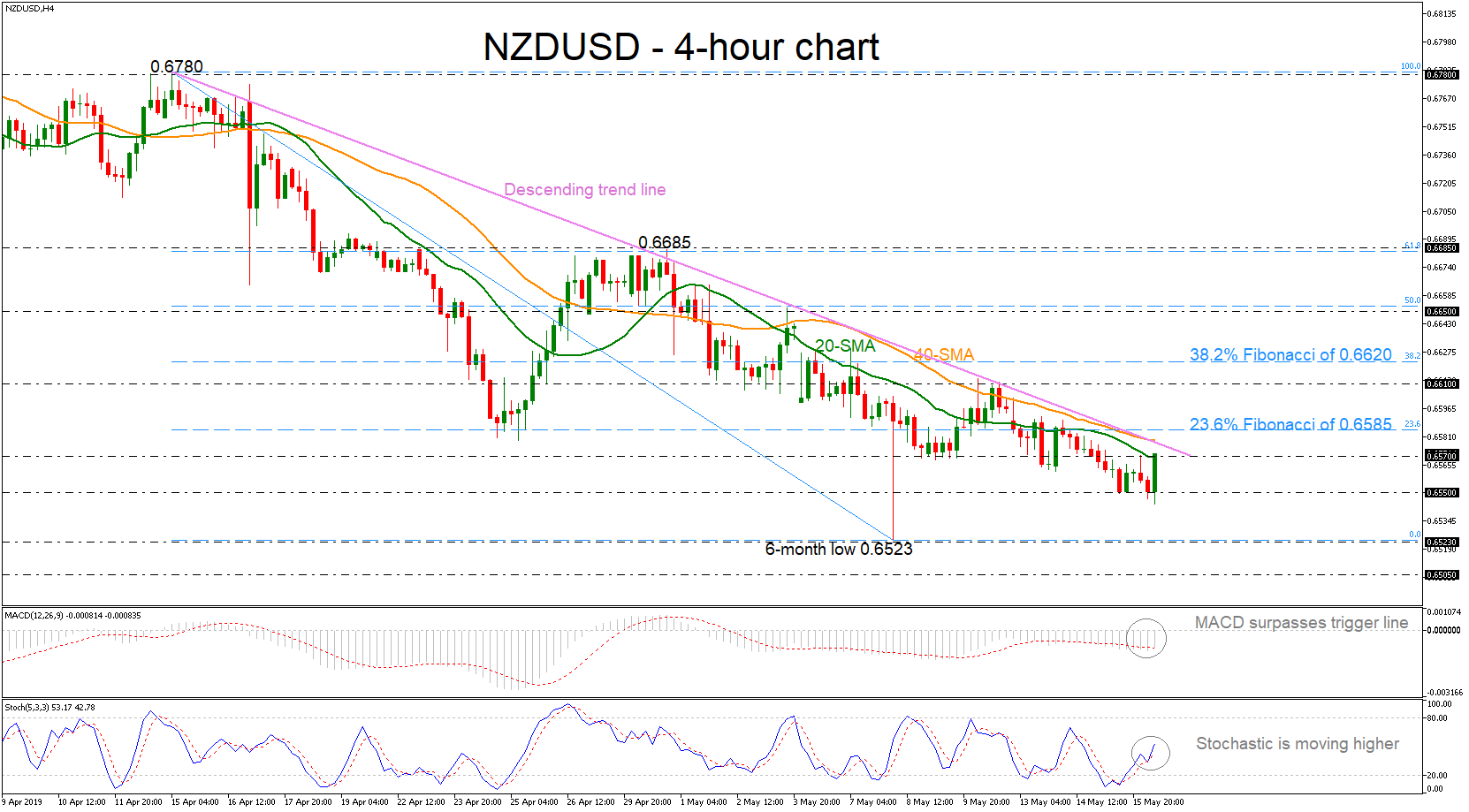
NZDUSD declined earlier on Thursday, hitting a one-week low of 0.6544 but the price recovered most of its lost ground immediately. What remains to be seen is if the bulls have enough fuel to exit the steep descending trend line drawn from the April peak. The stochastic and the MACD are in favor of this scenario, suggesting more upside pressure as both are turning higher.
The downtrend line around 0.6580 will attract full attention on the way up. Should the price break the line to the upside, the rally may get further legs, with the spotlight turning next to the 23.6% Fibonacci retracement level of the downleg from 0.6780 to 0.6523, near 0.6585. A decisive close above the latter, could be considered a big achievement, opening the door for the 0.6610 resistance.
In the alternative scenario, the pair may retry to violate the 0.6550 support to drive the price back down to the six-month low of 0.6523. If the attempt proves successful, the next target would be lower around 0.6505, registered on October 31.
To sum up, NZDUSD has been in a downside movement in the near-term, however, in the very short-term, the market seems to be ready to penetrate the diagonal line to the upside and therefore shift the bearish view to neutral.
Yen And Franc Firm Again As Trump Bans Huawei, Fuelling Tensions With China
- Trump continues to up the pressure on China; imposes ban on telecom giant Huawei
- But some relief as US delays auto tariffs decision for now
- Dollar softer after unexpectedly weak data out of the United States
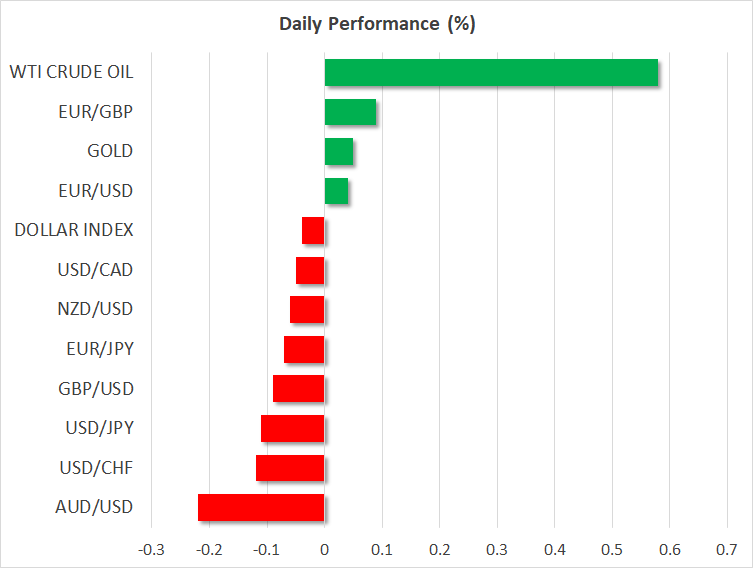
- Aussie worst performer as rise in Australian unemployment raises rate cut bets
Fragile market mood as trade tensions remain elevated
Markets were mostly in risk-off mood on Thursday as a combination of on-going trade frictions and disappointing economic data out of the world’s two largest economies put a damper on investor sentiment. US President Trump once again appeared to be piling the pressure on China by signing an executive order that restricts American companies from doing business with Chinese telecom equipment maker, Huawei.
The news weighed on Asian equities today, though most bourses managed to reverse earlier losses. Futures for European indices were pointing to a negative start despite relief yesterday from reports that Trump will likely delay his decision by up to six months on whether or not to raise tariffs on car imports.
Those reports, along with news that US Treasury Secretary Steven Mnuchin is expected to travel to China soon to resume trade talks helped Wall Street close higher for a second straight day. However, US stock futures have turned negative today as market sentiment remains fragile with the outlook for the global economy once again looking dimmer following the latest escalation in the Sino-US trade dispute, as well as signs that growth in both the US and China is slowing again.
Dollar struggles after disappointing April data
The US dollar stood firm against a basket of currencies but was weaker against the yen and Swiss franc. The greenback briefly touched a low of 109.14 yen yesterday after a surprise drop in US retail sales in April. Industrial production also shrank unexpectedly in April, raising fresh concerns about the growth outlook.
The softer data prompted investors to increase their bets of a rate cut by the Fed by year-end. Markets are now fully pricing in a 25-bps rate cut by December. The shift in expectations dragged Treasury yields lower. But the dollar was able to stay supported, coming under pressure only against other safe havens, as troubles elsewhere continues to keep the US currency attractive relative to other majors such as the euro and the pound.
The single currency was able to hold above the $1.12 level, finding some support from the delay in auto-tariffs, which has the potential to severely damage the Eurozone’s car industry. Sterling, meanwhile, hit a 3-month low below the $1.29 level, as investors doubted whether Theresa May will be able to strike a deal with Labour in time before her Brexit deal is put to a vote for a fourth and final time in early June.
Aussie tumbles as employment numbers lift rate cut expectations
Growing expectations that the Reserve Bank of Australia could cut rates as soon as June pushed the Australian dollar to a 4½-month low of $0.6891 today. Yesterday it was weak Chinese figures that contributed to the sell-off and today it was the Australian employment report. Australia’s unemployment rate rose to the highest in 8-months, and, despite gains in overall employment, full-time jobs fell in April.
While it may still be too soon to come to any conclusions about the labour market, traders appear to have already made up their minds and are pricing a 25-bps rate cut by August.
Oil prices boosted by Middle East tensions
The worsening outlook had little impact on oil prices as rising tensions in the Middle East offset growth worries as well as a jump in US crude stocks last week. There are growing fears of a conflict in the region as US-Iran relations deteriorate fast with the US reportedly pulling its staff from the area. There were also attacks on Saudi oil tankers and facilities over the past few days, raising worries about supply disruptions.
Brent crude climbed back above the $72 a barrel level, while WTI was last trading around $62.25. Unless there’s a significant de-escalation in tensions, oil prices are likely to remain supported in the coming days or weeks even as the demand picture is increasingly at risk from weaker global growth.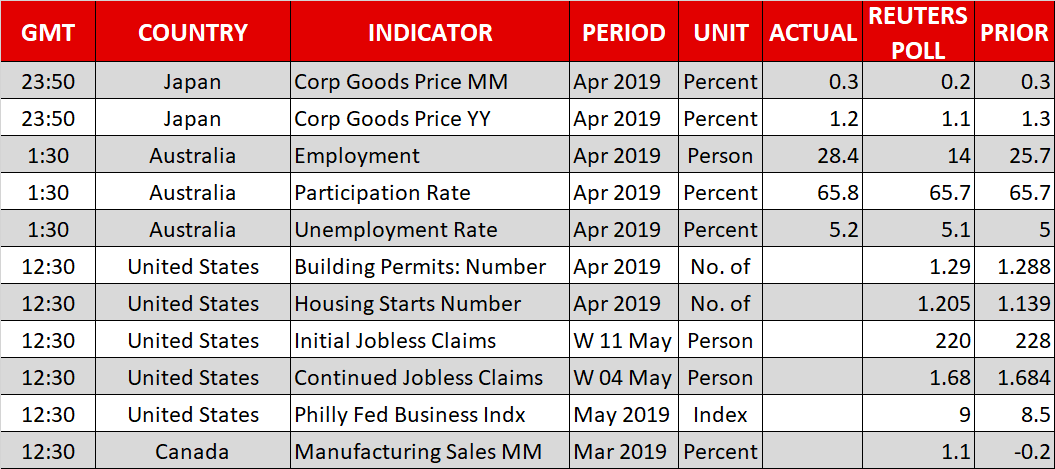
EUR Strengthens On Hopes Of The US Delaying Tariffs
The EUR reversed previous losses of the day against the USD yesterday, after reports stated that the US President may delay tariffs on European cars. The Trump administration seems to be considering a delay of the tariffs on European and Japanese cars by six months according to media. A formal announcement is yet to be released and is expected by Saturday according to media. The decision may be a result of the deepening US-Sino trade war and should that be so, further escalation maybe in the cards. We see the case for a weight to have been lifted from the EUR, however soft financial data, a slow recovery and the US-Sino trade war continue to threaten the common currency. We expect the EUR to be data driven at the time, yet at the same time we could see it strengthening somewhat as the tariff issue seems to be removed. EUR/USD maintained a wide sideways movement yesterday, testing yet remaining between the 1.1220 (R1) resistance line and the 1.1175 (S1) support line. We could see the pair maintain a sideways movement today, however the pair may prove to be sensitive to today’s financial releases. Should the pair’s long positions be favoured by the market, we could see it breaking the 1.1220 (R1) resistance line, opening the way for the 1.1260 (R2) resistance level. On the other hand should the pair come under the selling interest of the market, we could see it breaking the 1.1175 (S1) support line.
GBP weakens on Brexit impasse
The pound weakened against the USD yesterday, hitting a three month low as concerns about Brexit grow. The negotiations between the Government and the Labour party seem to be in a deadlock with no light at the end of the tunnel. Theresa May could be facing a leadership challenge soon enough according to media and hopes of getting her Brexit deal through are diminishing. It should be noted that recent polls are showing the Tory party landing very low results some even placing it as 4th in power, while Nigel Farage’s party (Hard Brexiteers) seems to be ranking first. We expect the pound to remain under pressure as long as the Brexit outlook is clouded. Cable dropped yesterday, breaking the 1.2875 (R1) support line, now turned to resistance. We maintain a bearish outlook for the pair and for us to switch it in favor of a sideways motion, we would require the pair’s price action to break the downward trendline incepted since Monday. Please be advised that the RSI indicator in the 4 hour chart is below the reading of 30, implying a rather overcrowded short position. Should the bears maintain control over the pair’s direction, we could see it breaking the 1.2775 (S1) support line, while if the bulls take over, we could see the pair breaking the 1.2875 (R1) resistance line and aim for the 1.2960 (R2) resistance level.
Other economic highlights, today and early tomorrow
During today’s European session, we get from the Eurozone the Trade balance for March. In the American session we get from the US the number of housing starts for April and the Philly Fed business index for May while form Canada we get the manufacturing sales growth rate for April and BoC’s stability report. During tomorrow’s Asian session, we get New Zealand’s NZ Mfg PMI for April and the PPI rate for Q1. As for speakers please note that ECB’s Praet, De Guidos and Coeure, BoC governor Poloz and Minneapolis Fed president Kashkari are speaking today.
EUR/USD H4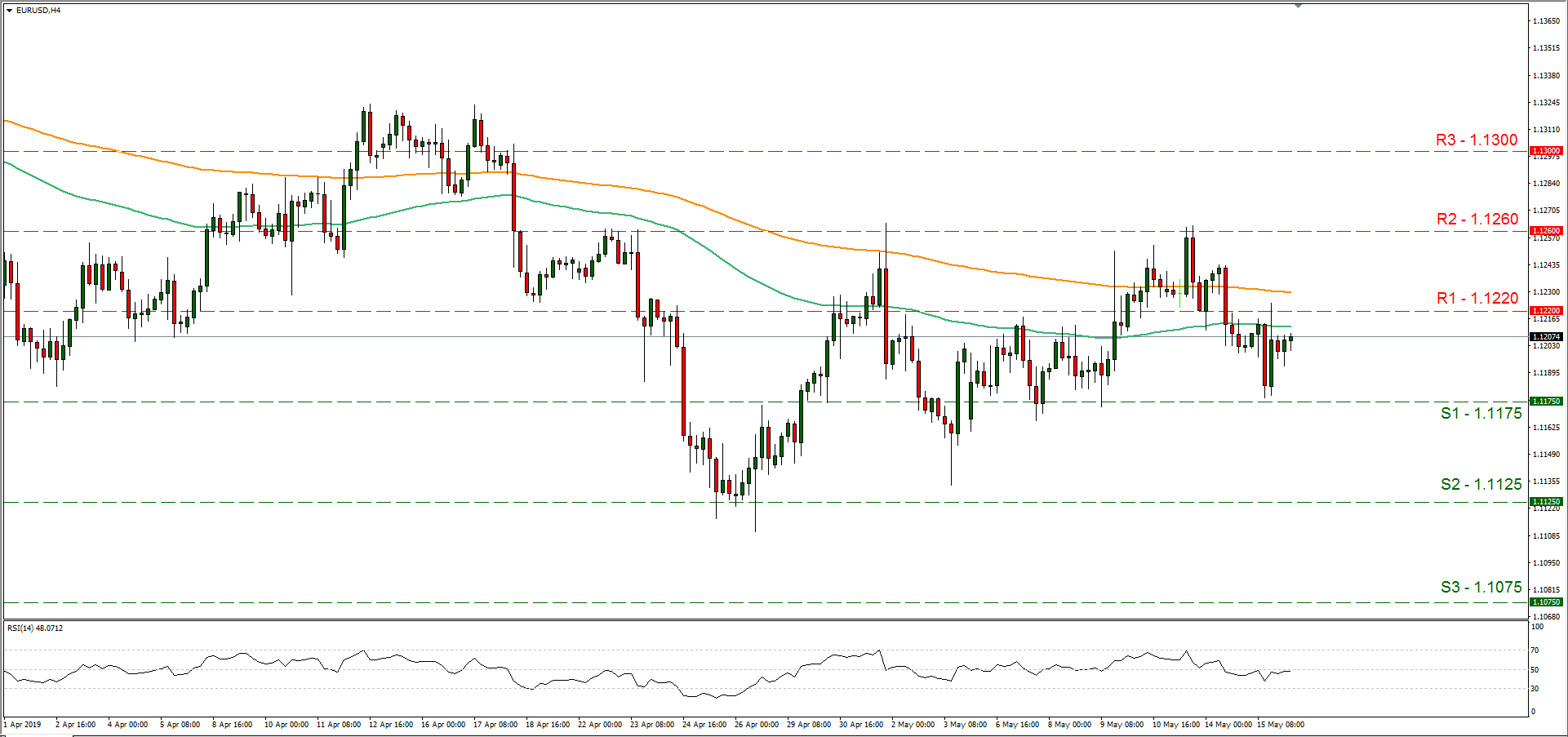
Support: 1.1175 (S1), 1.1125 (S2), 1.1075 (S3)
Resistance: 1.1220 (R1), 1.1260 (R2), 1.1300 (R3)
GBP/USD H4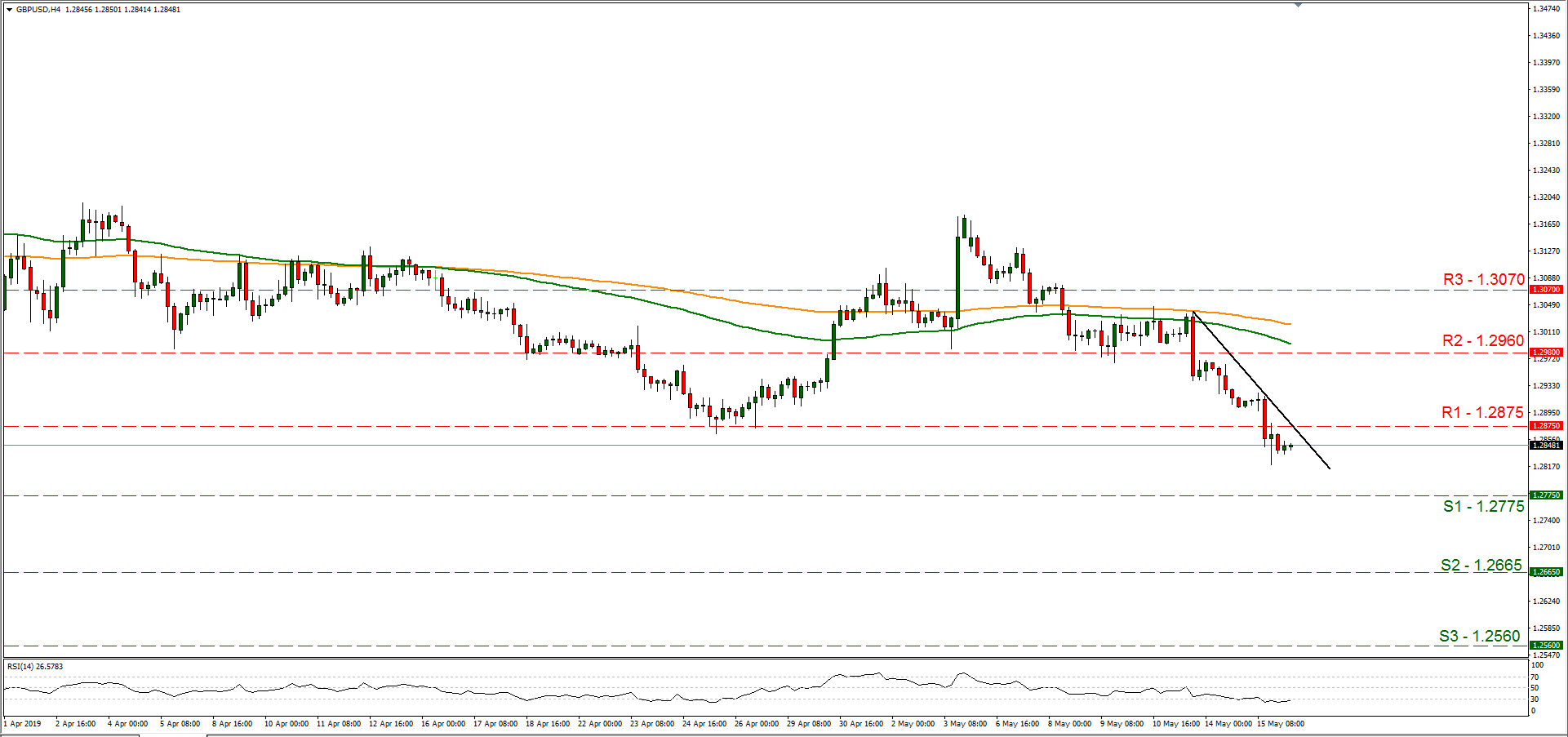
Support: 1.2775 (S1), 1.2665 (S2), 1.2560 (S3)
Resistance: 1.2875 (R1), 1.2960 (R2), 1.3070 (R3)