Sample Category Title
European Open – Trump Downplays Trade Dispute
Trumps eases fears with an eye on Wall Street
The panic at the start of the week looks to have passed for now, with equity markets facing a second day in the green on an apparent softening in tone from US President Donald Trump.
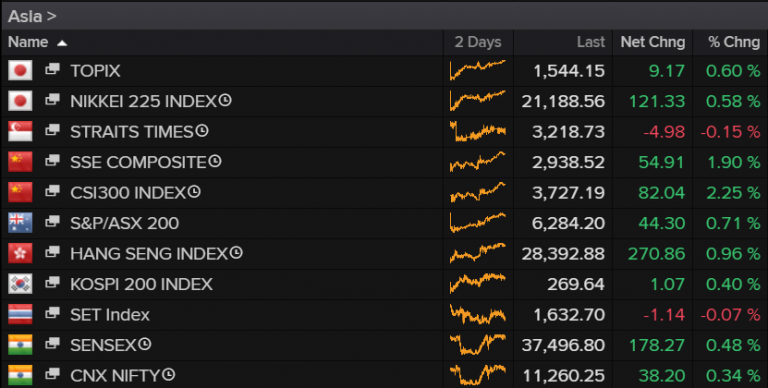
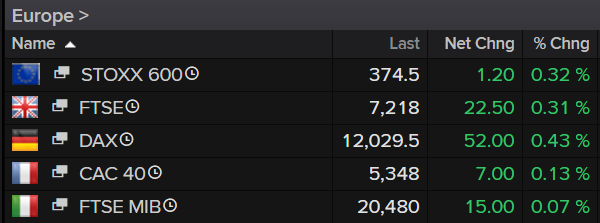
In the last 24 hours, Trump has been as vocal as ever and has sought to play down the breakdown in trade talks, instead referring to it as a “little squabble” and claiming they have not collapsed at all. This seems very at odds with the remarks he was making previously and suggests he may have been doing so with one eye on Wall Street.
Trump will have seen the response in the markets to the new tariffs and harsh rhetoric that has accompanied them and having satisfied a supporter base that wants to see a hardline with China, may have been looking to repair some of the damage suffered on Wall Street. We know he pays close attention to the markets and he won’t want a repeat of the fourth quarter.
Trump also once again took aim at the Fed, claiming if they cut rates the US would win the trade war, “it would be game over”. It’s highly unlikely the Fed will oblige in assisting with political matters but clearly the days of the central bank coming under pressure from the White House are not behind us.
Weaker Chinese data gets overlooked
Interestingly, the weaker Chinese data overnight has not really dampened the bounce we’re seeing in the markets. Considerably weaker numbers across the board – retail sales, industrial production and fixed asset investment – may have come as a greater concern at the start of the week but it appears the softer rhetoric from Trump is more meaningful to investors.
AUDUSD May Lose A Little Bit More
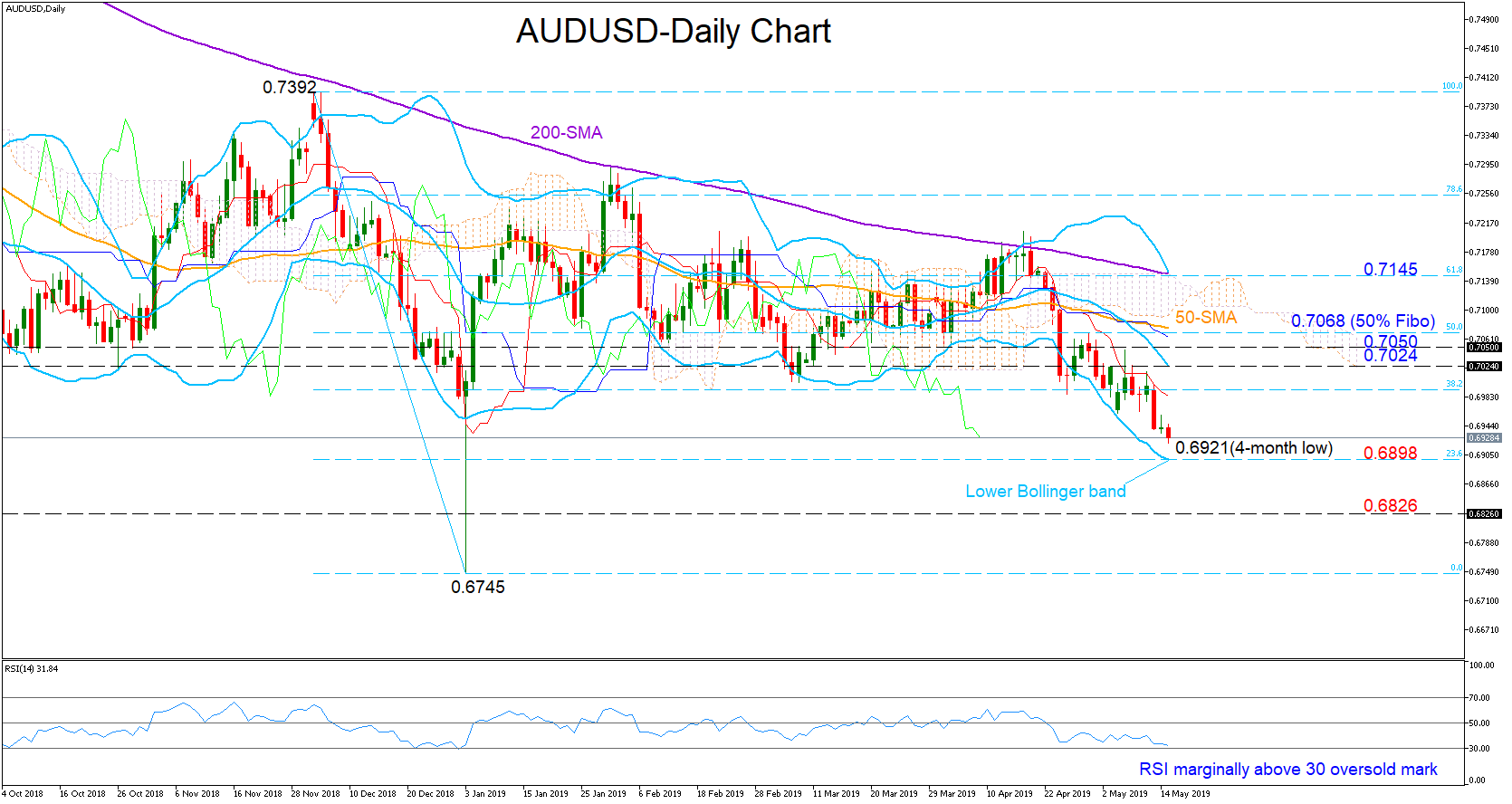
AUDUSD has been driving on a slippery road the past five weeks, breaking a key support around the 0.70 level to reach a fresh four-month low of 0.6921. The RSI is close to its 30 oversold level but the bears have yet to challenge the lower Bollinger band, a sign that more losses could follow before the price potentially rebounds.
Another bearish wave could find support at 0.6898, in the crossroads of the lower Bollinger band and the 23.6% Fibonacci of the downleg from 0.7392 to 0.6745. The 2016 low of 0.6826 may also come into view if the decline continues and before the 0.6745 bottom.
Should the price finish the session above the middle Bollinger band currently at 0.7024, the 0.7050-0.7068 area, which also includes the 50% Fibonacci, could be the next target for the bulls. A steeper rally above the latter, could open the way towards the 61.8% Fibonacci of 0.7145 and the 200-day simple moving average (SMA).
In the medium-term, the drop below the 0.7000 mark has switched the outlook from neutral to bearish, re-activating the downtrend started from the 0.7392 peak..
In brief, AUDUSD is currently holding a bearish profile both in the short and the medium-term picture.
Stocks Bounce Back As Trump Downplays China Tensions But Weak Data Weigh On Aussie
- Trade worries continue to ease after Trump calls latest escalation 'a little squabble'
- Equities attempt a rebound on the back of the improving risk appetite
- But aussie and yuan held back from disappointing Chinese data
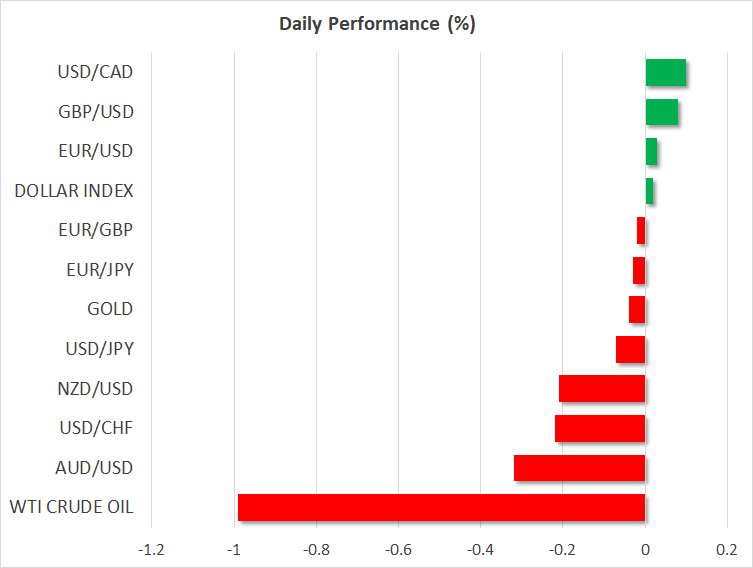
Risk appetite recovers on Trump's 'little squabble' comments
The US president, Donald Trump, sought to play down the latest spat with China on Tuesday, telling reporters 'We're having a little squabble with China because we've been treated very unfairly for many, many decades'. Trump also indicated the two sides continue to talk, adding that a deal could happen 'much faster' than thought.
Trump's remarks helped allay market concerns of an imminent collapse in the months-long trade discussions, lifting sentiment. The Dow Jones and the S&P 500 both closed 0.8% higher, while the Nasdaq was up by more than 1%. Asian equities took their cue from Wall Street, rising sharply along with European and US stock futures.
The response in currency markets was more muted, however, with both the yen and the Swiss franc today reversing some of Tuesday's losses. Gold remained elevated too, drifting only marginally lower to around $1294 an ounce, having briefly peaked above $1300 yesterday.
The continued support for safe-havens suggests markets remain cautious about the fate of the US-China trade negotiations and investors would need to see more concrete signs that a full dialogue is being restored and a deal is back within reach.
Chinese data disappoints, boosts hopes of more stimulus
Economic indicators out of China today fell short of expectations, raising fresh doubts about the growth outlook. Industrial output slowed sharply from 8.5% to 5.4% year-on-year in April, while retail sales grew at the weakest rate in 16 years.
The downbeat numbers weighed on the Australian dollar, which is often viewed as a proxy for China-related developments. Further weighing on the aussie were unimpressive wage growth figures out of Australia, pushing the currency to a fresh 4-month low of 0.6917 versus the US dollar today.
The focus now for the aussie is April employment numbers due early on Thursday. A weak reading there as well would fuel speculation of a rate cut by the RBA in the coming months.
The Chinese yuan was also struggling, holding close to yesterday's 4½-month trough of 6.8865 per US dollar even as the poor data raised hopes of more stimulus measures by the Chinese authorities.
Euro and pound subdued on Italy and Brexit woes
The euro found itself testing the $1.12 handle on Wednesday as the Italian budget row threatened to rear its ugly head again. Italy's deputy prime minister, Matteo Salvini, sparked fears of another standoff between the country and the European Union after he signalled that the government is willing to ignore Eurozone budget rules if it means having to spend more to reduce the high unemployment rate.
Italian 10-year government bond yields jumped to 2-month highs on the comments, triggering a small dip in the euro. However, the single currency later managed to bounce back to around $1.1212 following solid Q1 GDP figures out of Germany.
Sterling also struggled as the UK government said MPs will get a fourth and final chance to vote on the Withdrawal Agreement in the week beginning June 3. But with little progress in the cross-party talks and many lawmakers still opposed to the deal, there's little hope of the legislation passing. May's best chance of getting the deal through would be a catastrophic performance by both Labour and the Conservatives in the upcoming European Parliament elections, which could pressure MPs to vote in favour of the Brexit deal.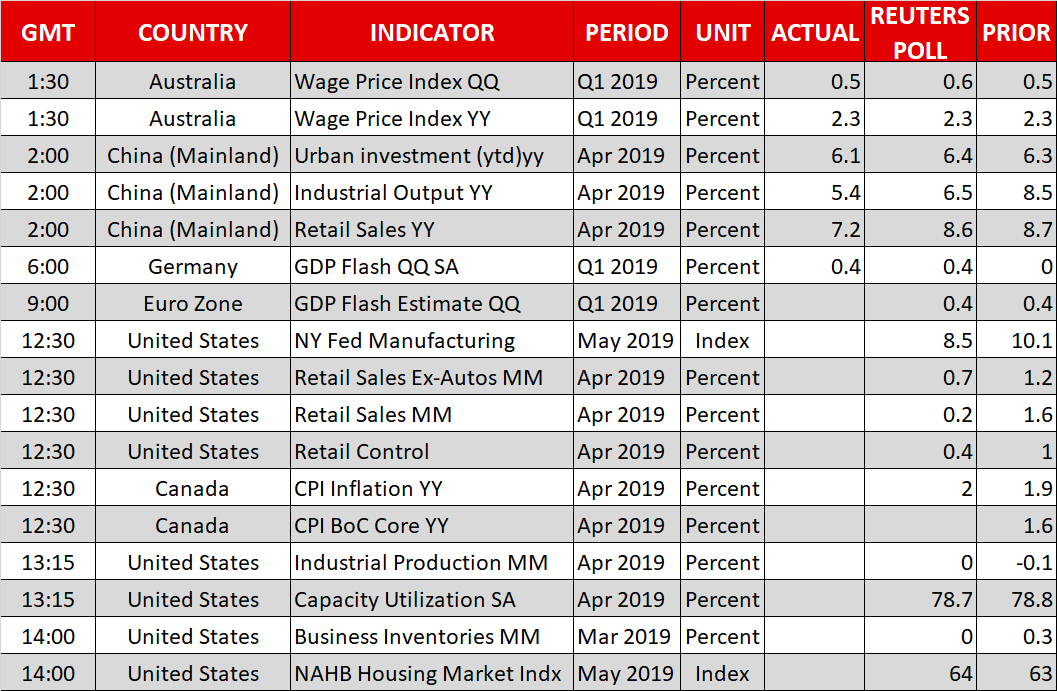
Gold Retreats As Risk Aversion Softens
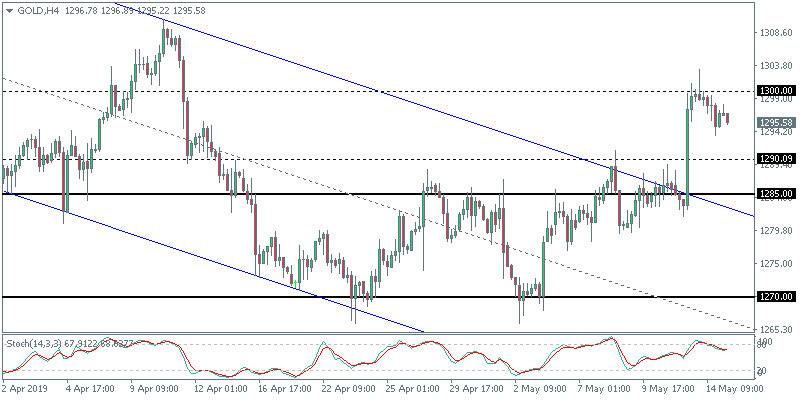
Gold prices reversed gains after briefly testing the 1300 mark earlier this week. The reversal led to prices closing in the red on Tuesday. However, in the near term, the trade wars could remain a trigger which could keep the momentum biased to the upside. On the economic front, the US retail sales and industrial production figures will be the short-term catalyst.
Can Gold Maintain the Gains?
The reversal off the 1300 mark currently shows a consolidation in the gains. Gold prices are likely to test the support at the 1285 handle in the near term. Establishing support at this level could confirm the upside bias. However, if gold eases below the 1285 level, then price action could suggest another bout of sideways range in the precious metals market.
Oil Price Eases On API Inventory Report
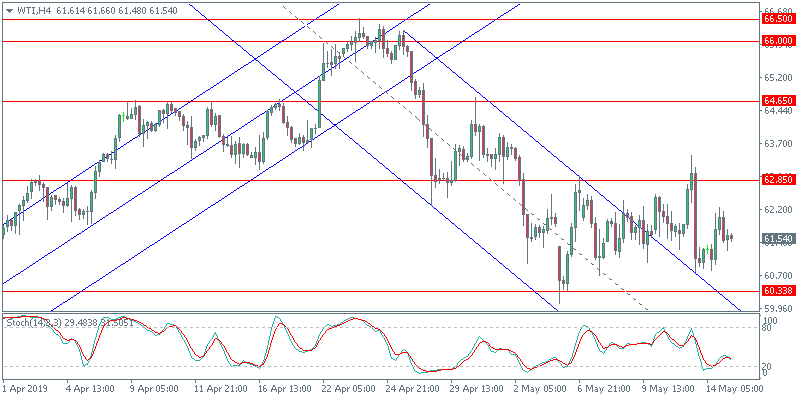
Crude oil prices posted a brief intraday rebound. This came on reports of drone attacks on Saudi oil tankers. Previously, there were attempts on four other oil tankers off the coast of the UAE. The American Petroleum Institute’s weekly oil inventory report saw a big jump in the buildup of oil inventories. According to the report, US crude oil inventories rose 8.63 million barrels last week.
WTI Crude Oil to Maintain its Range Trading
Crude oil prices remain range bound within the 62.85 resistance and 60.33 support. The brief rebound earlier this week resulted in a lower high. Therefore, we expect to see the bias continue to the downside. Another retest of the lower support near 60.33 is quite likely in the near term.
Germany’s ZEW Economic Sentiment Weakens Unexpectedly
The monthly economic sentiment report from Germany fell to -2.1 unexpectedly in May. This was below the estimated increase to 5.1. The decline in the sentiment index for May ends a six-month trend of improvements in the index. The eurozone industrial production was down 0.3% matching estimates.
Euro Trades Weaker for a Second Consecutive Day
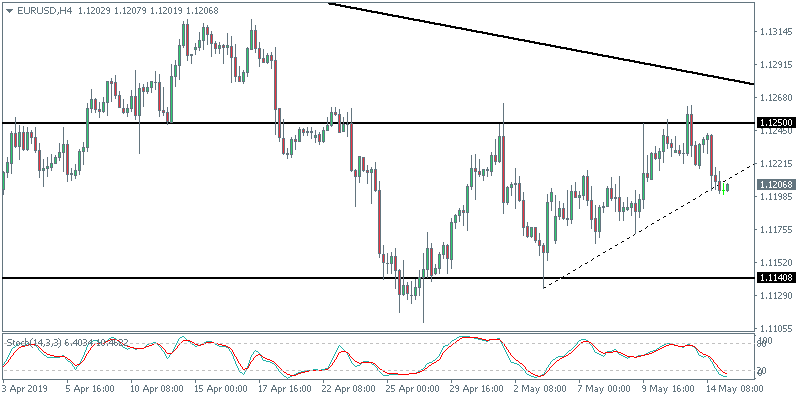
The common currency was trading weaker for the second daily session in a row. This comes after price briefly touched the resistance level of 1.1250. Following the breach of the minor rising trend line, price is attempting to rebound. A bullish close above the doji on the 4-hour chart could see the EURUSD attempting to retrace the recent losses.
China’s Slowdown Resumes as Seasonal Effects Faded
Economic data in April prove that China’s economy is not yet out of the wood. Growth in industrial production , retail sales and fixed asset investment all surprised to downside, suggesting that the rebound in March was only due to one-off, temporary factors. Re-escalation of US-China trade war is expected to further hurt economic sentiment and real economic growth, urging the government to accelerate easing monetary and fiscal policies in coming months.
Industrial Production
Industrial production expanded +5.4% y/y in April, missing consensus of +6.5% and sharply lower than March’s +8.7%. This indicates that the strength in March was only driven by temporary factors - companies stockpiled input materials so as to benefit more from the reduction in value-added tax which took effect on April 1. The weakness in IP was indeed signaled in the PMI report released late last month. The Caixin/ Markit manufacturing PMI eased to 50.2 in April, down from a recent high of 50.8 in March. This suggested that the country’s manufacturing sector remained on the verge of falling to contraction. Concerning the sub-indices, “new orders” fell slightly while “new export orders” returned to contractionary territory. Meanwhile, the “output” sub-index dropped while the “employment” sub-index returned to negative territory after hitting a 74-month high in March. While the Caixin/ Markit PMI focuses on small- and medium- size firms, the official PMI report by National Bureau of Statistics (NBS) recorded a -0.4 point drop in manufacturing PMI to 50.1 in April. The two reports suggest that the struggle in the manufacturing sector is broadly based.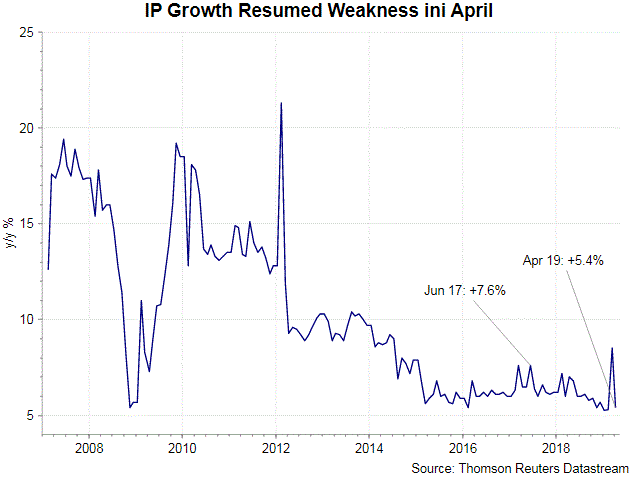
Retail Sales
Growth in retail sales weakened markedly to +7.2% y/y in April, the slowest pace since May 2003. According to the government, the slowdown was driven by seasonal factor – this April had fewer national holidays and weekends than last year. Excluding this factor, retail sales growth, at +8.7% y/y in April, was unchanged from that in March. Nonetheless, this has not altered the downtrend of retail sales expansions. We will be closely watching how China’s individual tax cut would help stimulate consumption. Last month, Xinhua, the authoritarian government’s mouthpiece, cited a research as saying that the tax cut could increase consumer spending by RMB 717.6B, about 1.9% of total retail sales in 2018.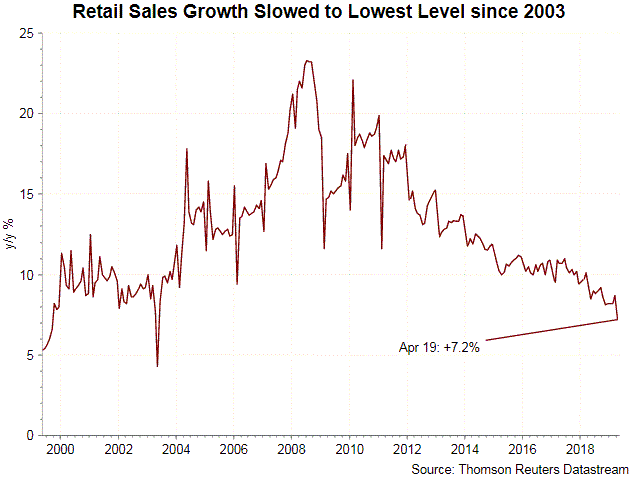
Urban Fixed Asset Investment
Urban Fixed Asset Investment grew +6.1% y/y in the first three months of the year, missing consensus of +6.4% and first quarter growth of +6.3%. This also marked the first slowdown in growth since August 2018, despite government’s stimulus measures to boost investment. Manufacturing investment grew only +2.5% y/y during the period, another sign confirming the slowdown in the manufacturing sector. April’s figure for infrastructural and real estate investment are not released yet.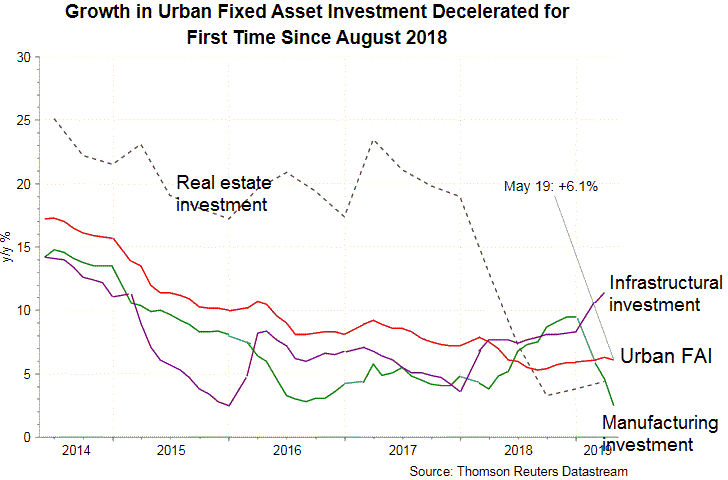
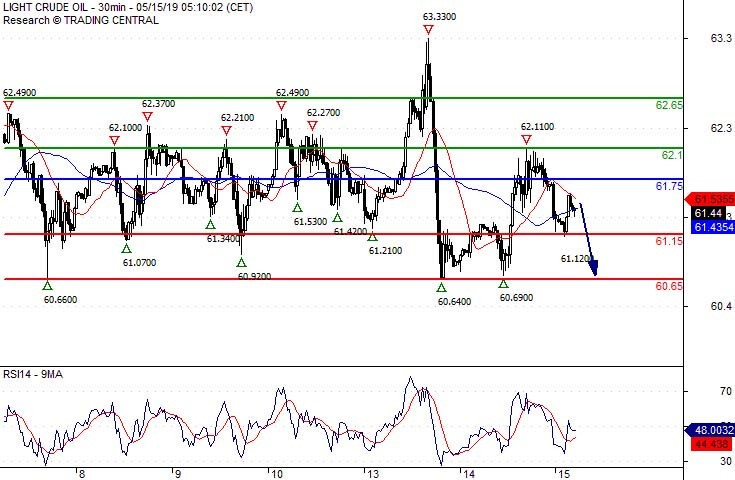
Crude Oil 60.65 Expected
Pivot (invalidation): 61.75
Our preference Short positions below 61.75 with targets at 61.15 & 60.65 in extension.
Alternative scenario Above 61.75 look for further upside with 62.10 & 62.65 as targets.
Comment The RSI has just struck against its neutrality area at 50% and is reversing down. The 20-period moving average is about to cross below the 50-period moving average.
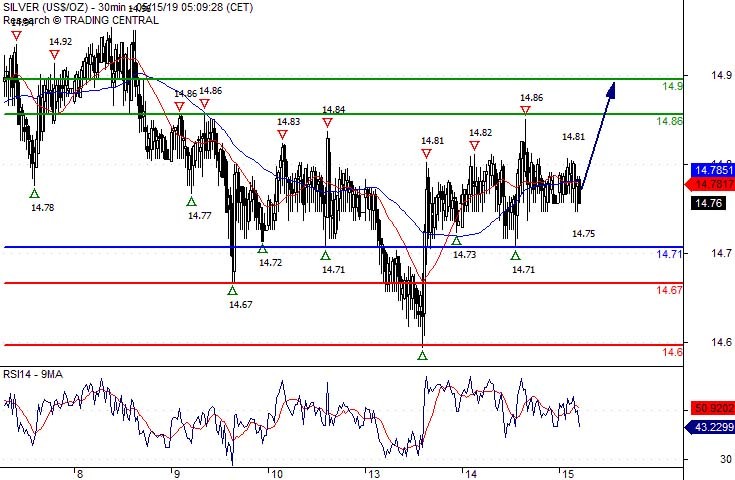
Silver Spot Bullish Bias Above 14.7100
Pivot (invalidation): 14.7100
Our preference Long positions above 14.7100 with targets at 14.8600 & 14.9000 in extension.
Alternative scenario Below 14.7100 look for further downside with 14.6700 & 14.6000 as targets.
Comment A support base at 14.7100 has formed and has allowed for a temporary stabilisation.
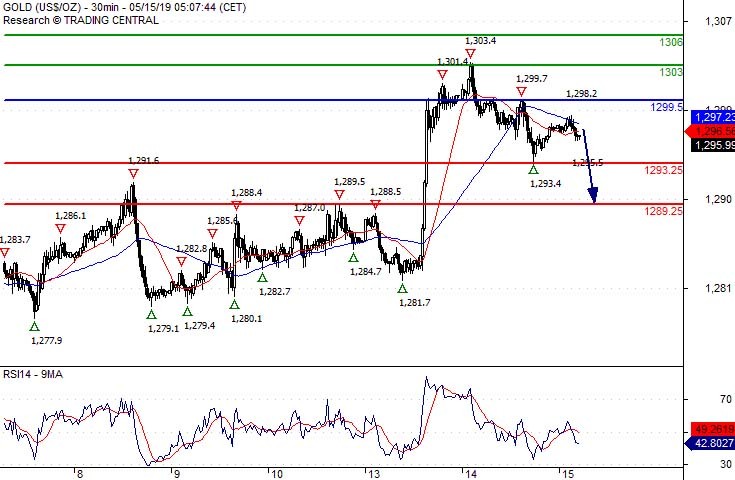
Gold Spot 1289.25 Expected
Pivot (invalidation): 1299.50
Our preference Short positions below 1299.50 with targets at 1293.25 & 1289.25 in extension.
Alternative scenario Above 1299.50 look for further upside with 1303.00 & 1306.00 as targets.
Comment The RSI calls for a new downleg.