Sample Category Title
GBPUSD Back Under Pressure Below 1.2800
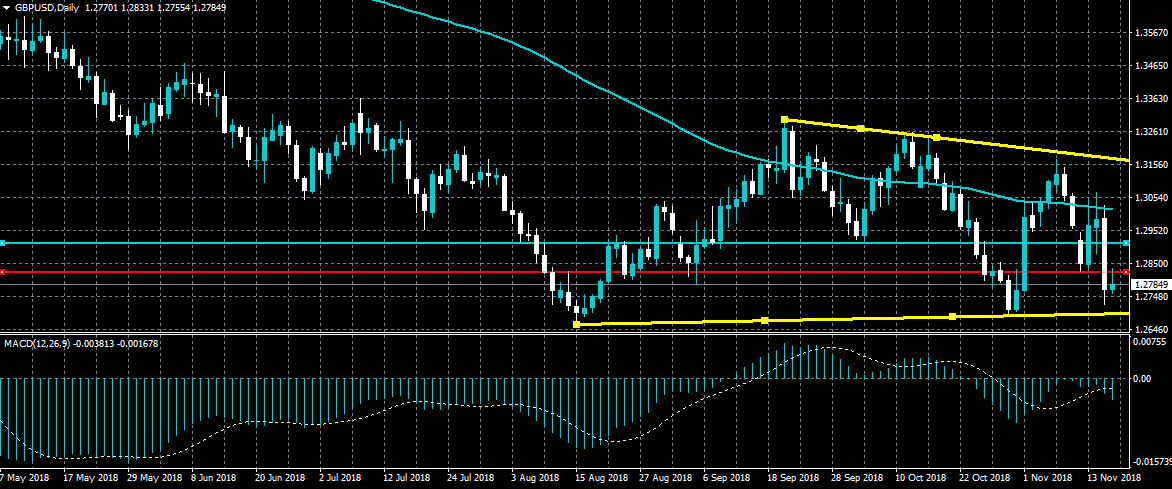
The British pound has started to once again move lower against the US dollar, following a strong technical rejection from the 1.2831 level during the European trading session. News that British Prime Minister Theresa May will likely face an upcoming leadership challenge is pressuring the GBPUSD pair lower. Sellers need to break the 1.2722 support level while buyers need to move price above the 1.2835 resistance level.
The GBPUSD pair is strongly bearish while trading below the 1.2800 level, key technical support is now found at the 1.2722 and 1.2694 levels.
If the GBPUSD pair trades above the 1.2800 level, key resistance is found at the 1.2835 and 1.2900 levels.
Platinum Futures Stand In Bullish Correction Within Long-Term’s Negative Structure
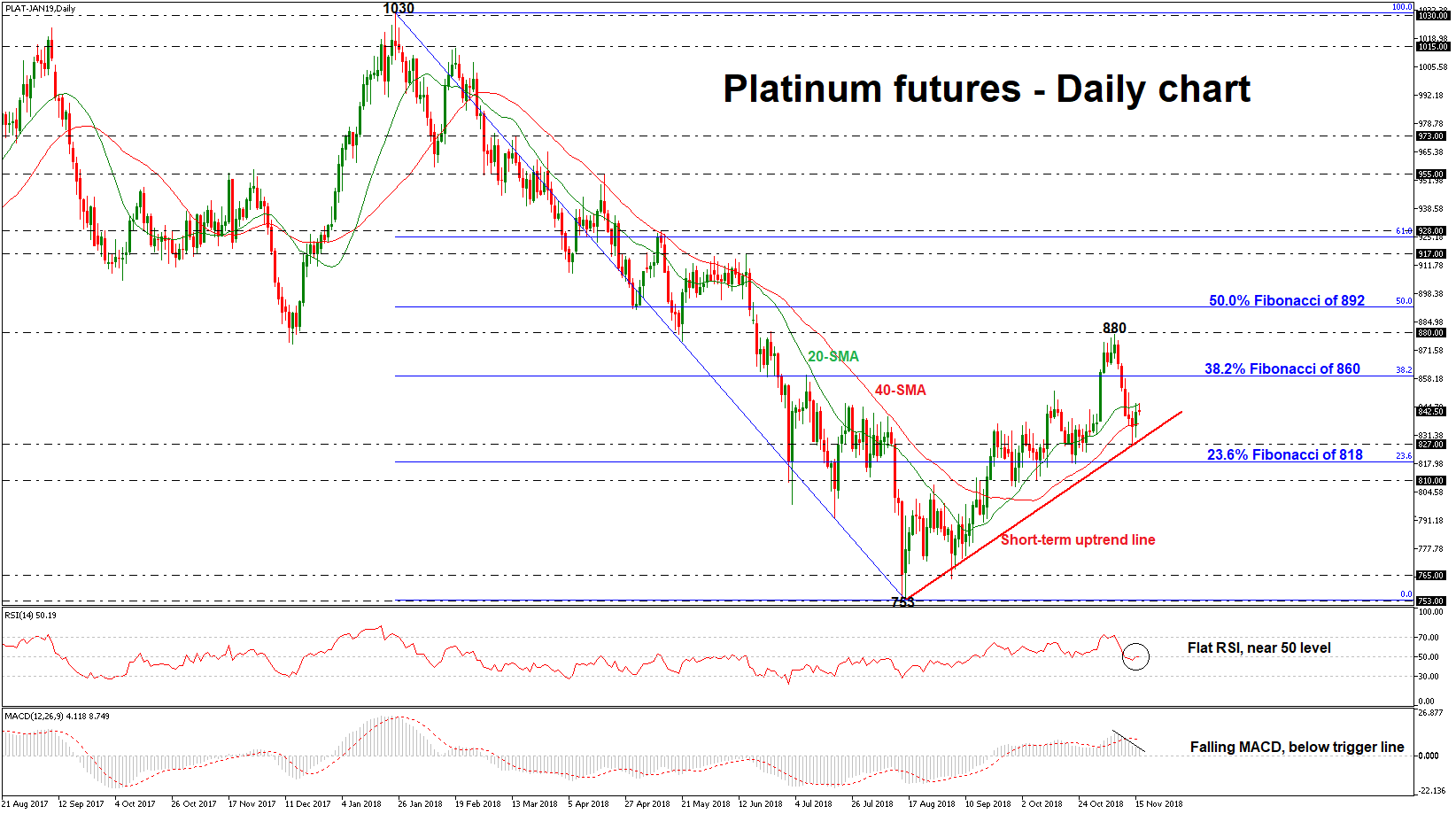
Platinum futures delivered on January 2019 are moving higher over the last three months, following the bounce off the 753 support level. The price seems to be in a bullish correction mode as it surpassed the first significant level of Fibonacci barriers, the 23.6% level, taken from the downleg from 1030 to 753, near 818.
From the technical point of view, the RSI indicator looks neutral near the 50 level, while the MACD oscillator holds below the trigger line but remains above the zero line.
Should the white gold manage to strengthen its positive momentum, the next resistance could come around the 38.2% Fibonacci mark of 860. A break above this level would drive the commodity until the latest high of 880 before challenging the 50.0 %Fibonacci of 892.
However, if prices violate the short-term bullish trend line and the 827 support to the downside the next barrier is coming from the 23.6% Fibonacci of 818. The next key support to watch slightly lower is the 810 level, taken from the bottom on October 8. A drop below this barrier could signal a resumption of the long-term downtrend that's been developing since January 28.
Overall, the short-term structure indicates a bullish correction as the price hovers above the rising diagonal line, however, the technical indicators are pointing for further losses in the very near term.
GBPNZD Breaks Below Trendline, Turns Negative In Medium-Term
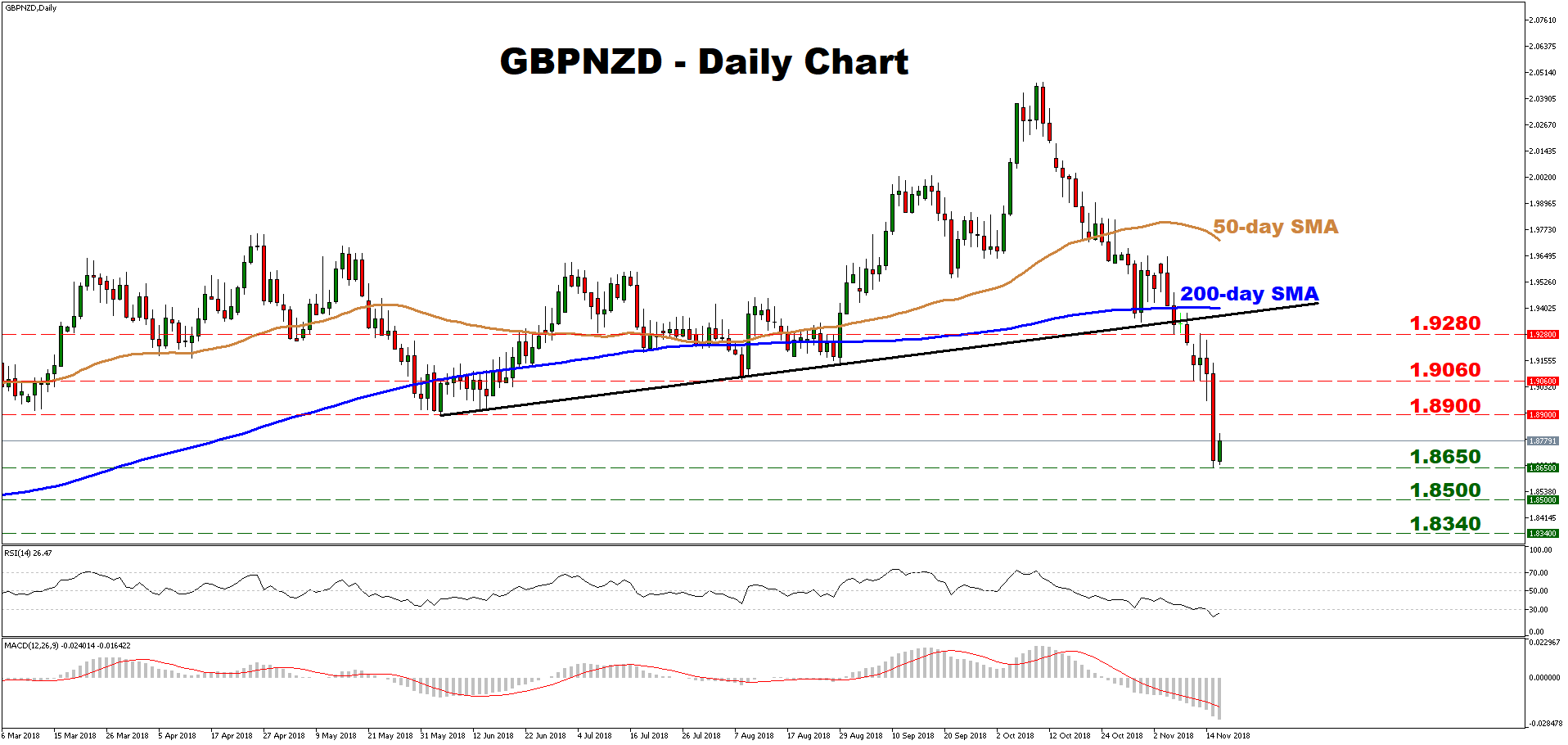
GBPNZD crossed below a medium-term uptrend line taken from the lows of June in recent sessions, and also below its 200-day simple moving average (SMA), recording a ten-month low yesterday. These suggest the medium-term outlook has turned firmly negative.
Short-term oscillators support this concept. The MACD lies both in negative territory and beneath its red trigger line. That said, the RSI is already in oversold territory, which may be a signal that a short-term rebound may be in store before the broader downtrend resumes.
Further declines in the pair could meet immediate support near 1.8650, the level that capped the plunge on November 15. If the bears pierce below it, then attention may turn to the October 2017 low of 1.8340, assuming the round figure of 1.8500 is violated first.
On the upside, a recovery may stall initially around 1.8900, the June trough. An upside break could open the way for a test of 1.9060, a zone defined by the August lows, with even steeper advances eyeing the 1.9280 hurdle – this being the high of November 13. Higher still, the 200-day SMA at 1.9400 would attract attention.
Summarizing, the picture is decisively negative both in the short- and medium-terms, though the oversold RSI suggests a near-term rebound shouldn’t be ruled out.
GBPJPY Holds Above 2-Week Trough, Neutral In Medium-Term
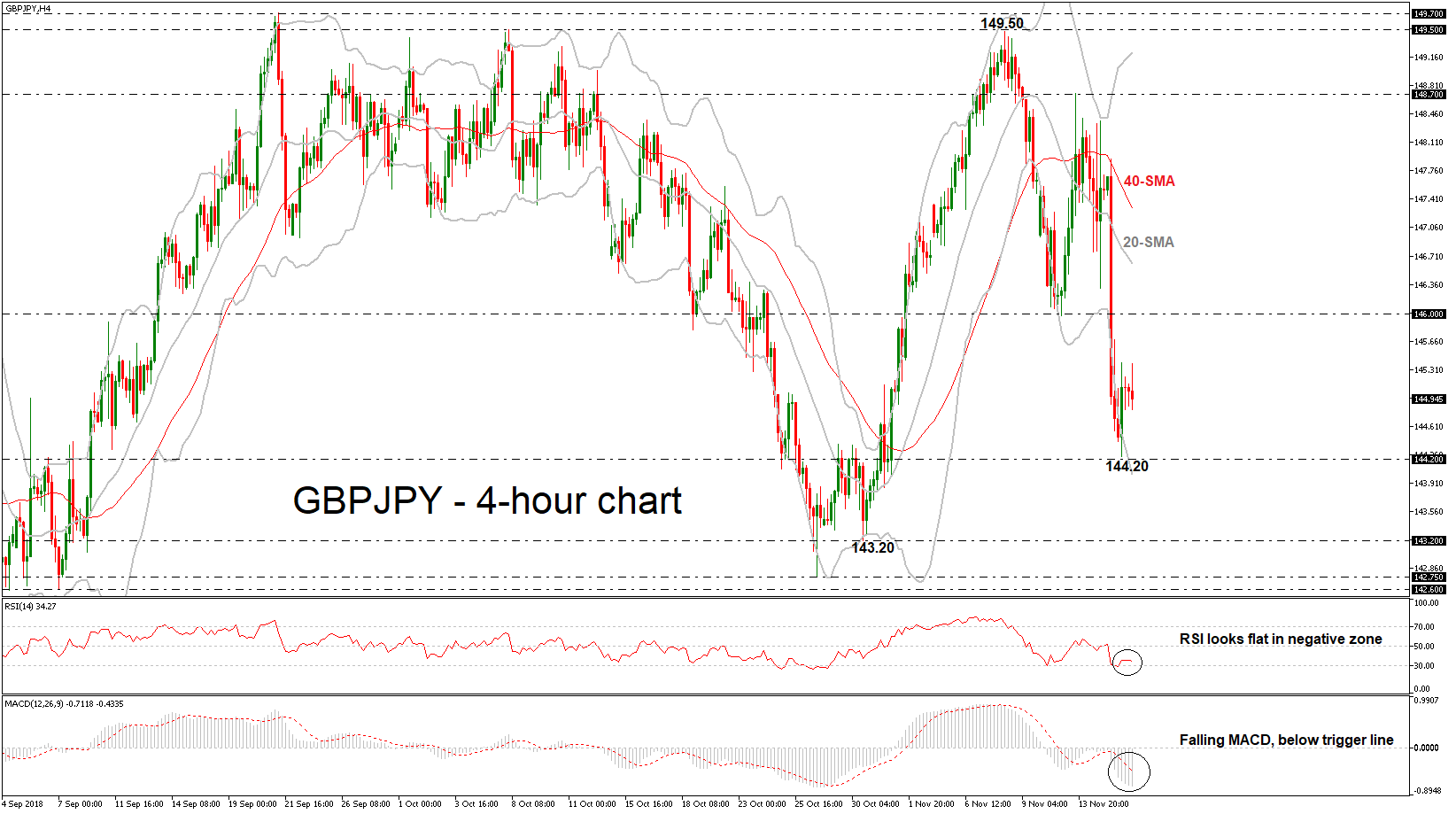
GBPJPY has declined considerably over yesterday’s trading session, diving to a two-week low near the 144.20 level. In the very short-term the price seems to be strongly negative, while in the daily chart the pair remains in a consolidation area over the last two months. The RSI indicator is flattening in the negative territory while the MACD oscillator holds in the bearish zone below the zero and trigger lines.
Immediate support is coming from the 144.20 support level, which it reached on Thursday, while even lower and a drop below the lower Bollinger Band would retouch the 143.20 strong barrier, taken from the low on October 30.
If there is a successful attempt higher the next resistance would be at the 146.00 psychological level. More advances could move the pair towards the mid-level of the Bollinger Band near 146.60 at the time of writing.
The neutral picture in the medium term looks to last for a while longer after prices failed to break above the 149.50 earlier this month.
Forex Technical Analysis: EUR/USD, USD/JPY, GBP/USD
EUR/USD
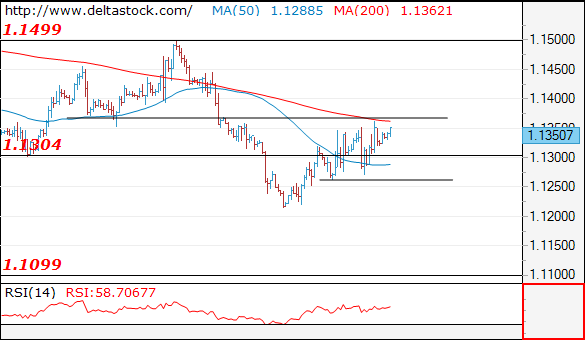
Current level - 1.1350
The overall outlook remains unchanged below 1.1360, for a slide towards 1.1100 area. Trigger on the downside is 1.1270.
| Resistance | Support | ||
| intraday | intraweek | intraday | intraweek |
| 1.1360 | 1.1360 | 1.1270 | 1.1100 |
| 1.1500 | 1.1500 | 1.1210 | 1.0850 |
USD/JPY
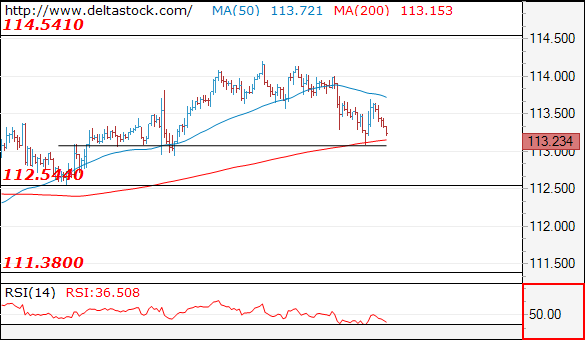
Current level - 113.23
The intraday bias is bearish below 113.70, with a risk of a slide towards 112.50 static support. Key hurdle lies at 114.00 and it should be considered a trigger, for an upmove beyond 114.50.
| Resistance | Support | ||
| intraday | intraweek | intraday | intraweek |
| 113.70 | 114.50 | 113.00 | 111.60 |
| 114.50 | 116.20 | 112.50 | 110.40 |
GBP/USD
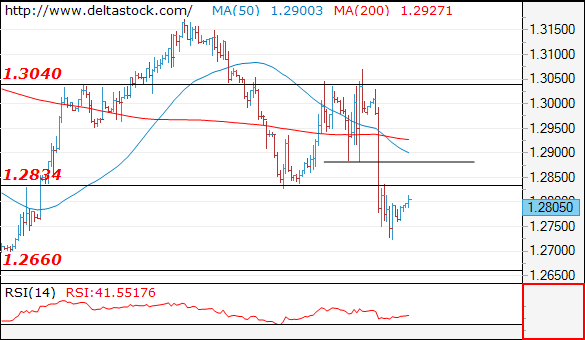
Current level - 1.2805
The rebound here is corrective and the bias is bearish below 1.2830, for a slide towards 1.2660 area. Crucial on the upside is 1.2880.
| Resistance | Support | ||
| intraday | intraweek | intraday | intraweek |
| 1.2830 | 1.3250 | 1.2720 | 1.2660 |
| 1.2880 | 1.3440 | 1.2660 | 1.2570 |
USDJPY Outlook: Key Supports Under Renewed Pressure After Thursday’s Strong Downside Rejection
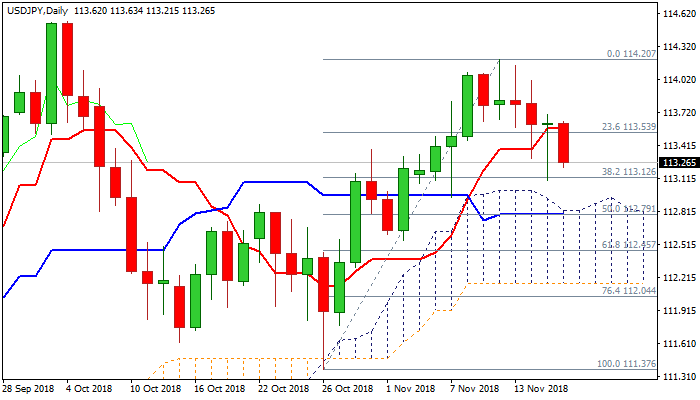
The pair holds in red on Friday following Thursday's long-tailed Doji candle, left after strong downside rejection at 113.12/10 (Fibo 38.2% of 111.37/114.20/20SMA) which guards daily cloud top (112.82).
Doji signaled indecision after strong downside rejection, but fresh weakness keeps near-term bias with bears.
Weakening momentum studies on daily chart support the notion, with violation and close below 113.12/112.82 pivots, to generate stronger negative signal and confirm reversal from 114.20.
On the other side, hopes of fresh upside would remain alive while daily cloud top holds dips.
Res: 113.57, 113.67, 114.00, 114.20
Sup: 113.12, 112.82, 112.66, 112.45
Brexit News, Weak Economy And Downward Trend
The British pound lost about 2% on Thursday, as Brexit talks provoked a number of ministerial resignations. Meanwhile, stocks of British banks were under threat, as the declared parameters of the deal would negatively affect their influence in Continental Europe.
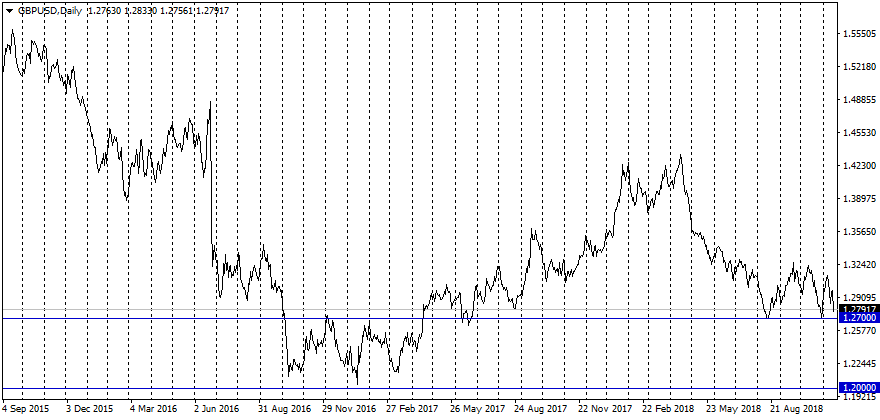
The GBPUSD pair has returned to the bottom, trading near this year’s lows. The focus of investors has shifted to the events regarding to Brexit, and thus the current position of the British currency is majorly affected by the market sentiment.
U.K. macroeconomic statistics has been temporarily in the shadow, although this week’s data indicate possible problems in the country’s economy.
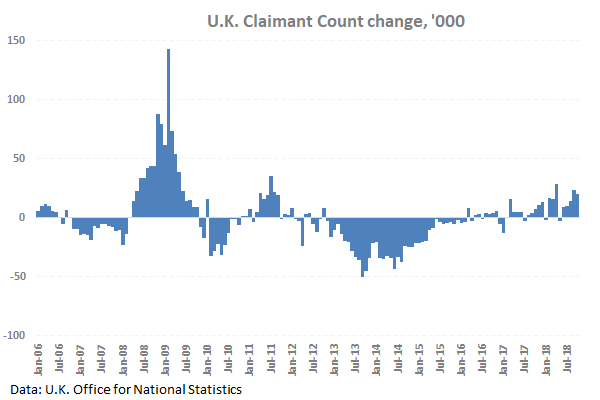
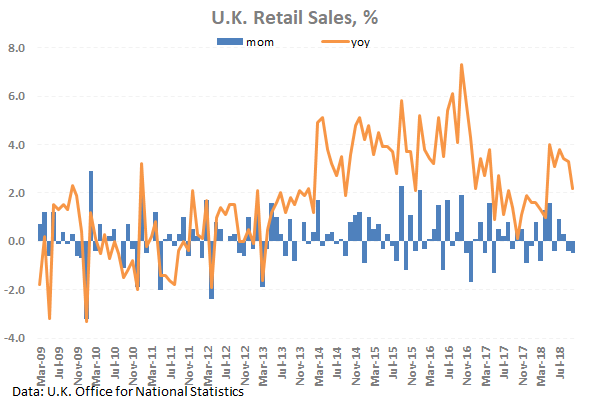
Uncertainty around Brexit is manifested in the reports. Yesterday, the Retail sales indicator has clearly illustrated the economy’s weakening. In October, sales fell for the second month in a row, losing 0.5%, subsequent to a 0.4% decline the past month. The claimant number had grown for the fifth consecutive month. The Unemployment rate increased unexpectedly, and Consumer inflation shows no signs of acceleration. All these further reflect the decline of the consumer demand.
Now markets are shifting their focus to the Macroeconomics, and that may increase the pressure on the pound on speculation that the Bank of England may abandon its plans to raise the rates in the coming months.
It is worth to pay attention to the dynamics of the GBPUSD near support area at 1.2700. A fall below this point may be a signal of a serious prospects revaluation, which can cause a fairly rapid reduction of the pair to the post-Brexit lows, just a little above 1.2000.
Economic Results Of The Week: Growth Slowdown, Trade War, Rates Hike In Asia, Preliminary Brexit Agreement
The global economy took another blow this week, with Germany and Japan – the world’s third- and fourth-largest economies – both showing contractions in the third quarter and renewing fears of a synchronized slowdown. Trade wars are dragging on, the falling oil price opened a new front of concern and Asian leaders are worried that the region is doing the heavy lifting on global economic growth.
The White House is offering reassurance that the world’s two biggest economies are still in conversation “at all levels” about trade, and China’s drawing up some potential terms of agreement, even as the U.S. also is striking a definitely-maybe tone on the potential of imposing fresh tariffs on car imports. The ongoing tensions have firms all over the world taking a careful look at global supply chains. Bloomberg analysis of the tech sector shows how hard it would be to draw that “iron curtain” that former Treasury chief Hank Paulson alluded to last week. Meanwhile, the China slowdown showed up in Singles’ Day data, though there are signs that the economy might have some better days ahead.
To Hike and to Hold
Asian central bankers were on the front lines this week, Indonesia and the Philippines – among the region’s most aggressive interest-rate hikers this year – taking more policy action to shore up their currencies and tamp down inflation, while Thailand held. Chatter about a potential interest-rate cut in China has gotten a little louder amid the building economic growth risks. And Japan reached an unenviable mark as the central bank’s trove of assets overtook the size of the economy. Meanwhile in Mexico, the central bank also raised its key rate, saying President-elect Andres Manuel Lopez Obrador’s decision to cancel a $13 billion airport and broader policy uncertainty with the new administration have worsened the inflation outlook by weakening the peso. From Singapore’s third annual FinTech Festival, IMF Managing Director Christine Lagarde nudged central banks to consider issuing digital currencies, but the European Central Bank still thinks they are “evil spawn.” And in the U.S., new San Francisco Fed boss Mary Daly said she sees a potential December hike and two moves in 2019 and Fed Chairman Jerome Powell warned the economy could face headwinds next year.
It was a breath-stopping week for European Union tensions as negotiators reached a provisional deal for British withdrawal from the bloc, only for a wave of U.K. government resignations to undermine Prime Minister Theresa May’s proposals. The EU revealed its contingency plans to save markets in case of a no-deal Brexit. Italian officials are holding firm on their controversial budget – presenting a red-hot dilemma for the bloc – and taking swipes at the euro. As if that weren’t enough, economic growth is stalling in the euro area, and here are fresh reasons to worry that robots are coming for you, Eastern Europe.
DAX Drops Despite Strong Eurozone CPI
The DAX index has edged lower in the Friday session. Currently, the DAX is trading at 11,390, down 0.29% on the day. The focus on Friday is on inflation numbers. Germany’s Wholesale Price Index dipped from 0.4% to 0.3% in October, but still beat the estimate of 0.2%. In the eurozone, Final CPI and Final Core CPI both improved in October, with readings of 2.2% and 1.1%, respectively.
The DAX has had a dismal week, posting losses of 1.80 percent. Risk appetite soured this week after Germany reported that GDP in the third quarter had declined 0.2%, marking the first contraction in GDP since 2015. German officials put a spin on the weak release, saying that the contraction was largely due to weakness in the auto sector as a result of new pollution standards. In truth, it’s likely that the skid is also due to the global trade war, which has also resulted in U.S. tariffs on European products. Another alarm signal is weak investor confidence. German ZEW Economic Sentiment posted a second straight soft release for November, with a reading of -24.1 points. This points to deep pessimism on the part of institutional investors and analysts. The ZEW added that investors did not expect a rapid recovery from the current weakness, and if is the prevailing sentiment among investors, more headwinds could be in store for European equity markets.
Are Rome and Brussels on a collision course? The crisis over the Italian budget continues, as Rome missed a deadline from the European Commission to revise its draft budget. The Italian government said it would stick to its deficit target of 2.4%, which is within EU fiscal rules. For its part, the EU argues that the deficit target could reach 3.1% in 2020, which would breach the rules. With the ball in the EU court, what happens next? The EU could respond with financial sanctions, known as an excessive deficit procedure, which would amount to billions of euros. As the third largest economy in the eurozone, Italy’s challenge to the EU could have repercussions for the entire bloc, as officials in Brussels scramble to respond to the salvo fired by Rome.
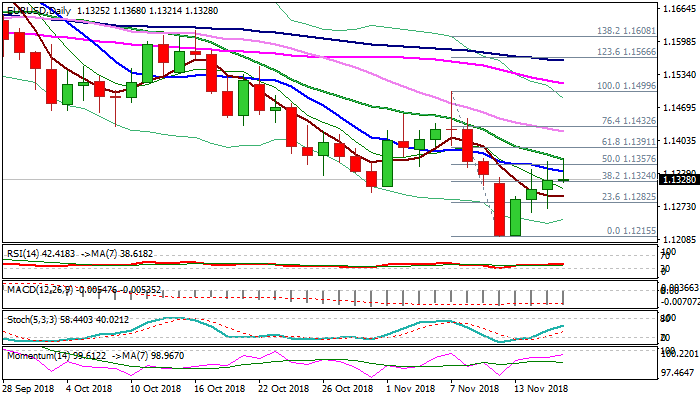
EURUSD Outlook: Recovery Attempts Struggle At Pivotal 1.1342/67 Resistance Zone
The Euro stands at the front foot on Friday, but upside attempts show strong hesitation at pivotal Fibo barrier at 1.1357 (50% of 1.1499/1.1215 bear-leg), as probe above 1.1357 repeatedly failed and was capped by falling 20SMA.
Near-term structure would weaken if the action ends week below pivotal resistance zone between 1.1342 and 1.1367 (falling 10SMA / Fibo 50% / falling 20SMA), with return below 1.1310 (cracked 200WMA) to confirm negative stance.
Bullish scenario requires close above 20SMA to open way for 1.14+ gains.
EU CPI came in line with expectations in Oct, with performance of British pound expected to affect the single currency.
Res: 1.1342, 1.1357, 1.1367, 1.1391
Sup: 1.1321, 1.1292, 1.1263, 1.1215