Sample Category Title
EUR/AUD Weekly Outlook
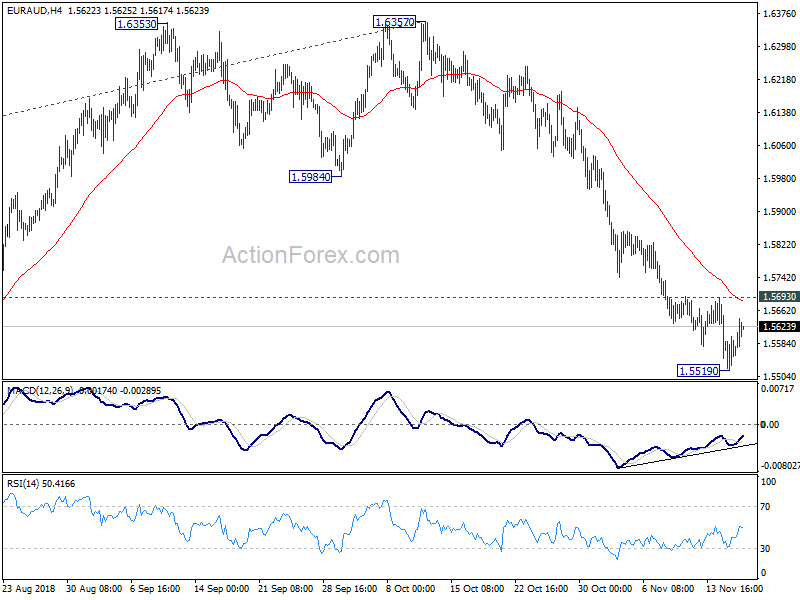
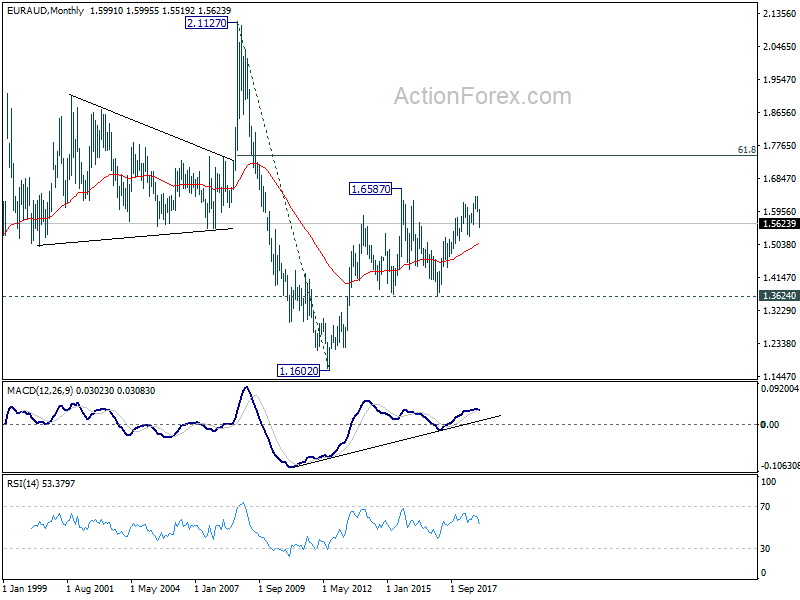
EUR/AUD edged lower to 1.5519 last week but recovered since then. Initial bias is neutral this week first. As long as 1.5693 minor resistance intact, further decline is expected. On the downside, break of 1.5519 will resume the decline from 1.6357 for 1.5271/5313 cluster support zone next. On the upside, break of 1.5693 should indicate short term bottoming, on bullish convergence condition in 4 hour MACD. In that case, stronger rebound would be seen back to 55 day EMA (now at 1.5940).
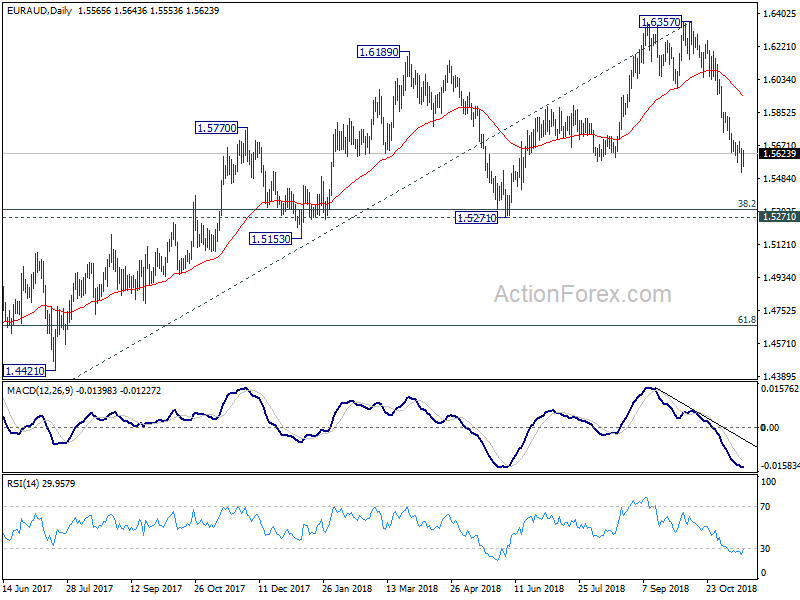
In the bigger picture, current development argues that up trend from 1.3624 (2017 low) is possibly completed at 1.6357, ahead of 1.6587 (2015 high). This is supported by bearish divergence condition in weekly MACD. Deeper decline is now in favor to 1.5271 cluster support (38.2% retracement of 1.3624 to 1.6357 at 1.5313). Break will target 61.8% retracement at 1.4668. On the upside, break of 1.5984 support turned resistance is now needed to revive the prior medium term up trend. Otherwise, further decline will be in favor even in case of strong interim rebound.
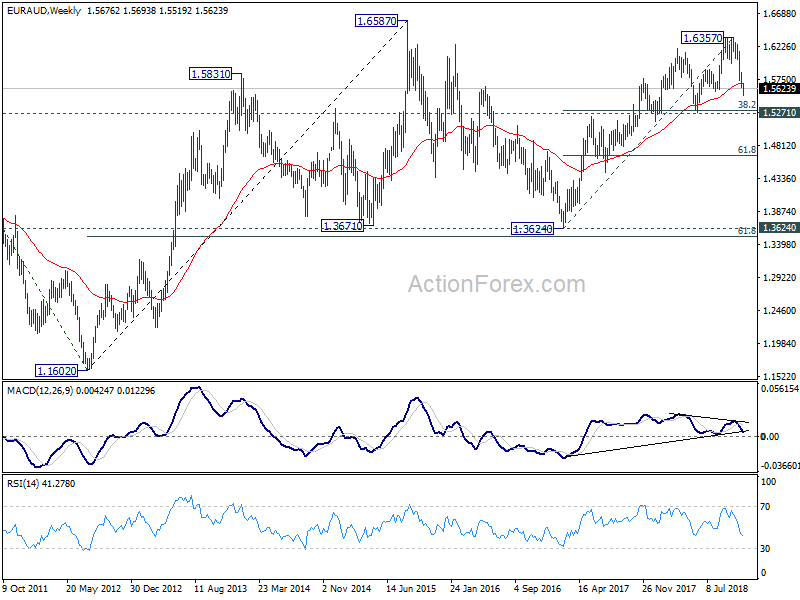
In the longer term picture, the rise from 1.1602 long term bottom (2012 low) isn't over yet. We'll keep monitoring the development but there is prospect of extending the rise to 61.8% retracement of 2.1127 to 1.1602 at 1.7488 and above. However, sustained trading below 1.3624 key support should indicate long term reversal and target 1.1602 long term bottom again.
EUR/CHF Weekly Outlook
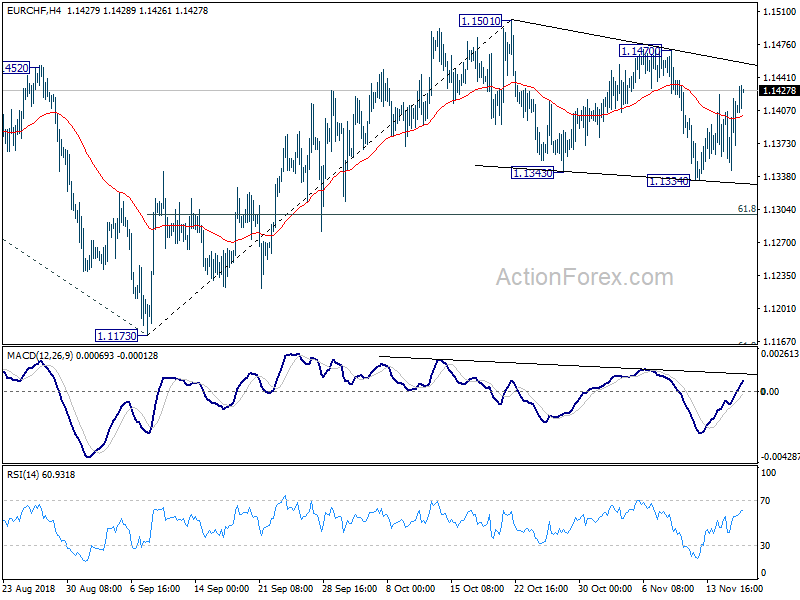
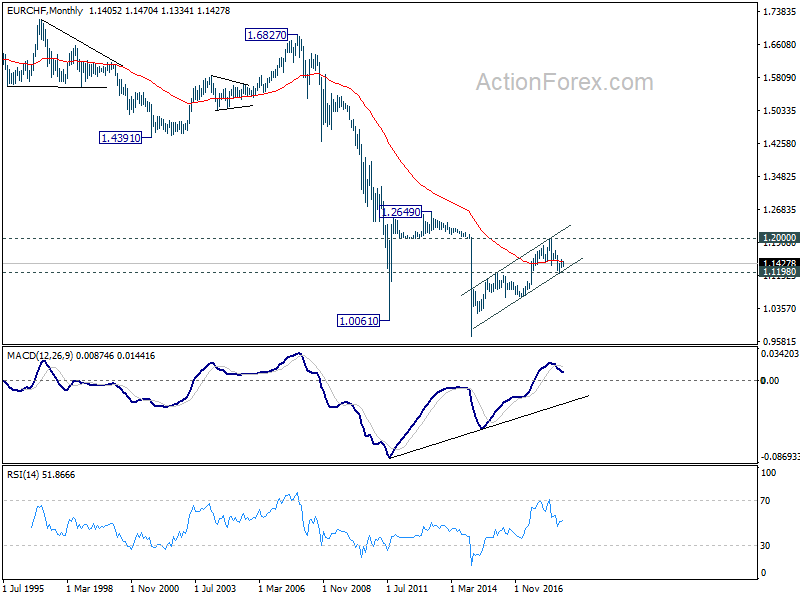
EUR/CHF dipped to 1.1334 last week but quickly recovered. Initial bias stays neutral first. The structure of price actions from 1.1501 suggests it's a consolidation pattern. In case of another fall, downside should be contained by 61.8% retracement of 1.1173 to 1.1501 at 1.1298 to bring rebound. On the upside, break of 1.1470 resistance will argue that rise from 1.1173 is resuming. Break of 1.1501 will revive the case of bullish trend reversal.
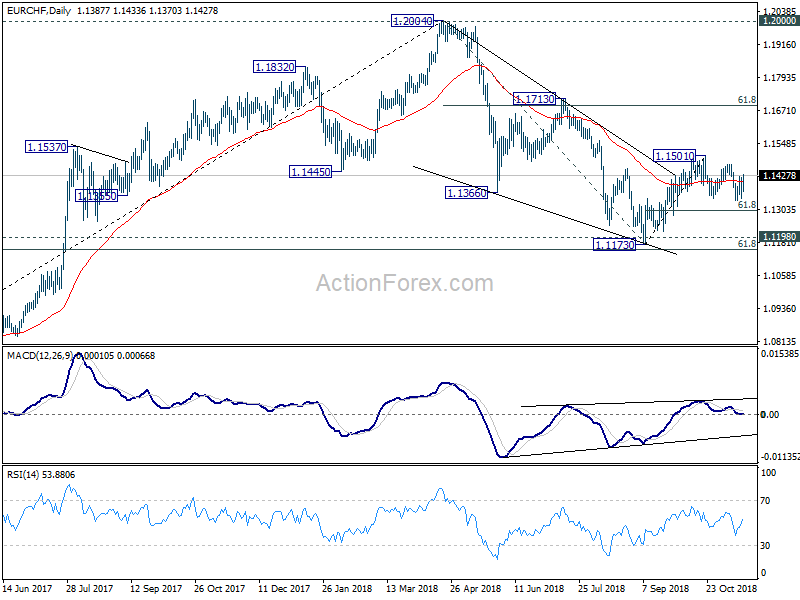
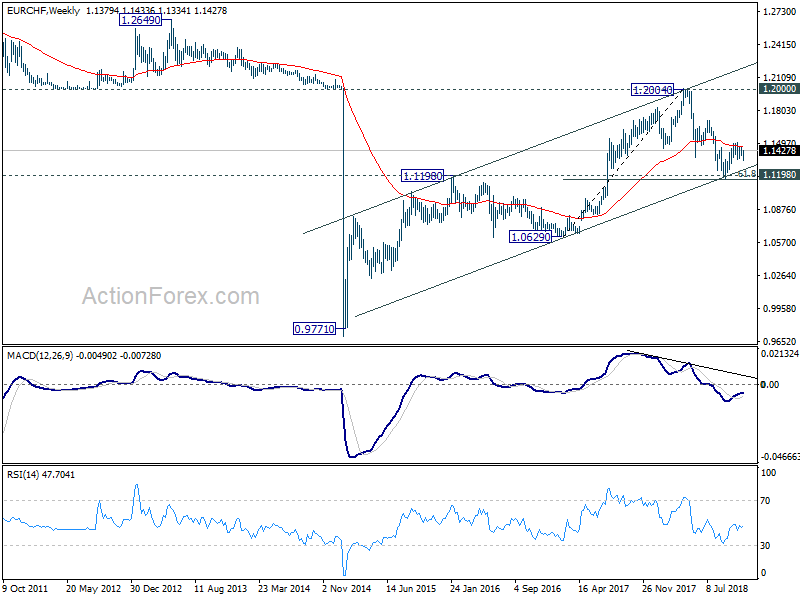
In the bigger picture, price actions from 1.2004 medium term top is seen as a correction only. Downside should be contained by support zone of 1.1198 (2016 high) and 61.8% retracement of 1.0629 to 1.2004 at 1.1154 to complete it and bring rebound. This cluster level is in proximity to long term channel support (now at 1.1261) too. A break of 1.2 key resistance is still expected in the medium term long term. However, sustained break of the mentioned support zone will mark reversal of the long term trend. In that case, 1.0629 key support will be back into focus.
Brexit, Italy and Trade War as Focuses in Holiday Shortened Week
Sterling was overwhelming the weakest one last week on Brexit political drama in the UK. It's now even uncertain for how long Prime Minister Theresa would stay in position, not to mention if there would be an agreement for orderly Brexit. Dollar followed as the second weakest after cautious comments from Fed officials prompted traders to pare back bets on Fed's rate path. Canadian Dollar was the third weakest as oil price's free fall continued.
Euro was mixed only, thanks to other happenings overshadowing Italy-EU budget clash. New Zealand and Australian Dollar were the strongest ones, lifted by their own data. Also, prospect of de-escalation of US-China trade war also helped.
Looking ahead, the economic calendar is relatively light this week, in particular with US on Thanksgiving holiday. RBA and ECB minutes will catch some attentions. Also Eurozone PMIs and Canada CPI and retail sales will be watched. The main focuses will remain on UK politics, Italy budget, US-China trade talks and fedspeaks.
Traders pare back bets on Fed's rate path,
Traders have started to pare back bets on Fed's rate hikes quite notably. Some high profile Fed officials expressed their concerns of global slowdown and that impact on the US. In the background, both Japan and German recorded GDP contraction in Q3. Then Fed Chair Powell named current global slowdown as a headwind for the US ahead.
More Fed officials jumped in later, in particular, Trump's newly appointed Fed Vice Chair Richard Clarida. He pointed out that global slowing is going to be relevant to the outlook of US with impacts through trade and capital markets, etc. Dallas Fed Robert Kaplan said global growth is going to be a little bit of headwind that may spill over to the US.
For now, raising interest rates to neutral is still the consensus among Fed policymakers. But where the neutral rate lies is up for debate to a certain extent. Some like Philadelphia Fed Patrick Harker even said he's not convinced with a December hike. Minneapolis Fed President Neel Kashkari also said he didn't see any need for more rate hikes.
Another point that Powell brought out last week was that Fed will have a press conference at every meeting starting 2019. And that means every meeting is live. This arrangement comes at the very correct timing as Fed can calibrate their rate path with much more flexibility next year.
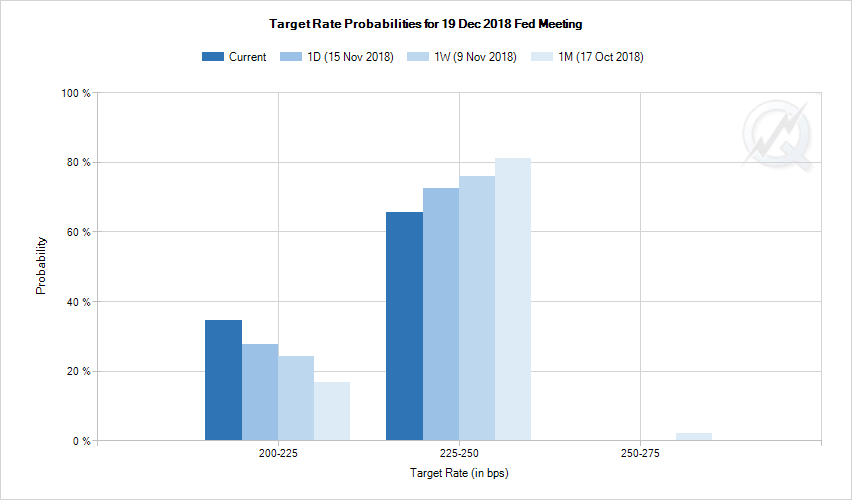
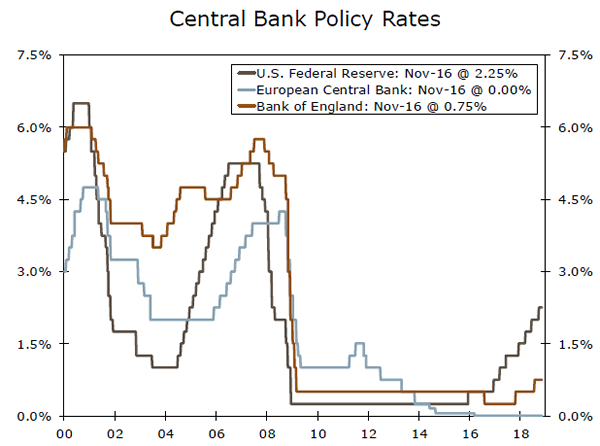
As of now, Fed fund futures are pricing in 65.44% chance of a December hike to 2.25-2.50%, down from 75.78% a week ago and 83% a month ago.
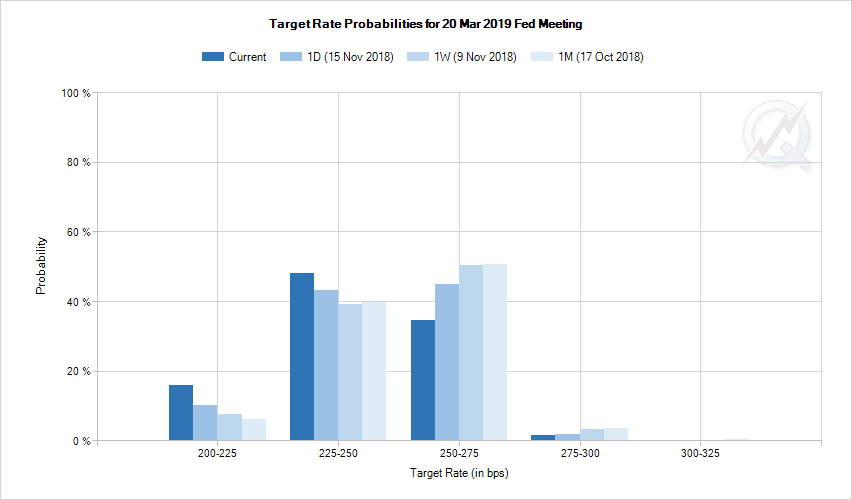
For March 2019, the chance of another hike to 2.50-2.75 now stands at 35.9%, down from 53.5% a week ago and 54.1% a month ago.
Trump responded positively to China's trade concessions
Staying with the US, China sent a document with listing out 142 items regarding Trump's requests on trade and market access. That's generally seen as a positive step towards a "framework" deal at the Trump-Xi meeting during the Nov 30-Dec 1 G20 summit. But there are also concerns regarding the non-negotiable items on the list, as well as China's commitment to its own words.
Trump's responses were, nevertheless, rather upbeat. He hailed on Friday that " it's a very complete list. I think it's 142 items, and that's a lot of items." He added "there are four or give big things left off" and "it's just not acceptable to me yet". But he also said "I think we'll probably get them too". Regarding imposition of additional tariffs on USD 267B of Chinese goods, Trump said "we may not have to do that. China would like to make a deal."
Dollar index risks medium term reversal, but not yet there
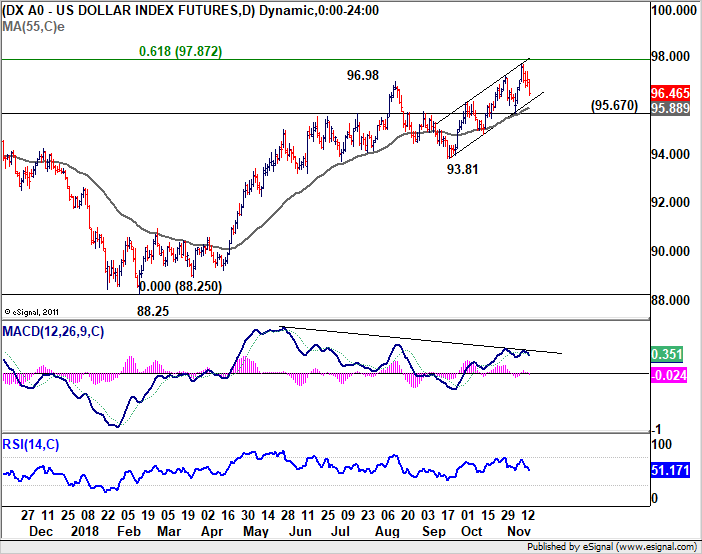
Both developments on Fed expectations and de-escalation in US-China trade war were Dollar negative. Dollar index edged higher to 97.69 last week then turned south to close at 96.46. It's too early to call for a reversal as the index is staying inside near term rising channel, above rising 55 day EMA. But risk is increasing considering that it's close to 61.8% retracement of 103.82 to 88.25 at 97.87, a key fibonacci resistance. Break of 95.67 support will be an important sign of medium term topping and should bring deeper fall back to 93.81 support and below.
UK government in chaos, no-confidence vote on PM May coming soon
Sterling was sold off steeply on political turmoil in the UK. In short, Prime Minister Theresa May appeared to have secured Cabinet support for her Brexit agreement with EU. European Council also decided to hold an unscheduled meeting on November 25 to approve the agreement. However, just around half a day later, four ministers resigned in protest to the Brexit agreement, including Brexit Minister Dominic Raab.
Then Brexiteer leader Jacob Rees-Mogg led a campaign to oust May with no-confidence vote request. Right now, over 20 other MPs have already submitted their requests. It seems very likely for them to meet the requirement of 48 and a leadership challenge could happen as soon as on the coming Tuesday.
So far, it's quite uncertain if May could get 158 or more MPs to support her in case of the no-confidence vote. And even if she could survive this, it rather doubtful if she can be the Brexit agreement through the Commons. The Pound will remain vulnerable in the week ahead.
European Commission might start Excessive Deficit Procedure on Italy
Euro somewhat survived as Brexit overshadowed Italy's budget clash. In Italy's resubmitted draft budget plan to the European Commission, budget deficit target was held unchanged at 2.4% of GDP in 2019. Among that, Italy planned to raise its structural deficit by 0.8% of GDP. This is clearly a violation of EU's demand to cut by -0.6%. GDP growth forecasts was held unchanged at 1.5% for the same year. That was widely seen as overly optimistic.
Though, the new draft showed falling debt as Italy planned to use funds equal to 1% of GDP from privatization. This is seen as an act to address EU's major concern on ballooning debt. Public debt is now estimated to fall to 129.2% of GDP in 2019, then further to 127.3% in 2020, and then 126.0% in 2021. Italy's debt stands at 130.9% this year.
Now, European Commission is expected make decision on what to do with Italy, possibly on the coming Wednesday. It's believed that the commission will start the first step to discipline Italy, which is called "Excessive Deficit Procedure". The EU Economic and Financial Committee will then have two weeks to review the Commission's report. Then, the Commission could move to formally launched the EDP, which can results in fines.
Italian 10 year yield closed at 3.490 last week, slightly up from prior week's 3.398. German 10 year yield closed at 0.370, comparing to prior week's 0.409. That is, German-Italian spread was back above 310. We could see the spread widen further should the Commission decides to take some actions. That could see Euro facing some pressure, in particular against Yen.
GBP/JPY Weekly Outlook
GBP/JPY's sharp decline last week suggests rejection by 149.70 resistance. Initial bias remains on the downside this week for 142.76 support first. Sustained break there will bring retest of 139.39/47 key support zone. On the upside, above 145.59 support turned resistance could bring stronger rebound. But near tem outlook will be neutral at best as long as 149.70 key resistance holds.
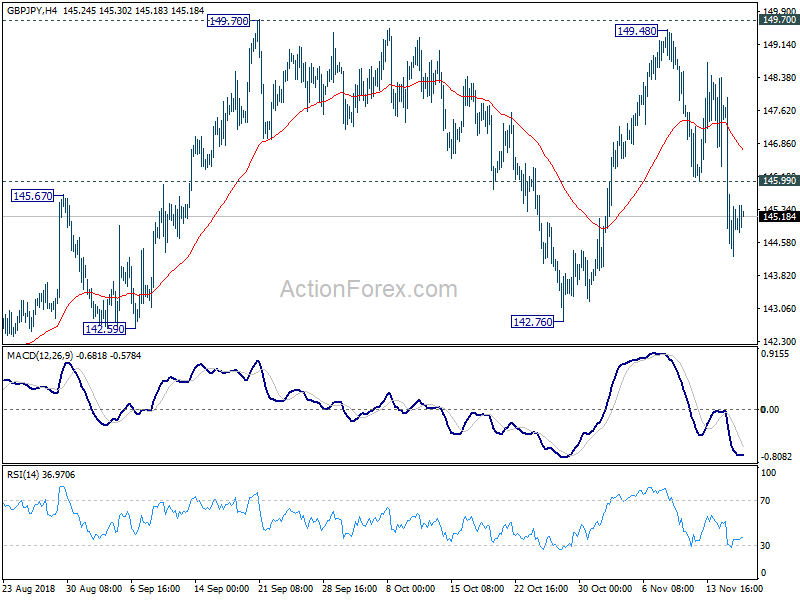
In the bigger picture, as long as 139.29 cluster support (50% retracement of 122.36 to 156.59 at 139.47) holds, up trend from 122.36 (2016 low) would still extend beyond 156.69 high. However, decisive break of 139.29/47 will suggest that such up trend is completed and turn outlook bearish. In that case, next target is 61.8% retracement at 135.43.
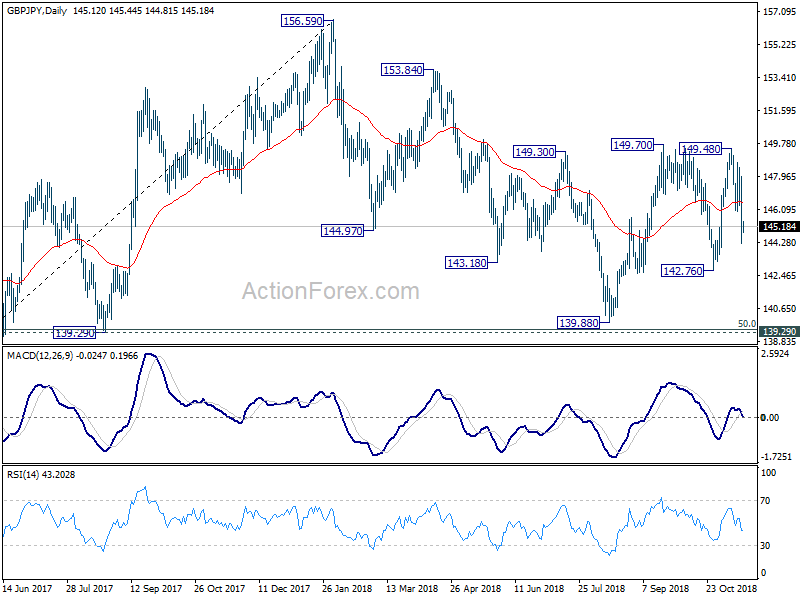
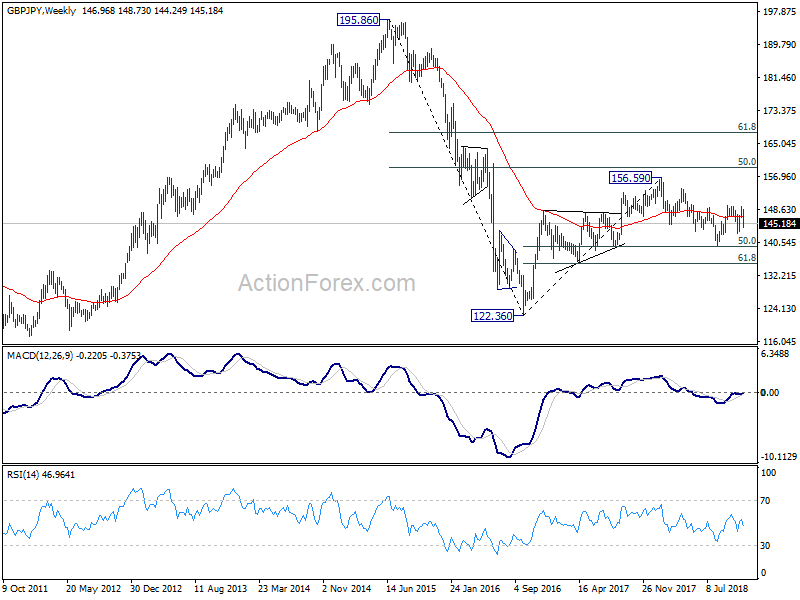
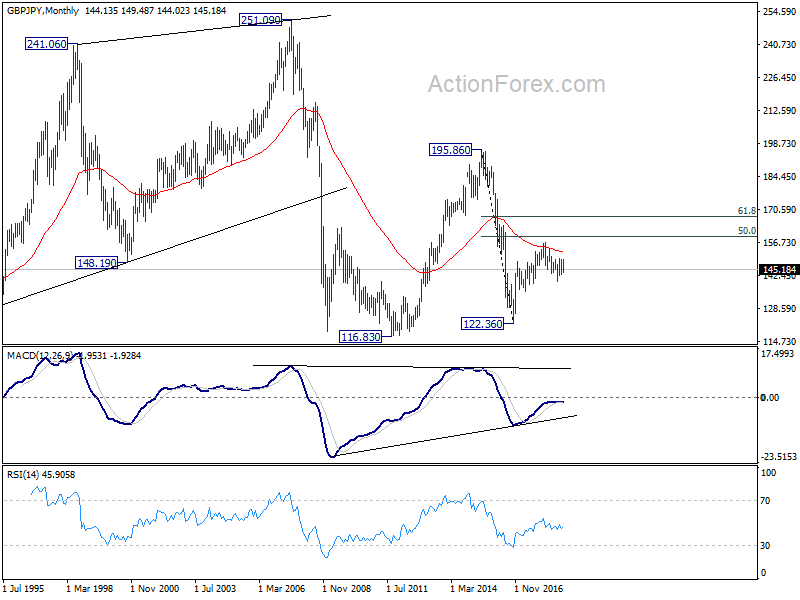
In the longer term picture, as long as 139.29 holds, rise from 122.36 is in favor to extend to 50% retracement of 195.86 (2015 high) to 122.36 (2016 low) at 159.11, and possibly further to 61.8% retracement at 167.78 before completion. However, firm break of 139.29 will turn focus back to 116.83/122.36 support zone instead (116.83 as 2011 low).
Summary 11/19 – 11/23
Monday, Nov 19, 2018
[php_everywhere instance="1"]
Tuesday, Nov 20, 2018
[php_everywhere instance="2"]
Wednesday, Nov 21 2018
[php_everywhere instance="3"]
Thursday, Nov 22, 2018
[php_everywhere instance="4"]
Friday, Nov 23, 2018
[php_everywhere instance="5"]
Weekly Economic and Financial Commentary: Incoming Data Reinforce Slower Pace of Global Growth
U.S. Review
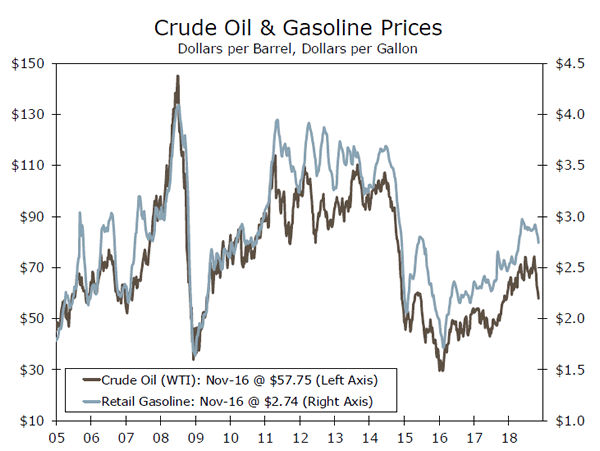
Despite Recent Price Drop, Oil Still Swaying Econ Data
- At the start of October, the WTI price for a barrel of oil was over $75. Since then it has been a mostly downward slide. This week it slipped below $60/barrel for the first time since February.
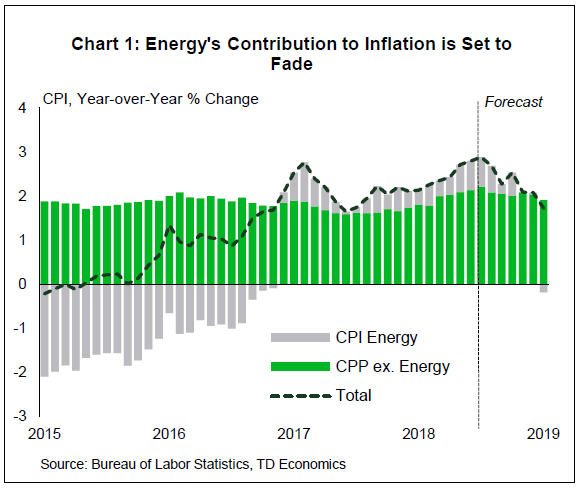
- A batch of October economic indicators this week, however, are still under the influence of the higher price dynamic in place at the start of the month. Lifted by higher energy costs, CPI inflation rose 0.3% in October. Retailers reported the biggest monthly sales increase since May, but gas stations saw the largest increase.
Inflation Under Control
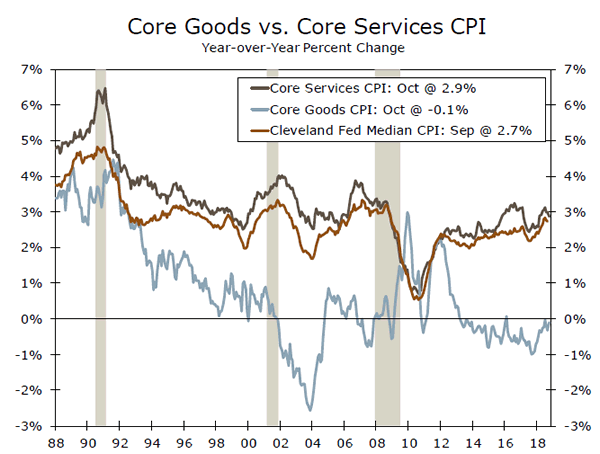
The CPI report released at the start of the week offers the latest evidence that inflation is more or less right in-line with where the Fed wants it to be. The headline monthly increase was nudged higher by gasoline prices, but there was also broadly based support from a number of other categories. Also, a big drop in oil prices may not mean consumers will see smaller energy outlays across the board. The cost of energy services, i.e., electricity and natural gas, saw the biggest monthly gains since early 2014 in October.
Core inflation rose 0.19% in October after softer prints in the preceding months, which should alleviate fears that inflation has hit another soft patch. Core goods prices posted the largest monthly increase since January, unwinding some weakness from the previous month. Tariffs are a top-of-mind worry for goods prices, but the dollar's climb this year should keep goods prices from rising too rapidly.
The rebound in core inflation suggests the underlying trend is modestly higher which should keep the Fed on course to gradually lift short term interest rates. While businesses are beginning to see a break on some commodity prices, tariffs and a tight labor market are pushing other costs higher. We expect core inflation to trend up in the year ahead, spurred by more businesses willing to raise prices.
If the Stores Were Any Less Hotter Than They Are
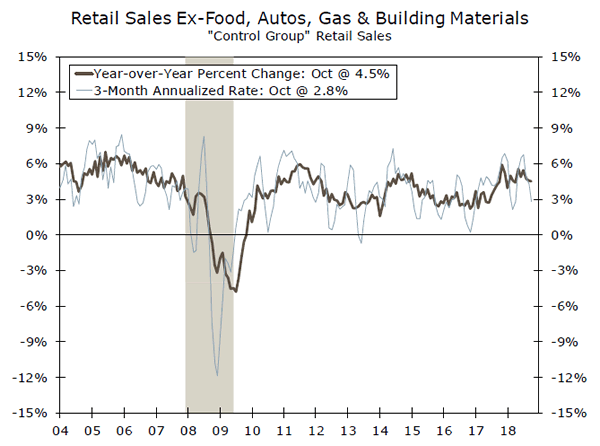
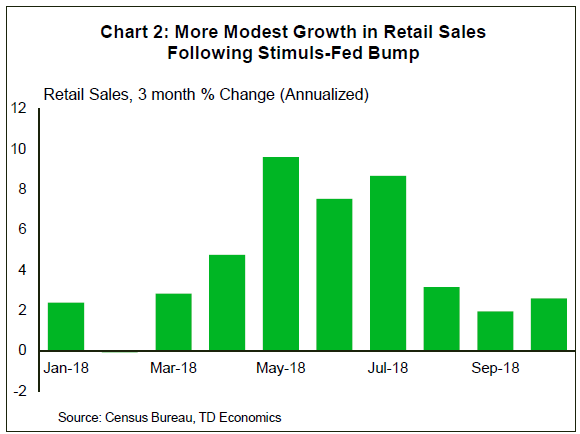
It was the best month at the nation's stores since May as retail sales surged 0.8%. While we do expect holiday sales to increase 4.5% over last year, we would caution against getting too wound up based on the latest retail sales report.
In addition to the 3.5% pop in gas station sales, motor vehicle sales were also up 1.1% in October and neither of these components reflects core retail spending. The three-month annualized rate of control group retail sales slowed in October to 2.8%, which is a bit of a slowdown from where it was a few months ago.
As the calendar flips to 2019, we expect further moderation in spending, as the boost from tax cuts will start to fade for consumers amid rising prices and less accommodative monetary policy.
Industrial Production: Up Where It Counts
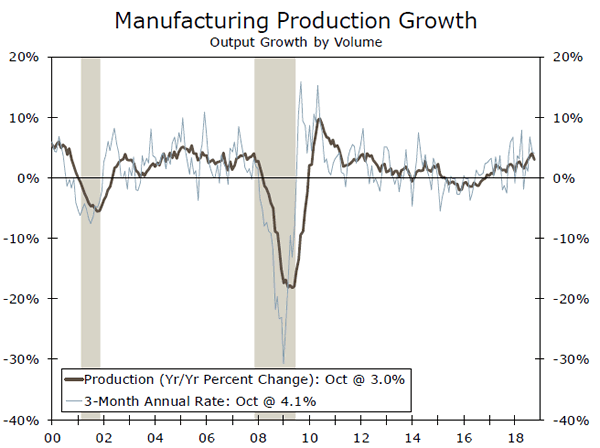
Industrial production rose less than expected in October (+0.1%) and production for December was revised down a tick. A warm October sent utilities production down 0.5% while mining production edged lower for a second straight month.
The juggernaut of IP–manufacturing—posted a better than expected gain of 0.3% in October. Production for September was also revised a bit higher, and points to factory activity being on somewhat firmer ground than previously thought. Most major manufacturing categories posted gains over the month, with the notable exception of autos, where sales have softened this year. Despite the decent production numbers this month, there are hints that slowing global growth, a strong dollar and trade issues are beginning to weigh on manufacturing. On a year-over-year basis, manufacturing production growth slowed to 3.0%.
U.S. Outlook
Housing Starts • Tuesday
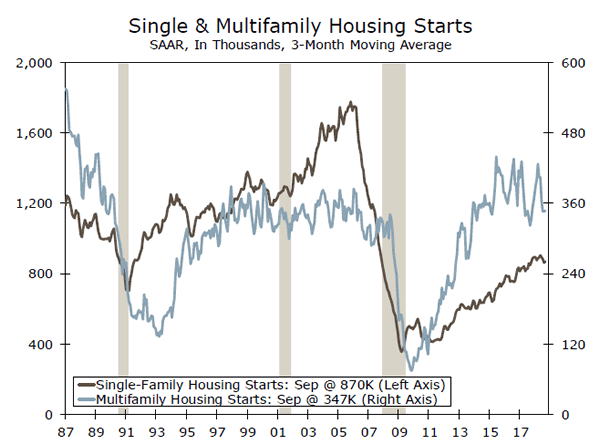
Housing starts dropped in September, with most of the decline stemming from a 15.2% drop in multifamily starts. But, single-family starts were also sluggish, declining a more modest 0.9%. Housing is unlikely to make a significant breakout to the upside at this point in the business cycle. Higher mortgage rates and steadily rising home prices have significantly reduced affordability. Rising input costs have made it more difficult to build homes at lower price points, where demand is strongest, and labor costs continue to rise amid a shortage of skilled construction workers.
Building permit data for September appear to tell a slightly brighter story. Initially reported as a drop of 0.6% in September, permits were revised up to a 1.7% gain. Permits traditionally lead starts by two to three months, but with buyers and builders facing significant headwinds, we do not expect renewed strength in starts.
Previous: 1201K Wells Fargo: 1252K Consensus: 1230K
Durable Goods • Wednesday
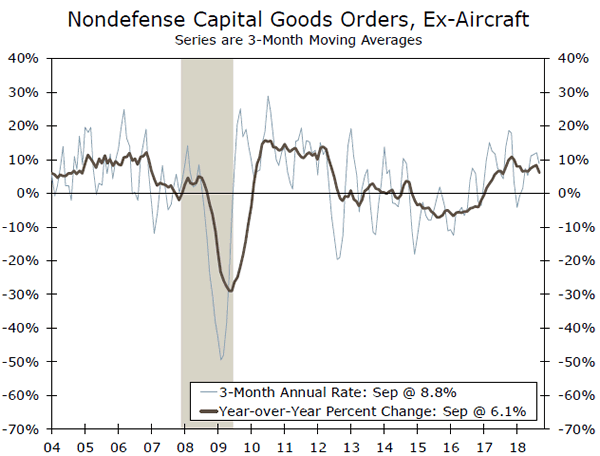
Durable goods orders rose 0.7% in September, propelled by defense aircraft orders, which more than doubled, up 118.7%. This coupled with a modest 0.5% bump in motor vehicle orders more than offset declines in commercial aircraft orders. Aside from defense aircraft, however, September orders were broadly modest. Nondefense excluding aircraft, orders and shipments were both down 0.1% over the month, the second monthly decline for both categories.
This week, however, we learned that business equipment production was up 0.8% in October, following a surge of 9.3% in Q3. While equipment spending was weaker than expected in Q3, we look for a rebound in Q4. The regional Fed manufacturing surveys thus far for October confirm orders holding up. A simple average of the Philadelphia, New York, Richmond, Kansas City and Dallas new orders components did fall 0.8 points in October, but remains near cycle highs.
Previous: 0.7% Wells Fargo: -2.1% Consensus: -2.2% (Month-over-Month)
Existing Home Sales • Wednesday
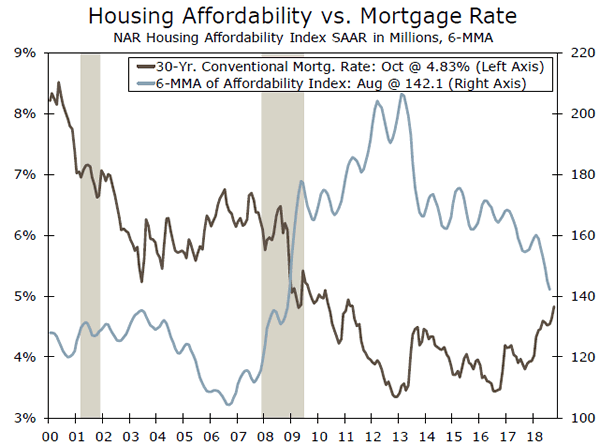
Existing home sales fell for the sixth consecutive month in September. The continued slowdown in existing sales has not been wholly surprising. Pending home sales, mortgage purchase applications and the proportion of consumers stating now is a good time to buy a home have all been trending lower in recent months. Another dynamic at play are inventories, which had been trending lower for more than three years. With fewer homes for sale, existing home sales were destined to fall. The slide in home buying has coincided with rising mortgage rates and follows years of rapid price appreciation, which have collectively taken a toll on affordability.
We suspect the housing market will continue to cool in coming months, as virtually every leading indicator of housing has continued to weaken. While we expect to see less typical seasonal weakness over the winter months, we expect the overall sales to remain anemic.
Previous: 5.15M Wells Fargo: 5.22M Consensus: 5.20M
Global Review
Incoming Data Reinforce Slower Pace of Global Growth
- Data out of Asia were largely lackluster in nature this week. Japanese real GDP contracted in Q3, while several key indicators in China reinforce the fundamental slowdown occurring in its economy amid ongoing trade tensions.
- In the U.K., wage and price data were generally positive, although key developments on the Brexit front reinforce that the U.K. economy will likely face continued uncertainty in the coming months.
- Mexico's central bank raised its policy rate in an attempt to combat currency depreciation in the wake of rising political uncertainty after the recent presidential election.
Incoming Data Reinforce Slower Pace of Global Growth
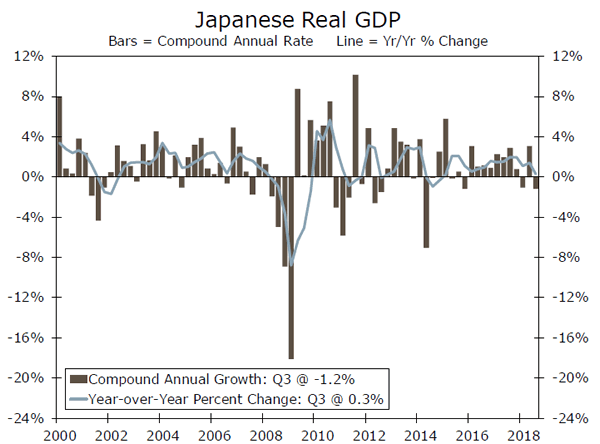
Economic data released this week in parts of Asia were generally lackluster in nature. In Japan, real GDP contracted in Q3, with the 1.2% drop on an annualized basis a sharp reversal from the 3% annualized growth rate registered in Q2 (see chart on page 1). While much of the slowdown might be temporary in nature due to recent natural disasters weighing on output, multiple sectors still contributed to weakness in the broader economy. Notable declines in private consumption and non-residential investment were registered in Q3. In particular, non-residential investment spending declined at a 0.9% annualized pace over the quarter after a large jump in Q2. While a rebound in Q4 looks likely, we still only see the Japanese economy expanding at a sluggish pace over the next two years, as a proposed sales tax increase and other structural headwinds weigh on a more rapid pace of growth.
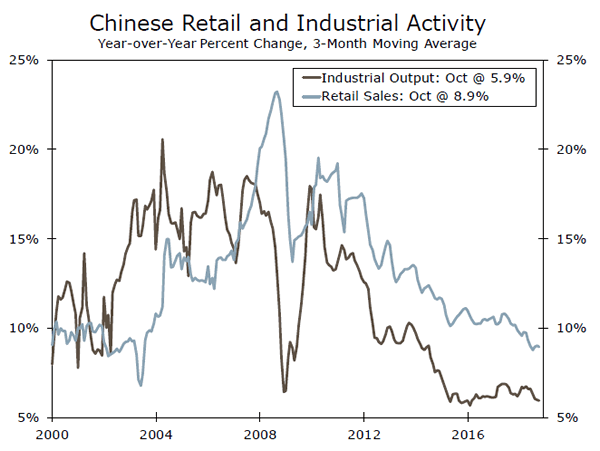
In China, growth in retail sales slowed in October, and while fixed investment spending and industrial output picked up slightly from a year ago, growth remains significantly lower than the doubledigit rates registered earlier in the expansion (top chart). The Chinese economy continues to remain a key point of concern in the global arena, as ongoing trade tensions with the U.S. weigh on the outlook amid a more fundamental domestic slowdown. We recently downgraded our growth forecasts for the next two years, and now look for real GDP to rise 6.1% in 2019 and 6.0% in 2020.
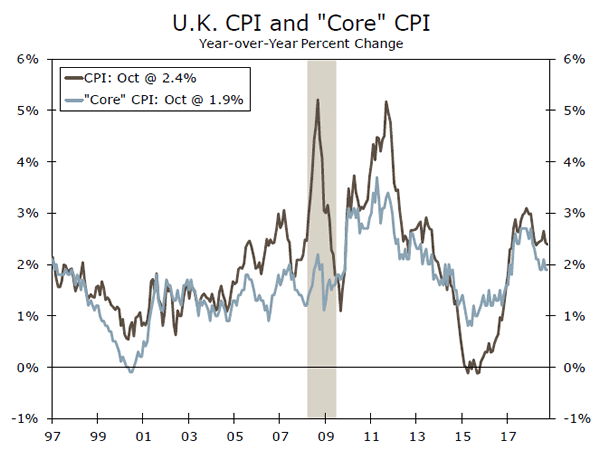
Turning to Europe, data released in the U.K. showed that inflation continues to move back toward the Bank of England's 2% target, at 2.4% in October (middle chart). As price pressures have receded after skyrocketing in the wake of the Brexit referendum in 2016, wage growth has begun to show signs of picking up. Average weekly earnings grew 3% year-over-year in September, the fastest pace of growth since 2015. However, retail sales data for October missed consensus estimates, declining 0.5% over the month. Although inflation is moving back toward target and wage growth is picking up, the U.K. economy continues to face uncertainty surrounding the ultimate fate of Brexit negotiations. While policymakers reportedly reached an agreement over the last major issue of the Irish border this week, the final deal must still be approved by U.K. parliament. This now looks to be more difficult, as key U.K. ministers resigned this week in the wake of the initial deal agreement. Our base case view is still for a deal to be approved before the March 2019 deadline, however we acknowledge that uncertainty is likely to persist both in finalizing an agreement before the deadline, and after as policymakers must then negotiate a more comprehensive U.K.-E.U. trade deal.
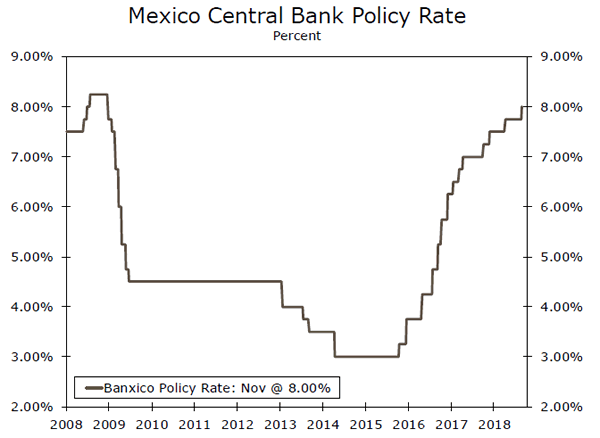
Finally, Mexico's central bank raised its policy rate 25 bps to 8.00% this week in what appears to be a move to stem further currency depreciation (bottom chart). The Mexican peso has dropped more than 6% against the dollar since mid-October as uncertainty has risen surrounding the likely policy agenda of the incoming president. While in the near term economic fundamentals remain solid, with real GDP rising 2.6% year-overyear in Q3, longer-term growth prospects could be a concern amid restrictive financial conditions and ongoing political uncertainty.
Global Outlook
Japan CPI • Wednesday
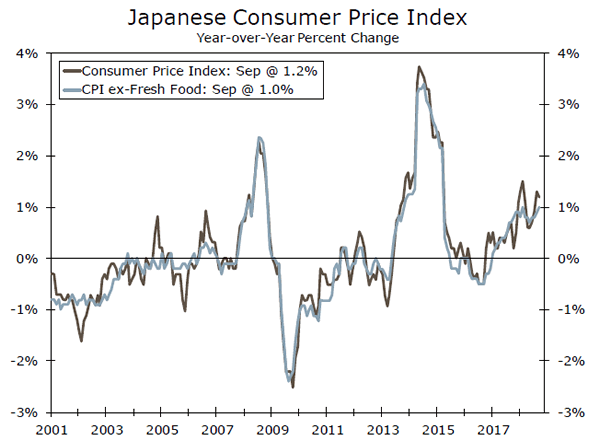
Price pressures remain lackluster in Japan, with the CPI rising 1.2% year-over-year in September, while the core index increased just 1% for the same period. Core inflation has remained around 1% for several months, and persistently low inflation remains an issue for the Bank of Japan (BoJ). As such, interest rates have remained in negative territory as the bank has adopted unconventional monetary policy measures and amassed assets on its balance sheet that now total around 100% of GDP. At the same time, the economy contracted in Q3, with real GDP shrinking at a 1.2% annualized rate. Generally subdued economic growth has likely restrained a more rapid acceleration in price growth. In our view, the BoJ will continue to remain firmly accommodative until price pressures show signs of a convincing upward trend. This looks unlikely to happen anytime soon, and we look for the CPI to rise just 1.4% year-over-year in October.
Previous: 1.2% Wells Fargo: 1.4% Consensus: 1.4% (Year-over-Year)
Eurozone PMIs • Friday
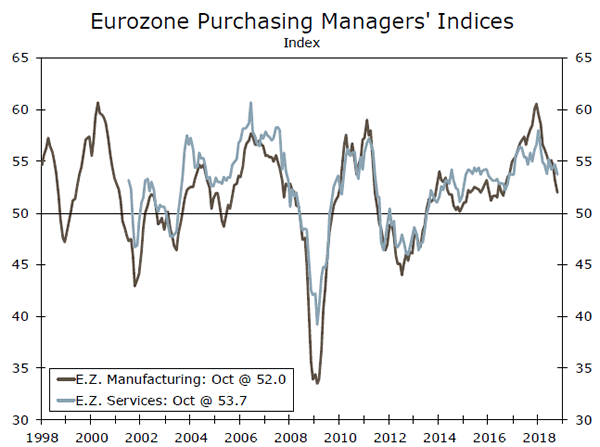
The Markit PMIs in the Eurozone continue to trend lower, with the manufacturing PMI declining to 52.0 in October from 53.2 in September. Eurozone industrial production data largely confirm the survey data, with production growing less than 1% year-over-year in August after run rates surpassed 5% by the end of 2017. This slowing in production is indicative of the broader lackluster growth picture across much of Europe. Eurozone real GDP expanded at only a 0.7% annualized rate in Q3, the slowest since 2013. German GDP figures released this week showed an outright decline in Q3, while growth in Italy was broadly flat over the quarter. Concerns surrounding Italy's fiscal situation and growth prospects remain on the forefront, and the European Central Bank will likely be watching next week's PMI release for signs of a production rebound and stronger growth prospects as it looks to normalize policy in coming quarters.
Previous: 52.0 (Manufacturing), 53.7 (Services) Consensus: 52.0 (Manufacturing), 53.6 (Services)
Canada CPI • Friday
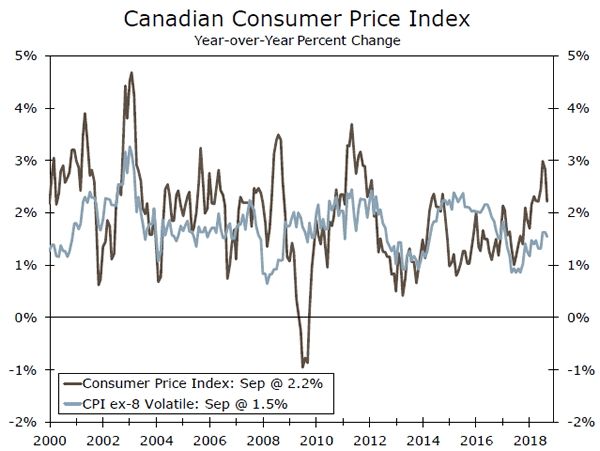
Canadian inflation moderated in September, with headline inflation rising 2.2% year-over-year, lower than the 2.8% print registered in August. However, September's drop was largely due to one-off factors, such as a pullback in typically higher summer airfare prices. Inflation has moved closer to the Bank of Canada's (BoC) 2% target, and at its most recent policy announcement the BoC looked for inflation to remain near target through 2020 as other temporary factors such as higher oil prices and minimum wage increases should fade. Indeed, global oil prices have declined sharply in recent weeks, and point to lower price pressures going forward. At the same time, real GDP expanded at a solid 2.9% annualized pace in Q2, while wage growth has also remained steady enough. These measures point to a Canadian economy that is functioning with little slack. Given these fundamentals, we look for the BoC to hike rates three times in 2019, as inflation stays within target and growth remains sturdy.
Previous: 2.2% (Year-over-Year) Wells Fargo: 2.1%
Point of View
Interest Rate Watch
Will the Fed Continue to Tighten?
There have been two developments recently that could lead some observers to question how much more tightening the Fed actually will deliver. First, will the Federal Open Market Committee (FOMC) hike further if the stock market goes further south?
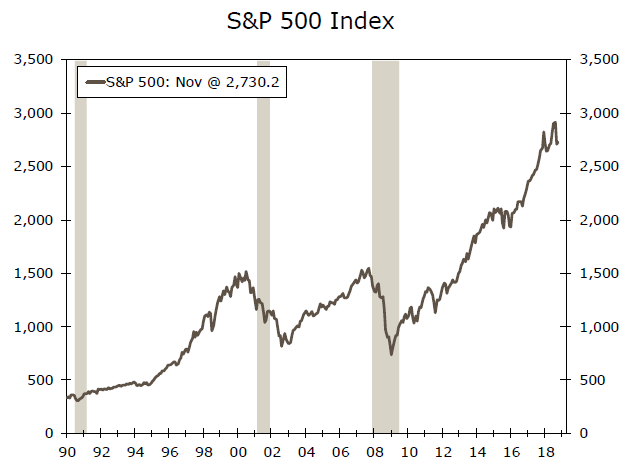
The Federal Reserve has two objectives: "full employment" and "price stability." To the extent that the value of the stock market affects those two variables, then the FOMC may change course. But as of this writing, the S&P 500 index is down only 7% or so from its peak in September. In our view, the decline in the stock market to date is not large enough to have a meaningful effect on the Fed's two primary objectives. In other words, the FOMC probably won't deviate from its publicly communicated tightening path, unless the downdraft in the stock market becomes much deeper.
Of arguably more importance is the recent decline in oil prices. (The price of West Texas Intermediate is down about 25% since early October.) This significant decline in oil prices likely will pull the overall rate of CPI inflation lower in coming months which, conceivably, could threaten the Fed's objective of "price stability."
In our view, however, the FOMC is likely to look through any near-term decline in the overall rate of CPI inflation. Unless the recent swoon in oil prices pulls down the core CPI inflation rate, which excludes food and energy prices, then the FOMC will probably continue to hike rates, albeit at a gradual rate.
The core rate of inflation followed the overall rate of inflation lower in 2015-16. However, there are reasons to expect that the core rate of inflation won't respond as much this time around as then. First, oil prices nosedived about 80% between mid-2014 and early 2016. The decline thus far has been much less extreme. Second, the sharp rise in the value of the dollar, which rose roughly 30% in trade-weighted terms during the previous episode, helped to depress import prices. Third, the labor market today is much tighter than it was three years ago. Unless the core CPI inflation rate recedes, the FOMC is likely to continue on its path of gradual tightening.
Credit Market Insights
Bank Lending and the Yield Curve
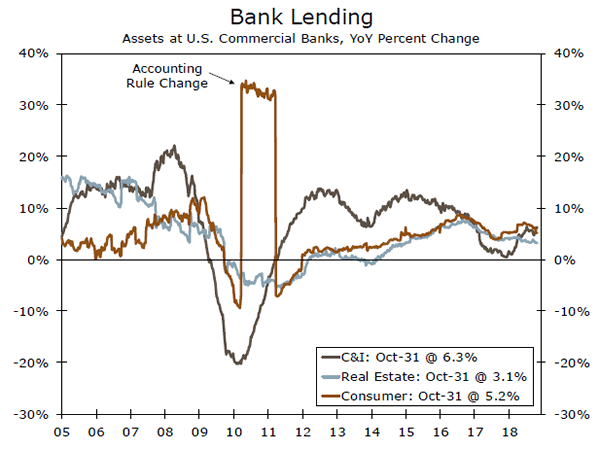
Banks loosened lending standards in Q3 while demand for loans contracted, according to data released this week in the Fed's Senior Loan Officer Survey. The supply of loanable funds remained strong as banks eased availability for commercial & industrial and residential loans, and left standards unchanged for CRE, auto and credit card lending. The most commonly cited reasons were increased competition among lenders and a generally sanguine outlook for economic activity.
Demand on the other hand was broadly weaker, particularly for residential loans. With mortgage rates up nearly one percentage point over the past year to near a seven-year high, this is not surprising. Residential investment has been a drag on GDP growth five of the past six quarters, and ongoing weakness in existing home sales portends further weakness. Firms reported reduced equipment investment as a major driver of the decline in demand, consistent with the underwhelming 0.8% pace of business fixed investment growth in Q3.
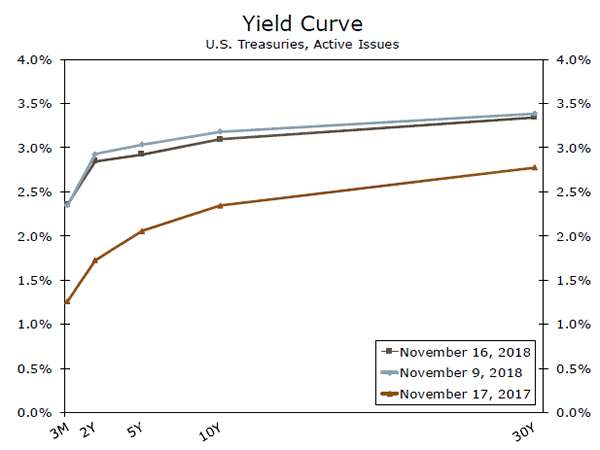
Banks also responded to a special question regarding the slope of the yield curve by indicating that the much discussed flattening over the past year has not impacted lending practices. However, if it were to moderately invert, they reported on net that they would tighten standards, viewing it as a signal of deteriorating economic conditions. With the 2yr-10yr U.S. Treasury spread hovering under 30 bps, this bears monitoring as a window into lending.
Topic of the Week
Bears Vs. Oilers
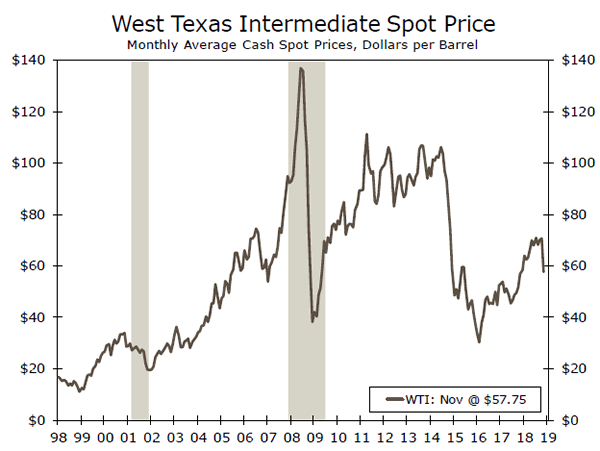
The WTI price for a barrel of oil fell another four dollars or so this week which was sufficient to take the percentage decline since October's high to more than 25%, handily surpassing the 20% drop which is the threshold for a bear market. Will the decline in oil prices weigh on business spending as it did earlier in this cycle?
In the second half of 2014, oil prices went through an even worse decline than we are experiencing now. In that period, the WTI oil price was cut in half, going from over $100 to less than $50 in the span of about six months.
Led by steep cutbacks in the mining and energy sector, business fixed investment spending went into a steep decline, culminating in the annualized growth rate of overall business fixed investment (BFI) falling in three consecutive quarters and the year-over–year rate also in outright decline in late 2015. There were questions being asked at the time about whether or not there was a "manufacturing recession."
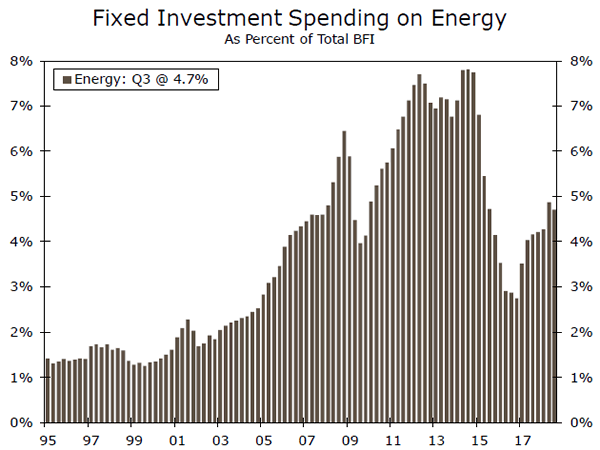
We argued at the time that the weakness was broadly concentrated in energy spending. Yes, there were knock-on effects in other industries, and BFI outside the mining sector also slowed, but it never slipped into negative territory on a year-over-year basis. Energy spending, however, went from an almost 8% share of BFI at the start of 2015, to less than 3% by the start of 2017.
We do expect equipment spending broadly to moderate throughout the forecast period, but that has more to do with late business cycle dynamics than oil prices. We are not yet rushing to make steep downward revisions to our spending forecast because of oil's recent price decline.
In order for that to happen we'd need to see prices remain at current depressed levels for several months. Note in the bottom chart how spending cuts in the energy sector did not begin in earnest until the start of 2015, which was roughly six months after oil prices peaked in that cycle. If we are still below $60/barrel in the spring, we'd be less sanguine. For now, however, we are not rushing to make changes.
The Weekly Bottom Line: Oil Industry Woes to Weigh on Growth
U.S. Highlights
- Equity markets were volatile again this week as concerns over global growth remained top of mind for investors.
- Economic data continues to point to solid economic growth stateside, with little signs that global weakness has caught on domestically.
- Inflation data for October showed a relatively benign picture. While the headline rate rose to 2.5% (from 2.2%), core inflation edged lower on the month.
Canadian Highlights
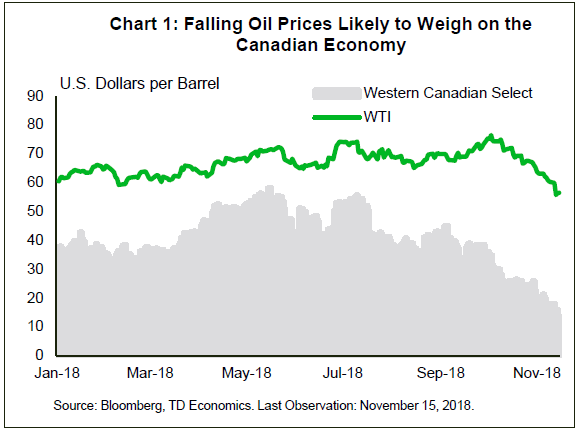
- Concerns over slowing demand and rising supply drove oil down to the mid-U.S. $50 range this week. Together with the persisting large discount on heavy crude, the lower price of oil is likely to have some negative consequences for the Canadian economy.
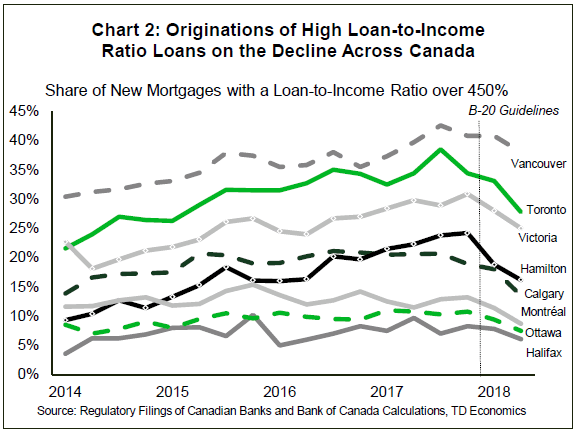
- On the housing front, existing home sales declined for the second consecutive month in October, suggesting that the recovery from the B-20 slump in the first half has run its course.
- Encouragingly, Bank of Canada research released this week revealed that regulatory changes in the mortgage market have improved lending quality, and may be helping to reduce financial stability risks.
U.S. - Growth is Solid, Inflation is Benign, Why Worry?
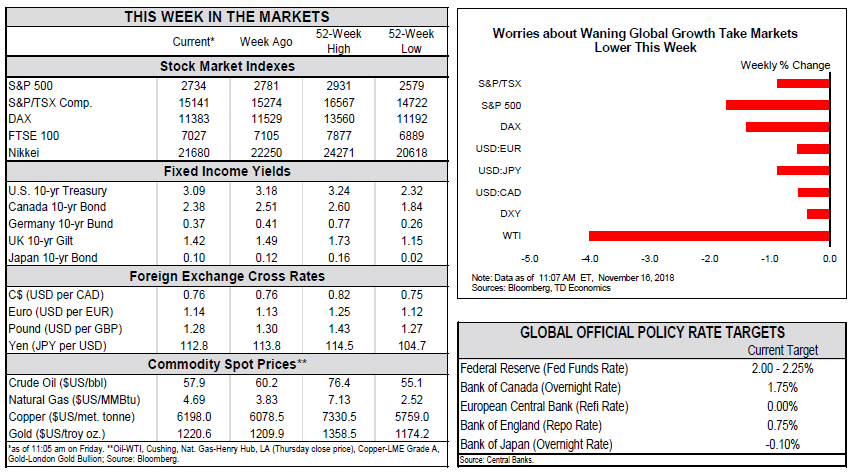
It was another volatile week in financial markets as fears around slowing global growth were exacerbated by worries over Brexit. This, as the cabinet minister in charge of negotiating a Brexit deal with the European Union resigned over the direction of the proposed deal. The S&P 500 finished the week down 2.1% as of writing.
Financial market jitters are not a reflection of any newfound weakness in U.S. economic data, which continues to point to solid growth and limited inflation. This week, consumer price index (CPI) data for October showed headline inflation rise to 2.5%, mainly due to rising energy prices. Core inflation, on the other hand, edged down to 2.1% (from 2.2%). Over the past three months, core prices have risen an average of just 1.6% (annualized), suggesting little cause for alarm on the price front. What's more, the recent pullback in the price of oil is likely to push headline inflation lower in the months ahead, with the Fed's preferred metric – the personal consumption expenditure price index – likely to drift back below the 2% mark.
A relatively soft inflation environment is giving support to the more dovish voices on the FOMC. In comments made this week, Chair Powell struck a balanced tone, but gave a nod to some of these more dovish elements. In particular, he noted the conditions that could lead the Federal Reserve to slow its pace of rate hikes over the next year. Slowing global economic growth, fading fiscal stimulus, and the lagged impact of past rate hikes are three factors that the Fed is monitoring. Despite these risks, the Chairman also noted the relative strength in the American economy, and notably that with press conferences scheduled after every Fed announcement in 2019 (instead of just once a quarter), every meeting is "live" – that is, has the potential for a change in policy.
Other economic data confirmed the solid economic growth narrative. Retail sales rose a robust 0.8% in October, reversing a downwardly revised pullback in sales in September. The drop in September and rebound in October reflected hurricane-related disruptions. Overall, the retail sales data are consistent with real consumer spending advancing by around 2.5% in the fourth quarter. For all intents and purposes, this is a great number. Nonetheless, it does represent a deceleration from the heady 3.9% pace average over the second and third quarters of the year.
With real consumer spending likely to run in the mid-2% range, the overall economy is likely to follow suit. In this environment, the impact of tariffs is likely to be more noticeable. Already there are signs that businesses are attempting to get ahead of the scheduled increase in Chinese tariffs to 25% (from 10%) by stockpiling imports. This volatility makes reading the economic tea leaves and the job of the Fed in gauging the reaction of the economy to higher interest rates that much more difficult.
Canada - Oil Industry Woes to Weigh on Growth
Concerns about slowing global growth and political developments this week dominated headlines, overshadowing domestic developments. Evidence that global demand is slowing continues to build, helping to take the bid out of commodity markets. WTI oil plunged to U.S. $55 this week on oversupply concerns before bouncing back above $56 per barrel. The 14% decline in oil prices since the end of October is an unambiguously negative development for the Canadian economy, particularly as temporary disruptions and supply bottlenecks persist keeping the price discount for heavy crude at over U.S. $40 a barrel (Chart 1). The slump in oil prices is also weighing on the loonie, keeping it a couple ticks below U.S. 76 cents – down 2.8% from its post USMCA high at the start of October.
The slump in the price of oil is hurting Canada's terms of trade, and the move in the loonie is a reflection of the resulting loss in purchasing power. If the decline in oil prices and the discount on heavy crude were to persist, it may have a more lasting negative effect on gross domestic income. On that front, rumour of an upcoming production cut by OPEC+ that is likely to be announced at its December 6th meeting will likely put a floor on prices in the near term. However, the large discount on heavy crude could last for a few more months since additional rail capacity will take some time to come online.
Slower income growth is the last thing that the Canadian economy and its highly indebted households need. Above-trend growth, low unemployment, and inflation at target are all factors that have given the Bank of Canada enough confidence to remove stimulus, resulting in the 125bp increase in its policy interest rate since July of last year. Together with the global rise in interest rates, this has helped to drive mortgage rates higher. Indeed, higher rates and regulatory changes have weighed on housing this year. Existing home sales in October declined for the second consecutive month, suggesting that the summer bounce from the B-20 drag in the first half of the year may be done. Although price growth remains subdued, affordability remains strained in key markets. More new supply could help improve housing and rental affordability. On that note, in its fall economic statement, the Ontario government announced a plan to help encourage rental supply by removing rent control from newly built units.
Waning global demand and lower oil prices are the latest concerns that complicate matters for the Bank of Canada as it contemplates further rate hikes. However, the high level of household debt, and the associated increased sensitivity of the Canadian economy to higher interest rates, remains the top concern. Encouragingly, Bank research found that the regulatory changes in the mortgage market have improved lending quality (Chart 2) nationwide. This should provide some comfort that actions taken by regulators are reining in financial stability risks.
Canada: Upcoming Key Economic Releases
Canadian Consumer Price Index - October
Release Date: November 23, 2018
Previous: -0.4% m/m, 2.2% y/y, Index: 133.7
TD Forecast: 0.2% m/m nsa, 2.4% y/y, Index: 134.0
Consensus: N/A
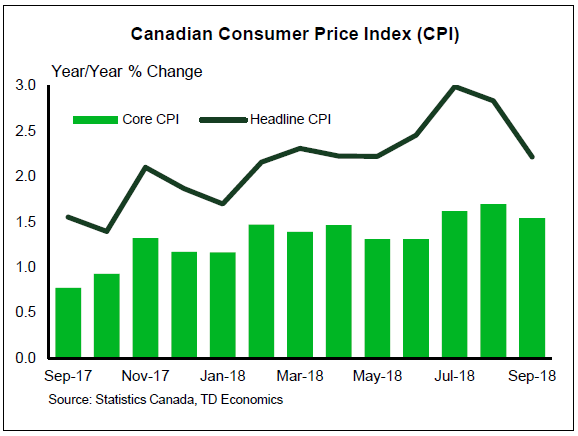
We expect CPI to inch higher to 2.4% in October on y/y tailwinds from energy and food prices. Airfares have fully unwound their previous jump and therefore pose less risk to the figure this month, though the methodology changes still make the figure uncertain. Most of the attention will be on the core measures this month, as the report marks the last inflation print ahead of the December BoC meeting. Average BoC core ticked back to 2.0% and there is risk for a rebound back to 2.1%, raising odds of multiple rate hikes in the next three meetings. However, headline inflation is still the Bank's main target, and the latest oil rout leaves inflation tracking below the BoC's projections at 2.0% in Q4 vs 2.3%.
Canadian Retail Sales – September
Release Date: November 23, 2018
Previous Result: 57.8
TD Forecast: 56.9
Consensus: 56.2
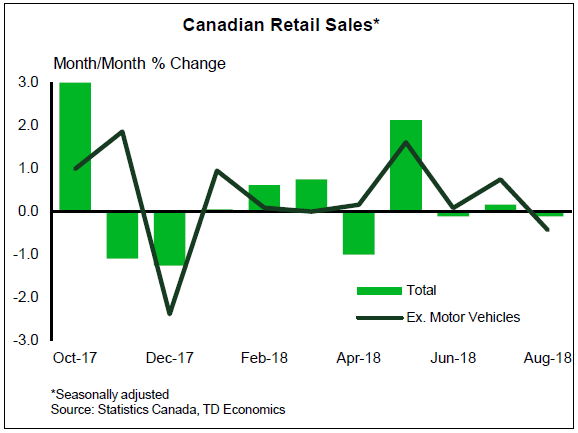
Retail sales are expected to come in unchanged for September as a pullback in motor vehicle sales offsets a modest increase in the core. Motor vehicles are poised for their third decline in the last four months as consumers grapple with higher debt costs and prioritize spending elsewhere. However, we expect ex-auto sales to rebound by 0.3% m/m on a recovery in import activity as well as strong employment data. Electronics should benefit from the release of new iPhone models mid-month although lower prices at the pump will weigh on gasoline station sales.
Real retail sales should come in at or slightly above the nominal print owing to a modest decline in seasonally adjusted consumer prices for September. This would cap off a relatively disappointing quarter for retail activity in Canada, with sales up a muted 0.5% (annualized) for Q3 as a whole, consistent with a moderation in household consumption from Q2.
Will Oil and the Stock Market Derail Fed Tightening?
The stock market has weakened recently and oil prices have moved lower. Unless the core rate of inflation recedes, however, the Fed will probably tighten further, at least in the foreseeable future.
How Much Attention Does the Fed Pay to Oil and Stocks?
There have been two developments recently that could lead some observers to question how much more tightening the Fed actually will deliver. First, will the Federal Open Market Committee (FOMC) hike further if the stock market goes further south?
FOMC policymakers do not care much about the stock market, per se. Rather, the Federal Reserve has two objectives: "full employment" and "price stability." To the extent that the value of the stock market affects those two variables, then the FOMC may change course. But as of this writing, the S&P 500 index is down only 7% or so from its peak in September (top chart). In our view, the decline in the stock market to date is not large enough to have a meaningful effect on the Fed's two primary objectives. In other words, the FOMC probably won't deviate from its publicly communicated tightening path, unless the downdraft in the stock market becomes much deeper.
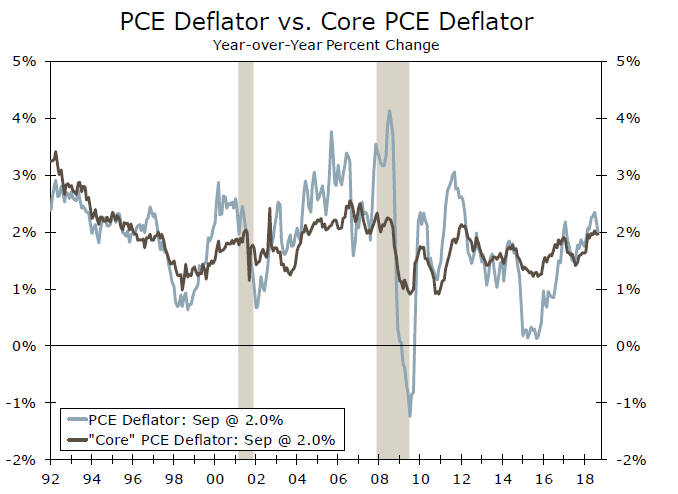
Of arguably more importance is the recent decline in oil prices. (The price of West Texas Intermediate is down about 25% since early October.) This significant decline in oil prices likely will pull the overall rate of consumer price inflation lower in coming months which, conceivably, could threaten the Fed's objective of "price stability." (The Fed prefers to measure consumer price inflation using the PCE deflator rather than the consumer price index.)
In our view, however, the FOMC is likely to look through any near-term decline in the overall rate of PCE inflation. Unless the recent swoon in oil prices pulls down the core rate of PCE inflation, which excludes food and energy prices, then the FOMC will probably continue to hike rates, albeit at a gradual rate.
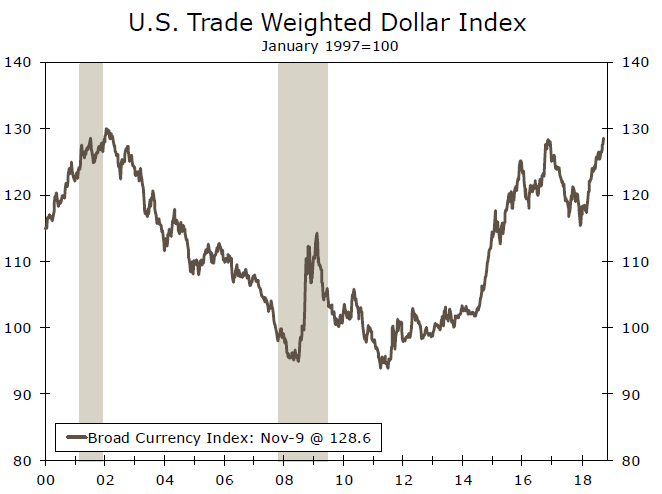
The core PCE inflation rate followed the overall PCE inflation rate lower in 2015-2016 after the collapse in oil prices (middle chart). However, there are reasons to expect that the core rate of inflation won't respond as much this time around. First, oil prices nosedived about 80% between mid-2014 and early 2016. As noted above, the decline in oil prices since September has been much less extreme. Second, the sharp rise in the value of the dollar, which appreciated roughly 30% in trade-weighted terms during the previous episode, helped depress non-petroleum import prices. The dollar is up this year, but only by a bit more than 10% since its low in January (bottom chart). Third, tariffs could give some near-term boost to consumer prices. Finally, the labor market today is much tighter than it was three years ago, which has led to some wage acceleration. Unless the core PCE inflation rate recedes, the FOMC likely will continue on its path of gradual tightening, at least for the foreseeable future.
Dollar Lower Ahead of Crucial Week for Brexit and Italian Budget
The US dollar is weaker across the board on Friday. The comments from U.S. Federal Reserve Vice-Chair Richard Clarida on interest rates nearing a neutral rate were dollar negative. Rising optimism about the US-China trade disagreement also depreciated the greenback as investors exited the safe haven of the dollar. Presidents Trump and Xi Jinping will meet in Buenos Aires ahead of the G20 summit with the new comments out of the White House boosting the chances of a positive outcome. Sterling was higher on Friday, but continues to print a 1.12 percent drop as Brexit headlines put downward pressure on the currency. UK Prime Minister Theresa May faces a difficult task as the deal agreed to with the EU was always going to be a tough sell. Resignations in her cabinet have followed as the deal makes its way to parliament with an uncertain fate as too many factions disagree on what now is a final deal with the EU with a fast approaching deadline.
- Pound lower after UK PM facing disagreement over Brexit Deal
- EU Says Brexit Deal offered struck by UK PM non-negotiable
- US Durable goods to gain 0.4 percent
Euro rises as Fed Member Comments and US-China Hope Sinks Dollar
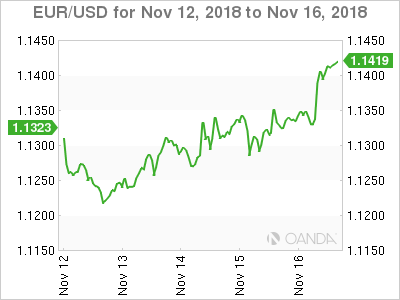
The EUR/USD rose 0.84 percent on Friday. The single currency is trading at 1.1419 after US President Donald Trump said that the US may not have to impose addition tariffs on China. Trade war concerns eased as the two leaders have done some work ahead of their meeting in Buenos Aires at the end of the month.
Given the attention Brexit news got, the Italian budget drama got little attention after comments from the EU made it clear it takes the position of the nation as a challenge of the Union’s budget rules. Both sides are digging into their positions with Italy claiming that it needs the extra budget to boost growth. The EU could start the procedure to issue sanctions this Wednesday.
Sterling Rebounds on Friday, More Brexit Pain to Come
The GBP/USD fell 1.12 percent on a weekly basis, after managing a 0.42 percent recovery on Friday. Resignations at PM May’s cabinet have increased the probabilities of a no-deal Brexit as the UK leadership is questioned at a time when a decision has to be made on the deal at hand.
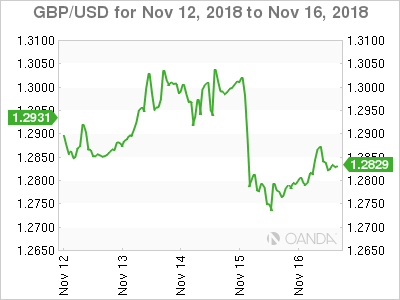
Sterling will be under pressure as the European Union has made it known through various channels that the deal will not be revisited in any major way.
Market events to watch this week:
Monday, November 19
- 7:30pm AUD Monetary Policy Meeting Minutes
Tuesday, November 20
- 4:20am AUD RBA Gov Lowe Speaks
- 6:00am GBP Inflation Report Hearings
Wednesday, November 21
- 8:30am USD Core Durable Goods Orders m/m
Thursday, November 22
- 7:30am EUR ECB Monetary Policy Meeting Accounts
Friday, November 23
- 8:30am CAD CPI m/m
- 8:30am CAD Core Retail Sales m/m
*All times EDT
China Weekly Letter: US-China Rivalry Here to Stay Despite Possible Ceasefire
Key points this week
- Lots of speculation about the Xi-Trump meeting
- Economic data points to more weakness short term
- Trade deal or not – rivalry here to stay
Continued speculation about the Xi-Trump meeting
A lot of stories about the upcoming Xi-Trump meeting have surfaced this week. According to Trump's economic adviser Larry Kudlow there are now talks on 'all levels'. Yesterday, Trump's Commerce Secretary Wilbur Ross said that Xi and Trump can only be expected to get a framework deal in place, but that it would take a long time to negotiate the whole list of 132 US demands, see Bloomberg. Ross also stated, that the US was still planning to raise the tariff rate from 10% to 25% on USD200bn of imports on 1 January. According to Reuters, China has delivered a written response to US demands that could form the basis for the negotiations. Two of Trump's trade advisors, the ultra-hawk Peter Navarro and Larry Kudlow, clashed openly as Kudlow criticized recent comments by Navarro and said the Trump administration has deliberately curtailed Navarro's public role, see CNBC and Politico.
Comment. The upcoming Xi-Trump meeting is no doubt the most important event for China in the short term. If they manage to agree on a ceasefire that paves the way for serious negotiations next year, it could be the beginning of the end of the trade war with a deal struck in 2019. However, if Trump is not satisfied with Chinese concessions, we could be looking at tariffs on all Chinese imports early next year, adding significant further downward pressure on the Chinese economy. We still see a 60% probability of a ceasefire. If Trump escalates further, it could hit him like a boomerang by sending US stock markets lower, hurting consumers and weakening the US economy. That would weaken his hand in the trade war. It is the most likely reason why we have seen Trump take steps to restart talks after he for a long period repeated, that 'now is not the time'. It is unclear whether a tariff increase on 1 January from 10% to 25% is coming regardless as Ross state. My sense is that it would be a deal breaker for China in restarting real talks as they will not negotiate with 'a gun to their head'. For more on the Xi-Trump meeting see FT,
Economic data points to more weakness short term
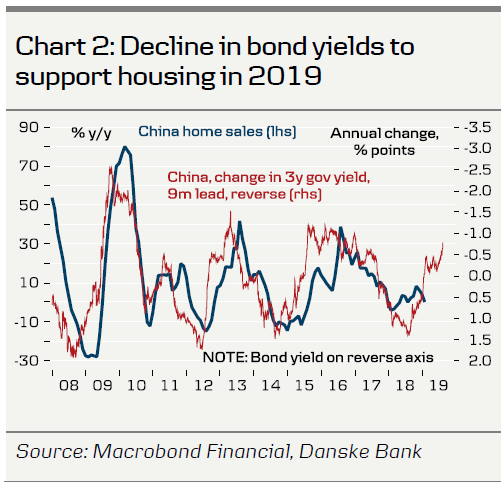
Data this week showed further softness in retail sales (chart 1) and credit growth. However, there is a small ray of light in money growth, where the momentum in M1 is showing some stabilisation. A further decline in bond yields also gives support to housing (chart 2), which is set to be one of the stabilising pillars in China along with infrastructure investments. House price data for October showed an increase of 9.7% y/y up from 8.9% y/y in September driven by increases in tier-3 and tier-4 cities.
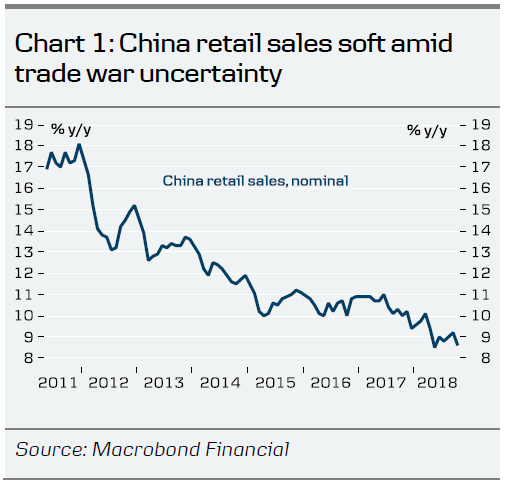
Comment. We expect further downward pressure on the Chinese economy in the next two quarters but a bottom at some point in Q2 as stimulus kicks in and (hopefully) the trade war uncertainty moves down a notch. China may step harder on the gas in 2019 through tax cuts and possibly further reductions in the Reserve Requirement Ratio.
Trade deal or not - rivalry is here to stay
While the US and China are working on a path to make a trade deal, the longer term rivalry is likely here to stay. This week Vice-President Pence warned China of rising aggression in the Indo-Pacific in a speech held in Singapore at the East Asia Summit: 'We all agree that empire and aggression has no place in the Indo-Pacific'. However, he also reached out saying 'Let me be clear, though: our vision for Indo-Pacific excludes no nation. It only requires that nations treat their neighbors with respect, and respect the sovereignty of our nations and international rules and order', see SCMP. Mike Pence is said to be unveiling a rival to the 'dangerous' Belt and Road Initiative, at the APEC meeting this weekend.
Comment. Maybe the most noteworthy thing about Mike Pence's visit was that he was sent as stand-in for Donald Trump at the APEC summit in Papa New Guinea. China on the other hand is represented by President Xi Jinping, see The Guardian. While Mike Pence assured the Asian nations in his speech, that the US commitment to the region was strong, Trump's absence at the APEC meeting is weakening this signal.
The Indo-Pacific will be just one of the places where the US-China rivalry will play out in the coming years. Among other things, the US can be expected to do more 'Navigation of freedom' cruises in the South China Sea, challenge China further on the Taiwan issue and increase investments in infrastructure as a counterbalance to China's Belt and Road Initiative. The recent near-collision between a US and Chinese cruise ship is testament to the tensions ahead. Another battle front will be increased US export controls of tech products and other measures to stop technology transfer to China, see WSJ.
Other China news this week
US study shows US military advantage has eroded and the US could lose a war against China or Russia. The study was released by a bipartisan commission that Congress created to evaluate the Trump administration's defence strategy, see SCMP here and here.
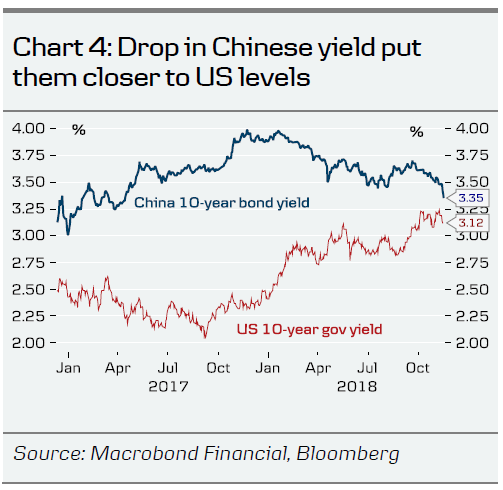
Chinese bond yields fell sharply this week (chart 4), see Bloomberg. Expectations of a further reduction in the Reserve Requirement Ratio before year-end are fuelling demand for bonds as it frees up more liquidity in the banks.
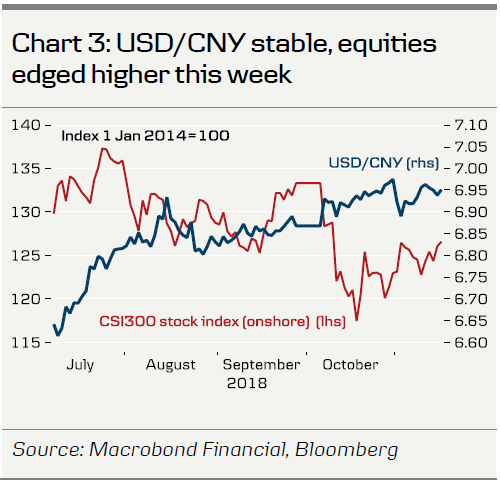
CNY stable while stocks edge higher (chart 3). We look for USD/CNY to stay around the current level for a while before rising gradually towards 7.20 in 12M on diverging monetary policy, see FX Forecast Update(page 15), 15 November 2018. Stock markets edged a bit higher but have moved broadly sideways over the past two months.
China's tech giant Tencent beat earnings expectations, see Bloomberg. Concerns over their gaming business still linger, though, following government restrictions.
Alibaba set new record on Singles day. Total sales worth USD30.8bn was a 27% increase from last year's previous record of USSD25bn, see Forbes.
IMF released a Working Paperon China's rebalancing. The paper concludes that rebalancing in 2017 'was uneven and decelerated along many dimensions reflecting the temporary factors behind the growth pick-up. Going forward, rebalancing is expected to proceed as these temporary factors recede, but elevated income inequality and leverage will remain a challenge.'
Elliott Wave Analysis: USDJPY Update
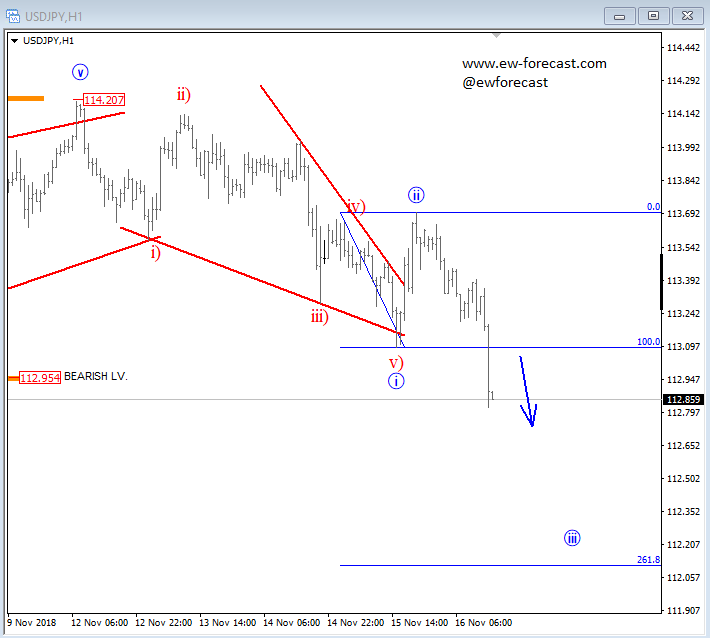
As expected, USDJPY is finally turning lower, which more and more looks like it's a wave »iii« in play after that projected leading diagonal in wave »i« from the highs. However, as said below, US stocks market can see a recovery, which may cause a small pullback on USDJPY before a continuation to the downside, but in any case we remain bearish!
USDJPY, 1h