Sample Category Title
Mixed Trade ahead of Fed Minutes
Stock markets are a little flat on Wednesday as we await the Fed minutes and digest more inflation data from China and the UK.
We saw a strong rebound on Tuesday as some Russian troops completed military drills near the Ukrainian border and returned to their normal bases in what was the first de-escalation in the region in weeks. It came at a time when various world leaders were warning about the threat of invasion this week, something Russia repeatedly denied.
Friday's warnings carried an additional urgency that triggered a sell-off late in the day and saw oil, gas, and gold rally. We've since seen some of those positions being unwound as the threat of conflict appears to have reduced. But with the threat level still relatively high, there's still a certain amount of risk premium in the markets. Especially with NATO and Ukraine suggesting they aren't seeing evidence of troops withdrawing yet.
We're basically drifting from one crisis to another at the minute; from soaring inflation and higher interest rates to deteriorating living standards and now the prospect of conflict in Ukraine, which in turn exacerbates the first two. With tensions easing on the border, attention has quickly shifted back to inflation following some more disappointing figures this morning.
Pressure intensifying on the BoE
It seems a long time since we saw an inflation print that wasn't above the consensus, or central bank estimates, which is fueling further concerns about interest rates and the cost of living crisis. While inflation is expected to peak in April, the road back is becoming ever-more perilous with every above-consensus reading. The peak is now likely to be higher again than many anticipated which probably means more rate hikes and a further squeeze on households and businesses.
Ultimately, the economy will suffer further even if many are better able to absorb higher prices as a result of savings built up over the last couple of years. That may encourage the Bank of England to be cautious in raising rates in the second half of the year as inflation falls but markets are clearly not of that view. Another five hikes are heavily priced in this year, on top of the two consecutive increases in December and February, which would take Bank Rate to 1.75%, the highest since the start of 2009.
Chinese inflation dips, paving the way for further rate cuts
China on the other hand is more focused on supporting the domestic economy, with inflation running well below target and slipping further to 0.9% in January. Producer prices remain high at 9.1% but have been on a downward trajectory in recent months which will allow the central bank to continue to cut rates this year and further shield the economy from the various headwinds it faces including the pandemic and property market turbulence.
Fed minutes to confirm hawkish evolution
I'm not sure what we'll learn from the Fed minutes later today that we're not already aware of, with numerous policymakers expressing increasingly hawkish views in recent weeks. Few have been as hawkish as James Bullard who's called for a full percentage point of increases before July and raised the prospect of inter-meeting hikes. I expect the minutes will reflect the ongoing hawkish evolution at the central bank but it shouldn't shift the dial as far as markets are concerned, with six hikes already priced in.
Oil edging higher again as NATO questions Russian withdrawals
Oil prices are trending higher again on Wednesday, despite tensions in Ukraine appearing to ease. They spiked late on Friday and at the start of the week as the perceived risk of a Russian invasion increased, threatening to impact supplies in an already extremely tight market.
While crude has pulled back from the highs as Russian troops began leaving the border - NATO remains unconvinced by those assurances - the market remains extremely tight and prices had been on an upward trajectory prior to the escalation. The softening of tensions may have only delayed the march to $100, rather than preventing it. API reported a small drawdown last week which is roughly in line with what's expected from the EIA report later today.
Gold remains supported as inflation continues to beat expectations
Gold is trading a little higher again today and above $1,850 where it has dipped below over the last 24 hours. This is the first big test of support, with it having been a major barrier of resistance in January. If it can hold above here, we could see it target yesterday's highs again in the coming days and weeks even as the risk of a Russian invasion declines.
The yellow metal continues to be supported by rapidly rising inflation even as markets price in more and more rate hikes from central banks. Another above-consensus reading from the UK this morning shows the trend is not improving as we near the peak over the next couple of months. Gold could remain well supported for a while yet.
A major breakout coming for Bitcoin?
Bitcoin continues to look very healthy after weathering the geopolitical storm well before benefiting from the improvement in risk appetite on Tuesday. Once again it finds itself trading a little shy of $45,500 where it ran into resistance last week after repeatedly seeing support there back in December. A move above here will be a big psychological boost and could propel bitcoin higher. Of course, risk appetite remains important, especially that linked to inflation and interest rates, which could continue to be a drag if anxiety remains in the broader markets.
Pound Edges Higher as UK CPI Rises
UK inflation rises to 5.5%
UK consumers continue to feel the cost-of-living squeeze, as inflation climbed to its highest level in 30 years. January CPI rose to 5.5% y/y, up from 5.4% in December and ticking above the consensus of 5.4%. Similarly, Core CPI rose from 4.2% to 4.4% and beat the forecast of 4.3%. Inflation is expected to continue to accelerate, with predictions that it will hit 7% come April.
These inflation numbers, together with the rise in wage growth are putting more pressure on the Bank of England to tighten its policy. The bank is widely expected to raise rates at the March meeting to 0.75%, which would mark three consecutive rate hikes for the first time in the BoE’s history. Inflation is expected to ease in the second half of the year, which means that the BoE might raise rates again in May but could then take a pause.
The Federal Reserve also has been dealing with the headache of surging inflation, which has forced the central bank to become more hawkish and abandon its stance that inflation is transitory. The Fed expects inflation to ease in the second half of 2022, but cannot afford to sit idle and plans to raise rates in March. The only question is the extent of the hike – the CME’s FedWatch has pegged a 57% chance of a 50-basis point hike and a 43% likelihood of a 25-basis point hike. It’s clear to all that this will mark the start of a series of hikes this year, although the exact number will depend on economic developments.
The crisis on the Ukraine/Russia border has eased but the situation remains very tense. Russia has apparently moved some troops away from the border but President Biden said that this has not been verified and warned that an invasion remains “distinctly possible”. Biden has warned Russia that it would face severe consequences if it invades, and the ball is squarely in Moscow’s court as to what happens next.
GBP/USD Technical Analysis
- There is resistance at 1.3640. and 1.3719
- There is support at 1.3487 and 1.3413
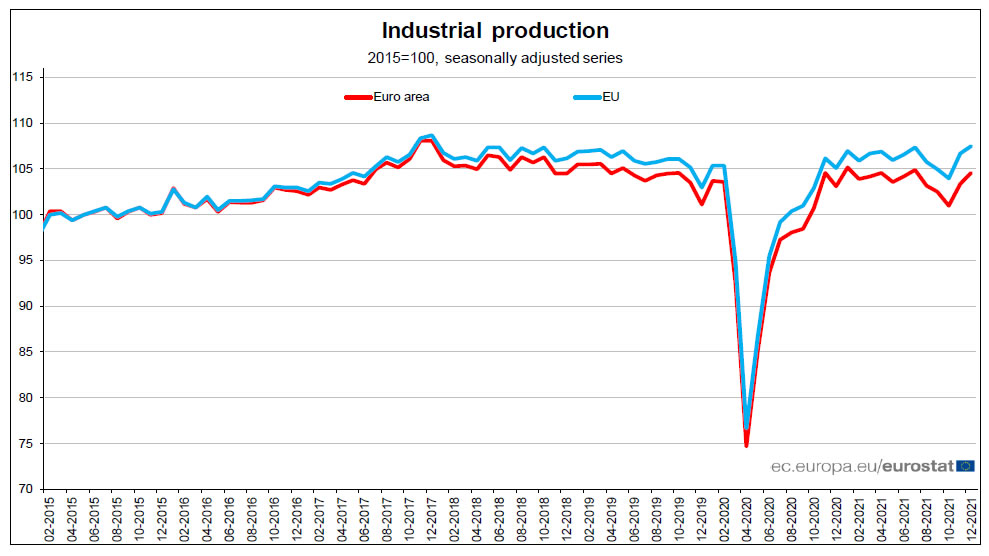
Eurozone industrial production rose 1.2% mom in Dec, EU up 0.7% mom
Eurozone industrial production rose 1.2% mom in December, well above expectation of 0.3% mom. Production of capital goods rose by 2.6%, intermediate goods by 0.5% and non-durable consumer goods by 0.4%, while production of durable consumer goods fell by -0.3% and energy by -0.8%.
EU industrial production rose 0.7% mom. Among Member States for which data are available, the largest monthly increases were registered in Ireland (+10.3%), Lithuania (+6.2%) and Luxembourg (+5.1%). The highest decreases were observed in Czechia (-2.9%), Austria (-1.1%) and Italy (-1.0%).
Signs that UK Inflation Peak is Close
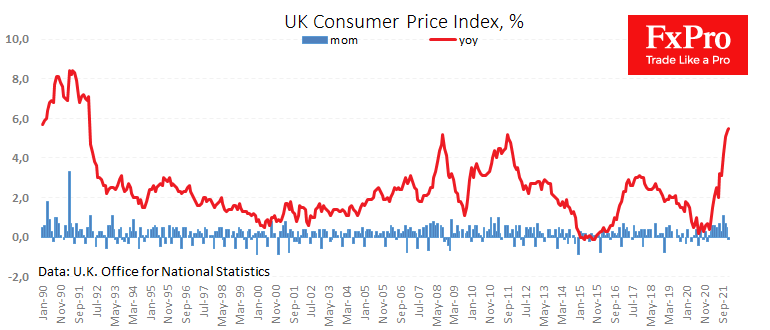
Britain’s consumer price index fell 0.1% in January, not as sharply as analysts had expected; they were expecting an average fall of 0.2%. Year over year inflation reached 5.5%, a new record since March 1992. There are plenty of signs that peak inflation is near, but the big question is how quickly price growth will return to its 2% target and what effort it will take from the Bank of England.
Among signs of a cooling inflation outlook, we highlight the second month of slowing producer prices to 13.6% YoY in January against 13.9% and 15.2% in the previous two months. This is an early indicator which allows us to expect less pressure from commodity prices on producers further down the line, which will cool consumer inflation in the coming months.
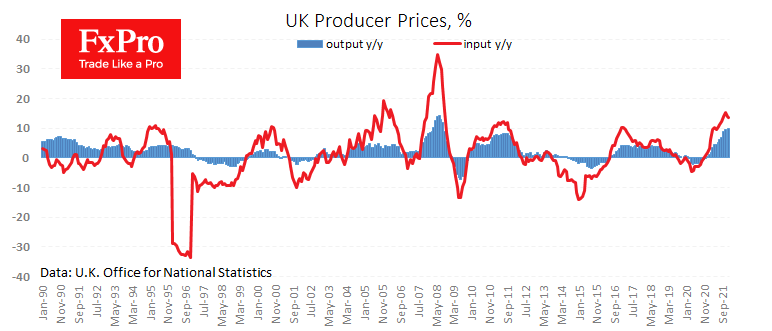
Among the early indicators of inflation around the world is also the Chinese producer price index, which noted a slowdown in January to 9.1% from 10.3% a month earlier and a peak of 13.5% in October.
The publication of the UK inflation accelerated the rise in the pound, sending GBPUSD above 1.3570.
USDJPY Uptrend Intact as Negative Pullbacks Negated
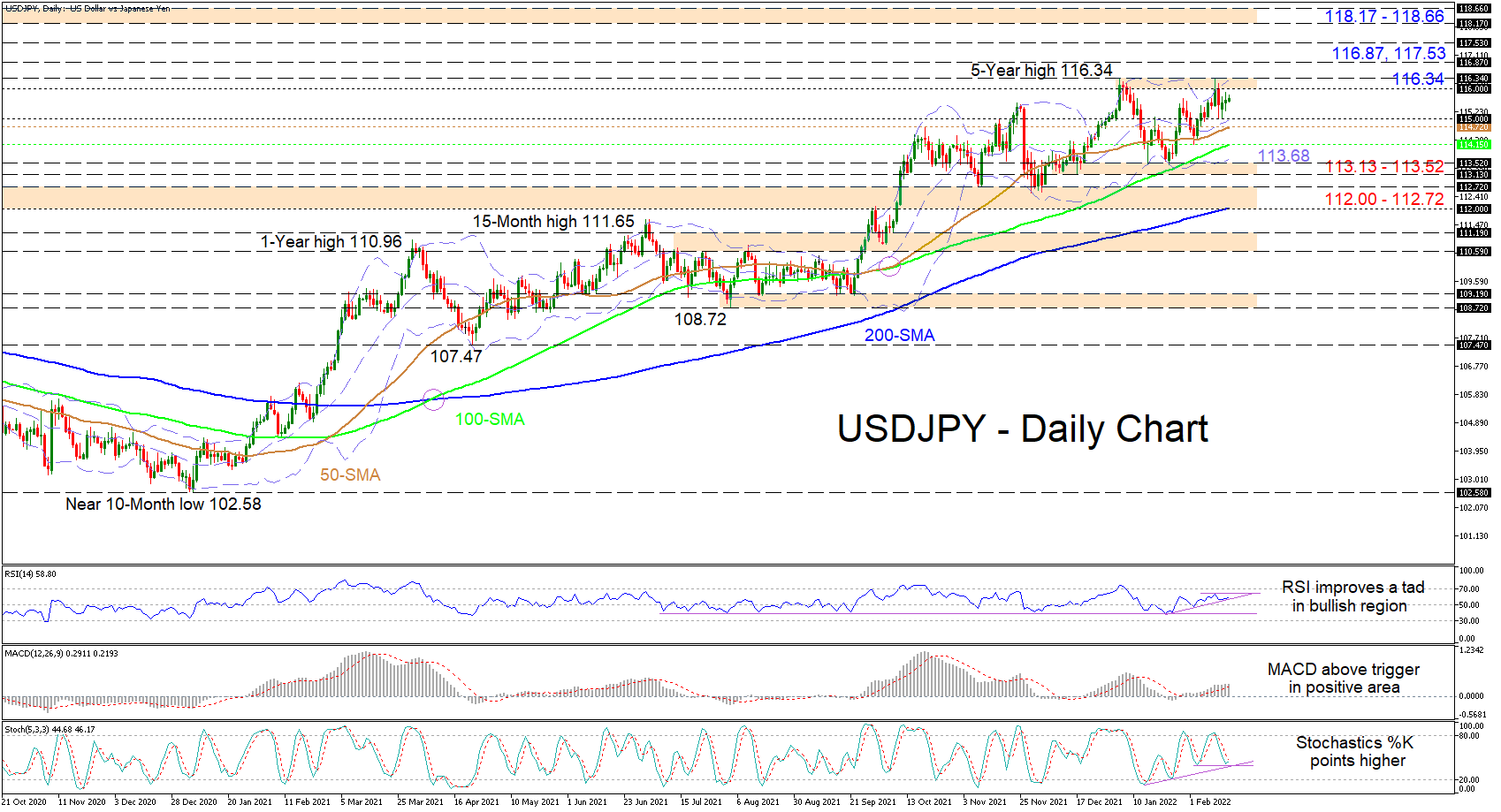
USDJPY is exhibiting a bullish tone as it approaches the 116.00 handle after the 50- and 100-day simple moving averages (SMAs) defused sellers’ attempts to steer the pair lower. The soaring SMAs are shielding the broader ascent in the pair.
Additionally, the short-term oscillators suggest that upside momentum is growing. The MACD is holding above its red signal line in the positive section, while the RSI is creeping higher in the bullish zone. Furthermore, the uptick in the stochastic %K line is promoting more advances in the pair.
To the upside, the fortified 116.00-116.34 resistance ceiling could delay price gains from gaining pace. However, if this barrier fails to keep growing bullish pressures at bay, the 116.87 and 117.53 highs, identified in the first half of January 2017, could come under attack. Should a more profound up move evolve, the 118.17-118.66 tough barricade, shaped over early November until mid-December 2016 that includes a double top formation, may be challenged.
Otherwise, if price developments become curbed by the 116.00-116.34 obstacle, an initial support band may transpire from 115.00 until the 50-day SMA at 114.72. In the event a deeper price pullback unfolds, the 100-day SMA at 114.15 could act as another upside defence before sellers aim for the lower Bollinger band at 113.68 and the adjoining 113.13-113.52 support base. In the event downward forces remain in control, the critical 112.00-112.72 support border may then draw traders’ attention.
Summarizing, USDJPY is currently sustaining a neutral-to-bullish tone above the 115.00 hurdle and the SMAs. A clear break of the 116.00-116.34 boundary could resuscitate the broader uptrend. That said, a price dive below the 113.13-113.52 support base may spark worries about a deeper correction unfolding in the pair.
NZDUSD Looks for a Bullish Breakout but How Far Could it Go?
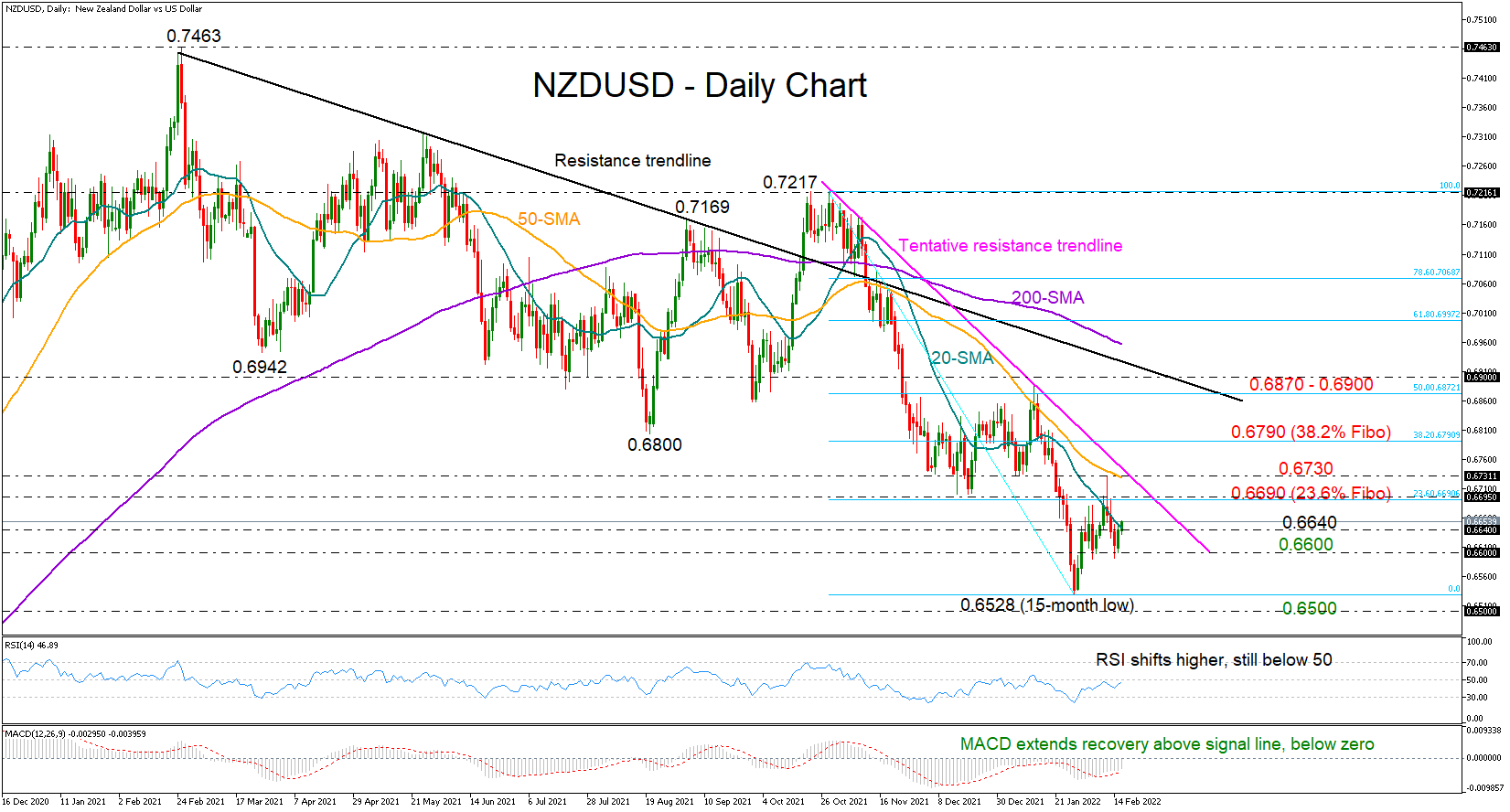
NZDUSD refused to return to the bottom of its downtrend earlier this week, pivoting once again near the 0.6600 round level to retest the 20-day simple moving average (SMA) at 0.6640, which has been constraining bullish actions for almost a week now.
The way higher, however, looks to be bumpier and the bulls will need to breach a few more barriers before they stage a meaningful rally. The RSI and the MACD are also reflecting some caution among traders. Although they keep progressing, the former is still beneath its 50 neutral mark and the latter is within the negative zone for the third consecutive month.
The 23.6% Fibonacci retracement of the 0.7217 – 0.6528 downleg at 0.6690 could immediately cease any upside movements above the 20-day SMA. Within breathing distance, the 50-day SMA could also prove a tough obstacle along the tentative descending trendline at 0.6730, while the 38.2% Fibonacci of 0.6790 could prevent an acceleration towards the previous high of 0.6889 and the resistance trendline currently sitting around 0.6900.
On the downside, a pullback below the 20-day SMA could initially seek support around 0.6600. If this floor cracks this time, the bears may again attempt to build the downward structure below January’s low of 0.6528 and the 0.6500 level with scope to reach the June 2020 limitations around 0.6378.
In brief, NZDUSD is expected to push for more gains in the short-term following the bounce above 0.6600. Yet, whether any upside corrections will be strong enough to boost buying confidence above 0.6730 remains to be seen.
GBP/USD Pair is Now Correcting Higher from $1.3486
The British Pound is facing a strong resistance near the 1.3620 and 1.3640 levels against the US Dollar. Recently, the GBP/USD pair declined and traded below the 1.3550 level.
It traded as low as 1.3486 and currently correcting higher. There was a move above the 1.3520 and the 50 hourly simple moving average. An immediate resistance is near the 1.3545 level. Besides, there is a key bearish trend line forming with resistance near 1.3545 on the hourly chart.
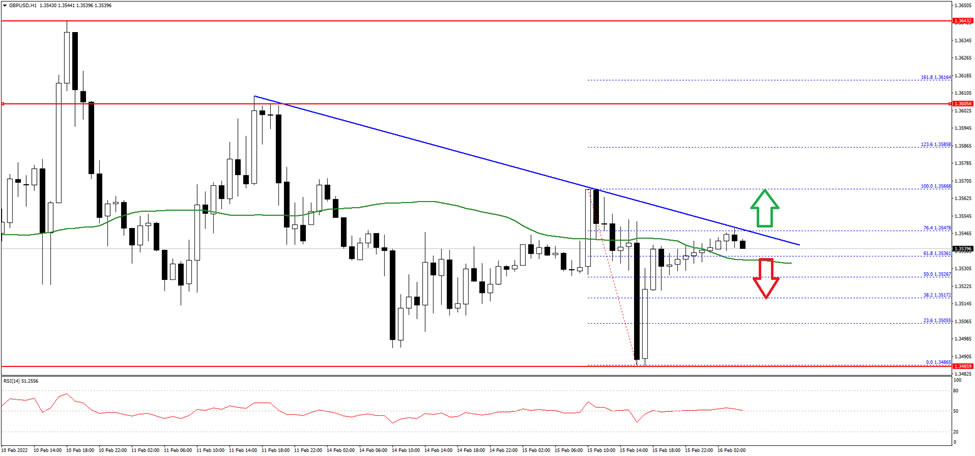
The next key resistance is near the 1.3565 level. Any more gains might push the pair towards the 1.3600 level, where the bears could take a stand in the near term.
An initial support on the downside is near 1.3535 on FXOpen. The main support is forming near the 1.3520 level. A break below the 1.3520 support could even push the pair below the 1.3500 support.
Faster UK Inflation a Tailwind for Sterling
- Risk assets revel in easing of geopolitical tensions for the time being
- UK reports higher-than-expected January inflation
- GBPUSD could revisit 1.37 if BOE triggers larger-than-expected March hike
- Hawkish FOMC minutes, Fed speak could boost dollar and drag stocks lower
Asian stocks are following Wall Street’s positive lead overnight while European equity futures are inching higher even as their US counterparts remain mixed at the time of writing. Safe havens such as the US dollar and gold are holding on to Tuesday’s declines, as oil prices unwind some of the risk premiums surrounding the Russia-Ukraine geopolitical crisis.
The apparent de-escalation in the stand-off has resulted in the return of some risk appetite. However, investors and traders still have inflation concerns front and center as the path towards the normalising of global monetary policy continues.
The prospects of interest rates rising faster than anticipated should cap the upside for stock markets until markets get used to such an environment. Until then, markets have plenty of uncertainty to wade through, with further bouts of volatility likely in store.
UK inflation climbs to new 30-year highs
The pound is climbing after higher-than-expected inflation in the UK stoked bets of even more aggressive rate rises from the Bank of England. The UK’s January CPI rose by 5.5% year-on-year, above the median estimate of 5.4%, which marks its fastest climb since March 1992. The core CPI, which strips out more volatile components such as food and energy costs, also came in at a fresh three-decade high of 4.4%, slightly higher than median forecasts.
With inflation pushing higher, the BOE may well have a strong case to trigger a 50-basis point hike at its March policy meeting. Note that at the early February meeting, four of the nine members on the bank’s Monetary Policy Committee had voted for the unprecedented rate adjustment. The scenario of a larger-than-usual hike was also given further credence by Tuesday’s UK data which showed another 108,000 jobs added in January to mark 14 consecutive months of job gains, along with a positive surprise in wage growth. Overnight index swaps show that markets are expecting the UK’s benchmark rate to rise by another 150 basis points to reach 2% by November.
As markets continue pricing in such hawkish prospects, that could lead to more near-term gains for the pound. Sterling is currently the only G10 currency that has advanced against the US dollar so far this year and could climb further if markets are led to believe that a 50bp hike next month is inevitable. Traders are currently pricing in a 60% chance of this happening.
With GBPUSD able to keep its head above the psychologically important 1.35 level in recent sessions, cable could make another run towards 1.37, barring another surge in dollar strength. The 200-day simple moving average and a key Fibonacci level combine here, to form the next challenge for bulls.
Fresh hawkish Fed clues could rock markets
The incoming FOMC minutes and the scheduled Fed speak are set to hold large sway over how markets perform before the weekend. Treasury yields and the US dollar could rise on further signs that Fed officials are ready to wield a larger interest rate rise hammer to quell soaring inflation. However, such a narrative could erode US stocks’ week-to-date gains, while significantly capping any near-term upside until markets have fully digested the Fed’s path forward for US interest rates and the shrinking of its balance sheet.
BoJ Kuroda: Basic approach to allow 10-yr JGB yield to move 25 bps up-down 0%
Speaking in the parliament, BoJ Governor Haruhiko Kuroda said there is no plan to change the band for 10-year JGB yield to fluctuate in. He added, "our basic approach is to buy a sufficient amount of bonds to allow 10-year JGB to move 25 basis points up and down each around our 0% target."
"How much JGB BoJ will buy to defend its yield target depends on market conditions at the time," he said. "BoJ's fixed-rate bond-buying offer was made in light of such unusual market situation. If market conditions become unusual again, BoJ will of course use tools such as fixed-rate market operation."
Daily Technical Analysis
EUR/USD
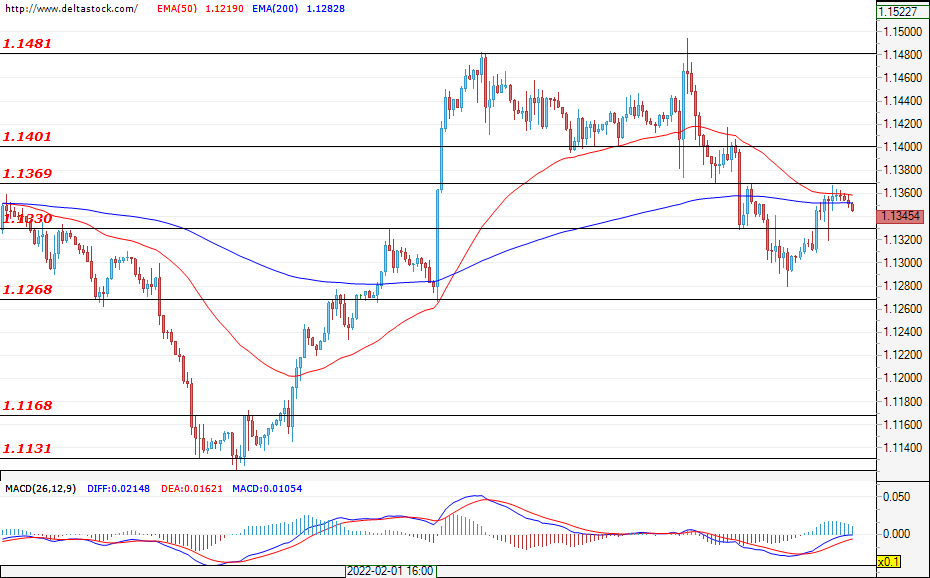
The depreciation of the single European currency was limited just above the support zone at 1.1268 during the first trading session for this week. The subsequent appreciation could be seen as a corrective move due to the fact that the bulls failed to gain enough momentum to breach the resistance at 1.1369. If the bears prevail in this situation, then it is possible to witness another wave of depreciation of the euro against the greenback, but this time towards the next more significant support area at 1.1168.
USD/JPY
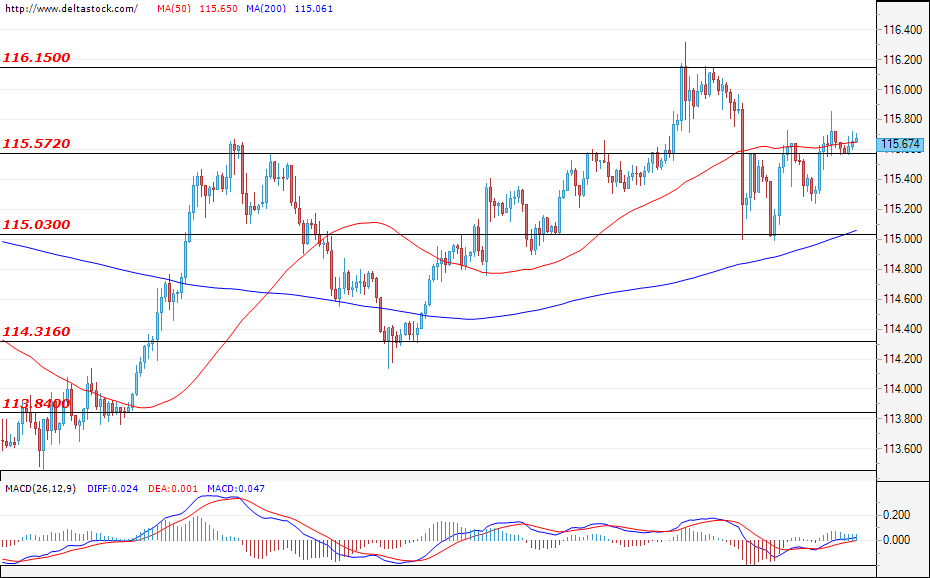
The situation with the Ninja as a whole remained unchanged at the time of writing, except that the currency pair is trading just above the 115.57 level, which currently plays the role of the first important support. The formation of a range is a possible development in the long run which, however, is expected to remain within the narrow channel between 115.03 and 116.15. Looking at the daily charts, the most likely scenario is for an attack on the resistance zone at 116.15. An unsuccessful breach here could steer any further trading activity towards the lower boundary of the mentioned range.
GBP/USD
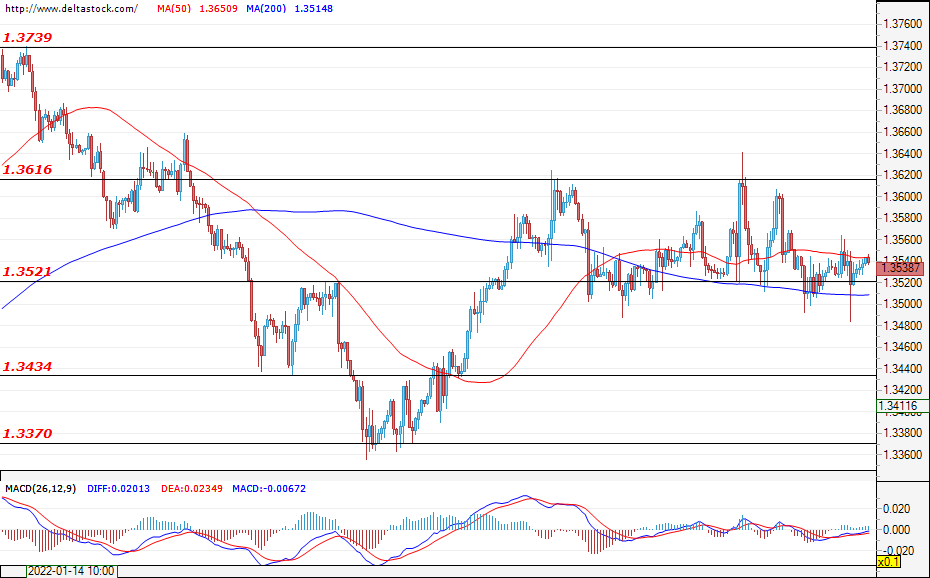
The Cable continues to trade in the narrow range between 1.3521 and 1.3616, and since the beginning of the week, we have witnessed two attempts at breaching the lower border of the mentioned range. Despite the unsuccessful breach, the sentiment remains negative – for another attack on the support zone at 1.3521. In the event of a breach, we could expect a decline towards the next significant support at 1.3434. Investors are eagerly awaiting the announcement of the consumer price index data for the UK (today; 07:00 GMT), which could determine the future of the currency pair. Increased market volatility is therefore expected.
EUGERMANY40
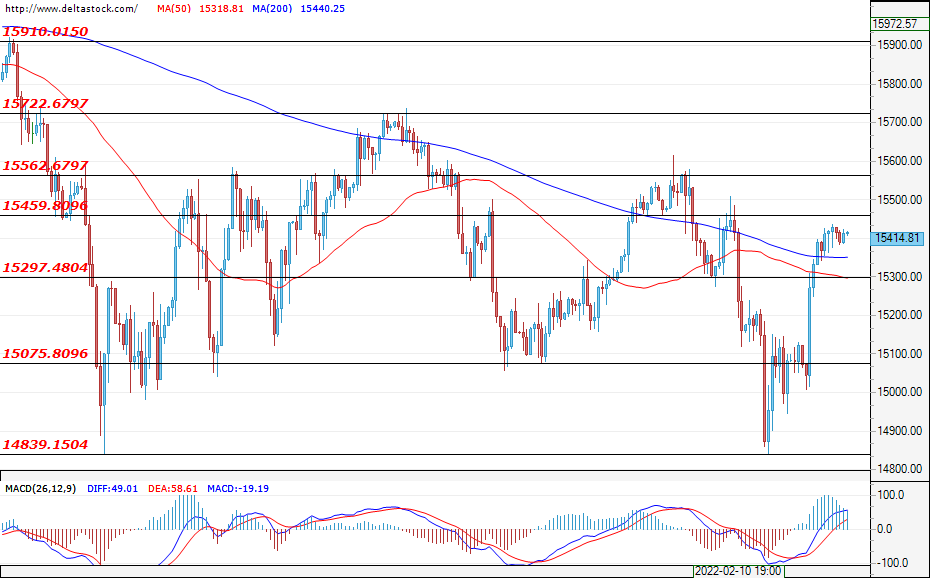
Yesterday, the German index managed to almost completely erase the losses that it had suffered in the previous two days, rising by more than 2 percent in the last trading session alone. At the time of writing, the bulls are on the verge of testing the resistance zone at 15459. A successful breach here would give the buyers the necessary incentive to lead the trading activity towards the next significant resistance at 15722. On the other hand, if the bears limit the recovery, then it is possible to witness another drop towards and a test of the support area at around 15075.
US30
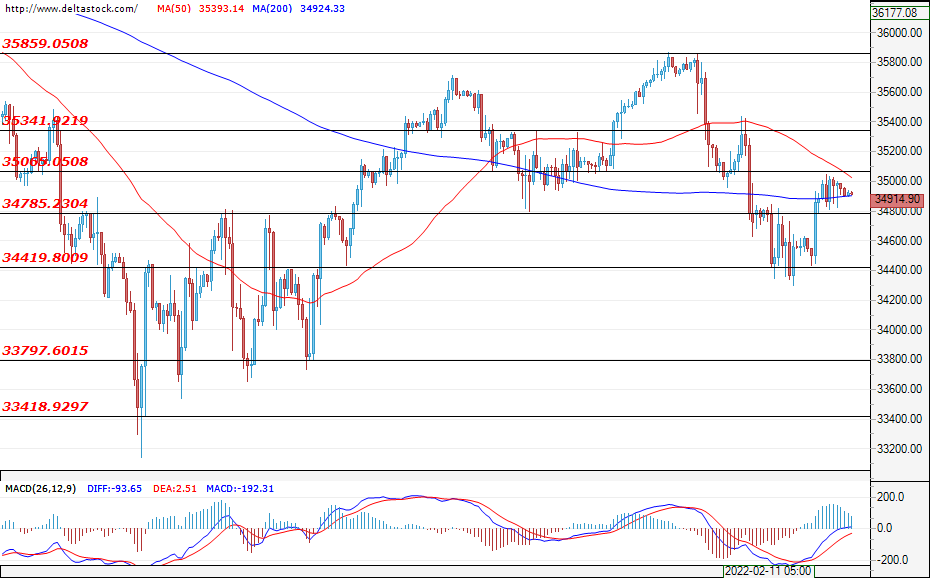
The U.S. blue-chip stock index also recovered with more than 1%, following the sell-off that began in the last session of the past week. Limiting the sell-off at 34419 gave the necessary incentive needed for the bulls to head towards the resistance zone at 35065. At the moment, the bears successfully manage to limit the appreciation below the mentioned resistance. Despite the recovery, the sentiment remains rather negative – for another attack on the support level at 34419. The Fed's meeting minutes, scheduled for today at 19:00 GMT, would have an impact on investors only if their reading of the Fed's previous meeting from two weeks ago changes as a result of today’s event.