


Key takeaways
- WTI crude extends bullish breakout: Prices surged about 19% since 26 Feb, reaching a 14-month high near $78, after breaking a 28-month descending resistance, with geopolitical tensions from the United States–Israel strikes on Iran acting as the key catalyst.
- Geopolitical risk underpinning the rally: Rising fears that Strait of Hormuz—which handles roughly 25% of global seaborne oil trade—could be disrupted have pushed prediction-market odds of a closure to above 86%, reinforcing the bullish outlook for oil.
- Technical momentum still positive: WTI maintains a bullish structure above $73.38 support, and a break above $78.10 could extend the rally toward $80.30 and $83.60–$84.55, while a drop below support risks a pullback toward $69–$67.80 before the next potential upside leg.
The price actions of the West Texas (WTI) crude oil have staged the expected upside breakout from the minor bullish flag, as highlighted in our previous report.
In addition, WTI crude broke above a 28-month major descending resistance from 28 September 2023 swing high, gapped up above $71.33 on Monday, 2 March 2026, triggered by joint attacks by the US and Israel on Iran.
So far, WTI crude has rallied by around 19% since the publication of our last report on 26 February to print a 14-month intraday high of $78.06 on Tuesday, 3 March 2026.
Below are several key support factors that oil prices can continue to see further potential upside despite US President Trump’s assurance to provide naval escorts for oil tankers through the Strait of Hormuz, a key global oil flow chokepoint, to prevent any significant oil supply shock triggered by potential Iranian sabotage on oil tankers.
Rising odds on the closure of the Strait of Hormuz by Iran
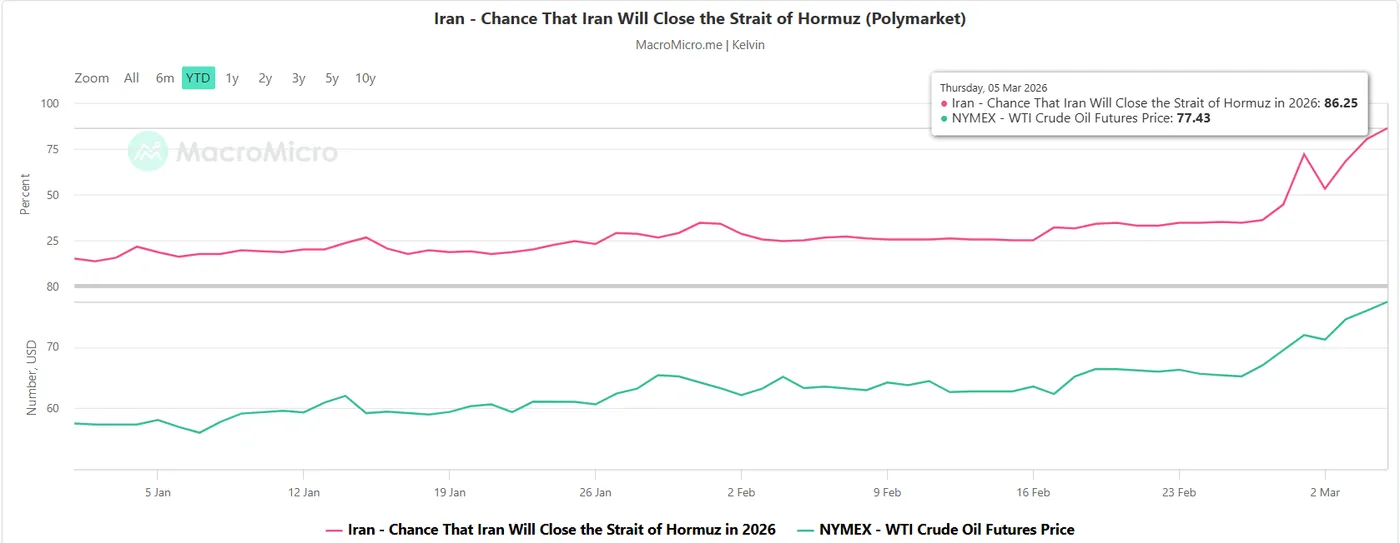
Fig. 1: Probability that Iran will close the Strait of Hormuz in 2026 as of 1 February 2026 (Source: Polymarket, MacroMicro)
The Strait of Hormuz, situated between Oman and Iran, is a crucial maritime energy chokepoint, as it handles a quarter of the world’s maritime oil trade and a fifth of the LNG trade, making it one of the most critical globally.
Based on the latest data from the prediction market platform Polymarket as of today (Thursday), 5 March 2026, as compiled by MacroMicro the probability of Iran closing the Strait of Hormuz in 2026 has increased to a current all-time high of 86.25%, surpassing the previous probability peak of 71.95% printed on 1 March 2026, during the onset of the latest US-Iran war (see Fig. 1).
Since the start of the probability trend of Iran closing the Strait of Hormuz in 2026, there has been a significant direct correlation with the movement of the WTI crude oil futures.
Hence, a fresh all-time high in terms of the probability of the closure of the Strait of Hormuz from Polymarket suggests that the ongoing short to medium-term bullish trend phases of WTI crude oil can persist.
Let’s now decipher the short-term (1 to 3 days) trajectory of WTI crude oil from a technical analysis perspective.
WTI Oil – Bullish acceleration intact, looking to break above $78.10/barrel
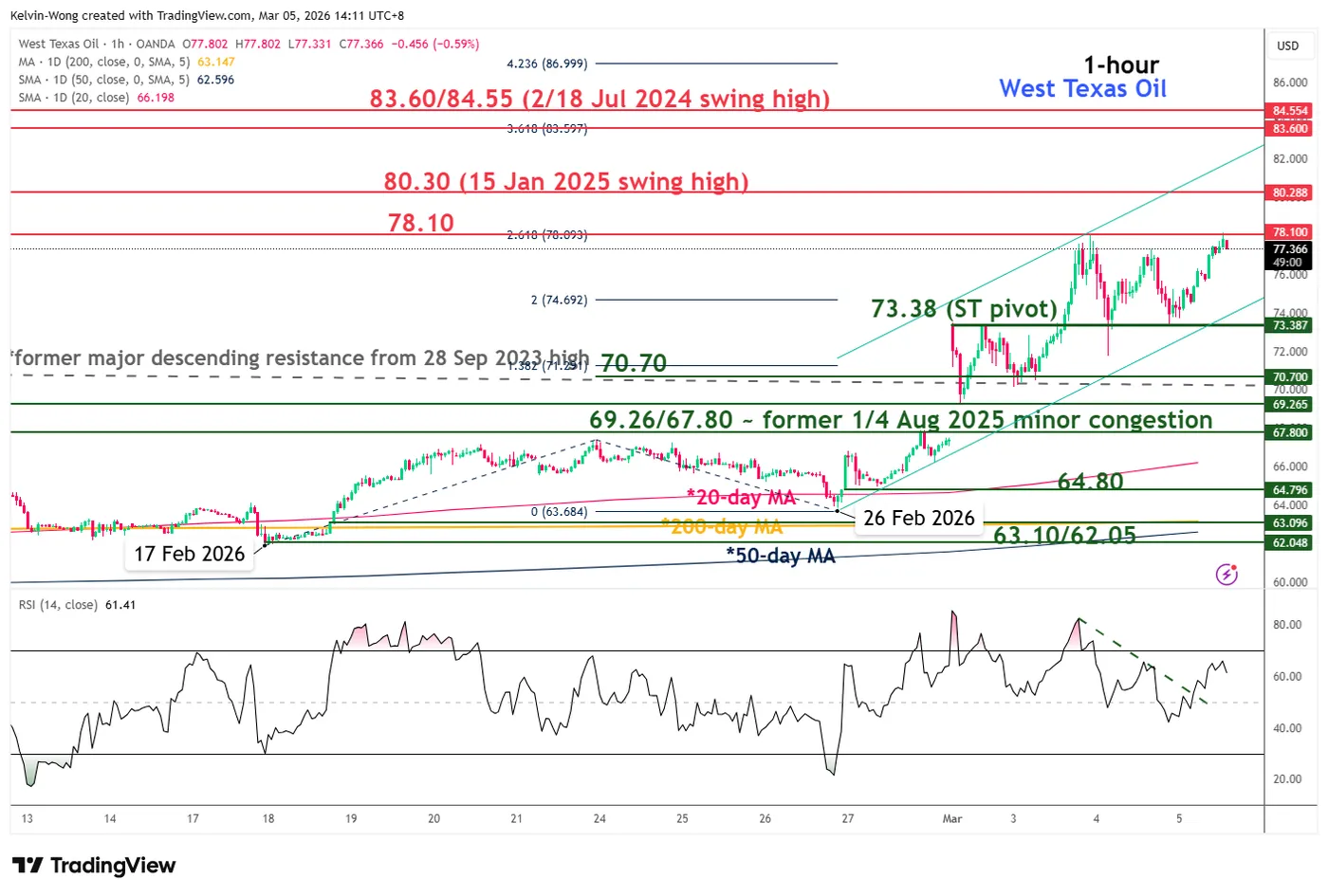
Fig. 2: West Texas Oil CFD minor trend as of 5 Mar 2026 (Source: TradingView)
Watch the tightened $73.38 key short-term pivotal support to maintain a bullish bias on the West Texas Oil CFD (a proxy of the WTI crude oil futures). A clearance above $78.10 increases the odds of the continuation of the bullish impulsive up move sequence for the next intermediate resistances to come in at $80.30 and $83.60/84.55 (also a Fibonacci extension) (see Fig. 2).
On the other hand, failure to hold with an hourly close below $73.38 support negates the bullish tone for a potential minor corrective decline to retest the next intermediate support zone of $69.26/67.80 (also close to the rising 20-day moving average) before the next potential bullish leg materializes for the West Texas Oil CFD.
Key elements to support the bullish bias on WTI Oil
- Price actions have continued to oscillate within a minor ascending channel since the 26 February 2026 low, with its lower boundary at around $73.38.
- The hourly RSI momentum indicator has staged a bullish breakout above its former descending resistance and continued to trend higher above the 50 level. These observations suggest short-term bullish momentum remains intact.





 crude oil have staged the expected upside breakout from the minor bullish flag, as highlighted in our previous report.)