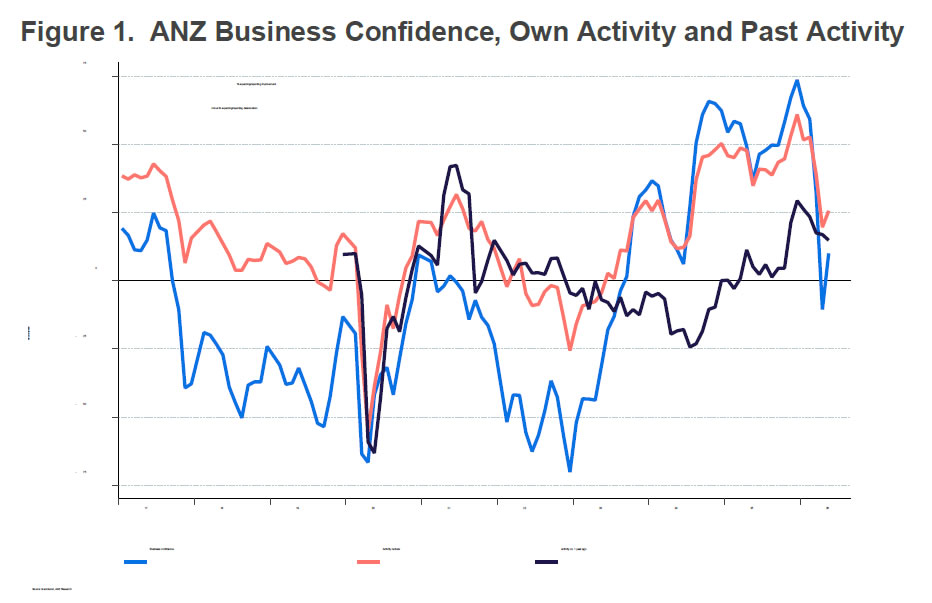
New Zealand business sentiment improved sharply in May, suggesting firms are gradually adapting to the economic shock created by the Middle East conflict. ANZ Business Confidence jumped from -10.6 to 10.0, returning to positive territory, while firms’ Own Activity Outlook rose from 19.6 to 25.6. The rebound indicates that some of the initial pessimism triggered by surging energy prices and global uncertainty has faded, although confidence remains well below levels seen before the conflict began.
Beneath the headline improvement, however, the survey painted a more mixed picture. Inflation expectations one year ahead eased from 3.81% to 3.63%, while wage expectations edged down from 2.53% to 2.48%. Employment intentions also improved notably, rising from -2.7 to 3.4, suggesting firms have become somewhat more optimistic about hiring.
ANZ noted that activity indicators remain considerably weaker than before the conflict, with retail and construction sectors continuing to struggle while agriculture and manufacturing have proven more resilient.
For the Reserve Bank of New Zealand, the survey may offer some reassurance that medium-term inflation pressures remain contained despite elevated headline inflation. ANZ emphasized that wage intentions provide a better guide to underlying inflation than short-term inflation expectations, and both measures remain below pre-conflict levels.
According to the ANZ, firms continue facing rising costs and profitability pressures but have limited ability to pass those costs on to customers in a soft demand environment. That dynamic may help contain broader inflation pressures even as the RBNZ continues preparing markets for likely OCR hikes later this year.
| Indicator | Previous | Actual |
|---|---|---|
| ANZ Business Confidence | -10.6 | 10.0 |
| Own Activity Outlook | 19.6 | 25.6 |
| Inflation Expectations (1-Year) | 3.81% | 3.63% |
| Employment Intentions | -2.7 | 3.4 |
| Wage Expectations (1-Year) | 2.53% | 2.48% |