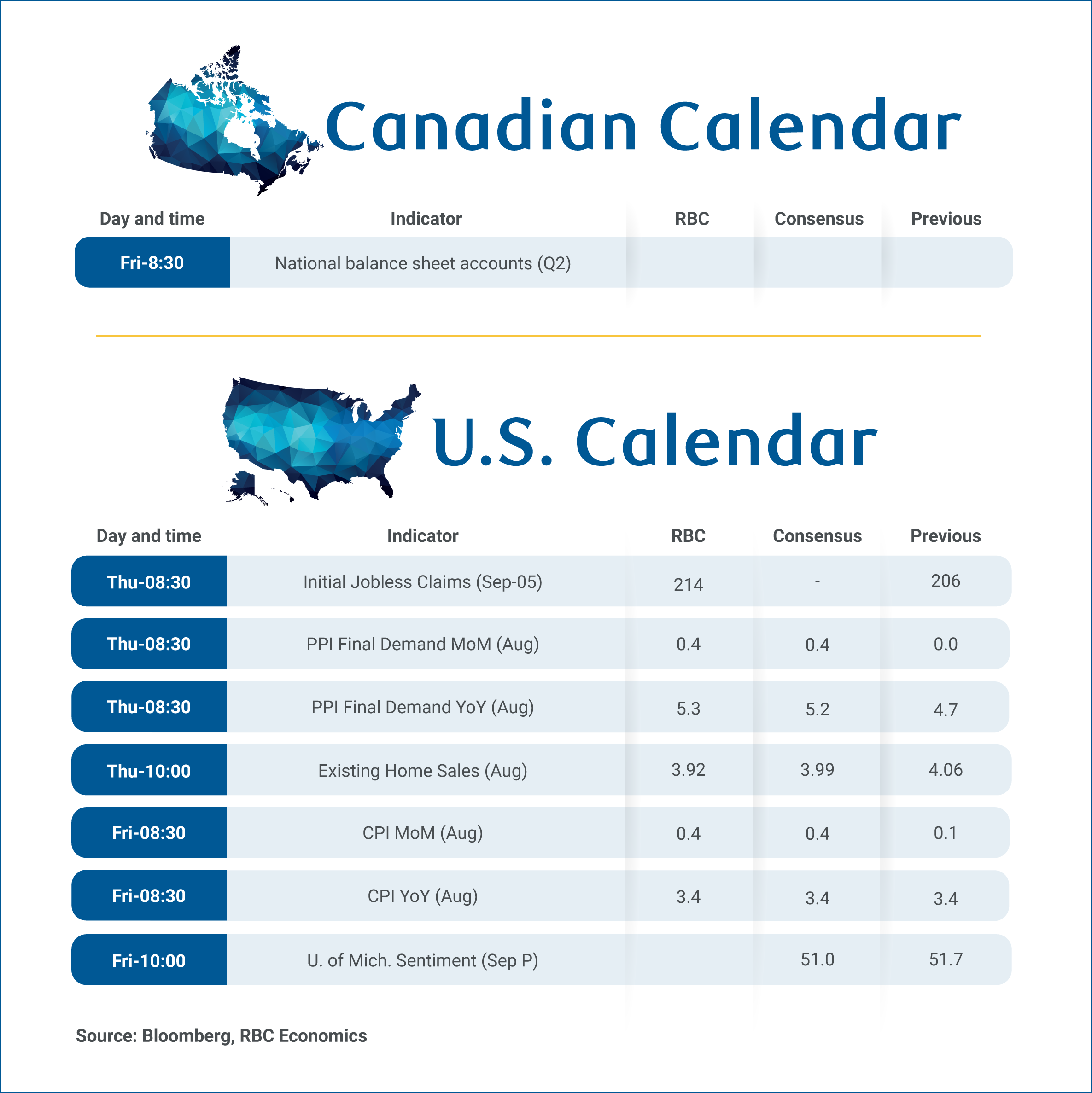
Canada’s economic calendar will be quiet next week after a recent run of data pointed to a gradually improving domestic backdrop.
Economic activity rebounded through the second quarter, supported by stronger household spending and business investment, while some of the earlier drag from trade disruptions faded.
The pace of growth is unlikely to be sustained, but the broader trend remains consistent with a gradual recovery. And labour market conditions have also shown further signs of stabilizing. Employment fell by 42,000 in August, ending a 3-month run of firm job growth. But the unemployment rate was unchanged at 6.4%, down 0.7 percentage points from a year ago.
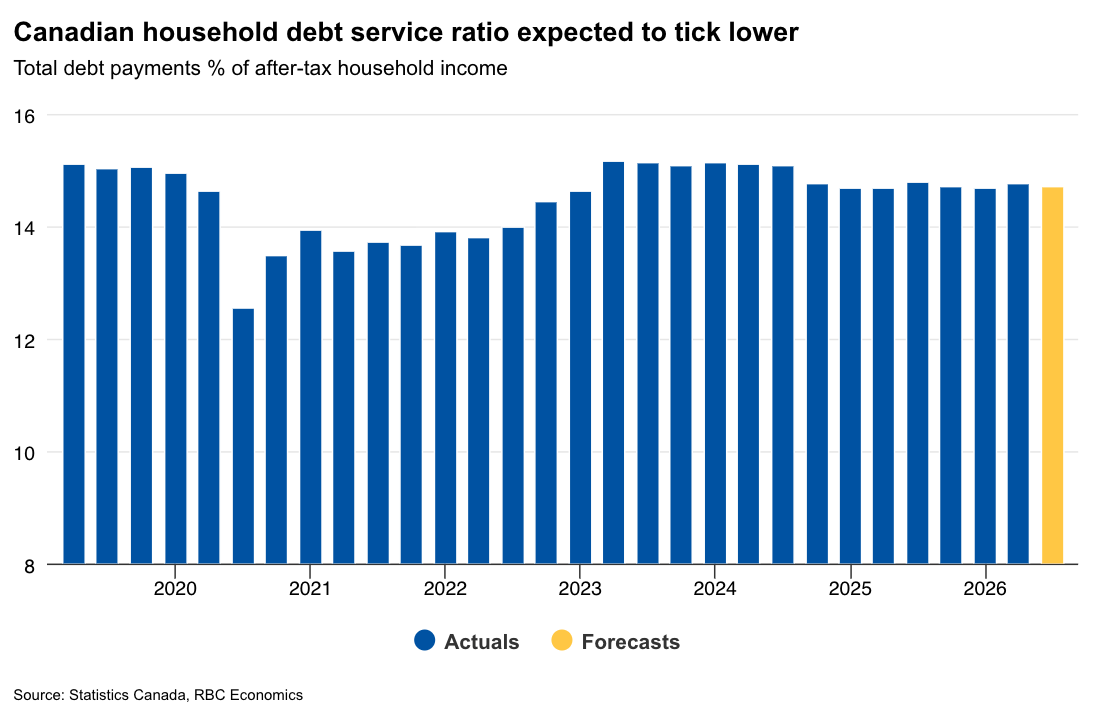
Next Friday’s Q2 national balance sheet accounts should show an increase in household net worth, boosted by rising financial assets and stabilizing housing markets. The TSX Composite Index rose another 6.4% in the quarter following a 3% gain in Q1, while the S&P 500 rebounded 17.2%, more than reversing its decline in the prior quarter. Non-financial assets were likely little changed, with the non-seasonally adjusted CREA Home Price Index rising just 0.2% in Q2. The household debt service ratio is also expected to edge lower, helped by stronger disposable income growth as wages and salaries increased and government transfers rose.
With limited Canadian economic releases scheduled next week, attention will also shift south of the border to the U.S. August CPI report on Friday. U.S. inflation has continued to cool overall, but the details have become increasingly problematic. Headline CPI rose 0.1% in July and was 3.4% above year-ago levels, while core prices increased 0.2% on the month and 2.5% from a year ago.
The breadth of U.S. inflation pressures has narrowed from earlier this year, but tariff-related cost pressures remain visible in some goods categories while services inflation, particularly shelter, remains stubbornly sticky. We expect headline CPI to rise 0.4% m/m in August, leaving the year-over-year rate at 3.4%, while core prices are expected to increase 0.2% m/m and 2.4% y/y. While some moderation in underlying inflation has occurred, the persistence of even core inflation measures at rates significantly above the Fed’s 2% inflation objective is concerning and raises the risk that additional interest rate hikes could be needed. The danger is that recent energy price pressures and tariff effects could prevent further disinflation or even drive a re-acceleration in core measures. If this materializes, the Federal Reserve would have limited ability to look through such a trend, leaving additional tightening as the most likely policy response.