


Cheaper Oil Gave Bond Markets Room to Recover, and France Was One of the Clearest Beneficiaries
What’s happening: Brent crude fell below $98 on Tuesday on improving Middle East supply availability, the planned G7 release of emergency stocks and Saudi Arabia’s unexpectedly aggressive cut to November crude prices for Asian buyers. Lower oil eased inflation-risk pressure, sovereign yields moved lower and the Dollar’s advance paused. EUR/USD rebounded to around 1.127 and the French-German 10-year spread narrowed back toward 130bp.
Why it matters: This is relief rather than a change in the broader trend. US yields are still near multi-decade highs and expectations for further Fed tightening remain intact, while France’s budget still has to navigate a deeply divided parliament. Wednesday’s FOMC minutes are the next test of whether the relief can extend.
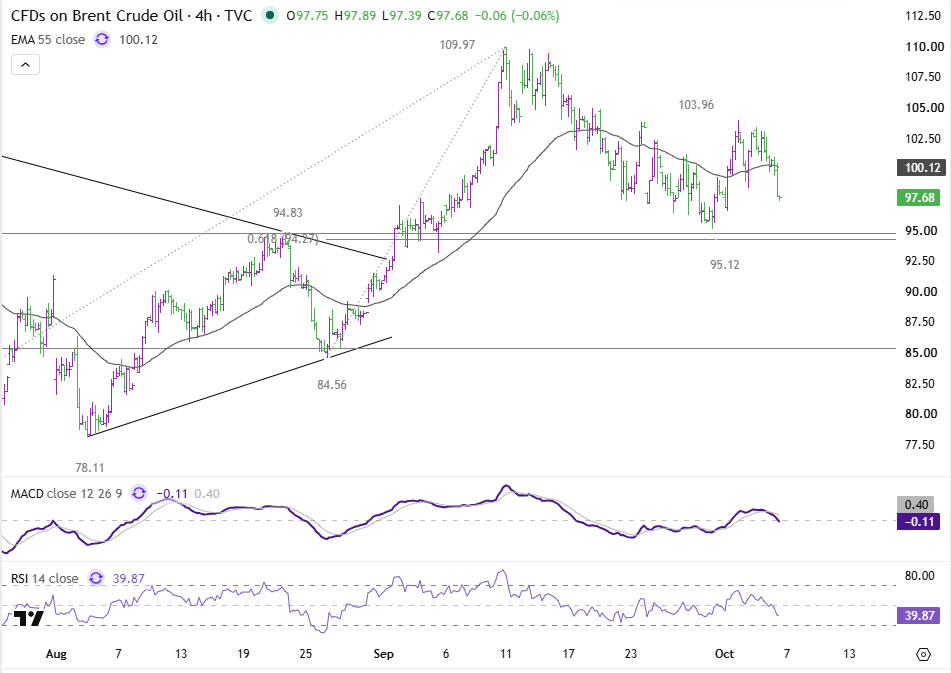
Brent crude fell below $98 on Tuesday, extending the easing in energy risk that has given global bond markets some breathing room after last week’s sharp repricing. The immediate catalyst was a combination of improving Middle East supply availability, the planned G7 release of emergency stocks and Saudi Arabia’s unexpectedly aggressive cut to November crude prices for Asian buyers. Lower oil helped ease inflation-risk pressure, sovereign yields moved lower and the Dollar’s advance paused. The important qualification is that this remains relief rather than a change in the broader trend: US yields are still near multi-decade highs and expectations for further Fed tightening remain intact.
Saudi Pricing Adds to the Supply-Relief Story
Oil Supply Data
- Brent: fell below $98 on Tuesday
- Saudi Aramco Arab Light OSP to Asia (November): cut to $5 below Oman/Dubai, from a $3 discount previously, the widest discount since June 2020
- Saudi prices to Northwest Europe and the Mediterranean: raised
- G7 emergency reserves: agreed release of 100 million barrels of crude and diesel
Saudi Aramco cut the November official selling price of Arab Light to Asia to $5 below Oman/Dubai, from a $3 discount previously, the widest discount since June 2020. At the same time, prices to Northwest Europe and the Mediterranean were raised. That regional contrast makes the Asian move look more like an attempt to defend market share than a blanket signal of collapsing global demand.
Saudi November Pricing: Asia vs Europe
| Region | Move in November pricing | Read-through |
|---|---|---|
| Asia | Arab Light cut to $5 below Oman/Dubai, from a $3 discount; widest discount since June 2020 | Looks more like an attempt to defend market share |
| Northwest Europe and Mediterranean |
Prices raised | Not a blanket signal of collapsing global demand |
The Saudi decision landed alongside a broader improvement in physical supply conditions. Gulf exports have recovered materially from their wartime disruption, while G7 countries have agreed to release 100 million barrels of crude and diesel from emergency reserves. Reuters also reported stronger Saudi pipeline flows and improving Middle East exports, even as regional security risks remain elevated. Brent’s fall therefore looks more like an unwinding of part of the geopolitical supply premium than a fundamental breakdown in oil demand.
Lower Oil Gives Bonds Room to Recover
The oil move fed directly into the inflation side of the rates story. German Bund yields fell, US Treasury yields eased from fresh multi-decade highs and UK gilts also rallied during the session. With energy prices backing away from last week’s extremes, markets had more room to trim some of the inflation compensation embedded in longer-dated yields.
Bond and Dollar Moves
- German Bund yields: fell
- US Treasury yields: eased from fresh multi-decade highs
- UK gilts: rallied during the session
- Dollar Index: slipped back toward 101.8, still comfortably above the 100 area and up strongly over the past month
That also interrupted the Dollar’s recent advance. The Dollar Index slipped back toward 101.8, although it remains comfortably above the 100 area and is still up strongly over the past month. This is therefore better described as a pause in the Dollar move than a reversal. Wednesday’s FOMC minutes remain the next test of whether lower oil and softer long yields can extend that pause.
France Is the Main Beneficiary
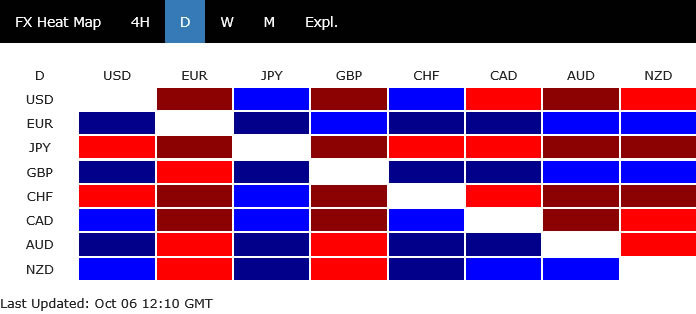
The Euro became the clearest regional beneficiary. EUR/USD rebounded from Monday’s 1.1161 17-month low to around 1.127, while the daily FX heat map showed the Euro outperforming all seven other major currencies. That indicates the move was not simply the mirror image of a softer Dollar.
Euro and France Data Points
- EUR/USD: rebounded from Monday’s 1.1161 17-month low to around 1.127
- Euro: outperformed all seven other major currencies on the daily FX heat map
- French-German 10-year spread: narrowed back toward 130bp, after reaching roughly 150bp last week
- French-German 10-year spread: 129.79bp earlier Tuesday, according to Reuters
- France 10-year yield: eased to around 4.75%
France supplied the additional catalyst. The French-German 10-year spread narrowed back toward 130bp after reaching roughly 150bp last week, while France’s 10-year yield eased to around 4.75%. Reuters put the spread at 129.79bp earlier Tuesday and noted that French yields had already been falling before Marine Le Pen outlined a more aggressive fiscal consolidation plan. Le Pen proposed cutting France’s deficit below 3% of GDP by 2030 and lifting planned net spending savings to €140bn by 2032.
French Fiscal Proposals
- Marine Le Pen: deficit below 3% of GDP by 2030, with planned net spending savings lifted to €140bn by 2032
- Prime Minister Sébastien Lecornu’s government: €43bn of savings proposed in the 2027 budget
- National Rally leader Jordan Bardella: a larger shadow-budget package presented
Separately, Prime Minister Sébastien Lecornu’s government has proposed €43bn of savings in the 2027 budget, while National Rally leader Jordan Bardella has presented a larger shadow-budget package. These proposals do not resolve France’s fiscal problem, but they helped reinforce a session in which investors were already reducing some of last week’s extreme risk premium.
Cheaper oil gave bond markets room, and France was one of the clearest beneficiaries.
Relief Is Not Resolution
The French story remains fragile. The 2027 budget still has to navigate a deeply divided parliament, with the possibility of a no-confidence confrontation still hanging over the process. France also faces a heavy funding requirement next year, while Spain adds another political event with its November 29 snap election.
That makes today’s narrowing in French spreads encouraging, but not decisive. A sustained OAT-Bund spread near or below 130bp, together with French 10-year yields staying below roughly 4.80%, would indicate that the worst of last week’s pressure is continuing to ease. A move back through the recent yield peak near 4.88% would quickly undermine that interpretation.
French Easing: What Confirms It vs What Undermines It
| Signal | Level | Reading |
|---|---|---|
| OAT-Bund spread | Sustained near or below 130bp | Worst of last week’s pressure continuing to ease |
| French 10-year yield | Staying below roughly 4.80% | Worst of last week’s pressure continuing to ease |
| French 10-year yield | Move back through the recent peak near 4.88% | Would quickly undermine the easing interpretation |
Related Coverage
FX and Europe
- USD/CAD Rally Reaches 61.8% Test as Fed Minutes and Canada Jobs Loom: the pair stretched near 1.4290 with no confirmed top, with the Fed minutes testing the Dollar side first.
- Eurozone Retail Sales Barely Rebound Despite Recovery in Non-Food Spending: soft consumption momentum behind the Euro, with weak fuel sales and uneven country performance offsetting better non-food demand.
Asia-Pacific Central Banks and Sentiment
- BoJ Ueda Shifts Focus to Anchoring Inflation as 2% Target Comes Into Reach: the BoJ debate moving from whether inflation can reach 2% to how much tightening is needed to keep it there.
- Australia Westpac Consumer Sentiment Drops to 80.4 as Post-RBA Responses Collapse: consumers hit hard by the RBA hike, with Westpac still expecting another increase in November.
- NZ NZIER Business Confidence Surges, But Own Activity Slips as Cost Pressures Ease: stronger optimism in New Zealand, though realized activity lags and cost and selling-price pressures ease.
FAQ
Why did Brent fall below $98?
Three factors combined: improving Middle East supply availability, the planned G7 release of 100 million barrels of crude and diesel from emergency reserves, and Saudi Aramco’s cut of the November Arab Light price to Asia to $5 below Oman/Dubai. Because Saudi prices to Northwest Europe and the Mediterranean were raised, the Asian cut looks more like a market-share move than a signal of collapsing demand. Brent’s fall therefore looks like an unwinding of part of the geopolitical supply premium rather than a fundamental breakdown in oil demand.
Is the Dollar’s advance over?
Not yet. Lower oil and softer long yields paused the advance, with the Dollar Index slipping back toward 101.8. It remains comfortably above the 100 area and is still up strongly over the past month, so this is better described as a pause than a reversal. US yields are still near multi-decade highs and expectations for further Fed tightening remain intact, with Wednesday’s FOMC minutes the next test.
Why did the Euro and French bonds rally, and is France out of the woods?
Cheaper oil gave bond markets room, and France was one of the clearest beneficiaries. The French-German 10-year spread narrowed back toward 130bp from roughly 150bp last week, France’s 10-year yield eased to around 4.75%, and EUR/USD rebounded from 1.1161 to around 1.127. But the fiscal proposals from Lecornu’s government and the National Rally do not resolve France’s fiscal problem, and the 2027 budget still faces a deeply divided parliament. The narrowing is encouraging, but not decisive.
Key Takeaways
- Brent fell below $98 on improving Middle East supply, the planned G7 release of 100 million barrels and Saudi Arabia’s cut to November prices for Asian buyers.
- The Asian price cut, alongside higher prices to Northwest Europe and the Mediterranean, looks like a market-share move, and Brent’s fall looks like an unwinding of part of the geopolitical supply premium.
- Lower oil lowered Bund, Treasury and gilt yields, but US yields remain near multi-decade highs and expectations for further Fed tightening remain intact.
- The Dollar Index slipped back toward 101.8, a pause in the Dollar move rather than a reversal.
- EUR/USD rebounded from Monday’s 1.1161 low to around 1.127, with the Euro outperforming all seven other major currencies.
- The French-German 10-year spread narrowed toward 130bp and France’s 10-year yield eased to around 4.75%, though the French story remains fragile.
- A sustained spread near or below 130bp with yields below roughly 4.80% would show easing continuing, while a move back through the 4.88% peak would quickly undermine it.
What to Watch Next
Wednesday’s FOMC minutes are the immediate global catalyst. For the current relief move to extend, Brent would ideally remain below $100 while long US yields continue to ease. A rebound in oil back above $100 alongside renewed Treasury selling would make Tuesday look more like a one-day pause.
For the Euro, France remains the key. As long as the OAT-Bund spread stays near or below 130bp and French yields remain contained, EUR/USD has room to hold the rebound from 1.1161. But the improvement is still a reduction in stress, not evidence that the underlying fiscal and political risks have disappeared.





