


- European currencies are under pressure from domestic turmoil.
- The yen is falling due to concerns about the Bank of Japan’s lack of urgency.
The US dollar has reached its highest level since late July, rising steadily over the last seven trading sessions and gaining more than 2%. In addition to domestic factors supporting the dollar, such as a strong economy, momentum in big tech and a tightening monetary policy outlook, there have been other contributing factors. Rising political risks are weighing on the euro and the pound, while the yen has fallen for seven of the last eight days amid disappointment over the committee’s lack of unity regarding the Bank of Japan’s monetary policy outlook.
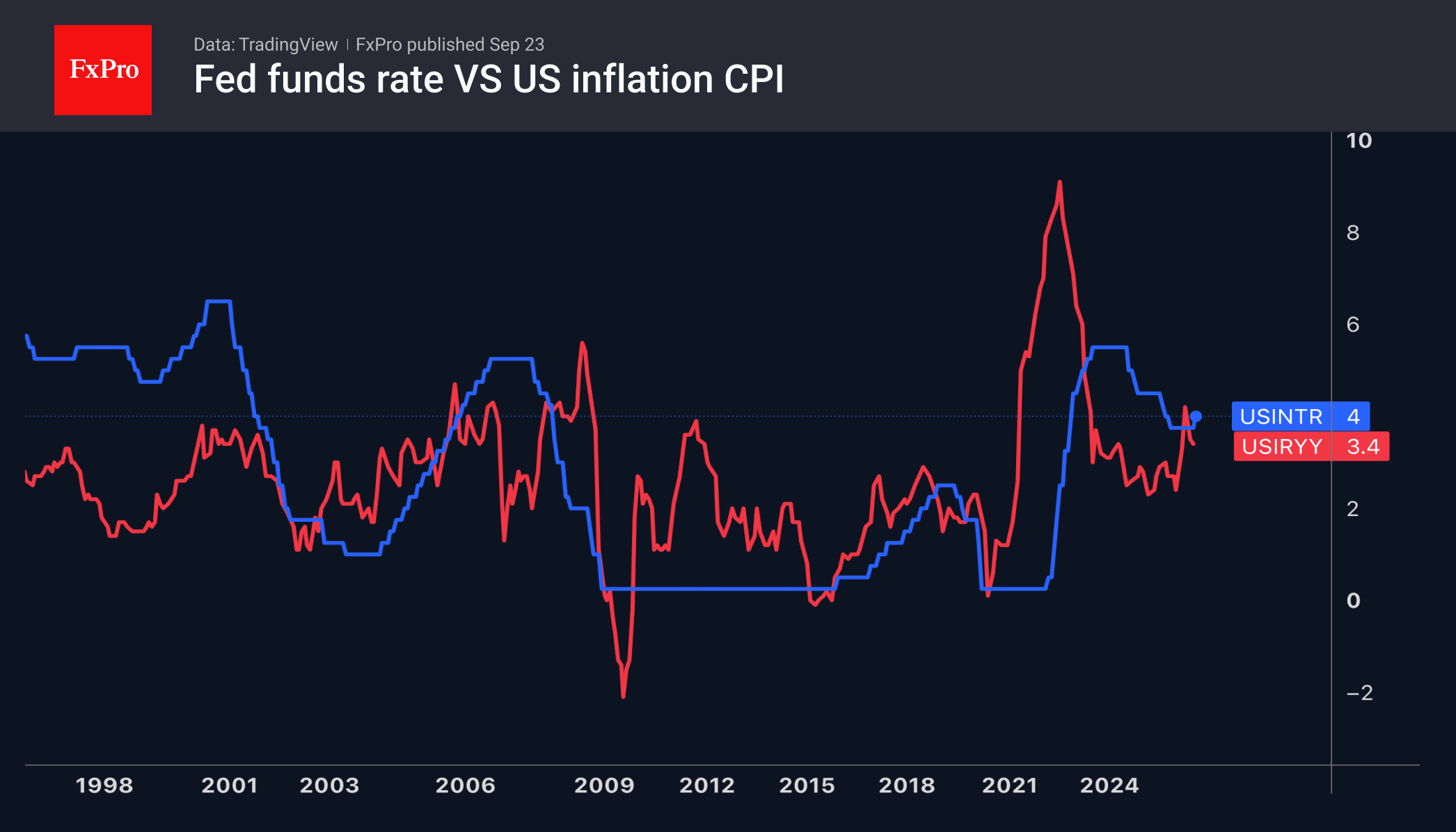
Recent comments from FOMC members indicate concerns that the protracted conflict in the Middle East and associated high energy prices will drive up core inflation through second-round effects. This will require the Fed to continue raising rates aggressively. The futures market puts the probability of a rate rise in October at 54%. The probability of two further rate rises in 2026 stands at around 40%.
In the UK, the probability of a base rate rise from 3.75% to 4% in November exceeds 81%. Yet, GBPUSD is falling on concerns ahead of the publication of the UK budget proposal by Andy Burnham’s government. The new Prime Minister’s excessive stimulus measures could clash with the BoE’s monetary policy tightening, increasing the risk of a repeat of the 2022 scenario, which saw the pound plummet and was followed by Liz Truss’s resignation.
The situation is even bleaker in France, where public debt could exceed 120% of GDP as early as 2027, while the cost of servicing that debt is set to double by the end of the decade. This calls for urgent budget-cutting measures, but the National Assembly is categorically opposed to them.
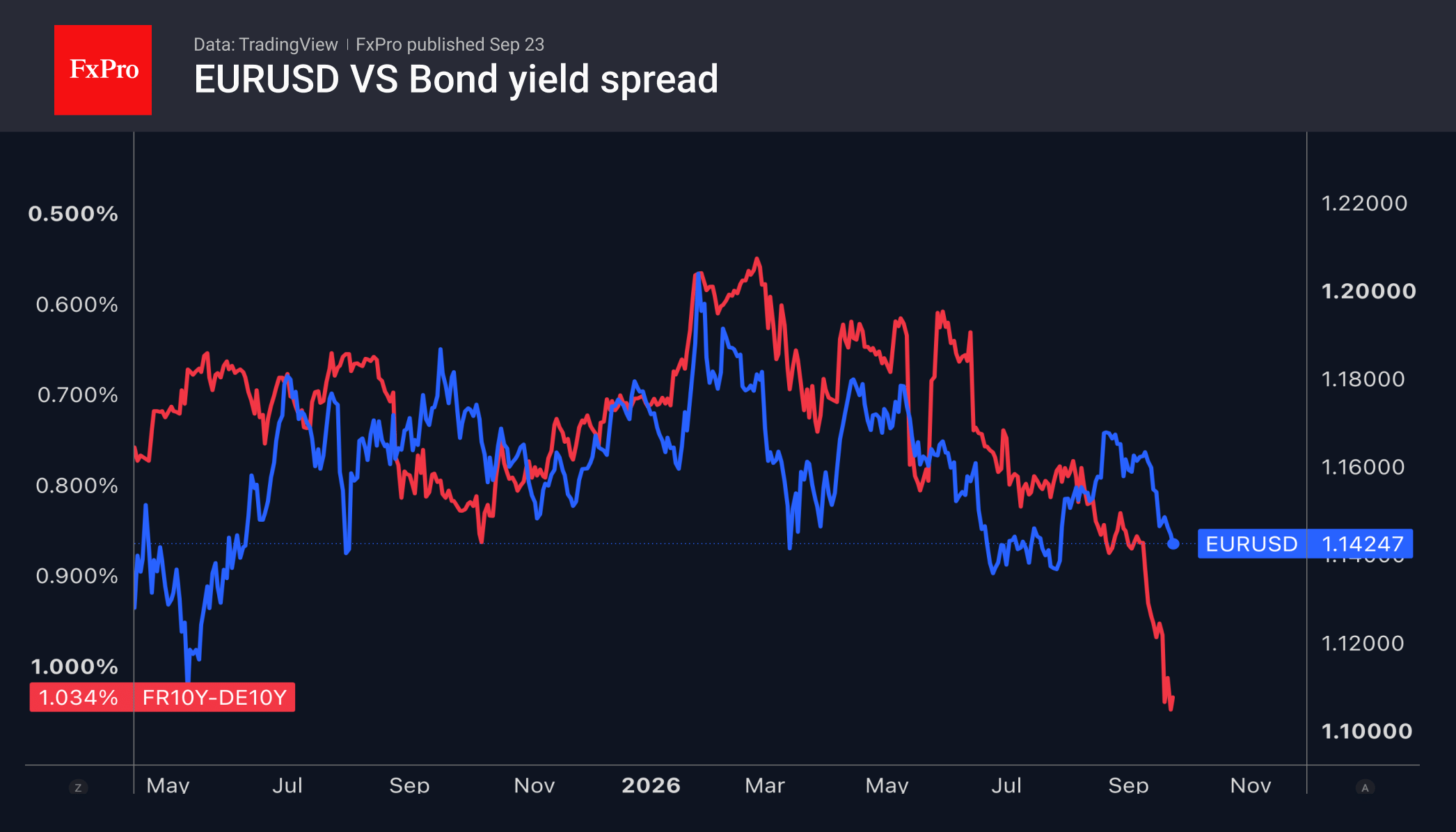
As a result, investors are fleeing the country, widening the yield spread between French and German bonds. This spread is already wider than it was during the European debt crisis. Back then, it took Mario Draghi and his famous pledge, ‘whatever it takes to preserve the euro’. It looks as though the central bank may once again have to resort to buying up debt securities. Such prospects are frightening investors and putting serious pressure on the EURUSD.
The BoJ has seriously disappointed investors, with two dissenting voices and no clear signals of an imminent rate rise. Rumours are circulating in the market that, against the backdrop of Japan having the lowest inflation rate among the G7 countries, its central bank will not be in a hurry to act, which is driving the USDJPY higher.
The FxPro Analyst Team





