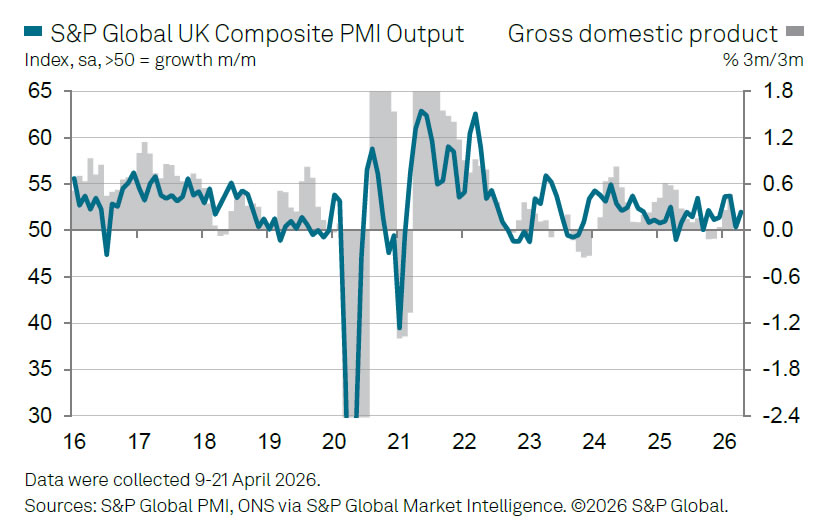
UK business activity picked up in April, with the Flash PMI Composite rising from 50.3 to 52.0, a two-month high. Services activity rose from 50.5 to 52.0. Manufacturing PMI jumped from 51.0 to 53.6, the highest level in nearly four years, with output returning to expansion at 51.8, up from 49.2. However, much of this strength appears to be driven by front-loaded demand, as firms rush to secure inputs and build inventories ahead of expected supply disruptions.
That urgency is being fueled by rising costs. Price pressures have surged at one of the fastest rates outside of the pandemic period, driven not only by higher energy prices but also broader supply concerns. Supply chain delays have also intensified, reaching levels rarely seen outside crisis periods, adding further upward pressure to prices.
The survey underscores the increasingly difficult trade-off facing the Bank of England. The sharp spike in price pressures is likely to intensify calls for further rate hikes to contain inflation. However, policymakers cannot ignore the growing signs of fragility in demand and confidence.
While April’s PMI points to a modest rebound from March, consistent with around 0.2% quarterly growth, the underlying details—softening employment, weaker sentiment, and supply-driven activity—suggest that this pace may prove short-lived if the crisis persists.
| Indicator | Apr | Mar |
|---|---|---|
| PMI Composite | 52.0 | 50.3 |
| PMI Services | 52.0 | 50.5 |
| PMI Manufacturing | 53.6 | 51.0 |
| Manufacturing Output | 51.8 | 49.2 |
| GDP Signal | ~0.2% qoq | Flat |