New Zealand inflation slowed more than expected in the September quarter, with annual CPI easing from 4.1% to 3.7%, below market expectations of 3.8% and RBNZ’s 3.9% projection. Quarterly inflation also moderated sharply from 1.5% to 0.7%, undershooting forecasts of 0.8%. While the result indicates some relief from earlier price pressures, annual inflation remains above RBNZ’s 1–3% target range. More importantly, the underlying details were less reassuring, with several measures of core inflation strengthening despite the headline slowdown.
Lower petrol prices were the largest downward contributor to quarterly inflation, falling 6.5% after surging 20.1% in the June quarter. Nevertheless, petrol remained 19.1% more expensive than a year earlier, making it the largest individual contributor to annual inflation. Stats NZ estimated that annual CPI would have risen 3.2% without the increase in petrol prices over the year. Meanwhile, international airfares jumped 14.3% during the quarter, providing the largest upward contribution, while vegetables rose 10.5% and local authority rates increased 6.2%. The contrasting movements illustrate how substantial changes in individual prices influenced the headline result.
Underlying inflation measures presented a more concerning picture. The 30% trimmed mean accelerated from 2.6% to 3.0% yoy, while the weighted median increased from 2.7% to 3.1%. CPI excluding fuel and food also strengthened from 2.9% to 3.2%. Meanwhile, the proportion of the CPI basket recording annual price increases above 3% surged from 38.5% to 54.9%, indicating considerably broader inflation pressures. Quarterly non-tradables inflation accelerated from 0.6% to 1.0%, although its annual rate edged down from 3.4% to 3.3%. In contrast, quarterly tradables inflation slowed sharply from 2.7% to 0.2%, reflecting the significant reversal in fuel prices.
The report therefore offers mixed evidence of progress toward sustained disinflation. Easing fuel costs helped lower headline inflation, but stronger core measures and the widening distribution of price increases suggest underlying pressures remain persistent. These details are particularly relevant ahead of RBNZ’s October 28 policy review, with markets pricing a high probability of another 25bps rate hike. Westpac has also brought forward its expected increase from December to October, citing firm underlying inflation. While the downside headline surprise provides some reassurance, the broader composition gives policymakers less reason to conclude that inflation risks have subsided.
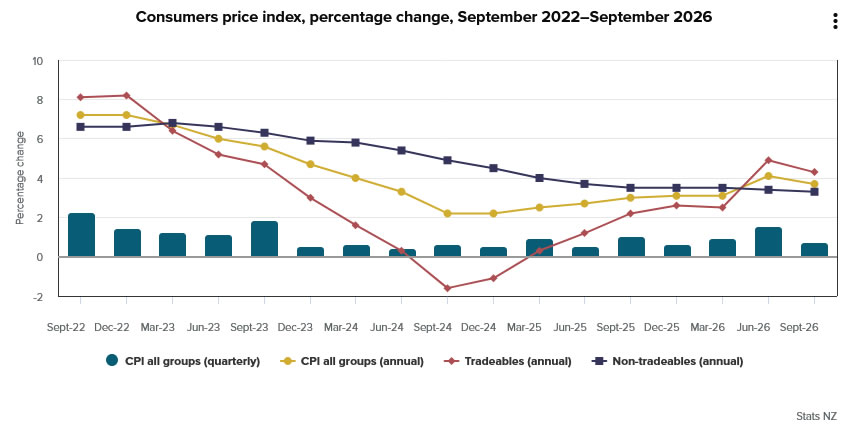
Data Summary
New Zealand CPI — Q3 2026
| Indicator | Previous | Forecast | Current |
|---|---|---|---|
| CPI Q/Q | 1.5% | 0.8% | 0.7% |
| CPI Y/Y | 4.1% | 3.8% | 3.7% |
| Tradables Q/Q | 2.7% | — | 0.2% |
| Tradables Y/Y | 4.9% | — | 4.3% |
| Non-tradables Q/Q | 0.6% | — | 1.0% |
| Non-tradables Y/Y | 3.4% | — | 3.3% |
Underlying Inflation Measures — Y/Y
| Indicator | Previous | Current |
|---|---|---|
| CPI excluding fuel | 2.9% | 3.0% |
| CPI excluding fuel and food | 2.9% | 3.2% |
| CPI excluding fuel, food and household energy | 2.5% | 2.9% |
| 30% trimmed mean | 2.6% | 3.0% |
| Weighted median | 2.7% | 3.1% |
| CPI basket with annual price rises above 3% | 38.5% | 54.9% |
Selected Price Movements
| Component | Q3 Q/Q | Q3 Y/Y |
|---|---|---|
| Petrol | -6.5% | +19.1% |
| International airfares | +14.3% | +12.5% |
| Vegetables | +10.5% | -2.2% |
| Local authority rates and payments | +6.2% | +6.2% |
| New housing construction | — | +3.2% |
| Electricity | — | +9.3% |
Key Takeaways
- Headline inflation slows more than expected: New Zealand CPI eased from 4.1% to 3.7% yoy in Q3, below consensus of 3.8% and the RBNZ’s 3.9% projection. Quarterly inflation moderated sharply from 1.5% to 0.7%, against expectations of 0.8%. However, annual inflation remains above the RBNZ’s 1–3% target range.
- Falling petrol prices provide significant quarterly relief: Petrol prices declined 6.5% qoq after surging 20.1% in Q2, helping reduce quarterly tradables inflation from 2.7% to 0.2%. Nevertheless, petrol remained 19.1% more expensive than a year earlier and was the largest individual contributor to annual CPI inflation.
- Other components show contrasting price movements: International airfares jumped 14.3% during the quarter, providing the largest upward contribution to quarterly inflation. Vegetable prices increased 10.5%, while local authority rates and payments rose 6.2%. These increases partially offset the downward impact of cheaper fuel.
- Core inflation measures strengthen despite headline disinflation: The 30% trimmed mean accelerated from 2.6% to 3.0% yoy, while the weighted median climbed from 2.7% to 3.1%. CPI excluding fuel and food also rose from 2.9% to 3.2%, suggesting underlying price pressures remain persistent.
- Inflation becomes considerably more widespread: The share of the CPI basket recording annual price increases exceeding 3% jumped from 38.5% to 54.9%. Meanwhile, 85.5% of the basket experienced some increase in prices, highlighting broader inflation pressures despite the lower headline rate.
- Domestic inflation remains relatively firm: Quarterly non-tradables inflation accelerated from 0.6% to 1.0%, although its annual rate edged down from 3.4% to 3.3%. This contrasts with the sharp quarterly slowdown in tradables inflation and suggests an uneven adjustment between domestic and externally influenced prices.
- RBNZ tightening expectations remain strong: The softer headline result has not removed concerns about inflation persistence. Reuters reported markets pricing around a 98% probability of another rate hike at the October 28 meeting, while Westpac brought forward its expected 25bps increase from December to October, citing firm core inflation.