Sample Category Title
Canadian Dollar Edges Higher, Manufacturing Sales Ahead
The Canadian dollar has posted modest gains this week against the greenback, and continues to move higher in the Friday session. Currently, USD/CAD is trading at 1.2772, down 0.21% on the day. On the release front, it's a quiet end to the week. Canada will release Manufacturing Sales, which is expected to post a strong gain of 0.9%. In the US, the key event is the Empire State Manufacturing Index, with the markets predicting the indicator will soften to 18.8 points.
The Canadian dollar jumped on the currency bandwagon on Wednesday, as the US dollar was broadly lower after the Federal Reserve raised rates by a quarter-point. This marked the third rate hike in 2017, testimony to the strong performance of the US economy. The Fed statement was optimistic about the economy, noting that the labor market "remained strong". It also lowered its unemployment forecast in 2018 from 4.1% to 3.9%, and revised growth for 2018 from 2.1% to 2.5%. Despite this rosy prognosis, the US dollar was broadly down after the announcement. Why? One reason is the sore point in the economy – inflation. The Fed has not changed its September forecast for rate hikes next year, with the Fed dot plot indicating that three rate hikes are projected for 2018. This disappointed some investors who would like to see four increases next year. As well, the rate statement said that the Fed did not expect the tax reform legislation to have any long-term effect on the economy, contradicting White House claims that the legislation would trigger substantial growth in the economy.
The Canadian currency also received a boost from BoC Governor Stephen Poloz, who spoke at an event in Toronto on Wednesday. Poloz presented an upbeat assessment of the Canadian economy, and indicated that there is more room for rate hikes next year. With the Fed raising rates this week, and almost certain to do so again at the January meeting, the BoC will be under pressure to increase rates early in 2018, or the Canadian dollar could take a tumble.
Will President Trump get his tax reform bill on the books before Christmas? The House and Senate are currently working on a reconciliation bill, which would Trump hopes to sign before Christmas. With the Republicans losing a precious Senate seat in Alabama this week, their majority in the Senate has shriveled to just two seats (51-49), so every vote is crucial. Republican senator Mario Rubio has indicated that he might not vote for the tax bill unless child credits are raised, and this has stoked concerns on global markets that the bill might get stalled, which would be a disaster for Trump and could send stock markets sharply lower. The countdown in Washington continues, as a final bill could be unveiled on Friday, with a final vote next week.
Global Stocks Dip on Tax Reform Jitters, Gold Shines
A sense of caution was felt across financial markets during Thursday's trading session as concerns surrounding the progress of U.S. tax reforms resurfaced.
Asian stocks were mostly lower early trading on Friday thanks to this growing uncertainty, while the lack of risk appetite exposed European shares to further losses. With Asian and European markets gripped by U.S. tax reform jitters, Wall Street could come under pressure this afternoon as investors scatter away from riskier assets to safe-haven investments.
Dollar slips on tax reform uncertainty
It has certainly been a rough trading week for the Dollar, which was thoroughly punished by low inflation concerns and growing uncertainty over the fate of U.S. tax reforms.
The impact of Wednesday's dovish U.S. rate hike can still be reflected in the Dollar's price action, with growing concerns about the progress of U.S. tax reform fueling the downside. Taking a look at the technical picture, the Dollar Index still remains under pressure on the daily charts. Repeated weakness below the 93.50 level may open a path lower towards 93.20 and 90.00 respectively.
Currency spotlight - EURUSD
The Euro sharply depreciated against the Dollar during Thursday's trading session after the European Central Bank left rates unchanged in December.
Although the central bank raised growth forecasts, inflation was still predicted to remain below the golden 2% target into 2020. With the ECB reiterating its pledge to provide stimulus as long as needed, bears were offered a fresh opportunity to attack the Euro currency. While the EURUSD has ventured higher during Friday's trading session, there is a suspicion that this could be based on Dollar weakness.
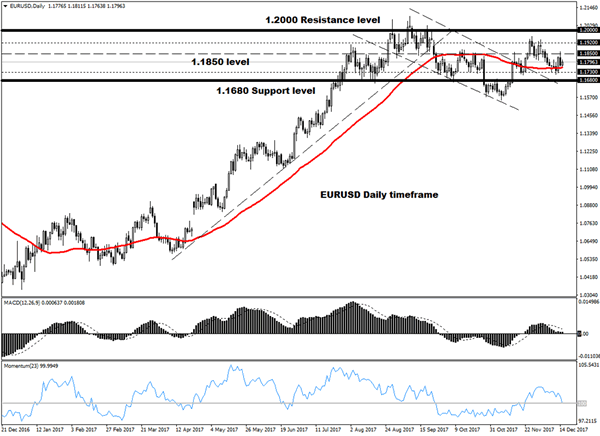
Taking a closer look at the technical picture, the EURUSD is still under some noticeable pressure on the daily charts with 1.1850 acting as a resistance. Sustained weakness below this level may encourage a further decline back towards 1.1730 and 1.1680, respectively. Alternatively, a breakout above 1.1850 could open a path higher to 1.1920.
Commodity spotlight - Gold
Gold prices appreciated during Friday's trading session as the Dollar slipped, driven by investor concerns about the progress of U.S. tax reforms.
The upside was complimented by fears over low inflation in the United States, which clouded the prospects of higher interest rates beyond 2017. With the Dollar vulnerable to further losses, thanks to uncertainty over tax reforms and investors questioning the Federal Reserve's ability to raise rates three times in 2018, Gold (which is zero-yielding) could remain buoyant.
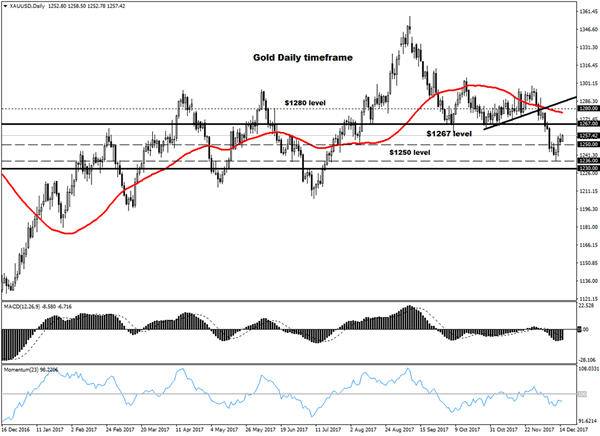
From a technical standpoint, the yellow metal is in the process of a technical bounce on the daily charts, with the next level of interest at $1267. Alternatively, a failure for prices to keep above $1250 has the ability to open a path back towards $1236 and $1230, respectively.
Draghi & Poloz Spin it Again
ECB president Draghi and BoC governor Poloz showdd their usual rhetorcial creativity on Thursday, prompting the euro to lose some ground and the loonie to regain momentum following last week's rate announcement. Yen pushes higher after the Tankan manufacturing survey hit 11-year high. USD is down cross the board after on fresh roadblocks to US tax reform, this time from Senator Rubio. Up next is US industrial production and further chatter on the tax bills.
Draghi left the ECB's forward guidance unchanged along with interest rates at this month's rate decision. The staff boosted growth up to 2.3% next year from 1.8% while bumping 2019 to 1.9% from 1.7%. In spite of that, inflation forecasts were only nudged up to 1.4% next year from 1.2% and unchanged at 1.5% in 2019.
One of the major risks Draghi cited was the FX rate, keeping a lid on the currency. In the aftermath of the press conference, EURUSD remarkably slid to 1.1780 from 1.1850 in the face of rising sentiment and improving data.
On the flipside is BOC Governor Stephen Poloz continued to confound markets. 8 days after the CAD began a sharp descent following the central bank's keeping of the term "caution" in its policy statement, Poloz entered into a discussion on what caution means, indicating it does not mean they will not hike again. He also added that the 50-bp rate hikes of the last 6 months were not expected to have a large effect on the ecomomy.
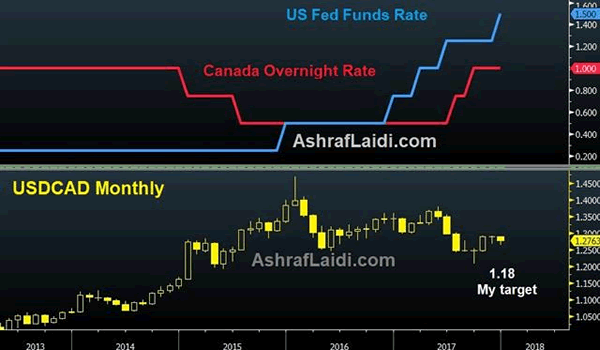
USD/CAD fell by 1205 pips to 1.2850 only to rebound to 1.2800 around the US close. It is now trading at 1.2750, sending the USDCAD short of the Premium Insights back into the green. Markets are now pricing a 62% chance of a hike in March but we struggle to see how either side could have any confidence at this point. Also note that Canadian oil is now trading at a $28 discount to WTI in a story that is underappreciated.
EURGBP Holds in Bearish Sloping Channel; Risk of More Losses
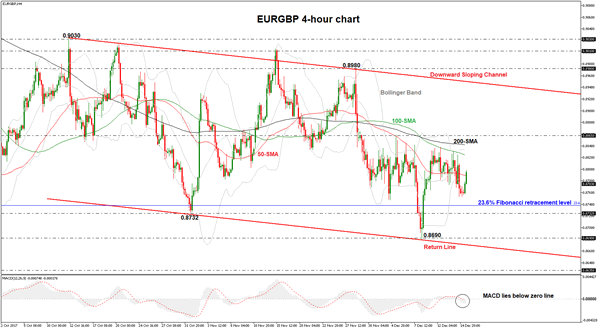
EURGBP posted losses for two negative weeks in a row and over the last nine weeks, the pair has been trading within a downward sloping channel, starting at a peak of 0.9030 resistance level and touching a low at 0.8690. The latter barrier is a new seven-month low.
Looking at the 4-hour chart, in the short-term timeframe, the price is holding below the 0.8865 strong obstacle, which is slightly above the 200-simple moving average (SMA) and is approaching the 23.6% Fibonacci retracement level of the last big upward movement with low at 0.6939 and high at 0.9305. The fibo level stands near the 0.8745 barrier, and the 0.8732 – 0.8745 zone has been acting as a critical support for the bulls.
However, a penetration below 0.8732 could open the door for the 0.8690 key level or could extend the losses towards the return line of the sloping channel, near 0.8670. On the reverse side, if the euro/pound pair posts an upward run above 0.8865, that would shift the bias to a more bullish one and it could pave the way for a test of the 0.8980 resistance.
Short-term momentum is weak and the MACD oscillator is endorsing the scenario for further bearish movement as it lies below the zero line. It is worth mentioning that the price paused its downward tendency as it rebounded on the lower band of the Bollinger band, but the descending movement in the medium-term still holds.
Brexit Clock Ticks Down but Pound Steady; H&M Drags Stocks
Here are the latest developments in global markets:
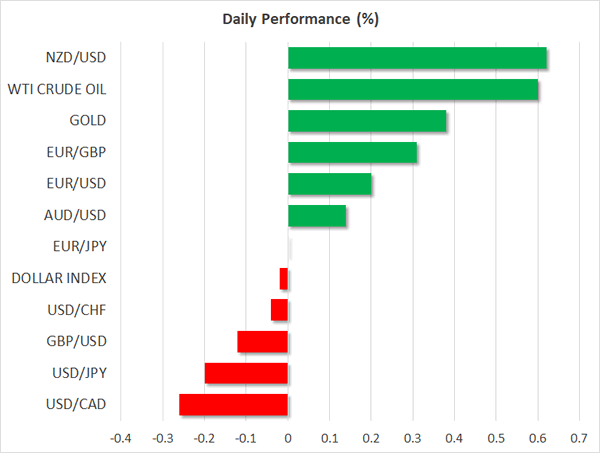
FOREX: The dollar continued to trade near yesterday's lows versus its major peers as tax risks kept weighing on the currency after another US Senate Republican warned to give a "no-vote" on the promised tax cuts. Dollar/yen was weaker at 112.18 (-0.18%). Euro/dollar posted moderate gains, rising marginally above the 1.1800 key-level (+0.20%) as yesterday's dovish ECB signals on eurozone's inflation restricted larger gains. The pound was steady at $1.3418, while the kiwi remained the best performer, jumping to a fresh two-month high of $0.7032 (+0.64%) after New Zealand's finance minister expressed his confidence on the currency's trend. Dollar/loonie stood at 1.2751 (-0.34%).
STOCKS: An unexpected drop in H&M sales – one of the world's biggest fast-fashion retailers – drove the European stocks lower despite a rise in utilities, while losses in tech shares continued to weigh on European indices as well. The benchmark STOXX 600 and the blue-chip STOXX 50 was down by 0.33% at 1030 GMT. The German DAX 30 fell by 0.38% and the French CAC 40 retreated by 0.33%. The British FTSE 100 was flat.
COMMODITIES: Oil prices inched up during early European trading hours, supported by the ongoing supply restrictions in the North Sea but fears over rising US output remained a drag in the market. WTI crude was last up by 0.75% on the day at $57.47 per barrel and Brent strengthened by 0.24% to $63.46. Gold rose by 0.40% to $1,257.70 per ounce.
Day ahead: EU leaders meet to discuss Brexit; US & Canada release industrial figures
EU leaders are said to officially approve the UK PM May's divorce proposals today at the end of the two-day EU summit in Brussels and therefore move negotiations to the next stage of future relations. Still, the media stated that May accepted on Thursday the EU offer to postpone the long-desired trade talks until March, giving room for discussions on the transition period, as the UK still has to clarify the sort of trade deal it wants to achieve. Note that May, whose hand is weaker now as she suffered a defeat over her Brexit plans in the British Parliament on Wednesday, will not attend Friday's meeting.
Meanwhile in the US, the cloud around the future of tax legislation becomes darker as Republicans who reached a joint agreement on tax plans with their House counterparts on Wednesday, continue to lack support from their inner cycle. With Florida's Senator Republican, Marco Rubio, threatening on Thursday to oppose the proposed tax cuts, the bill could face a cliff-edge as Republicans cannot afford to lose more than two-votes without Democrats' support. Today, Republicans are anticipated to unveil the final bill before the crucial vote early next week.
Looking at today's economic calendar, the US and Canada will report figures on industrial trends.
The New York Fed will publish readings on New York's manufacturing conditions for the month of December at 1330 GMT. Forecasts suggest the index to decline by 0.8 points to 18.60.
At 1415 GMT growth in industrial production reported by the Fed is forecasted to slow down to 0.3% m/m in December after reaching a six-month high of 0.9% in the previous month.
In Canada, manufacturing sales will be available at 1330 GMT with analysts projecting the measure to increase by 0.3 percentage points to 0.8% m/m in October.
In energy markets, investors will keep a close eye on the US oil rig count issued by the Baker Hughes company at 1800 GMT. Potential increases in active drilling rigs would add further losses to oil prices which recently have been under pressure as concerns over rising output in the US weighed on the market.

EURUSD Buyers Now In Control Above 1.1790
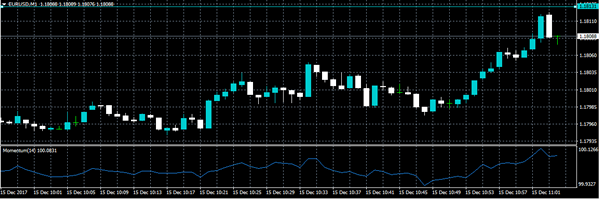
The euro has now turned higher against the U.S dollar, following a lack of overall selling interest below the key 1.1770 level during the European trading session. The EURUSD now trades above the 1.1800 handle, with the 1.1813 level the next strong technical resistance barrier ahead. Traders will now watch the pairs 100-day moving average, located at the 1.1799 level, ahead of the U.S open. The U.S economy will release Industrial production and Manufacturing figures for the month of November, with analysts expecting both data points to come in weaker than October.
The EURUSD pair has now turned bullish while price-action trades above the 1.1790 level. Upside resistance is found at the 1.1813 and 1.1840 technical levels.
If the EURUSD pair declines below the 1.1790 level again, sellers will likely target the 1.1770 and 1.1750 support regions.
GBPUSD Buyers Still In Control ABove 1.3400
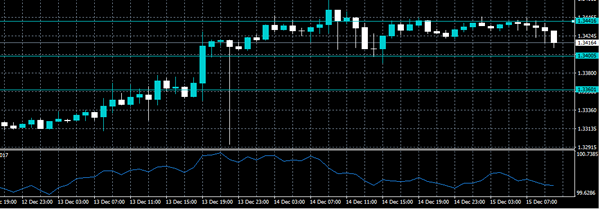
The British pound continues to hold firm against the U.S dollar, with political optimism over EU Brexit negotiations underpinning sterling’s recent strength. After a brief drop towards the 1.3400 level yesterday, the GBPUSD quickly recovered, and currently holds price-action around the 1.3420 region. Going forward, the pair is likely to remain volatile heading into the weekend, with UK and U.S politics now taking center stage after the conclusion of the Federal Reserve and Bank of England policy meetings.
GBPUSD buyers retain control of the pair while price-action holds above the key 1.3400 technical level. Upside targets remain the 1.3470 and 1.3520 levels.
If price-action declines below the 1.3400 technical level for a sustained period, further downside pressure towards the 1.3380 and 1.3340 support levels remains likely for the GBPUSD pair.
Technical Outlook: SPOT GOLD – Weaker Dollar Inflates Gold Price, Plethora Of Barriers Comes In Focus
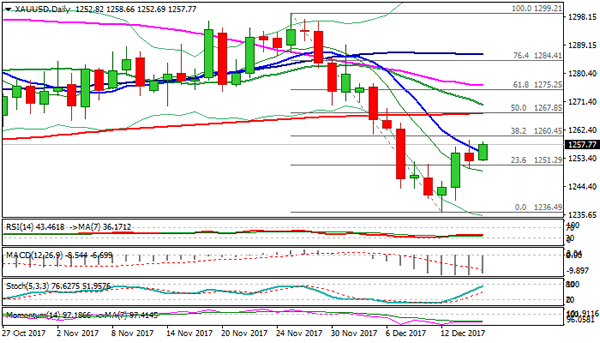
Gold regains traction and pressures Thursday's one-week high at $1259 after shallow correction was contained at $1250.
The dollar eased on Friday on fresh concerns over US tax reform, boosting gold's price.
Recovery leg from $1236 (12 Dec low) looks for break of pivotal barrier at $1260 (Fibo 38.2% of $1299/$1236 descend), to generate stronger bullish signal for extension towards next strong barrier at $1267 (200SMA / 50% retracement).
Initial bullish signal that was generated on today's break above falling 10SMA (currently at $1255) supports the notion.
However, overall bearish structure requires caution as recovery rally is seen limited before bears regain full control.
Failure to clear $1260 will be initial signal of early rejection while extended recovery leg should remain capped by $1267/70 barriers (converging 200/20 SMA's) to keep bearish scenario intact. Conversely, sustained break higher would sideline bears for stronger correction of $1299/$1236 bear-leg.
Res: 1260, 1264, 1267, 1270
Sup: 1252, 1250, 1247, 1240
US 30 Index Bullish In The Short- And Medium-Term, RSI Though Overbought
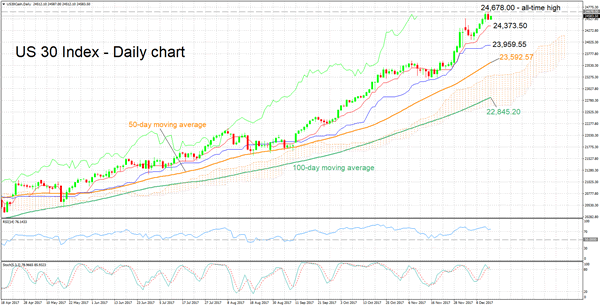
The US 30 index has been advancing for the most part in recent days, reaching an all-time high of 24,678.00 during yesterday's trading.
The Tenkan-sen line being above the Kijun-sen line is a positive alignment pointing to a bullish short-term picture for the index. The RSI, which has been moving higher in recent weeks, supports a positive view in the short-term, though it has crossed into overbought territory above the 70 level, rendering a short-term pullback a possibility. Turning to the stochastics, the %K line moving below the slow %D line also suggests that a pullback might take place in the very short-term.
Should the index continue advancing, resistance could be met around yesterday's all-time high of 24,678. Stronger bullish movement might find a barrier at 25,000, this being a potential psychological mark.
On the downside, support might be found around the current level of Tenkan-sen at 23,373.50 and further below – and given sharper declines – the Kijun-sen at 23,959.55.
The medium-term picture is clearly bullish with the index recording higher highs and higher lows over the last number of months. Price action is also taking place above the Ichimoku cloud as well as above the 50- and 100-day moving average lines, with both lines maintaining a positive slope.
Overall, the index is projecting a positive picture in the short- and medium-term with some caveats – such as RSI being in overbought territory – currently being in place in the short-term.
CRUDE OIL: Builds Up On Recovery Higher
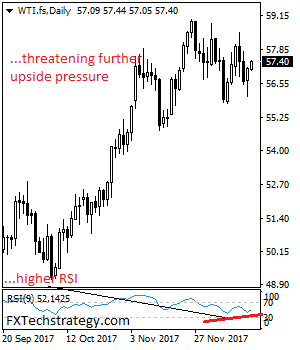
CRUDE OIL - The commodity followed through higher on Friday leaving risk of a move higher towards the 58.53 zone. On the downside, support resides at the 57.00 level where a break will expose the 56.50 level. A cut through here will set the stage for a run at the 56.00 level. Further down, support resides at the 54.50 level. On the upside, resistance resides at the 57.50 level. Further out, resistance comes in at the 58.00 level. A break above here will aim at the 58.50 level and then the 59.00 level followed by the 59.50 level. Its daily RSI is bullish and pointing higher suggesting further upside pressure. All in all, CRUDE OIL remains biased to the upside nearer term.