

Sample Category Title
Summary 10/2 – 10/6
Monday, Oct 2, 2017
[php_everywhere] [/php_everywhere]
Tuesday, Oct 3, 2017
[php_everywhere] [/php_everywhere]
Wednesday, Oct 4, 2017
[php_everywhere] [/php_everywhere]
Thursday, Oct 5, 2017
[php_everywhere] [/php_everywhere]
Friday, Oct 6, 2017
[php_everywhere] [/php_everywhere].
Summary 10/9 – 10/13
Monday, Oct 9, 2017
[php_everywhere] [/php_everywhere]
Tuesday, Oct 10, 2017
[php_everywhere] [/php_everywhere]
Wednesday, Oct 11, 2017
[php_everywhere] [/php_everywhere]
Thursday, Oct 12, 2017
[php_everywhere] [/php_everywhere]
Friday, Oct 13, 2017
[php_everywhere] [/php_everywhere].
Summary 10/16 – 10/20
Monday, Oct 16, 2017
[php_everywhere] [/php_everywhere]
Tuesday, Oct 17, 2017
[php_everywhere] [/php_everywhere]
Wednesday, Oct 18, 2017
[php_everywhere] [/php_everywhere]
Thursday, Oct 19, 2017
[php_everywhere] [/php_everywhere]
Friday, Oct 20, 2017
[php_everywhere] [/php_everywhere].
Weekly Economic and Financial Commentary: Hurricanes Cloud Data Takeaways
U.S. Review
Harvey and Irma Push Up Inflation and Retail Sales
- Higher gasoline prices and replacing storm-damaged property put upward pressure on the CPI and retail sales in September. Core CPI came in softer than expected, which does little to clarify the underlying inflation trend the Fed is seeking.
- Small business owners were hit by the storms as well, but small business optimism remains strong despite contending with increasing difficulty finding qualified workers. JOLTS data in August confirmed that demand for labor is strong and September's slip in payrolls is likely to reverse easily.
Hurricanes Cloud Data Takeaways
Interpreting the hurricane-impacted string of data releases over the next few months is nuanced but not impossible. Most of the economy was on solid footing before the storms and large swings in the data are very likely to prove transitory. The large drop in payrolls in September will likely reverse in October, as we know the labor market is strong and demand will warrant the creation of more jobs. One area that is less obvious is the inflation data. Continued misses in gauges of price changes for much of this year has been vexing, especially because underlying fundamentals should support greater inflation pressure than has actually played out. Hurricane Harvey's aim at the Gulf Coast certainly pushed up prices, though we know the effect is transitory. The problem for the FOMC is trying to flush out the underlying inflation pressure from the transitory effects. As inflation did not show much sign of acceleration before the storms, basing decisions on incoming inflation data in the months ahead is quite tricky.
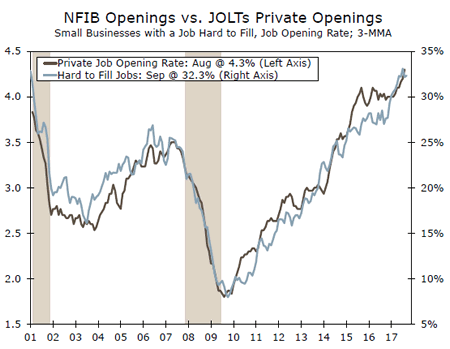
August JOLTS data show demand for labor was solid before the storms, suggesting the decline in September should reverse rather easily. Openings remained at their record highs, though that did little to entice workers to leave their current positions. The quit rate held in its 2.1-2.2 percent range that it has bounced between each month this year, leaving 2.2 percent as cycle high.
Many small businesses are finding it difficult to find qualified workers, according to the September NFIB survey also released this week. Among respondents attempting to hire, 86 percent said there were few or no qualified applicants. The problem is most acute for manufacturers and construction firms. Overall small business optimism slipped in September, partially reflecting the impact from the storms. Optimism still remains near cycle high.
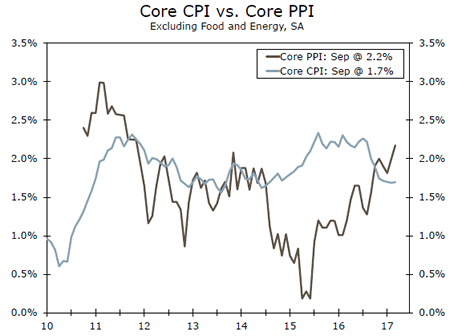
Producer prices in September pointed to firming inflation. Energy prices contributed to a sizable 0.4 percent rise in producer prices on the month. The volatile trade component helped push services prices up 0.4 percent, and higher energy costs also helped boost prices for transportation on the month. Though construction costs were little changed in September, they will likely continue on the recent upward trend as rebuilding from the hurricanes get underway. Although not the Fed's primary inflation gauge, the PPI has firmed over the year and is behaving in a way supportive of the Fed's inflation objectives. Headline PPI is up 2.6 percent while core PPI, which excludes food and energy, is up 2.2 percent.
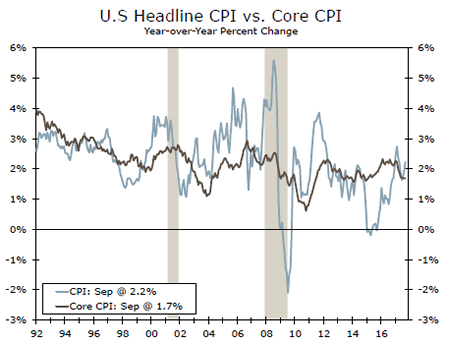
The storms pushed up consumer prices, particularly at the gas pump, as expected. Headline CPI rose 0.5 percent on the month, though core inflation rose 0.1 percent, which was below the consensus of 0.2 percent. The softer showing in the core did little to give the Fed clarity on the underlying inflation trend.
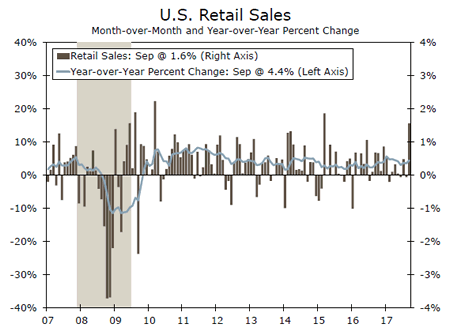
Retail sales received a large boost from storm-related purchases. Replacing cars and paying more at the pump pushed retail sales up 1.6 percent on the month. Control group sales were up a solid 0.4 percent which suggests the strong showing in September was not only because of hurricanes, as it excludes autos and gas as well as food services and building materials.
U.S. Outlook
Industrial Production • Tuesday
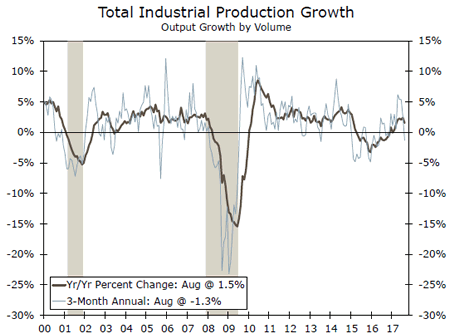
Output at the nation's factories, mines and utilities fell 0.9 percent in August after Hurricane Harvey hit the Gulf Coast. The storm was estimated to have reduced the monthly change in industrial production by about three-quarters of a percentage point. In the manufacturing sector, a rise in durables output was not enough to offset outages at refineries, chemical plants and plastics factories. At the same time, mild weather weighed heavily on utilities output.
With Irma making landfall two weeks later, we expect to see another drop in September. Power outages in Florida will have weighed on utilities output, while the ISM supplier delivery index suggests production disruptions continued last month. We look for industrial production to have declined 0.6 percent in September but expect a substantial rebound in October.
Previous: -0.9% Wells Fargo: -0.6% Consensus: 0.3% (Month-over-Month)
Housing Starts • Wednesday
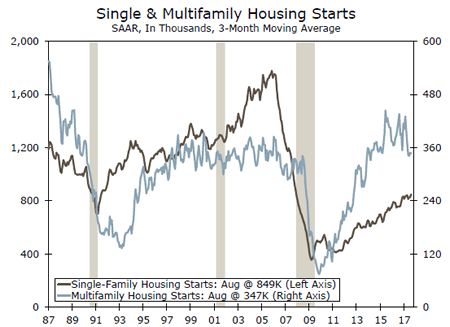
Housing starts edged down in August amid further weakness in the multi-family segment. Single family starts, however, continued their upward trend and are up nearly 9 percent year-to-date.
We expect starts to have fallen slightly to a 1.17 million annualized pace in September after hurricanes Harvey and Irma hit Texas and Florida, two of the largest and fastest-growing housing markets this year. Low mortgage rates and strong permitting activity— particularly in the multifamily segment, where permits were up 20 percent last month—suggest that the damage will be relatively contained in September. That said, overall new construction is likely to remain weak between now and the end of the year, as repair efforts divert labor and materials and delay new construction.
Previous: 1.18 Million Wells Fargo: 1.17 Million Consensus: 1.18 Million
Leading Economic Index • Thursday
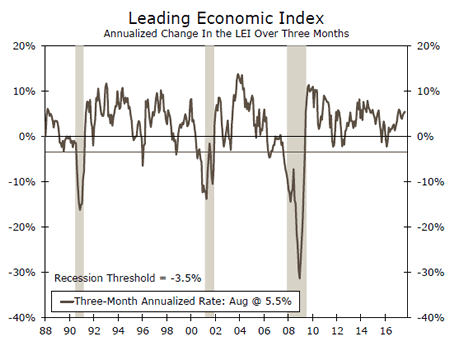
The Leading Economic Index is expected to show another gain in September, suggesting the economy will continue to expand in the coming months. The pace, however, looks likely to slow a bit due to disruptions stemming from the recent storms.
Leading indicators of the labor market, including jobless claims and the average workweek deteriorated last month and are expected to pull the index lower. Higher stock prices in September, however, as well as relatively easy credit conditions implied by the Leading Credit Index and interest rate spread, should be enough to offset the dip. Along with a boost from the ISM manufacturing report's new orders index, we look for the LEI to have risen 0.2 percent last month.
Previous: 0.4% Wells Fargo: 0.2% Consensus: 0.1% (Month-over-Month)
Global Review
Global Growth Appears to Have Been Solid in Q3
- Real GDP growth in Singapore, an important bellwether for global economic growth, strengthened to a three-year high in the third quarter. It appears that the British economy continued to expand at a modest pace in Q3, and real GDP growth in the Eurozone remained solid.
- On balance, global economic growth appears to have strengthened recently. However, the modest downshift in economic momentum that appears to be underway in China is a reminder that the global economy is not exactly "booming" yet either.
Global Growth Appears to Have Been Solid in Q3
As usual, Singapore this week was the first country to release GDP data from the just-completed quarter. As shown on the graph on the front page, the year-over-year rate of real GDP growth in the Lion City picked up from 2.9 percent in Q2-2017 to 4.6 percent in the third quarter, the strongest year-over-year rate of growth in more than three years. The preliminary supply-side disaggregation that was released showed that the pick-up in the overall rate of real GDP growth was driven largely by acceleration in the manufacturing sector. A breakdown of the quarterly GDP data into its underlying demand-side components is not yet available, but the strength in the manufacturing sector is consistent with monthly data indicating that export growth was solid in the third quarter. The small economy of Singapore is not that important in terms of global economy growth. However, the extensive trade ties that Singapore has with many other economies make it an important bellwether for the state of global economic growth.
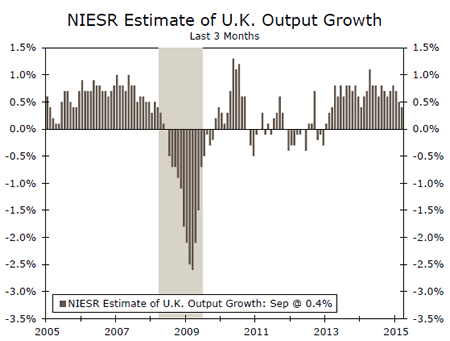
The United Kingdom has not yet released GDP data for third quarter, but a widely respected think tank in that country estimates that real GDP grew 0.4 percent (not annualized) in the July-to-September period relative to the second quarter (top chart). The think tank's estimate, which has had a good track record over the years, is in line with our own estimate of Q3 GDP growth. In general, the British economy has decelerated somewhat this year, but growth remains positive. Data released this week showed that British industrial production (IP) grew for the fifth consecutive month in August, giving credence to estimates that U.K. real GDP growth remained positive in the third quarter.
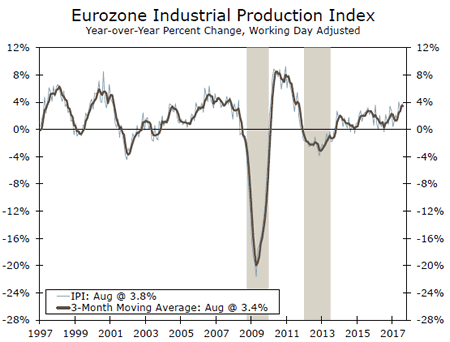
Speaking of the industrial sector, IP in the Eurozone rose 1.4 percent in August relative to the previous month. Data released earlier had shown that German IP jumped 2.6 percent during the month, but the outturn for the overall euro area was still much stronger than most analysts had expected. As shown in the middle chart, there is a clear upturn in Eurozone IP growth that is underway this year. As we have written previously, we expect the economic expansion in the Eurozone to remain intact for the foreseeable future and we look for the ECB to take further steps in coming months to dial back its degree of monetary policy accommodation.
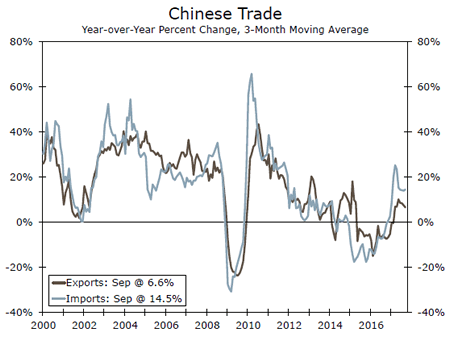
In contrast to the modest acceleration we are seeing in some other major economies, recent economic data out of China suggest that economic growth in the world's second-largest economy may have downshifted a tad in Q3. Export growth in China has softened a bit in recent months as did import growth (bottom chart). The latter would be consistent with some deceleration in domestic demand in China. On balance, it appears that global economic growth has strengthened recently. However, the modest downshift in economic momentum that appears to be underway in China is a reminder that the global economy is not exactly "booming" yet either.
Global Outlook
Germany ZEW • Tuesday
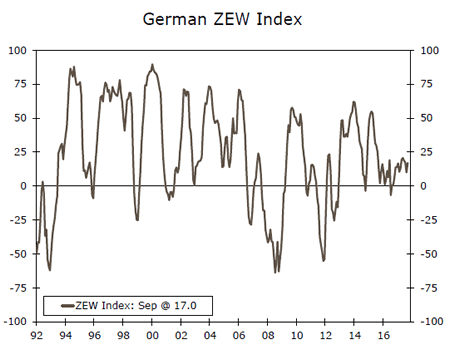
The German and Eurozone economies have been steadily, and slowly, improving. Consequently, there is renewed speculation that the ECB is considering the need to start taking measures to unwind the monetary expansion implemented over the past several years.
On Tuesday markets are expected to get information on the ZEW current situation and expectations indices for both Germany and the Eurozone for the month of October. These indices have been, in general, on an upward trajectory during the past several years with the current situation index hitting 87.9 in September in Germany and 31.7 in the Eurozone.
Meanwhile, the expectation index has been very volatile, both in Germany and in the Eurozone but improved in September. A further improvement in these indices would cement the view that the region is continuing to improve.
Previous: 87.9 Consensus: 88.5
China Q3 GDP • Wednesday
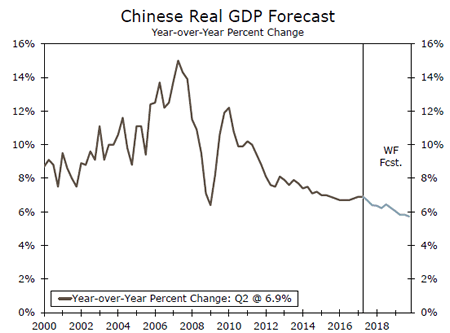
Our forecast for the Chinese economy calls for a further slowdown in the coming years. However, the result for the second quarter was a bit stronger than what markets had expected, up 6.9 percent on a year-earlier basis.
On Wednesday, the markets will have an opportunity to gauge the staying power of the Chinese economy again, especially if they can keep the growth rate steady at the 6.9 percent rate they recorded during the second quarter.
Although we have seen some improvement in the Chinese PMI manufacturing index, the improvement has not mimicked the strong improvement we have seen in the United States and in the Eurozone and thus we are still calling for Chinese economic growth to slowly weaken. We expect a rate of growth of 6.7 percent during the third quarter of the year.
Previous: 6.9% Wells Fargo: 6.7% Consensus: 6.8% (Year-over-Year)
Brazil Economic Activity • Wednesday
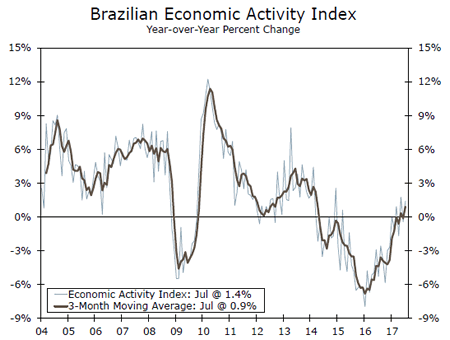
The Brazilian economy has been slowly coming out of its worst recession in history lately. However, the monthly economic activity numbers, which are a proxy for the behavior of GDP, have not been consistent with a sustained recovery, up one month, down the next.
On Wednesday the Brazilian economic activity index for August will hit the wire and it will be nice to see some stability from this index. The July year-over-year number was 1.4 percent while the monthover- month print was also positive, up 0.4 percent. That is, a repeat of July's performance with both the year-over-year as well as the monthly number would help cement expectations of a sustained recovery for the Brazilian economy. Still, we are not expecting the economy to recover at a fast pace even after two years of dismal economic activity. The political crisis in the country is still lingering and a full recovery will take a relatively long time.
Previous: 0.4% Consensus: -0.3% (Month-over-Month)
Point of View
Interest Rate Watch
A Cautious Climb.
Our outlook for interest rates projects a cautious climb in rates as the Fed adjusts policy towards a perceived normalization of both the funds rate and the Fed's balance sheet. However, normalization from a stance of administered, below market equilibrium interest rates will be anything but normal. As interest rates are a price for credit, the challenge in the markets will be a movement from policy set to market determined interest rates. We are cautious on the transition.
Steady Domestic Demand—at Low Rates
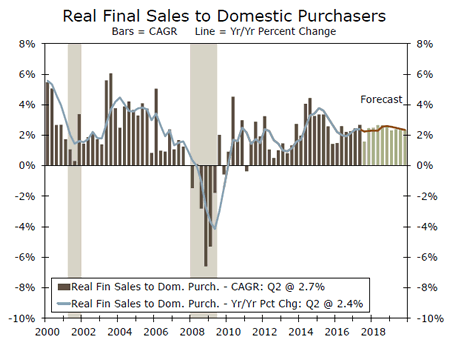
As illustrated by the top graph, domestic real final sales, at the current FOMC determined low interest rates has been very steady in recent years. Consumer spending has been solid and housing starts have improved over recent years. However, we are aware that light vehicles sales as well as housing will be sensitive to a rising interest rate path.
Crossing the Streams: From Negative to Positive Real Rates
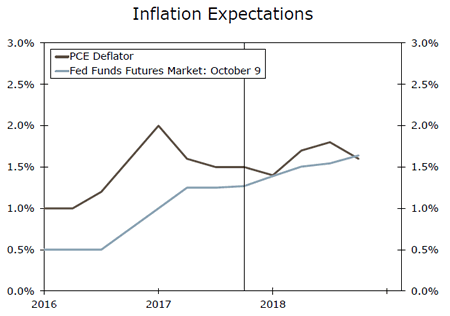
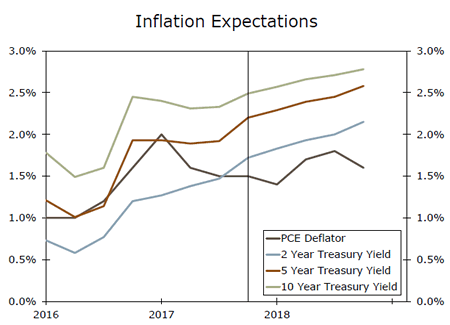
Over the next two years, short-term interest rates should cross into positive territory (middle graph) and will be there for the first time for a sustained basis since 2007. There are two issues. First, decisions made at negative real rates that now must be refinanced at positive rates will be challenged. Second, as the FOMC pursues its intended policy, investors will quickly judge that the total return of some past investments made at lower rates will quickly negative total returns.
Our Outlook: Rising Rates with Caution
Over the next two years we do see that interest rates will rise modestly. However, over the past four years we have been below consensus on the extent of any interest rate rise and we were right. For 2017, for example, we anticipated that the 10-year rate would be up 2.5 percent, below the 2.7 percent Blue Chip Consensus.
If interest rates were to rise as much as the FOMC intends, we believe economic growth would be damped and possibly lead to a recession on the basis of our published work. Therefore, the FOMC will likely limit its rate increases.
Credit Market Insights
Consumer Credit Slows in August
Consumer credit rose $13.3 billion, representing a modest pullback from July. Consumer credit is up just 4.2 percent year over year, down from a 5.7 percent rise in the prior month. Revolving credit remains just below its pre-recession peak, climbing 7.0 percent year over year in August, while non-revolving credit, up just 3.2 percent year over year, currently sits at a record high. The limited rise in personal consumption for August likely translated into the slowdown of consumer borrowing for the month. Our expectation is for consumer credit to gradually grow.
Although consumer credit slowed in August, it remained elevated as a percentage of disposable income. At 26.1 percent, consumer credit currently represents its largest share of disposable income since the start of the series in 1960. Commercial banks continue to hold the largest share of consumer credit, followed closely by the federal government. Financial companies and credit unions largely round out the remaining portion of the consumer credit pie.
The federal government holds
approximately 40 percent of all nonrevolving credit, which includes student loans and mortgages, up from holding just 15 percent in 2010. We expect the growth of this share to persist as educational costs continue to rise.
Consumer credit is expected to expand as strong consumer confidence remains at elevated levels.
Topic of the Week
Past Storms Offer Little Clues for CRE Spending
Every hurricane affects the national construction numbers differently. Major storms affected two large commercial real estate markets this year, Harvey in Texas and Irma in Florida. Estimates already put the storms among the most costly on record.
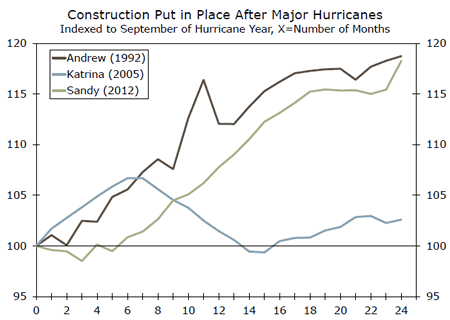
Reviewing past data on value of construction put in place following Andrew in 1992, Katrina in 2005 and Sandy in 2012 bears little fruit. Construction values stumbled slightly in the months following Andrew but returned to trend rather quickly. It took slightly longer after Sandy and values rose uninterrupted after Katrina. That does not mean it will this time, however.
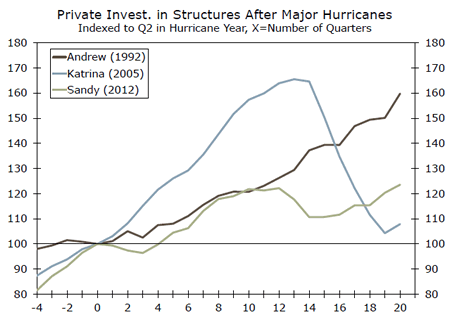
Andrew was an incredibly powerful and destructive storm, but damage was limited to South Florida. Katrina was certainly catastrophic, but it bore down on the Gulf Coast as its economy was already shrinking, and the rest of the country was enjoying a real estate boom. Sandy was likely the most relatable to Irma and Harvey, as it hit a very active real estate market in New York City and it affected a large chunk of the eastern seaboard. Still, rebuilding after Sandy took place later than expected which makes comparing that weather event with this one iffy at best.
Fixed investment in structures from the GDP tables also behaved differently in quarters following the past major storms, offering us little clues for coming months. The fact that Harvey affected some energy infrastructure puts its impact on fixed structure investment closer in line with Katrina's aftermath. However, fixed structures investment continued uninterrupted in 2005.
There was a ramp up in construction costs about six months after Hurricane Andrew in 1992. Similarly sized bumps followed Katrina in 2005 and Sandy in 2012, but those occurred about a year later. Regardless, the recent storms are highly likely to cause a run up in costs in coming months. Construction labor is already in short supply, which has led to higher construction costs even before the hurricanes arrived.
The Weekly Bottom Line: Hurricane Recovery Efforts Bolster Consumer Spending
U.S. Highlights
- Global stock markets this week rose to new highs in a number of regions, shrugging off elevated geopolitical tensions and the threat of a massive shake-up in global supply chains for the umpteenth week in a row.
- Retail sales rebounded strongly in September, helped by Hurricane-related rebuilding efforts. Looking ahead, we anticipate that consumer spending should pick up to a 3% annualized pace in the fourth quarter.
- Core consumer price growth disappointed in September, holding steady at a 1.7% y/y pace. Core measures of inflation have remained below target for much of the recovery even though economic slack has largely diminished. Persistently weak inflation makes us a little less certain about a December rate hike by the Fed.
Canadian Highlights
- It was a relatively quiet week in Canadian markets, with the loonie, oil, and equities all trading up as of late Friday morning.
- On the data front, it was all about housing. Led by a dip in Toronto, starts slowed slightly in September after two months of strong activity. On the other side of the coin, resale activity ticked up for a second month in a row, on broad cross-country strength.
- The near-term stabilization of housing activity is welcome after this summer's readjustment in the important GTA market. However, we are not out of the woods yet, with a number of factors, including rising rates and regulatory changes likely to generate further medium-term headwinds.
U.S. - Hurricane Recovery Efforts Bolster Consumer Spending
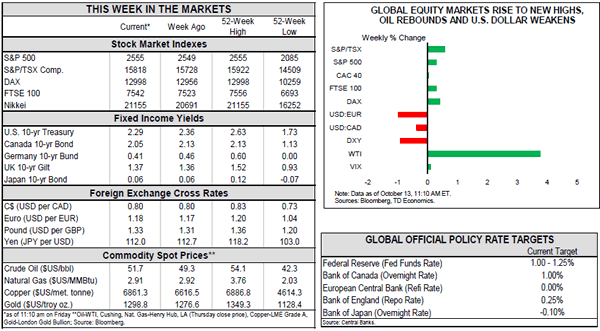
Global stock markets this week rose to new highs in a number of regions, shrugging off elevated geopolitical tensions and the threat of a massive shake-up in global supply chains for the umpteenth week in a row. It seems that nothing can derail the slow melt-up; not gradually rising interest rates, North Korean tensions, populist movements in Europe, or policy uncertainty emanating from the U.S. administration. Perhaps with low interest rates stimulating investor risk appetite this should be expected, but one can't help but wonder what may happen to asset prices as global interest rates rise further off extraordinary low levels.
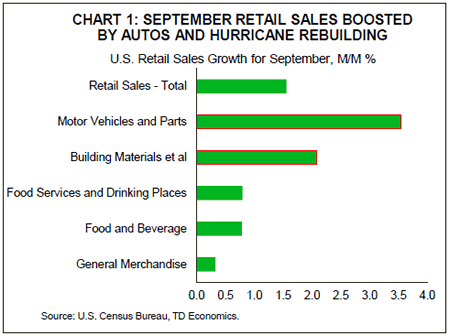
To some extent, rising asset prices fairly represent the state of the U.S. and global economy. Economic indicators for the third quarter continue to show a Hurricane-battered but resilient U.S. economy. This morning's retail sales report for September recorded a 1.6% increase on the month, lifted by strong auto sales (18.5 million units), and building and material supply sales (Chart 1). Although the strength in these two categories likely reflected rebuilding efforts after Hurricanes Harvey and Irma, strong growth in other spending categories provides some underlying support to U.S. consumer spending heading into the fourth quarter. All told, we anticipate that rising incomes and strong job growth are supportive of a strong handoff to fourth quarter spending, with consumption expected to accelerate to a 3% annualized pace from 2% in the third quarter.
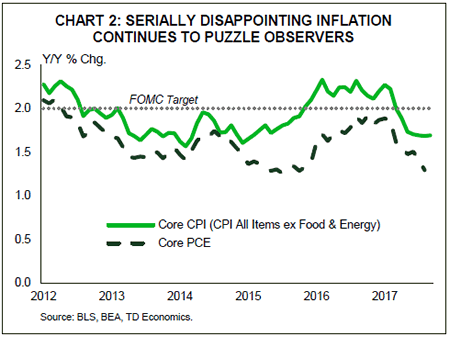
But, not all news on the U.S. economy was positive this week. The inflation report for September was disappointing. Headline inflation ticked up to a 2.2% y/y pace from a 1.9% pace in August, bolstered again by the Hurricane-related increase in gasoline prices that is expected to reverse in the months ahead. Most disappointing was core inflation, a measure that strips out volatile food and energy prices, which held at 1.7% y/y despite an expectation for a small uptick to 1.8%, with month-on-month prices rising a meagre 0.1% (or 1.2% annualized) rate.
This latest in a string of disappointing inflation readings will surely add fuel to the ongoing inflation puzzle debate going on in the Federal Reserve as evidenced by the minutes from its September meeting released this week. Core measures of inflation, including the Fed's preferred core PCE deflator metric, have held below the 2% target for much of the recovery from the Great Recession even though economic slack has largely diminished (Chart 2). Fed officials remain somewhat divided on the topic. Some Committee members favor maintaining a highly accommodative monetary policy environment until wages and inflation show a persistent move higher, while others attribute much of the weakness to more temporary forces that do not warrant a pause in interest rate normalization. All told, we continue to anticipate that the Fed will raise rates this December, but the ongoing weakness in inflation makes us a little less certain about this call.
Taken together, above-trend economic growth in the U.S. and other regions are helping support asset prices. However, as the IMF pointed out this week, risks to the global economic recovery remain skewed to the downside. An unforeseen shock can easily derail the recovery, sending risk asset prices down with it.
Canada - Housing Steadies, For Now
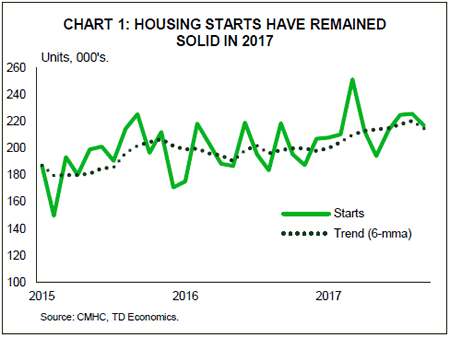
The shortened week was fairly light on the data front, with the releases focused on Canadian housing markets. Starting with new housing activity, September saw a modest pullback in housing starts, to 217k units. This was above market expectations, and comes on the back of two months of solid activity (Chart 1). The slowdown, such as it was, can be put down to Ontario, and the closely-watched Toronto market in particular, which saw a 18k drop in starts. Even with this softness, the third quarter saw Ontario starts at their second highest point in five years - the high point being the red hot pace recorded in the first quarter of the year.
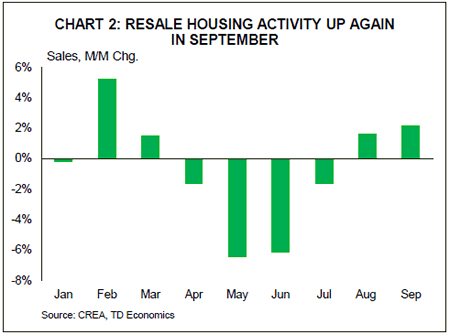
In contrast to the starts data, the resale housing market saw a further tick-up in activity in September, with home sales up 2.1% month-on-month (Chart 2). It was a generally encouraging report, with healthy activity reported across the country. To focus on Toronto again, activity continued to rebound, but remains a far cry from the frenzy seen early in the year, and the sales-to-listings ratio, at 46%, suggests a relatively balanced market - a far cry from its peak of 94% in January. For the time being at least, Canadian real estate activity looks to have regained its footing - a welcome change after the volatility of this past summer. That said, we are not out of the woods just yet as a number of signs suggest that a slowing of activity may be on the horizon.
First, it remains likely that the Bank of Canada will hike its policy interest rate again this fall, most likely in December. In the grand scheme of things, while not overly aggressive, the 75bp of hikes over the second half of the year will work to reduce affordability and moderate demand. Second, looking a bit further out, OSFI may extend recent "B20" regulations to cover all mortgage lending. What this means is that all borrowers will need to show their ability to service a mortgage at the Bank of Canada's posted rate (generally about 2 percentage points higher than typically contracted mortgage rates). Currently this requirement only applies to those with low down payments and those who are taking out mortgages with terms of less than five years. The high level of the posted rate makes this change particularly impactful: a further 25bp increase in rates will have an impact, to be sure, but adding 200bp to the rate for approval purposes is likely to result in a more significant reduction of mortgage approval sizes, all else equal. And, while there remains a lot of uncertainty around the path of interest rates, OSFI has so far shown no signs of backing down on this change.
Finally, for housing starts there is the simple matter of market dynamics. That multi-unit construction is the bulk of housing activity in Canada means that to a large extent, housing starts reflect earlier market conditions - condo pre-sales typically occur well in advance of construction. This implies that any slowing in presale activity in Ontario over the late spring and summer's adjustment period is not likely to make itself felt in starts activity (let alone measures of ongoing construction activity) for some time to come. On balance then, it seems likely that as we move into 2018, housing activity is likely to moderate.
Canada: Upcoming Key Economic Releases
Canadian Manufacturing Sales - August
Release Date: October 18
Previous Result: -2.6% m/m
TD Forecast: -0.1% m/m
Consensus: NA
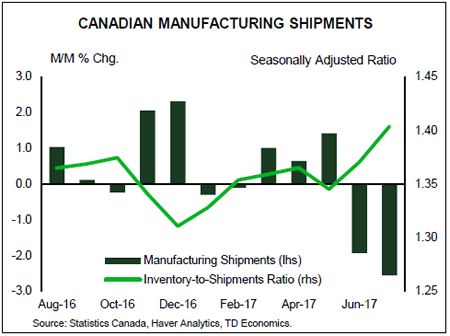
Manufacturing sales are expected to post their third consecutive decline in August, with nominal sales forecast to edge lower by 0.1% m/m. After a sharp decline in output caused by retooling shutdowns, factory shipments of motor vehicles should post a partial rebound in August. However, this report will not capture ongoing labour disputes, which will constrain any further recovery in September. Outside of the transportation sector, the weak export data and a broad decline in hours worked argue towards a downbeat report, though rising petroleum prices will help to support nominal refinery sales. Real manufacturing sales should underperform the nominal print due to higher factory prices.
Canadian Consumer Price Index - September
Release date: October 20
August Result: 0.1% m/m, 1.4% y/y
TD Forecast: 0.3% m/m, 1.7% y/y
Consensus: NA
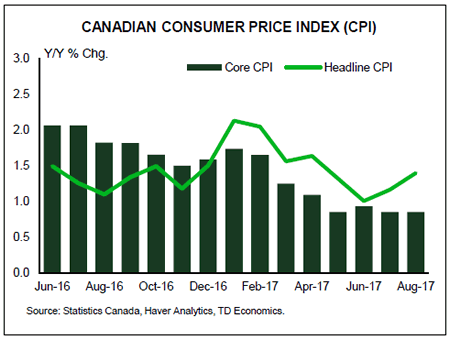
TD looks for a 0.3% m/m increase in the September CPI, lifting the headline inflation rate to 1.7% y/y vs 1.4% y/y in August. Energy prices should be a net boost on higher gasoline prices, while food prices are at risk of downward pressures in light of the rapid appreciation seen in CAD. Other sources of downside include apparel - sensitive to currency fluctuations - along with telephone services, the latter which has plunged in the prior two months. On the upside, we expect to see continued strength in shelter prices from lagged effects from increases in the new housing price index. The fundamental story remains sound with labour market slack dissipating and wage pressures picking up, allowing core inflation measures to stabilize or firm further in this report. The Bank's three measures averaged a 1.5% y/y pace in August; a move higher toward 2% would strengthen confidence that the output gap is approaching is closure, which we set estimate is by yearend.
Canadian Retail Sales - August
Release Date: October 20
Previous Result: 0.4% m/m, ex-auto: 0.2% m/m
TD Forecast: 0.5%, ex-auto: 0.4% m/m
Consensus: NA
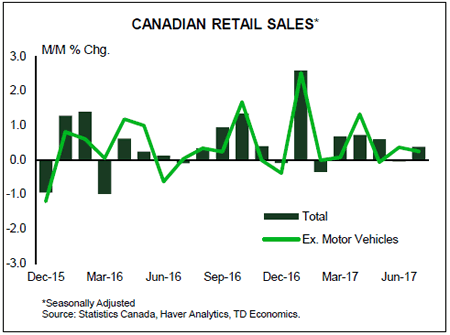
Retail sales are forecast to rise by 0.5% m/m in August, led by another increase in motor vehicle spending. This would leave ex-auto sales up 0.4% on the month, with gasoline station receipts expected to make a positive contribution due to Hurricane Harvey's impact on prices. August saw the unemployment rate reach a post-crisis low while consumer confidence rose to record highs, both of which should support increased consumer spending. Core retail sales will also benefit from a recent pickup in wage growth, which has accelerated from early-2017 lows, though unseasonably cool weather may have a negative impact. Due to rising consumer prices, we look for real retail sales to underperform the nominal print with a more modest increase, consistent with a moderation in household spending growth from Q2.
CPI Misses Lofty Estimate Despite Soaring Petrol Prices
Fed policy uncertainty increased three folds after the CPI miss.
Just as the dollar was picking up some momentum, it got hammered back to reality as the doggedly unexceptional CPI prints continues to haunt the dollar bulls.
When it comes to gauging inflation, it could be time to throw the textbook theory out the window as despite unemployment falling there's little sign of inflationary pressures flaring up. Also, the Fed's preferred inflation measure, the core PCE index, has consistently fallen short of its target rate of 2 percent, so its either time to update the old Phillips Curve or finally conclude that the influence of technology on lower prices will likely persist for the foreseeable future.
Either way, the monthly rituals surrounding these inflation prints are adding more confusion rather than clarity regarding monetary policy. Perhaps we've become too accustomed to knowing that when it comes to inflation, the Feds are the only game in town.But I'm sure if you asked most traders why the Feds have set a 2 % inflation target, besides a lot of blank stares, the likely response would be " it is because it is".
The clear example of how confusion within the Fed inflation mandates distorts dollar conviction sentiments can analyse market behaviour. After last weeks boisterous average hourly earnings print USD conviction soared to +2.5 on a scale +/- 3 but then dropped to -1.5 post CPI. These position Flip Flops add an unwanted element of disorder that could be quickly ironed out by a decisive Fed
The week ahead could be pivotal on numerous levels
The British Pound
The Brexit drama should escalate, as May is expected to touch on the topic of a transition deal at the EU leaders' summit. But from the EU perspective, this is likely to be a case of " show me the money "and EU leader will continue to baulk at any proposal until a divorce check is signed. This scenario does not portend well for the Pound next week
The Euro
The Spanish Referendum is now inconsequential to currency markets, But the Australian election on Sunday could provide some fodder especially if the far-right Austrian Freedom party has a stronger showing than expected. The right-wing Freedom party is expected to form a coalition partnership, but a stronger appearance could ruffle a few EU leaders feathers. By all accounts, range trade mentality should remain the order of the day.
Tax Reform
Tax reform passage will struggle given the fragile GOP majority as the lack of support from both McCain and Corker's could be the ultimate nail in the coffin. But given Trump's current approval ratings, unless the Republicans can move this reform through the Senate quickly, there's no guarantee they will have a sitting majority after the midterm election.
The Ultimate Game of Thrones
Without a doubt, traders went into the US CPI and retail sales data with one thing on their mind, who is the next Fed Chair.
One of the exciting candidates that are churning the rumour mill is Stanford Economist John Taylor who is the most hawkish among the perceived frontrunners.
Much of the initial market debate centred around the "Taylor Rule" an interest rate forecasting model invented and perfected by Dr Taylor which estimates Fed Funds~3.75% vs 1.25 % presently. The market was a bit shell-shocked initially until a flurry of Google searches discovered that his recent on the record comments better align his views with the current Feds gradual pace of normalisation. None the less he does present a more hawkish alternative to the current front-runner Powell and Warsh who currently sit atop the bookie boards at 45% and 25% respectively
Regional sentiment:
New Zealand Dollar
The New Zealand election upheaval should be settled Monday when the NZ First board will meet to decide whether to support either Labour or National in government. Once again politically driven mean reversion trades prove to be a significant risk-reward, even more so when the USD has failed to gain any real traction over the last six weeks.
China
Let not lose sight of the 19th Communist Party Congress kicks off in China which is expected to produce a deluge of headline risk. Last week the RMB complex was arguably one of the primary drivers in regional USD dollar sentiment so local traders will have eyes focused and ears to the ground on headline risk.
Last but not least we have the China data dump to deal with throughout the week as CPI, GDP, retail sales and industrial production will provide some good food for thought.
Australian Dollar
Other then Fed speak, and unlikely hawkish shift at the Fed Helm USD should continue to suffer at the expense of high beta FX. The Aussie dollar finished the week on a positive tone and appeared poised to extend gains next week.
Muted US Inflation Derails Dollar Recovery
Global Political Uncertainty in Driving Seat
The US dollar is trading lower on Friday after the consumer price index (CPI) and the preferred inflation metric the core CPI came slightly under expectations. Fed speakers had been divided in their comments leading up to the release. Doves thought it was a mistake to keep raising rates with low inflation. Hawks urged that waiting could be a bigger mistake and that inflation will eventually catch up. The disappointing data has not taken the December rate hike off the table, with the data between now and the date of the meeting to provide the final say.
The CME FedWatch tool is showing a decrease in the probabilities for a December US interest rate hike. The calculation is done using the prices of Fed funds target rates futures and it stands at 82.9 percent. One week ago it was 87.8 percent, but also worth mentioning a month ago the odds were below 50 percent for a lift at the end of the year.
The USD regained some of the ground lost after the CPI release with the comments from US President Trump that refused to certify the Iran nuclear deal but has not officially terminated the deal and solutions can still be achieved. Political uncertainty remains a critical factor as the US faces an uphill battle in the fourth quarter and alongside Brexit the European Union has to deal with the situation in Catalonia.
The EUR/USD lost 0.07 percent on Friday and will post a 0.75 percent weekly gain. The single currency advanced versus the dollar after the US consumer price index (CPI) disappointed and will put pressure on the U.S. Federal Reserve as the December Federal Open Market Committee (FOMC) still has a rate hike priced in by the market. Statements from US President Donald Trump about Iran's nuclear deal that could involve new sanctions changed the direction of the pair on Friday.
Earlier at the end of the week the European Central Bank (ECB) president had said that the European Union continues to enjoy a firm and broad based economic expansion. European data this week supported that view as industrial production jumped 1.4 percent in the region. Germany and Italy surprised by beating estimates. German inflation remains low at 0.1 percent as for all the work of the ECB the pull of deflation is too hard to shake off.
Final CPI for the European Union will be released on Tuesday, October 17 at 5:00. Inflation is expected to have remained steady at 1.5 percent. An improvement over that will be seen as a positive by the market specially after the US data underperformed on Friday.
The GBP/USD rose 0.21 percent on Friday. Cable has been reacting to different Brexit scenarios. Rumours of a softer breakup after both sides admitted being at a deadlock saw the pound rise. The currency rose 1.72 percent on a weekly basis as the chief negotiator for the EU Michael Barnier confirmed that he will not recommend the talks move to the next phase until the deadlock is resolved. A harder Brexit was implied but rumours about a way to transition the UK out of the EU with members discussing several options on October 19–20.
The biggest issue that is keeping negotiations from moving forward are the UK's financial obligations to the EU. While the conservative party has said that no deal is better than a bad deal the market disagrees with that assessment as exiting the EU without a deal would mean higher levels of uncertainty making asset valuations harder.
The dollar was falling on Friday after a lukewarm CPI data release. The U.S. Federal Reserve has been supportive of the USD with two rate hikes, but low inflation has always made it questionable if there will be a third one.
Market events to watch this week:
Monday, October 16
- 5:45pm NZD CPI q/q
- 8:30pm AUD Monetary Policy Meeting Minutes
Tuesday, October 17
- Tentative GBP BOE Gov Carney Speaks
- 4:30am GBP CPI y/y
Wednesday, October 18
- 4:30am GBP Average Earnings Index 3m/y
- 8:30am USD Building Permits
- 10:30am USD Crude Oil Inventories
- 8:30pm AUD Employment Change
- 10:00pm CNY GDP q/y
- 10:00pm CNY Industrial Production y/y
Thursday, October 19
- 4:30am GBP Retail Sales m/m
- 8:30am USD Unemployment Claims
Friday, October 20
- 8:30am CAD CPI m/m
- 8:30am CAD Core Retail Sales m/m
- 7:15pm USD Fed Chair Yellen Speaks
*All times EDT
Canadian Dollar Lower After US Demands Jeopardize NAFTA
The Canadian dollar was lower against its US counterpart on Friday. The loonie had appreciated versus the dollar all week and after the release of a disappointing US inflation data it rose even higher, but US NAFTA proposals it reversed course. The US tabled an idea a higher regional content for autos to be part of the free tariff access. Current North American content requirement is 62.5 percent and the US wants to increase that to 85 percent (with 50 percent of that being US content). Negotiations have been tense after the US also proposed a five year term for the updated NAFTA, to which both Canada and Mexico had already objected.
House resale numbers in Canada rose 2.1 percent in September pointing to a more stable market after drops in building permits and new home sales earlier in the week. Permits dropped 5.5 percent and the New House Price Index (NHPI) underperformed with a 0.1 percent gain.
The CAD managed to print a 0.40 percent gain on a weekly basis versus the USD. Oil prices rose as Chinese demand showed signs of an increase, tensions rising between the United States and Iran threatening a return to sanctions, and Iraq unrest could lead to limited supplies out of the Kurdish regions as troops are mobilizing after the vote for independence in late September.
The USD/CAD lost 0.38 percent in the last five trading days. The USD recovered some ground on Friday after the Trump administration comments on NAFTA send the CAD lower. The currency pair is trading at 1.2481 as Canadian fundamentals appear stronger in the short term. Soft inflation dealt a strong blow to the greenback as it will give further ammunition to the doves within the Federal Open Market Committee (FOMC). The U.S. Federal Reserve is still anticipated to hike the Fed funds rate by 25 basis points in December, but there has to be some improvement in economic data.
The US dollar traded lower on Friday after the consumer price index (CPI) and the preferred inflation metric the core CPI came slightly under expectations. Fed speakers had been divided in their comments leading up to the release. Doves thought it was a mistake to keep raising rates with low inflation. Hawks urged that waiting could be a bigger mistake and that inflation will eventually catch up. The disappointing data has not taken the December rate hike off the table, with the data between now and the date of the meeting to provide the final say.
The CME FedWatch tool is showing a decrease in the probabilities for a December US interest rate hike. The calculation is done using the prices of Fed funds target rates futures and it stands at 82.9 percent. One week ago it was 87.8 percent, but also worth mentioning a month ago the odds were below 50 percent for a lift at the end of the year.
Canadian data will be scarce with the main events the release of inflation data and retail sales on Friday, October 20 at 8:30 am EDT.
Market events to watch this week:
Monday, October 16
- 5:45pm NZD CPI q/q
- 8:30pm AUD Monetary Policy Meeting Minutes
Tuesday, October 17
- Tentative GBP BOE Gov Carney Speaks
- 4:30am GBP CPI y/y
Wednesday, October 18
- 4:30am GBP Average Earnings Index 3m/y
- 8:30am USD Building Permits
- 10:30am USD Crude Oil Inventories
- 8:30pm AUD Employment Change
- 10:00pm CNY GDP q/y
- 10:00pm CNY Industrial Production y/y
Thursday, October 19
- 4:30am GBP Retail Sales m/m
- 8:30am USD Unemployment Claims
Friday, October 20
- 8:30am CAD CPI m/m
- 8:30am CAD Core Retail Sales m/m
- 7:15pm USD Fed Chair Yellen Speaks
*All times EDT
Week Ahead – UK Inflation, Japanese Trade Data Among Week’s Important Releases; Party Congress Eyed in China
Next week's economic releases, which includes UK inflation figures, can determine the future path of monetary policy for major economies, while political events, such China's five-yearly Communist Party Congress commencing on Wednesday, perhaps have the capacity to steer developments for the years to come.
Chinese Party Congress, Japanese trade data and elections further ahead and Australian employment to be closely watched
Data on producer as well as on consumer prices for the month of September will be released out of China on Monday. Expectations are for the producer price index (PPI) to grow by 6.3% year-on-year, at the same pace as in the preceding month. According to analysts' estimates, the consumer price index will rise by 1.6% on an annual basis, below August's 1.8%. Among other releases attracting attention in China, are figures on urban investment, industrial output and retail sales (all for the month of September), as well as third quarter GDP figures, to be released on Thursday. Analysts' forecasts are projecting an annual growth rate of 6.8% during the quarter. The respective figure during the second (as well as the first) quarter of the year stood at 6.9%, with the official growth target for 2017 being "around 6.5%". In the background will be China's Communist Party Congress taking place in Beijing and beginning on Wednesday, October 18. This political meeting takes place once every five years and has a mandate of considering and approving new policies, as well as appointing to certain positions those individuals who will lead China over the next five years.
Transitioning from the world's second largest economy to the next in line, September Japanese trade data out on Thursday will definitely be eyed. Exports and imports are expected to rise by double digits though at a smaller pace relative to August (but only slightly so in the case of imports). Of course, speculation regarding the outcome of general elections taking place in the nation on October 22 will be on the rise. Should the Japanese Prime Minister Shinzo Abe come out strong, then it is expected that we'll have a continuation of Abenomics with a reflationary economic agenda remaining on the table. This is also seen as increasing the odds for the Bank of Japan to maintain its ultra-loose monetary policy, something which supports the dollar/yen moving higher over the medium- to longer-term given the divergent monetary policies in the US and Japan.
Relating to the Antipodean currencies, the releases gathering most attention in Australia will be Thursday's employment data (number of positions added to the economy, unemployment rate and participation rate) for the month of September. Last month's upbeat employment report allowed the aussie to move higher relative to the greenback. Out of New Zealand, third quarter inflation figures to be released on Tuesday will be in focus. The bi-weekly milk auction, which tends to affect the kiwi as New Zealand is a major dairy exporter, will also be taking place on the same day.
Eurozone inflation, ZEW survey and producer prices out of Germany - UK data supporting the case for a hike?
Final inflation figures for the month of September to be released on Tuesday will be attracting attention in the eurozone, especially after reports this week that the European Central Bank could decide to proceed with a reduction of its monthly asset purchases (currently amounting to 60 billion euros per month) by around half as it completes its monetary policy meeting on October 26. On a monthly and annual basis, inflation is expected to show growth by 0.4% and 1.5% respectively, with August's equivalent figures being released at 0.3% and 1.5%. The core measures of inflation will also be eyed. Also out on Tuesday, will be the ZEW survey gauging economic sentiment for the month of October in Germany, eurozone's (as well as Europe's) largest economy. September producer price data released on Friday will also be on the look-out in Germany.
Expected to be of most importance out of the UK will be Tuesday's inflation figures for the month of September, August employment statistics out on Wednesday and Thursday's September retail sales. Month-on-month, the consumer price index (CPI) is anticipated to grow by 0.3% (August's figure stood at 0.6%) and year-on-year by 3.0% (August's equivalent came in at 2.9%). The Bank of England's inflation target stands at 2%. It will be interesting to see whether the numbers would support the case for an interest rate hike to be delivered by the BoE, something which would support a stronger British currency. The central bank will be completing its next meeting on monetary policy on November 2.
US industrial production, housing starts and existing home sales - manufacturing & retail sales as well as inflation dominating attention in Canada
Out of the US, industrial production figures to be released on Tuesday, housing starts on Wednesday and existing home sales on Friday, all pertaining to the month of September, would probably be the releases having the capacity to move forex markets the most. It is important to note that the effect of hurricanes could have distorted the aforementioned economic releases. Other themes which have been recurring and driving sentiment either in favor or against the US currency, such as who the next Fed chair would be (with a Yellen reappointment not to be ruled out), the US-North Korea spat and President Trump's plans on tax reform, might reappear as well.
Canada will see the release of manufacturing sales on Wednesday as well as inflation and retail sales data on Friday. In terms of inflation, the CPI measures utilized by the Bank of Canada will be in focus as well. It remains to be seen whether the data will negatively or positively affect the Bank of Canada's appetite for additional interest rate hikes after the ones delivered in July and September which brought the central bank's benchmark rate to 1%. The BoC will be completing its next meeting on October 25.
This weekend's International Monetary Fund and World Bank meeting of central bankers and finance ministers would be also generating interest (the IMF this week upgraded its growth outlook for the US, China, Japan and the eurozone relative to its previous forecasts in July), with Federal Reserve Chair Janet Yellen (talking on Sunday) being among the notable speakers. Yellen will also be participating in a lecture titled "Monetary Policy Since the Financial Crisis" on Friday.