

Sample Category Title
EUR/CHF Approaches Parity Level
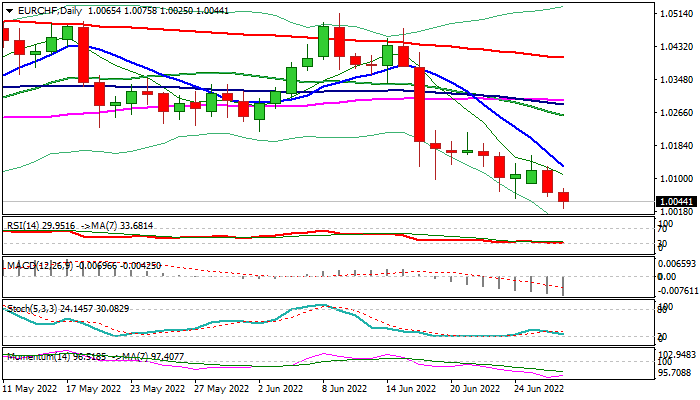
The EURCHF remains in firmly red and hits the lowest since March 7 on Wednesday, with parity level being in focus.
The Swiss franc continues to benefit from the recent shift in the Swiss National Bank’s monetary policy as the central bank raised interest rates last week by 50% basis points from -0.75% to -0.25%, in its first hike since 2007, surprising the wide expectations for unchanged policy.
The SNB argued its decision that inflation in Switzerland edged above their 0% - 2% target and also following the other central banks which further tightened their policies as inflation continues to rise and hurt the economies.
The SNB also signaled that further hikes cannot be ruled out that would keep the franc supported.
Bears broke again below pivotal Fibo support at 1.0146 (61.8% of 0.8977/1.2004, 2015/2018 rally) and look for a monthly close below this level to confirm bearish stance for an eventual attack at parity level and possible retest of Jan 2015 spike low at 0.8997.
Daily studies remain bearish but stretched that signals bears may face headwinds on approach to psychological parity support, with upticks to stay below falling 10DMA (1.0131) to keep bears intact and offer better selling opportunities.
Res: 1.0087; 1.0110; 1.0131; 1.0157.
Sup: 1.0025; 1.0000; 0.9706; 0.9500.
EURGBP Rangebound after Advance Pauses
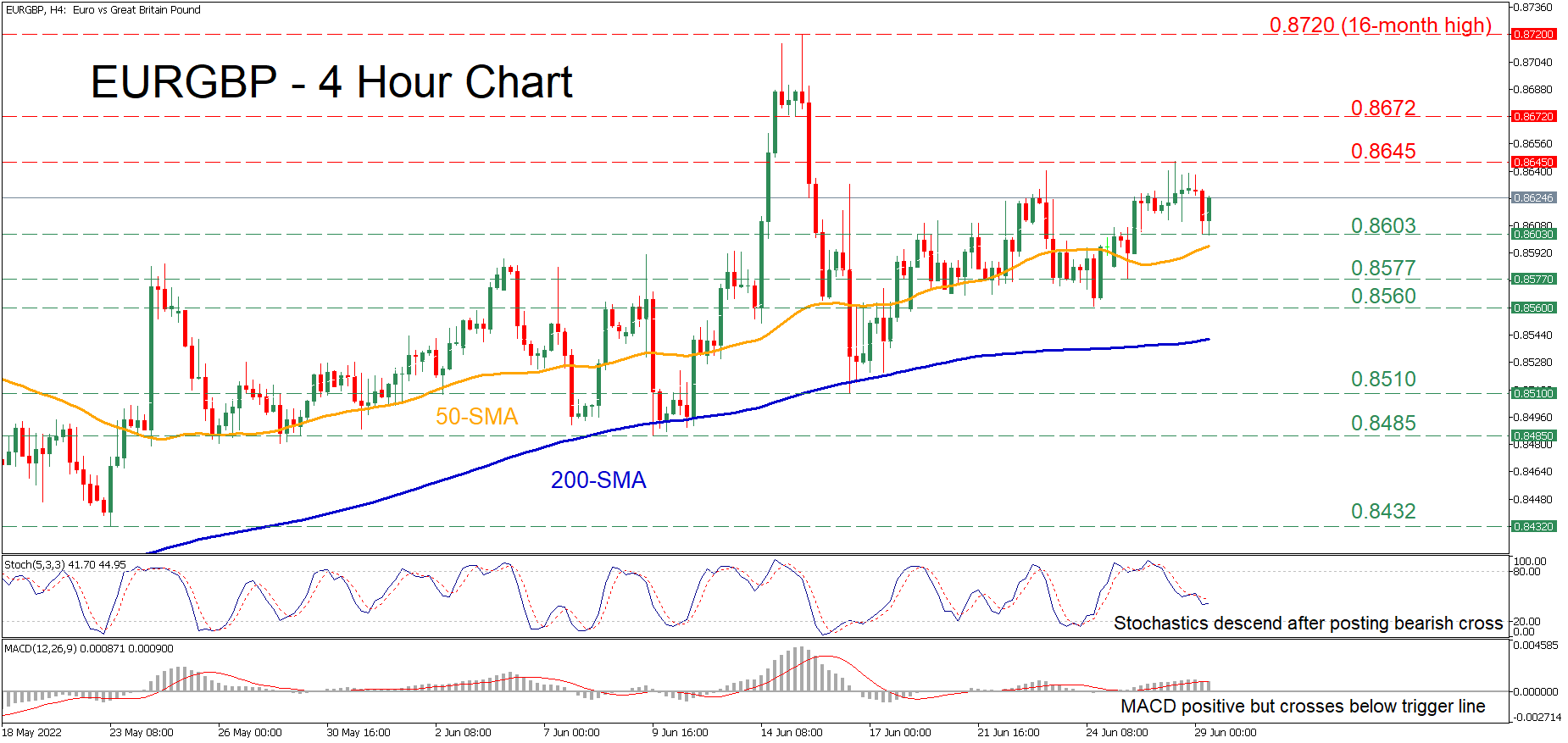
EURGBP has been marching higher since its downtrend ceased at the 0.8510 region, generating a profound structure of higher highs and higher lows. Nevertheless, in the last few four-hour sessions, the pair has been trading sideways after its upside move got capped at 0.8645.
The momentum indicators are reflecting a loss of momentum for the pair. The stochastic oscillator is descending after posting a bearish cross, while the MACD has dived beneath its red signal line but remains in the positive region.
Should selling pressure intensify, the price could test its most recent low of 0.8603. Dipping beneath that region, the bears could aim for 0.8577 before the spotlight turns to the 0.8560 barrier. Failing to halt there, 0.8510 could prove a tough obstacle for the price to overcome.
To the upside, bullish forces may propel the pair towards its recent reversal point of 0.8645. Conquering this barricade, the price might ascend to challenge the inside swing low of 0.8672. An upside violation of the latter could open the door for the 16-month high of 0.8720.
Overall, EURGBP has been exhibiting signs of strength lately but has not yet managed to totally erase its short-term decline. For that scenario to materialize, the price needs to initially jump above the 0.8645 ceiling.
GBP/USD: Signals of an End of Extended Directionless Mode Still Require a Confirmation
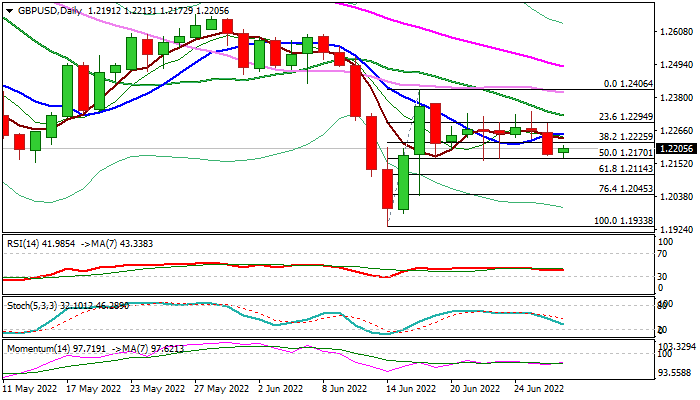
Cable is holding within a narrow consolidation in European trading on Wednesday, following Tuesday’s 0.64% drop, which generated an initial signal of an end of a multi-day directionless mode.
Fresh weakness touched strong supports at 1.2170 zone (50% retracement of 1.1933/1.2406 / lows of June 22/23), but so far lacking strength for a clear break, which would confirm bearish signal and shift near-term focus lower.
Daily technical picture is bearish with strong negative momentum and MA’s in bearish setup, keeping near-term bias with bears, as sterling is weighed by month-end dollar buying.
However, risk of extended range-trading is expected to persist as long as the price action stays above 1.2170 zone pivots, but the downside will remain vulnerable while daily Kijun-sen (1.2300) caps.
Res: 1.2213; 1.2235; 1.2260; 1.2300
Sup: 1.2170; 1.2114; 1.2045; 1.2000
BoJ Reaffirms Policy, Yen at 136
Kuroda pledges to maintain easy policy
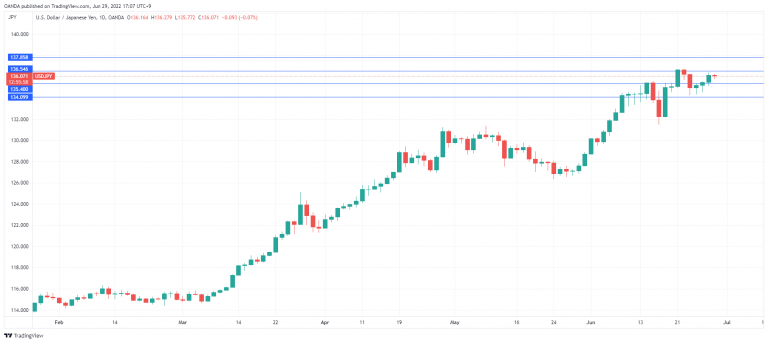
The Japanese yen is one of those currencies that keeps investors on its toes, and it has certainly lived up to its billing in recent weeks. USD/JPY has shot up 5.79% in the month of June and is back above the 136.00 line. BoJ Core CPI, the central bank’s preferred inflation gauge, ticked upwards to 1.5% in May, up from 1.4% prior and matching the forecast.
There is no mystery behind the yen’s sharp depreciation of some 17% in 2022. The currency has been at the mercy of the US/Japan rate differential, which has continued to widen. The Federal Reserve is in the midst of an aggressive rate-tightening cycle, with the Fed delivering a massive 0.75% increase at its last meeting. The Bank of Japan continues to take an opposite approach, that of an ultra-accommodative policy. The BoJ has maintained this stance at a time when other central banks are tightening, in order to boost the fragile Japanese economy. While other major economies are struggling with surging inflation, Japan’s inflation is around 2% – quite low but nonetheless on the rise after some 15 years of deflation.
Governor Kuroda reiterated on Wednesday that the BoJ would maintain accommodative policy, insisting that the increase was mostly a result of higher energy prices. Kuroda has said in the past that the present bout of inflation is temporary and that the BoJ would not change policy until inflation was anchored by higher domestic demand and an acceleration in wage growth. With neither of those criteria likely to occur anytime soon, we can expect the BoJ to continue to tenaciously defend its yield curve control and do little more than jawbone about the exchange rate. This does not bode well for the yen, which could continue its sharp slide and fall below the 140.00 line.
USD/JPY Technical
- USD/JPY faces resistance at 1.3654 and 1.3785
- There is support at 1.3540 and 1.3409
EURCHF Targets Parity Amid Hawkish ECB and SNB
American stocks erased earlier gains after mixed economic data from the United States. According to the Conference Board, the country’s consumer confidence dropped from 103.2 to 98.7 in June. This was the lowest confidence data in over 9 years. Consumers are worried about the soaring inflation and slow wage growth. Additional data revealed that the country’s house prices continued rising amid a supply and demand imbalance. The house price index rose by 18% year-over-year. Meanwhile, data by the Commerce Department revealed that the trade deficit narrowed by $104.3 billion. Nike shares dropped even after the company published strong results.
The euro made a strong bearish breakout ahead of important economic data from the euro area. The European Commission will publish the latest consumer and business confidence data. Like in the United States, the expectation is that the bloc’s confidence continued dropping as the cost of living continued escalating. The euro also declined even after the hawkish statement by Christine Lagarde. In a statement on Tuesday, the ECB chair said that the bank will start hiking interest rates as inflation remained at elevated levels. The ECB meetings in Portugal will continue. Some of the speeches to watch will be Christine Lagarde’s and De Guindos.
The economic calendar will have some important events on Wednesday. The US statistics agency will publish the latest GDP and personal consumer expenditure (PCE) data. Economists expect the data to show that the economy contracted by 1.5% in the first quarter. This being the third estimate, the data will likely not have a major impact on the US dollar and American equities. The US will also publish the latest oil inventories data. Expectation is that inventories dropped again last week. The other key catalysts will be speeches by key central bank officials like Christine Lagarde, Jerome Powell, and Andrew Bailey.
EURUSD
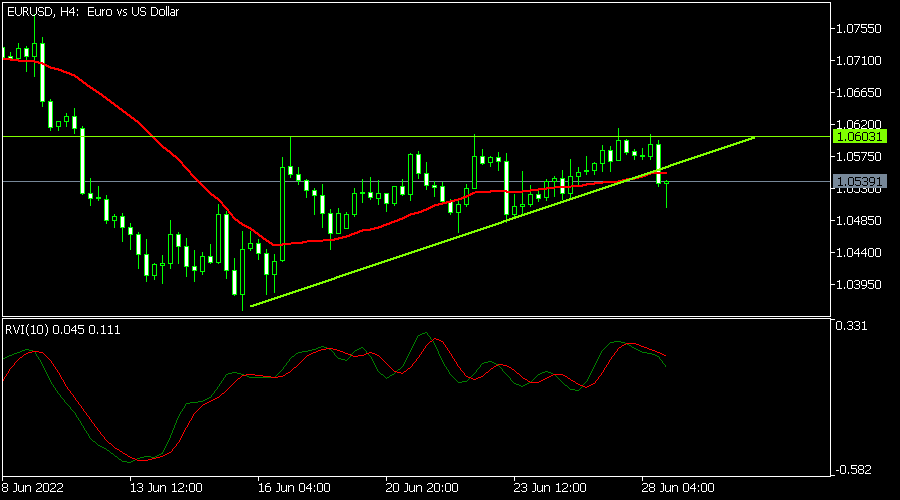
The EURUSD pair dropped to a low of 1.0500, which was the lowest level since June 23. On the four-hour chart, the pair managed to invalidate the ascending triangle pattern that has been forming. Now, the pattern resembles a triple-top, which is usually a bearish sign. The pair moved slightly below the 25-day moving average while the Relative Vigor Index (RVI) tilted lower. Therefore, the pair will likely continue falling as bears target the key support at 1.0450.
GBPUSD
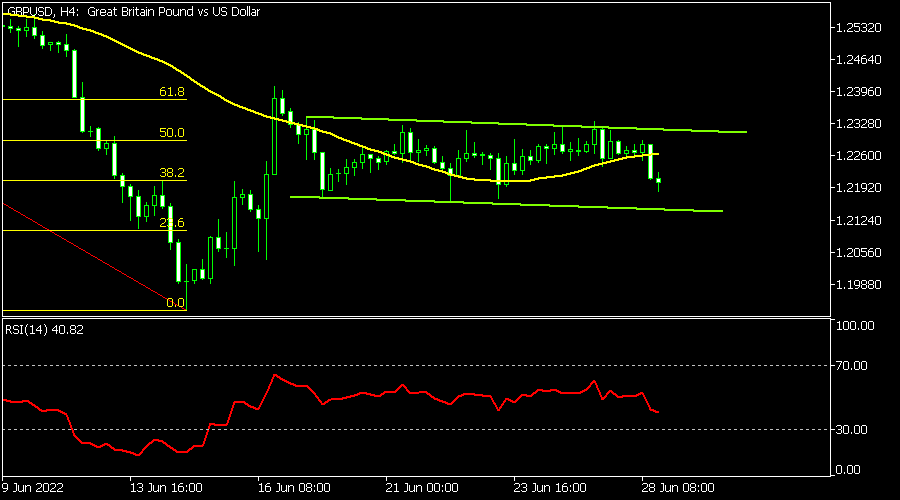
The GBPUSD pair dropped slightly after the weak US consumer confidence data. It fell to a low of 1.2178, which was the lowest level since Thursday last week. The pair has moved slightly below the upper side of the descending channel pattern. It has also dropped to the 38.2% Fibonacci Retracement level while the RSI has tilted lower. The pair will likely continue falling as bears target the lower side of the channel.
EURCHF
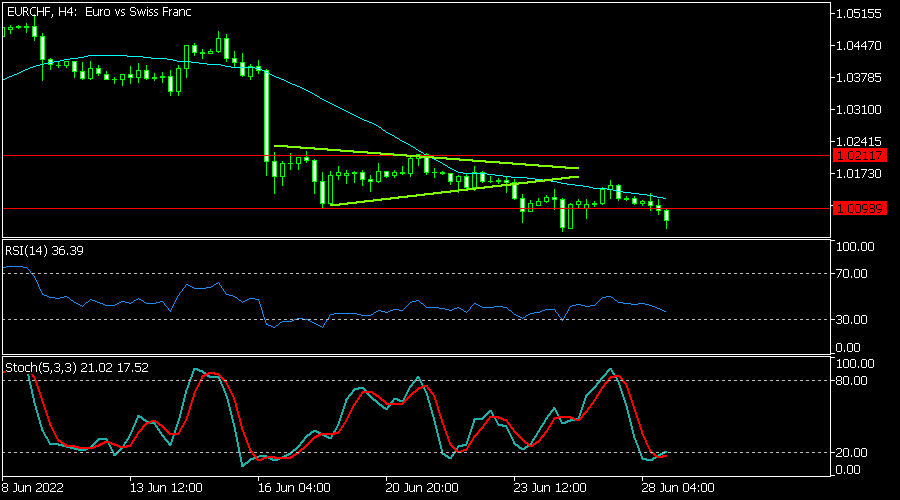
The EURCHF pair dropped to a low of 1.007 as the Swiss franc strength continued. The pair dropped below the 25-day and 50-day moving averages. The RSI and the Stochastic Oscillator have tilted lower. It also dropped below the key support level at 1.009, which was the lowest level on June 17. The pair will likely continue falling as bears target the parity level.
ECB Simkus: We should move decisively toward monetary-policy normalization
ECB Governing Council member Gediminas Simkus said that by July meeting, "should see some change in the data, some change in relation to what we have seen at the beginning of June". He added, "if we see this change in data that points to the persistence of inflation, to its acceleration, 50 basis points should be a policy option for July."
"With these levels of inflation and inflation being more and more broad-based, with wages growing in the euro area, we should move decisively toward monetary-policy normalization," said Simkus,
ECB has pre-committed to a 25bps rate hike in July. Another hike is also pre-committed for September, but the size would be dependent on incoming data.
USD/JPY Technical Analysis 29th June 2022
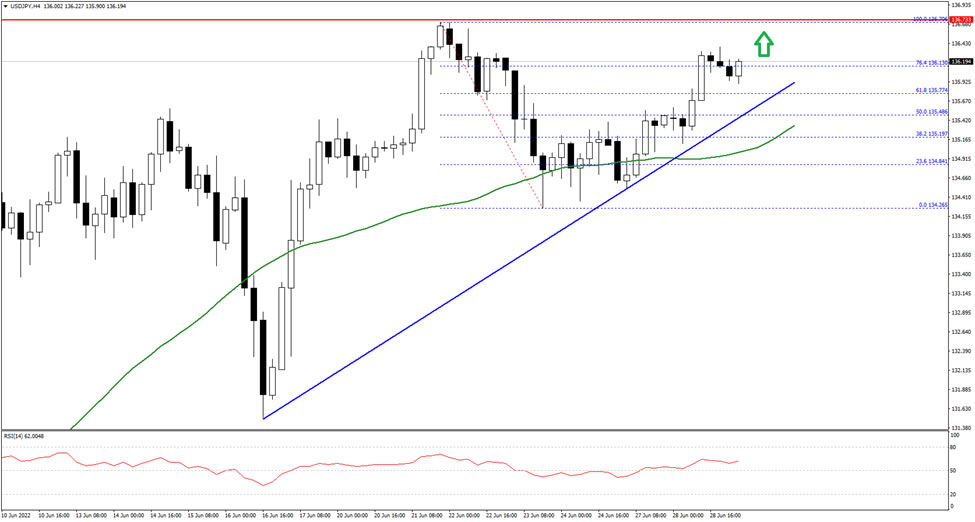
The US Dollar started a fresh increase from well below the 132.00 level against the Japanese Yen. The USD/JPY pair traded above the 134.50 resistance zone to start a fresh surge.
The pair even climbed above the 136.00 level and the 50 hourly simple moving average. The pair traded to a new multi-year high at 136.70 before there was a minor downside correction. USD/JPY is again rising and trading above 136.20 on FXOpen.
The first major resistance is near the 136.50 zone. A clear break above the 136.50 resistance could push the price towards 137.00. The next major resistance is near the 138.00 level.
On the downside, an initial support is near the 135.80 zone and a trend line on the hourly chart. The next major support sits near the 135.40 level, below which there is a risk of more downsides towards the 133.80 level.
NZDUSD Back to Multi-Month Lows; Negative Momentum Prevails
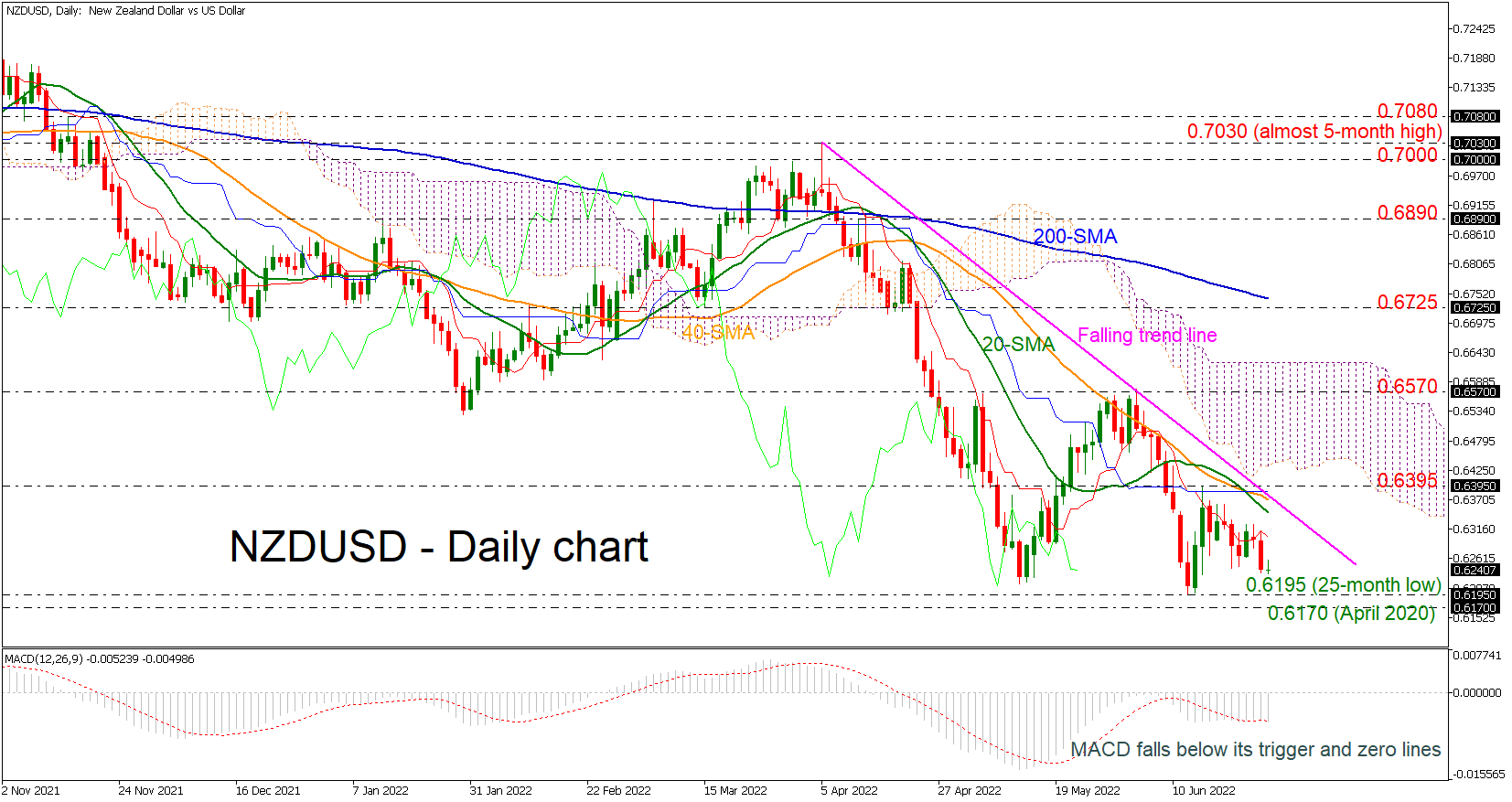
NZDUSD is recording another day of losses after a failed attempt to break significantly above the 0.6395 resistance level and the short-term descending trend line.
Chances for a reversal, however, are decreasing as the 20-day simple moving average (SMA) dropped below the 40-day SMA, while the red Tenkan-sen line has a steeper negative slope now, suggesting that the next move in the price is more likely to be down. The MACD continues to strengthen to the downside and below its red signal line, supporting this view as well.
Another step lower may reach a key support at the 25-month low of 0.6195, where the price stopped on June 15. Should this prove a weak obstacle, the selling could pick up speed until the April 2020 inside swing high at 0.6170, where any violation would bring more pressure to the market with the price probably stretching further down to test the 0.5920 mark, taken from the bottom on May 2020.
Alternatively, in case of a rebound, immediate resistance could come from the 20- and the 40-day SMAs at 0.6345 and 0.6370 respectively, which stands around the downtrend line and the 0.6395 resistance. Higher, the Ichimoku cloud and the 0.6570 barrier could also restrict upside movements, though only a close above the 0.6725 line and the 200-day SMA at 0.6740 would confirm the start of an uptrend.
In the longer-term picture the pair is still increasingly bearish as long as it holds below the falling trend line and more importantly well below the 200-day SMA.
Daily Technical Analysis
EUR/USD
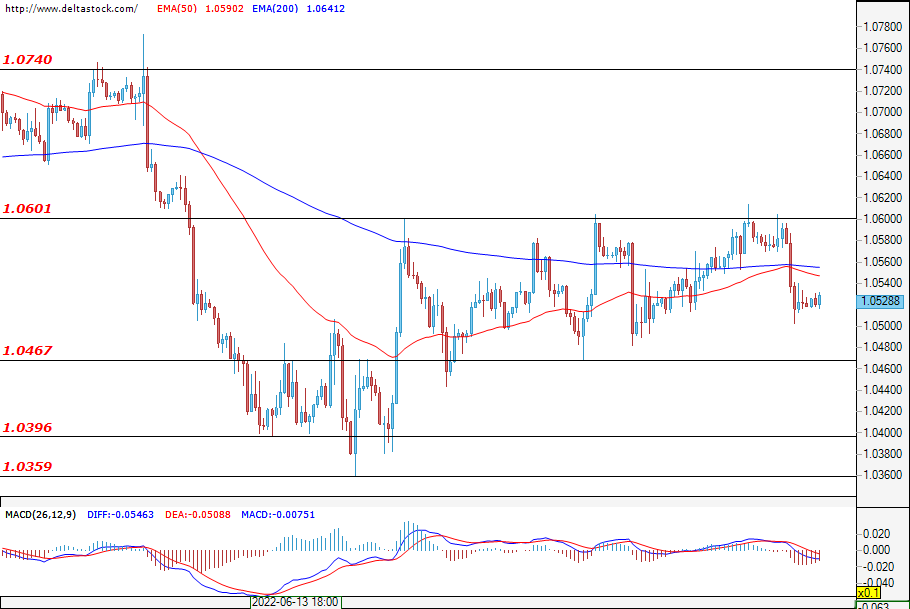
Just as expected, the disappointing data on consumer confidence for the United States sank the euro towards 1.0500. In the early hours of today, the bulls are trying to hold onto the zone, and the trading range of the pair remains locked between 1.0467 and 1.0601. The zone at 1.0467 was tested several times and immediately provided reliable support. If there is a new attack of the bulls on the resistance at 1.0601, it is likely that it will be breached and the pair will continue the rally towards 1.0740. At the moment, bad macroeconomic data supports a strong dollar and this hinders the appearance of sustainable rallies. The mood is therefore rather mixed and the market is waiting for a catalyst to start a trend movement. Today is expected to be a busy day in terms of calendar events, the most significant being a series of business and consumer confidence data for the euro area at 09:00 GMT, the GDP data for the U.S. at 12:30 GMT, and speeches by Christine Lagarde and Jerome Powell at 13:00 GMT.
USD/JPY
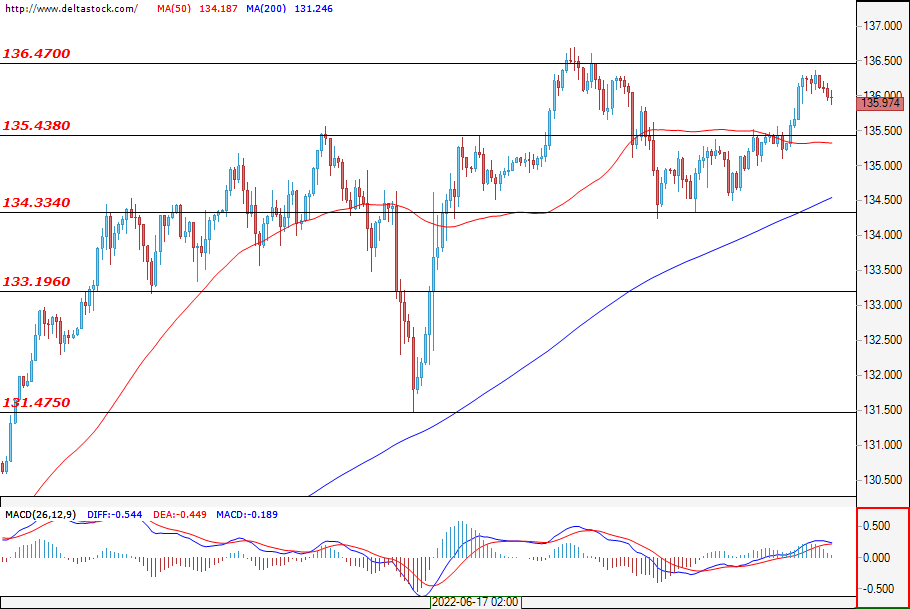
The pair marked another day of gains, but the bulls still failed to reach the resistance at around 136.50. If their pressure continues today as well, it is likely that the zone will be breached and the pair will mark new peaks. The uptrend remains strong, and at the moment, the price action does not show signals for a reversal of the trend. The first daily support is the zone at 135.43, and the most significant one is found at 134.33. As long as the extremely different monetary policies of the central banks of the United States and Japan are being maintained, this may allow the pair to reach levels as high as 141.00 in the long run.
GBP/USD
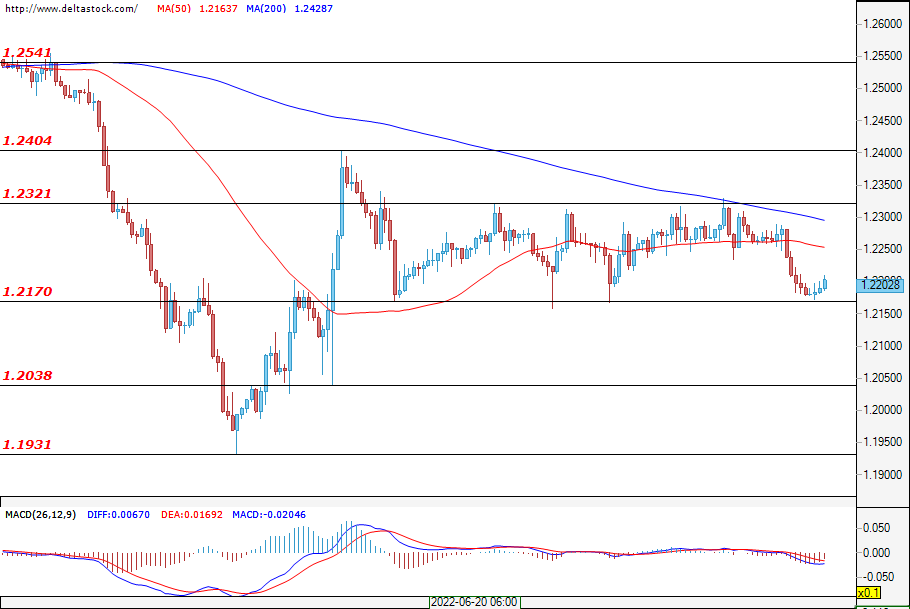
The sterling continues to trade in the range between the support at 1.2170 and the resistance at 1.2320 for a second week in a row. The duration of the range implies the accumulation of a large volume of positions, and therefore the creation of a strong movement upon its exit. The support at 1.2170 has proven to be reliable in the past, but the optimal scenario for the pair could be a false breach of 1.2170 in order to activate liquidity and a strong follow-up attack on 1.2320. At the moment, the market remains indecisive, and a rise in activity can be expected below 1.2170 or with a confirmed breach of 1.2320.
EUGERMANY40
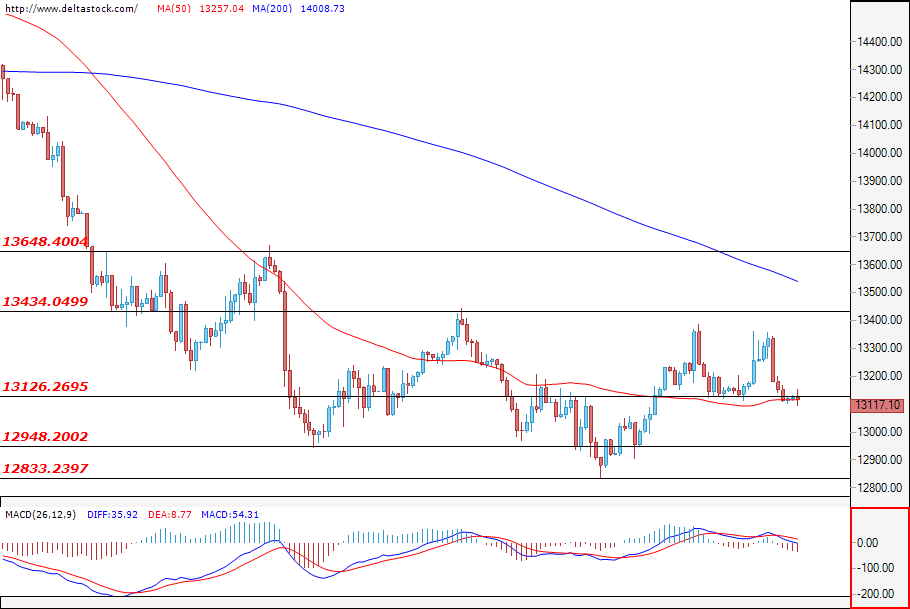
The German index failed to hold onto its gains during the day, and after the bad data from the United States, it was completely hammered. The bulls failed to reach the top at 13434 for a second day in a row. In the early hours of today, the support at 13126 was briefly violated, but the lack of new lows could renew bullish optimism. It is possible that the market will try to pressure the bears into liquidating their positions with a rally towards 13434 and even 13650. The first support is 13126, followed by the more significant levels of 12950 and 12830.
US30
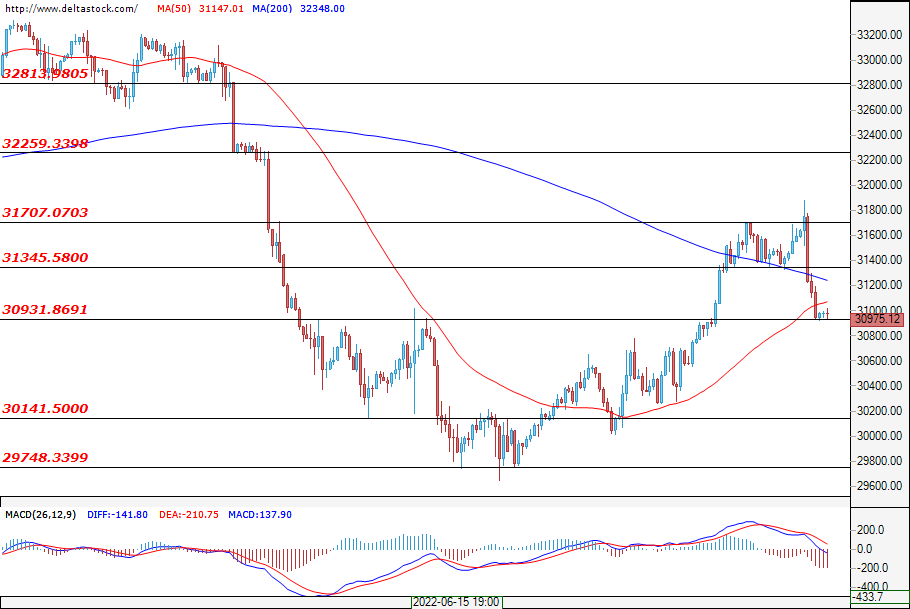
After a false breach of the 31700 resistance, the U.S. blue chips were aggressively sold out due to disappointing data on consumer confidence. The decline is currently limited by the 30930 support, but if the negative mood carries over today as well, then a new plunge can be expected towards the area at around 30500 and even 30140. The bulls still have a fighting chance due to the positive expectations linked to the books rebalancing of large funds at the end of the quarter. Fresh cash flows could raise prices, with the first resistances being 31345 and 31700. Today, markets will also expect the statement of the Fed chairman Jerome Powell at 13:00 GMT.
European Yields and Euro Took a Hit this Morning
Markets
European bonds continued to underperform their US peers yesterday. ECB Lagarde sharpened the central bank’s communication at the Sintra symposium. If necessary, the ECB would act in a determined and sustained manner to tackle inflation. Conditions under which gradualism would not be appropriate include a de-anchoring of inflation expectations or a more permanent loss of economic potential that limits resource availability (eg cut-off of Russian energy supplies). The German yield curve bear steepened slightly with yields rising by 6.1 bps (2-yr) to 8.3 bps (20-yr). Weak US eco data at the start of US trading triggered a turnaround in risk sentiment and supported US Treasuries. US stock markets eventually ceded 1.5% (Dow) to 3% (Nasdaq). The US yield curve bull flattened with yields ending the day up to 3.7 bps (20-yr) lower. June US consumer confidence and Richmond Fed Manufacturing Index started the rot in equities. Consumer confidence fell from a downwardly revised 103.2 to 98.7, the lowest level since February 2021. Details showed especially the expectations component responsible for the setback, both with regard to business conditions as with inflation developments. The Richmond Fed stands at its lowest since May 2020 with shipments (new orders and order backlogs) and employment taking a big hit while price pressure remains elevated. Forward looking indicators don’t make the most happy reading neither. The US Treasury concluded its end-of-month refinancing operation with a $40bn 7-yr Note deal. While it fared better than Monday’s 2-yr and 5-yr deals, metrics still couldn’t convince. The auction tailed with a setback in the bid cover. EUR/USD again failed to recapture the 1.06 handle despite the relative interest rate support with the dollar even clawing back. The pair eventually fell back to the low 1.05 area, both because of some upside fatigue as because of the U-turn in risk sentiment. EUR/GBP went nowhere around 0.8630. European yields and the euro took a hit this morning following the earliest German regional CPI reading for June. North Rhine Westphalia CPI printed at -0.1% M/M and 7.5% Y/Y which is softer than the expectations for the national gauge (0.4% M/M and 7.9% Y/Y). Apart from German numbers, also Spanish and Belgian CPI are due today. If they effectively fend off the worst case scenario of a CPI acceleration tomorrow, it adds to our Summer consolidation/correction phase on bond markets. It also implies that EUR/USD could be restricted to 1.0350/1.0642 rather than 1.0350/1.08. Especially in the sell-on-upticks risk environment. Other factors to watch today are June EC economic confidence numbers and a panel discussion with ECB president Lagarde, Fed Chair Powell, BoE governor Bailey and BIS chief Carstens. More technical factors, like end-of-month and end-of-quarter extension buying could have an influence as well.
News Headlines
The Hungarian central bank (MNB) yesterday delivered a monster-hike of 185 bps to bring the base rate from 5.9% to 7.75%. It’s a sharp U-turn compared to just one meeting ago, when it slowed the tightening pace to 50 bps as it entered a period more gradual tightening. The MNB announced that with the move it intends to close the gap with the one-week deposit rate, which will be increased on Thursday from 7.25% currently. Doing so makes policy more transparent and sends a clear signal to markets who got increasingly worried that the MNB lifted the foot off the brake too soon. Inflation continued to rise into the double digits in May, is expected to increase further and won’t be in line with the target before 2024. The Hungarian forint went in a tailspin in recent months (EUR/HUF north of 400), amplifying inflation dynamics. It strengthened to EUR/HUF 397.15 in the wake of the decision. The MNB said the tightening cycle will continue until the outlook for inflation stabilizes around the central bank target in a sustainable manner and risks become evenly balanced.