

Sample Category Title
US Dollar Index Steady ahead of FOMC and NFP Data
The price of crude oil dipped slightly even after Germany backed a phased-in ban of Russian oil imports. In a statement, one of the closest advisors of Olaf Scholz said that Berlin was in favour of an oil embargo in a bid to punish Russia. The government has said that it has dramatically reduced the amount of oil it is buying from the country. The main challenge with Germany is on natural gas, which is hard to transport. At the same time, the European Commission is coming up with the sixth sanction package that will target the country’s oil sector.
The US dollar rose slightly on Monday morning as investors repositioned themselves for the upcoming Federal Reserve decision and America’s non-farm payrolls (NFP) data. The Fed, which starts its meeting on Tuesday, is expected to make its second interest rate hike on Wednesday. Expectations are that the bank will hike rates by 0.50% and then start implementing a quantitative tightening policy. The US dollar will also react to the latest NFP data that will come out on Friday. Further, investors will focus on the latest manufacturing and services PMI numbers.
US futures rose slightly on Monday morning after the Chinese government pledged more stimulus in a bid to meet economic targets. The Communist Party’s Politburo said that it will provide more infrastructure spending in a bid to boost the economy. This happened as signs emerged that the country’s economy was slowing due to the Covid lockdowns. Stocks also reacted to the Berkshire Hathaway meeting that happened in Omaha. In it, Warren Buffett sounded optimistic about the market as the firm invested $51 billion in stocks in Q1.
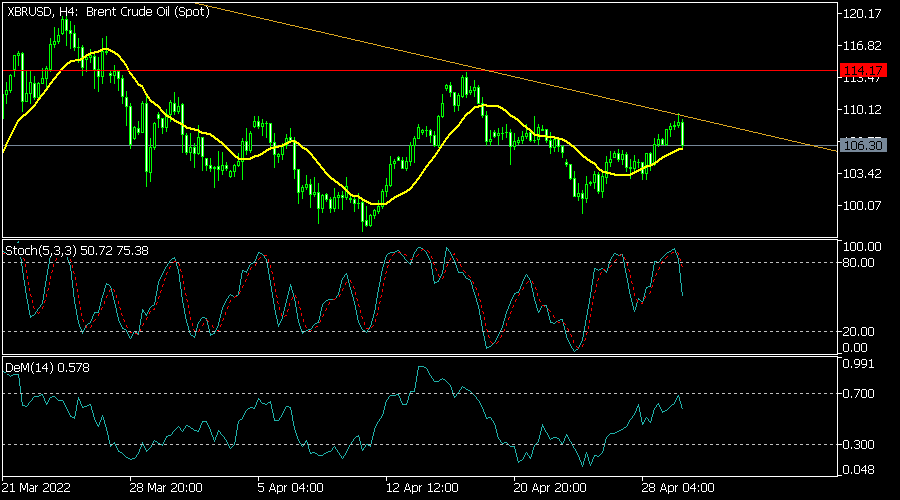
XBRUSD
The XBRUSD pair declined to a low of 106.30, which is slightly below last week’s high of 107.3. On the four-hour chart, the pair has moved below the descending channel shown in brown. It has formed what looks like a descending triangle pattern. Further, the DeMarker and Stochastic Oscillator have moved slightly below the overbought levels. Therefore, the pair will likely keep falling as investors wait for the upcoming OPEC+ meeting.
EURUSD
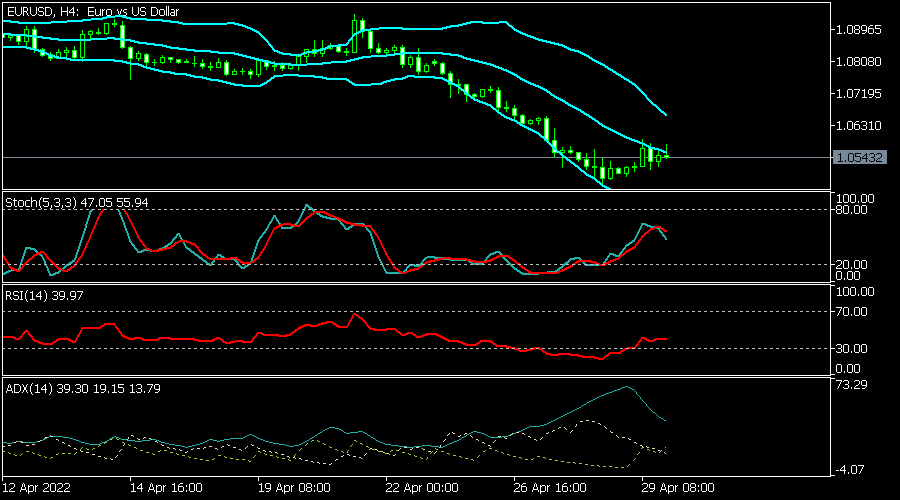
The EURUSD pair was little changed as traders wait for upcoming events from the European Union and the United States. It is trading at 1.0543, which is along the middle line of the Bollinger Bands. The Stochastic Oscillator has moved above the middle line while the Relative Strength Index (RSI) has moved above the oversold level. The Average Directional Index has started falling while the pair has formed a bearish flag pattern. Therefore, the pair will likely keep falling ahead of the Fed decision.
XAUUSD
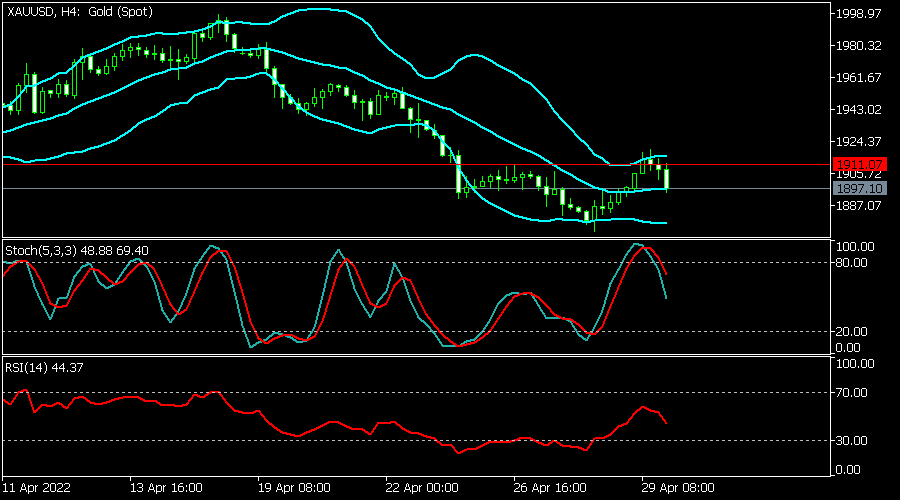
The XAUUSD pair retreated to a low of 1,897 as investors repositioned for the upcoming Fed decision. This price was slightly below last week’s high of 1,920. It has also moved slightly below the middle line of the Bollinger Bands while the Stochastic Oscillator and Relative Strength Index have moved lower. Therefore, the pair will likely keep falling, with the next key support being at the lower side of the Bollinger Bands.
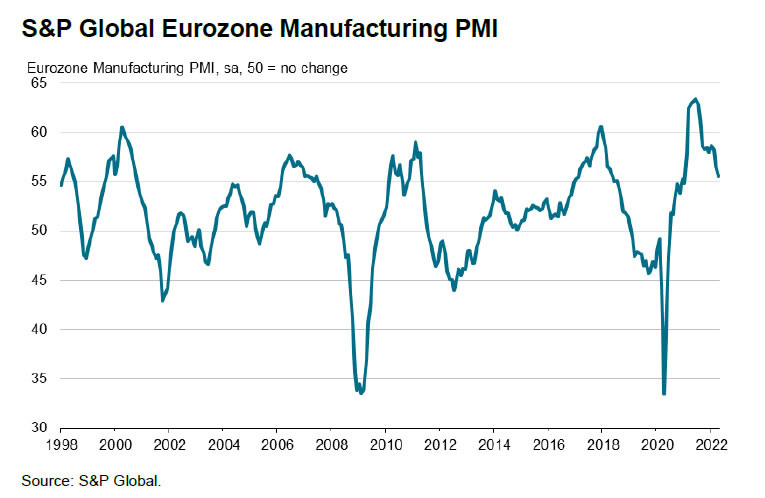
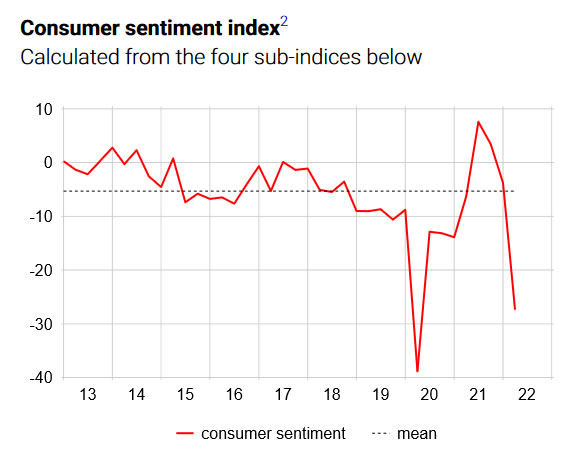
Eurozone PMI manufacturing finalized at 55.5, output came to a near standstill
Eurozone PMI Manufacturing was finalized at 55.5 in April, a 15-month low, and down from March's 55.5. Output index was finalized at 50.7, a 22-month low, down from March's 53.1.
Looking at some member states, PMI manufacturing of the Netherlands rose to 2-month high at 59.9. France rose to 2-month high at 55.. Austria dropped to 15-month low at 57.9. Germany dropped to 20-month low at 54.6. Italy dropped to 16-month low at 54.5. Spain dropped to 14-month low at 53.3.
Chris Williamson, Chief Business Economist at S&P Global said: "Manufacturing output came to a near standstill across the eurozone in April, with production merely edging higher at the slowest rate since June 2020. Companies not only reported that ongoing problems with component shortages were aggravated by the Ukraine war and new lockdowns in China, but that rising prices and growing uncertainty about the economic outlook were also hitting demand."
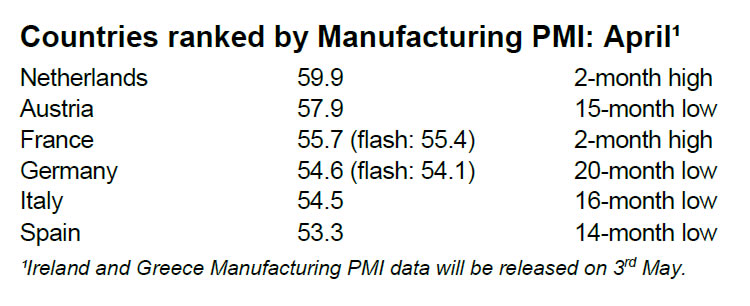
Germany PMI manufacturing finalized at 54.6, unwanted combination of soaring price pressures and falling activity
Germany PMI Manufacturing was finalized at 54.6 in April, a 20-month low, down from March's 56.9. S&P Global said supply disruption and weaker demand weighed on output. Soaring costs drove unprecedented rise in prices charged. Goods producers remained pessimistic about the outlook.
Phil Smith, Economics Associate Director at S&P Global, said:
"Germany's manufacturers are facing an unwanted combination of soaring price pressures and falling activity, as the war in Ukraine and COVID lockdowns in China disrupt supply chains and hit demand.
"The survey's output index is now in contraction territory for the first time since the initial COVID shutdowns in the first half of 2020, with a similar situation for new orders hinting that this not just a supply problem but also evidence of slowing demand for goods.
"While factory employment continues to rise, and at a robust pace, it would seem that it's only a matter of time before the weakened trends in output and new orders start to feed through to hiring activity, especially given manufacturers' gloomy assessment of the outlook.
"It's early days yet, but it's already looking like manufacturing will be a drag on the economy in the second quarter, and the prospect of more lockdowns in China and any escalation of the energy crisis would only serve to increase this risk."
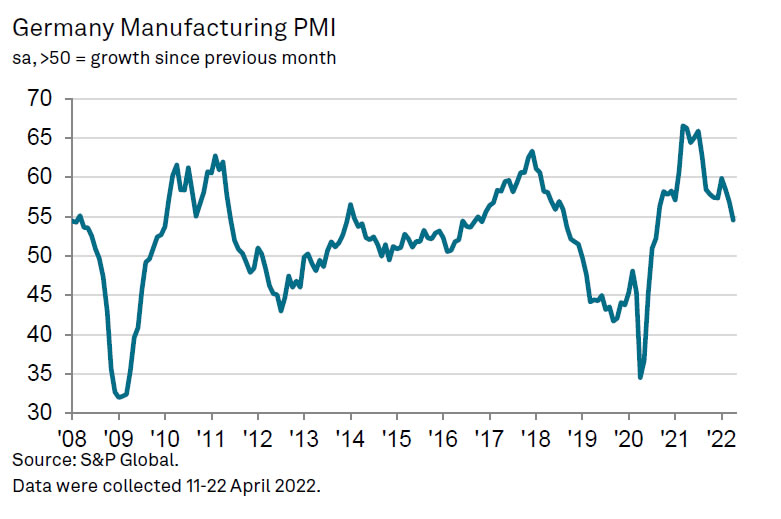
France PMI manufacturing finalized at 55.7 in Apr, continues to churn out growth
France PMI Manufacturing was finalized at 55.7 in April, up from March's 54.7. S&P Global said manufacturing output growth was constrained by war in Ukraine. There were reports of automotive sector weakness, while supply issues persisted. Output price inflation accelerated to series high.
Joe Hayes, Senior Economist at S&P Global, said:
"France's manufacturing sector continues to churn out growth in the face of an intensely challenging backdrop for goods producers. That said, some of the anecdotal evidence from panellists we received this month suggests production growth may be short-lived.
"Advanced purchases from clients in anticipation of price hikes underpinned order book growth at some firms. This is worrying evidence that suggests inflation expectations have become de-anchored, but it also suggests that weaker demand conditions are in the horizon if clients are bringing forward their purchases and are hesitant to place orders at higher prices.
"The supply situation also remains uncertain as bottlenecks in China due to COVID restrictions and the war in Ukraine have added to pressures. Firms continue to struggle to replenish their stock of finished goods, which have fallen in for the past six months.
"If firms can secure inputs, this may help support output in the face of weak demand if firms choose to rebuild their stocks, but rampant inflation and a concerning outlook for demand is diminishing support for growth."
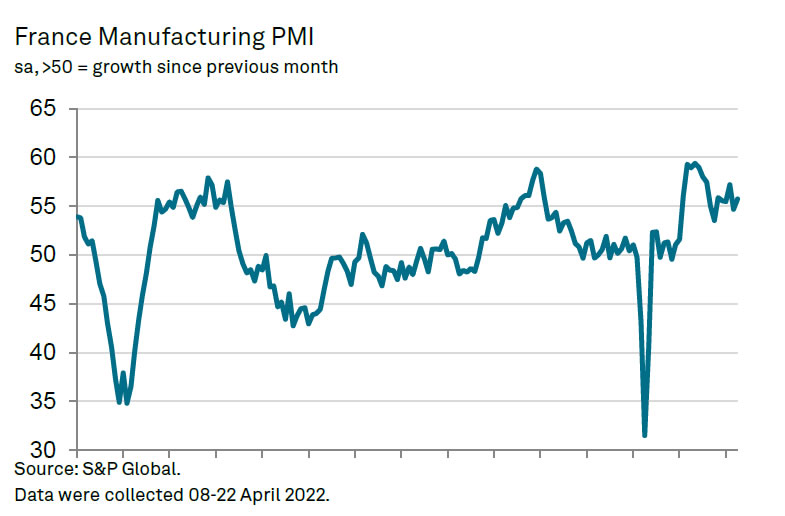
Swiss SECO consumer climate dropped to -27 in Q2, marked weakening of sentiment
Swiss SECO consumer climate dropped sharply from -4 to -27 in Q2, well below expectation of -15. That's was the biggest decline since the onset of the pandemic, and the reading was below long-term average of -5. Looking at some details, the expected economic development index dropped from 21 to -31. Expected financial situation dropped from -3 to -25. Major purchases index dropped further from -23 to -31.
SECO said: "The survey from April shows a marked weakening of consumer sentiment. In particular, consumers' outlook for the general economic situation has turned far more pessimistic. Households are feeling the strain as prices continue to rise. Meanwhile, the situation on the labour market is again being viewed as more positive. "
Dax 40 Struggles to Rebound
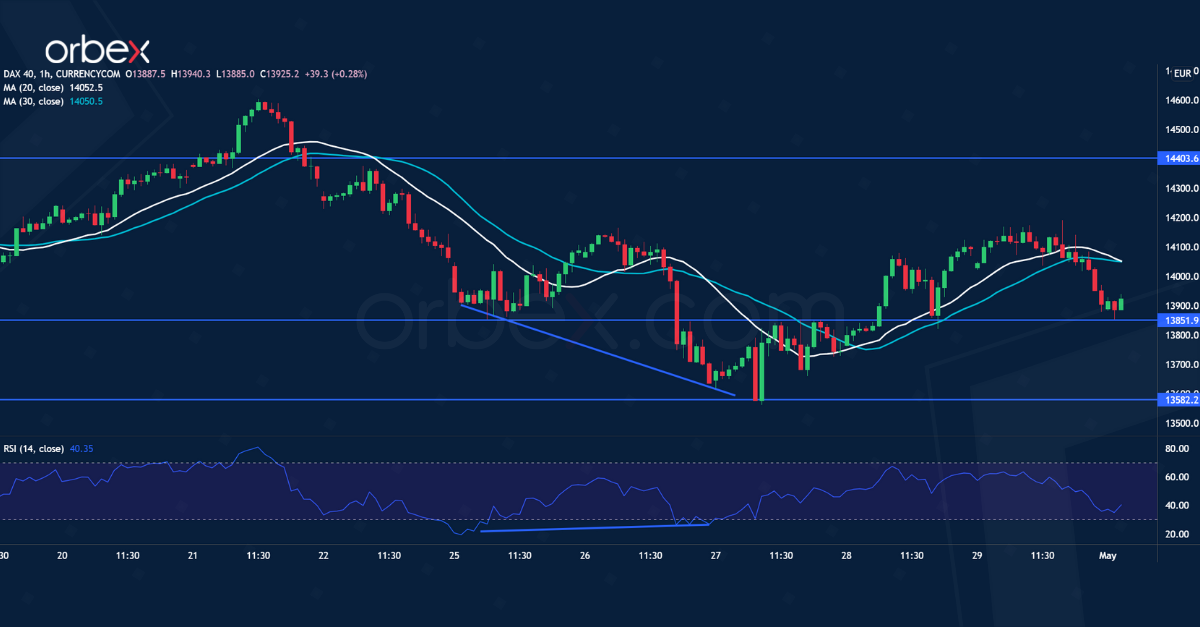
The Dax 40 weakens as the energy crisis in Europe casts doubt on growth. A bullish RSI divergence indicates a slowdown in the current liquidation.
A break above the latest sell-off point at 14140 prompted some sellers to cover their bets, easing the pressure in the process. Nonetheless, the bulls need to clear offers around 14400 from a previously faded rebound.
Only then a broader rally may reach the March peak at 14910. Otherwise, 13850 is a fresh support, and 13580 is a key level to keep the recovery intact.
EUR/CHF Grinds Higher
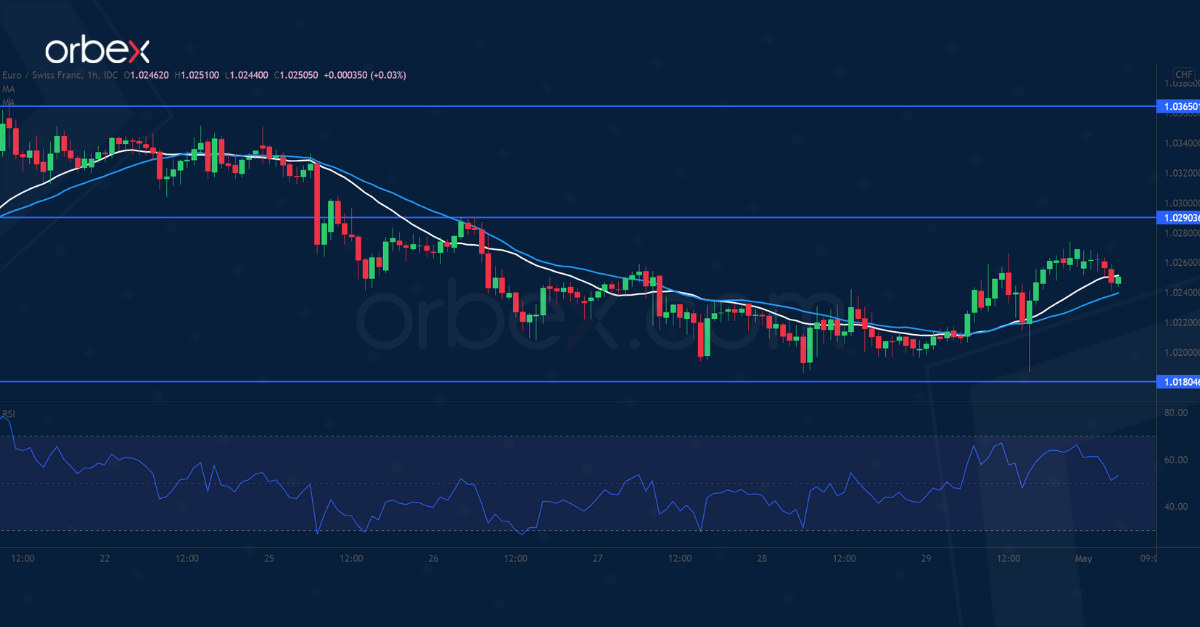
The euro bounces back as core inflation across the eurozone accelerated to 3.5% in April.
On the daily chart, the pair is in a narrowing consolidation between 1.0100 and 1.0370, a sign of stabilization after February’s sharp drop. Solid support above 1.0190 indicates a strong interest in keeping the euro afloat.
1.0290 is the next hurdle and a bullish breakout could flush remaining selling interests out and extend the rally to the major supply area at 1.0370. On the downside, 1.0140 is a second line of defense in case of hesitation.
USD/CAD Bounces Off Support
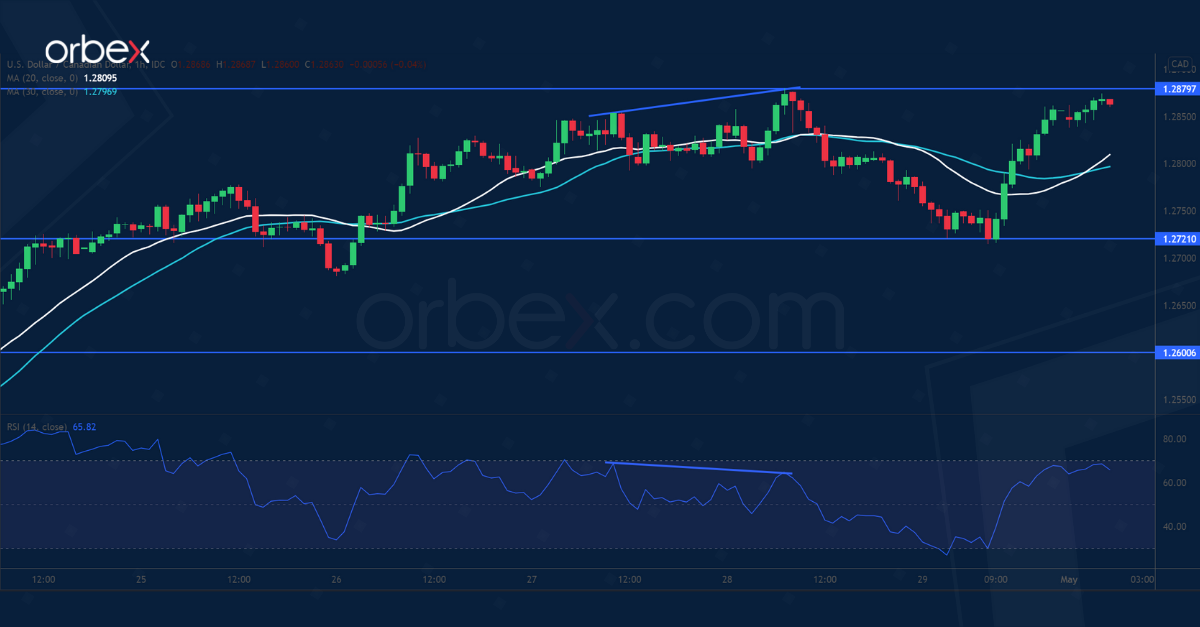
The US dollar found support from a rise in personal income in March. The pair previously found resistance at March’s high around 1.2880.
A bearish RSI divergence suggests a loss of momentum in the upward push. However, price action’s swift recovery from 1.2720 showed strong commitment from the buy-side.
A close above 1.2880 would bring the greenback to December’s high at 1.2960, where a breakout could trigger an extended rally. 1.2600 on the 30-day moving average is another major area of interest.
Dollar Already Regains Part of Friday’s Correction
Markets
The balance between growth and inflation still was the talk of the town on Friday and will likely continue dominating the debate. EMU growth slowed to 0.2% Q/Q from 0.3% resulting in a 5.0 Y/Y. Few details on the composition of were available yet. However, ‘anecdotic’ evidence suggests that even the hoped for post-covid rebound in contact related activities/services is eroded by the cost of living crisis. In the respect, EMU April inflation ‘stabilized’ at 7.5% Y/Y, but core inflation again accelerated faster than expected from 2.9% to 3.5%, an indication that price rises are affecting activity in ever more profound way. Markets concluded that this imbalance only can be addressed by more decisive CB action.
The German yield curve bear flattened with yields rising between 6.3 bps (2-y) and 3.8 bps (10 & 30-y). The 10-y EMU inflation swap closed at a historic top of 3.14%!! It can only be seen as a de-anchoring of inflation expectations.
US eco data were mixed, but a faster than expected rise in the employment cost index (1.4% from 1.0%) forced US interest markets to a similar conclusion. US yields jumped between 11.6 bps (5-y) and 9.7 bps (2-y). One difference compared to Europe, the rise was driven by a sharp rise in real yields (10-y +15 bps). The latter, combined with uncertainty on future corporate results, hammered US equities with the Nasdaq ceding 4.17%! EMU stocks still closed with limited gains (EuroStoxx 0.68%).
In theory, the rise in US real yields could have been a positive for the dollar. However, after the recent astonishing rally, the greenback fell prey to modest profit taking. The DXY index closed just below 103 (open 103.61). USD/JPY finished at 129.70. Even the euro regained some ground closing at EUR/USD 1.0545 (from 1.0499 on Thursday). Still, the picture remains very fragile. Sterling slightly outperformed the euro (EUR/GBP close 0.8388) as investors were counting down to this week’s BOE policy decision. Poor China PMI’ published this weekend (composite 42.7 from 48.8, services tumbling from 48.41 to 41.9) confirmed that Covid lockdowns in major Chinese cities taking a big toll on growth. Chinese equity markets are closed for the Labour day Holiday, but the data don’t help to restore confidence on the back of Friday’s WS sell-off. The offshore yuan (USD/CNH 6.683) is losing further ground. European equity futures are indicating losses of 1.0%. The dollar already regains part of Friday’s correction and US yields remain upwardly oriented.
Today, the US Manufacturing ISM and the EC confidence data will be published. US data recently held up quite well and the ISM is still expected to rise marginally to 57.6. EC economic confidence is captured in a downtrend and a further erosion from 108.5 to 108 is expected. Negative surprises can put further pressure on equities, but we don’t expected a sustained decline in US or European yields yet.
Several central banks this week are expected to step up their efforts to arrest inflation (RBA tomorrow, Fed Wednesday, BoE and Czech central bank on Thursday). The Norges Bank (Thursday) is expected to take a pause. A fragile risk sentiment and decisive Fed action probably will keep the dollar supported. The absence of an unambiguous ECB commitment, keeps the door open for EUR/USD return action toward the 1.0341 2017 low.
News Headlines
Rating agency S&P affirmed the Czech Republic’s AA- rating with a stable outlook. The Russian war in Ukraine triggered a downward revision for this year’s growth forecast from 4% to 1.8%, but for now is no reason to downgrade the Czech rating. If the conflict has an even bigger economic effect, it could nevertheless become the case. Especially should monetary and fiscal authorities reverse their tightening stances currently in place to rein in high and rising inflation. Low government and external debt, combined substantial FX reserves provide a solid buffer for the Czech rating. The Czech koruna barely suffered a setback last week despite the combination of rising rates and crashing stocks. EUR/CZK changes hands around 24.60.
Chinese PMI Crashed as the Zero-COVID-19 Policy Weighs on Supply and Demand
Market movers today
Markets will continue to digest gloomy Chinese PMI figures released over the weekend.
A range of Manufacturing PMI figures for April are out in Europe and Scandinavia, as is the EU Commission's economic sentiment indicator. Business indicators have so far remained surprisingly resilient despite the headwinds from the Ukraine war.
In the US, the ISM manufacturing index is the highlight of the day.
Later this week, the FOMC meeting on Wednesday, Bank of England and Norges Bank on Thursday and Russian energy developments will remain in focus, as the EU readies another sanctions package. An emergency meeting among EU energy ministers is scheduled for today.
The 60 second overview
PMI China: Chinese PMI released over the weekend fell substantially in April as the "zero-Covid" lockdowns hampered not only manufacturing production but also service production. Manufacturing PMI fell from 49.5 to 47.4 and service from 48.4 to 41.9 - the latter being the lowest since February 2020.The statistics bureau said that the drop both reflected declines in de supply and demand. Both domestic and export orders fell sharply. The off-shore yuan weakened sharply on the numbers. See this FT story discussing the longer term economic and political impact of the Chinese zero-Covid poliy.
Oil: EU energy ministers are due to hold at an emergency meeting today to discuss the implications of the Russian decision to cut off the gas deliveries to Poland and Bulgaria last week. It seems that an oil embargo on Russia will be on table as Germany have now confirmed that it can replace Russian crude deliveries by late summer according to AP. Hence, it now seems very likely that we will see a gradual phase in of an EU oil ban. Brent oil rose above USD 110 a barrel on Friday as the rumour of an EU ban started to emerge. However, the weak Chinese PMI data have pushed priced down towards USD 106 USD a barrel this morning. OPEC+ will meet this week. But despite a possible EU ban on Russian oil and falling Russian oil production any deviation from the strategy of lifting oil production gradually is not expected. OPEC will be pointing to the negative demand effect from the lockdowns in China. That said, OPEC is already struggling to deliver the extra oil it has pledged in previous months.
Euro area inflation: Flash HICP reached yet another record high of 7.49% in April (from 7.44% in March). Energy price inflation slowed down but with a 3.8pp contribution energy remains by far the biggest driver of headline inflation. Food price inflation on the other hand is still on a steep acceleration path up 6.4% from 5% in March and importantly core inflation reached a new record high of 3.5% up from 3% in March. Headline inflation might have reached a peak if commodity prices are stabilizing. However, underlying inflation are still seeing a clear upward pressure where further upside risks loom from food prices and tentative signs of wage growth picking up.
FI: A swath of European data out on Friday morning led to mostly sideways trading, until the resilient economic performance in Q1 (of 0.2% qoq) and core inflation (3.5% yoy) gave clear signal of ECB on route to hike in July at 11:00CET. However, we remain more concerned about the medium-term headwinds for the euro area. Later in the afternoon, a US lead sell-off with UST selling off by 10bp, led to additional transatlantic spread widening to stay around 200bp - and further spread widening is expected. However, after the weak Chinese PMI during the weekend we expect rates to decline from the morning session. Bund spreads had a very volatile day, albeit ended virtually unchanged on the day after having widened intraday by 4bp.
FX: EUR/USD continues to hover around 1.05. We expect the Riksbank pivot to be supportive of the SEK in coming weeks. NOK was the biggest loser among majors last week posting a loss of almost 5% vs the USD.
Credit: Credit continued the risk-off mode this Friday. iTraxx main widened 1bp and Xover widened 9.8bp. This marks the 8th consecutive session of spread widening and takes spreads to the widest levels recorded this year. Main is now booked at 90.2bp and Xover at 427.6bp.
Nordic macro
Like the rest of Europe, Swedish manufacturing PMI's are released today. The trend remain downwards sloping and expectations are for a modest decline in April, albeit remaining at strong levels. Perhaps even more interesting are the developments of the different sub-indices, for example delivery times/prices and new orders, as these could provide crucial information on both the supply (supply disruptions/cost pressures) and the demand side.