Sample Category Title
Oil Near $130 is a Nightmare for Inflation
Oil markets were under great pressure amid increased demand and falling supply. OPEC+ is unable or unwilling to achieve its self-imposed production targets and insists on limiting production increases by 400,000 barrels per day despite rising prices. In addition, US producers are unable or unwilling to increase US oil supplies.
Inflation is a number one concern for the markets and everyone has a right to fear. Inflation in the US has jumped to a 40-year high of 7.5%. Inflation in the Eurozone hit an all-time high at 5.8%. It is not much different in the UK, where inflation has reached 5.5%, the highest level in 30 years.
The war between Russia and Ukraine has only made matters worse. If Russian oil and gas supplies are interrupted due to sanctions or by order of the Kremlin to respond to the sanctions, this could drive prices crazy, even before we see an actual impact on demand from the disappearance of Russian oil from the market.
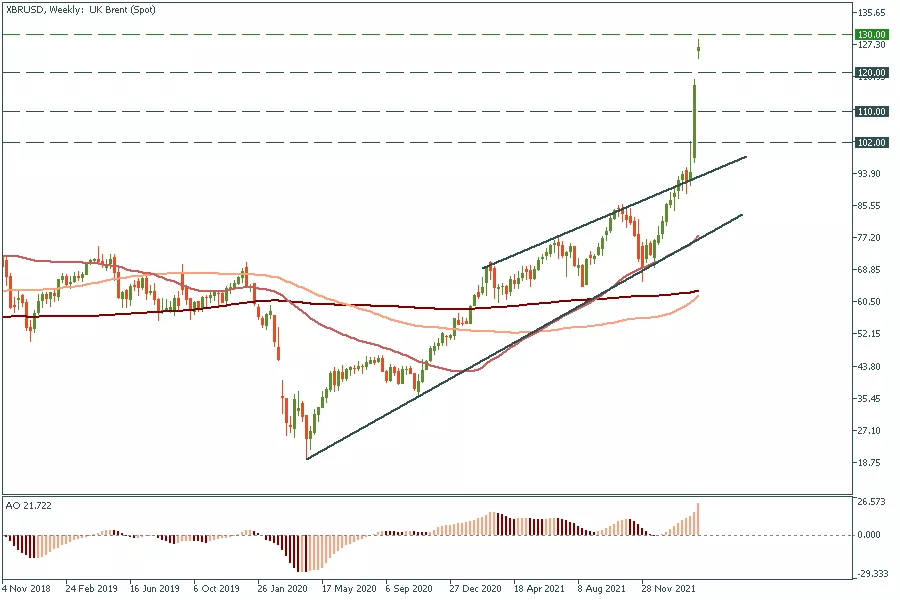
Crude oil soars towards $130 a barrel
Although the sanctions imposed by the West so far do not target Russian energy exports, after the Russian invasion of Ukraine, Russian shipments became toxic for most traders, insurance companies, and tanker owners. Some refiners and traders are concerned about how financial transactions will work after Russian banks are excluded from the SWIFT system. Others are running away to avoid harming their reputation.
To what extent may oil prices rise?
JPMorgan thinks that 66% of Russian oil will struggle to find buyers and expects crude oil prices to reach $185 by the end of the year if Russian oil remains without a buyer. If the Russian energy sector comes under sanctions, or if Germany moves to halt Nord Stream 2 gas pipeline, and if the US fails to reach a nuclear deal with Iran, all of these factors could curb global oil supplies. Together, they will push prices up even more.
What does oil above $125 mean for inflation?
If energy prices go up, inflation will be the first to be affected. This will have fatal consequences for Russia, but it will also increase cost-of-living pressures in the West.
Even before oil prices rose above $110 a barrel, analysts lowered growth forecasts and raised inflation estimates. If Russian energy sector is included in the list of targets, this will mean oil and gas will be more expensive for longer. In the scenario of the oil reaching $150 and remaining above $100 until early 2023, the pressure on consumers will increase. The economy and businesses will also be hit hard, with higher energy costs and lower demand hurting profits. This will increase the risk of turning the economic slowdown into a recession with growing inflation globally.
The US inflation to where?
It is still unknown how the US economy will respond to the oil shock that has sent crude oil prices above $125 a barrel.
The US economy can withstand six months of oil prices at an average of $100, although it may deepen the inflation problem. However, it is almost certain that if oil remains around $125, it will lead to a halt in growth and higher unemployment rates, which could turn into a recession. Another question is how central banks will respond to rising oil prices. Federal Reserve Chairman Jerome Powell said events in Ukraine would not stop the US central bank's plans to start raising interest rates. What is not yet clear is the extent and the speed of rate hikes.
Finally, the economic impact of the invasion of Ukraine will come in the form of slowing US economic growth with higher inflation, while the European economy may enter a recession. Russia will plunge into a deep double-digit recession.
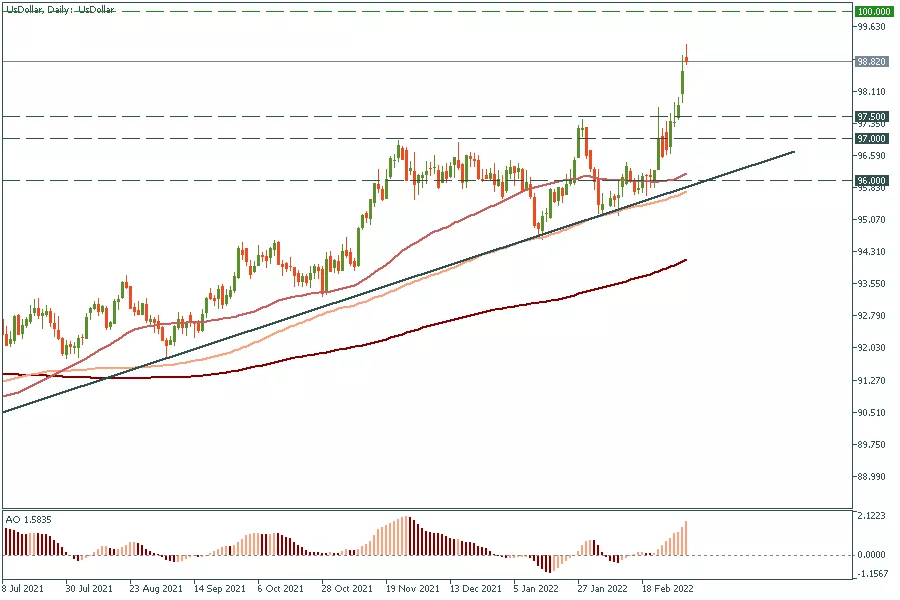
The US dollar index rose to 99.00. For now, the greenback enjoys safe haven demand. Support is at 97.50.
GER 40 Drops to a Fresh Low
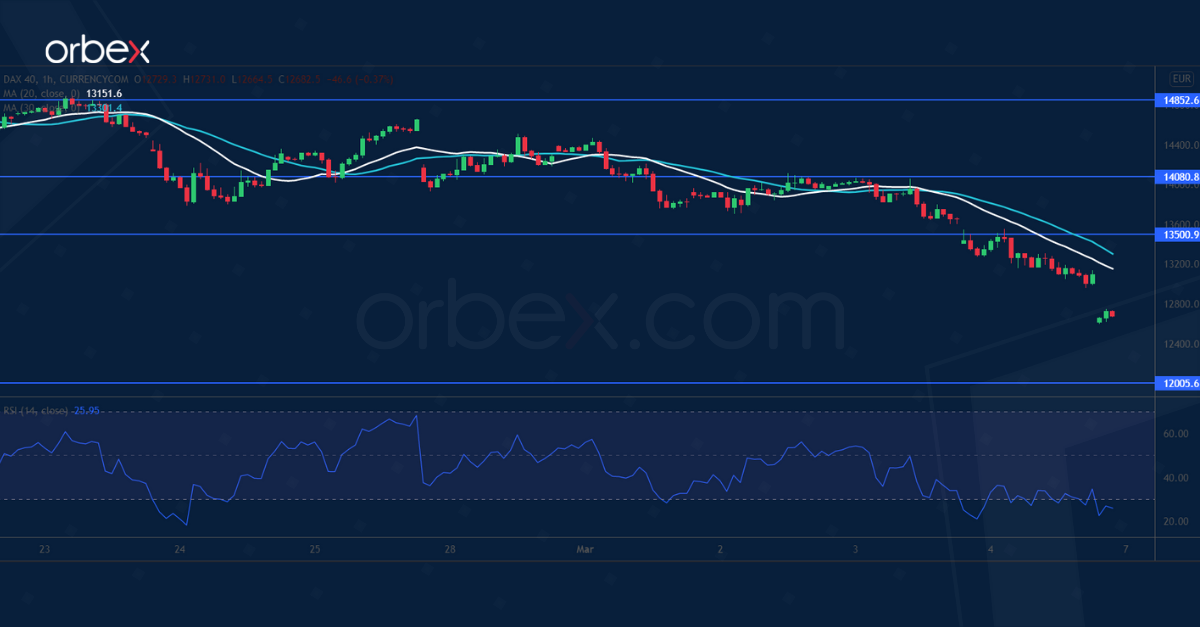
The Dax 40 plunges for fears of stagflation in the eurozone. The index has ventured further into the bearish territory after it broke below March 2021’s lows around 14000.
The liquidation is yet to end as sentiment remains downbeat. A break below the psychological level of 13000 would trigger a new round of sell-off to 12000.
The RSI’s oversold situation from both daily and hourly charts may cause a limited bounce if short-term traders take profit. 13500 is the first resistance ahead and could attract more trend followers.
XAU/USD Breaks Higher
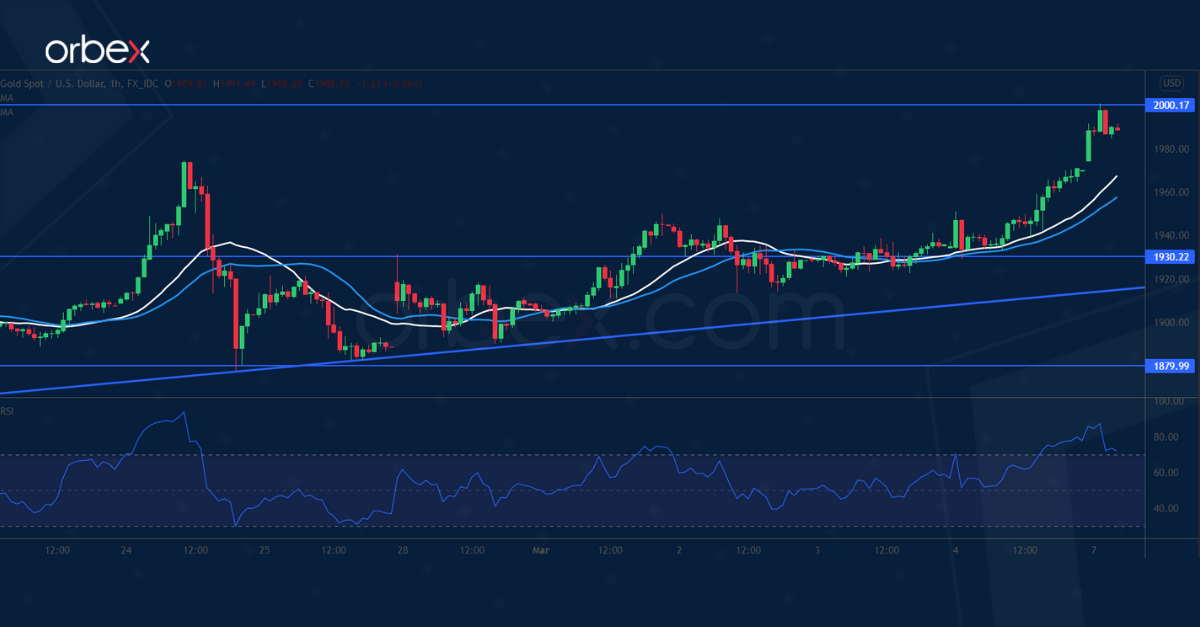
Gold rallies as investors’ flight to safety continue. The bulls have tempered their aggressiveness after the initial surge.
The latest pullback has been an opportunity to accumulate against a bullish backdrop. Price action continues to climb along the rising trendline which suggests that the direction is still up.
A break above the psychological level of 2000 would bring in more momentum traders. In fact, that would send the price to August 2020’s high at 2075. Between the trendline and 1930 there is a key demand zone.
USD/CHF struggles for support
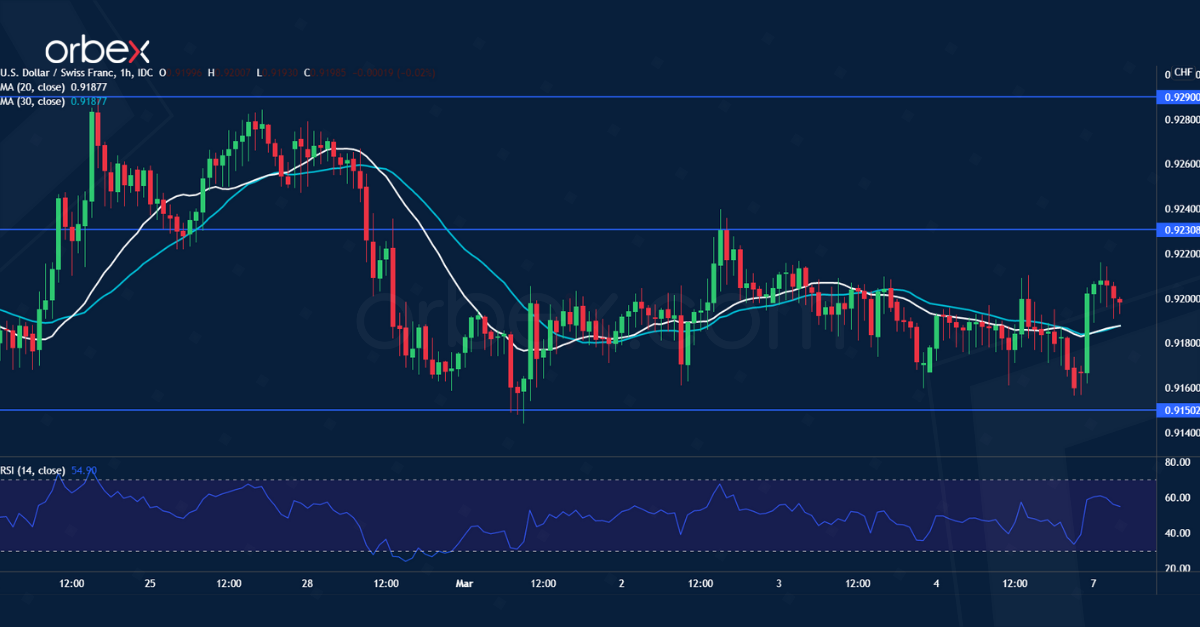
The US dollar softens as the Fed may settle for a less aggressive rate hike agenda. The recent sideways action is a sign of the market’s indecision.
Sellers’ previous attempts to push below 0.9150 have met some buying interest in this demand zone. A definitive breakout may send the pair to January’s lows around 0.9100. Then the path of least resistance could be down, ending a three-month-long consolidation.
0.9230 is the immediate resistance and 0.9290 is a major hurdle before the greenback could bounce back.
Daily Technical Analysis
EUR/USD
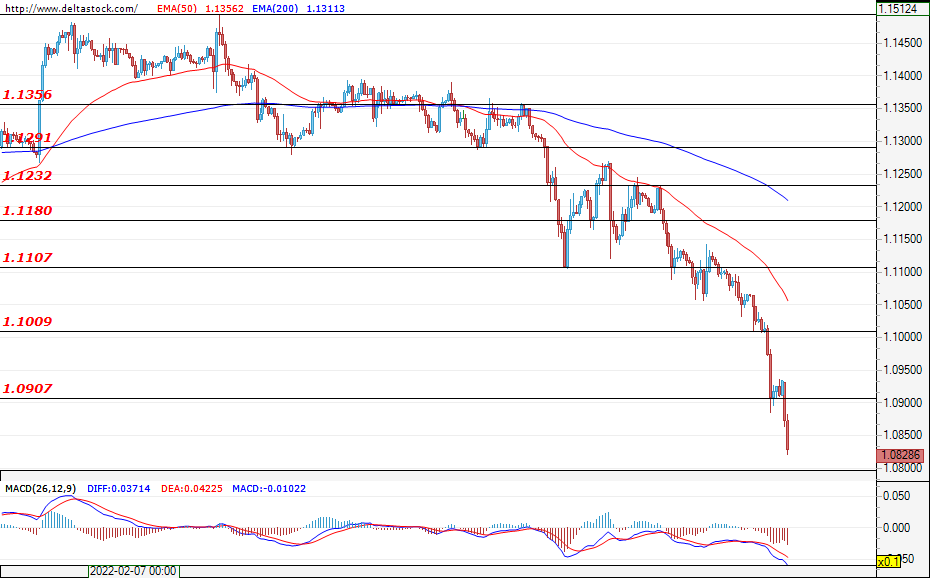
During the early hours of today’s trading session, the sellers prevailed and the support at 1.0900 was successfully breached. At the time of writing this analysis the euro continues to lose ground against the U.S. Dollar and the expectations are the bearish trend to continue heading the pair towards a test of the next significant support at 1.0800. In the upward direction, if bulls re-enter the market, the correction should be limited to the first resistance level at 1.0900. This week, the investors will be expecting the announcement of the European Central Bank interest rate decision (Thursday; 12:45 GMT) and Lagard’s press-conference shortly after that.
USD/JPY
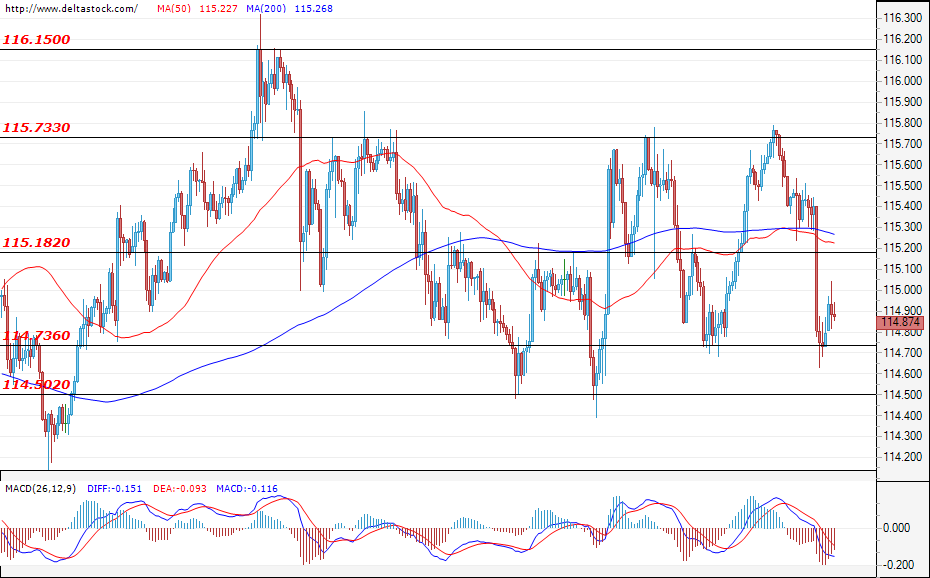
The support zone at 114.75 withheld the bearish attack and the U.S. Dollar recovered some of its recent losses and, at the time of writing, the pair is trading above the mentioned zone. A test of the resistance at 115.18 is highly possible but if the bullish momentum fades, then a successful test of the support zone at 114.75 could lead to a downward movement towards a test of the next support at 114.50.
GBP/USD
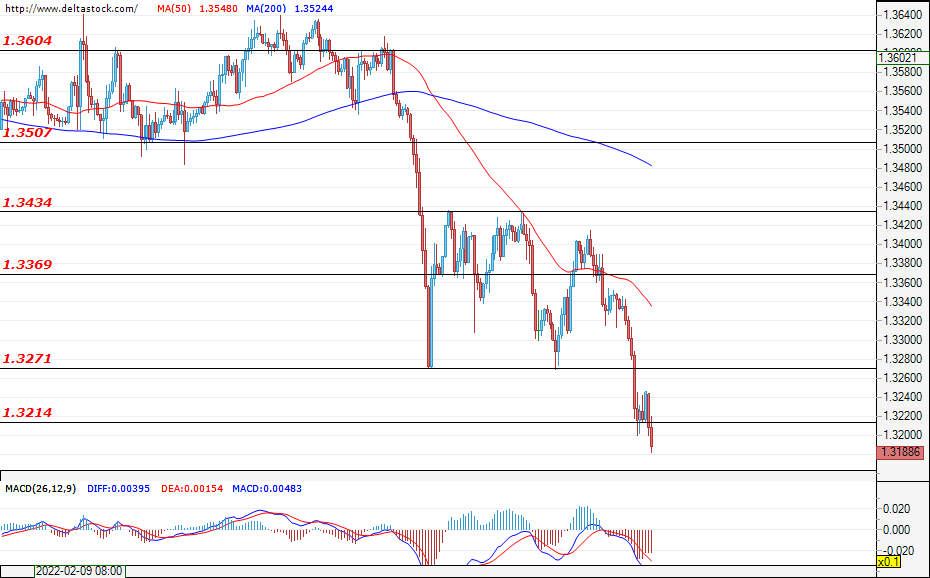
In the early hours of today’s trading session, the appreciation of the U.S. dollar continued and, the pair successfully violated the support zone at 1.3214, and if the bears manage to maintain their control over the market, a test of the next support at 1.3150 is a possible scenario. However, if the bulls re-enter the markets we may witness a corrective move towards the resistance at 1.3271.
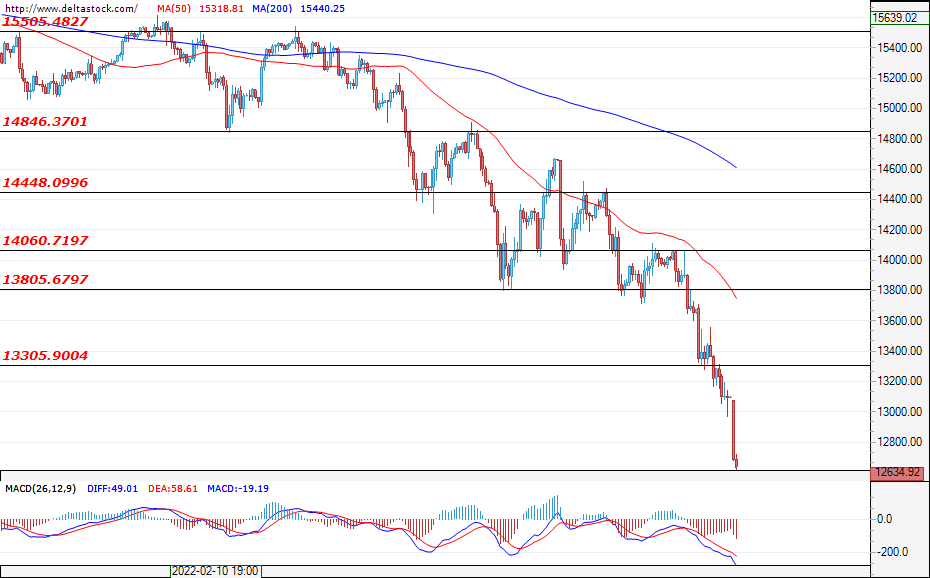
EUGERMANY40
The German index began the day with a new sell-off and over 3% decrease in its price. The panic sell-offs caused by the uncertain situation with the conflict between Russia and Ukraine seems to continue and the bulls cannot manage to gain control to limit downward movement. The expectations are the sell-offs to deepen and the index to head towards a test of the psychological level at 13000. High volatility could be expected during today’s trading session and, if the bulls manage to take control over the market, then the price could make a corrective move towards resistance at 13300 before the bear's pressure continues.
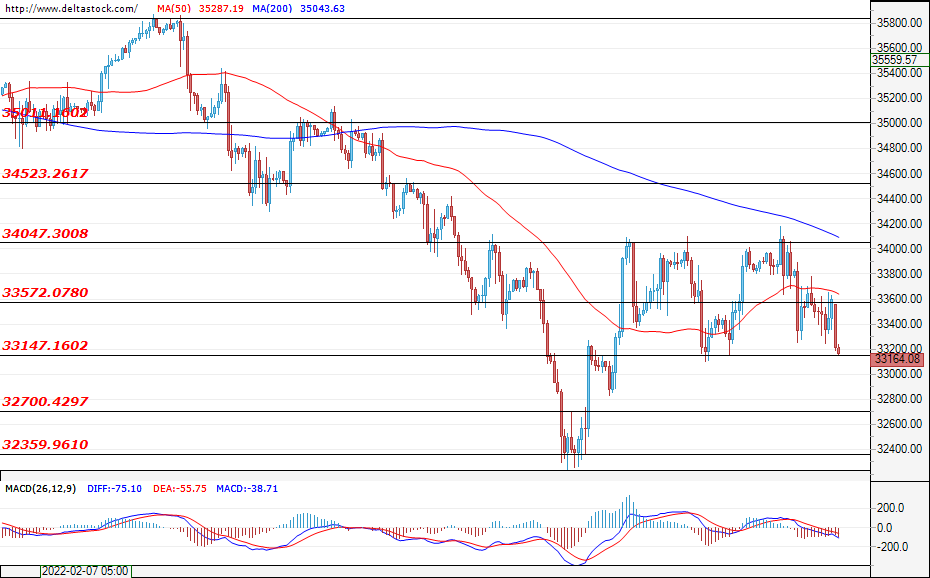
US30
After recovering from Friday's session, the U.S. blue-chip stock index opened with a negative gap today, losing more than 1.1% of its value at the time of writing. The losses were largely driven by the growing concerns about the economic consequences spurred from the Russia - Ukraine conflict. A confirmed breach of the 33147 area would open an opportunity for the bears to instigate an additional sell-off and to attack the next support zone at around 32700. Negotiations between the warring parties remain at the forefront, the outcome of which would be the main factor determining the future of the index. Any planned economic news this week that could affect the volatility of the U.S. index has already been mentioned in the EUR/USD analysis.
The Euro Continues to Fall of a Cliff
Markets
US February payrolls on Friday came in better than expected and saw an upward revision for January too. The Fed is set to kick off the hiking cycle next week, even as wage growth came to a standstill (m/m) last month. Markets couldn’t care less though, with all attention still going to the geopolitical narrative. Alleged Russian shelling at Europe’s biggest nuclear power plant unnerved investors already at the start of Friday’s trading day. Risky assets were sold once again, with Europe in focus. The EuroStoxx50 slid almost 5% and lost support at 3608. US indices lost up to 1.7% in the Nasdaq. Commodities soared. Brent closed just below $120/barrel. Reports of the US discussing a Russian oil embargo fueled already very vivid concerns about shortages. Core bonds enjoyed safe haven bids. US Treasury yields slid with the belly of the curve outperforming. Declines ranged from 5.3 bps (2y) over 6.3 bps (30y) to 10.9 bps (7y/10y). The 10y reference tested 1.70%. German yields slipped 8.9-13.4 bps with the 10y yield closing near first support around -0.07% and eying a return to -0.11% (New Year gap). The euro continues to fall of a cliff. It lost against all G10 peers. EUR/USD went from 1.1068 all the way to the low 1.09 area. It’s the lowest level for the pair since May 2020. EUR/JPY closed at 125.55, losing the 128 support definitively. EUR/CHF was in proximity of parity (1.002). Less than one month ago, the pair filled bids in the 1.06 area. Not even EUR/GBP (0.826) stood a chance, giving up on 0.8282/0.83 decisively. The few that were even worse off were all situated in Central-Europe. The forint set a new record low at EUR/HUF 387.4. FX interventions in Poland and the Czech Republic did little to help the zloty (EUR/PLN closed at 4.897) or the koruna (negligible gains to EUR/CZK 25.69).
The new week unfortunately didn’t bring much change, on the contrary. Screens are flashing red with the same flows seen last week. Asian equities accumulate losses up to 3%. European futures suggest a similar open, which would bring the EuroStoxx50 officially into a bear market (>= 20% declines from the previous cycle top). Core bonds inch higher. The dollar gains, the euro weakens. EUR/USD is trading sub 1.09. EUR/CHF dived under 1 for a few hours this morning. SNB board member Maechler in an interview published last weekend said that the central bank is ready to intervene in the FX market to address the rapidly strengthening franc. Oil prices exploded overnight. Brent almost hit $140 at the open before paring gains to a still-whopping $130/b – the highest level since 2008. Copper hits a new record high. We fear doom and gloom sentiment will stay around for some time to come. Germany’s 10y yield is ready to wipe out all 2022 gains, EUR/USD is preparing for a return to the 1.06/1.08 area from a technical point of view and doesn’t have to count on the ECB for a directional change. Frankfurt on Thursday will most likely put any normalization plans on hold until the geopolitical sky clears up a bit.
News Headlines
In a working report to the annual meeting of the Parliament, Chinese Prime Minister Li Kequiang proposed a growth target for the Chinese economy of about 5.5% this year. Last year China targeted economic growth of over 6%, but finally 2021 growth printed at 8.1%. China for this year again targets CPI inflation of about 3.0% and a budget deficit of around 2.8% of GDP. The latter probably leaves room for further fiscal stimulus if needed. Chinese authorities face a difficult balancing act this year. The country is expected to stimulate the economy by easing controls on the real estate and supporting infrastructure projects. But authorities need to keep debt levels in check. Last year export growth was an important driver for growth. Data this morning showed that exports over the first two months rose 16.3% Y/Y while imports slowed to 15.5%. This resulted in a further widening of the trade deficit to $115.95 bln (YTD). After opening mostly lower, the yuan rebounded, with USD/CNY currently again trading near 6.319.
US policy makers indicated that they are exploring measures that could lead to a ban of Russian oil imports. US Secretary of State Anthony Blinken on Sunday indicated that the US was examining measures with European allies. However, according to sources, the US could starting implementing the ban on its own. In this respect, Blinken also indicated to maintain of a steady oil global supply of oil, which could be important for Europe which is more depended on Russian energy supply. Brent oil jumped close to $140 p/b overnight.
Euro-SwissyTips a Toe Below One, Boost Speculation of SNB Intervention
The week starts with a 10% rally in US crude prices after the US Secretary of state Blinken said that the US and its allies now consider an embargo on the Russian oil.
The market mood is red, again, this Monday. Cutting off the Russian oil will increase the positive pressure on oil prices and will likely send the price of a barrel above $150 in the foreseeable future. The extended rally in oil and commodity prices will likely bring the European economies to ration consumption and weigh on the economic recovery and the corporate earnings in 2022.
Activity in European futures hint at an ugly start to the week. US equities are also poised to open in the red, yet losses could be more contained as the US economy’s exposure to Russian oil is significantly less than the European. While the Russian oil stands for 30% of European oil supply, the US economy imports only 3% of its oil from Russia.
Safe havens fly high
Bitcoin slipped below the $40K mark during the weekend, and the safe haven flows didn’t come to the rescue, whereas the traditional safe haven assets are heavily in demand since the opening bell, with the US dollar index preparing to flirt with the 100 mark for the first time since May 2020, and the gold hitting $2000 an ounce.
Ready to address the strong franc BUT
Swiss franc, on the other hand, sees very important safe-haven inflows. The euro-swissy fell below the 1 mark for the first time since 2015.
It’s hard to tell how the Swiss National Bank (SNB) will react to the sudden franc appreciation.
SNB Governing Board Member Andréa Maechler said that the bank is ready to intervene and address rapidly the strengthening franc, yet the strong franc also helps Switzerland fight back the globally spiking inflation. Inflation in Switzerland spiked above the 2% level for the first time since the subprime crisis, but the actual levels remain acceptable when compared to 5.1% in the Eurozone, and the expectation of an advance near the 8% in the US.
There will certainly be an effort to stop the franc appreciation near the 1 level against the single currency, however, if price stability is the SNB’s top priority, the Swiss policymakers may not get too aggressive on the FX front.
GBP/JPY Daily Outlook
Daily Pivots: (S1) 150.91; (P) 152.57; (R1) 153.67; More...
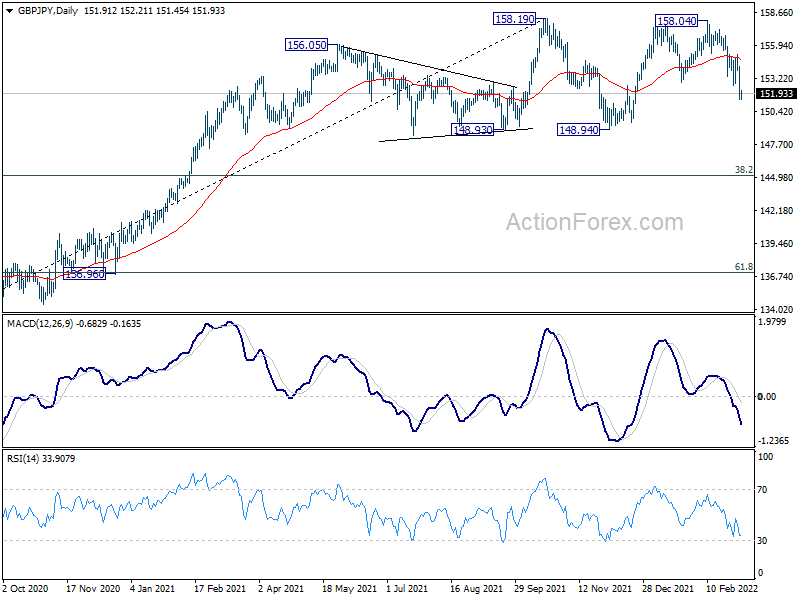
Intraday bias in GBP/JPY remains on the downside at this point. Current fall from 158.04 should target 148.94 support next. On the upside, break of 155.20 resistance is needed to indicate completion of the decline. Otherwise, outlook will be mildly bearish in case of recovery.
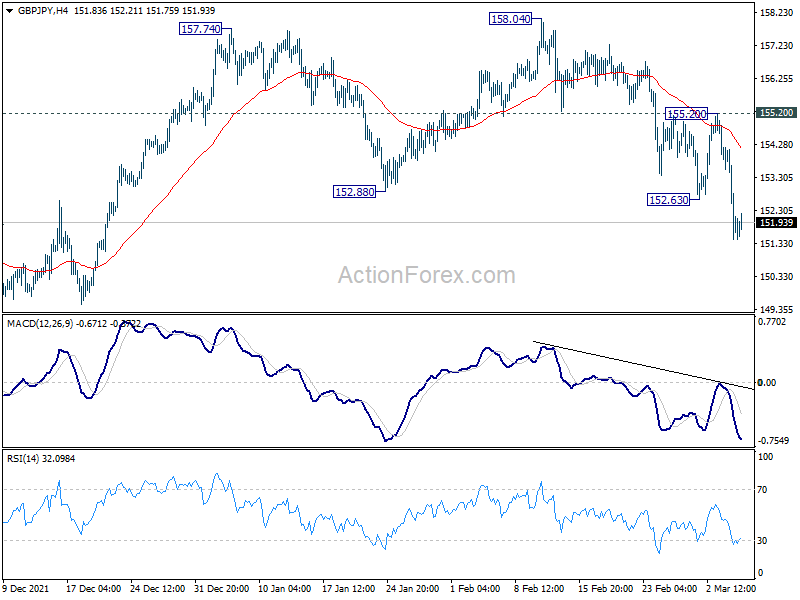
In the bigger picture, price actions from 158.19 are seen as developing into a consolidation pattern to up trend from 123.94 (2020 low). Downside should be contained by 38.2% retracement of 123.94 to 158.19 at 145.10 to bring rebound. Firm break of 158.19 will resume the up trend to long term fibonacci level at 167.93. However, sustained break of 145.10 will raise the chance of trend reversal and target 61.8% retracement at 137.02.
EUR/JPY Daily Outlook
Daily Pivots: (S1) 124.48; (P) 126.15; (R1) 127.22; More....
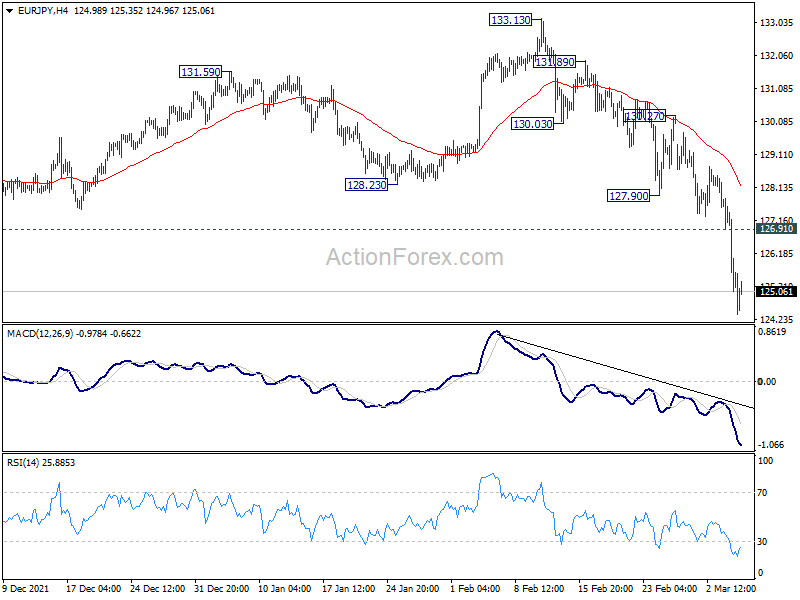
EUR/JPY's drops to as low as 124.38 so far today. Intraday bias stays on the downside for 121.94 medium term fibonacci level. On the upside, above 126.91 minor resistance will turn intraday bias neutral and bring consolidation first, before staging another fall.
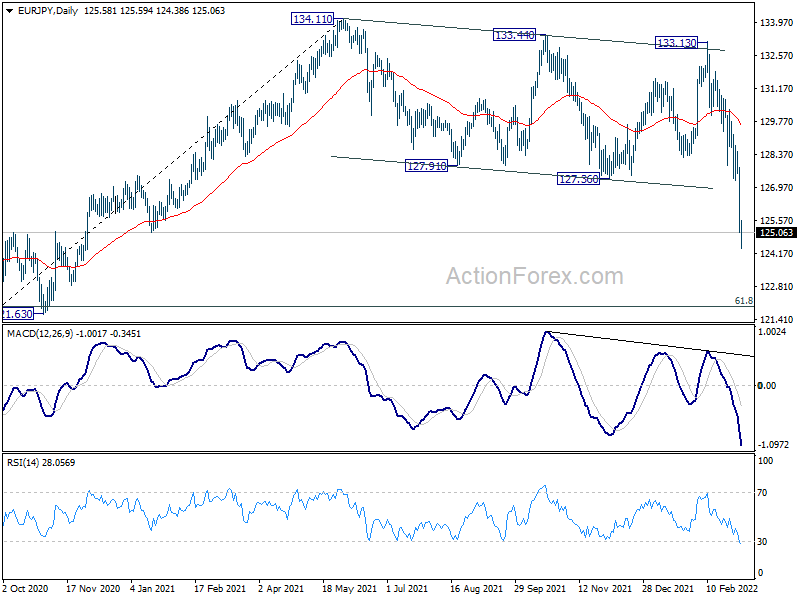
In the bigger picture, current development suggests that whole rise from 114.42 (2020 low) has completed 134.11 already. Fall from there is developing into a medium term down trend. Next target is 61.8% retracement of 114.42 to 134.11 at 121.94. On the upside, firm break of 127.36 support turned resistance is needed to be the first sign of medium term bottoming. Otherwise, outlook will stay bearish in case of recovery.
EUR/AUD Daily Outlook
Daily Pivots: (S1) 1.4715; (P) 1.4911; (R1) 1.5019; More...
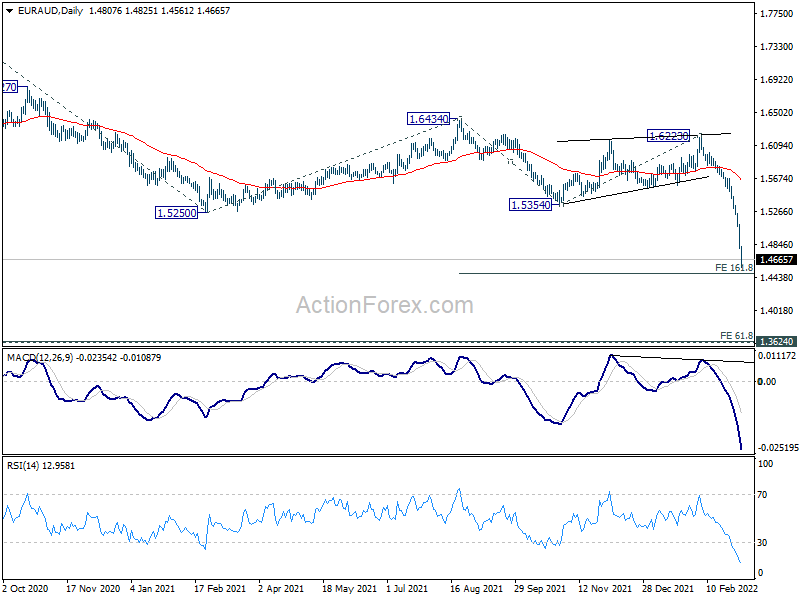
EUR/AUD drops to as low as 1.4561 so far today and intraday bias stays on the downside. Next target is 161.8% projection of 1.6343 to 1.5354 from 1.6223 at 1.4476. Sustained break there will pave the way to 1.3624 long term target zone. On the upside, above 1.4987 minor resistance will turn intraday bias neutral and bring consolidations, before staging another fall.
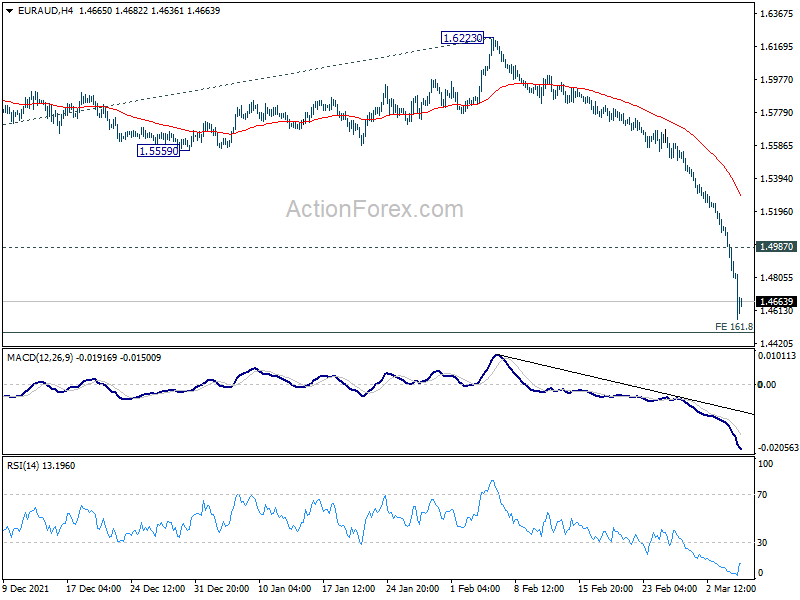
In the bigger picture, fall from 1.9799 is seen as a long term impulsive move. Next target is 61.8% projection of 1.9799 to 61.8% projection of 1.9799 to 1.5250 from 1.6434 at 1.3623, which is close to 1.3624 long term support (2017 low). Some support could be seen there to bring interim rebound. But overall, break of 1.5354 support turned resistance is needed to be the first sign of medium term bottoming. Otherwise, outlook will stay bearish in case of recovery.