Sample Category Title
XAU/USD Pulls Back for Support
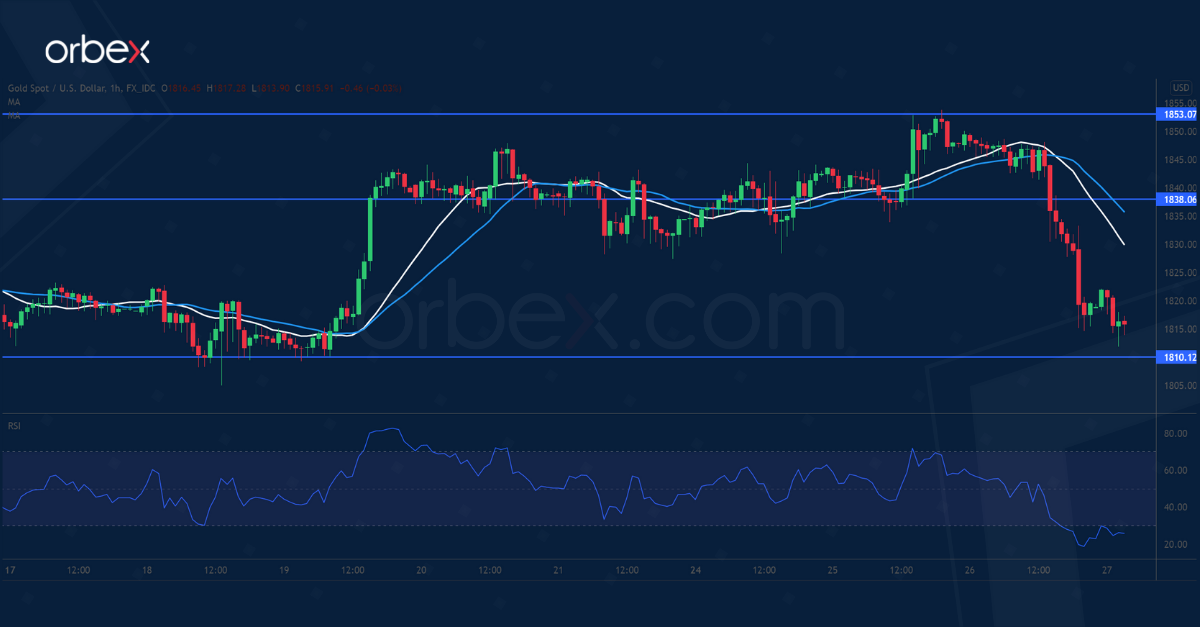
Gold tumbled after the US Fed signaled it may raise interest rates in March. The rally stalled at 1853 and a break below the resistance-turned-support at 1830 flushed some buyers out.
1810 at the base of the previous bullish breakout is a second line of defense. The short-term uptrend may still be intact as long as the metal stays above this key support.
A deeper correction would drive the price down to the daily support at 1785. The bulls need a rebound above 1838 to regain control of price action.
NZD/USD Continues Lower
The New Zealand dollar steadied after the Q4 CPI beat expectations.
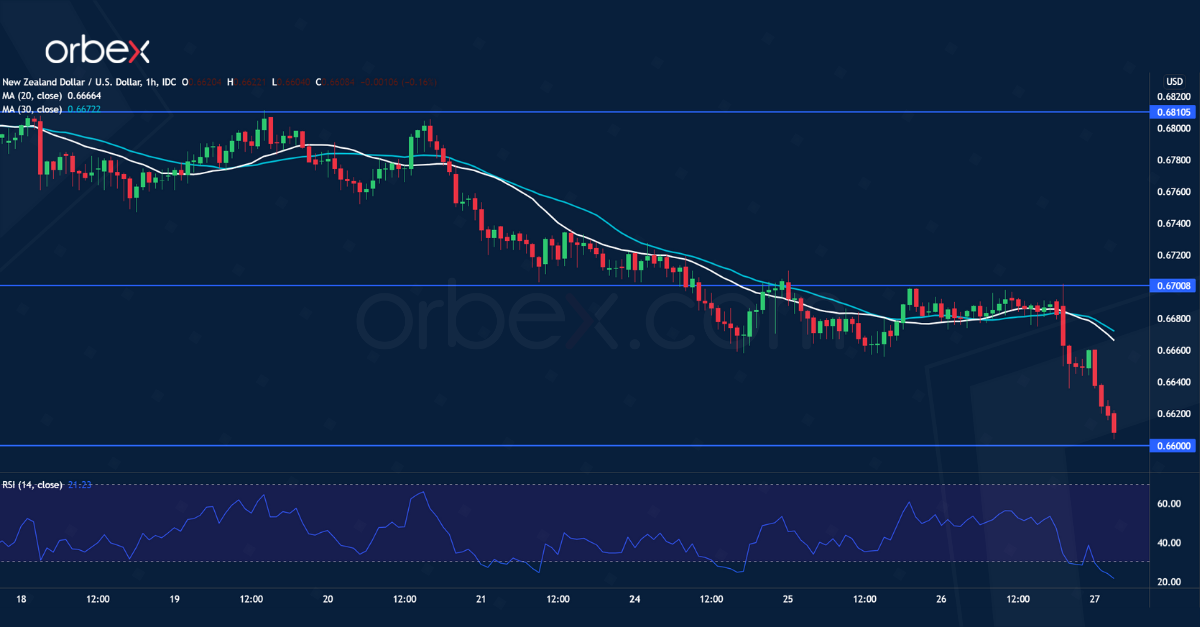
However, the pair is still in bearish territory after it broke below the lower end (0.6750) of the flag consolidation from the daily time frame. The RSI’s oversold situation brought in a buying-the-dips crowd around 0.6660 but its breach indicates a lack of buying interest.
The kiwi is now testing November 2020’s low at 0.6600. The bears could be waiting to fade the next bounce with 0.6700 as a fresh resistance.
USD/CAD Breaks Higher
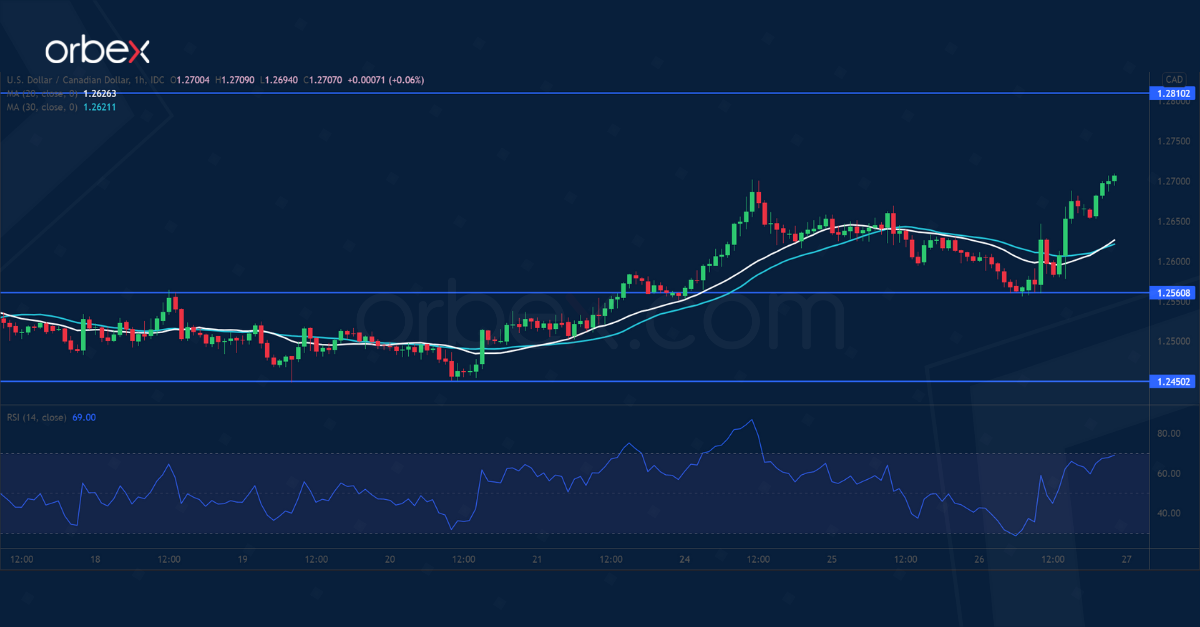
The Canadian dollar slipped after the BOC kept interest rates unchanged. Its US counterpart found support at 1.2560 after a brief pullback.
An oversold RSI attracted some bargain hunters. The current rebound is a sign that there is a strong interest in pushing for a bullish reversal. 1.2700 is a key supply zone as it coincides with the 30-day moving average.
A breakout would definitely turn sentiment around and trigger a runaway rally. In turn, this sets the daily resistance at 1.2810 as the next target.
US Equities Bounce Back as the Fed Points to More Tightening
The price of crude oil jumped in the overnight session as investors continued focusing on the ongoing tensions between the US and Russia. The US accuses Russia of attempting to invade Ukraine again. The last invasion happened in 2014 when the country annexed Crimea. The events are positive for oil prices because Russia is the third-biggest oil producer in the world and the US is considering adding sanctions to the oil industry. Brent, the global benchmark, rose above $90 for the first time in over seven years even after the rising US inventories. According to the Energy Information Administration, inventories rose to over 2.37 million barrels in the previous week.
The Canadian dollar declined against key currencies after a surprise interest rate decision by the Bank of Canada (BOC). The bank caught investors off-guard as it decided to leave interest rates unchanged at 0.25%. Before the meeting, most analysts were expecting the bank to hike interest rates by about 25 basis points. Recent data by Statistics Canada showed that the country’s inflation surged to a 30-year high of 4.8%. In its statement, the BOC said that it expects inflation will remain at the current range this year.
The US dollar rose slightly after the Federal Reserve decision. Like the Bank of Canada, the Fed decided to leave its interest rate unchanged between 0% and 0.25% in its first meeting of the year. It also hinted that it would end its quantitative easing program in March and then immediately start a period of tightening. Analysts expect that the bank will implement about three rate hikes this year considering that the American economy is doing well. For example, data published on Wednesday showed that he country’s new home sales jumped to 811k in December. Last week, data revealed that building permits and housing starts also rose.
EURCAD
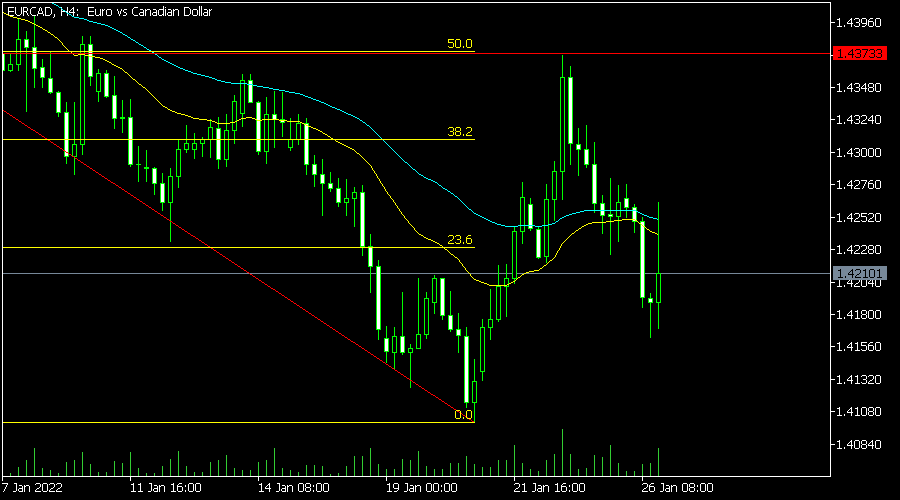
The EURCAD pair has been in a downward trend in the past few days. The pair has managed to drop from a high of 1.4373 to a low of 1.4165. It tilted upwards after the latest interest rate decision by the Bank of Canada. On the four-hour chart, it is slightly below the 25-day and 50-day exponential moving averages and the 23.6% Fibonacci retracement level. Therefore, the cross will likely keep falling as bears product that the BOC will be more hawkish than the ECB.
XBRUSD
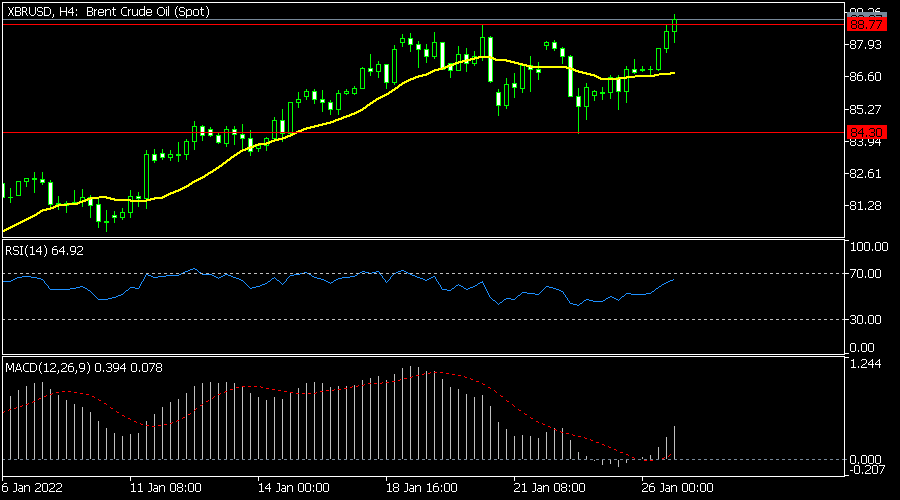
The XBRUSD pair has been in a strong bullish trend in the past few months. The pair managed to cross the key resistance level at 90. It also crossed the important resistance level at 88.77, which was the highest level this year. It is above the 25-day and 50-day moving averages while oscillators have continued rising. Therefore, the pair will likely keep rising as geopolitical risks remain.
EURUSD
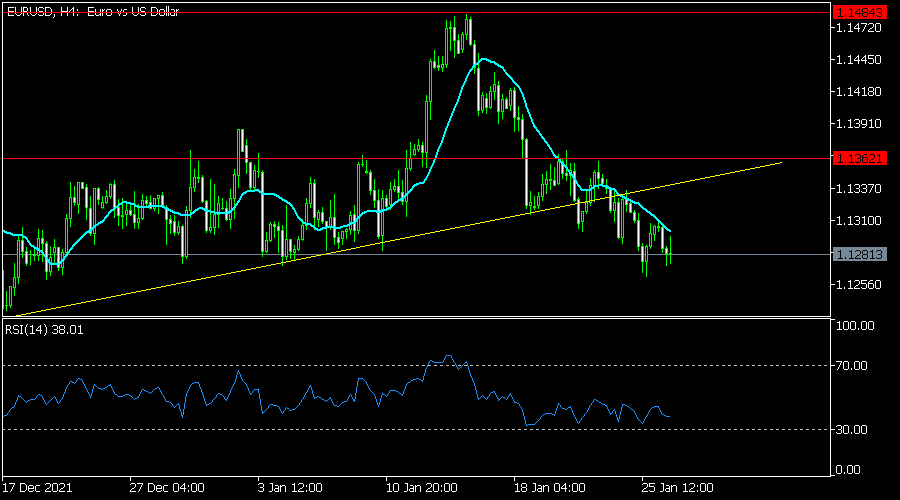
The EURUSD pair continued its downward trend after the Fed decision. The pair declined to a low of 1.1282, which is significantly below this month’s high of 1.1485. It is below the 25-day and 50-day moving averages while the Relative Strength Index (RSI) is hovering above the oversold level. Therefore, the pair will likely continue retreating as bears target the key support at 1.1400.
Fed Will Raise Rates on Consecutive Policy Meetings
Markets
This time really is different. Fed Chair Powell couldn’t make it more clear to all remaining doubters. The economy is stronger than at the start of the previous tightening cycle, inflation is running way hotter and the labour market is much more tighter. Even in the sense that most FOMC participants agree that labour market conditions are consistent with maximum employment. These differences will have important implications for the appropriate pace of policy adjustment. Say goodbye to quarterly guided 25 bps rate hikes and welcome a more volatile rate path. Forward guidance is officially buried. It strengthens our call that the Fed will raise rates on consecutive policy meetings, starting in March. It simultaneously makes our call of 4 consecutive 25 bps rate hikes look conservative. Powell refused to rule out more and stronger (>25 bps) rate moves. Embedded in our outdated scenario of a rate pause after Summer was the start of the Fed’s balance sheet roll-off. The Fed already published some high profile guidelines, but didn’t commit to a specific timing our pace yet. We now expect those principles and the effective start of the run-off to start in June while it won’t derail the tightening cycle. Especially in the early months, It’s a process running in the background which has little to do with the Fed’s inflation crusade via higher policy rates.
Markets didn’t take Powell’s message well. They struggle to make peace with the idea of the Fed taking the punchbowl away. US stocks and bonds sold off in lockstep when Powell indicated that there’s quite a bit of room to raise interest rates without threatening the labour market. Main US equity indices closed flat compared to Tuesday’s closing levels, but this hides a 5% drop from intraday high to intraday low. The Fed’s focus on the interest rate path instead of the balance sheet run-off, caused the US yield curve to bear flatten. US yields added 13.4 bps (2-yr) to 5.3 bps (30-yr) with new cycle highs for tenors of up to 5 years. The US 10-yr yield (1.84%) closes in on that reference (1.9%). Real yields were obviously responsible with the US 10-yr real yield moving to its highest level since June 2020 (-0.55%). Heavy risk-off and higher real yields benefited the dollar, though gains could have been stronger. The trade-weighted greenback (DXY) closed at 96.48 from a 95.96 open. A test of the recovery high at 96.94 is imminent. Risks of a short term break clearly increased. EUR/USD drifted from 1.1301 to 1.124 and is currently lured by the November low at 1.1186. Again, we think a break could follow especially should the ECB continue its ostrich policy at next week’s policy meeting, which is our base case. Post-FOMC dynamics will remain dominant near-term.
News Headline
Q4 CPI inflation in New Zealand rose 1.4%Q/Q bringing the Y/Y measure to 5.9% (from 4.9% in Q3). The latter was the fastest yearly rise since 1990 and beat both market and RBNZ (5.7%) forecasts. Price rises were widespread apart from telecommunications. Prices for construction of new dwellings rose 16% Y/Y. Petrol prices went up 30% Y/Y. Housing rents rose 3.8% Y/Y. The rise in domestic non-tradeable inflation was slightly more modest at 5.3% . The RBNZ is expected to extend its tightening cycle at the Feb 23 meeting following rate hikes in October and November. The Kiwi dollar didn’t profit even as short term rates rose further. The post-Fed rise of the dollar even triggered further kiwi losses with NZD/USD declining to 0.6605, the lowest level since early November 2020.
The Bank of Canada yesterday left its policy rate unchanged at 0.25%. BoC Governor Macklem indicated that the lift-off might come soon as the economy doesn’t need the support that was put in place to cope with the Covid crisis. According to the BoC statement, the overall economic slack has been absorbed. The economy entered 2022 with a considerable momentum and the labour market has tightened significantly. Inflation is expected close to 5.0% in H1 2022. As the slack is absorbed, the BoC removed its extraordinary guidance to keep interest rates at the effective lower bound. Interest rates will need to be increased, but the BoC wasn’t specific on the pace of rate hikes. Markets are discounting about six 25 bps rate hikes for this year. The loonie lost modest ground immediately after the decision and USD/CAD rose further post-Fed currently trading north of 1.27.
GBP/JPY Daily Outlook
Daily Pivots: (S1) 153.81; (P) 154.27; (R1) 154.87; More...
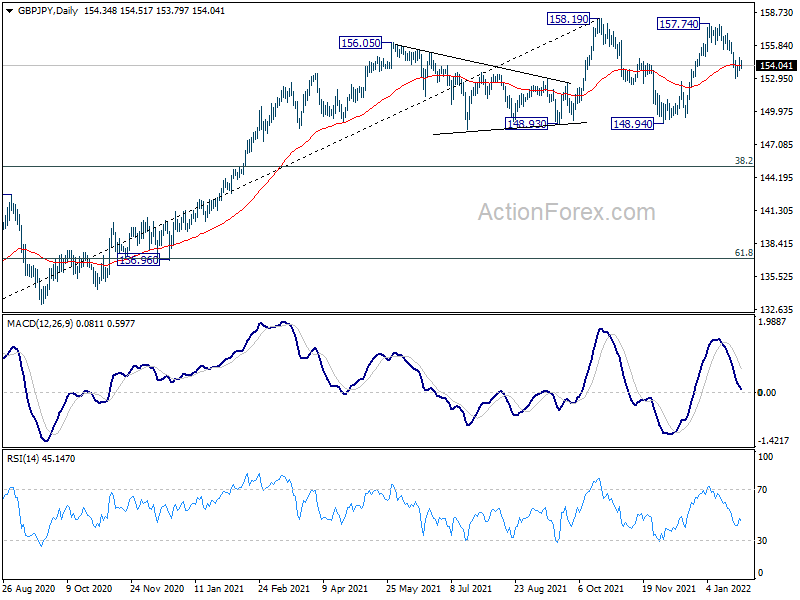
Intraday bias in GBP/JPY remains neutral at this point. Outlook is unchanged that fall from 157.74 is seen as the third leg of the consolidative pattern from 158.19. Deeper decline is expected as long as 155.38 minor resistance holds. Below 152.88 will target 148.94 support next. On the upside, above 155.38 minor resistance will flip bias back to the upside for 157.74/158.19 resistance zone instead.
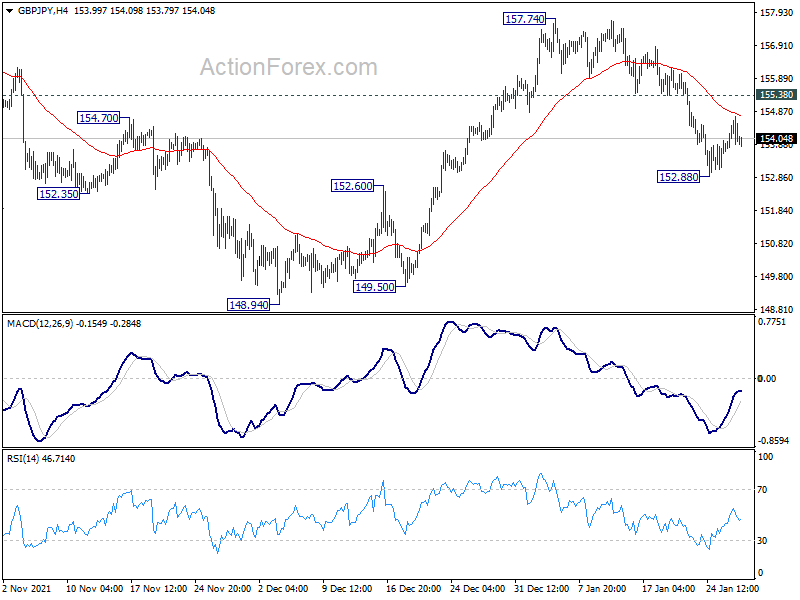
In the bigger picture, price actions from 158.19 are currently seen as developing into a consolidation pattern to up trend from 123.94 (2020 low). Downside should be contained by 123.94 to 158.19 at 145.10 to bring rebound. Firm break of 158.19 will resume the up trend to long term fibonacci level at 167.93. However, sustained break of 145.10 will raise the chance of trend reversal and target 61.8% retracement at 137.02.
EUR/JPY Daily Outlook
Daily Pivots: (S1) 128.60; (P) 128.92; (R1) 129.24; More....
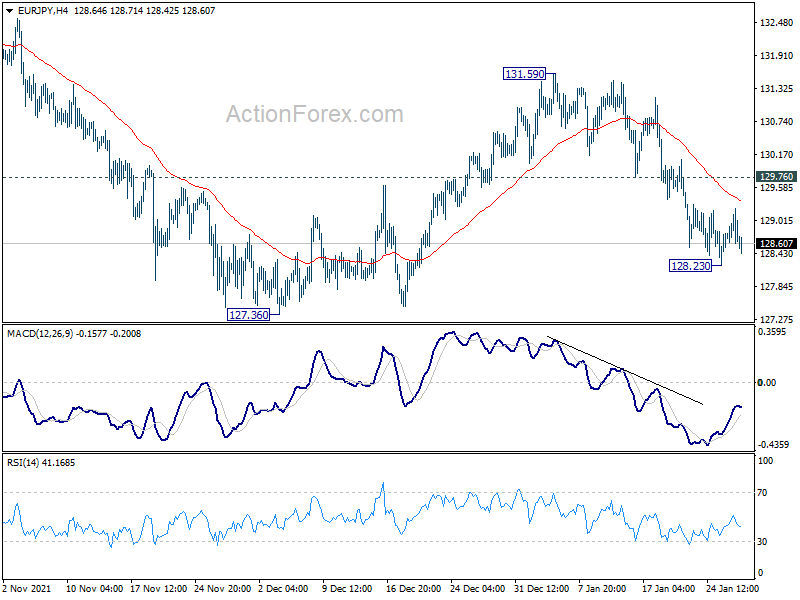
Intraday bias in EUR/JPY remains neutral for some consolidations above 128.23 temporary low. Outlook is unchanged that consolidation pattern from 134.11 is extending with another falling leg. Further decline is expected as long as 129.76 resistance holds. Below 128.23 will target 127.36, and possibly further to 126.58 fibonacci level. On the upside, above 129.76 minor resistance will turn bias back to the upside to 131.59 resistance instead.
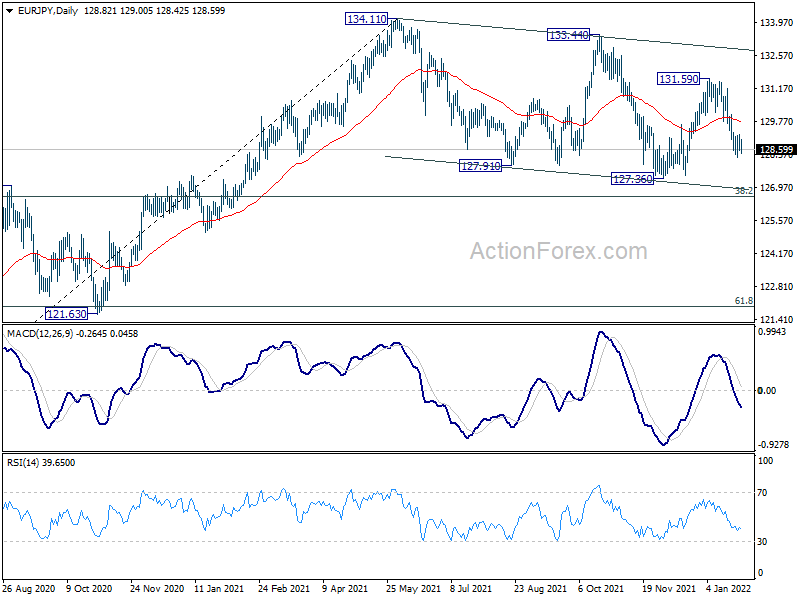
In the bigger picture, price actions from 134.11 are currently seen as a consolidation pattern only. As long as 38.2% retracement of 114.42 (2020 low) to 134.11 at 126.58 holds, up trend from 114.42 is still in favor to continue. Break of 134.11 will target long term resistance at 137.49 (2018 high). However, sustained break of 126.58 will raise the chance of medium term bearish reversal. In this case, deeper decline would be seen to 61.8% retracement at 121.94, and possibly below.
EUR/GBP Daily Outlook
Daily Pivots: (S1) 0.8338; (P) 0.8354; (R1) 0.8367; More...
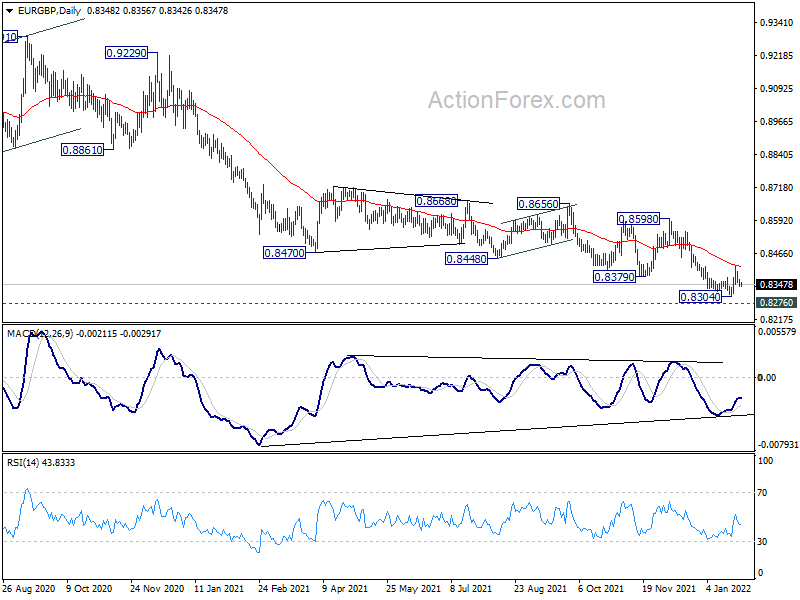
Break of 0.8349 minor support suggests that rebound from 0.8304 has completed at 0.8421, after rejection by 55 day EMA. Intraday bias is back on the downside for 0.8304 first. Break will resume larger down trend towards 0.8276 low. On the upside, break of 0.8421 will resume the rebound towards 0.8598 key structural resistance.
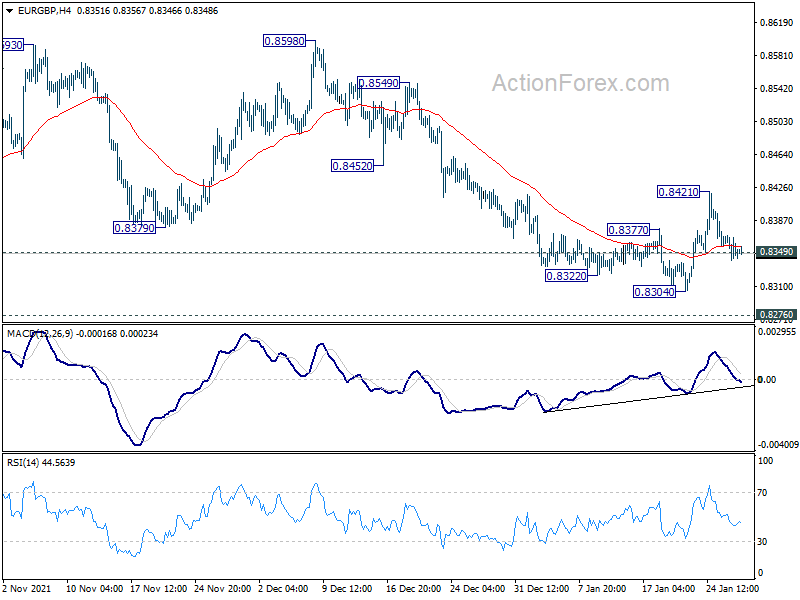
In the bigger picture, price actions from 0.9499 (2020 high) are still seen as developing into a corrective pattern. Deeper fall could be seen as long as 0.8598 resistance holds, towards long term support at 0.8276. We'd look for bottoming signal around there to bring reversal. Meanwhile, firm break of 0.8598 will now be an early sign of medium term bottoming and bring stronger rebound. However, sustained break of 0.8276 will argue that the long term trend has reversed.
EUR/AUD Daily Outlook
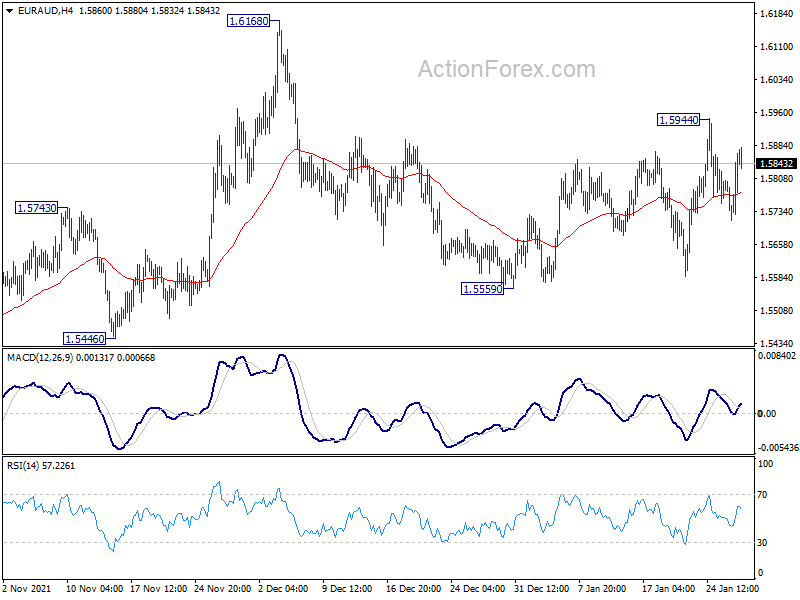
Daily Pivots: (S1) 1.5727; (P) 1.5787; (R1) 1.5859; More...
Range trading continuously EUR/AUD and intraday bias remains neutral. On the upside break of 1.5944 will resume the rise from 1.5559 to 1.6168 first. On the downside, break of 1.5559 will resume the fall from 1.6168 to retest 1.5250/5354 support zone.
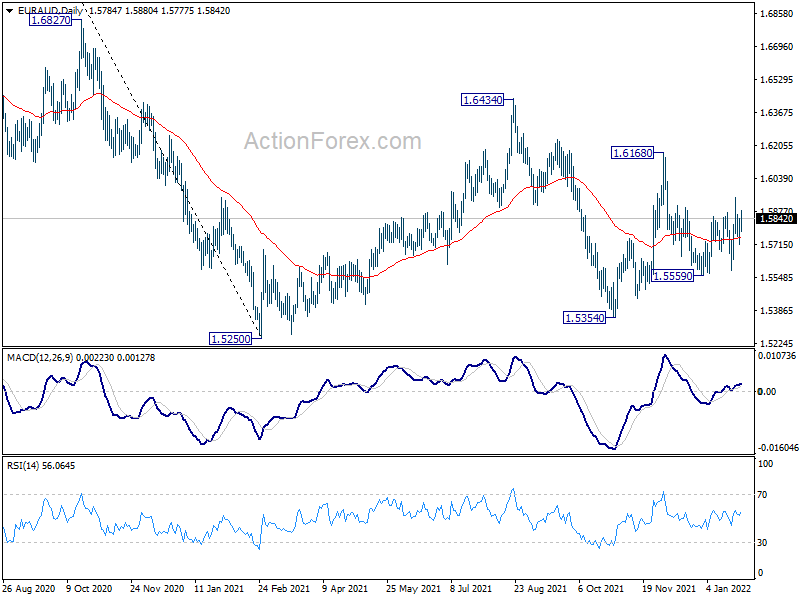
In the bigger picture, rise from 1.5354 is seen as the third leg of the corrective pattern from 1.5250 low. Further rise cannot be ruled out, but even in that case, strong resistance should be seen at 38.2% retracement of 1.9799 to 1.5250 at 1.6988. Larger down trend from 1.9799 is in favor to extend through 1.5250 at a later stage.
EUR/CHF Daily Outlook
Daily Pivots: (S1) 1.0368; (P) 1.0383; (R1) 1.0405; More....
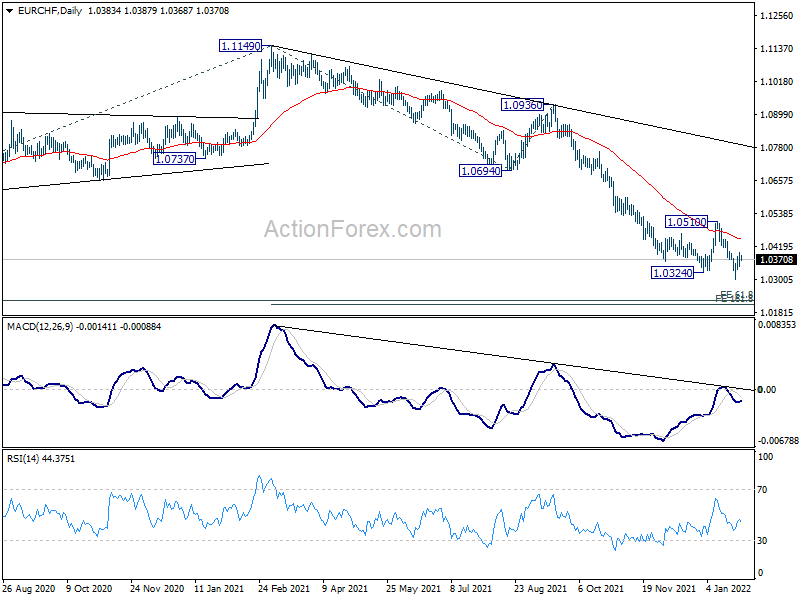
Outlook in EUR/CHF remains unchanged. Recovery from 1.0298 might still extend higher, but upside should be limited well below 1.0510 resistance to bring another fall. Break of 1.0298 will resume the down trend from 1.1149 and target 161.8% projection of 1.1149 to 1.0694 from 1.0936 at 1.0200 next.
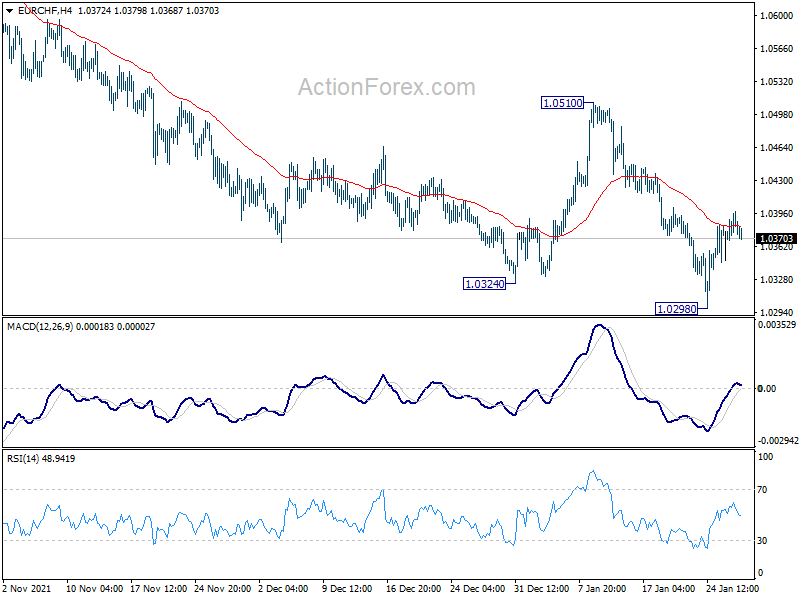
In the bigger picture, long term down trend from 1.2004 (2018 high) is still in progress. Next target is 61.8% projection of 1.2004 to 1.0505 to 1.1149 at 1.0223. On the upside, firm break of 1.0505 support turned resistance is needed to be the first sign of medium term bottoming. Otherwise, outlook will remain bearish even in case of rebound.