Sample Category Title
ECB Draghi not dovish enough, EUR/USD rebounds after defending 1.1107 support
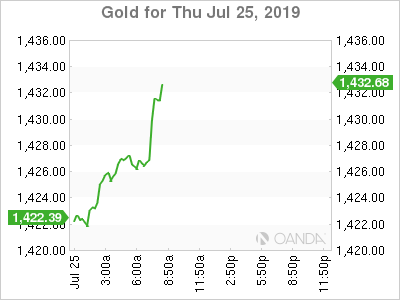
Euro initially dives after ECB leaves door open for rate cut in the statement. But it quickly recovers as President Mario Draghi is not as dovish in the press conference. Most importantly, there was no discussion on rate cuts today. Additionally, no unanimity was achieved among policy makers regarding the next move, just "convergence" of views. The comments argue that there is a lack of urgency for any action. And, September's decision could be live, depending on upcoming economic projections.
On the economy, Draghi said slower growth outlook "mainly reflects the ongoing weakness in international trade in an environment of prolonged global uncertainties, which are particularly affecting the euro area manufacturing sector."On the other hand, "activity levels in the services and construction sectors are resilient and the labor market is still improving."
Nevertheless, risks "remain tilted to the downside, reflecting the prolonged presence of uncertainties related to geopolitical factors, the rising threat of protectionism, and vulnerabilities in emerging markets." Incoming data continue to point to "somewhat slower growth" in Q2 and Q3.
"Inflationary pressures remain muted and indicators of inflation expectations have declined." But, over the medium term,"underlying inflation is expected to increase, supported by our monetary policy measures, the ongoing economic expansion, and stronger wage growth."
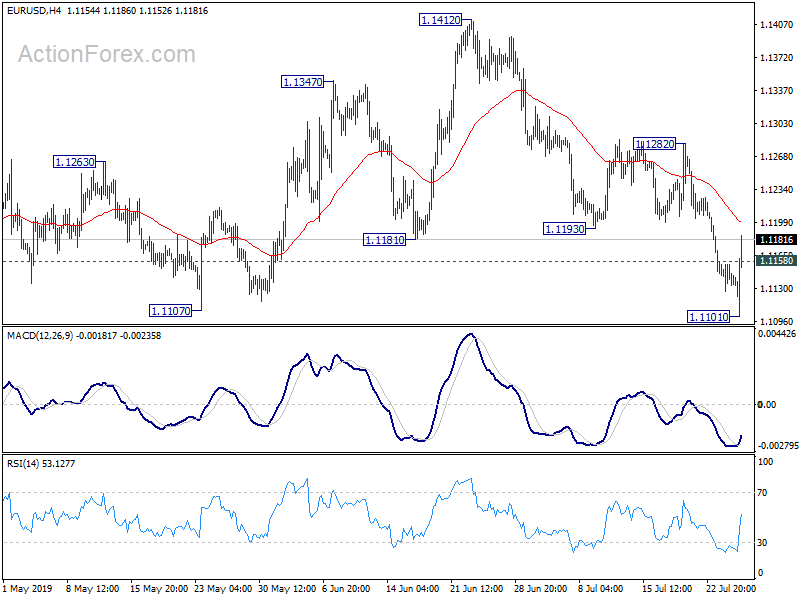
EUR/USD could have defended 1.1107 low after brief breach to 1.1101 resistance. Stronger rebound should be seen back to 1.1193/1.1282 resistance zone.
CADJPY Loses Ground Below Descending Line
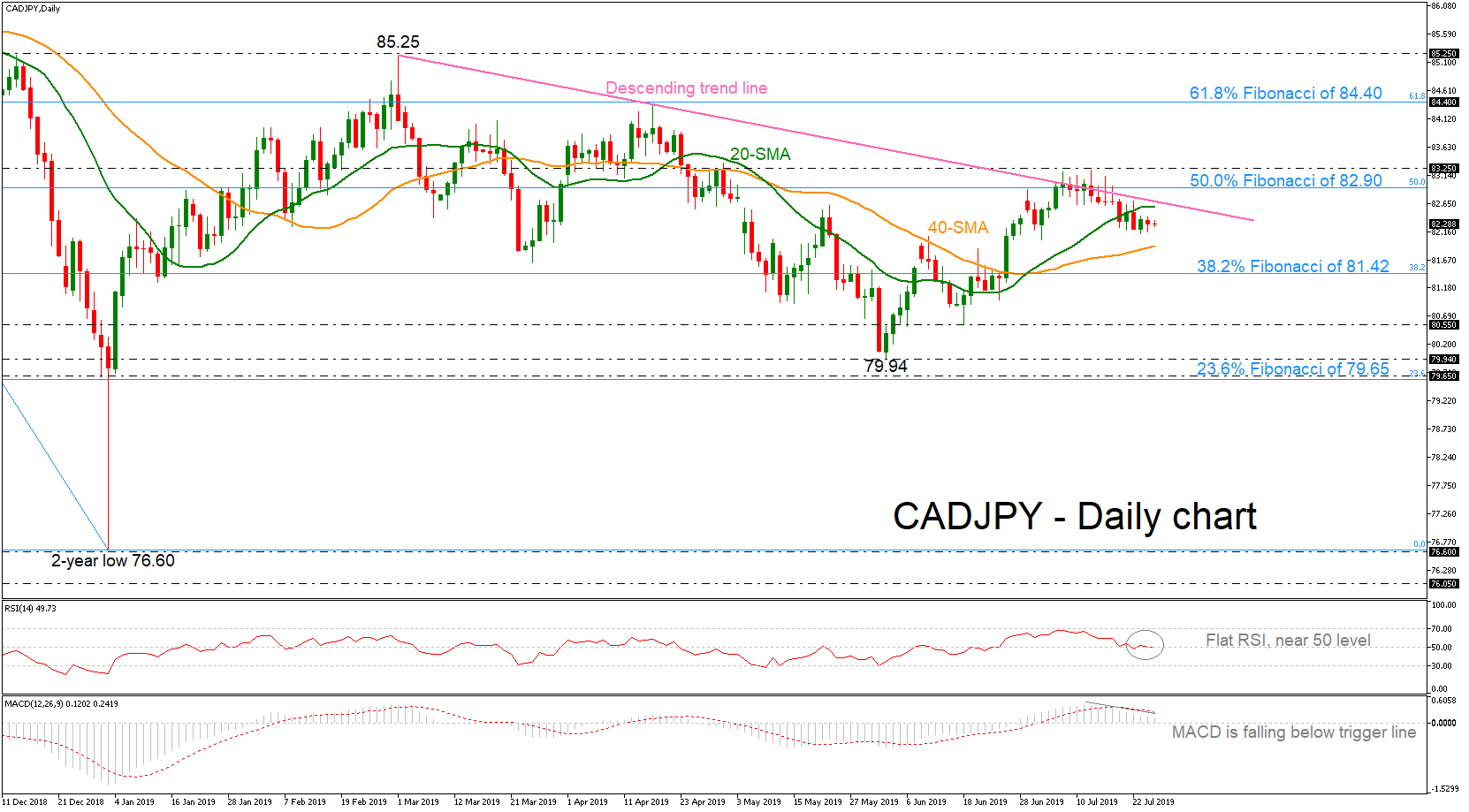
CADJPY has been moving within the 61.8% Fibonacci retracement level of the downward wave from 89.25 to 76.60 near 84.40 and the 23.6% Fibo of 79.65 after the bounce off the two-year low of 76.60 on January 3. In the medium-term, the pair has been remainED below a descending line, suggesting a somewhat bearish structure.
Technically, the RSI is flattening near the neutral threshold of 50, while the MACD is edging lower below the trigger line.
A step lower could find support around the 40-simple moving averages (SMA) currently at 81.90 before touching the 38.2% Fibo of 81.42. In case of steeper declines could turn towards the 80.55 area.
An advance above the descending trend line and the 50.0% Fibonacci of 82.90 immediate resistance is coming from the 83.25 barrier. More bullish actions could be faced near the 61.8% Fibonacci region, which overlaps with the 84.40 resistance level, registered on April 17.
Concluding, a break above the 61.8% Fibo of 84.40 in the near term could change the bearish outlook to bullish. However, in case of a pullback below the 23.6% Fibonacci, this could confirm the long-term negative momentum.
(ECB) Introductory Statement to the Press Conference
Mario Draghi, President of the ECB,
Luis de Guindos, Vice-President of the ECB,
Frankfurt am Main, 25 July 2019
INTRODUCTORY STATEMENT
Ladies and gentlemen, the Vice-President and I are very pleased to welcome you to our press conference. We will now report on the outcome of today's meeting of the Governing Council, which was also attended by the Commission Vice-President, Mr Dombrovskis.
Based on our regular economic and monetary analyses, we decided to keep the key ECB interest rates unchanged. We expect them to remain at their present or lower levels at least through the first half of 2020, and in any case for as long as necessary to ensure the continued sustained convergence of inflation to our aim over the medium term.
We intend to continue reinvesting, in full, the principal payments from maturing securities purchased under the asset purchase programme for an extended period of time past the date when we start raising the key ECB interest rates, and in any case for as long as necessary to maintain favourable liquidity conditions and an ample degree of monetary accommodation.
The Governing Council also underlined the need for a highly accommodative stance of monetary policy for a prolonged period of time, as inflation rates, both realised and projected, have been persistently below levels that are in line with its aim. Accordingly, if the medium-term inflation outlook continues to fall short of our aim, the Governing Council is determined to act, in line with its commitment to symmetry in the inflation aim. It therefore stands ready to adjust all of its instruments, as appropriate, to ensure that inflation moves towards its aim in a sustained manner.
In this context, we have tasked the relevant Eurosystem Committees with examining options, including ways to reinforce our forward guidance on policy rates, mitigating measures, such as the design of a tiered system for reserve remuneration, and options for the size and composition of potential new net asset purchases.
Incoming information since the last Governing Council meeting in early June indicates that, while further employment gains and increasing wages continue to underpin the resilience of the economy, softening global growth dynamics and weak international trade are still weighing on the euro area outlook. Moreover, the prolonged presence of uncertainties, related to geopolitical factors, the rising threat of protectionism, and vulnerabilities in emerging markets, is dampening economic sentiment, notably in the manufacturing sector. In this environment, inflationary pressures remain muted and indicators of inflation expectations have declined. Therefore, a significant degree of monetary stimulus continues to be necessary to ensure that financial conditions remain very favourable and support the euro area expansion, the ongoing build-up of domestic price pressures and, thus, headline inflation developments over the medium term.
Let me now explain our assessment in greater detail, starting with the economic analysis. Following a rise of 0.2% in the fourth quarter of 2018, euro area real GDP increased by 0.4%, quarter on quarter, in the first quarter of 2019. Incoming economic data and survey information continue to point to somewhat slower growth in the second and third quarters of this year. This mainly reflects the ongoing weakness in international trade in an environment of prolonged global uncertainties, which are particularly affecting the euro area manufacturing sector. At the same time, activity levels in the services and construction sectors are resilient and the labour market is still improving. Looking ahead, the euro area expansion will continue to be supported by favourable financing conditions, further employment gains and rising wages, the mildly expansionary euro area fiscal stance and the ongoing – albeit somewhat slower – growth in global activity.
The risks surrounding the euro area growth outlook remain tilted to the downside, reflecting the prolonged presence of uncertainties, related to geopolitical factors, the rising threat of protectionism, and vulnerabilities in emerging markets.
Euro area annual HICP inflation increased to 1.3% in June 2019, from 1.2 % in May, as higher HICP inflation excluding food and energy more than offset lower energy price inflation. On the basis of current futures prices for oil, headline inflation is likely to decline over the coming months, before rising again towards the end of the year. Looking through the recent volatility due to temporary factors, measures of underlying inflation remain generally muted. Indicators of inflation expectations have declined. While labour cost pressures have strengthened and broadened amid high levels of capacity utilisation and tightening labour markets, the pass-through of cost pressures to inflation is taking longer than previously anticipated. Over the medium term underlying inflation is expected to increase, supported by our monetary policy measures, the ongoing economic expansion and stronger wage growth.
Turning to the monetary analysis, broad money (M3) growth stood at 4.5% in June 2019, after 4.8% in May. Sustained rates of broad money growth reflect ongoing bank credit creation for the private sector and low opportunity costs of holding M3. The narrow monetary aggregate M1 continues to be the main contributor to broad money growth on the components side.
The annual growth rate of loans to non-financial corporations remained unchanged at 3.8% in June 2019. Notwithstanding some moderation from the peak recorded in September 2018, the annual growth rate of loans to non-financial corporations continues to be robust. The annual growth rate of loans to households also remained unchanged at 3.3% in June, continuing its gradual improvement. Overall, loan growth is still benefiting from historically low bank lending rates. The euro area bank lending survey for the second quarter of 2019 indicates that loan growth continued to be supported by increasing demand across all loan categories. At the same time, credit standards for loans to enterprises tightened in the second quarter amid concerns about the economic outlook, while they remained broadly unchanged for loans for house purchase.
Our monetary policy measures, including the forthcoming new series of targeted longer-term refinancing operations (TLTRO III), will help to safeguard favourable bank lending conditions and will continue to support access to financing, in particular for small and medium-sized enterprises.
To sum up, a cross-check of the outcome of the economic analysis with the signals coming from the monetary analysis confirmed that an ample degree of monetary accommodation is still necessary for the continued sustained convergence of inflation to levels that are below, but close to, 2% over the medium term.
In order to reap the full benefits from our monetary policy measures, other policy areas must contribute more decisively to raising the longer-term growth potential and reducing vulnerabilities. The implementation of structural reforms in euro area countries needs to be substantially stepped up to boost euro area productivity and growth potential, reduce structural unemployment and increase resilience. The 2019 country-specific recommendations should serve as the relevant signpost. Regarding fiscal policies, the mildly expansionary euro area fiscal stance is providing support to economic activity. At the same time, countries where government debt is high need to continue rebuilding fiscal buffers. All countries should reinforce their efforts to achieve a more growth-friendly composition of public finances. Likewise, the transparent and consistent implementation of the European Union's fiscal and economic governance framework over time and across countries remains essential to bolster the resilience of the euro area economy. Improving the functioning of Economic and Monetary Union remains a priority. The Governing Council welcomes the ongoing work and urges further specific and decisive steps to complete the banking union and the capital markets union.
We are now at your disposal for questions.
ECB President Mario Draghi’s press conference live stream
https://www.youtube.com/watch?v=IBGTRRXF1vw
US durable goods rose 2.0%, ex-transport orders rose 1.2%
US durable goods orders rose 2.0% to USD 246.0B in June, beat expectation of 0.7%. Ex-transport orders rose 1.2% to, also beat expectation of 0.2%. Excluding defense, new orders increased 3.1 percent.
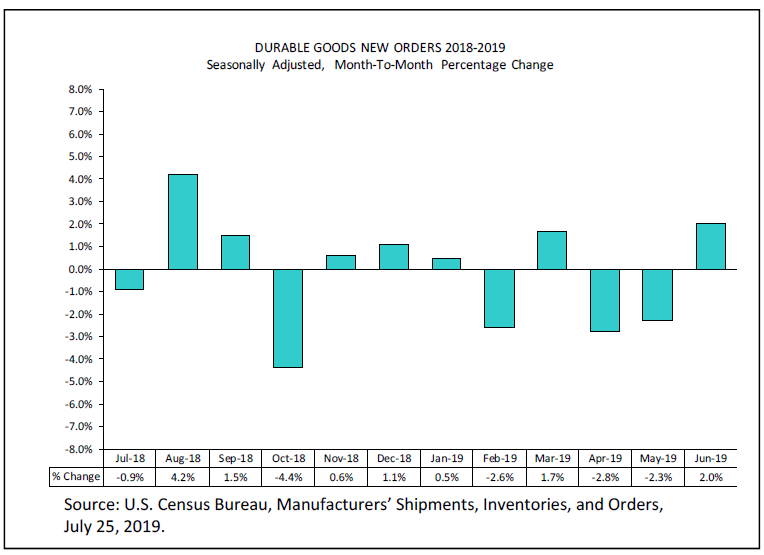
Advance goods trade deficit narrowed -1.2% to USD 74.2B, but was larger than expectation of USD -72.4B. Wholesale inventories rose 0.2% mom, below expectation of 0.4% mom.
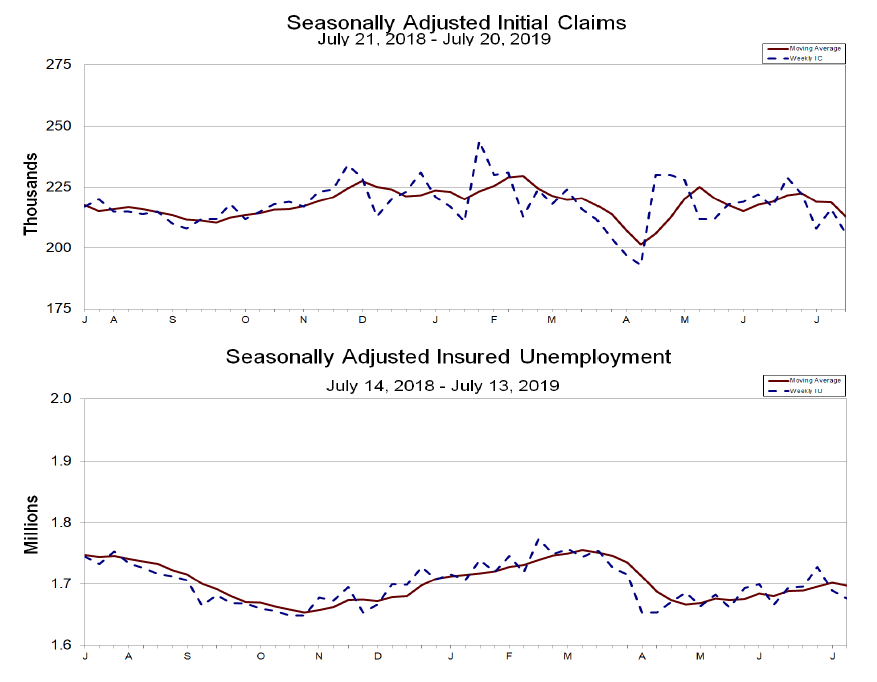
US initial jobless claims dropped to 206k, better expectation
US initial jobless claims dropped -10k to 206k in the week ending July 20, below expectation of 220k. Four-week moving average of initial claims dropped -5.75k to 213k.
Continuing claims dropped -13k to 1.676m in the week ending July 13. Four-week moving average of continuing claims dropped -4.5k to 1.697m.
ECB Queues Up Cut and QE, Earnings Impress, Oil, Gold and Bitcoin All Rising
US stocks are popping higher on earnings and after the ECB’s dovish hold signaled they are ready to use the whole toolbox in September. More QE and lower rates will help the eurozone and risky assets are getting a nice bump this morning. US earnings continue to come in mixed, but some of the larger cap beats are dominating the headlines. 3M and Facebook delivered strong results. So far roughly three out of four S&P 500 companies that have reported results have delivered strong earnings.
ECB
The ECB is ready to deliver rate cuts and launch QE2 and all options appear on the table for the September meeting. The initial reaction saw the euro spike higher on the dovish hold, but that did not last as the groundwork was put in place for a strong dovish signal for the upcoming meetings. The ECB decision went as expected, though some traders were disappointed they didn’t cut today. The tweaks to forward guidance that rates could go lower and the formation of committees to look at all the tool box options, including tiering, increasing its size, and widen composition of new asset purchases. The Draghi press conference is expected to be dovish, as we could see this be his last memorable presser. Draghi looks like he will continue on with his mantra from seven years ago that he will do whatever it takes to save the eurozone.
Oil
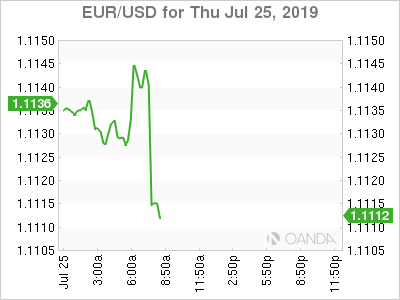
Oil prices are still benefiting from yesterday’s bullish EIA report, practically matching the API report we saw on Tuesday. The strong draw of nearly 11 million barrels mostly came from the Gulf of Mexico, which was dealing with the aftermath of Tropical Storm Barry. US production saw its biggest drop since October 2017, but it is expected to rebound strongly next week.
The demand part of the energy equation got another negative headlines as Germany’s business climate fell to the lowest level since February 2010. Further global economic data weakness may have limited effects on crude demand as the next round of easing from the ECB, along with the Fed’s shift to an easing cycle, will help the bolster the economy.
Gold
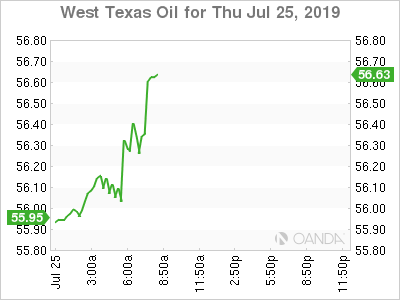
The ECB’s signal for fresh stimulus along with growing expectations the Fed is about to unleash a series of rate cuts is going to provide gold with solid demand for the rest of the year. Even if we see stocks continue to the climb into uncharted territory, the yellow metal seems ready to shine brighter.
Bitcoin
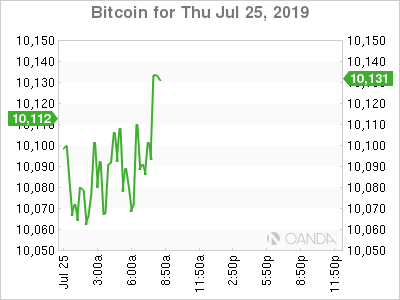
The largest cryptocurrency is testing the $10,000 level once again as investors see regulatory concerns start to fade. The regulatory environment will likely squeeze out the smaller digital coins first and we could see Bitcoin in medium-term.
AUDUSD Looks To Weaken Towards 0.6900 Zone
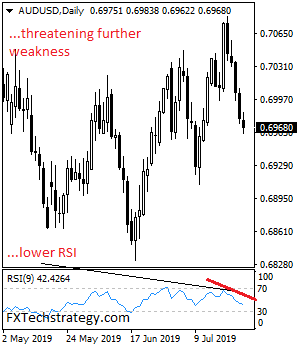
AUDUSD looks to weaken further towards 0.6900 as it retains its downside pressure. On the downside, resistance lies at the 1.6900 level. A cut through here will turn attention to the 0.6850 level and then the 0.6800 level where a violation will set the stage for a retarget of the 0.6750 level. Its daily RSI is bearish and pointing lower suggesting more weakness. Resistance is seen the 0.7000 level where a breach will aim at the 0.7050 level. Below here will set the stage for a run at the 0.7100 level with a cut through here targeting further downside pressure towards the 0.7150 level. On the whole, AUDUSD faces further downside threats.
ECB stands pat, indicates possibility of lower rates, stands ready to act
ECB keeps monetary policy unchanged as widely expected. Main refinancing rate is kept at 0.00%. Marginal lending facility and deposit facility rates are held at 0.25% and -0.40% respectively.
Forward guidance is changed to reflect the possibility of lower interest rates. That is, interest rates are expected to "remain at their present or lower levels at least through the first half of 2020".
Also ECB "stands ready to adjust all of it instruments" if "medium-term inflation outlook continues to fall short of its aim"
Full statement here.
Monetary Policy Decisions
At today's meeting the Governing Council of the European Central Bank (ECB) decided that the interest rate on the main refinancing operations and the interest rates on the marginal lending facility and the deposit facility will remain unchanged at 0.00%, 0.25% and -0.40% respectively. The Governing Council expects the key ECB interest rates to remain at their present or lower levels at least through the first half of 2020, and in any case for as long as necessary to ensure the continued sustained convergence of inflation to its aim over the medium term.
The Governing Council intends to continue reinvesting, in full, the principal payments from maturing securities purchased under the asset purchase programme for an extended period of time past the date when it starts raising the key ECB interest rates, and in any case for as long as necessary to maintain favourable liquidity conditions and an ample degree of monetary accommodation.
The Governing Council also underlined the need for a highly accommodative stance of monetary policy for a prolonged period of time, as inflation rates, both realised and projected, have been persistently below levels that are in line with its aim. Accordingly, if the medium-term inflation outlook continues to fall short of its aim, the Governing Council is determined to act, in line with its commitment to symmetry in the inflation aim. It therefore stands ready to adjust all of its instruments, as appropriate, to ensure that inflation moves towards its aim in a sustained manner.
In this context, the Governing Council has tasked the relevant Eurosystem Committees with examining options, including ways to reinforce its forward guidance on policy rates, mitigating measures, such as the design of a tiered system for reserve remuneration, and options for the size and composition of potential new net asset purchases.
The President of the ECB will comment on the considerations underlying these decisions at a press conference starting at 14:30 CET today.
NZDUSD Continues Selling Interest, Next Support At Uptrend Line
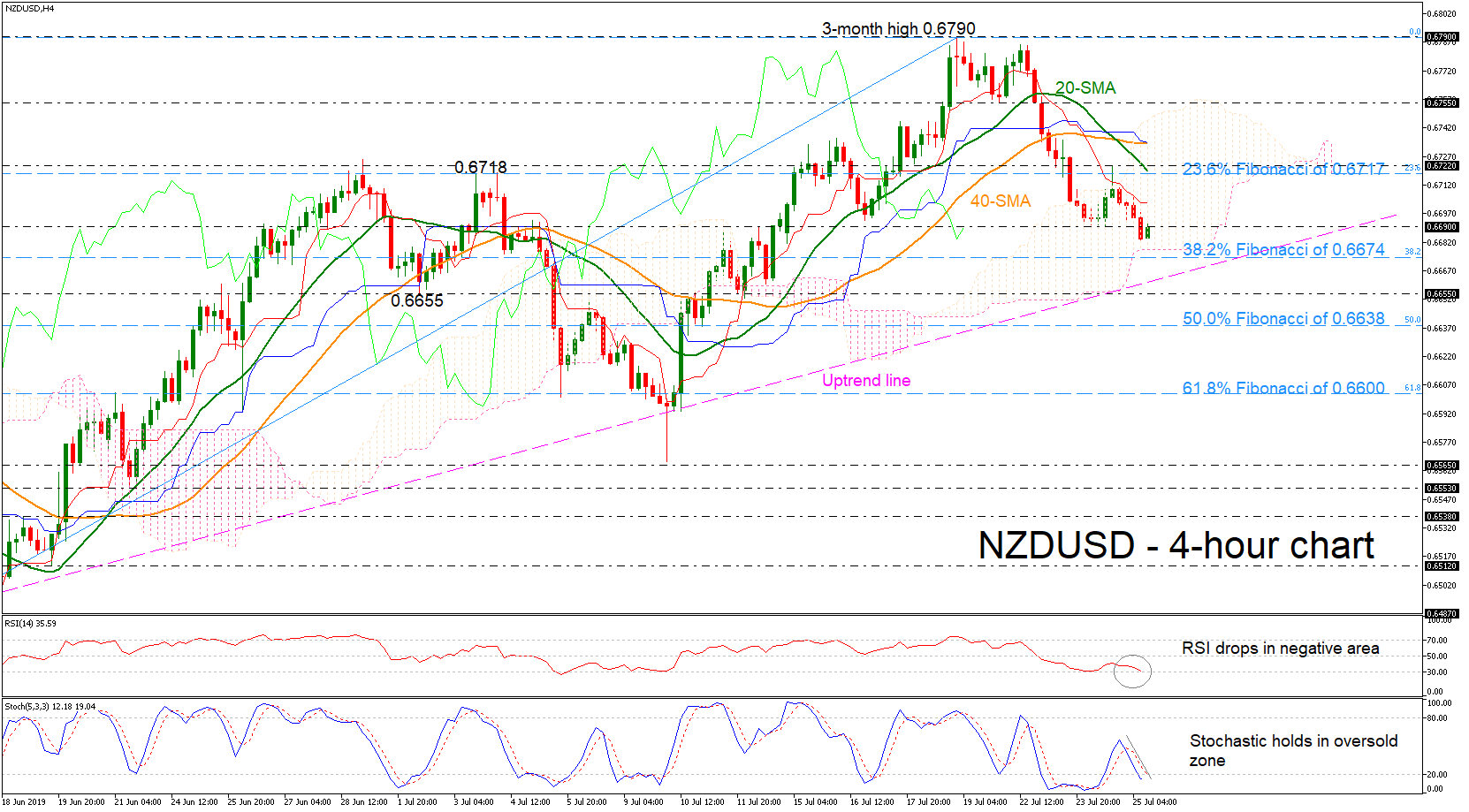
NZDUSD is on course for weekly losses, dropping into the Ichimoku cloud and creating a ten-day low around 0.6685.
The RSI in the 4-hour chart continues to drop in the bearish area, while the red Tenkan-sen keeps moving below the blue Kijun-sen line, increasing chances for a meaningful selling interest in the short-term trading. Also, the stochastic oscillator entered the oversold zone and is still heading lower.
Should the price edges down, the 38.2% Fibonacci retracement level of the upleg from 0.6487 to 0.6790 near 0.6674 could attract traders’ attention before touching the 0.6655 barrier, penetrating the ascending trend line to the downside.
In the alternative scenario, a jump above 0.6690 could reach the 23.6% Fibonacci of 0.6717 and the 0.6722 resistance level, which encapsulates the 20-simple moving average (SMA). More advances could send the pair until the 40-SMA currently at 0.6733.
Overall, NZDUSD is in the process of changing the outlook from positive to negative but first it needs to violate the 38.2% Fibo and the short-term uptrend line.