

Sample Category Title
EUR/JPY Decline Likely To Continue
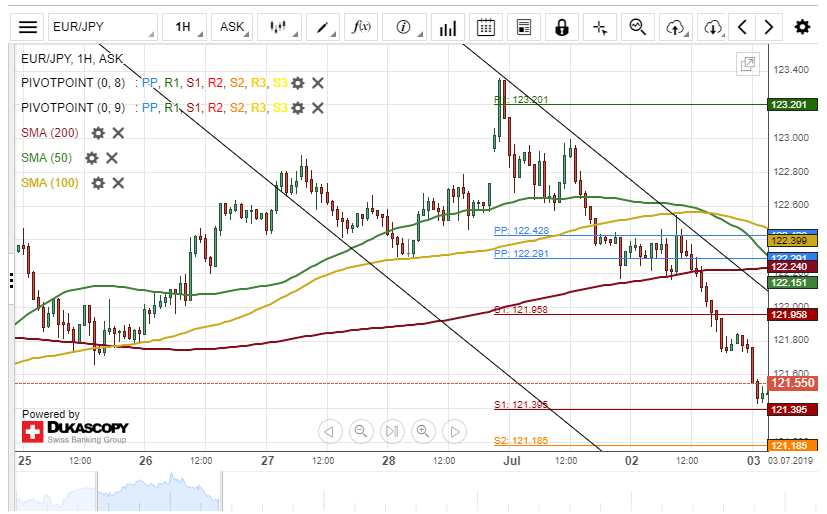
During Tuesday's trading session, the Eurozone single currency made 78 pips movement against the Japanese Yen.
As for the near future, it is likely that the EUR/JPY exchange rate would continue its downward movement. Bearish traders could aim for a support level formed by the weekly S3 at 120.71.
However, a support cluster formed by the combination of the weekly S1 and the monthly S2 at 121.28 could provide support for the currency exchange rate during the following trading session.
AUD/USD Consolidates Below 0.70
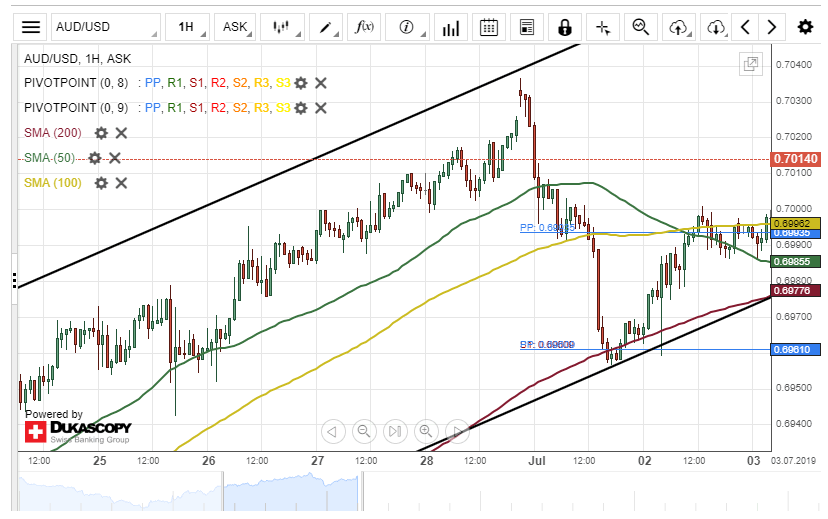
During the last 24 hours, the Australian Dollar versus the US Dollar has made about 37 pips movement. The currency pair consolidated below a psychological resistance level at 0.70 during the first half of Wednesday's trading session.
If the exchange rate passes the psychological resistance level, a surge towards the 0.7040 mark could be expected within this session.
However, if the level as mentioned earlier holds, a potential breakout through the lower boundary of an ascending channel pattern could occur.
Technical indicators flash buy signals on the daily time-frame chart. Most likely, the currency exchange rate could continue its upside movement today.
USD/CAD Sell Signals Today
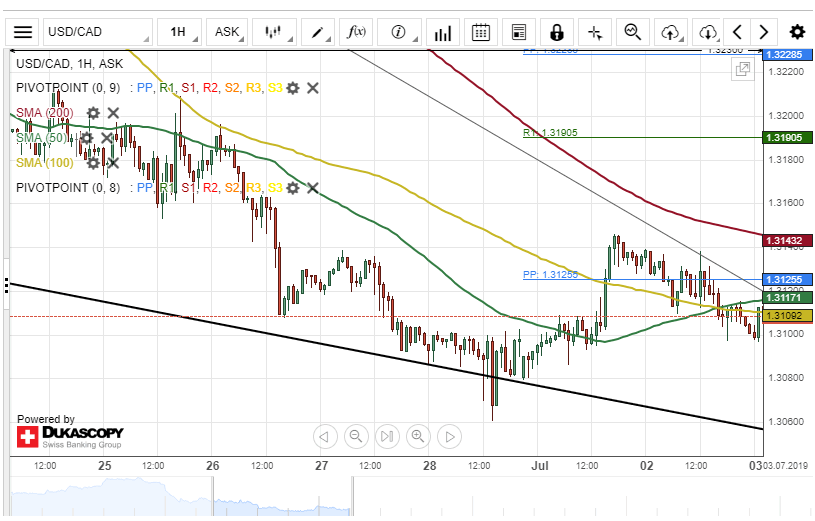
The US Dollar depreciated about 41 base points against the Canadian Dollar on Tuesday. The currency pair was trading near the upper boundary of a downtrend line during the morning hours of Wednesday's trading session.
Given that the exchange rate is located near the border of the trendline, a breakout could occur within this session.
However, technical indicators demonstrate that the currency exchange rate could continue its downward movement today.
If this breakout occurs, a surge towards the 1.3190 area might be expected during the following trading session.
NZD/USD Nears Support Cluster At 0.6678
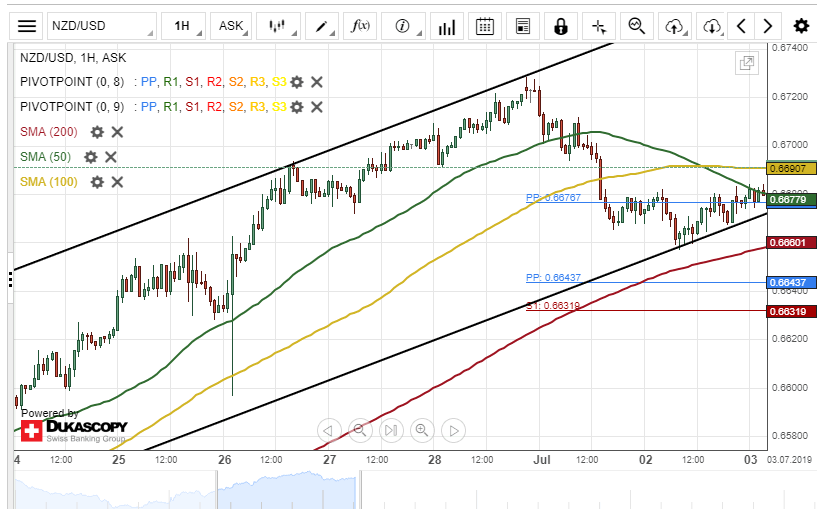
The NZD/USD currency pair traded with low volatility during yesterday's trading session. The New Zealand Dollar made about 22 pips movement against the US Dollar on Tuesday.
Given that the exchange rate is trading near the lower boundary of an ascending channel pattern at 0.6678, a breakout could happen during the following trading session.
However, a support level formed by the weekly pivot point and the 50-hour simple moving average at 0.6678 could prevent the breakout from occurring within this session.
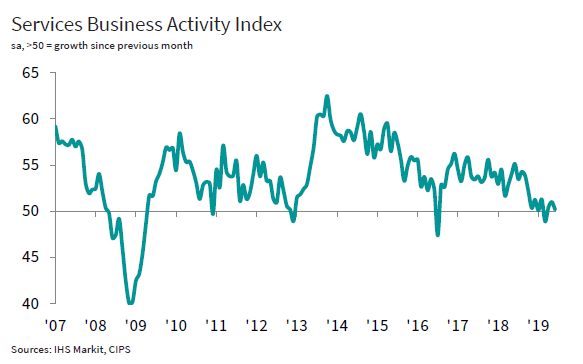
UK PMI services dropped to 50.2, all surveys point to -0.1% GDP contraction in Q2
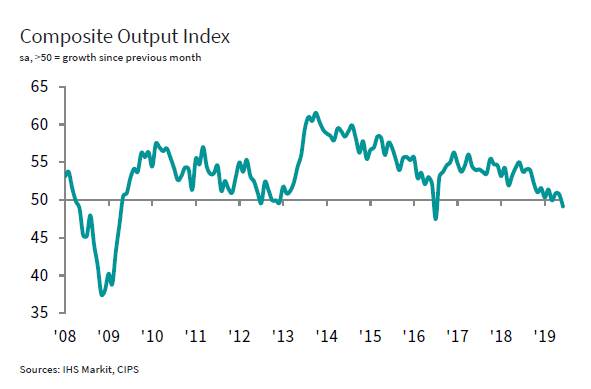
UK PMI Services dropped to 50.2 in June, down from 51.0 and missed expectation of 51.0. That's a also a three-month low, just above 50 no-change mark. All Sector PMI dropped to 49.2, down from 50.7, signalling a reduction in overall private sector business activity for the first time in 35 months.
 Chris Williamson, Chief Business Economist at IHS Markit, which compiles the survey:
"The near-stagnation of the services sector in June is one of the worst performances seen over the past decade and comes on the heels of steep declines in both manufacturing and construction. Collectively, the PMI surveys indicate that the economy has slipped into contraction for the first time since July 2016, suffering the second-steepest fall in output since the global financial crisis in April 2009.
"The June reading rounds off a second quarter for which the surveys point to a 0.1% contraction of GDP.
"The latest downturn has followed a gradual deterioration in demand over the past year as Brexit-related uncertainty has increasingly exacerbated the impact of a broader global economic slowdown. Risks also remain skewed to the downside as sentiment about the year ahead is worryingly subdued, suggesting the third quarter could see businesses continue to struggle.
"One ray of hope came from a further rise in employment as firms continued to hire new staff despite the drop in output, but the resulting decline in productivity signalled was the largest in the survey's 20-year history.
"Average selling prices for goods and services meanwhile rose at one of the slowest rates seen over the past three years, despite steeply rising costs, boding ill for corporate profits.
"The worsening picture will put further pressure on the Bank of England to add stimulus. For policymakers to not loosen policy with the all sector PMI at its current level would be unprecedented in the survey's two-decade history."
EURUSD 1.1310 Struggle
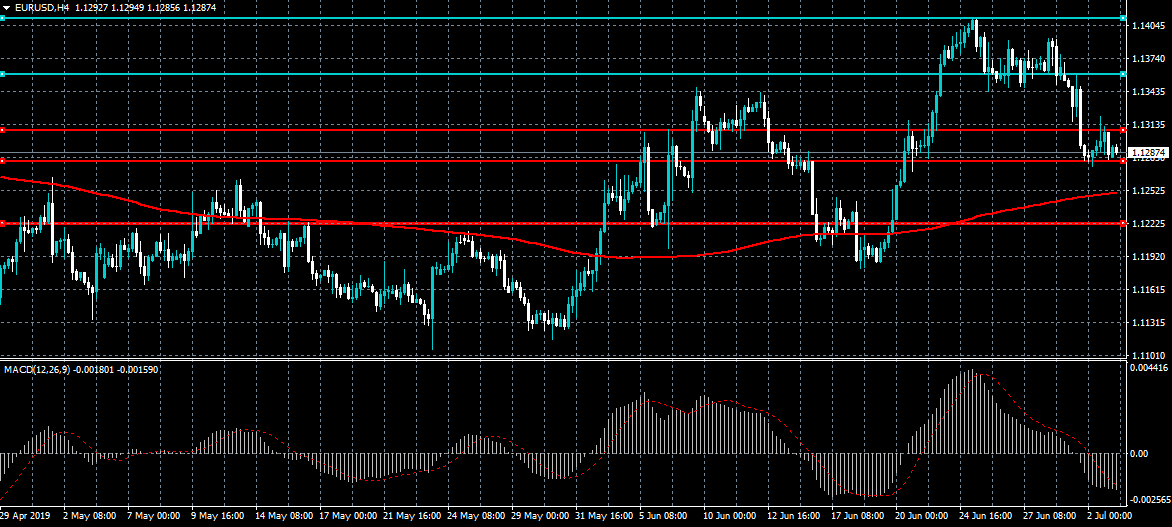
The euro is testing back towards its current monthly trading low against the US dollar, following multiple technical rejections from the 1.1310 level. A sustained break of the 1.1280 level may see the EURUSD pair failing back towards the 1.1255 support region. The release of the US ADP jobs report is likely to be the main market mover for the EURUSD pair later today.
The EURUSD pair is only bullish while trading above the 1.1310 level, key technical resistance is found at the 1.1355 and 1.1400 levels.
If the EURUSD pair trades below the 1.1310 level, key support is found at the 1.1280 and 1.1255 levels.
GBPUSD 1.2520 In Focus
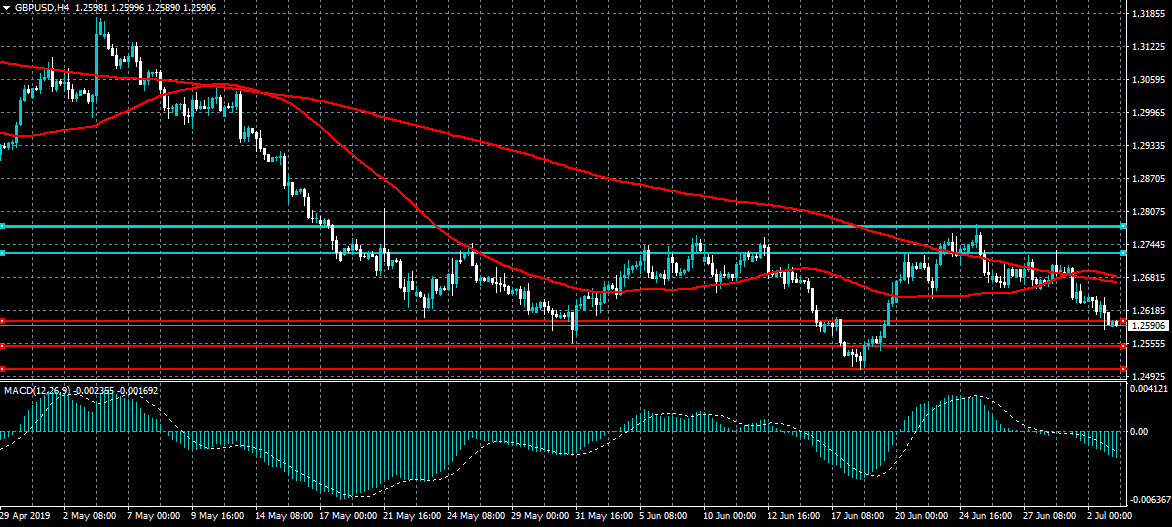
The British pound has dropped sharply lower against the US dollar, following bearish comments from Bank of England Governor Mark Carney. The 1.2520 support level is likely to come into focus now that the 1.2610 level has been convincingly breached. UK PMI Services data is likely to be the main mover for the GBPUSD pair this morning, with a negative number expected to weigh heavily on the GBPUSD pair.
The GBPUSD pair is heavily bearish while trading below the 1.2610 level, key support is found at the 1.2520 and 1.2460 levels.
GBPUSD pair is only bullish while trading above the 1.2660 level, key resistance is found at the 1.2710 and 1.2730 levels.
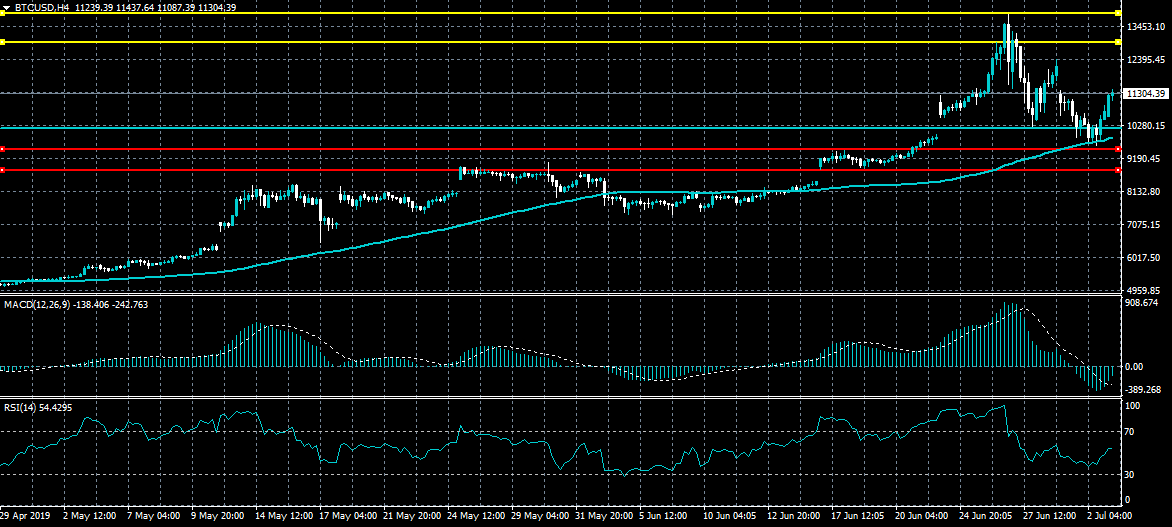
BTCUSD $10,200 Key
Bitcoin it attempting to recover bullish momentum after coming under downside pressure earlier this week below the $10,000 level. The $10,200 support level is the neckline of a bearish head and shoulders pattern with a large four-digit downside projection. The BTCUSD pair may also come under further selling pressure from the series of bearish candles across the weekly and daily time frames.
The BTCUSD pair is only bullish while trading above the $10,200 level, key resistance is located at the $11,800 and $12,400 levels.
If the BTCUSD pair trades under the $10,200 level, sellers may test towards the $9,000 and $8,500 support levels.
EURO Stalls After Europeans Nominated Christine Lagarde To Lead ECB
The euro was relatively unmoved after Europeans agreed to nominate IMF chief, Christine Lagarde to be the next head of the European Central Bank. Lagarde will be the first female ECB President and the first without a pedigree in central banking. As such, this raises the question about whether she will have the same credibility in the financial market that Draghi has. Her nomination comes at a time when global central banks have been in focus. In the US, the Fed is expected to slash rates in the July meeting while the ECB has extended the period it expects to raise interest rates to the first half of 2020. Yesterday, the RBA slashed rates for the second consecutive month. After the nomination, Lagarde will go through the formal approval process, which will take place in the next few months.
The USD was unchanged in the Asian session after Donald Trump announced his plan to nominate Judy Shelton and Christopher Waller to the Federal Reserve. The nominations came after his previous nominee – Herman Cain and Stephen Moore – stepped aside after receiving wide criticism. In a recent interview with CNBC, Judy said that if she were appointed to the Fed, she would lower interest rates to 0% within two years. In recent months, Trump has lambasted the Federal Reserve for the rate hikes it did in the past two years. The bank is now expected to slash interest rates in the July meeting.
The price of crude oil declined sharply in the US session even after OPEC+ agreed to a continuation of supply cuts. Members will now slash production by more than 1.2 million barrels every day for the next 9 months. Brent crude declined by 4.01% while US crude declined by 4.8%. This happened after the two benchmarks touched the highest levels in more than five weeks on Monday. While the supply cuts by OPEC were good for crude oil, investors were concerned that the cuts were not high enough. Investors were also concerned about the signs of the weakening of the global economy. Yesterday, API inventory data showed that crude stocks declined by more than 5 million barrels and later today, EIA is expected to show that inventories declined by more than 2.94 million barrels.
In the Asian session, investors received trade data from Australia. Data showed that exports and imports increased by 4% and 1%, leading to a higher trade surplus of more than $5.74 billion. In China, the Caixin services PMI declined to 52. Later on, investors will receive the CPI data from Turkey, rate decision by the Riksbank, PMI data from Germany, France, European Union and the UK. In the US, they will receive the Challenger Job Cuts data, the ADP nonfarm employment change data and the trade numbers. They will also receive the ISM non-manufacturing PMI data, Markit’s PMIs and factory orders.
EUR/USD
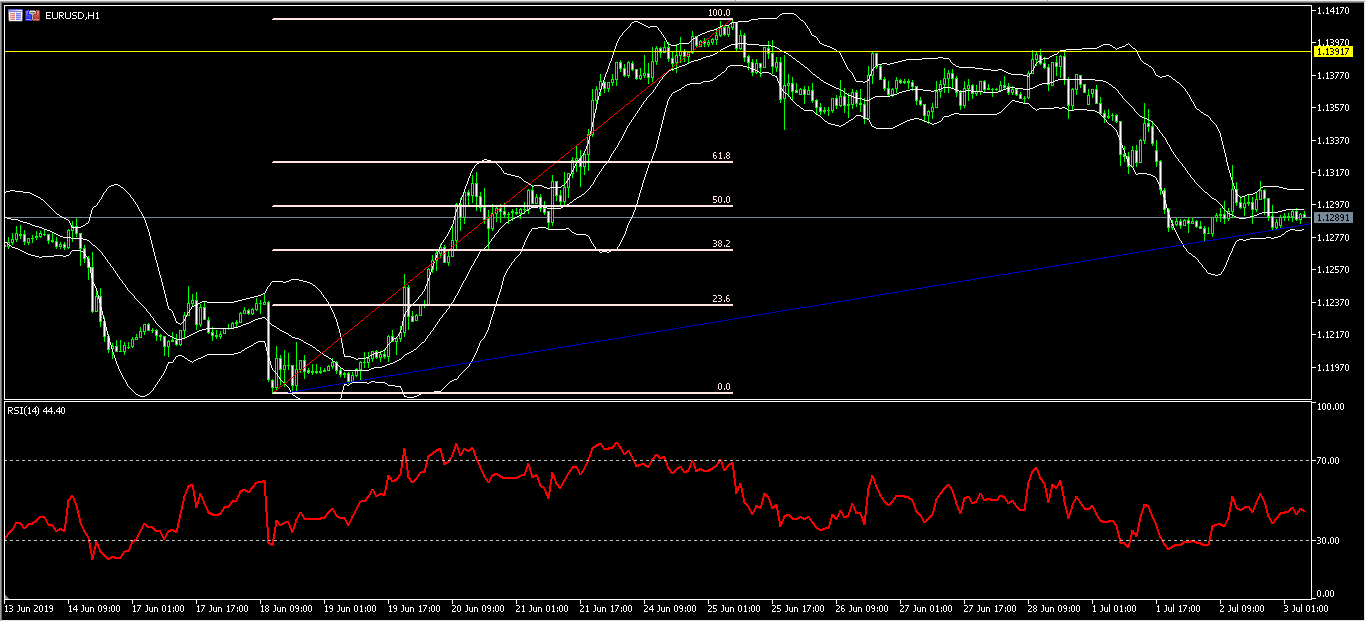
The EUR/USD pair has been declining since June 25, when it reached a high of 1.1412. The pair is trading at the 1.1287 level, which is slightly above yesterday’s low of 1.1275. On the hourly chart, the price is between the middle line of the Bollinger Bands and is along the blue support shown below. It is also slightly below the 50% Fibonacci Retracement level. The pair will likely continue the downward trend to test the important support of 1.1235, which is also the 23.6% Fibonacci Retracement level.
XBR/USD
The XBR/USD pair declined sharply to a low of 62.10. This was the lowest level since June 20 and was below all the short and medium-term moving averages on the hourly chart. The RSI moved to the oversold level of 30 and is currently at 32 while the price is along the lower line of the Bollinger Bands. The momentum indicator has continued to decline while the average directional index has reached 48. This means that the pair could continue declining to move below 60.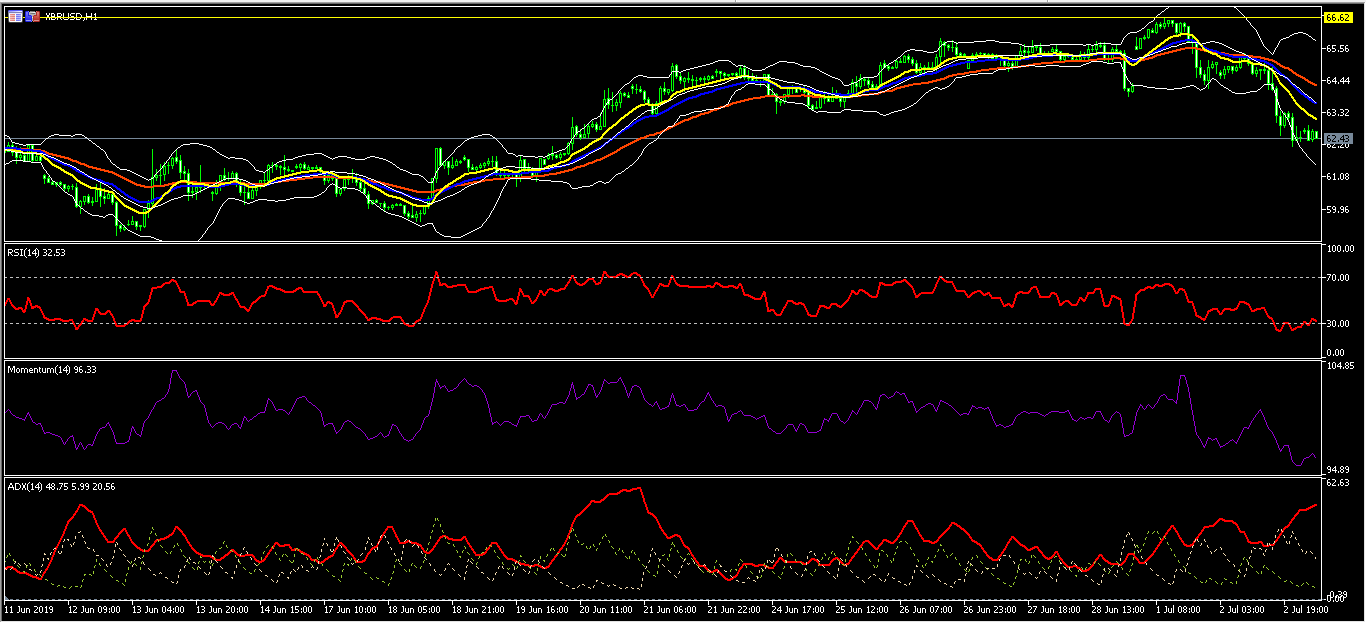
USD/JPY
The USD/JPY pair continued moving lower after the G20 summit. After rising to a high of 108.53 on Monday, the pair declined to low of 107.52 in the Asian session. The pair is trading between the 50% and 38.2% Fibonacci Retracement level. The price is below the 28-day and 14-day moving averages. The RSI has remained below the oversold level of 30. The pair will likely reach a low of 107.20, which is also the 23.6% Fibonacci Retracement level.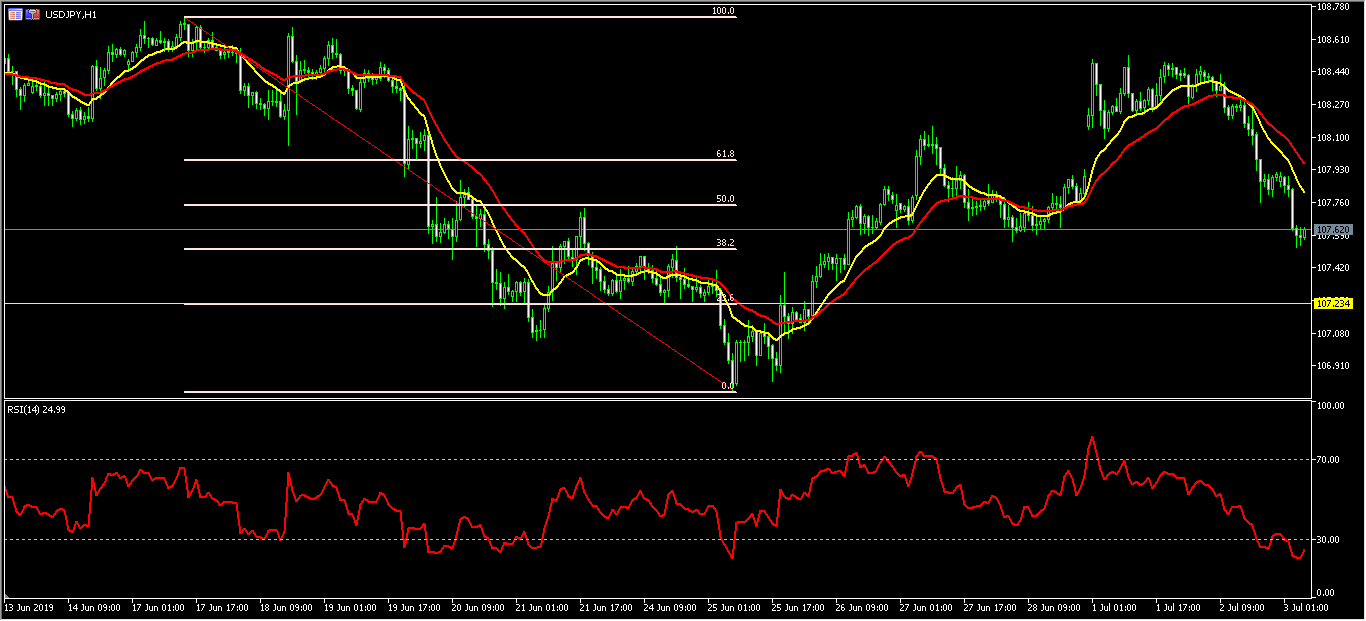
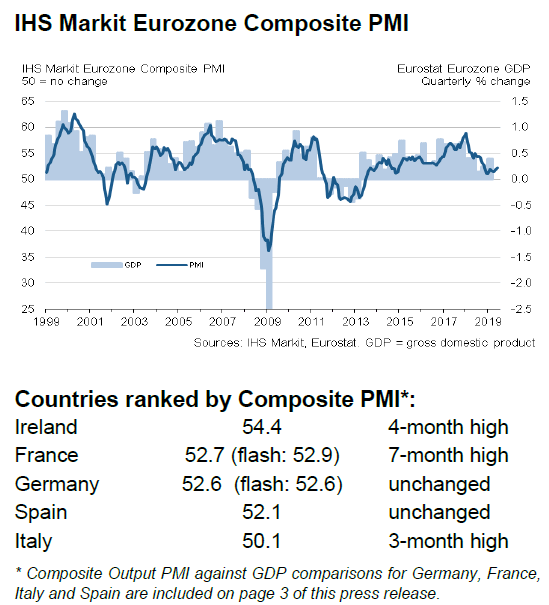
Eurozone PMI Composite finalized at 52.2, indicative of 0.2% growth in Q2
In June, Eurozone PMI Services is finalized at 53.6, revised up from 53.4 and up fro May's 52.9. PMI Composite is finalized at 52.2, revised up from 52.1 and up from May's 51.8. Among the member states, Italy PMI Composite was at 3-month high of 50.1. Spain was unchanged at 52.1. Germany was unchanged at 52.6. France hit 7-month high at 52.7.
Chris Williamson, Chief Business Economist at IHS Markit said:
"The June PMI surveys indicate that the pace of eurozone economic growth picked up at the end of the second quarter, though it would be wrong to get overly excited by the upturn. The survey is indicative of GDP merely rising by just over 0.2% in the second quarter, and a deterioration of business expectations for the year ahead to one of the lowest seen for over four years suggests the business mood remains sombre. Downside risks to the outlook prevail amid trade war worries, rising geopolitical uncertainty and slowing global economic growth.
"Looking at the largest states, the survey data are consistent with GDP growth easing sharply to 0.4% in Spain and only modest 0.2% expansions in both France and Germany. Italy is on course to see a 0.1% decline.
"Growth is being fuelled by the service sector which is helping offset the deep manufacturing downturn. However, a major concern is that, the longer the manufacturing slump persists, the greater the likelihood of the weakness spilling over to services, where the resilience in the face of the factory sector's downturn so far this year is looking increasingly unusual.
"Inflationary pressures have also moderated as weak demand prompted companies to increasingly compete on price.
"Given the relatively weak current and future growth being signalled by the PMI and the accompanying slide in inflationary pressures, we expect to see renewed stimulus from the ECB in coming months."