Sample Category Title
AUD/USD Two Scenarios Likely
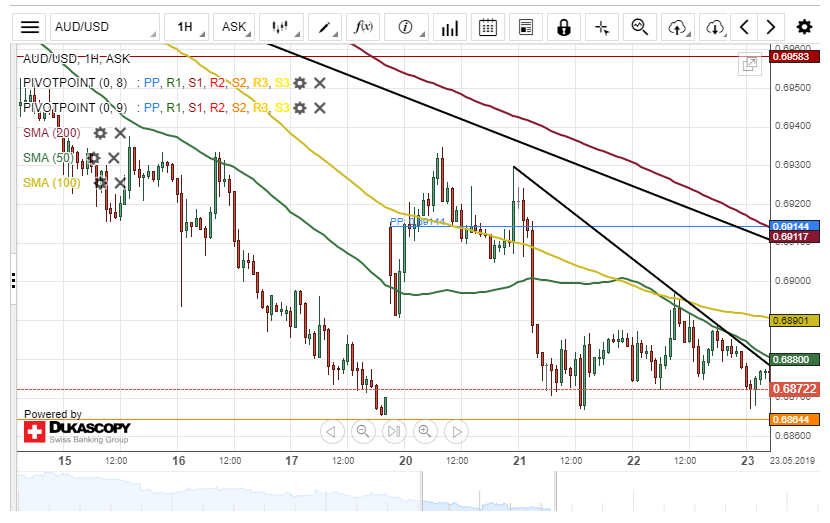
The Australian Dollar traded with low volatility against the US Dollar on Wednesday. The currency pair made just 23 base points movement during yesterday's trading session.
If the exchange rate breaks a support level formed by the monthly pivot point at 0.6864, bears might drive the pair further south within this session. The potential target will be near the weekly S1 at 0.6820.
On the other hand, if a breakout occurs through the upper boundary of a counter-trendline at 0.6877, bullish traders are likely to push the currency exchange rate towards the weekly PP at 0.6913 today.
USD/CAD Passes 61.80% Fibo
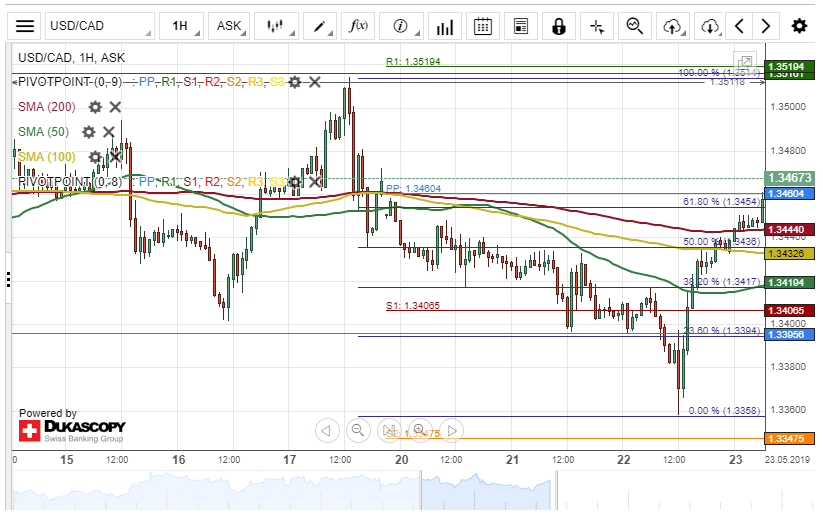
The US Dollar has appreciated about 90 base points against the Canadian Dollar since yesterday's trading session. The currency pair breached the three moving averages on Wednesday.
The exchange rate tested the 61.80% Fibonacci retracement level at 1.3454. The Fibonacci retracement level can be measured by connecting the high at 1.3514 and the low at 1.3358.
Given that the currency exchange rate has passed the 61.80% Fibo, the pair will target a psychological resistance level at 1.3500 today.
NZD/USD Likely To Pass 0.6485 Today
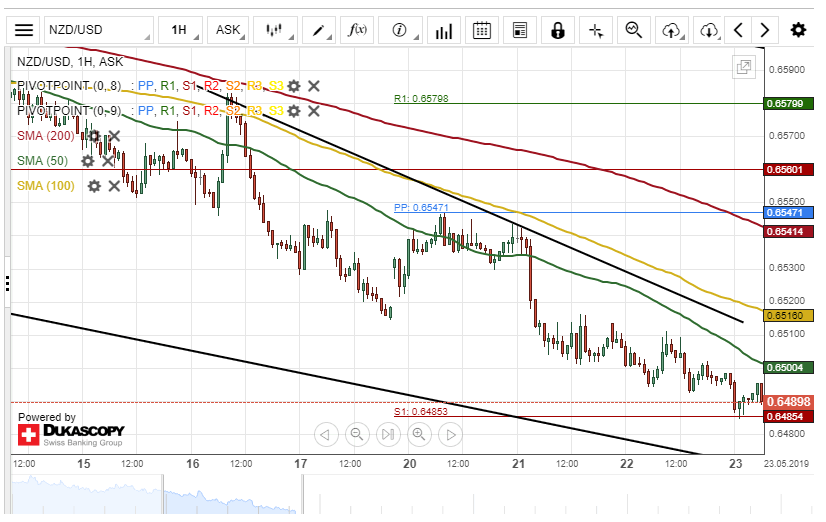
During yesterday's trading session, the New Zealand Dollar depreciated about 25 base points against the US Dollar. The currency pair tested the weekly S1 at 0.6485 during the Asian session on Thursday.
The 50-hour simple moving average is closely guiding the exchange rate lower. Most likely, the pair will break the weekly S1 as mentioned above within this trading session.
However, if the weekly S1 at 0.6485 holds, the currency exchange rate could aim for a resistance level formed by the upper boundary of a descending pattern at 0.6617 today.
NZDUSD Turns Attention To 7-Month Low, Strongly Negative
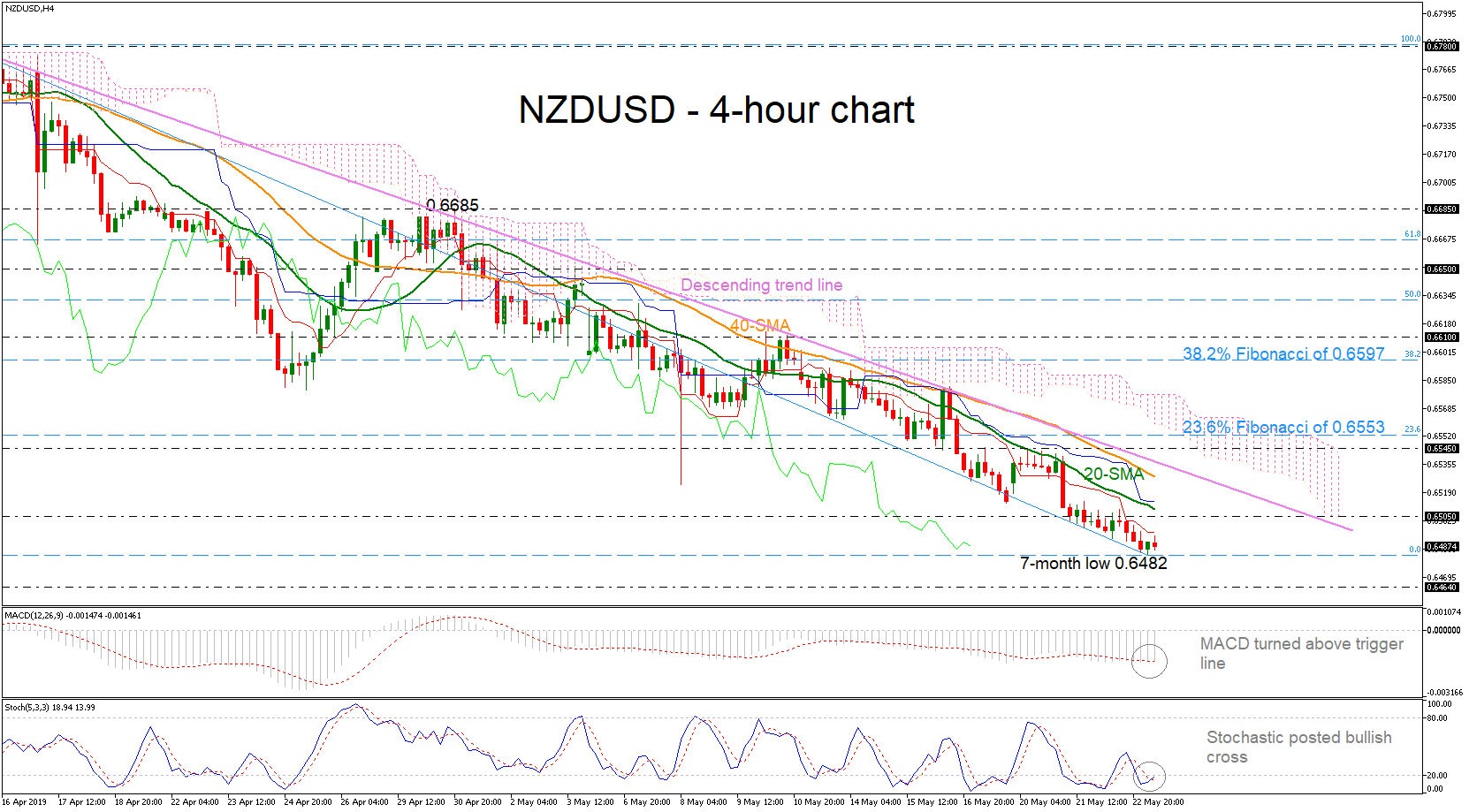
NZDUSD has been in a strong bearish rally over the last two months, reaching a fresh seven-month low of 0.6482 earlier today.
What remains to be seen is if the bears have enough fuel to continue this sharp negative movement as the technical indicators are suggest the opposite. The MACD and the stochastics are ready for a bullish cross with the trigger line and within the %K and %D lines respectively in the bearish region.
If the momentum oscillators prove that an upside correction is near, immediate resistance would initially come from the 0.6505 barrier and the 20-simple moving average (SMA) around 0.6510 in the 4-hour chart. Should the price break the line to the upside, the rally may get further legs, with the spotlight turning next to the 0.6545 resistance and the short-term descending trend line. A violation of these lines could open the way for bullish orders until the Ichimoku cloud and the 23.6% Fibonacci of the downleg from 0.6780 to 0.6482, near 0.6553.
On the flipside, the pair may retry to penetrate the seven-month low to drive the price lower towards the 0.6464, identified by the lows on October 2018. If the attempt proves successful, the next target would be lower around 0.6423, registered last October as well.
To sum up, NZDUSD has been in a significant downside movement in the near-term, posting lower lows and lower highs. However, only a close above the falling trend line could switch the bearish profile to bullish.
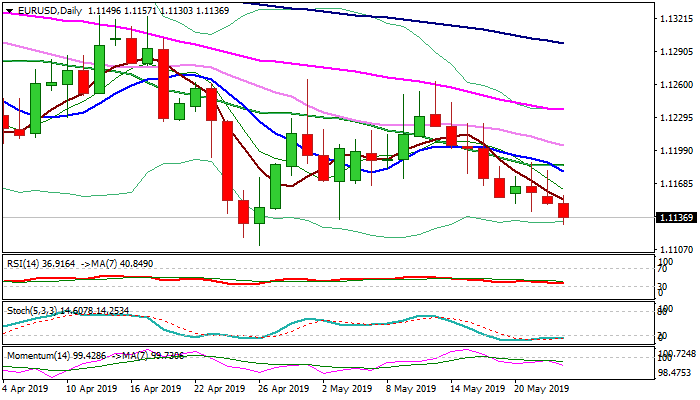
EUR/USD Outlook: Euro Focuses Key Support At 1.1111, Weighed By Intervention And Weak German / EU Data
The Euro accelerated lower in early European trading on Thursday, pressured by central banks’ intervention in Asia.
The single currency is at one month low after bears took out the last obstacle at 1.1147 (Fibo 76.4% of 1.1111/1.1264) and opened way towards key support at 1.1111 (2019 low, posted on 26 Apr).
German and EU Manufacturing and Services PMI’s both fell below expectations in May, adding to negative outlook.
Bullish divergence on oversold slow stochastic warns that bears may face strong headwinds from 1.11 support zone.
Consolidative / corrective actions are expected to offer better selling opportunities while holding below falling 10SMA (1.1180) which is diverging from 20SMA after formation of bear-cross.
Res: 1.1154, 1.1180, 1.1203, 1.1224
Sup: 1.1130, 1.1111, 1.1075, 1.1000
German Ifo Business climate dropped to 97.9, deterioration spreading to services
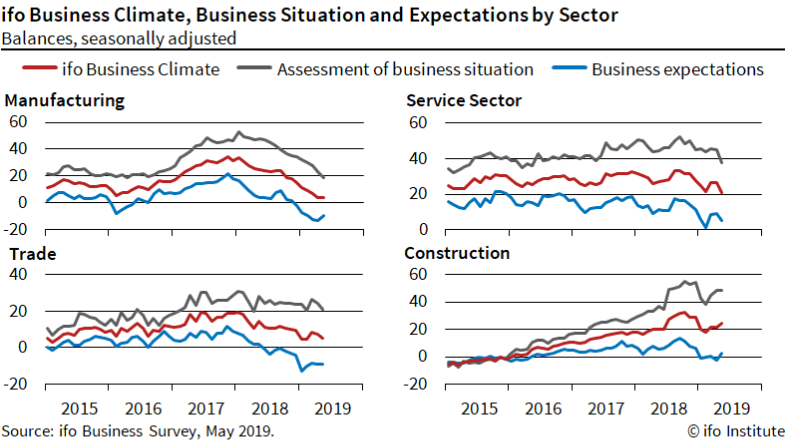
In May, Germany Ifo Business Climate dropped to 97.9, down from 99.2 and missed expectation of 99.1. Current Assessment index dropped to 100.6, down from 103.3 and missed expectation of 103.5. Expectations Index rose to 95.3, up from 95.2 and beat expectation of 95.0.
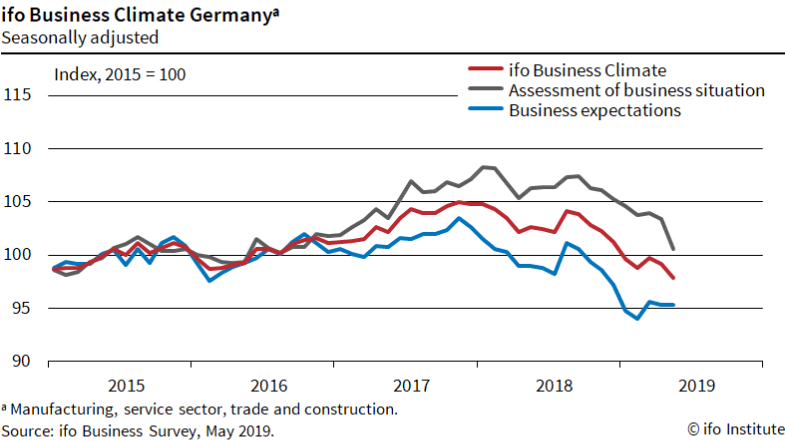
Ifo President Clemens Fuest said "the German economy is still lacking in momentum." Manufacturing index dropped "slightly" but expectations rose for the first time since September 2018. However, Also, "in the services, the business climate took a substantial hit. Not since April 2013 has the indicator of current sentiment fallen as far as it did this month. Optimism with regard to the coming months also declined."
GBP/USD Outlook: Pound Falls Further As Pressure On PM May To Step Down Rises
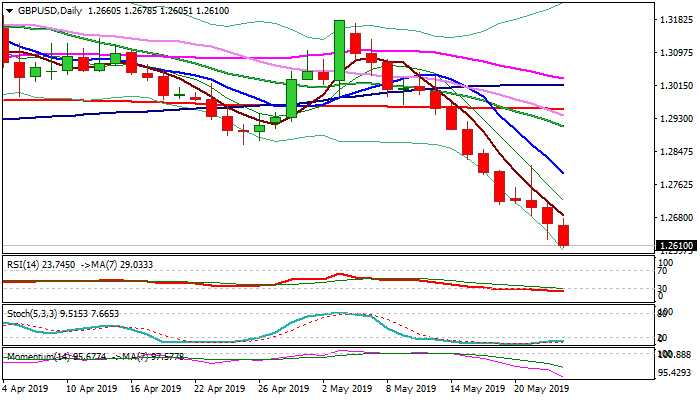
Sterling continues to spiral down and hit new lowest levels since early Jan, as political turmoil in the UK intensifies and fears of no-deal Brexit rise that overshadows EU elections Prime Minister Theresa May is under strong pressure to quit and is expected to announce a date of her departure, likely on Friday. Boris Johnson is leading on the list of May's successors and markets see risk of further fall of pound if he becomes the PM. Technical studies remain firmly bearish and helped with negative sentiment, as cable holds in red for the thirteenth straight day and eyes targets at 1.2476 (2018 low) and 1.2397 (2019 low, posted on 3 Jan). Mild corrective actions are expected to offer better opportunities to re-enter bearish market, but deeply oversold daily studies so far lack any firmer signal. Falling 5SMA offers initial resistance at 1.2684, guarding more significant barrier at 1.2791 (falling 10SMA) which should limit stronger upticks and keep bears intact.
Res: 1.2650, 1.2684, 1.2719, 1.2773
Sup: 1.2600, 1.2580, 1.2528, 1.2476
Institutions Are All Over Bitcoin
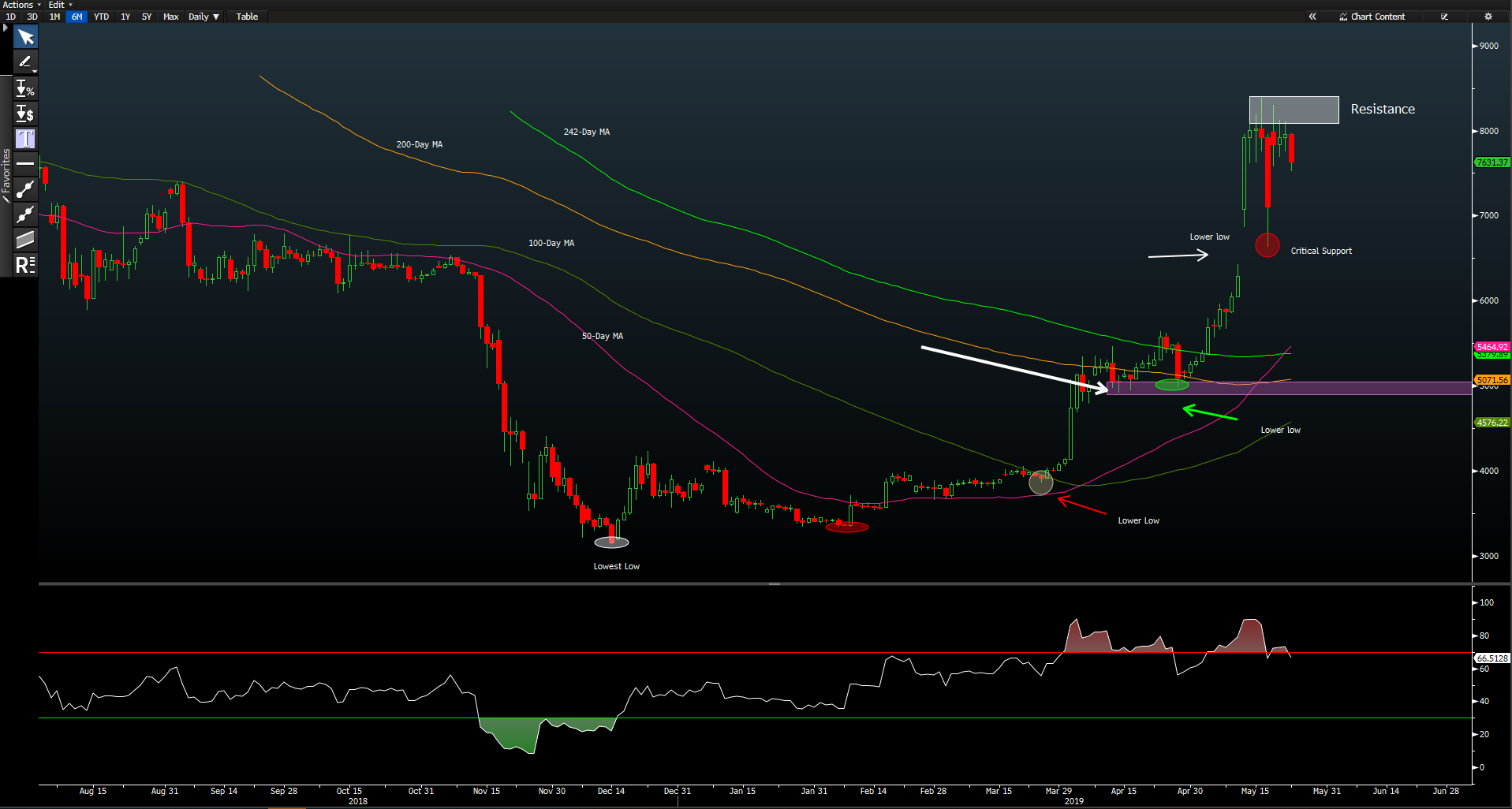
Bitcoin's price is under pressure today and it is trading lower by -4.13 percent. Bitcoin is trading at $7,626 at the time of writing this article. Bitcoin has lost nearly 0.2 percent of its value in the past week. However, it is still up 109% year to date. Ethereum, the second most famous coin by market cap, is also down today by -5.93 percent but up 76% year to date. It is Ripple's XRP token which hasn't performed that well this year, a lackluster performance, up only 4.05 percent YTD.
BTC enthusiasts have been waiting desperately for a bull rally since the price has crossed the level of $6,000. There is no doubt that the cryptocurrency market has finally left the winter behind it and it has entered in a spring season; breaking out of the bear market shell. If this argument is true then the current sell-off must be classified as a retracement or perhaps a healthy pullback. After all, the Bitcoin price had 3 stabs at the level of $8,300, but it failed to move above this level so far. Thus, it is vital to keep an eye on important levels of support where the price could perhaps find some sort of backing.
The level which jumps out the most is sitting at the $6,631, the low formed on May 17. However, if the price doesn't find its support there, then it is likely to continue to move towards it 50-day moving average which is trading at $5,465.
One of the major regulated Bitcoin future exchange, CME is clocking record volume for the month of May in terms of Bitcoin future volume. Since the Bitcoin futures were launched, the exchange has traded nearly 1.6MM contracts representing the notional value of $50 billion. The highest volume of Bitcoin futures traded was 33,677 on May 13. All of this comes on the heel of the largest volume of new accounts joining this space, a sign that new users are clearly entering the market. During the month of May, the number of new accounts has hit a record level of 2,547 while this number at the start of this year was sitting just a little above the 2,000 mark. Increase in these new accounts and Bitcoin future volume shows that institutions have found a way of using the Bitcoin futures along with their traditional assets.
USD Gets LittleTo No Support From Fed’s Minutes
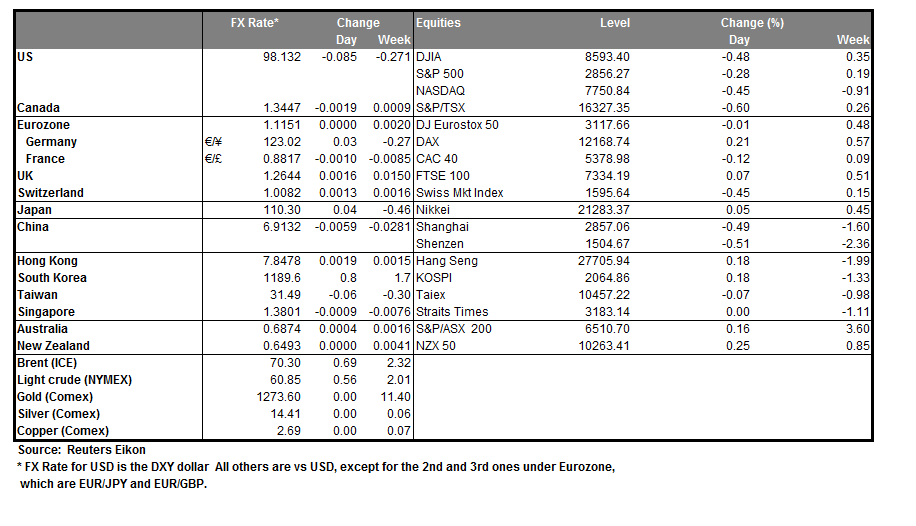
The USD produced little gains from the Fed’s minutes, remaining mostly flat against its major counterparts yesterday. The minutes revealed that there is support among the Committee's members to Powell’s opinion that inflation weakness is due to transitory factors. Also the minutes show a support for a patient approach for some time, even should global conditions improve. The Fed also discussed arguments for and against shortening the bond portfolio maturity levels. We see the case for the Fed to maintain a bias towards a neutral stance towards the interest rate level despite past expectations of the market of a possible rate cut. There could be a slight support for the USD, given the implied temporary nature of the inflation dip. USD/JPY stabilised lower yesterday, testing the 110.30 (S1) support line. Technically, it should be noted that the pair’s price action has broken the upward trendline incepted since the 15th of May hence we switch our bullish outlook, in favour of a sideways scenario. Should the bulls once again take over, we could see the pair aiming if not breaking the 110.90 (R1). Should the bears take over, we could see the pair breaking the 110.30 (S1) and aim for the 109.75 (S2) support level.
Oil prices weaken as there is a new injection in US oil inventories
Oil prices weakened yesterday, as the US crude oil inventories showed another injection and economic worries were enhanced. The EIA crude oil inventories figure was another injection, this time of 4.74 million barrels, which underscored the slack in the US oil market. Also analysts tend to point out that the US-Sino trade war may have a detrimental effect on oil demand as prices as a slowdown may reoccur. On the flip side the production cuts and US-Persian tension continue to provide support for oil prices. On the short term we could see oil prices weakening as the slack in the US oil market persists, yet OPEC production cuts could support oil prices. Oil prices dropped yesterday, breaking the 62.00 (R1) support line (now turned to resistance). As the slack in the US oil market seems to persist, we could see oil prices maintain the bearish momentum. It should be noted though that oil prices could prove sensitive to fundamental news especially headlines relating to OPEC production levels and on second base the US-Sino trade wars. Should WTI long positions be favored by the market, we could see it breaking the 62.00 (R1) resistance line and aim for the 63.25 (R2) resistance hurdle. On the other hand, should the commodity be under the selling interest of the market, we could see it breaking the 60.50 (S1) support line and aim for the 59.10 (S2) support barrier.
Other economic highlights, today and early tomorrow
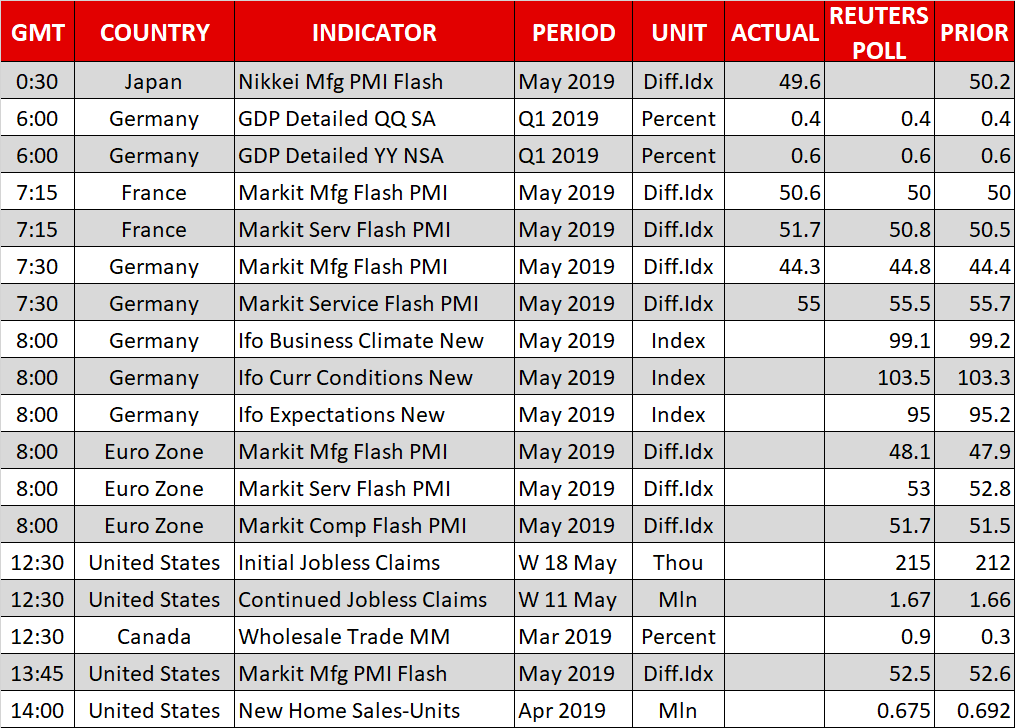
In the European session, we get from Germany the GDP for Q1, the preliminary Markit manufacturing PMI for May and the Ifo Business climate for May. From Eurozone, we get the preliminary Markit composite PMI for May and ECB is to release the account of the last policy meeting. In the American session, we get the US new home sales figure for April. In tomorrow’s Asian session, we get the Japan’s inflation rates for April. As for speakers, Fed’s Kaplan, Barkin, Bostic and Daly and ECB’s De Guidos speak.
WTI H4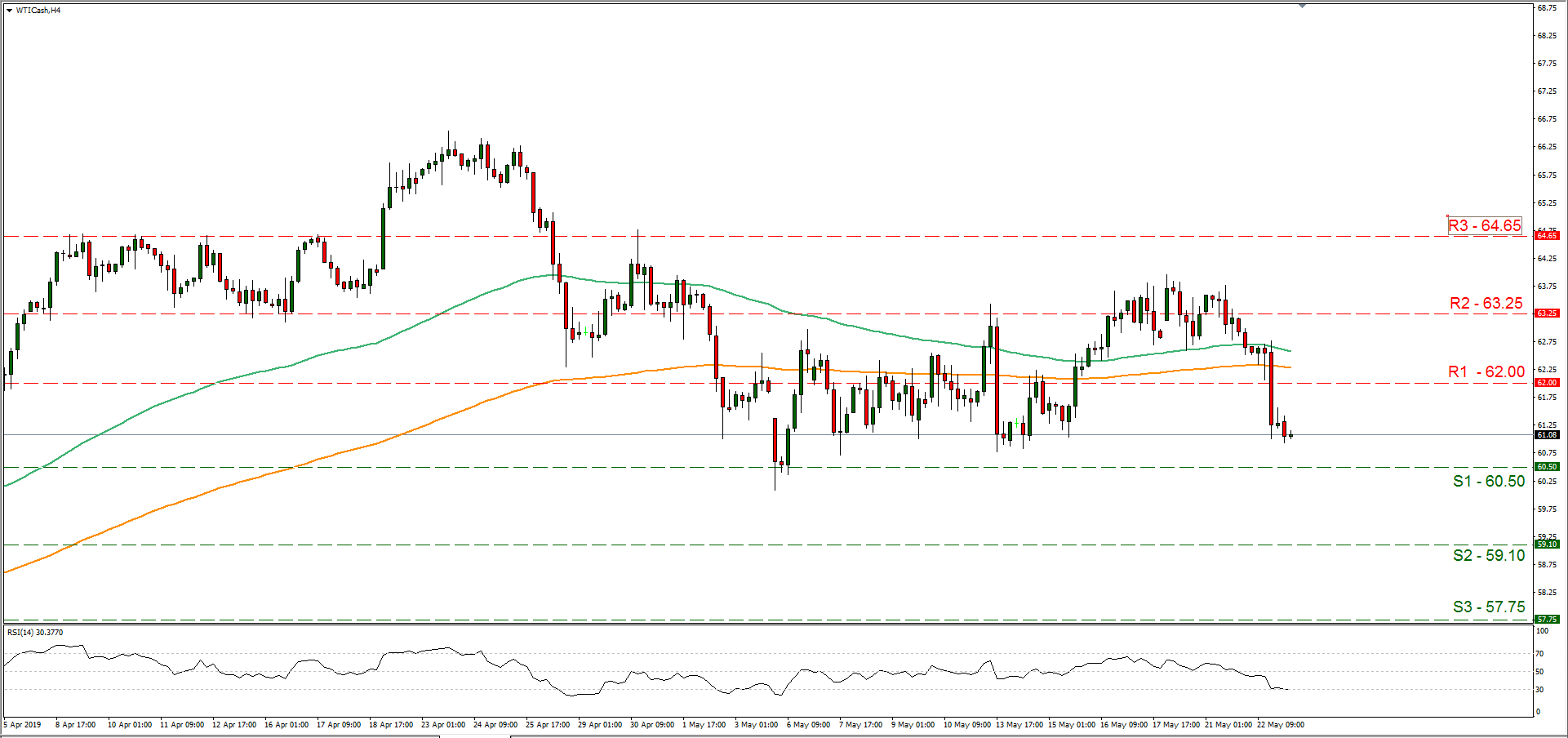
Support: 60.50 (S1), 59.10 (S2), 57.75 (S3)
Resistance: 62.00 (R1), 63.25 (R2), 64.65 (R3)
USD/JPY H4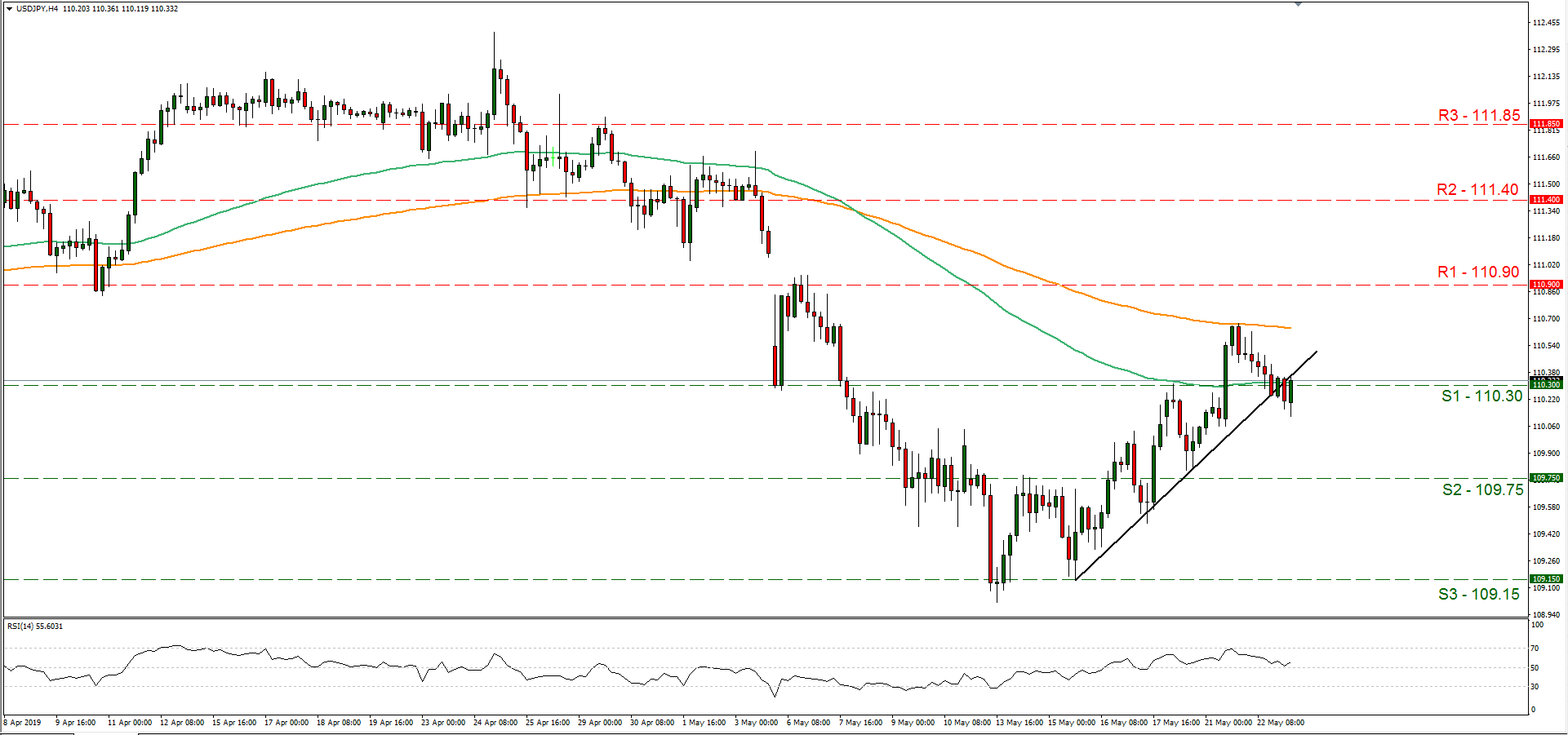
Support: 110.30 (S1), 109.75 (S2), 109.15 (S3)
Resistance: 110.90 (R1), 111.40 (R2), 111.85 (R3)
Then Came The Last Days Of (PM) May
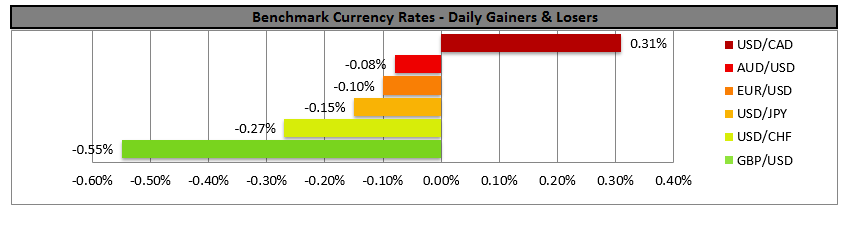
- Sterling hammered on expectations PM May could resign soon
- German PMIs disappoint – euro may stay under pressure
- Risk aversion deepens as markets fear ‘new cold war'
- Fed minutes reaffirm neutral stance, dollar advances
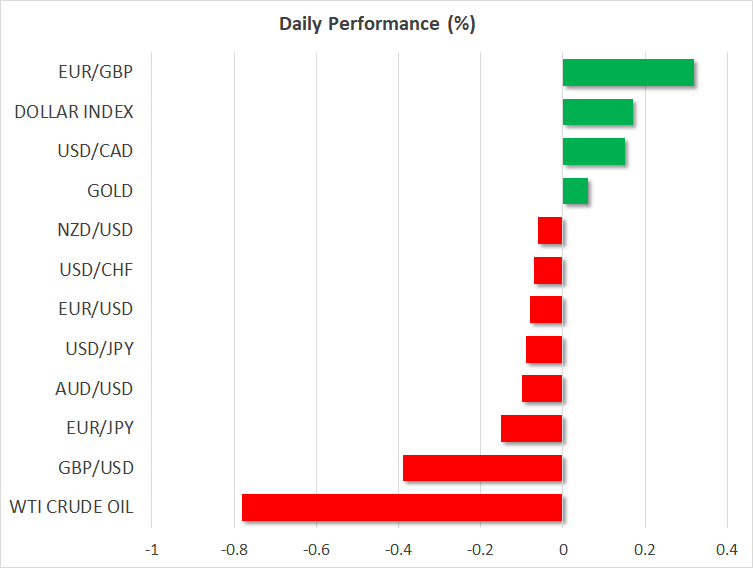
No reprieve for sterling as May fights for political survival
The British pound continues to be hammered by political uncertainty, with the leader of the House of Commons – Andrea Leadsom – resigning from the cabinet yesterday in protest to the government's Brexit approach. The move came after Prime Minister May unveiled a ‘softer' Brexit plan that opened the possibility of another referendum, infuriating Brexiteers in her Conservative party. The knives are truly out for May, who has come under unprecedented pressure to step down before this week ends.
Whether that happens or not might depend to a large extent on how her Conservative party performs in today's EU Parliament elections. If the Tories suffer as heavy a defeat as opinion polls suggest, with many of their voters defecting to the new Brexit Party, that could cause both May to quit and the Tories to start looking for a hardline Brexiteer to replace her. Naturally, that may raise the odds of a no-deal Brexit down the road, spelling more trouble for sterling.
German PMIs suggest little scope for euro rebound
Any material rebound in the euro is probably a long way off still, as the outlook for growth in the euro area remains gloomy. Germany's preliminary PMI surveys for May released earlier today disappointed, with the manufacturing index sinking deeper into contractionary territory and the services print falling by more than expected.
Europe's largest economy is therefore still struggling, which may help eliminate any surviving expectations for policy normalization by the ECB. As for the euro, until growth in the bloc starts showing signs of recovery, any rallies may remain relatively short-lived. There's also the risk of Eurosceptic parties becoming a dominant force in the EU Parliament after the elections this weekend.
Risk aversion deepens on fears of ‘new cold war'
Global stock markets are a sea of red on Thursday, with most Asian indices closing lower while futures tracking European and American bourses are pointing to a negative open, as trade concerns continue to dominate. China stepped up the rhetoric lately, with the nation's foreign minister saying that the US is trying to hinder the nation's development process. The overall sense in the market is that this conflict is quickly morphing from a trade dispute into a new cold war, particularly since ‘twitter diplomacy' leaves little room for either side to back down without losing face.
Fed minutes stress neutral stance, dollar likes it
The Fed minutes released yesterday confirmed that the central bank is firmly on hold. Most policymakers shared the view that the latest shortfall in inflation is transitory, and more importantly, there wasn't any discussion about cutting rates. This stands in stark contrast to market pricing, which still suggests a rate cut by December is a done deal.
As for the dollar, it moved a little higher in the aftermath and is extending its gains today. In the big picture, the greenback could remain the market's ‘darling', at least until one of the bleak narratives in the other major economies starts to improve. In this sense, the biggest downside risk for the dollar would be a material rebound in European growth, which as shown by today's euro area PMIs, is not there yet.