

Sample Category Title
EUR/JPY Will Aim For 200-Hour SMA
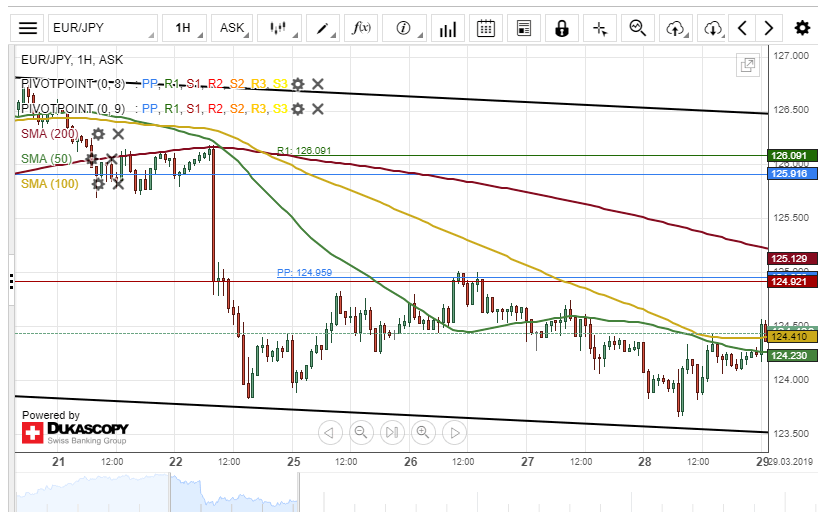
The single European currency is gradually gaining strength against the Japanese Yen. The currency pair gained about 79 base points during Thursday's trading session.
The exchange rate is currently trading near the 50– and 100-hour simple moving averages at 124.40. If the pair passes this SMAs, bullish traders will push the rate towards a resistance level formed by the 200-hour SMA at 125.15.
On the other hand, Technical indicators demonstrate that bears will continue to drive the EUR/JPY currency exchange rate lower during the following trading session.
Last Chance For Theresa May
Britain's Groundhog Day?
It has been a busy week in the House of Commons as the deadline set by the EU for the UK's exit from the EU is approaching at lightning speed. UK lawmakers will be voting on Theresa May's Brexit plan for the third time this year, on January 15th and on March 12th. Is March 29th gonna be another failure. Theresa May took actions to maximise its chances as today's deal is a trimmed version of the two previous ones. MPS will be only voting on the withdrawal agreement and not on the future relationship between the United Kingdom and the European Union. This would allow focusing on which kind of departure the UK wants, while leaving the future UK-EU relationship discussion for another day. It may be a risky bet as it maintain the uncertainty on the main important matter: how the UK be treated? However, it has been said that a bird in the hand is worth two in the bush.
Nevertheless, we do not believe this strategy will work, meaning that MPs will vote “no” for a third straight time. Therefore, the pound sterling should be heading further south. GBP/USD should find a solid support at 1.2949 (low from March 10th). If broken the low from February 14th at 1.2773 would be the next support. On the other hand, we anticipate that in case of a “yes” vote, the upside in the pound is quite limited the main questions would remain on the table.
Emerging markets murky
A US-China trade deal is close. Adherence to the spirit of the deal will be difficult; the countries have completely different economic systems that will not converge by ending punitive tariffs and buying more planes. Most appreciation of CNY has already occurred. When a deal is signed, markets will refocus on weak economic data. Chinese equities will react positively as will nearby currencies, AUD, THB and IDR. In Turkey, issues with TRY are troubling. The outlook for emerging markets is already shaky. Equities are up, but central banks are cutting economic forecasts. They can't both be right. Eastern European currencies such as HUF and PLN will come under selling pressure.
DAX Edges Higher As German Retail Sales Beat Expectations
The DAX index has edged higher on Friday. Currently, the DAX is trading at 11,463, up 0.32%. In economic news, German retail sales slowed to 0.9%, but beat the estimate of -1.0%. Unemployment claims fell by 7,000, shy of the estimate of 10,000. The unemployment rate for March dipped to 4.9% from 5.0%, the lowest level since reunification in 1990.
The DAX has posted gains this week, after sharp losses last week. The DAX fell 2.2% last Friday, after Germany posted a dismal manufacturing PMI. Manufacturing activity contracted for a third straight month, as the global trade war and damaging tariffs has reduced the appetite for German exports, particularly vehicles and auto parts. Investors are keeping a close eye on the ebb and flow of the U.S.-China trade talks, which continues to affect the markets. The negotiations between the sides continues and there have been reports of progress. However, optimism waned on Thursday, after a senior U.S. official said that it could be months before a deal is reached. As long as uncertainty continues to swirl around the talks, traders can expect swings in the stock markets.
EUR/USD Outlook: Bears Eye 2019 Low For Retest
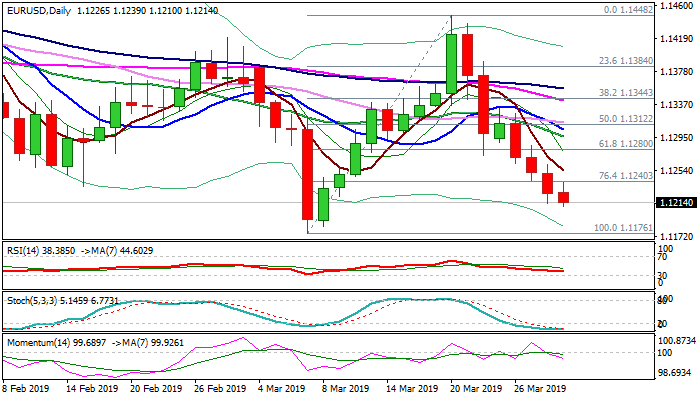
The Euro holds firmly in red for the fourth straight day and extends weakness, after fresh bearish signal was generated on Thursday's close below 1.1240 (Fibo 76.4% of 1.1176/1.1448) the last obstacle en-route to 1.1176 (2019).
The pair is on track to complete the second week in red that adds to negative outlook as 10/200WMA death cross weighs and bearish momentum rises on both, daily and weekly chart.
Also, the pair is on track to end month firmly in red and attempts through the base of thick monthly cloud that would increase pressure.
Bears look for test of key m/t supports at 1.1186/76 (Fibo 61.8% of 2017/2018 1.0340/1.2553 ascend/2019 low), violation of which would spark fresh acceleration lower and expose psychological 1.10 support.
Deeply oversold stochastic on daily chart warns that bears may lose traction, but without clearer positive signal for now. Close above broken 1.1240 support would ease negative pressure, however, limited corrective action is expected to precede fresh bears.
Res: 1.1240, 1.1255, 1.1280, 1.1296
Sup: 1.1200, 1.1186, 1.1176, 1.1118
Chinese Stocks Spiked, But Gold And Euro Decline Reflect Market Alertness
The euro for a week remains under pressure on global markets, due to weak economic indicators. As a result, the pair declined from the EURUSD high near 1.1450 to 1.1220 - the lows area since June 2017. An attempt to break the downtrend failed with the help of Draghi. ECB President Mario Draghi warned of a possible extension of the extremely low rates period.
Additionally, the EUR decline on Thursday was aggravated by weak inflation data from Germany. The annual price growth rate of the region’s largest economy slowed down to 1.3%, the minimum in 16 months. More importantly, the tendency to weaken price pressure is clearly an unpleasant surprise, disarming monetary policy hawks.
Weak data is a significant factor against the euro, opening the way for the decline. As for technical analysis, EURUSD can easily decline down to 1.06, where the pair received support in late 2016 and early 2017.
China A50
Chinese markets jumped up after the words of US Treasury Secretary Stephen Mnuchin about a "productive working dinner", noting progress in trade negotiations. China A50 blue-chip index of China stocks soared more than 4% on Friday, breaking the 13,000 level. This is the highest market close since March 2018. At the beginning of the month, the index had already tried to climb higher, but quotes could not hold on to these levels, opening the way for a prolonged correction.
Despite the fact that the negotiations are clearly tough and not as fast as previously planned, one by one, the positive comments from the officials support optimism in the Chinese markets.
The second attempt of the index to develop growth has a higher chance of success, as the market has consolidated strength in previous weeks.
Gold
The reverse side to the growth in demand for risks in China was the pressure on gold. From the beginning of the week, precious metal prices lost 2.6% turned out to be near March lows at $1,290. It is noteworthy that during the last two months, the periods of the steady growth of gold are replaced by sharp sales impulses, which causes wariness. The slowdown in global inflation is becoming a factor against the purchase of this precious metal as opposed to fixed-income bonds.
Seasonality also plays against gold at the moment. From March to August, this precious metal rarely experiences rally, amid a decline in demand for physical metal. Only by the fourth quarter, purchases by jewelers intensify against the background of preparations for holidays in India and China, which are the main consumers of jewelry gold.
US Retail Sales And ISM Manufacturing PMI Eyed Amid Slowdown Fears
Following the inversion of the US yield curve in the past week, retail sales figures and the ISM manufacturing PMI will be attracting attention on Monday as recession fears mount. The retail sales data are due at 13:30 GMT, while the ISM manufacturing gauge will be released slightly later at 15:00 GMT. With the US dollar’s declines so far being fairly limited after the Fed hit the pause button on further rate hikes, the greenback could be susceptible to downside moves if there are negative surprises in the data.
Retail spending slowed in the fourth quarter of last year, with a marked deterioration in December. There was only a weak rebound in January, with retail sales rising by just 0.2% month-on-month. The moderate improvement is expected to have continued in February, with analysts forecasting growth of 0.3% m/m. The alternative measure of retail sales, the ‘retail control’ group, which is used in GDP calculations and excludes volatile items, is seen rising by 0.4% m/m.
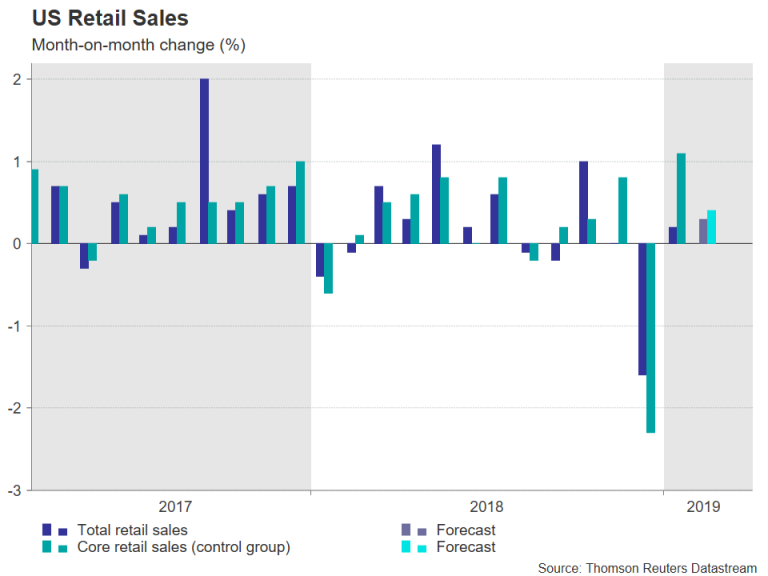
Consumer spending is the biggest component of US GDP, contributing to about 70% of economic output. Any signs of a significant slowdown therefore in consumer spending would likely add to market concerns that the US economy could be headed towards a recession. This week’s unexpected drop in the Conference Board’s consumer confidence index in March has already added to the worsening picture.
Another major data point on Monday will be the ISM manufacturing PMI. Manufacturing activity has been on a downtrend since the autumn, but the key indices have remained in expansionary territory. The most closely watched one, the ISM manufacturing PMI, fell to 54.2 in February but is forecast to have increased to 54.5 in March.
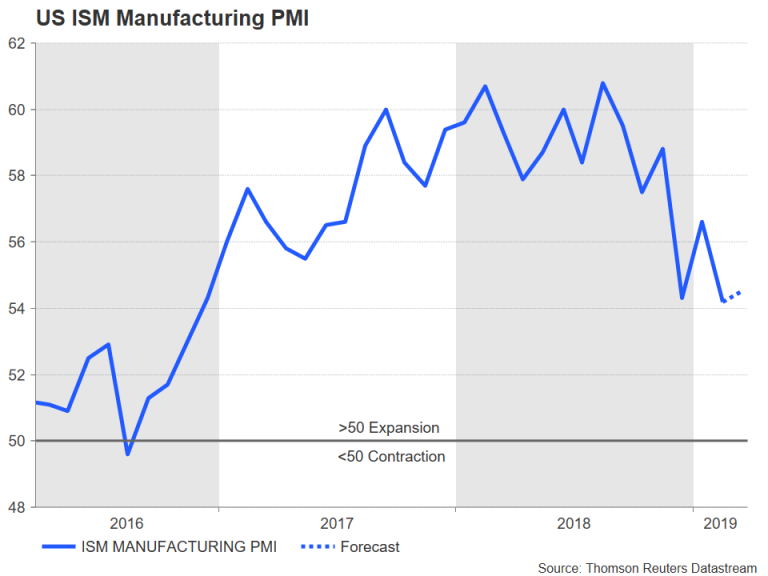
A rebound in March would ease worries of a sharp slowdown, at least in the short term, but only marginally. A better-than-expected retail sales figure would also likely provide the dollar with only a modest lift as investors would want to see more evidence pointing to a pick up in the growth momentum before revising their outlook.
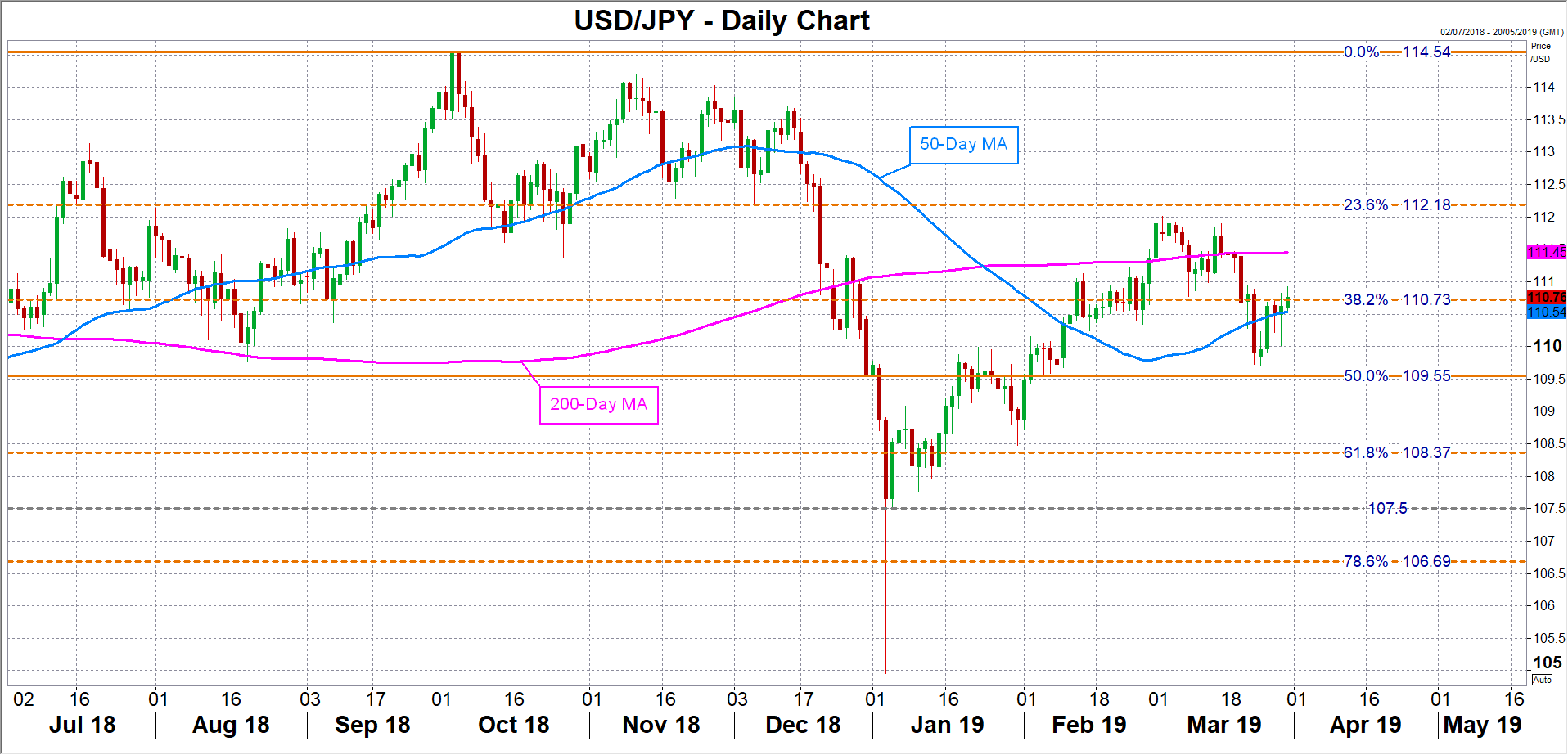
The dollar could break above immediate resistance in the 110.70 region against the yen, which is the 38.2% Fibonacci retracement of the downleg from 114.54 to 104.55, if the retail sales and ISM numbers beat expectations. Higher up, the 200-day moving average (currently at 111.45) could also prove easy to overcome. However, the pair would probably struggle to break past the next hurdle at 112.18, which is the 23.6% Fibonacci level, without a more dramatic turnaround in the outlook.
To the downside, a poor set of figures could drive dollar/yen towards the 50% Fibonacci at 109.55. If broken, the sell-off could extend towards the 61.8% Fibonacci at 108.37, while further down the next support could come at 107.50.
The yield spread between 10-year and 3-month Treasury notes turned negative at the end of last week, raising fears of a deep downturn. An inversion in this particular part of the yield curve is widely seen as a reliable predictor of a recession and the dollar could see increased volatility to incoming data as long as it remains inverted.
Forex Technical Analysis: EUR/USD, USD/JPY, GBP/USD
EUR/USD
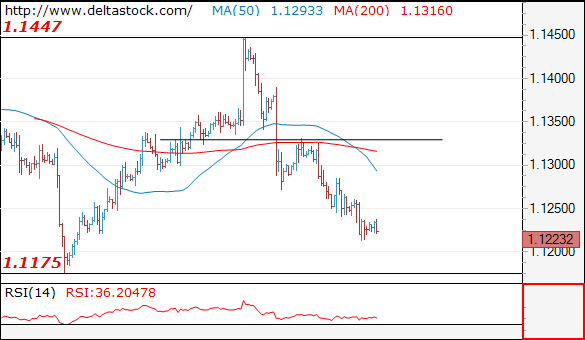
Current level - 1.1223
The downtrend is intact below 1.1240 minor resistance, but my outlook remains counter-trend, for a reversal above 1.1175 lows and rise back towards 1.1450 area. Trigger on the upside is 1.1285 high.
| Resistance | Support | ||
| intraday | intraweek | intraday | intraweek |
| 1.1240 | 1.1570 | 1.1175 | 1.1175 |
| 1.1350 | 1.1830 | 1.1175 | 1.0860 |
USD/JPY
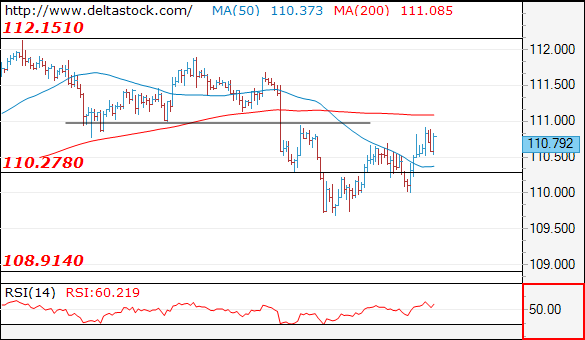
Current level - 110.79
The pair is struggling below 111.00 resistance and I favor a reversal, for a break through the crucial low at 110.00, en route to 108.90.
| Resistance | Support | ||
| intraday | intraweek | intraday | intraweek |
| 111.00 | 113.00 | 110.00 | 108.90 |
| 112.15 | 114.50 | 108.90 | 107.40 |
GBP/USD
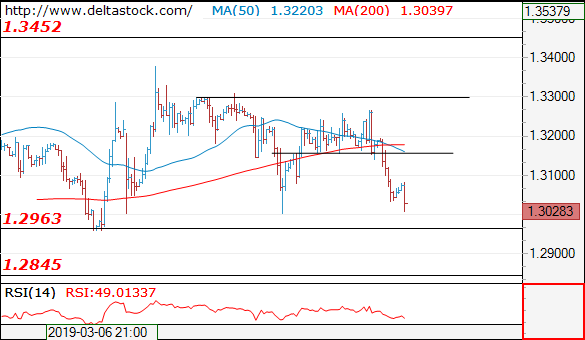
Current level - 1.3028
Yesterday's break through 1.3150 support led to a substantial slide and the pair is currently heading towards 1.2960 support area. My outlook is already counter-trend against 1.2960, for a reversal and rise back towards 1.3300. Trigger on the upside is 1.3085.
| Resistance | Support | ||
| intraday | intraweek | intraday | intraweek |
| 1.3085 | 1.3450 | 1.2960 | 1.2800 |
| 1.3150 | 1.3450 | 1.2960 | 1.2610 |
The US Dollar Index Has Updated Weekly Highs
The US dollar strengthened against a basket of major currencies despite weak economic data. Thus, GDP growth (q/q) counted to 2.2% in the 4th quarter of 2018, while experts expected 2.4%. Pending home sales index fell by 1.0%, although investors expected growth by 0.1%. Meanwhile, the number of initial jobless claims dropped to 211K instead of 220K. The dollar index (#DX) updated weekly highs and closed the trading session in the positive zone (+0.50%). The US dollar was supported by the recovery in the US government bonds yield, as well as the "soft" rhetoric of the Central Banks.
The British pound is still under pressure due to the uncertainty concerning Brexit. The British Parliament has not approved any of the bills, alternative to the draft agreement on Brexit, offered by Theresa May. The Prime Minister still hopes that parliamentarians will vote for her option for Brexit, and even has promised to resign if this agreement is approved. Today, Brexit debate will be held in the House of Commons.
The black gold" prices have been growing again. At the moment, futures for the WTI crude oil are testing the mark of $59.65 per barrel.
Market Indicators
- Yesterday, the bullish sentiment was observed in the US stock market: #SPY (+0.38%), #DIA (+0.38%), #QQQ (+0.23%).
- The 10-year US government bonds yield is recovering. At the moment, the indicator is at the level of 2.40-2.41%.
The news feed on 29.03.2019:
- German unemployment change at 10:55 (GMT+2:00);
- UK GDP data at 11:30 (GMT+2:00);
- Consumer price index in the Eurozone at 12:00 (GMT+2:00);
- Canada GDP at 14:30 (GMT+2:00);
- New home sales in the US at 16:00 (GMT+2:00).
EUR/USD – Euro Steadies, Key U.S. Consumer Data Next
After three losing sessions, EUR/USD has steadied on Friday. Currently, the pair is trading at 1.1225, up 0.01% on the day. On the release front, it’s a busy day on both sides of the pond. In Germany, retail sales slowed to 0.9%, but beat the estimate of -1.0%. Unemployment claims fell by 7,000, shy of the estimate of 10,000. The unemployment rate for March dipped to 4.9% from 5.0%, the lowest level since reunification in 1990. In the U.S., consumer data will be in focus, with the release of Core PCE Price Index, Personal Spending and UoM Consumer Sentiment.
Investors are keeping a close eye on the ebb and flow of the U.S.-China trade talks, which continues to affect the movement of currency markets. The negotiations between the sides continues and there have been reports of progress. However, optimism waned on Thursday, after a senior U.S. official said that it could be months before a deal is reached. These remarks have raised risk aversion and boosted the dollar.
Global trade tensions have weighed on inflation levels in the developed economies, and the U.S. is no exception. However, with the Fed saying it will put a hold on rates until 2020, could that change? At the Fed policy meeting, policymakers lowered their inflation forecast for 2020, citing weakness in the Chinese and European economies. However, the chief economist of Credit Suisse, James Sweeney, has taken a different tack, saying that U.S. inflation could climb as high as 2.3% next year, in response to the lack of rate hikes. Sweeney said that although inflation remains below the Fed target of 2.0%, there are signs in the services sector of inflation picking up.
EUR/USD Depreciates To 61.80% Fibo
During Thursday's trading session, the currency exchange rate passed through the support levels of the monthly and the weekly S1 to end the trading session at 1.1220. On Friday morning, the rate was located at the 1.1228 mark.
In regards to the near-term future, most likely, the resistance level of the weekly S1 at the 1.1234 mark will retrace the rate to push it to depreciate towards the 61.80% Fibonacci retracement level at the 1.1203 mark.
Moreover, the 55-hour simple moving average will catch up the rate to give additional resistance to the currency exchange rate at the 1.1235 mark.
