Sample Category Title
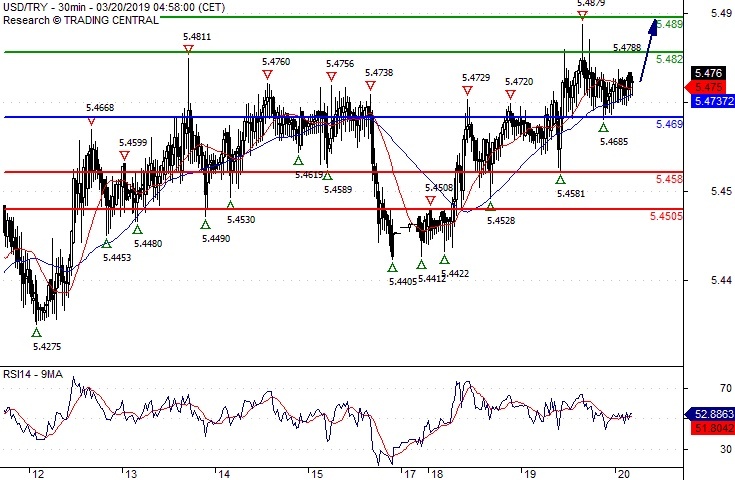
USD/TRY Further Upside
Pivot (invalidation): 5.4690
Our preference Long positions above 5.4690 with targets at 5.4820 & 5.4890 in extension.
Alternative scenario Below 5.4690 look for further downside with 5.4580 & 5.4505 as targets.
Comment Technically the RSI is above its neutrality area at 50.
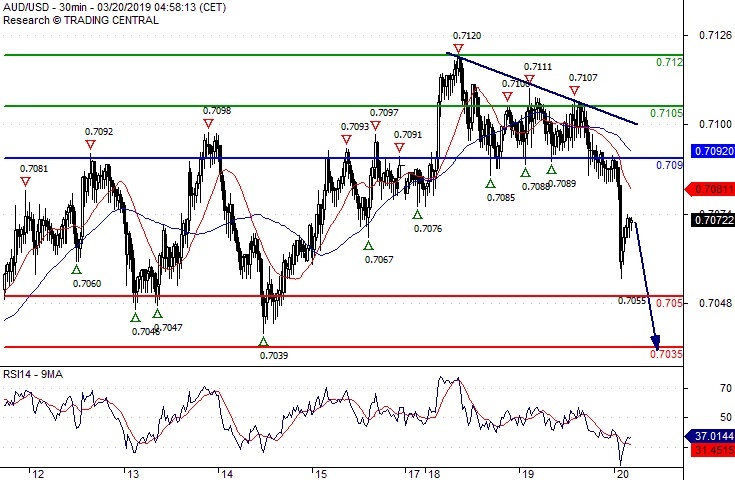
AUD/USD Under Pressure
Pivot (invalidation): 0.7090
Our preference Short positions below 0.7090 with targets at 0.7050 & 0.7035 in extension.
Alternative scenario Above 0.7090 look for further upside with 0.7105 & 0.7120 as targets.
Comment As Long as the resistance at 0.7090 is not surpassed, the risk of the break below 0.7050 remains high.
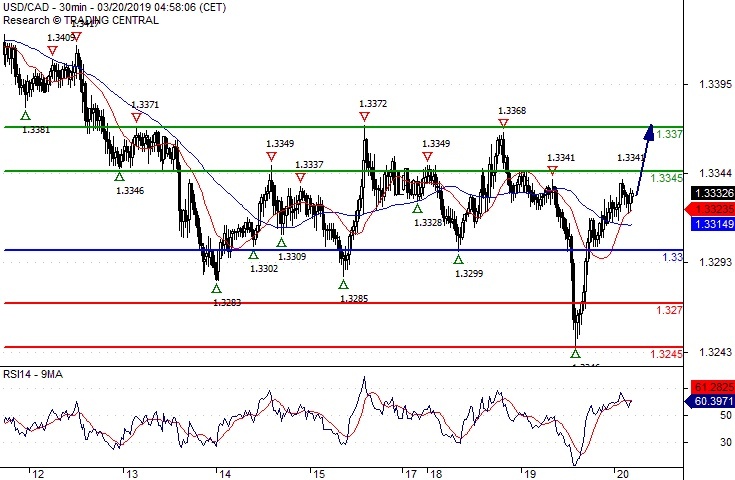
USD/CAD Look For 1.3370
Pivot (invalidation): 1.3300
Our preference Long positions above 1.3300 with targets at 1.3345 & 1.3370 in extension.
Alternative scenario Below 1.3300 look for further downside with 1.3270 & 1.3245 as targets.
Comment The RSI is bullish and calls for further upside.
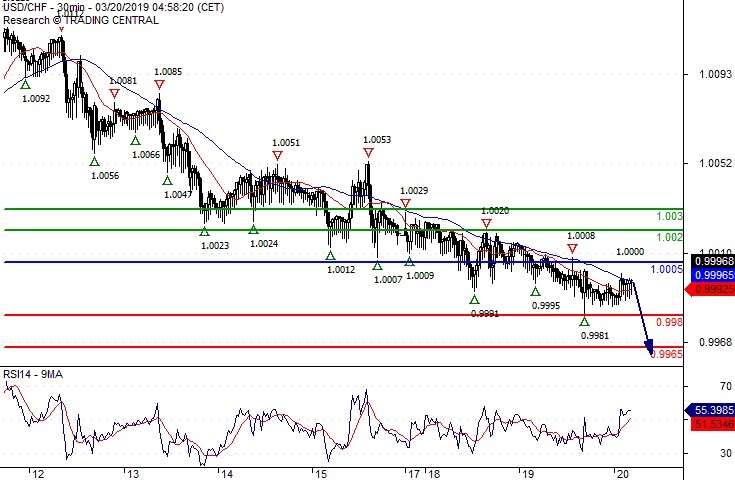
USD/CHF Key Resistance At 1.0005
Pivot (invalidation): 1.0005
Our preference Short positions below 1.0005 with targets at 0.9980 & 0.9965 in extension.
Alternative scenario Above 1.0005 look for further upside with 1.0020 & 1.0030 as targets.
Comment The upward potential is likely to be limited by the resistance at 1.0005
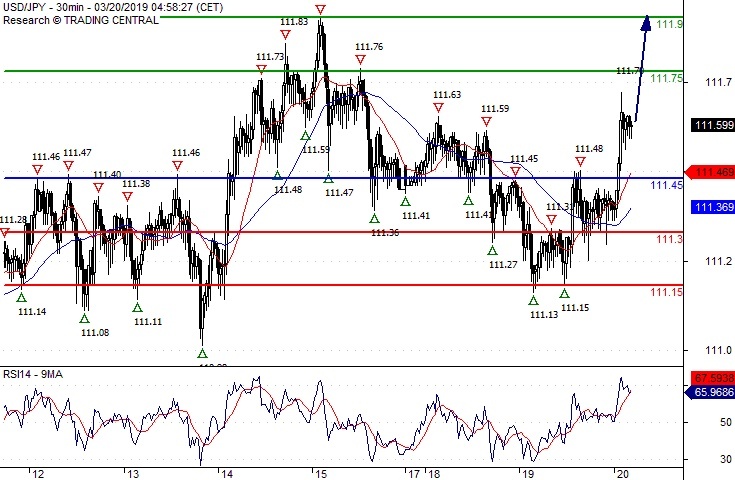
USD/JPY Target 111.90
Pivot (invalidation): 111.45
Our preference Long positions above 111.45 with targets at 111.75 & 111.90 in extension.
Alternative scenario Below 111.45 look for further downside with 111.30 & 111.15 as targets.
Comment The RSI is bullish and calls for further advance.
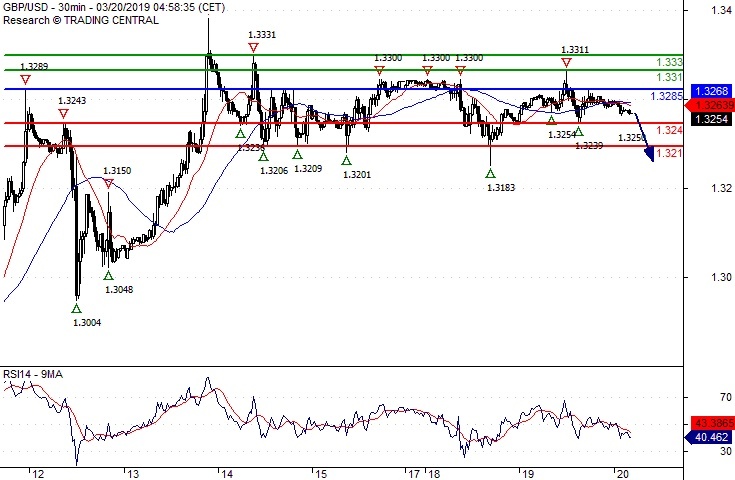
GBP/USD 1.3210 Expected
Pivot (invalidation): 1.3285
Our preference Short positions below 1.3285 with targets at 1.3240 & 1.3210 in extension.
Alternative scenario Above 1.3285 look for further upside with 1.3310 & 1.3330 as targets.
Comment A break below 1.3240 would trigger a drop towards 1.3210.
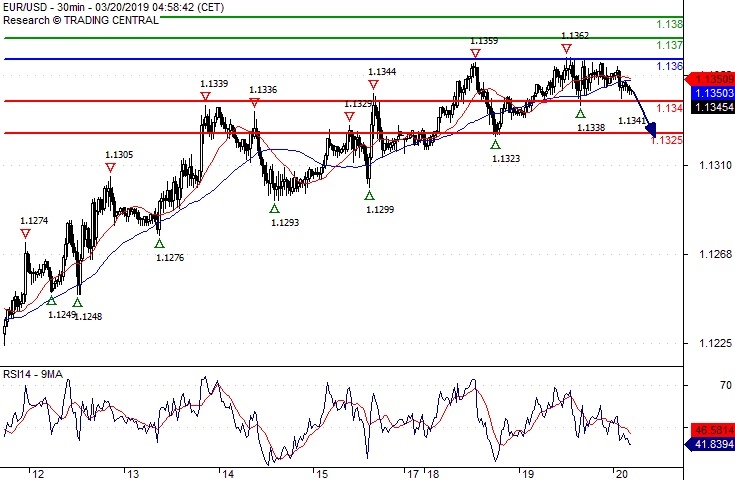
EUR/USD Turning Down
Pivot (invalidation): 1.1360
Our preference Short positions below 1.1360 with targets at 1.1340 & 1.1325 in extension.
Alternative scenario Above 1.1360 look for further upside with 1.1370 & 1.1380 as targets.
Comment The RSI shows downside momentum.
Attention Shifts To The Fed As Brexit Strolls Into Final Week
UK casually strolling into final days without a deal
There’s less than 10 days to go until the UK is meant to leave the European Union and despite the growing worry around Westminster, within there seems to be a severe lack of urgency. Not only has another vote on May’s deal this week been effectively blocked but the PM is now carefully crafting the extension request letter, which is expected to be sent today.
To be honest, it may have been wishful thinking to expect the UK to have backed the terms agreed with the EU ahead of the European Council meeting on Thursday and Friday and avoid the drama and hysteria that next week will now likely bring. These things are always concluded at a minute to midnight so the reality was always likely to be that this meeting would be the point at which the final terms on offer, including those of an extension, would be presented. It’s then over to the UK next week to either accept or reject them. Is there time for one more twist?
Are there any surprises left for the Fed?
The Federal Reserve gathers for the second day of its two day meeting on Wednesday, after which we’ll get the usual press conference with Chairman Jerome Powell and a fresh batch of economic projections. The question is whether any of this will change the outlook or move the markets in any significant way, I’m not convinced.
There’s been a major shift both in market expectations for a rate hike this year and the guidance from the central bank. With markets now expecting no hike this year and an increasing possibility of a cut as the year progresses and we head into 2020, how much more dovish can the language get? In fact, I think the risk here is that the central bank is actually more hawkish than the market is positioned for, whether investors pay any attention to this is another thing, they have had a tendency in the past to ignore hawkish warnings when the consensus outlook is more dovish.
Gold failing to fully capitalise on USD weakness
The question then becomes, what impact will all of this have on the dollar? It’s been a tough 12 days for the greenback but overall, the forecasts of a tough year for the currency haven’t yet materialised. It’s had periods of weakness but has repeatedly returned back to the highs it reached back in November. With the dollar being bought at higher levels on each decline, there is an argument for another bullish run in the dollar and that bad year never actually materialising.
This obviously wouldn’t help gold much, which has very much benefited as the dollar has stalled. It hasn’t looked quite so healthy recently though despite making small gains on the back of the weaker dollar. Dovish central banks continue to build a bullish case for gold but unless we’re about to embark on a series of rate cuts and QE, how much more can be priced in? In the near-term, at least, gold is looking vulnerable and the marginal gains on the back of more substantial dollar declines only supports this view.
Oil prices continues to amble higher
Nothing much has changed when it comes to oil for a while now. Yes, there’s been murmurings that OPEC+ could extend the cut until the end of the year and US output has stabilised, but as far as prices are concerned, we’re continuing to see very marginal gains that suggest traders are not getting too excited about these developments.
Another inventory drop last week, reported by API on Tuesday – the third in four weeks – has done little to stimulate further buying. EIA is expected to report similar findings today but there’s little reason to believe the response will be any different. It seems we need much more evidence of output cuts working, US output slowing and the global economic risks subsiding before traders are truly going to get on board. Still, more than 35% gains from the lows late last year aren’t a bad start, I guess.
US Stocks Falls As Trader Jitters Reappear
US stocks pared the earlier gains yesterday after trader worries reappeared. This is after a report noted that there were unfinished issues in the trade talks. A source said that China is not likely to comply with a number of the points discussed in the talks. As a result, US officials, including Robert Lighthizer and Steve Mnucchin, will travel to China in a bid to hammer a final deal. These officials have been in contact with China’s Liu He through video communications but the remaining details require face-to-face negotiations. After gaining by triple digits, the Dow ended the day 27 points lower. The Australian and New Zealand dollar declined as well.
The dollar index continued to decline ahead of the Federal Reserve interest rates decision. The FOMC will release the decision and hold a press conference later today. The indications are that the committee will leave interest rates unchanged. Other than that, traders will want to know the Fed’s view on the US economy, the progress on the balance sheet reduction and the outlook for rate hikes this year. This decision comes at a time when a few prominent analysts believe that the Fed will be forced to cut rates this year.
The sterling was little moved in today’s trading as the March 29 deadline neared. In recent weeks, the parliament has been deadlocked after failing to find a way forward. The members have rejected Theresa May’s deal because they believe it gives national sovereignty to the European Union. It has also voted to extend the exit period if a deal is not made. Yesterday, the European Union hardened its stand on whether the country will get an extension. Chief negotiator, Michael Barnier said that there was no need to extend the deal because the MPs will still vote against her deal. France too has expressed doubts about an extension. The country is worried that an extension will lead to extended uncertainty in the European Union. Yesterday, Theresa May wanted to write a letter to Donald Tusk requesting an extension but she was held up by a fierce row in cabinet and Downing Street about the wording.
EUR/USD
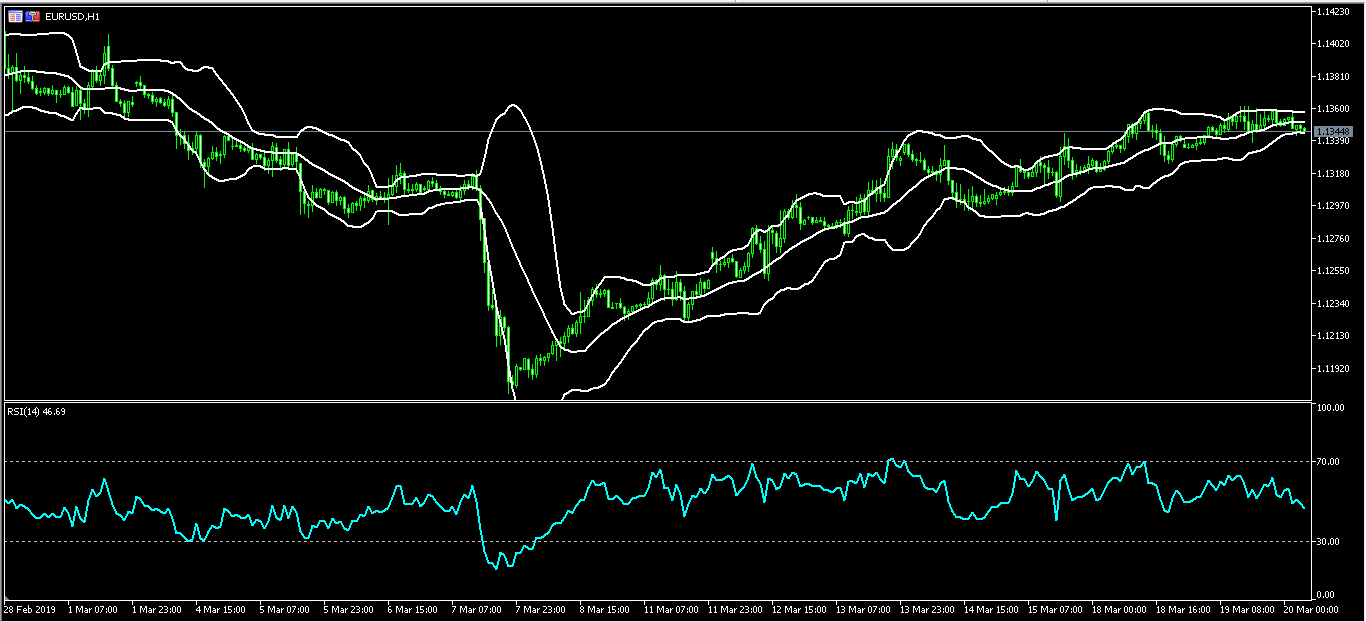
The EUR/USD was relatively unmoved as traders look forward to the Federal Reserve. The pair is now trading at 1.1345, which is slightly below the day’s high of 1.1360. On the hourly chart, the Bollinger Bands indicator has consolidated along the price as the RSI drops. At this point, there is a likelihood that the price will breakout in either direction after the Fed delivers its decision.
AUD/USD
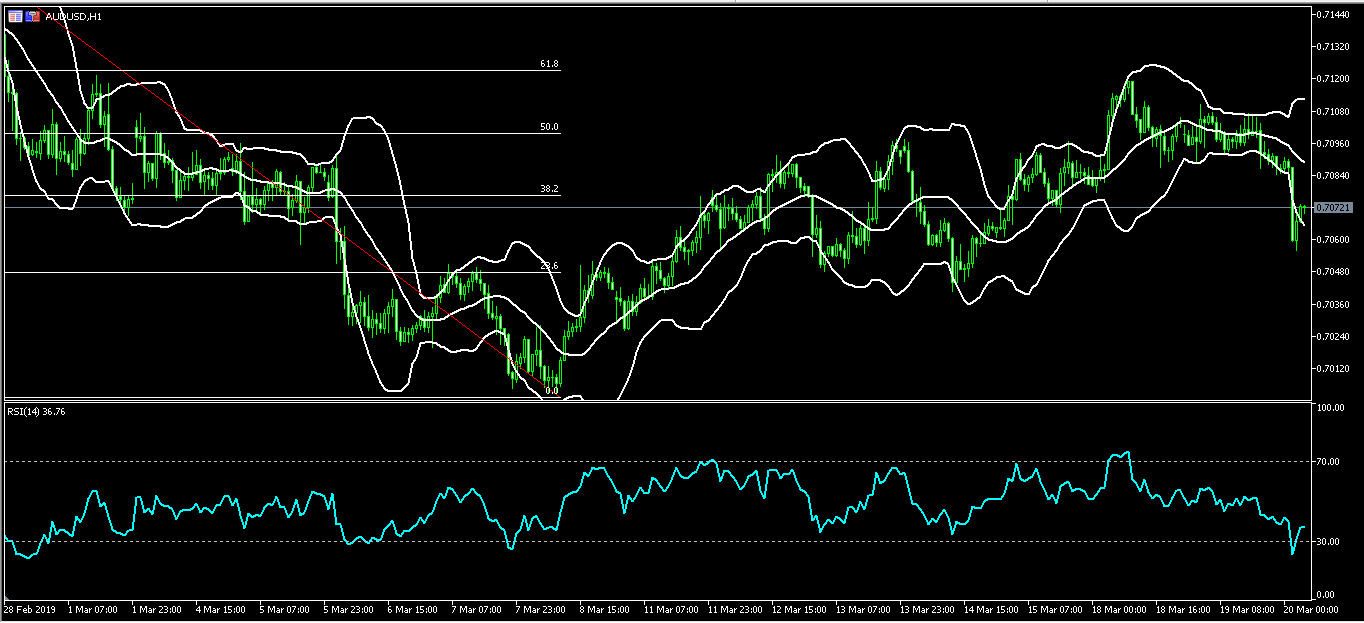
The Australian dollar dropped sharply after trade jitters re-appeared. The Australian dollar is exposed to China’s performance as it accounts for two-thirds of all its trade. The pair reached a low of 0.7056. In the Asian session, it pared some of those losses and is currently trading at 0.7070. On the hourly chart, this price is slightly below the 38.2% Fibonacci Retracement level and slightly above the lower line of the Bollinger Bands. The RSI has emerged from the oversold level and is currently at 36. The pair will likely recover as China and the US defend the deal they are negotiating.
NZD/USD
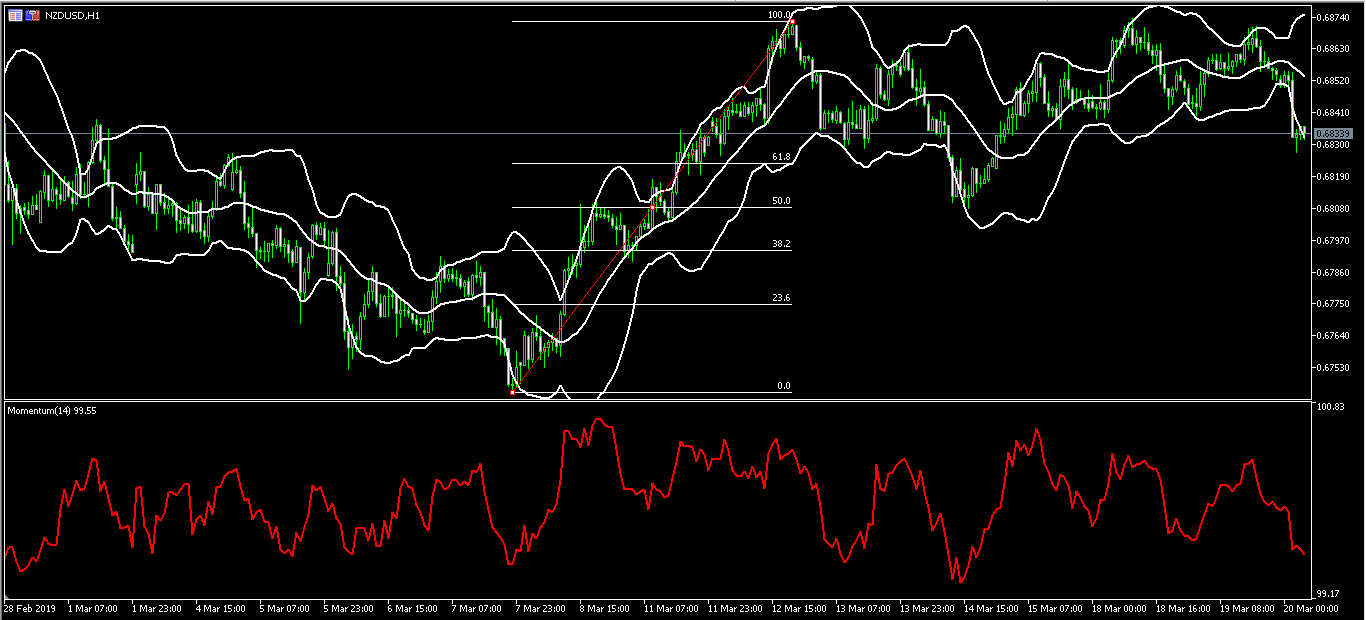
The NZD/USD pair declined after the news on US-China talks. The pair reached a low of 0.6827, which was the lowest level since March 15. On the hourly chart, this price was along the 61.8% Fibonacci Retracement level. The current price is along the lower band of the Bollinger Bands while the momentum indicator has fallen sharply. Like with the Aussie, the pair will likely recover today but this could change due to the Fed decision.
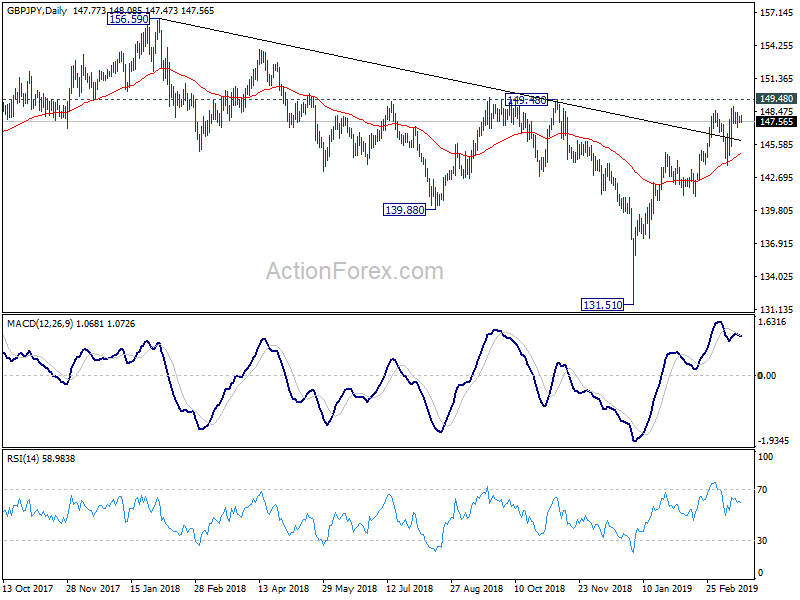
GBP/JPY Daily Outlook
Daily Pivots: (S1) 147.01; (P) 147.70; (R1) 148.39; More...
GBP/JPY is staying in tight range below 148.87 and intraday bias remains neutral for more consolidation. On the upside, decisive break of 149.48 key resistance will carry larger bullish implication and target 156.58 resistance next. On the downside, though, break of 143.72 support will indicate near term reversal and turn outlook bearish for 141.00 support.
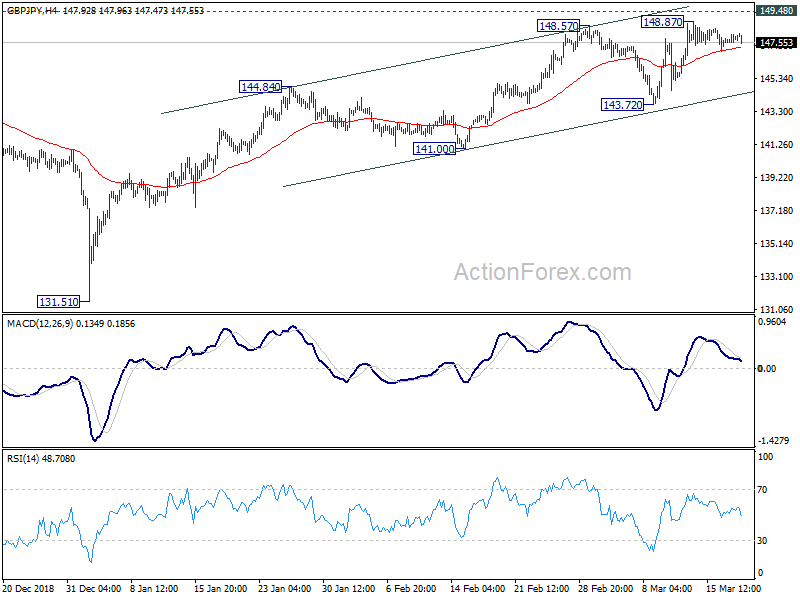
In the bigger picture, the strong rebound from 131.51 suggests that medium term fall from 156.59 (2018 high) has completed already. The corrective structure of such decline in turn argues that it's the second leg of the corrective pattern from 122.36 (2016 low). And this pattern is starting the third leg. On the upside, decisive break of 149.48 will pave the way to 156.59 resistance and above. However, firm break of 141.00 support will dampen this view and turn focus back to 131.51 low instead.