

Sample Category Title
Forex Technical Analysis: EUR/USD, USD/JPY, GBP/USD
EUR/USD
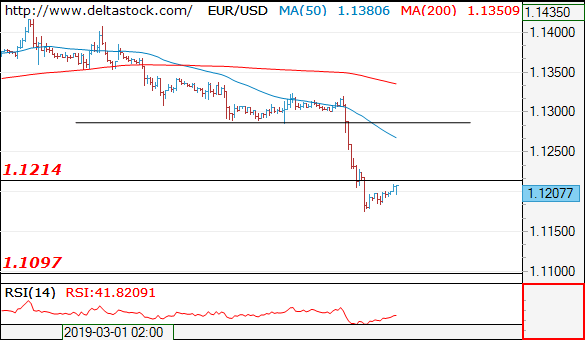
Current level - 1.1207
The sell-off after 1.1320 peak broke through 1.1280 intraday low and through November's minimum at 1.1214, which signals a trend mode and my outlook is bearish, for 1.1100, en route to 1.1010. Crucial on the upside is 1.1280.
| Resistance | Support | ||
| intraday | intraweek | intraday | intraweek |
| 1.1215 | 1.1350 | 1.1100 | 1.1100 |
| 1.1280 | 1.1420 | 1.1010 | 1.0860 |
USD/JPY
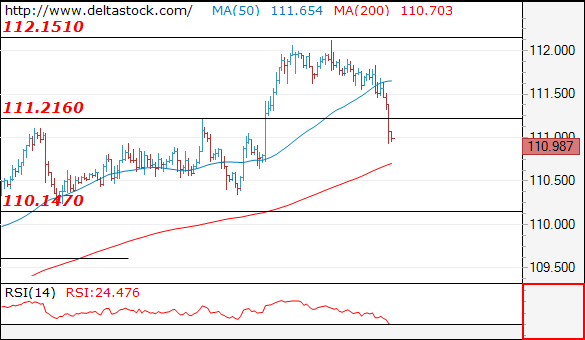
Current level - 110.98
The test at 111.20 was successful and the outlook is negative, for a slide towards 110.10. Initial resistance lies at 111.20-30.
| Resistance | Support | ||
| intraday | intraweek | intraday | intraweek |
| 111.20 | 113.00 | 110.10 | 110.20 |
| 112.15 | 114.50 | 109.60 | 108.50 |
GBP/USD
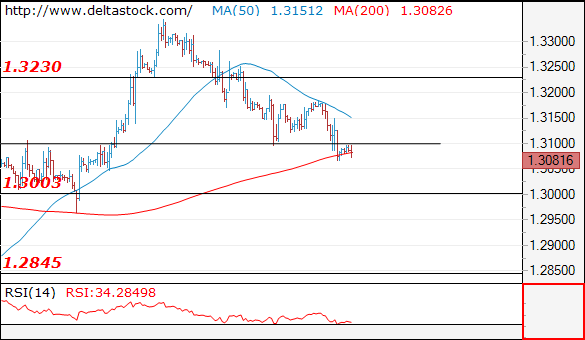
Current level - 1.3081
The consolidation pattern above 1.3100 has been finalized at 1.3185 and the bias is bearish, for a test of 1.3000, en route to 1.2845.
| Resistance | Support | ||
| intraday | intraweek | intraday | intraweek |
| 1.3100 | 1.3290 | 1.3000 | 1.2800 |
| 1.3185 | 1.3450 | 1.2845 | 1.2610 |
USDCAD Marks Another Weekly Bullish Spin, Rally Looks Overstretched
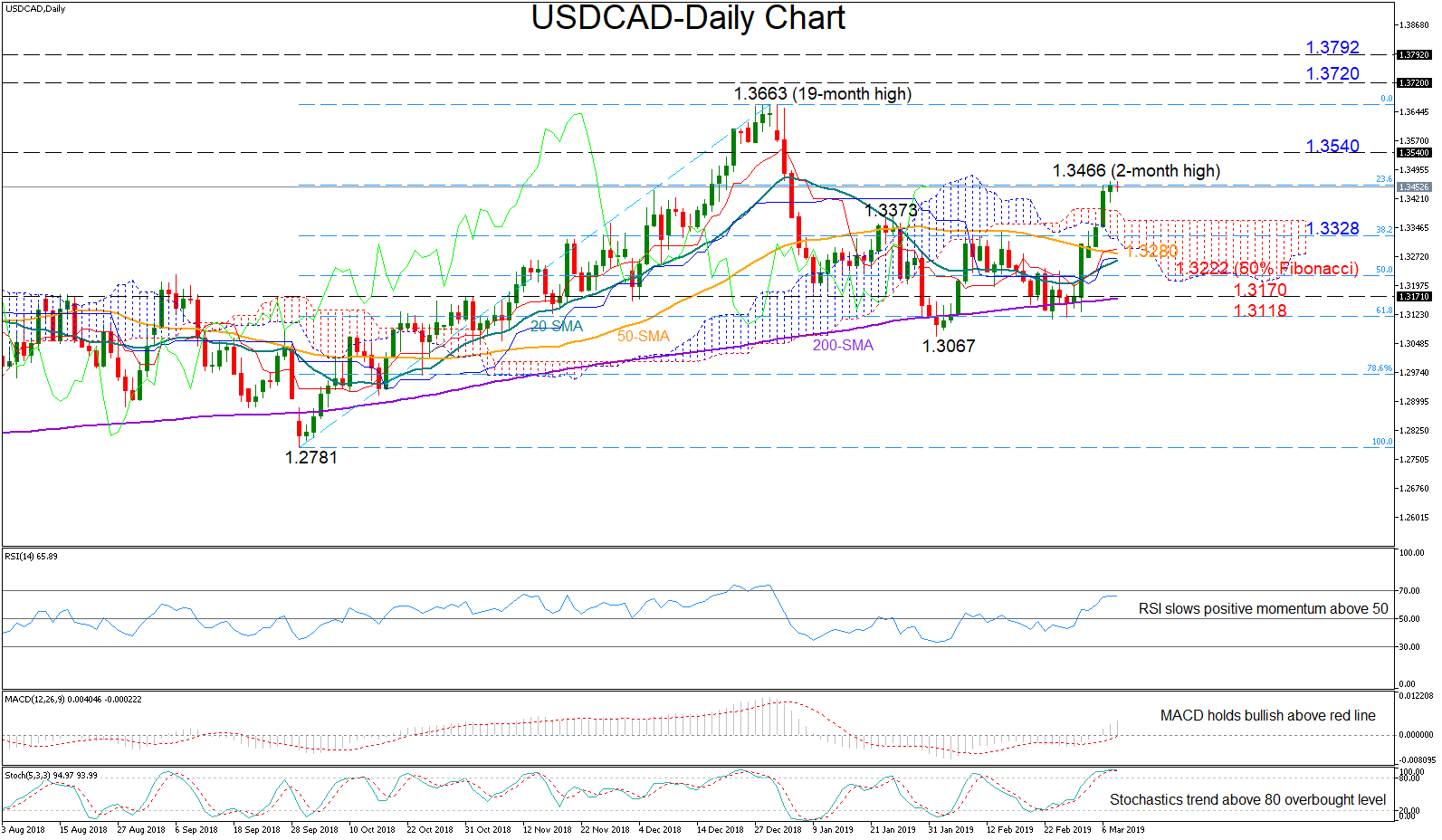
USDCAD repeated last week’s impressive performance and is set to close strongly green for the second consecutive week near two-month highs.
The pair has also crawled above the Ichimoku indicators and its moving averages, giving positive trend signals, while according to the MACD oscillator bullish momentum is likely to continue in the short-term as the indicator is far above its red trigger line. The fast-stochastics, though warn over an overbought market as the green %K line and the red %D line are ready for a bearish cross above 80, a sign that downside corrections may emerge in the very short-term. The slowing RSI is adding to the cautionary note.
Should negative pressure resume, immediate support could be found within the 1.3373-1.3328 area identified by the January 24 peak and the 38.2% Fibonacci of the upleg from 1.2781 to 1.3663. Moving lower, the 50% Fibonacci of 1.3222 could come into view once the pair overcomes the 50-day MA (1.3280) which has been somewhat restrictive in the previous month. Another key barrier is likely to appear within the 1.3170 and 1.3118 walls, with the 200-day MA also positioned close to the lower band of this range at the moment.
Alternatively, an extension higher could retest the 1.3540 previous resistance level before the spotlight turns to the 1.36 zone and more importantly to the 19-month high of 1.3663. A decisive run above this peak could lead to a stronger battle between 1.3720 and 1.3792, where the previous high of the November downfall is placed. The neutral medium-term picture would also switch to bullish in this case.
Summarizing, the immediate risk is tilted to the downside, with the short-term bias remaining positive. In the medium-term, the outlook holds neutral.
EURUSD Eases Marginally Higher After Dive Towards 21-Month Low
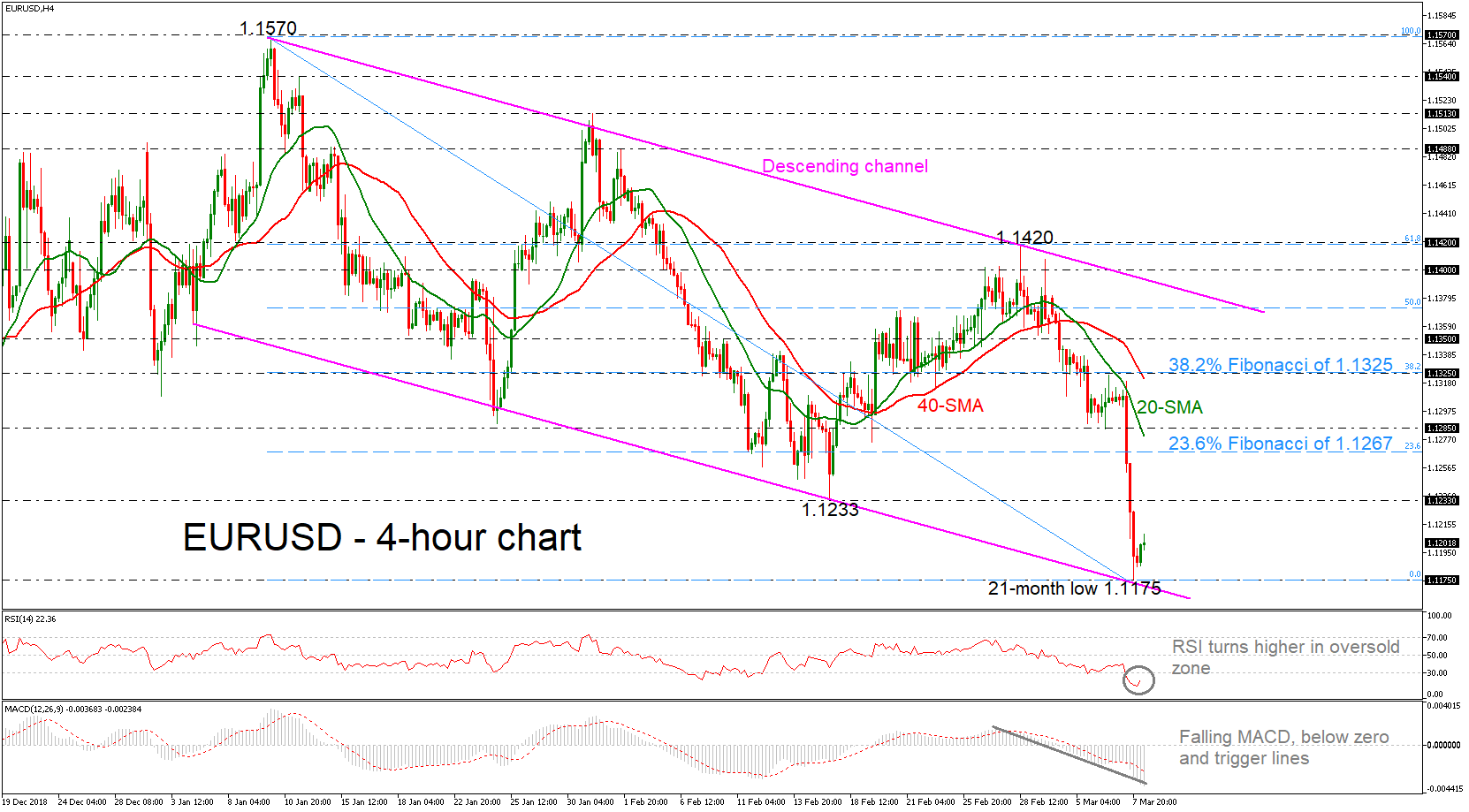
EURUSD created a strong downfall rally on Thursday, sending the price towards a fresh 21-month low beneath the 1.1200 handle, around 1.1175. The pair penetrated the medium-term sideways channel to the downside, completing a new descending channel in the short-term. The pair has not seen a positive day since February 26.
Technically, the RSI indicator is turning slightly to the upside after the decline in the oversold zone, suggesting a possible retracement in the price action, while the MACD oscillator is strengthening its bearish structure below the trigger line in the negative territory.
Should bearish dynamics dominate, and the market drop below the 1.1175 support and the lower band of the channel, the next move could be towards the 1.1115 barrier, registered on June 2017. More downside pressures could open the door for the 1.0830 level, taken from the low on May 2017.
Alternatively, if the price continues the rebound on the 21-month low, immediate resistance is coming from 1.1233, the previous bottom. Further up, the price could rest around the 23.6% Fibonacci retracement level of the downleg from 1.1570 to 1.1175, around 1.1267, while a violation of this point could drive the market until 1.1285, which stands near the 20-day simple moving average (SMA).
In the bigger view, EURUSD has declined considerably shifting the outlook from neutral to significantly bearish as it posted a new lower low.
Draghi Torpedoes Euro, US Payrolls Coming Up
- US nonfarm payrolls report dominates the agenda today
- ECB pushes back rate hike timing, announces new loans; euro crumbles
- Stocks continue to retreat, yen advances as risk appetite deteriorates

Nonfarm payrolls in the limelight
The spotlight will be on the US employment report for February today. Forecasts are quite optimistic across the board. Nonfarm payrolls (NFP) are expected to have risen by 180k, less than January’s astonishing 304k but still a strong number overall, the unemployment rate is anticipated to tick down to 3.9%, and earnings are projected to have accelerated further, to 3.3% in yearly terms.
Markets will likely focus mainly on earnings, as the Fed has stressed it wants to see a vigorous pickup in inflation before considering further hikes. On that front, it’s striking that market pricing has once again tilted towards Fed rate cuts this year, even without any negative US news. Hence, today’s data may prove pivotal, as a strong report could extinguish easing speculation and thus boost the dollar further, whereas a disappointment may see rate-cut expectations grow, triggering a correction lower. As for which is more likely, although labor market gauges were inconclusive, do note that given just how optimistic the forecasts already are, it would take a truly spectacular set of data to trigger further gains in the dollar.
Euro collapses as Draghi pulls another rabbit out of the hat
The ECB meeting was not short of fireworks, with policymakers delivering easing measures over and above what markets anticipated. Firstly, the Bank slashed its economic forecasts dramatically, and for a second time in less than three months. In terms of easing measures, Draghi not only announced a new round of cheap loans for commercial banks, but also pushed back the timing of the first rate hike. Rates will now stay unchanged ‘at least’ until the end of 2019, from ‘at least through the summer’ previously. In fact, Draghi said they even debated pushing this further back, to March next year. Euro/dollar plunged by more than one big figure, touching lows last seen in mid-2017.
Where does this leave the euro? Admittedly, things aren’t looking bright, as the ECB’s dovish tilt opens the door for more near-term downside, and suggests that any meaningful rebound will probably take much longer to materialize. That said, any massive weakness from current levels – for example euro/dollar below 1.10 – seems unlikely too. The ECB was already as dovish as it could possibly be at this stage, and in truth, there isn’t much left in the rates market to price out. Put differently, most of the ‘bad news’ may be baked into the battered euro already.
Equity correction deepens, yen shines as Draghi frightens markets
The picture wasn’t pretty in the broader market either, with US stock indices falling notably. Ominously, the benchmark S&P 500 (-0.81%) crossed back below its 200-day moving average and is expected to open lower today as well, according to futures. Meanwhile, Asian markets were a sea of red today, with Japan’s Nikkei 225 (-2.01%) and China’s Shanghai Composite (-4.40%) nosediving. Accordingly, the star performer in the FX market today is the defensive Japanese yen.
All this, without any clear catalyst other than Draghi’s pessimistic take on the euro area economy, which was seemingly a ‘reality check’ for investors, triggering a rethink of the entire outlook for global growth.
Canadian employment data also due, Brexit always in focus
Besides the US jobs data, Canadian employment figures will also hit the markets today.
In the UK, any Brexit headlines may attract attention ahead of the crucial votes in Parliament next week. The pound dropped yesterday, partly in sympathy to the euro and partly due to reports that after all these negotiations, the EU will only offer the UK non-legally binding compromises on the Irish backstop, which likely won’t be enough to satisfy UK lawmakers.

Asian Stocks Decline After Chinese Exports Fall
The euro remained lower in overnight trading after the ECB monetary policy decision. Yesterday, the bank released its decision, which was aimed at boosting the European economy. In the statement, the bank extended the period at which it will likely raise interest rates from the previously-guided ‘through summer’ to after December. In addition, the bank announced a fresh round of cheap loans to European banks, which will help stimulate growth through lending. At the core of this decision was the need for a weaker euro, which will help improve the export sector, which is a major supporter of the European economy. A weaker currency helps export-based countries by making their goods cheaper.
US stocks ended the day lower, extending a losing streak that started this week. The Dow, S&P and Nasdaq lost 78, 81 and 113 basis points respectively. The main reason for the declining stocks is fear on global growth. With a trade deal between China and US already priced-in, investors are worried about what will stimulate growth next. In response to the bearish US stock market, Asian stocks declined after a report that Chinese exports had declined in February. Exports declined by 20.7% in the month, which was a sharper decline than the 4.8% decline that investors were expecting. On a month-over-month basis, exports declined by 5.2% and the trade surplus reduced to $4.2 billion from the previous month’s $39 billion.
The Japanese yen gained against the USD after the release of important GDP numbers from the country. In the fourth quarter, the economy expanded by an annualized rate of 1.9%, which was better than the expected 1.8%. on a monthly basis, the economy expanded by 0.5%, higher than the expected 0.4%. The economic growth was boosted by the increase in consumer spending but offset by the low capital expenditure, which rose by 2.7%.
The dollar index moved slightly higher ahead of official US jobs numbers, which are expected today. The numbers are expected to show that the economy created more than 180K jobs in February while the unemployment rate is expected to fall to 3.9%. Wages are expected to grow by 3.3%. These numbers come a day after numbers from Challenger showed that layoffs had increased in February. The ADP numbers released on Wednesday showed that the economy created 183K jobs in the month.
EUR/USD
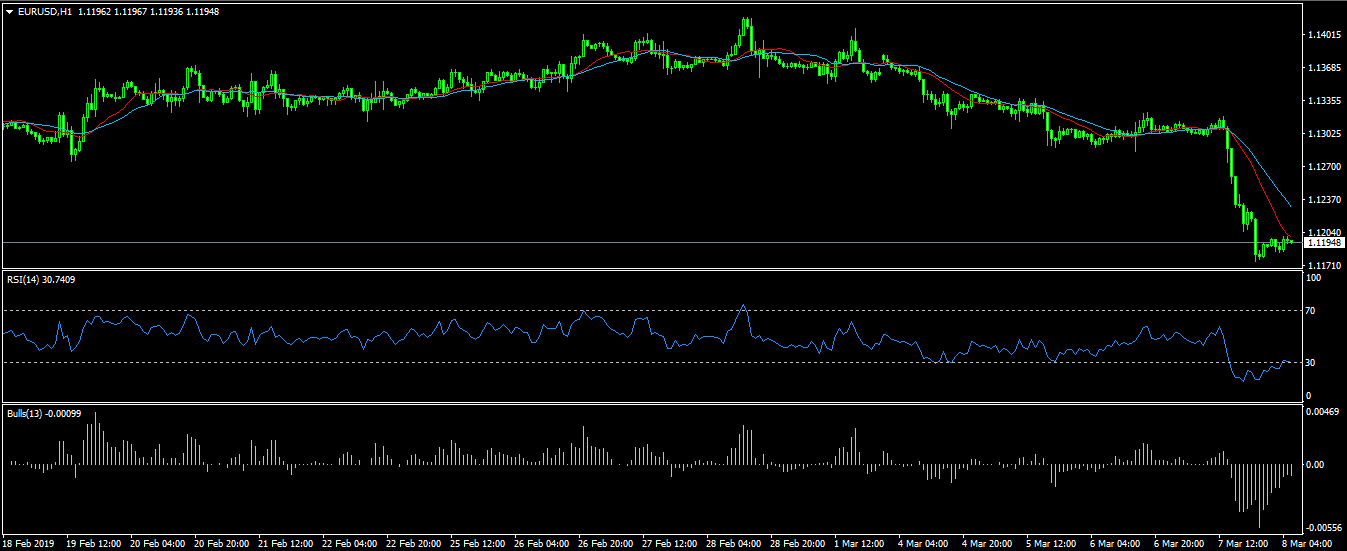
Yesterday, the EURUSD pair declined sharply from a high of 1.1320 to a low of 1.1175. This was the lowest level since July 2017. On the hourly chart, the pair is below all the short and medium-term moving averages. The RSI has remained in the oversold zone while the Bull’s Power has eased. The pair will likely see some gains today although the trend will likely remain bearish. This could change depending on the US jobs numbers expected later today.
USD/JPY
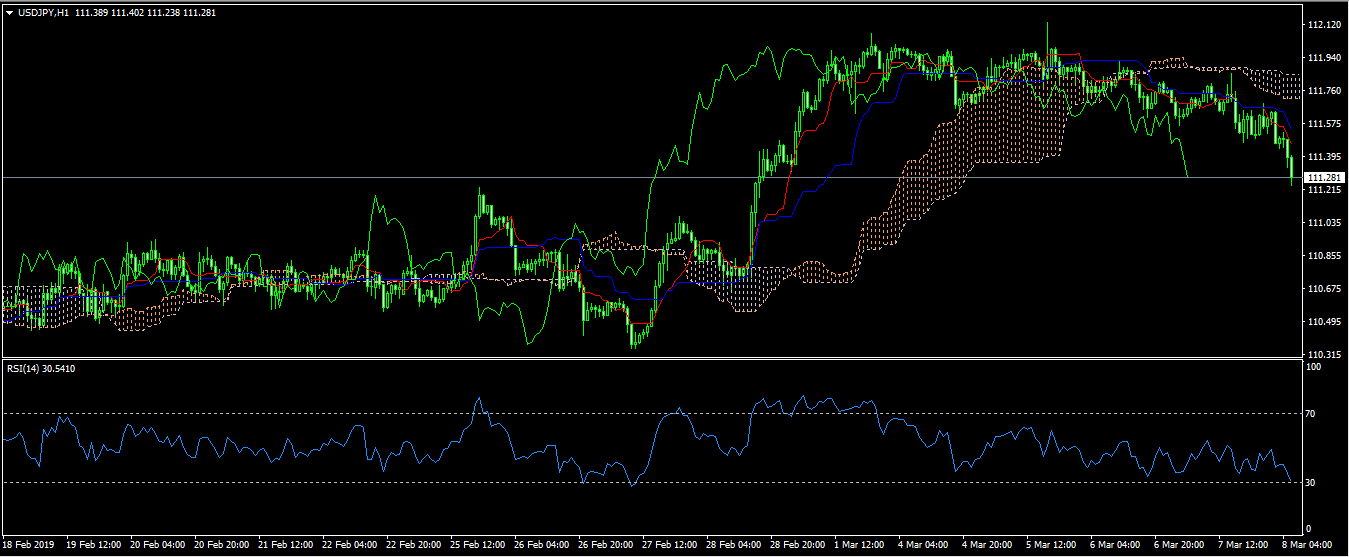
The USDJPY pair declined in overnight trading after the release of better economic growth numbers. The pair reached an intraday low of 111.23, which was the lowest level since last week. On the hourly-chart, the pair has been declining since peaking on Monday when it reached a high of 112.13. This price is below the 21-day and 42-day moving averages while the Ichimonku Kinko Hyo shows that the pair could continue to decline. This is supported by the Relative Strength Index, which too has been declining.
USD/CAD
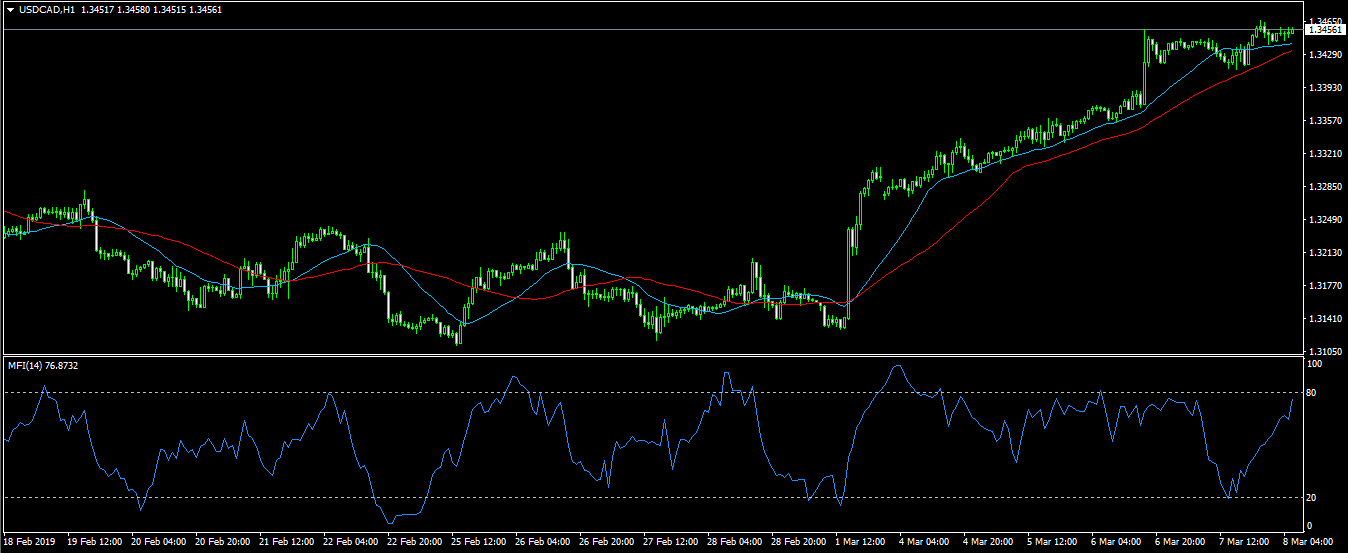
The USDCAD pair resumed the upward trend and reached a high of 1.3456. This was close to the highest level this year. Traders are looking ahead to US and Canadian jobs numbers expected later today. On the hourly chart, the pair was above the 21-day and 42-day moving averages. The money flow index, which is a volume-based RSI rose close to the overbought level of 80. While it could gain, the pair could reverse after the jobs numbers.
German Factory Frustrate Investors, All Eyes On US NFP
European markets are trading lower after the disappointing German factory data and this is also impacting the US futures. The German economic data was rotten and it has left a bitter taste in investors' mouth. Germany is the economic engine of the Eurozone and it is known for its strong export and manufacturing. The German Jan factory order data came in at -2.6 percent by missing the forecast of 0.5 percent. This really shows why the ECB made such a dovish decision by introducing the TLTROs, and at the same time, it cut the growth and inflation forecast.
Questions were being raised yesterday if the European Central Bank has made the right decision because the bank has seriously run of options in order to shore up the growth in the Eurozone. Since the advent of the quantitative easing program, four years ago, it was the most aggressive cut in the growth forecast by the ECB. Today's German factory number has put things in perspective and it explains why such a decision was essential.
Of course, the ECB wants to stay ahead of the curve and the bank doesn't want to face the same scenario as the Fed. The Federal Reserve's hawkish monetary stance scared the investors; the concerns were that the Fed's monetary policy created the economic slowdown. Mario Draghi, the president of the European Central Bank, decided to move ahead of the curve and paid closer attention to the economic data. The bank's decision was primarily based on the economic numbers which confirmed weakness in the euro zone's growth.
Having said this, one can only hope that the change in the ECB's stance may provide the kind of aid which the market needed. If the situation continues to worsen, there is very little that the bank can do following this.
Over in the United States, it will be all about the US NFP data. After some strong recent set of economic readings, the US dollar index touched its strongest level since December 2018. Last week, the US GDP number also confirmed that the economic growth in the US is robust, something which is against the current Fed's view of the economy.
However, Jerome Powell, the Fed chairman, wants to practice patience when it comes to the monetary policy. A strong jobs number (due later today) could put some more pressure on the Fed with respect to their monetary policy.
XAUUSD Intraday Analysis
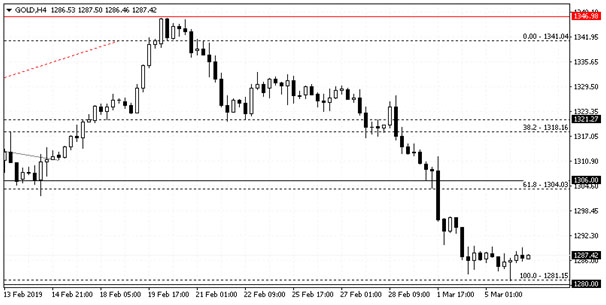
XAUUSD (1287.42): After gold prices formed a doji pattern for three consecutive sessions, price action is likely to signal a breakout from this range. The lower support at 1280 is likely to be breached to the downside. The support has been tested briefly twice and price action swiftly retraced the losses. To the upside, 1291.00 has formed as a minor resistance level. A breakout from this level to the upside will trigger a correction that could push gold prices toward 1306 level initially.
USDJPY Intraday Analysis
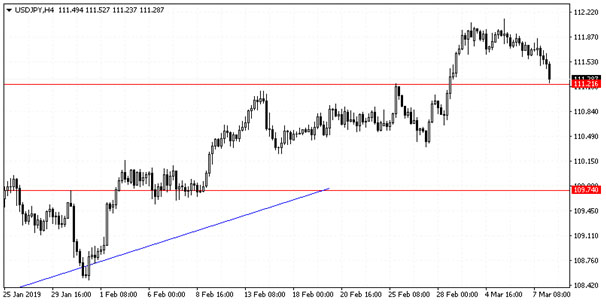
USDJPY (111.28): The USDJPY currency pair has retraced the gains after rallying to 112.04 level. The current declines has pushed the currency pair to test the previously established resistance level for support at 111.21. If this support holds, the USDJPY could be seen revering the declines and attempt to push higher. However, as long as the previous highs are not breached, the currency pair could remain range bound showing weakness to the upside.
EURUSD Intraday Analysis
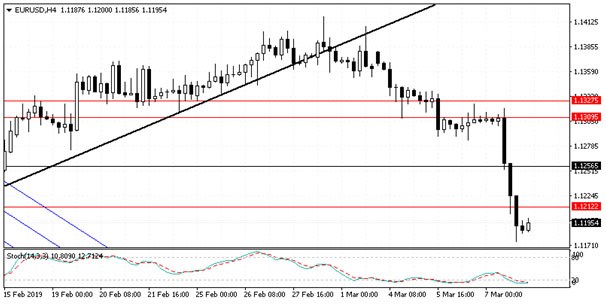
EURUSD (1.1195): The EURUSD currency pair posted strong declines on Thursday after the ECB’s meeting. Following the dovish comments from Draghi, the euro broke the support level of 1.1256 and extended declines down to 1.1200 level briefly. Price action at the moment looks bearish. If there is a bearish follow through from here on, we could expect the common currency to continue extending the declines even further below with the next support seen at 1.1150.
Traders Eye February Payrolls Report
The Euro currency fell sharply on the day following the ECB’s monetary policy meeting. The central bank announced the launch of TLTRO program starting September with two-year maturity. The central bank also gave a dovish forward guidance with lower growth forecasts.
The ECB cut Eurozone’s growth to 1.1% for 2019. This was a lower projection after December’s estimates of 1.7%. The central bank left interest rates steady.
The final employment change for the fourth quarter was seen at 0.3% for the Eurozone, with no revisions from the previous estimates. Final GDP held steady at 0.2% for the three months ending December 2018.
In the NY trading session, Canada’s building permits fell 5.5% on the month, missing estimates of a 4.8% decline and weakening from 6.4% increase previously.
U.S. productivity grew 1.9% at the end of last year, beating estimates of a 1.8% increase. Productivity was seen averaging 1.3% since 2007 until last year. Annual unit labor costs rose 2.0% in the fourth quarter.
The overnight trading session saw New Zealand’s manufacturing sales report coming out. Data showed that for the fourth quarter of 2018, manufacturing sales fell 0.5%, following a downward revised print of 1.8% for the third quarter of 2018.
Earlier today, Japan’s revised GDP reports were released. Data showed that the fourth quarter GDP rose 0.5%, slightly up from a 0.4% increase that was estimated previously. The fourth quarter GDP increased from 0.3% in the third quarter.
The European trading session will kick off with Germany’s factory orders report. Data is expected to show that factory orders rose 0.5%, after falling 1.6% the month before. Industrial production figures from France and Italy are due later in the day.
The NY trading session will see the release of Canada’s employment report. Canada is forecast to add 0.3k jobs in February while the unemployment rate is expected to remain steady at 5.8%. The U.S payrolls report is due later.
Economists expect headline payrolls to rise 181k in February, following a 304k increase in January. The U.S. unemployment rate is expected to fall to 3.9% from 4.0% previously while the average hourly earnings could rise 0.3% during the month in February.
Later in the day, building permits and housing starts data will be coming out.