Sample Category Title
It Won’t Be Easy For The Dollar To Escape Correction
The single currency lost 1.2%, responding to the softer ECB tone. Following the meeting, the regulator promised not to raise rates in 2019 and to provide another round of lending to banks at low rates, which should put pressure on interest rates in the financial system. With visible contrast with the previous intention to cut stimulus, it pushed the single currency below 1.1180 at some point fr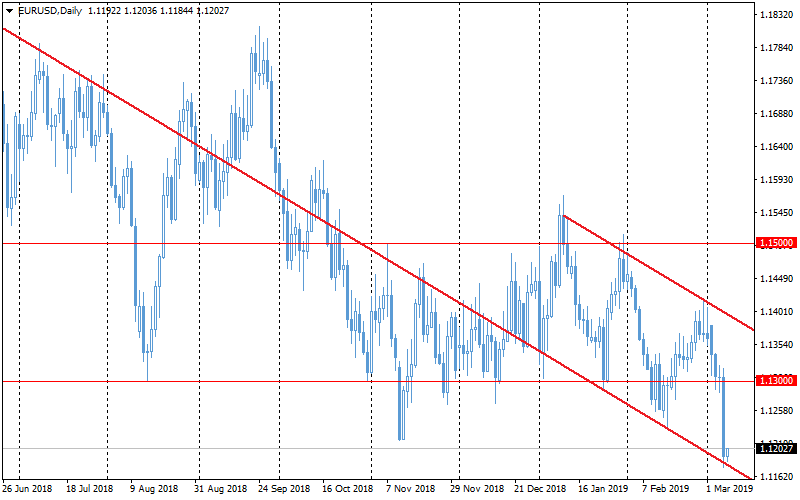
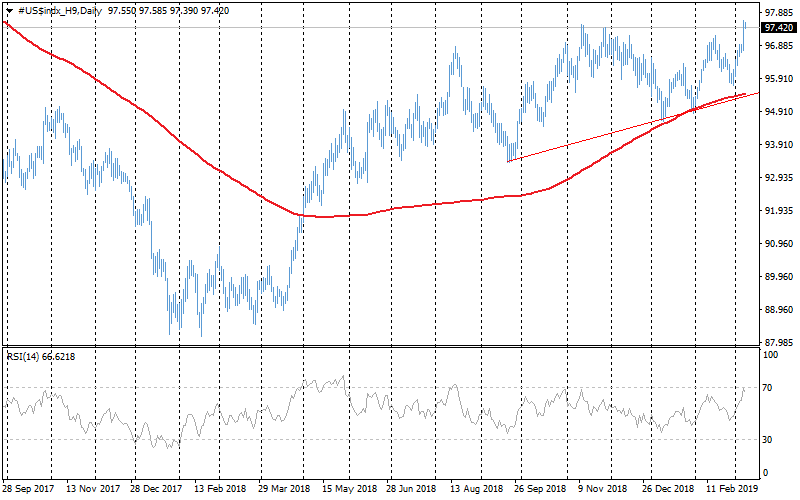
More importantly, as a result of this dynamic, the pair got out of the trading range, where it has been since October last year. The EUR weakness has become the main driver of the dollar index growth, which rose to 97.6 last night, the highest level since May 2017.
However, today the dollar has to pass an important test in the form of labour market statistics publication, and it will not be so easy. After seven trading sessions of growth in a row with the final chord in the form of strengthening by 0.9% over several hours with updating of multi-month highs, market participants are more likely to look for reasons for local profit-taking
It is also worth noting that Saturday's speech by the head of the Fed on the topic of normalizing monetary policy is the risk event for the dollar. It is possible that the central banks' heads will continue to play giveaway, one after another softening the rhetoric to avoid significant strengthening of their respective currencies.
It would not be surprising if the US dollar rolls back to 97 at the USDX index and to 1.13 at EURUSD. Nevertheless, from a fundamental point of view, the American currency strengthening is a logical result of stronger macroeconomic data. Simply put, the next few days may provide a more profitable opportunity to join the trend of dollar growth at more attractive levels.
om levels above 1.1330.
GBPJPY Slips Around 145.00, Still Looks Bullish In Medium-Term
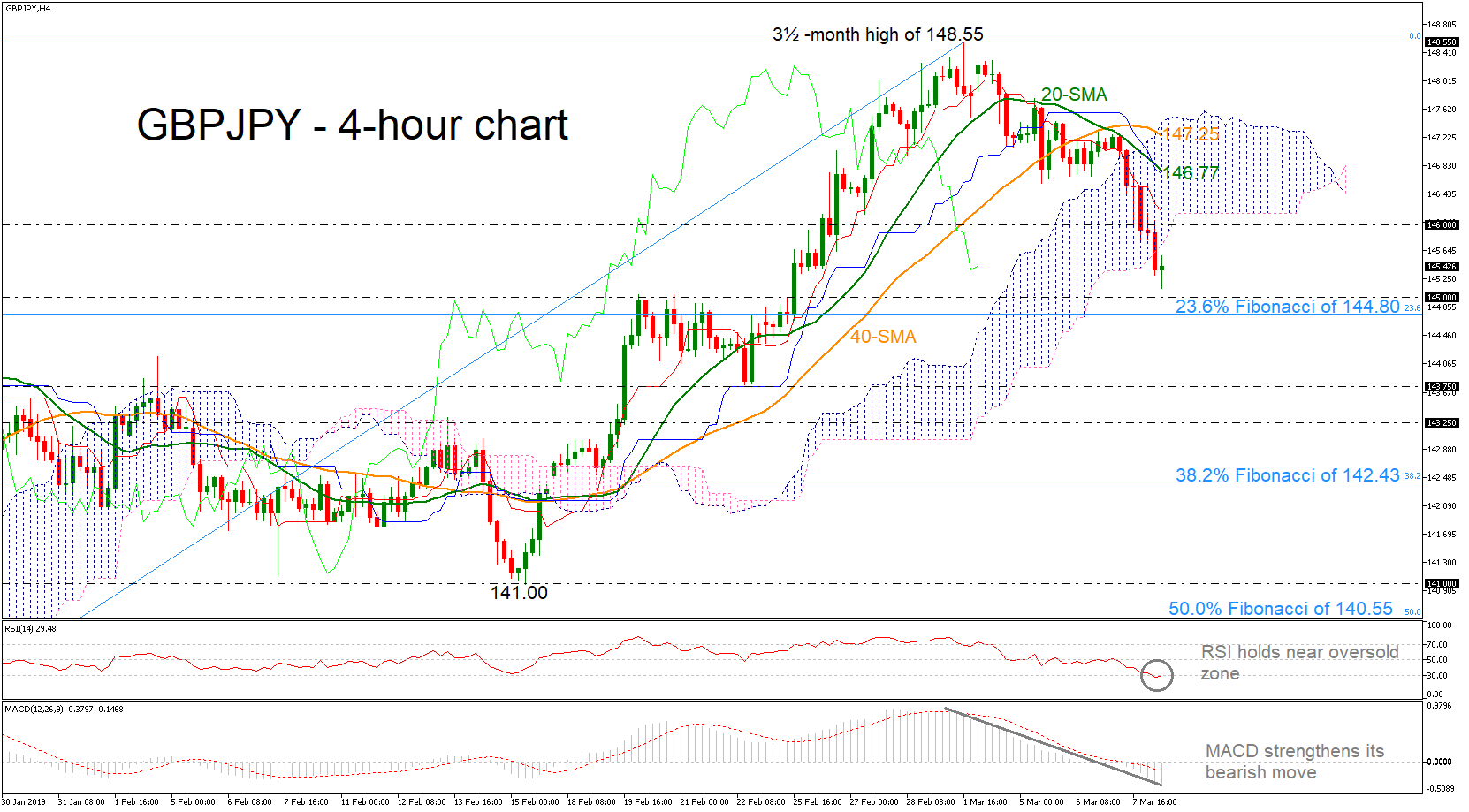
GBPJPY is edging lower towards a one-and-a-half-week low of 145.11, exiting from the Ichimoku cloud in the 4-hour chart, after it unlocked a fresh three-and-a-half-month high on March 1. The bearish momentum in the MACD points to further decline in the short-term. Yet with the RSI standing near its 30 oversold level, it seems that the strong bearish view may change, and the bulls could soon take over.
Additional losses could send the price below today’s low of 145.11, where the 145.00 handle is holding and the 23.6% Fibonacci retracement level of the upleg from 132.50 to 148.55, around 144.80. Another leg lower could touch the 144.75 support, identified by the low on February 22.
On the flipside, if the recent bearish rally proves overdone, the price could shift up to meet the 146.00 psychological level, near the lower boundary of the Ichimoku cloud. Heading higher, resistance could come next from the 20- and then from the 40-simple moving averages (SMAs) at 146.77 and 147.25 respectively, while more upside run could touch 148.55.
In the medium-term outlook, GBPJPY has been remaining bullish thanks to the rebound on the two-year low of 132.50 on January 3.
DAX Drops To March Low As ECB Sends Dovish Message
For a third straight day, the DAX index has recorded considerable losses. On Friday, the DAX is at 11,451, down 0.58% on the day. It’s a quiet day for eurozone fundamentals. The sole event, German factory orders, dropped by 2.6% in January. This marked a third straight decline, as the manufacturing sector continues to struggle.
The ECB sent a chill down the spines of investors on Thursday, and the downward trend has continued on Friday.The rate statement and follow-up comments from Mario Draghi were very dovish and have soured risk appetite. The ECB announced that it was extending its forward guidance on interest rate levels, saying that it would not raise rates before 2020. Although this should not have come as a surprise, the ECB had been on record until now as saying that rates could move higher in late 2019. In an acknowledgment to the slowdown in the eurozone, the ECB announced a new round of long-term loans to eurozone banks and slashed the 2019 GDP forecast for the bloc to 1.1%, down from 1.7% in the previous forecast. Mario Draghi reinforced the bank’s dovish stance in his press conference, saying that downside risk was pointed to the downside, although a recession was unlikely.
The U.S-China trade war has weighed on the global economy and caused significant volatility in the equity markets. Now that trade tensions have eased between the two super-economies, are we finally close to an agreement? If progress continues and the sides ink an agreement, traders can expect the markets to climb sharply. An agreement between the U.S. and China cannot come fast enough for Germany, the locomotive of the eurozone. The OECD has lowered its 2019 GDP forecast for Germany to 0.7%, down from 1.6% in November.
EUR/USD – Euro Slides As ECB Says No Rate Hikes Before 2020
EUR/USD has steadied on Friday, after suffering sharp losses on Thursday following the ECB rate statement. Currently, the pair is trading at 1.1212, up 0.04% on the day. On the release front, German Factory Orders were dismal, declining by 2.6%. This marked a third straight decline. In the U.S., the focus will be on employment numbers, and the markets are anticipating mixed results. Wage growth is expected to improve to 0.3%, but nonfarm payrolls are projected to fall sharply to 180 thousand. If the market forecast is accurate, the euro could rebound with strong gains.
The euro plunged 1.0% on Thursday, falling to its lowest level since June 2017. This was in response to the ECB rate statement and comments from Mario Draghi, which were more dovish than expected. The ECB announced that it was extending its forward guidance on interest rate levels, saying that it would not raise rates before 2020. Although this should not have come as a surprise, the ECB had been on record until now as saying that rates could move higher in late 2019. In an acknowledgment to the slowdown in the eurozone, the ECB announced a new round of long-term loans to eurozone banks and slashed the 2019 GDP forecast for the bloc to 1.1%, down from 1.7% in the previous forecast. Mario Draghi reinforced the bank’s dovish stance in his press conference, saying that downside risk was pointed to the downside, although a recession was unlikely.
Although the U.S. economy is in much better shape than the eurozone, the Federal Reserve is also sending out a dovish message, in stark contrast to its aggressive stance in 2018, when it raised rates four times. Fed chair Powell has said the bank would be patient before any rate hikes. Earlier this week, Boston Fed President, said that there was some downside risk to the U.S. economy and called on policymakers to be “patient” for several more meetings in order to evaluate the risks to the economy. Without being explicit, Rosengren appears to support the Fed remaining on the sideline for the upcoming policy meetings until the Fed can better gauge the health of the U.S. economy.
WTI Oil Outlook: WTI Price Falls On Renewed Concerns About Global Growth Slowdown
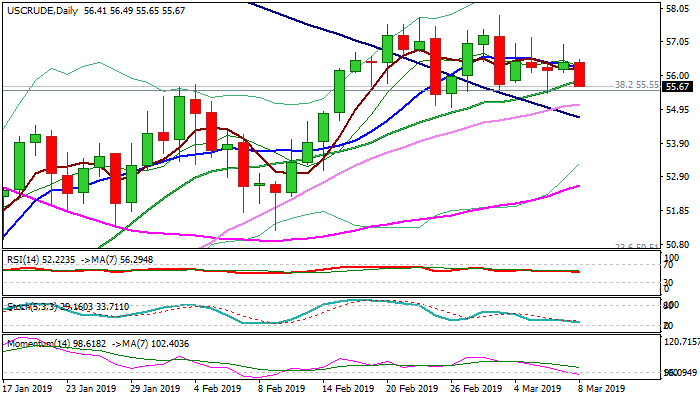
WTI oil price fell over 1% on Friday as weak China's data (Feb exports -20.7% vs -4.8% f/c, the biggest drop in three years) soured sentiment, adding to renewed fears about global growth slowdown that would likely impact oil demand and pressure oil prices. Fresh weakness pressures the lower boundary of past three-day congestion, when oil prices showed indecision on strong rejections at both sides. Negative signals are developing on daily chart, as indicators turn south and momentum is entering negative territory. Close below cracked 20SMA ($55.84) would add to negative signal, with extension below 30SMA ($55.11) which reinforces the floor of short-term $55.01/$57.85) to signal reversal. Strong US jobs data today would boost the dollar and add to negative outlook for the oil prices.
Res: 56.19, 56.49, 56.97, 57.17
Sup: 55.55, 55.01, 54.72, 54.54
EUR/USD Drops By 144 Base Points
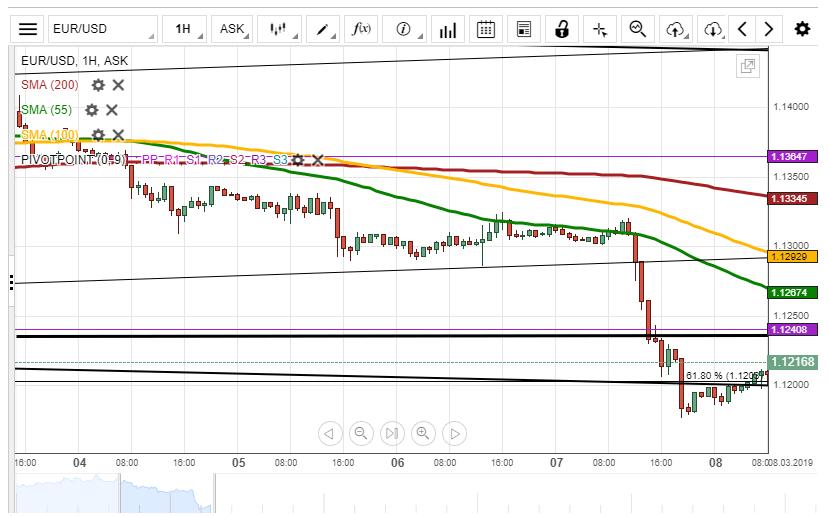
During Draghi's speech on asset purchase program, the European Single Currency depreciated by the 144 pips or 1.27%. The reason for such a sharp depreciation of the European Single Currency was the announcement that the purchase program would not be stopped. The ECB will continue buying government bonds.
In regards to the near-term future, most likely, the currency exchange rate will trade between the monthly S1 at 1.1240 and the 61.80% Fibo.
On the other hand, the US Dollar could depreciate against the European single currency during today's US Employment data sets release at 13:30 GMT to fit into the medium pattern at the 1.1250 level.
GBP/USD Might Fall To 1.3000
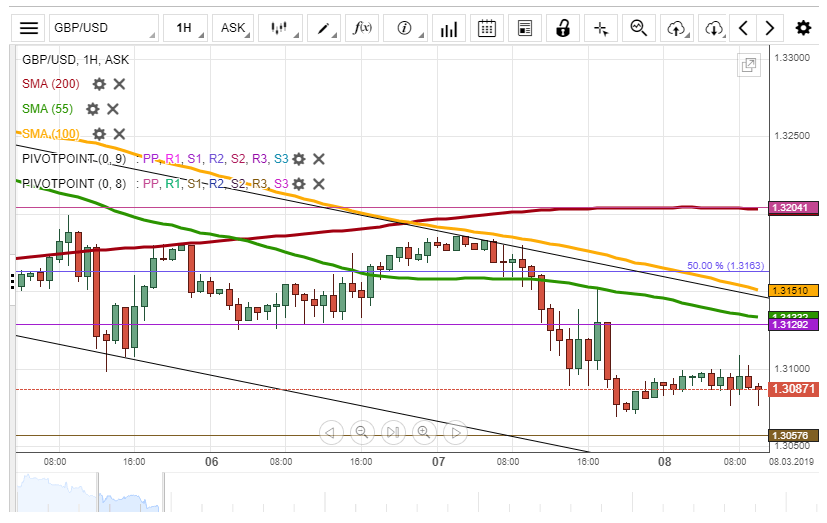
During Thursday's trading session, the 55-hour simple moving average retraced the currency exchange rate to pass through the support of the monthly pivot point towards the 1.3050 level. On Friday morning, the rate was located at the 1.3100 mark.
In regards to the near term future, the rate will trade downwards to pass through the support of the weekly S1 at 1.3057. Most likely, the rate will stay at 1.3000 level.
Moreover, today's US Employment data set release at 13:30 GMT could support the downtrend.
USD/JPY Depreciates To S1 At 110.84
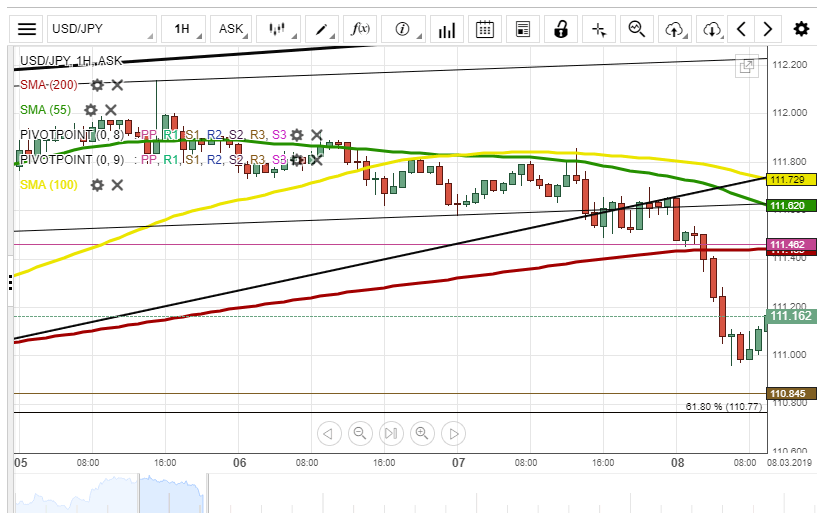
During Thursday's trading session, the currency exchange pair depreciated to the 111.40 level passing the small pattern line at 111.60. On Friday morning, the rate fell, even more, passing the support level of the 200-hour SMA to the 111.01 mark.
It is expected that the rate will fall to the weekly S2 at 110.84 to trade sideways at the 110.80 level for the rest of the trading day.
On the other hand, today's US Employment data set release at 13:30 GMT might push the rate to pass through the 61.80% Fibonacci retracement level to the 110.40 level.
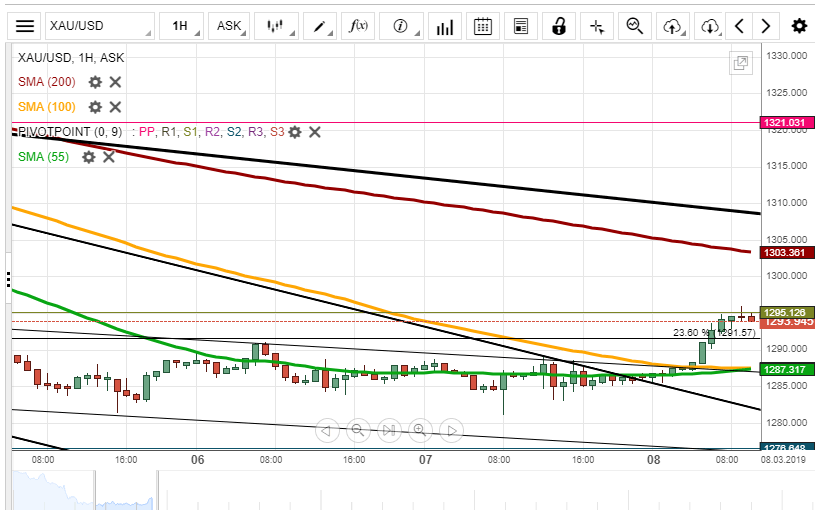
XAU/USD Might Stay At 1,290.00
During Thursday's trading day, the yellow metal followed the previously drawn pattern to end the trading session at the 1,286.21 mark. During Friday's midnight hours, gold appreciated against the US Dollar breaking the resistance levels most of the technical indicators to be located at the 1,294.62 mark.
It is expected that the yellow metal will trade above the 23.60% Fibonacci retracement level to stay at the 1,290.00 level during the trading session.
However, today's US Employment data set release at 13:30 GMT might push the rate to break the resistance of the monthly S1 at 1,295.12 to trade at 1,300.00.
AUD/USD Outlook: Aussie Continues To Pressure 0.70 Support, Final Push Through Likely On Strong US Jobs Data
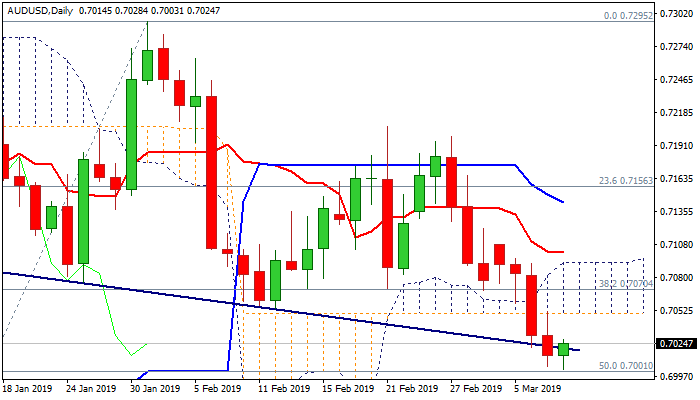
The Aussie dollar is a tad higher in European trading on Friday dipping to 0.7003 low in Asia, driven by weak China’s data that further soured risk sentiment.
The pair cracked Thursday’s low (0.7005) but faces strong headwinds from psychological 0.70 support (also 50% retracement of 0.6706/0.7295) and may hold in extended consolidation before renewed attack at 0.70 pivot.
Break here would open way for extension of bear-leg from 0.7199 (27 Feb lower top) towards next significant support at 0.6931 (Fibo 61.8% of 0.6706/0.7295 rally).
The notion is supported by Thursday’s close below the neckline of asymmetric H&S pattern on daily chart (0.7021) would add to negative outlook.
Daily cloud base marks solid resistance at 0.7050 which should ideally cap and keep intact pivotal barriers at 0.7090 (cloud top / 10SMA) and 0.7102 (20SMA), break of which would sideline bears.
US jobs data could further pressure Australian dollar on strong release.
Res: 0.7028, 0.7050, 0.7090, 0.7102
Sup: 0.7000, 0.6931, 0.6900, 0.6845