Sample Category Title
Dollar Steady Despite Healthy US Data, RBA In Focus
- Dollar unable to rally even after US payrolls smash expectations
- Risk sentiment mostly in positive territory today amid trade optimism
- Aussie on the back foot ahead of RBA decision
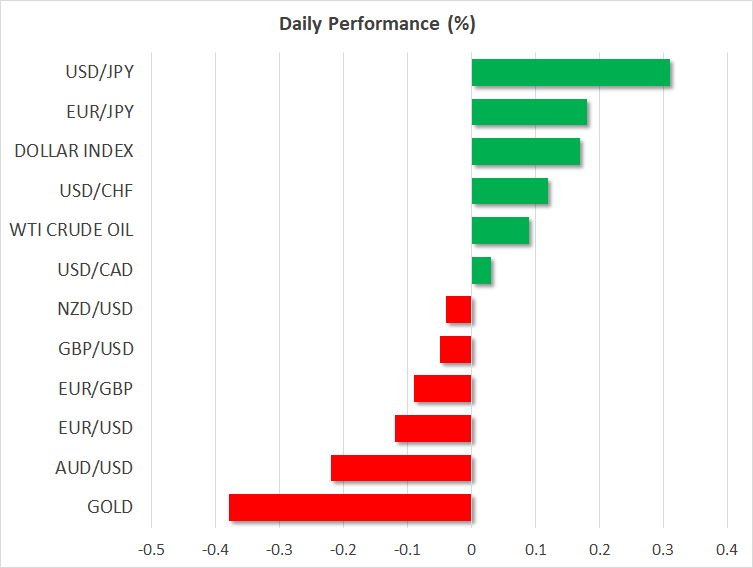
Dollar unimpressed by strong US data, as Fed casts shadow
Nonfarm payrolls smashed expectations in January, clocking in at a robust 304k, much higher than the anticipated 165k – though last month’s print was revised down significantly, mitigating some of the good news. Wage growth held steady at 3.2% in annual terms, with December’s figure being revised higher to 3.3%. Separately, the unemployment rate ticked up, but for ‘healthy’ reasons as the labor force participation rate rose as well, indicating that a greater number of people were interested in finding work. Overall, this was yet another employment report reaffirming that the US economy is in good shape.
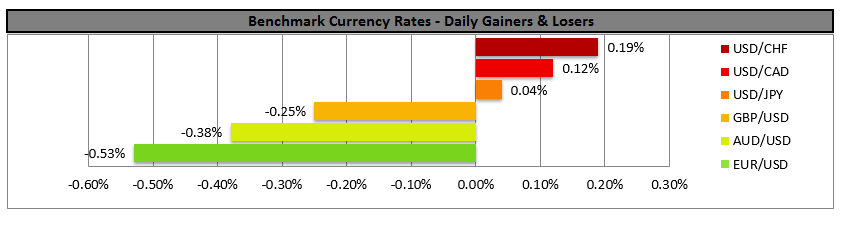
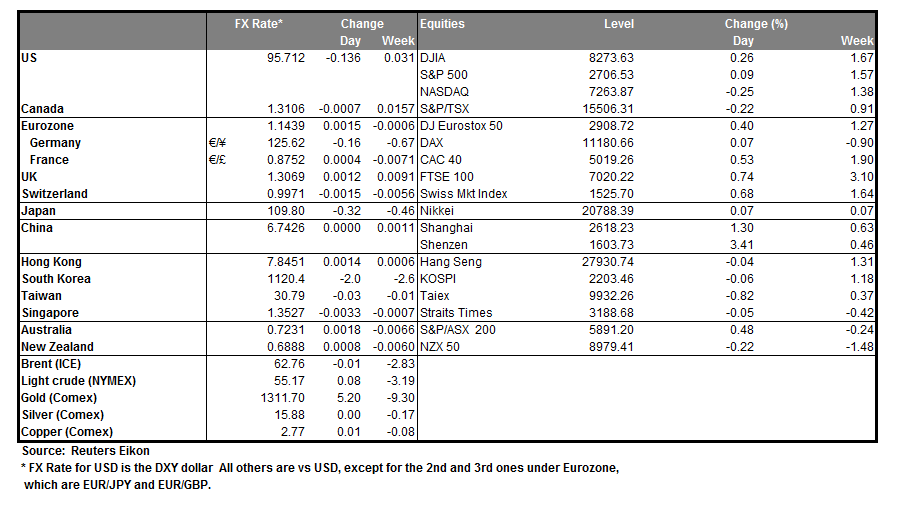
Likewise, the ISM manufacturing PMI staged a strong recovery in January, alleviating concerns that ‘dark clouds’ are gathering on the horizon. Yet, the dollar was largely unable to rally in the aftermath, closing the session only marginally higher versus a basket of six major currencies. Investors seemingly interpreted these data as augmenting the narrative that the Fed will be on hold for a while. The absence of a pickup in wages coupled with the continued rise in the labor force participation rate, suggests that there’s still some slack in the labor market, vindicating the central bank’s ‘patient’ approach. This probably explains the modest gains in US stock markets as well, even despite disappointing guidance by retail giant Amazon (-5.38%).
Trump refuels hopes for a trade deal
Some encouraging comments around trade over the weekend are supporting risk appetite early on Monday, with Japanese stocks being in the green while the safe-haven Japanese yen is on the retreat. Several markets in Asia are closed for the Lunar New Year.
On the trade front, President Trump played up hopes for a near-term solution in his latest comments, indicating that he sees a “good chance” of striking an accord with Beijing. Reports suggest he may meet with his Chinese counterpart at the end of February to iron out the big issues. The zeal with which both sides are pursuing a deal suggests that the likelihood for one is likely high, and if this optimism lingers in an environment where the Fed is firmly on hold, that paints a brighter picture for risky assets – most notably stocks.
Aussie on the back foot ahead of RBA
The Australian dollar is on the back foot today despite the positive risk backdrop, following data out of Australia overnight showing a bigger-than-expected drop in building approvals. The next risk event for the aussie will be the rate decision by the Reserve Bank of Australia (RBA) on Tuesday, at 0330 GMT. No change in policy is expected, and as such, market attention will fall on the statement accompanying the decision and any updates in the economic forecasts. Recent developments suggest the Bank could strike a more cautious tone with respect to future policy, and if so, that could keep the aussie under pressure.
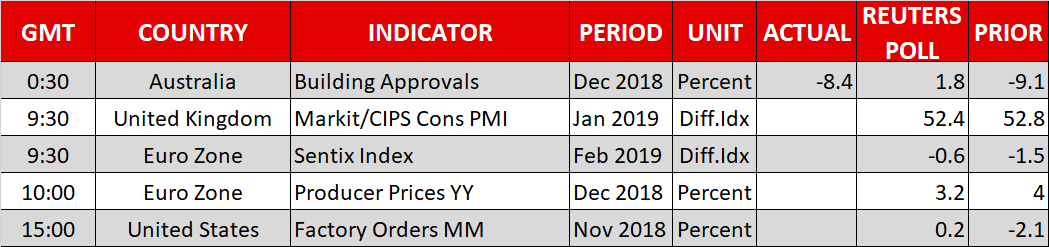
UK construction PMI coming up
In terms of economic data, the highlight on Monday will be the UK construction PMI for January. The manufacturing index disappointed on Friday, adding another dimension to UK-related uncertainties, though sterling/dollar found support near its 200-day simple moving average and subsequently rebounded. A similar disappointment today could ignite speculation for a dovish bias by the BoE when it meets again on Thursday. As always though, any Brexit news could eclipse anything related to economics.
In the Eurozone, producer prices for December are due, while in the US, factory orders for November will be in focus.
The earnings season remains in focus, with Google-parent Alphabet reporting its quarterly results today.
USD Strengthens After January’s Employment Report
The greenback got some support after the US employment report for January and the ISM manufacturing PMI showed stronger than expected readings. Analysts point out that the solid jobs report and the increased manufacturing activity, eased concerns for a potential slowdown in the US economy. Also the US 10 year treasury yield rose somewhat providing additional support for the USD, which under certain circumstances could linger on in the near term. The market may continue to favor USD long positions in the next few days, should the effect be maintained. As analysed in Friday's report, EUR/USD dropped on Friday and during today's Asian session, breaking the 1.1460 (R1) support line now turned to resistance. We could see the pair trading in a bearish market today, as financial releases are expected to weaken the common currency, while on the other hand support the greenback. Should the bears continue to reign over the pair's direction, we could see it breaking the 1.1425 (S1) support line and aim for the 1.1385 (S2) support barrier. Should on the other hand the pair's direction be dictated by the bulls, we could see it breaking the 1.1460 (R1) resistance line and aim for the 1.1495 (R2) resistance barrier.
RBA's Interest rate decision
RBA is to announce its interest rate decision tomorrow during the Asian session (03:30 GMT) and is widely expected to remain on hold at +1.50%. Currently AUD OIS imply a probability for the bank to remain on hold of 98.90% strengthening the arguments for such a scenario. Despite RBA's optimistic tone, weakening financial data and trade uncertainty may provide a number of more dovish comments in the accompanying statement. Analysts point out that market expectations have started to emerge, for a possible rate cut in contrast to the bank's implied view that its next move was to be a hike. Should the bank negatively surprise the markets we could see the Aussie weakening. AUD/USD continued to trade in a sideways movement yesterday with some bearish tendencies as it tested the 0.7230 (S1) support line. We could see the pair continuing to trade in a bearish market, especially if there are any negative surprises in RBA's interest rate decision. Should the pair come under the selling interest of the market, we could see it breaking the 0.7230 (S1) support line and aim for the 0.7150 (S2) support barrier. Should on the other hand the pair's long positions be favored by the market, we could see it aiming if not breaking the 0.7330 (R1) resistance line.
Today's other economic highlights
In today's European session, we get Turkey's CPI rate for January, the UK construction PMI for January and Eurozone's PPI rate for December. In the American session, we get the US factory orders growth rate for November.
As for the week ahead
On Tuesday, from Australia, we also get the retail sales and trade balance for December, while from the UK the services PMI for January, from the Eurozone the retail sales for December and from the US the ISM non-manufacturing PMI for January. On Wednesday, we get Germany's industrial orders for December and from New Zealand the employment data for Q4. On Thursday, we get from Germany the industrial output and from the UK the BoE interest rate decision. On Friday, we get from Japan the current account balance for December and from Canada the employment data for January.
AUD/USD H4
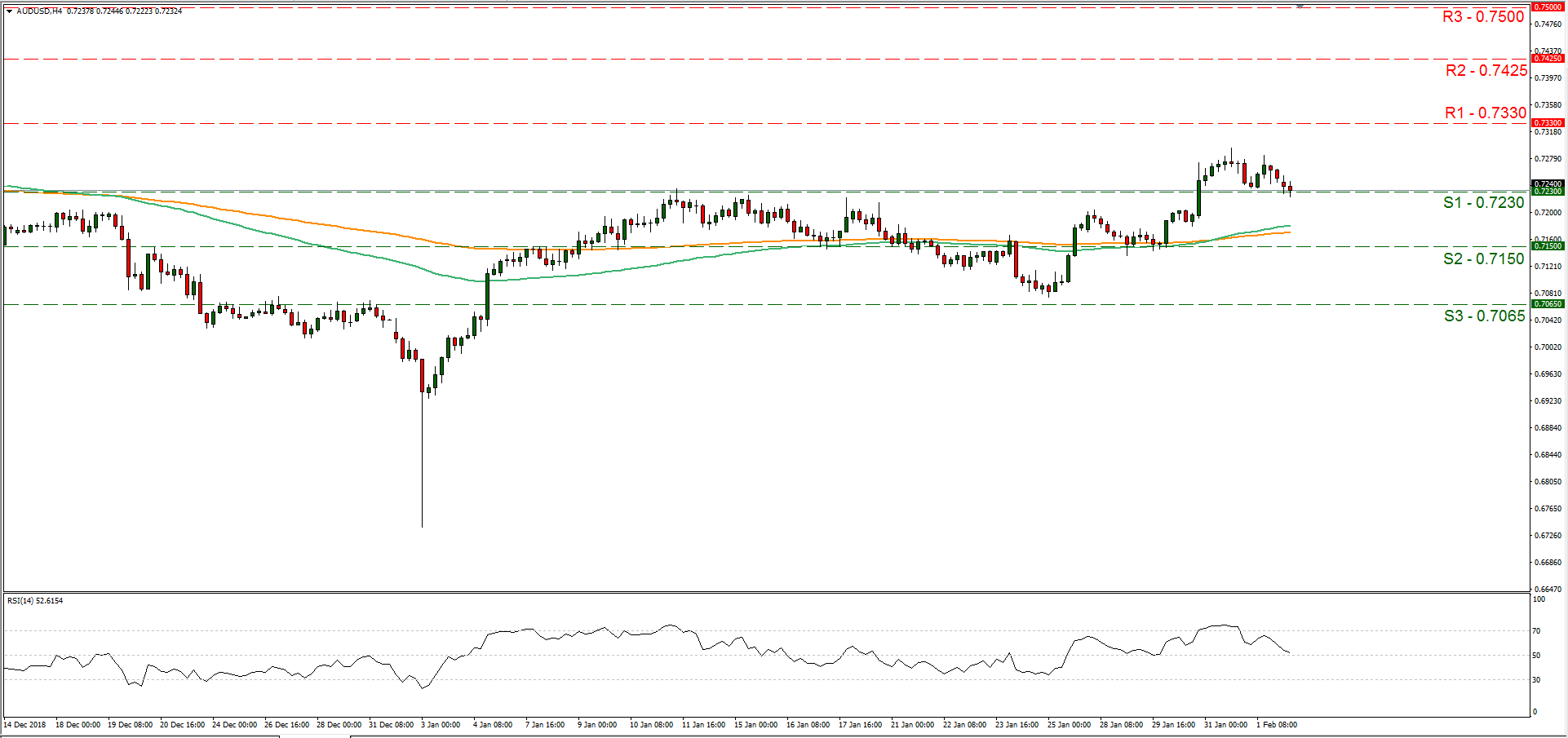
Support: 0.7230 (S1), 0.7150 (S2), 0.7065 (S3)
Resistance: 0.7330 (R1), 0.7425 (R2), 0.7500 (R3)
EUR/USD H4
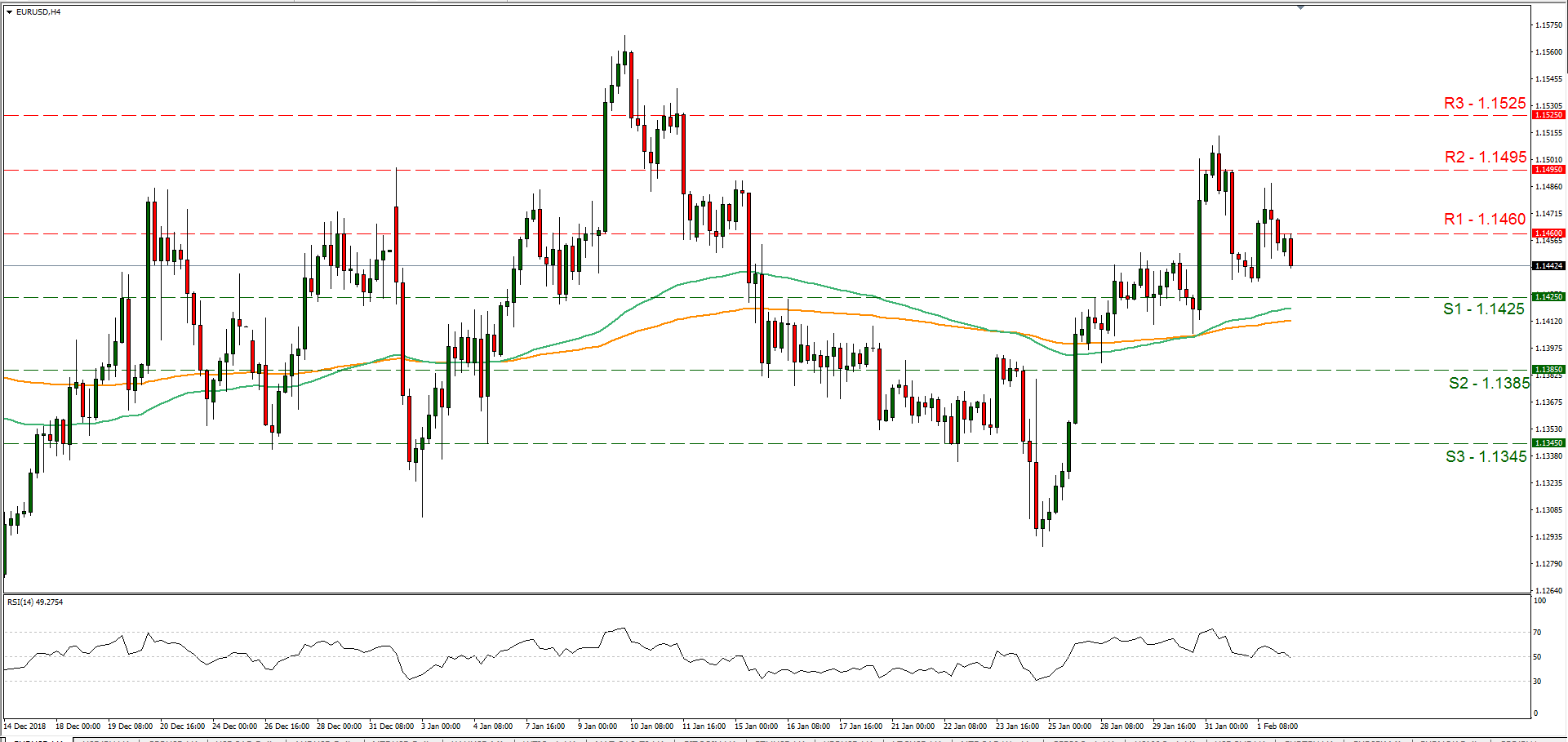
Support: 1.1425 (S1), 1.1385 (S2), 1.1345 (S3)
Resistance: 1.1460 (R1), 1.1495 (R2), 1.1525 (R3)
Forex Technical Analysis: EUR/USD, USD/JPY, GBP/USD
EUR/USD
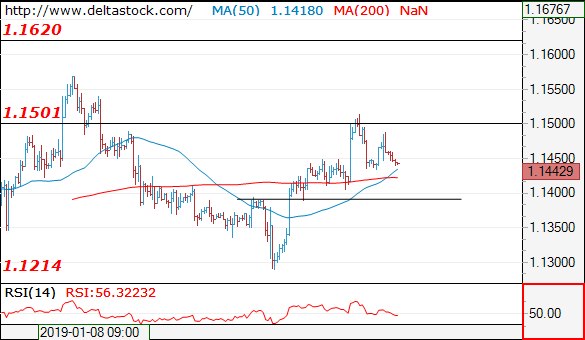
Current level - 1.1442
I favor a dip to 1.1390 static support and 1.1480 minor resistance should cap the upside for now.
| Resistance | Support | ||
| intraday | intraweek | intraday | intraweek |
| 1.1480 | 1.1630 | 1.1430 | 1.1214 |
| 1.1630 | 1.1820 | 1.1390 | 1.1100 |
USD/JPY
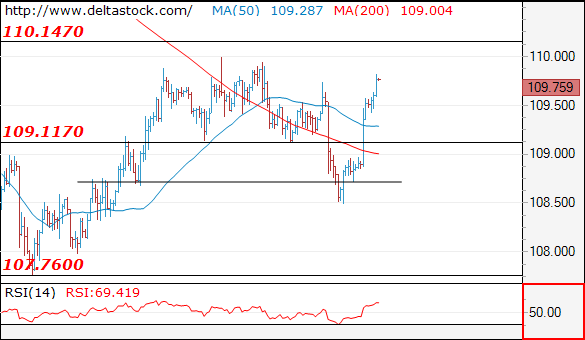
Current level - 109.75
The violation of 109.10 hurdle has neutralized the negative bias and the outlook is positive, for a test of 110.20 hurdle. Crucial support is projected at 109.10.
| Resistance | Support | ||
| intraday | intraweek | intraday | intraweek |
| 110.20 | 111.45 | 109.10 | 106.70 |
| 111.45 | 112.20 | 107.70 | 104.60 |
GBP/USD
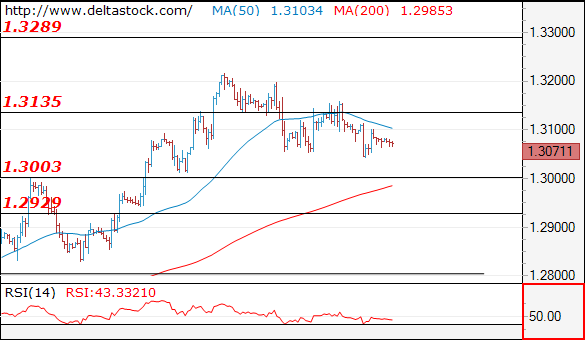
Current level - 1.3071
The intraday outlook is bearish, for a dip to 1.3000 static support and a break through the latter will allow a slide towards 1.2930.
| Resistance | Support | ||
| intraday | intraweek | intraday | intraweek |
| 1.3135 | 1.3290 | 1.3000 | 1.3000 |
| 1.3290 | 1.3480 | 1.2930 | 1.2800 |
WTI Crude Oil Futures Turn Bias To More Bullish, Reach 2-Month High
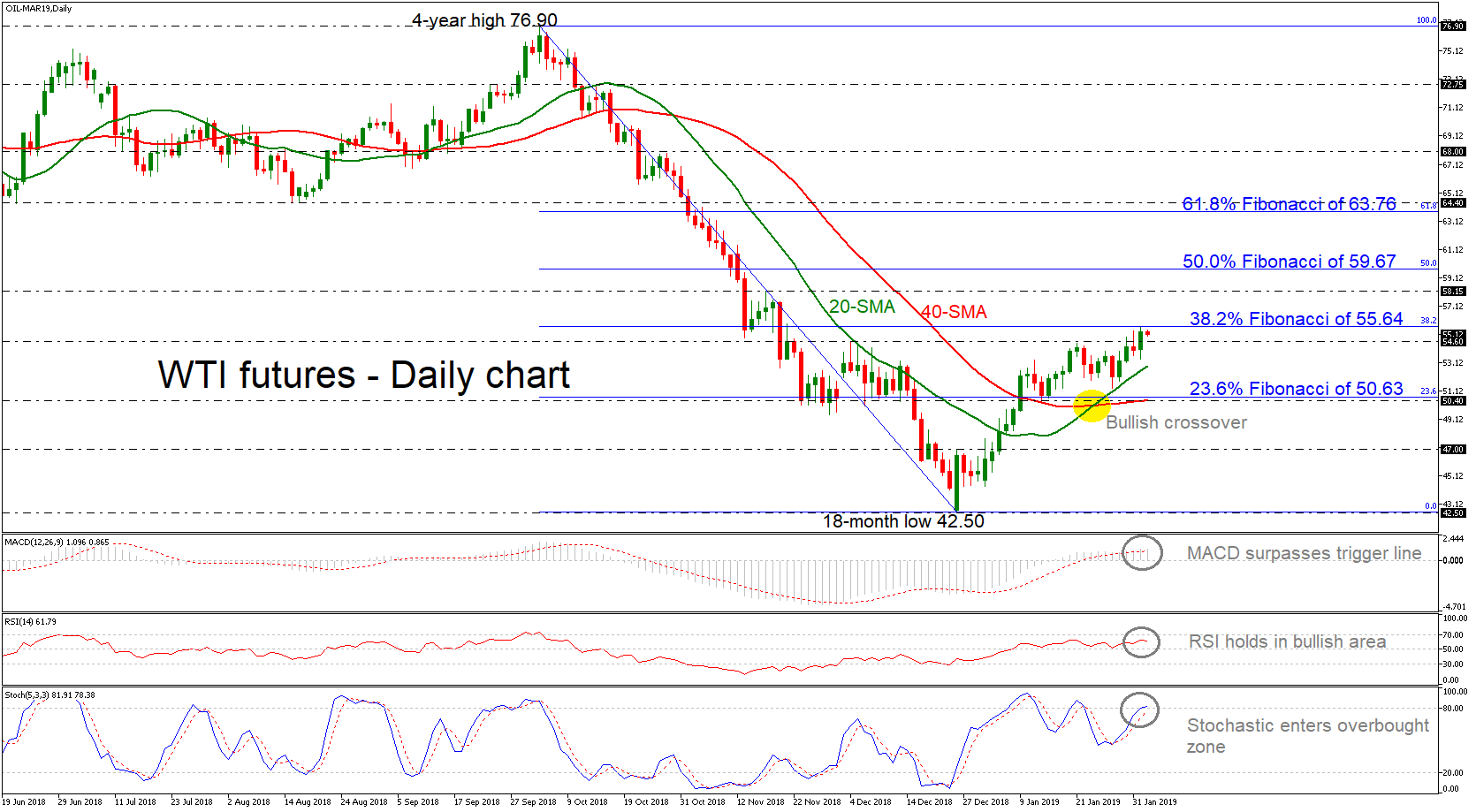
WTI futures came close to breaking the 38.2% Fibonacci retracement level of the downleg from the four-year high of 76.90 to the 18-month low of 42.50, around 55.64, reaching a fresh two-month high on Friday. The price remains in a bullish correction mode as it jumped above the 20- and 40-simple moving averages (SMAs), which posted a positive crossover in the preceding sessions in the daily timeframe.
According to the technical indicators the market could maintain positive momentum in the short-term as the MACD indicator has surpassed the trigger line and holds in the positive zone, while the RSI is positively sloped above its neutral threshold of 50 and lies near the 70 level. However, the fast Stochastics suggest that the market is located in overbought territory and therefore some weakness is possible; the blue %K line is losing speed over the red %D line in overbought zone above 80.
On the upside, the price could attempt to overcome the 38.2% Fibonacci and retest the 58.15 resistance level, which if successfully broken the door could open for the 50.0% Fibonacci mark of 59.67. Should traders continue to buy oil above that region, strengthening the short-term positive bias, resistance could then run towards the 61.8% Fibonacci of 63.76.
A reversal to the downside, however, could find immediate support at the 20-day SMA currently at 52.85, while slightly lower the 23.6% Fibonacci of 50.63 and the 40-day SMA near 50.40 could be a critical zone for the bears. If the latter fails to halt bearish movements, the next target could be at the 47.00 round number, taken from the inside swing top on December 26.
Turning to the medium-term, the outlook seems to be neutral and only a decisive close above the 61.8% Fibonacci could create a bullish picture. On the other hand, a close below the December’s low could shift the outlook back to bearish.
EURUSD Signals Neutral In Short And Medium-Term
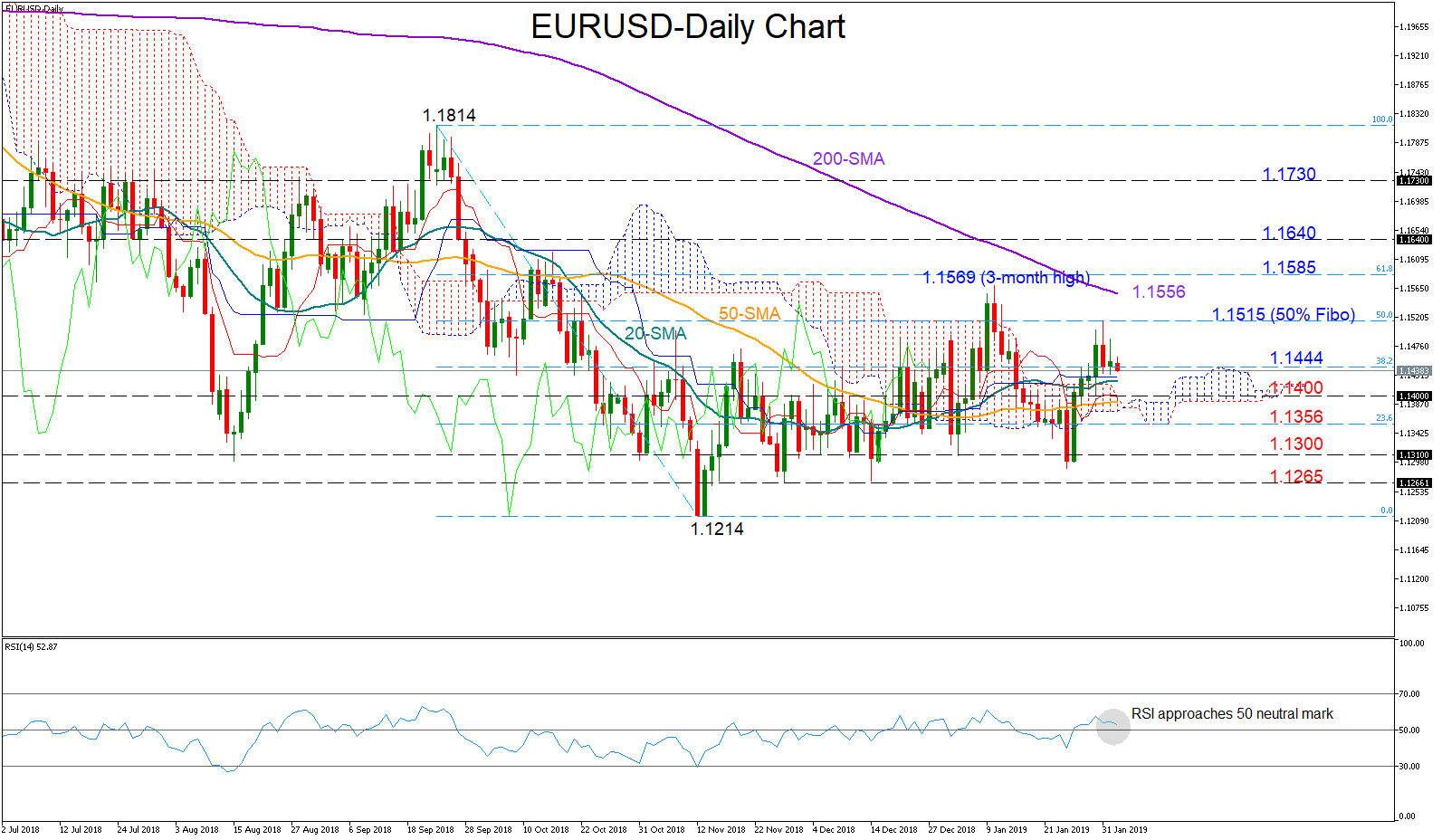
EURUSD managed to stay in the green for the second consecutive week even if it could not retain Thursday’s gains above the 1.15 level. The RSI seems to be heading towards its 50 neutral mark, while the red Tenkan-sen line continues its sideways move below the blue Kijun-sen line which is also flat, all reinforcing a neutral view for the short term.
The 1.1400 mark could be of psychological significance and therefore a potential support level to keep in mind in case the pair extends declines below the 38.2% Fibonacci of the downleg form 1.1814 to 1.1214. Slipping lower and breaking the 50-day simple moving average (MA) currently at 1.1390, would open the door for the 23.6% Fibonacci of 1.1356. If negative pressures become even stronger, attention would shift towards the 1.1300-1.1265 restrictive area, where the price bottomed several times in the past few months.
On the upside, the 50% Fibonacci of 1.1515 appeared a heavy obstacle for the bulls and therefore could gather extra attention when the price potentially rebounds. Traders, however, would like to see a strong rally above the 200-day MA (1.1556) to turn more confident. Should the price jump above that line for the first time after eight months, surpassing the 61.8% Fibonacci of 1.1585 as well, then the pair could pick up steam towards the 1.1640 area. Higher, the 1.1730 level may be the next resistance to watch.
Turning to the medium term picture, EURUSD maintains a neutral outlook, trading between 1.1569 and 1.1214 over the last three months. The lack of momentum in the 50-day MA could be a sign that the neutral profile is not likely to change anytime soon.
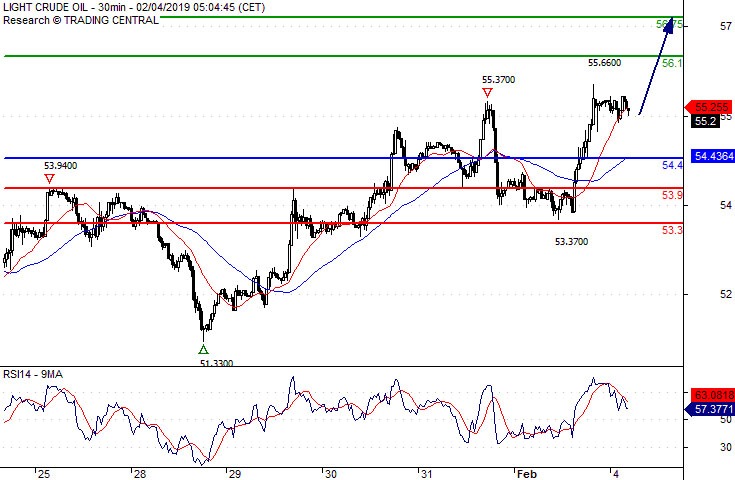
Crude Oil Further Advance
Pivot (invalidation): 54.40
Our preference Long positions above 54.40 with targets at 56.10 & 56.75 in extension.
Alternative scenario Below 54.40 look for further downside with 53.90 & 53.30 as targets.
Comment The RSI advocates for further upside.
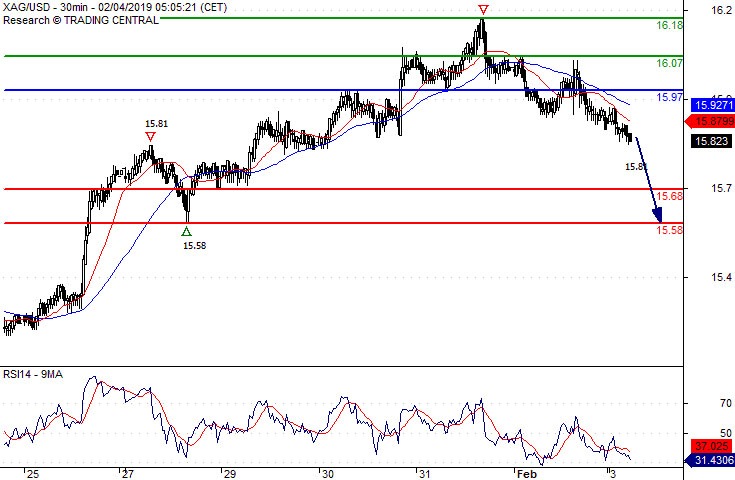
Silver Spot The Downside Prevails
Pivot (invalidation): 15.9700
Our preference Short positions below 15.9700 with targets at 15.6800 & 15.5800 in extension.
Alternative scenario Above 15.9700 look for further upside with 16.0700 & 16.1800 as targets.
Comment The RSI advocates for further decline.
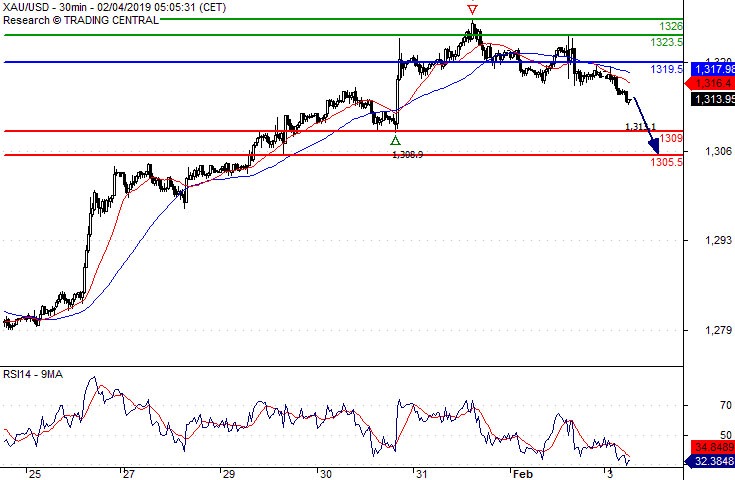
Gold Spot The Downside Prevails
Pivot (invalidation): 1319.50
Our preference Short positions below 1319.50 with targets at 1309.00 & 1305.50 in extension.
Alternative scenario Above 1319.50 look for further upside with 1323.50 & 1326.00 as targets.
Comment The RSI shows downside momentum.
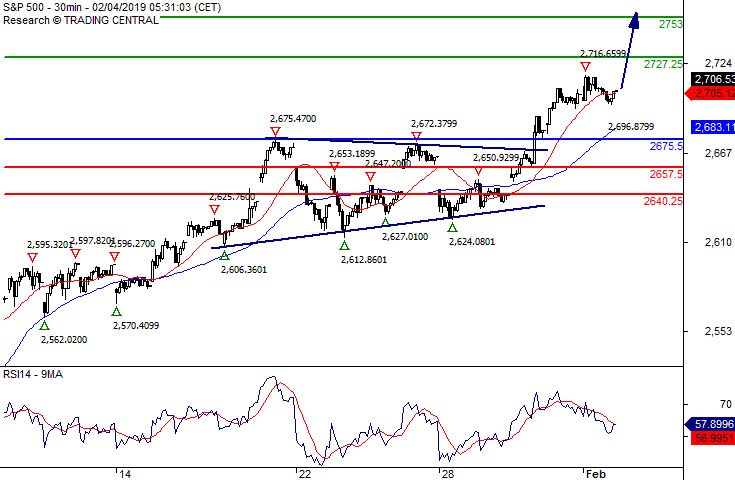
S&P 500 Further Advance
Pivot (invalidation): 2675.50
Our preference Long positions above 2675.50 with targets at 2727.25 & 2753.00 in extension.
Alternative scenario Below 2675.50 look for further downside with 2657.50 & 2640.25 as targets.
Comment The RSI is mixed to bullish.
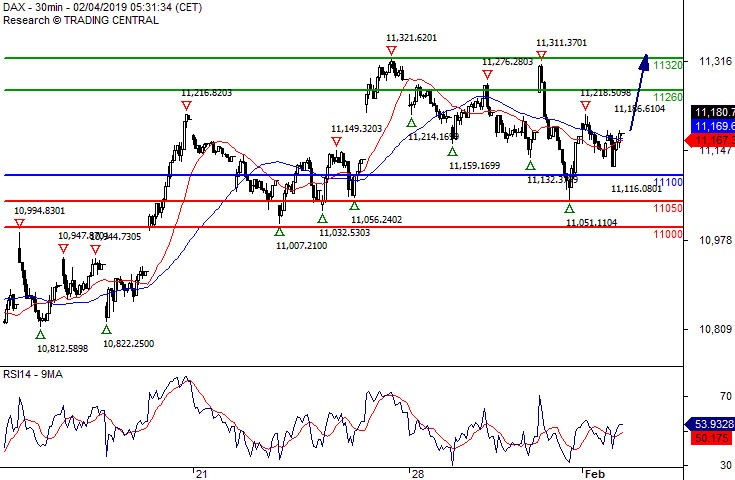
DAX Choppy
Pivot (invalidation): 11100.00
Our preference Long positions above 11100.00 with targets at 11260.00 & 11320.00 in extension.
Alternative scenario Below 11100.00 look for further downside with 11050.00 & 11000.00 as targets.
Comment The RSI is around its neutrality area at 50%