Sample Category Title
Yen Flash Rally & Apple’s Warning
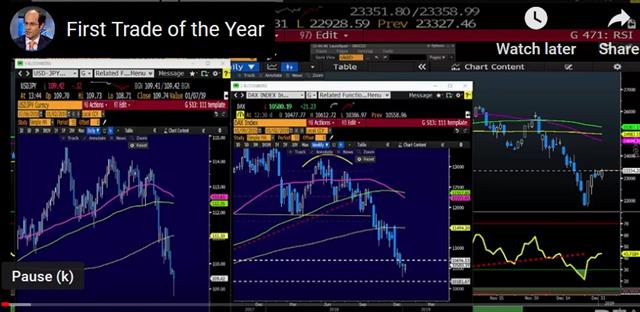
Yen pairs have soared at about 17:45 Eastern (22:45 GMT/London) in a similar on a combination of late reaction to plummeting equity futures following negative guidance from Apple. USDJPY collpased from 108.90 to 104.87 in under 5 minutes. Like the pound flash crash in October 2016, the JPY flash rally has occured in the sleepiest part of the trading dray, when Asian traders are not only not at their trading desks, but also because Japanese markets are officially still holiday. Japanese markets don't re-open til Friday (unofficially next week), which sets up a dangerous combination of ultra-light liquidity and automatically triggered algos to unleash lightening volatility. The market was already concerned about China and Apple thew gasoline on the fire late Wednesday by cutting its guidance and blaming an economic slowdown in China. Today's new trade has been covered in detail in the Premium video below.
The dip below 50 in the Caixin China PMI shouldn't have been a big surprise after the official measure broke that key level last week but it reinvigorated worries about a slowdown and sparked a run on risk trades.
Equity markets showed some resilience with the S&P 500 closing slightly higher after futures had fallen as much as 60 points. The FX market was less enthusiastic as the yen crosses and Aussie remained near the lows.
The big surprise came late in the day when Apple CEO Tim Cook cut guidance for the current quarter and blamed it almost entirely on an economic slowdown in China. “We did not foresee the magnitude of the economic deceleration, particularly in Greater China,” he wrote.
The note sent shares down 7% in the aftermarket but also sent AUD/USD to a fresh 22-month low of 0.6970. Companies often have especially good insight into real-time trends in the economy and a big-ticket item like an iPhone can be a particularly good gauge.
At the same time, China has been targeting Apple and that included an import ban in the quarter and a boycott in favor of Huawei may also be a factor. Yet this isn't an isolated factor and it will put an added emphasis on data.
Euro-Zone’s Markit Manufacturing PMI Declined To Its Lowest Level Since February 2016 In December
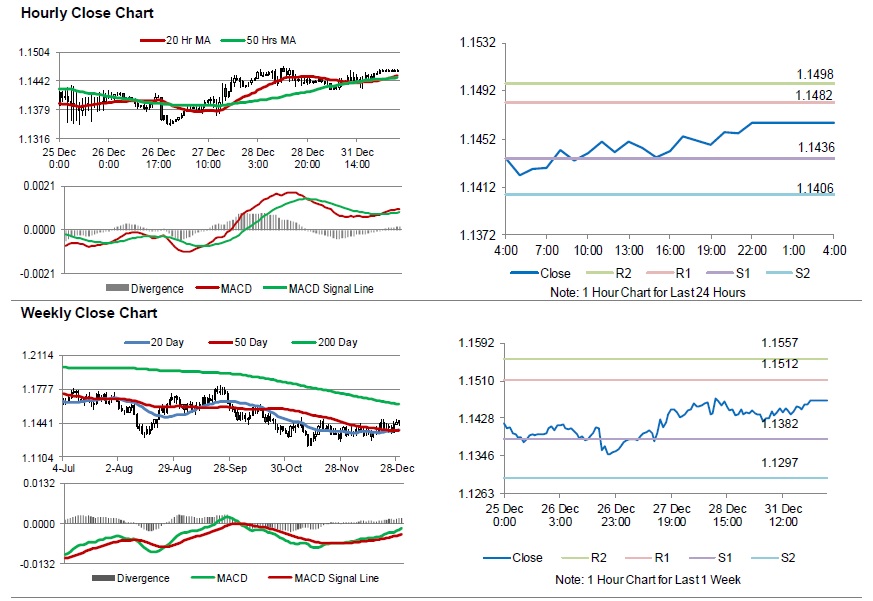
For the 24 hours to 23:00 GMT, the EUR declined 0.87% against the USD and closed at 1.1346, amid weak manufacturing PMI data across the euro-bloc.
Macroeconomic data showed that the Euro-zone's final manufacturing PMI dropped to a 34-month low level to 51.4 in December, at par with market expectations and confirming the preliminary print. In the prior month, the PMI had recorded a reading of 51.8.
Separately, in Germany, the final Markit manufacturing PMI fell to a level of 51.5 in December, hitting its lowest level in 33-months and confirming the preliminary print. In the previous month, the PMI had registered a level of 51.8.
In the US, data indicated that the US final Markit manufacturing PMI declined to a level of 53.8 in December, amid slowdown in growth of new businesses and notching its lowest level in 15 months. Market participants had envisaged the PMI to drop to a level of 53.9. In the preceding month, the PMI had registered a reading of 55.3.
In the Asian session, at GMT0400, the pair is trading at 1.1363, with the EUR trading 0.15% higher against the USD from yesterday's close.
The pair is expected to find support at 1.1282, and a fall through could take it to the next support level of 1.1202. The pair is expected to find its first resistance at 1.1470, and a rise through could take it to the next resistance level of 1.1578.
Amid no major economic releases across the euro bloc, investors would keep an eye on US construction spending for November and ISM manufacturing for December, along with initial jobless claims, due to release later in the day. Additionally, the ADP employment change data for November, will also be on investors' radar.
The currency pair is showing convergence with its 20 Hr moving average and trading below its 50 Hr moving average.
Britain’s Manufacturing Growth Climbed To A Six-Month High Level In December
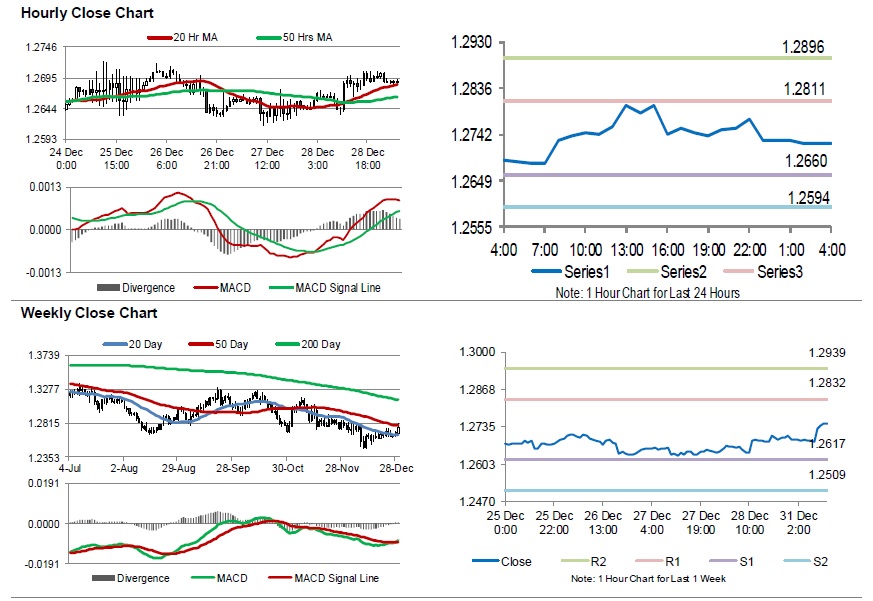
For the 24 hours to 23:00 GMT, the GBP declined 1.39% against the USD and closed at 1.2550, amid mounting worries over Brexit.
On data front, UK's manufacturing PMI unexpectedly advanced to a six-month high level of 54.2 in December, defying market expectations for a fall to a level of 52.5. The PMI had registered a revised reading of 53.6 in the prior month.
In the Asian session, at GMT0400, the pair is trading at 1.2549, with the GBP trading slightly lower against the USD from yesterday's close.
The pair is expected to find support at 1.2402, and a fall through could take it to the next support level of 1.2256. The pair is expected to find its first resistance at 1.2734, and a rise through could take it to the next resistance level of 1.2920.
Trading trend in the Sterling today is expected to be determined by UK's Markit construction PMI for December, slated to release in a few hours.
The currency pair is trading below its 20 Hr and 50 Hr moving averages.
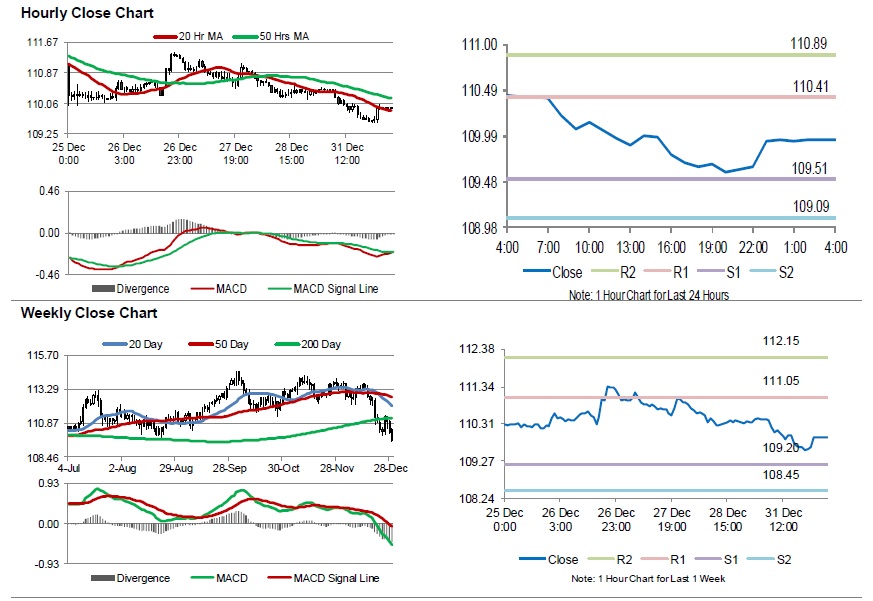
Japanese Yen Extends Its Gains In The Morning Session
For the 24 hours to 23:00 GMT, the USD declined 1.85% against the JPY and closed at 107.36.
In the Asian session, at GMT0400, the pair is trading at 107.19, with the USD trading 0.16% lower against the JPY from yesterday’s close.
The pair is expected to find support at 104.89, and a fall through could take it to the next support level of 102.58. The pair is expected to find its first resistance at 109.48, and a rise through could take it to the next resistance level of 111.76.
Moving ahead, investors would closely monitor Japan’s Nikkei manufacturing PMI for December, scheduled to release overnight.
The currency pair is trading below its 20 Hr and 50 Hr moving averages.
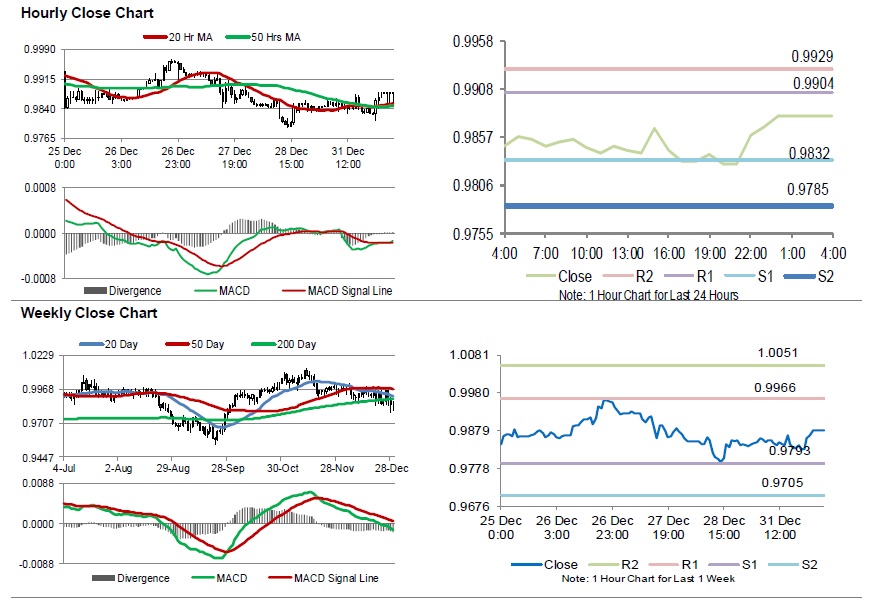
Swiss Franc Reverses Its Losses In The Morning Session
For the 24 hours to 23:00 GMT, the USD rose 0.44% against the CHF and closed at 0.9879.
In the Asian session, at GMT0400, the pair is trading at 0.9870, with the USD trading 0.09% lower against the CHF from yesterday’s close.
The pair is expected to find support at 0.9805, and a fall through could take it to the next support level of 0.9739. The pair is expected to find its first resistance at 0.9928, and a rise through could take it to the next resistance level of 0.9985.
Going ahead, traders would await the release of Switzerland’s manufacturing PMI for December, set to release in a while.
The currency pair is trading in between its 20 Hr and 50 Hr moving averages.
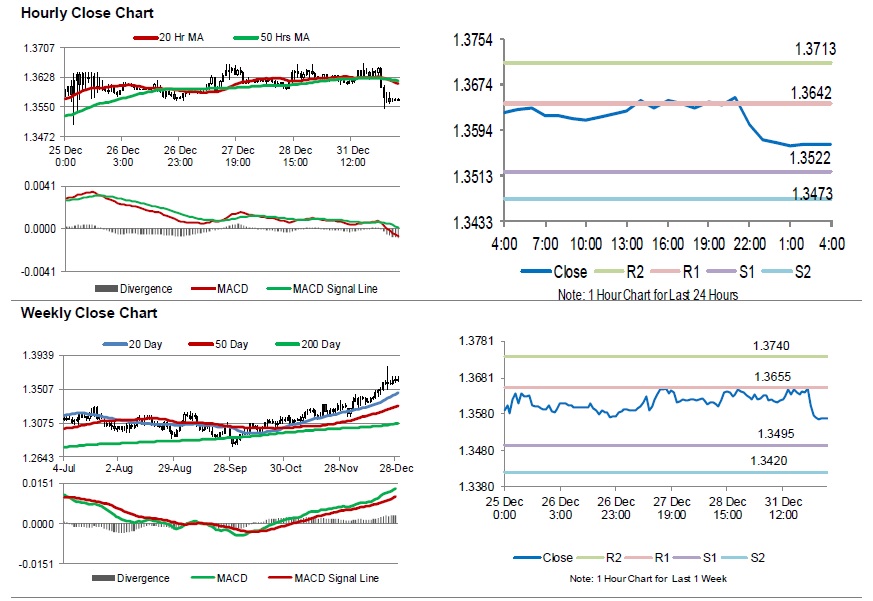
Canada’s RBC Manufacturing PMI Declined In December
For the 24 hours to 23:00 GMT, the USD declined 0.23% against the CAD and closed at 1.3622.
In economic news, Canada's RBC manufacturing PMI dropped to a level of 53.6 in December, compared to a level of 54.9 in the prior month. Moreover, the nation's MLI leading indicator remained unchanged at -0.1% in November.
In the Asian session, at GMT0400, the pair is trading at 1.3636, with the USD trading 0.10% higher against the CAD from yesterday's close.
The pair is expected to find support at 1.3582, and a fall through could take it to the next support level of 1.3529. The pair is expected to find its first resistance at 1.3676, and a rise through could take it to the next resistance level of 1.3717.
Amid lack of major economic releases in Canada today, investor sentiment would be determined by global macroeconomic events.
The currency pair is trading above its 20 Hr and 50 Hr moving averages.
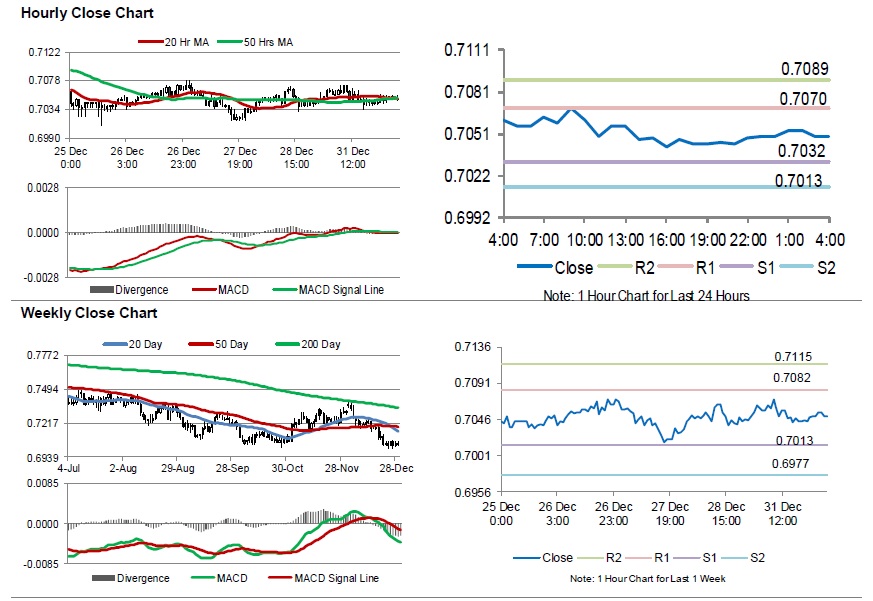
Aussie Reverses Its Losses In The Asian Session
For the 24 hours to 23:00 GMT, the AUD declined 1.70% against the USD and closed at 0.6892.
LME Copper prices declined 2.1% or $126.0/MT to $5839.0/MT. Aluminium prices declined 0.6% or $11.5/MT to $1858.0/MT.
In the Asian session, at GMT0400, the pair is trading at 0.6937, with the AUD trading 0.65% higher against the USD from yesterday’s close.
The pair is expected to find support at 0.6770, and a fall through could take it to the next support level of 0.6604. The pair is expected to find its first resistance at 0.7074, and a rise through could take it to the next resistance level of 0.7212.
Moving forward, traders would await Australia’s CBA services PMI for December, slated to release overnight.
The currency pair is trading below its 20 Hr and 50 Hr moving averages.
Gold: Yellow Metal Trading Higher In The Asian Session
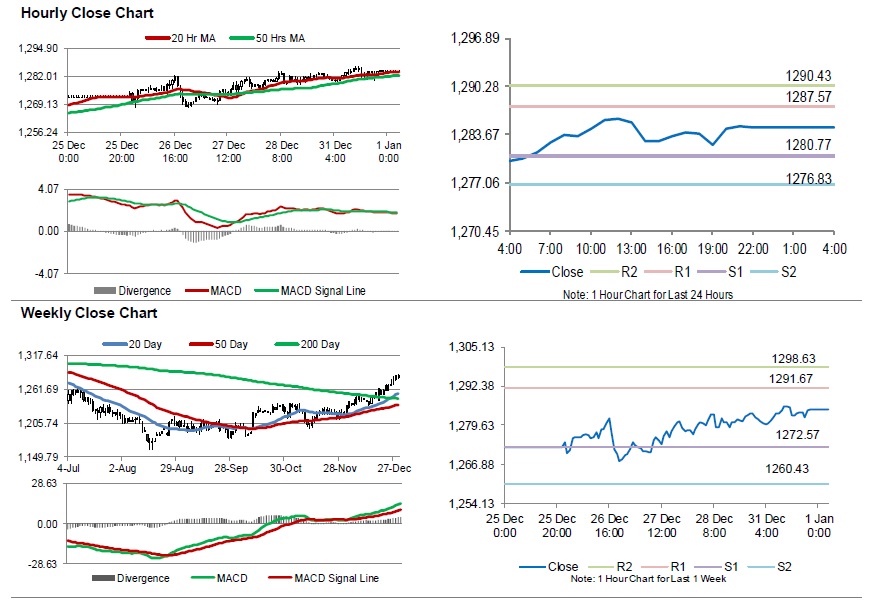
For the 24 hours to 23:00 GMT, Gold rose 0.13% against the USD and closed at USD1286.50 per ounce, as global growth worries increase demand for the precious yellow metal.
In the Asian session, at GMT0400, the pair is trading at 1290.10, with gold trading 0.28% higher against the USD from yesterday’s close.
The pair is expected to find support at 1283.00, and a fall through could take it to the next support level of 1275.90. The pair is expected to find its first resistance at 1294.80, and a rise through could take it to the next resistance level of 1299.50.
The yellow metal is trading above its 20 Hr and 50 Hr moving averages.
Silver: White Metal Trading Flat In The Morning Session
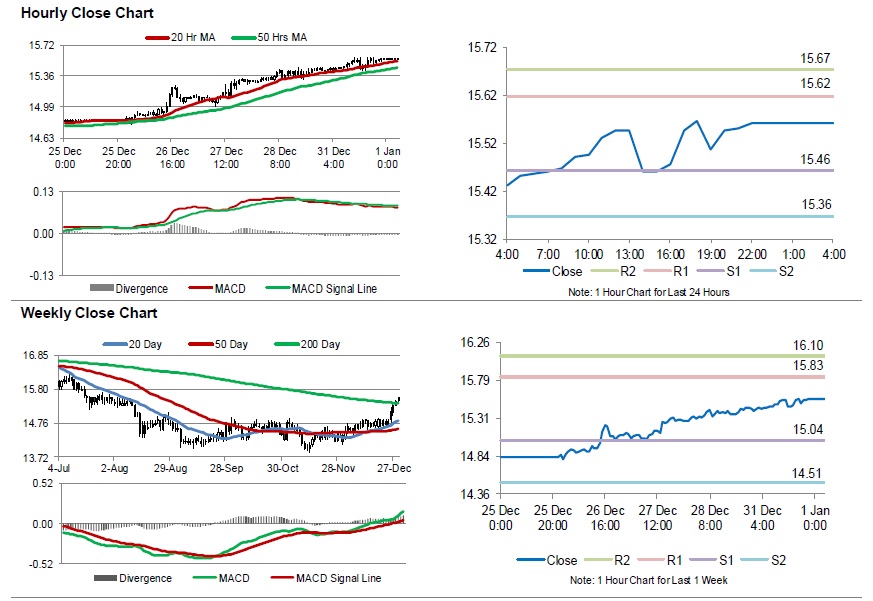
For the 24 hours to 23:00 GMT, Silver rose 1.20% against the USD and closed at USD15.63 per ounce, tracking gains in gold prices.
In the Asian session, at GMT0400, the pair is trading at 15.63, with silver trading flat against the USD from yesterday’s close.
The pair is expected to find support at 15.47, and a fall through could take it to the next support level of 15.32. The pair is expected to find its first resistance at 15.73, and a rise through could take it to the next resistance level of 15.83.
The white metal is trading above its 20 Hr and 50 Hr moving averages.
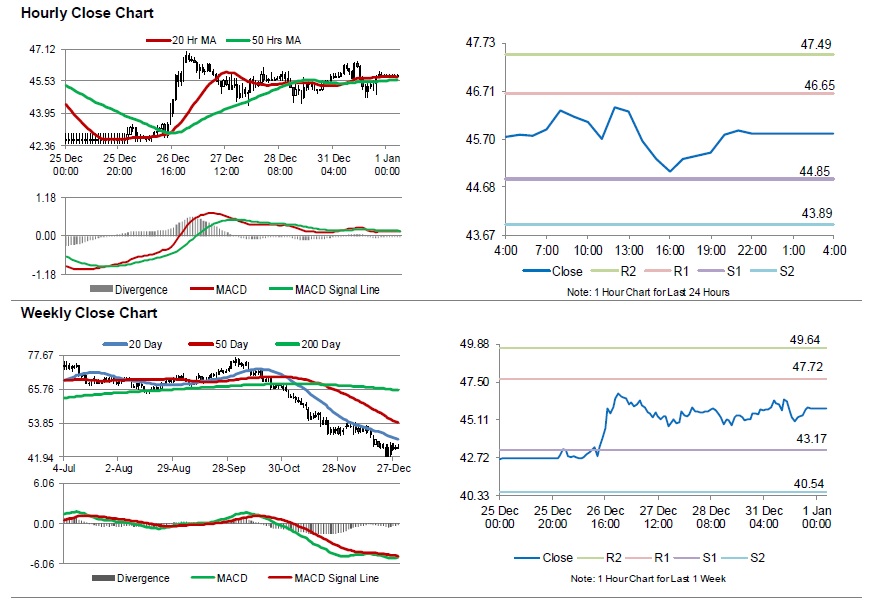
Crude Oil: Oil Trading Lower, Ahead Of API’s Weekly Crude Oil Stockpiles Data
For the 24 hours to 23:00 GMT, Crude Oil rose 1.72% against the USD and closed at USD46.08 per barrel, amid drop in December crude exports from Saudi Arabia and ahead of output cuts by the Organization of the Petroleum Exporting Countries and its allies.
In the Asian session, at GMT0400, the pair is trading at 45.61, with oil trading 1.02% lower against the USD from yesterday's close, amid growing fears of an economic slowdown in 2019.
The pair is expected to find support at 44.05, and a fall through could take it to the next support level of 42.48. The pair is expected to find its first resistance at 47.48, and a rise through could take it to the next resistance level of 49.34.
Crude oil is showing convergence with its 20 Hr and 50 Hr moving averages.