Sample Category Title
USDJPY Still Bearish Below 113.15 Level
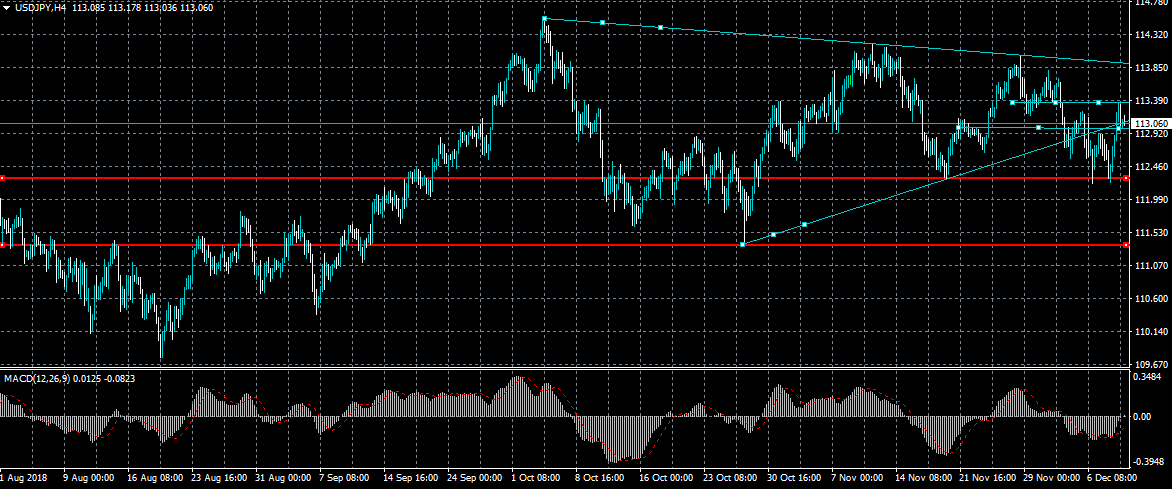
The US dollar has staged a strong recovery higher against the Japanese yen, amidst news that the US and Chinese governments are embarking on a fresh round of trade talks. The USDJPY pair remains bearish while trading below the 113.15 level, as price trades outside the ascending wedge pattern. The recent move higher may be a technical correction, giving indicators a chance to move away from oversold conditions before the next down move occurs.
The USDJPY pair remains bearish while trading below the 113.15 level, key support is found at the 112.20 and 111.50 levels.
If the USDJPY pair trades above the 113.15 level, key resistance is found at the 113.36 and 113.88 levels.
UK wage growth accelerated to fastest since 2008
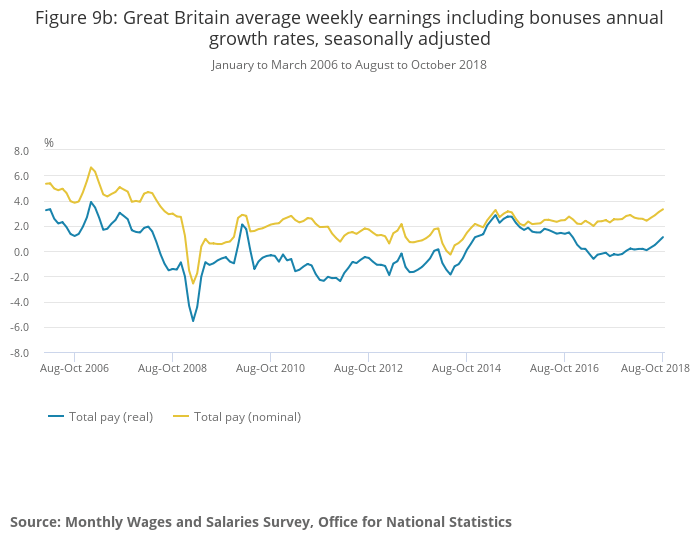
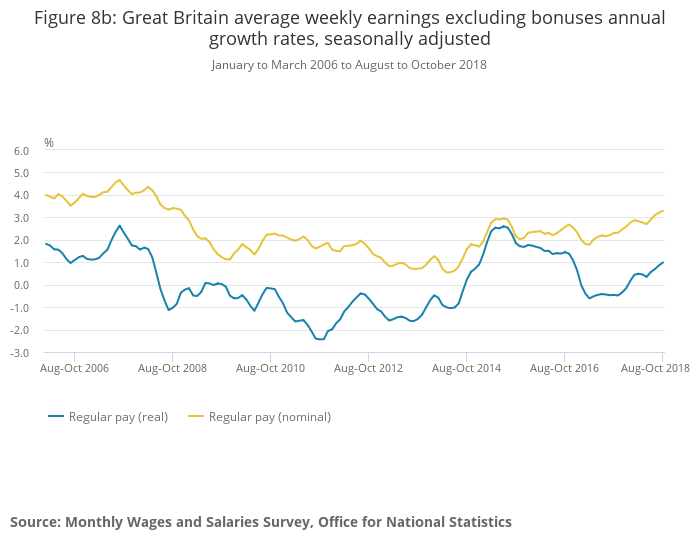
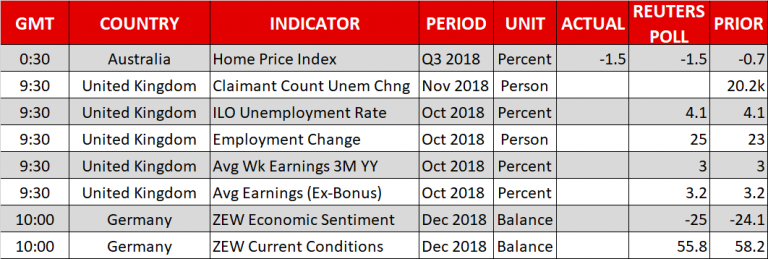
UK unemployment rate was unchanged at 4.1% in the three months to October, matched expectation. However, wage growth was rather impressive. Average weekly earnings including bonus rose 3.3% 3moy, above expectation of 3.0% 3moy. Average weekly earnings excluding bonus also rose 3.3% 3moy, above expectation of 3.2% 3moy. Wage growth was indeed fastest since 2008. Also claimant count rose 21.9k in November, above expectation of 13.2k.
Trade Hopes Calm Markets
Trade hopes calm markets
Equities recovered a bit, after news broke of a teleconference between US Trade Representative Robert Lighthizer, US Treasury Secretary Steven Mnuchin and Chinese Vice Premier Liu He. The troika are discussing the schedule of trade negotiations, and this has comforted rattled markets. Asian shares have moved to positive territory, led by China’s CSI 300 +0.48% while Hong Kong’s Hang Seng budged +0.07%. Japan’s Topix fell 0.91% to its lowest since May 2017 while the Nikkei 225 closed at -0.34%. US automakers Fiat Chrysler, Ford and GM are pushing the US government to restrain imports of Japanese cars. European shares are opening positively, despite worries about the ongoing drama of Brexit. GBP/USD is bouncing back from 1.2561 (10 December low) at 1.2619 and approaching 1.2660 short-term.
The arrest of Huawei CFO Meng Wanzhou on 1 December under order of US authorities, dampened optimism about Sino-American trade talks. Investors have run toward safe havens. Gold is up 2.33%, its highest in five months. The CHF and JPY gained 1.10% and +0.44% against the USD since last week.
Bank of India spikes rupee
USD/INR surged to 72.49 on unexpected news that the Reserve Bank of India’s Governor, Urjit Patel, has resigned. Patel said it was for personal reasons, but clearly, friction between the RBI and government was the real reason. A caretaker has been named until a permanent replacement is named. Watch for USD/INR to retest 70.
Changes in RBI staff are less of a worry for investors then the bank’s independence. With a shifting growth outlook, the credibility of policy makers is critical. There has been some improvement in INR, as local bond yields have retraced 10-15 basis points higher. However, the bigger clues will come on 14 Decembers at the next RBI board meeting. The RBI’s current easing bias does not support investing in INR. Markets are expecting weaker India growth in H1 2019, with lower inflation and a likely rate cut in Q3.
NZD/JPY Blue Box Generates 600 Pips
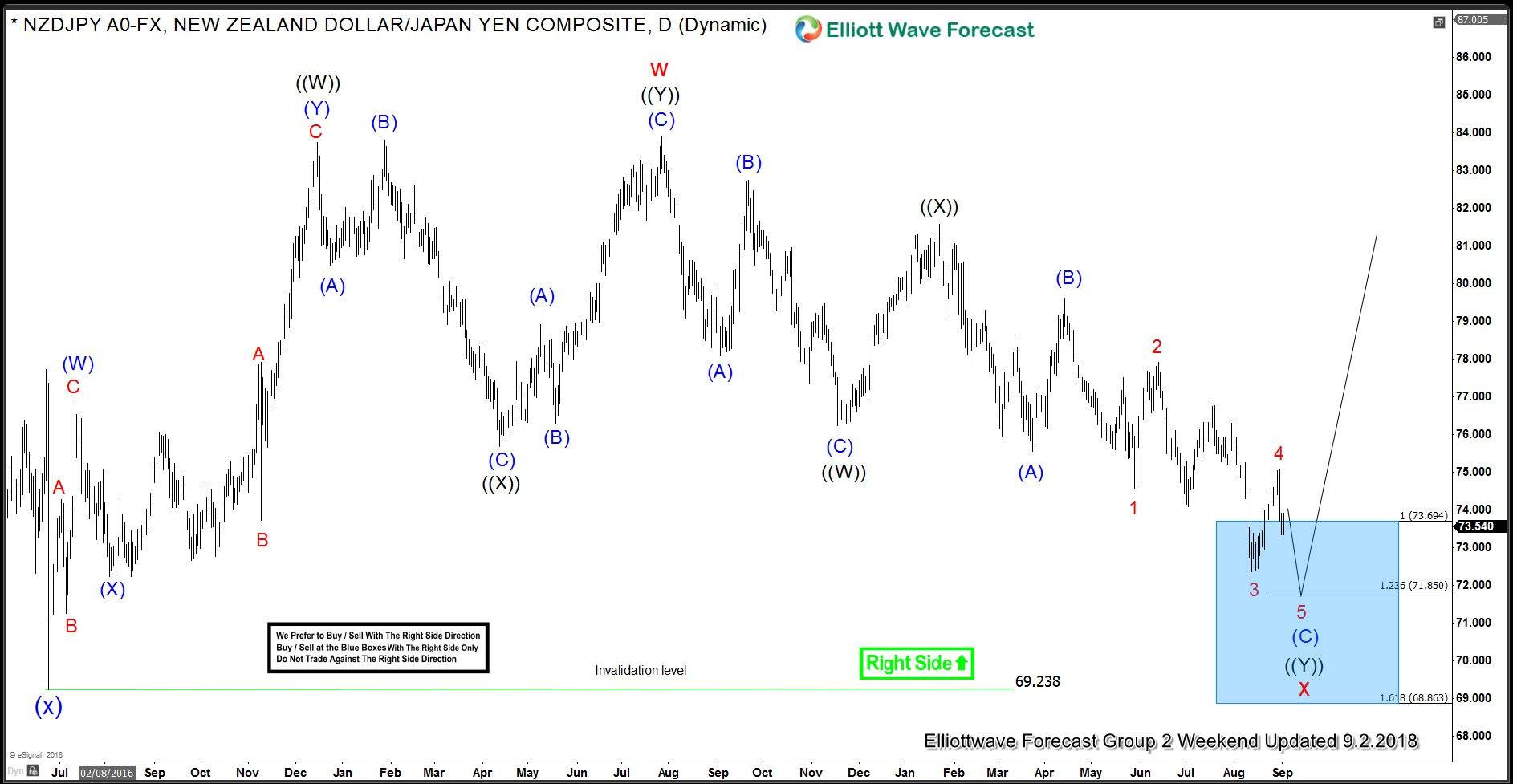
NZDJPY has put in a strong rally over the past couple of months gain 9.14% from a low of 72.25 to a high of 78.86. Earlier this year, we advised clients and followers that pair was reaching an inflection area between 73.70 – 68.86 and pair should find a low in this area and start turning higher. Below, we take a look at daily chart presented to members on 2 September 2018.
NZDJPY 2 September Daily Chart
Later in September 2018, pair reached the inflection area between 73.70 – 68.86 but based on Elliott wave structure and market correlation, we called another low to complete a double three Elliott wave structure down from 7/27/2017 (83.91) peak. After another low, we expected the pair to turn higher and resume the rally for a new high above 83.91 peak or a bounce back toward 50- 61.8 Fibonacci retracement of the decline from 83.91 peak.
In the chart below, we can see that pair made a marginal new low on 9/10/2018 (72.25) and turned up strongly, first leg up ended at 75.54 and we have labelled that as blue wave (1), this was followed by a deep test of 72.25 low to complete blue wave (2) at 72.32, then pair started rallying again and reached a high of 78.86 which is 200% Fibonacci extension of blue wave (1) related to wave (2) and hence could have completed wave (3). As pair has exceeded 161.8 Fibonacci extension of wave (1)-(2) so we are expecting the next pull back to be a blue wave (4) and if the wave count is correct, it should be followed by another high to complete blue wave (5) of black wave ((1)). Afterward, expect a larger wave ((2)) pull back to correct the cycle from 72.25 low and rally to continue. Alternatively, wave rally from 6/24/2018 low could take the form of a double three “wxy” structure rather than “abc” which would mean wave ((1)) could become wave ((A)) and wave ((2)) could be wave ((B)).
NZDJPY Daily Elliott Wave Analysis
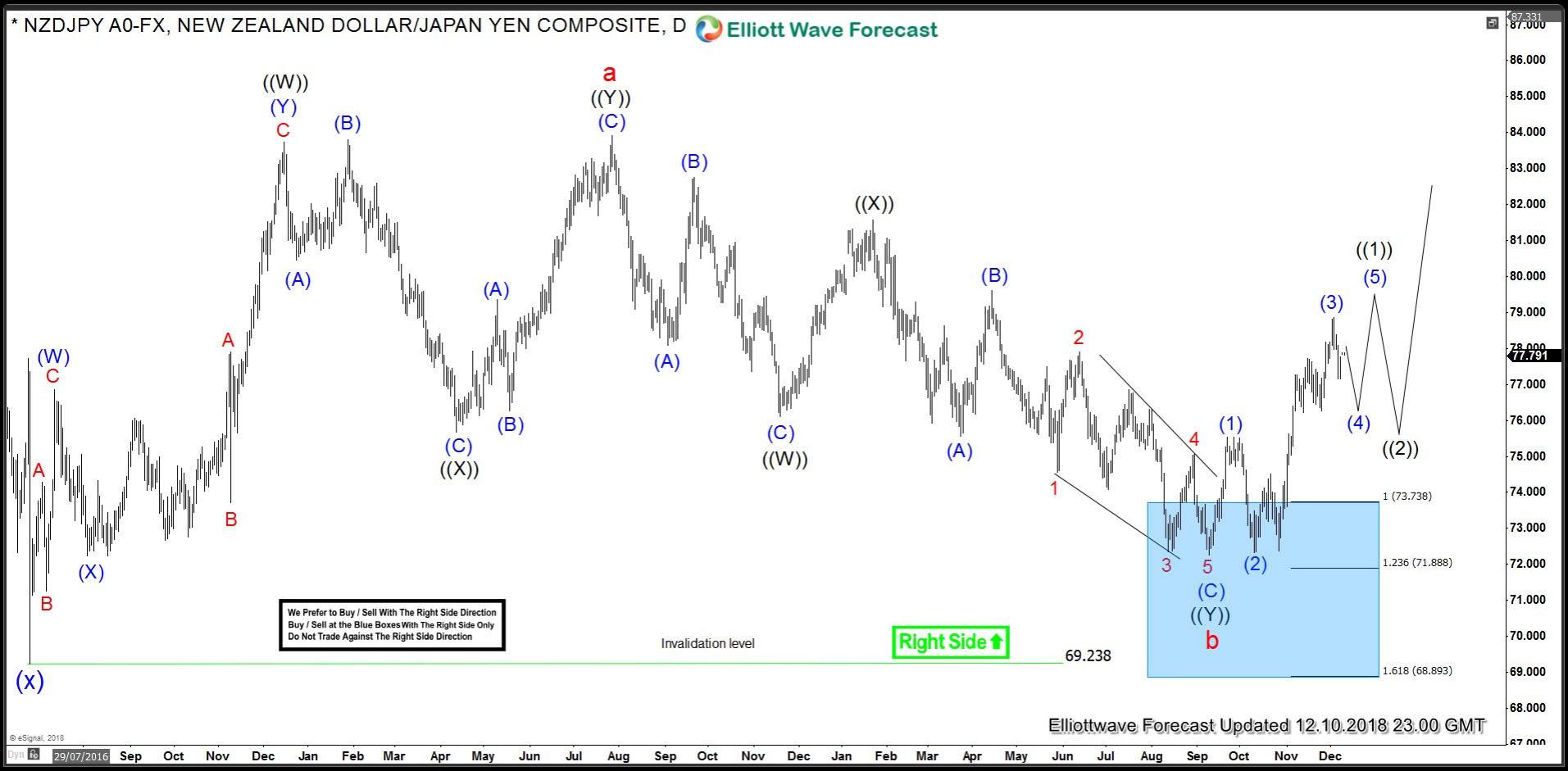
We don’t like selling the pair and we expect buyers to appear in the pull backs in wave (4) and later on in wave ((2)). In order to see the details analysis in the short-term and see the areas where wave (4) can end, possible target for wave (5) and how to define the buying area once wave ((2)) pull back starts, join us and learn to use Elliott Wave Theory in a more practical way.
GBP Is Falling, Brexit Vote Cancelled
The USD strengthened against the major currencies despite the weak economic stats and overall weakened expectations regarding the increase of the key interest rate. The USD index (#DX) closed in the green (+0.73%).
The pound is under pressure due to the ambiguousness regarding Brexit. Today the House of Commons should have had a vote regarding the Brexit agreement. However, Theresa May canceled the vote. The experts are thinking that the Prime Minister is afraid that the Parliament will decline her offer and hopes to convince them otherwise in the mean time.
The prices on oil are consolidating after a recent descent. The WTI futures are testing the 51 USD/barrel mark. At 23:30 (GMT+2) the API will publish a report regarding the reserves of the crude oil.
Market indicators
- Yesterday the US stock market had a bullish mood: #SPY (+0,19%), #DIA (+0,16%), #QQQ (+1,05%).
- The US Treasury bonds 10-year yield is 2,86-2,87%.
The News Feed for 11.12.2018:
- Labour Market reports (UK) – 11:30 (GMT+2:00);
- Economic Mood Index ZEW (GER) – 12:00 (GMT+2:00);
- Manufacturers' Price Index (US) – 15:30 (GMT+2:00).
Pound Weakens As Brexit Vote In UK Parliament Postponed
Cable dropped to the lowest point for 20 months as Theresa May postponed the parliamentary vote on the draft Brexit deal. The deepening UK political uncertainty and further arguments about a possible disorderly Brexit increased insecurity among investors. According to media, UK's PM Theresa May stated that she was delaying the planned vote, as her deal would likely be rejected by a “significant margin”. We would like to note, that scenarios such as a no deal Brexit, another referendum or a last minute renegotiation with the EU have increased chances of materializing after the postponement. It should also be noted that EU Council's president Tusk, ruled out the possible reworking of the Brexit deal and stated that the EU should prepare for a no deal Brexit. We would like to add that the EU may be reluctant to renegotiate the deal, as it could signal a possible EU weakness to other member states contemplating a possible exit. Having said that, in case of a possible renegotiation, we could see the UK focusing on a deadline for the Irish backstop. We see the case for the pound to remain under pressure as political uncertainty continues.
Cable tumbled yesterday breaking all support levels and reaching its lowest point in about 20 months, only to correct higher, staying above the 1.2555 (S1) support line during today's Asian session. We expect the pound to remain under pressure about Brexit, however the release of UK's employment data for October could provide some temporary support. Should the bears continue to reign over the pair's direction we could see it breaking the 1.2555 (S1) support line and aim for the 1.2485 (S2) support barrier. Should on the other hand the bulls take over, we could see the pair rising and breaking the 1.2630 (R1) resistance line, aiming for higher grounds. Please be advised that the pair's RSI indicator in the 4 hour chart has reached the reading of 30 implying a possibly overcrowded short position. Having said that, we would also like to mention we see the case, that any possible substantial good headlines for Brexit could have a disproportionally positive effect for the pair, implying a possible surprise for the market.
USD recovers on Fed expectations
The USD strengthened yesterday against a number of its counterparts, as the market was less pessimistic about the Fed's intentions. Analysts point out the interest rate differentials, between the Fed and other central banks still remain wide and could fuel the USD further. It should be noted that weak data over the past two weeks clouded the prospects of the USD over the next year. Analysts also note that the futures market may currently imply, that traders may expect December's rate hike and only one more in 2019. We could see the market supporting the USD somewhat, as market fears about a very dovish Fed over the next 12 months seem to pause, at least temporarily.
USD/JPY rose yesterday breaking the 112.72 (S1) resistance line (now turned to support and temporarily the 113.25 (R1) resistance level, only to correct lower during the Asian session today. Technically it should be noted that the pair's price action, broke the downward trendline incepted since the 3rd of December, hence we lift our bearish bias for a sideways movement. Should the pair find fresh buying orders along its path, we could see it breaking the 113.25 (R1) resistance line and aim for the 113.95 (R2) resistance hurdle. Should the pair come under the selling interest of the market we could see it breaking the 112.72 (S1) support line and aim for the 112.15 (S2) support level.
In today's other economic highlights:
In today's European session, we get Turkey's current account balance for October, UK's employment data for October and Germany's ZEW indicators for December. In the American session we get the PPI rates for November as well as the API weekly crude oil inventories figure.
GBP/USD H4
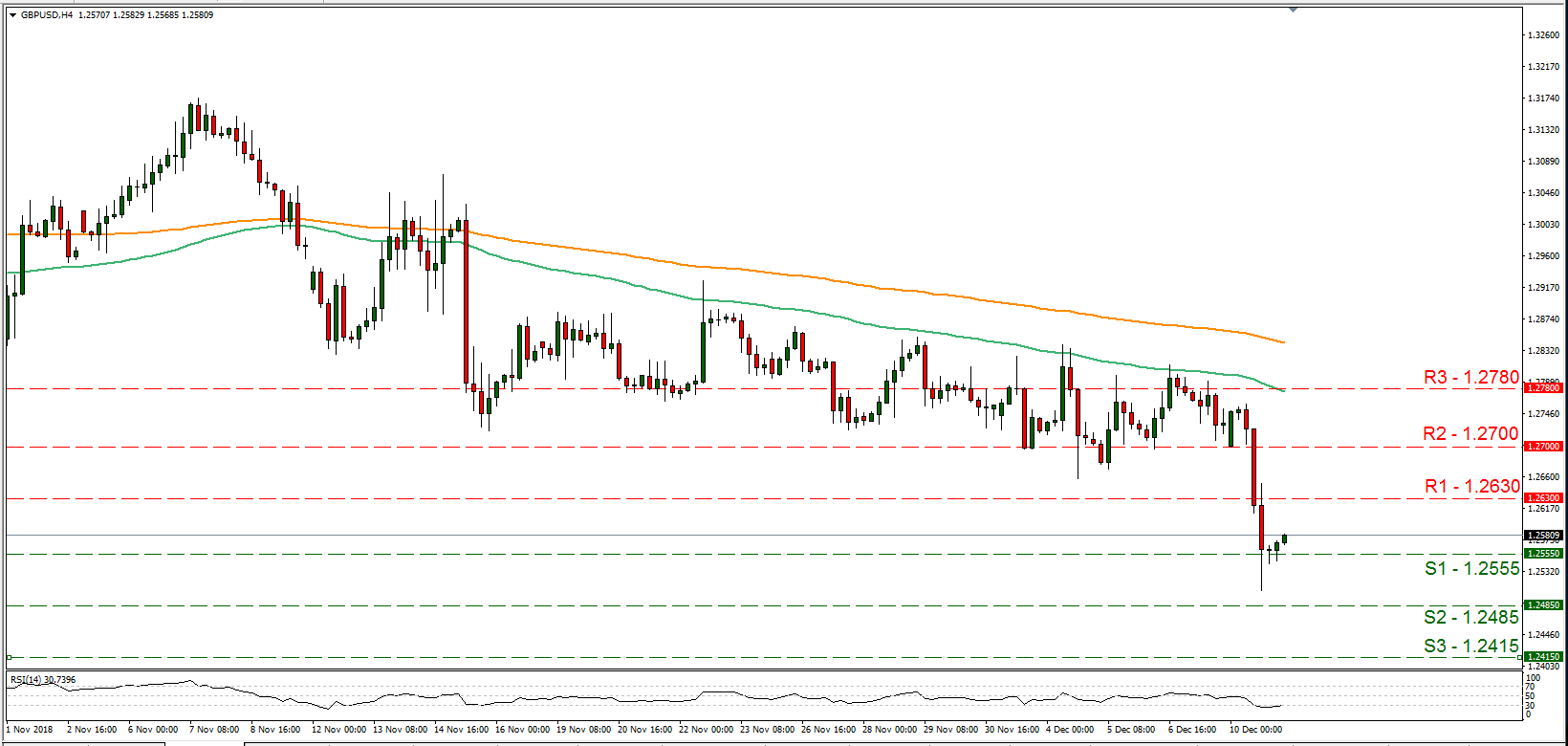
Support: 1.2555 (S1), 1.2485 (S2), 1.2415 (S3)
Resistance: 1.2630 (R1), 1.2700 (R2), 1.2780 (R3)
USD/JPY H4
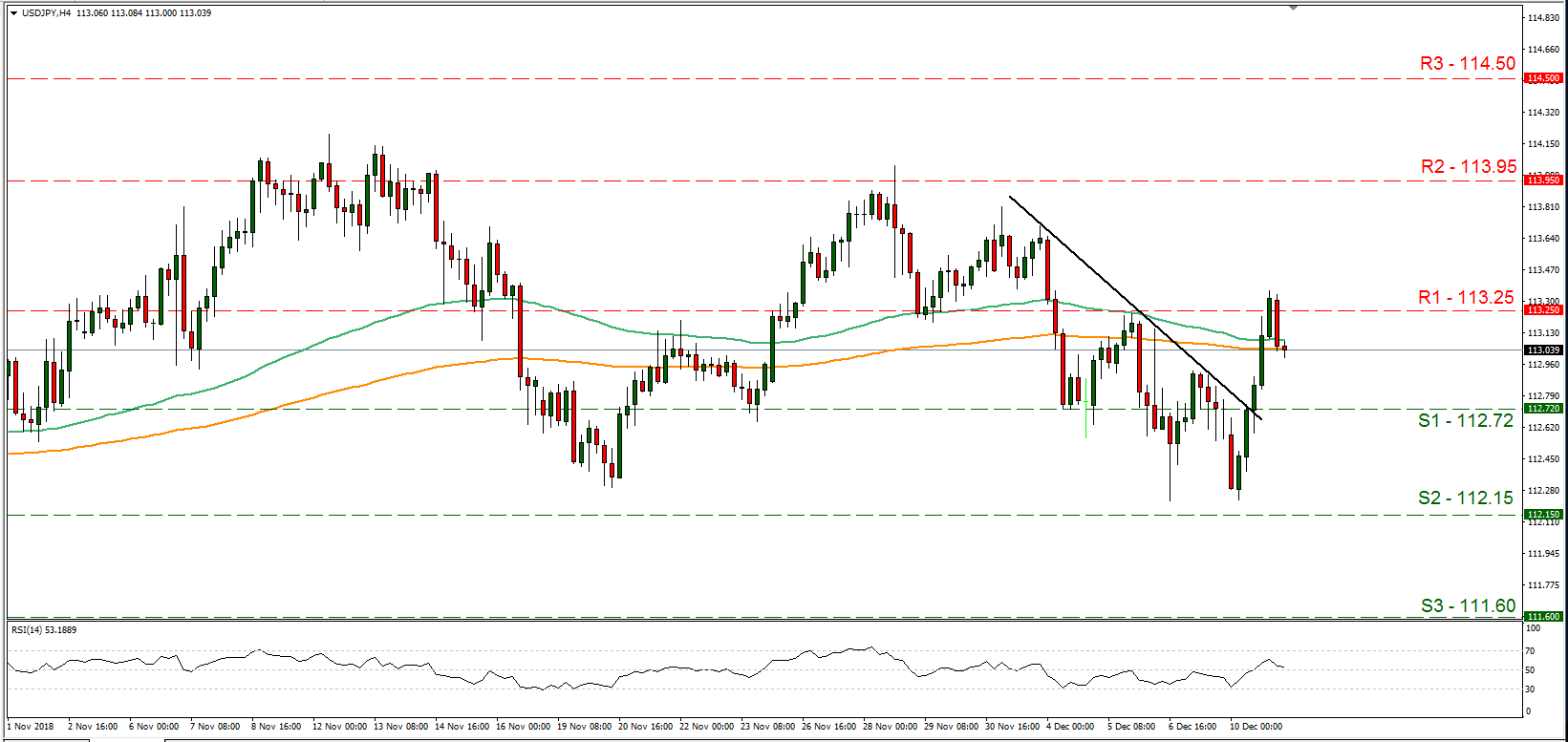
Support: 112.72 (S1), 112.15 (S2), 111.60 (S3)
Resistance: 113.25 (R1), 113.95 (R2), 114.50 (R3)
WTI Crude Futures Develop In Narrow Range After Strong Sell-Off
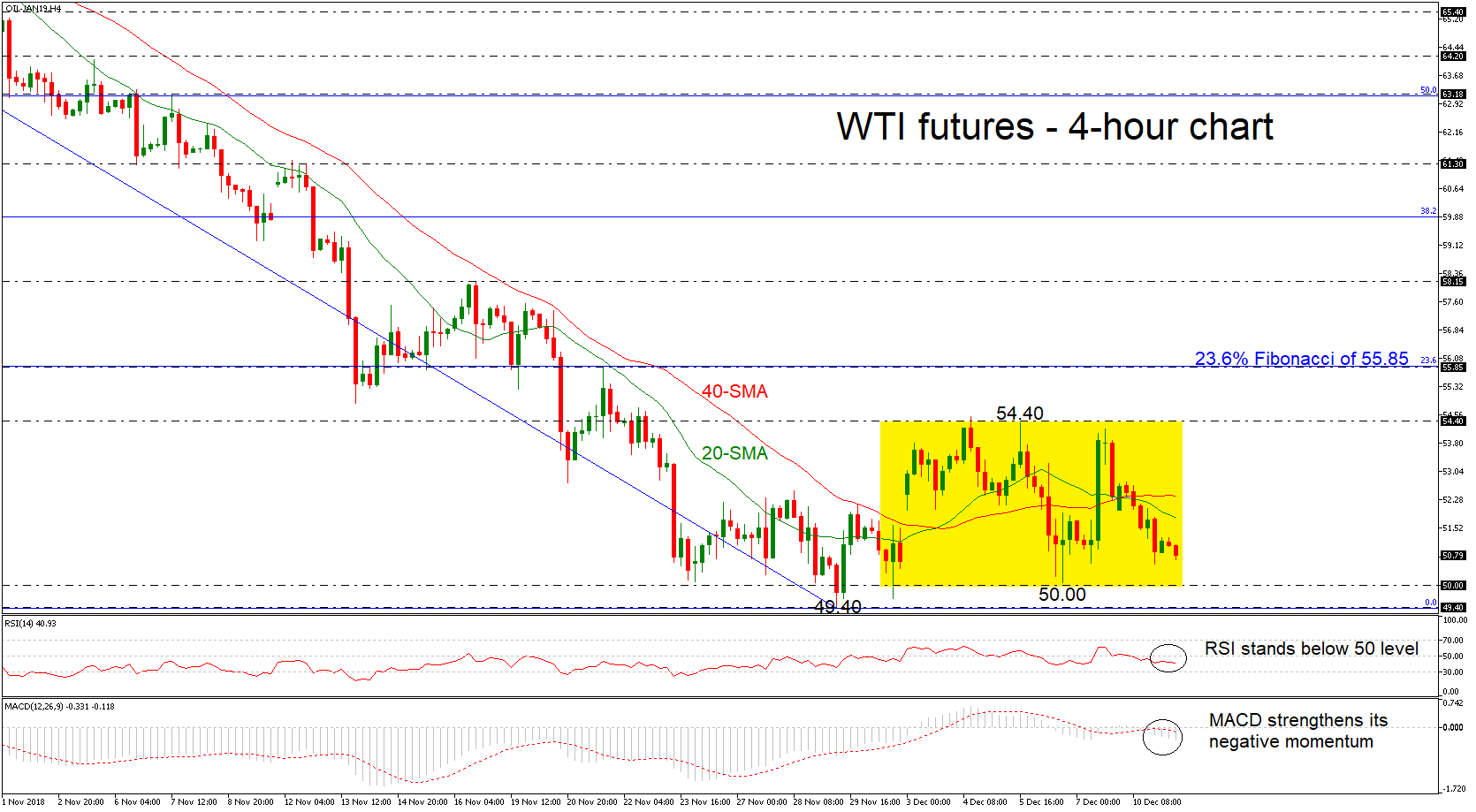
West Texas Intermediate (WTI) crude oil futures have turned neutral after a strong downfall in the previous weeks. The price struggles within a narrow range, with upper boundary the 54.40 resistance level and lower boundary the 50.00 handle. Currently, the price remains below the 20- and 40-simple moving averages (SMAs) and the technical indicators hold in negative area. The RSI is moving below its neutral level of 50, while the MACD is strengthening its negative momentum.
If the price exits from the trading range and dives below the 50.00 level, it could touch the 49.40 barrier, reached on November 29. Another significant stop for bears could come around the 47.76 hurdle, identified in September 2017.
However, in case of an upward movement, the oil price could approach the 20- and 40-SMAs around 51.82 and 52.39 respectively. A climb above these lines could push the market until the upper boundary of the consolidation area of 54.40, while a break above it could challenge the 23.6% Fibonacci retracement level of the downleg from 76.90 to 49.40, near 55.85.
Overall, WTI crude is still developing in a strong bearish tendency following the bounce off the 76.90 resistance. In the very short-term picture though, the market is neutral.
Brexit Vote Delayed And Pound Pays The Price
- US-China discuss trade talks schedule, but markets keep risk-off behavior
- May delays Brexit vote in Parliament; pound drops below 1.26
- Italian budget adjustments not ready yet
US-China discuss roadmap for trade talks
The Chinese Vice Premier, Liu He, is said to have exchanged views with the US Trade Representative, Robert Lighthizer and the US Treasury Secretary, Steven Mnuchin, on how to move trade talks forward on Tuesday, giving some grounds for optimism that a worsening trade war is not in the interest of either nation.
But given the widespread divisions over each other’s trade policies and the sensitivity of the issues, questions remain about how long it will take for the world’s two biggest economies to secure an agreement. And considering the bunch of disappointing data that was recently released out of several key economies and the doubts around the Fed’s rate hiking path in 2019, investors are not ready to invest in riskier assets yet, with US stocks closing with limited gains on Monday and Asian ones trading mixed early on Tuesday.
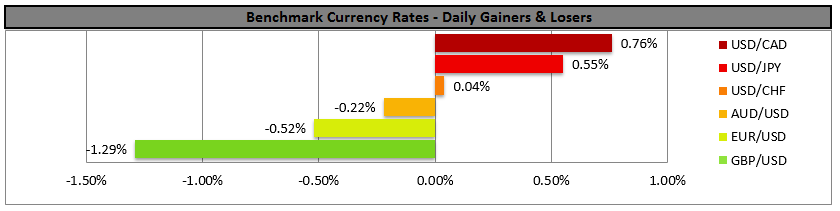
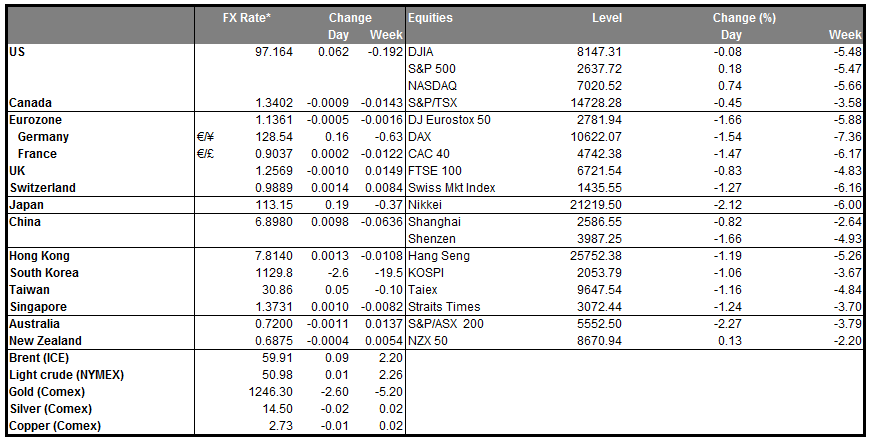
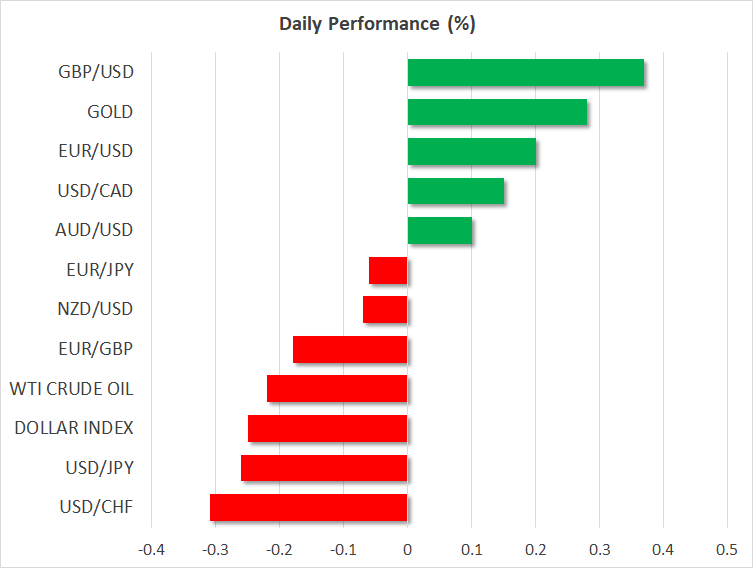
The US dollar was also weaker against six major currencies but marginally so as political concerns in Europe continue to support preference for the greenback. At the same time, the weakness in the dollar kept safe-haven gold elevated slightly above the $1,240/ounce mark.
Brexit vote in Parliament not happening today
In order to avoid an embarrassing defeat in the Parliament today, the UK Prime Minister, Theresa May, decided in the last minute to postpone the long-awaited Brexit vote, sending pound/dollar sharply down to an almost 20-month low of 1.2505 yesterday. With ministers showing strong disagreements about the withdrawal plan agreed by May and the EU leaders, a negative vote was inevitable and May’s very position as Prime Minister was in danger. A strongly negative result could have put May in an untenable position at the EU summit scheduled between December 13-14.
But with the parliamentary vote now not expected before Christmas, May has the chance to ask for concessions from EU leaders, especially on the Irish border backstop, and seek for a plan that would please the majority of ministers in the homeland. If she fails ahead of the January 21 deadline indicated by herself, then a disorderly exit on March 29 will be the most likely outcome as the time for discussions is running out and a second referendum has not been supported much by political parties. That could also trigger a no-confidence vote for May’s leadership and hence be pound-negative.
On the EU side, developments brought a new headache, with the President of the European Council, Donald Tusk warning that the EU will not renegotiate the deal and specifically the Irish border issue. Tusk is expected to meet May as soon as today according to EU officials, while May is expected to hold talks with the German Chancellor Angela Merkel today as well as with other EU leaders.
While the Brexit uncertainty continues to ride high, investors will likely shift some attention back to the calendar and to the employment report for the month of October. Expectations are for employment to have increased by 25k, slightly faster than the 23k rise in the previous month, while the three-month average weekly earnings and the unemployment rate are projected steady at 3.0% y/y and 4.1% respectively. A beat in the data may give a helpful hand to the pound, though gains could be limited in the face of Brexit uncertainty.
Italian budget concessions eyed this week
Meanwhile in the rest of Europe, Brexit is not the only problem as political concerns in Italy, and to a lower extent in France, weigh heavily on sentiment as well, keeping the euro under pressure as euro/dollar continues to move between 1.14 and 1.13.
In Italy, the government has not reached a consensus on the budget yet despite showing willingness to adjust its deficit targets after EU complaints, with the Vice President of the European Commission warning on Monday that little time is left for Rome to change its 2019 spending plans. He also threatened that the EU could move with disciplinary procedures that would potentially lead to fines and cuts of EU funds towards the Italian government if tweaks to the budget appear insufficient. On Wednesday, Italy’s Prime Minister, Giuseppe Conte will meet the President of the European Commission, Jean-Claude Junker in an attempt to avoid such consequences. Turning to France, President Macron is pushing hard to quell weeks of violent anti-government protests triggered initially by the announcement of new gas taxes. To restore order and stop demonstrations that caused severe property damage in the centre of Paris and left people dead, Macron pledged to increase minimum wages and introduce tax cuts for pensioners and overtime workers but declined to bring the wealth tax back into play – the tax his government scrapped in September last year.
Other highlights to watch
The German ZEW Economic Sentiment index for the month of December will come out at 1000 GMT and expectations are for the measure to stretch lower to -25, the lowest since August 2012.
In the US, the US Bureau of Labor Statistics will issue PPI readings at 1330 GMT ahead of CPI figures on Wednesday.
Staying in the US, the API weekly report on US crude inventories will be published at 1530 GMT, potentially bringing some movement of oil prices.
In terms of public appearances, ECB Vice President Luis de Guindos will be delivering remarks at the European Statistical Forum organised by the European Central Bank in Frankfurt, Germany at 0830 GMT.
The one-day conference by the World Trade Organization on “Updating trade cooperation” could attract interest during the day amid boiling trade tensions between the US and China.
2019: The Year of the Deal
This past year saw the realization of a number of key risks. Tariff talk turned swiftly into action, as the U.S. administration taxed imports on a broad range of products, from solar panels and washing machines, to steel and aluminum, to $250bn of Chinese products. Independent of that risk, breakout growth in the U.S. helped to smother the synchronous global growth theme. The resulting expectations for higher interest rates in the U.S. relative to the rest of the world put pressure on emerging market currencies. The most vulnerable and least prepared tipped into a balance of payments crisis, as capital fled to safer harbors. What followed was a slowdown in global trade flows, a dip in consumer and business sentiment, and a late-year selloff in global equity markets.
This unfolded in parallel with a host of other developments. The monetary policy environment became less supportive for economic growth after almost a decade-long expansion pushed G7 central banks to reconsider lax policies for economies that have long left the danger zone on growth. Outside of the U.S., fiscal policy has also become slightly less stimulative, with economies standing on their own legs. On the political front, a number of European countries saw a lean towards populist policies and parties, relative to establishment ones. Italy offers a recent example, with a budget impasse with the EU serving as a reminder of the tension between ideology and economic implications. The ultimate cost is being borne by Italy, where investor angst has raised borrowing costs, which will drag on future growth.
Looking to the year ahead, many of the same concerns will remain in play. After a couple of years of above-trend growth, the global economy will continue to face the gravitational pull back towards trend. Although the recent loss in economic momentum has not been extreme by historical standards, it will be important to closely monitor the interplay between event and late-business cycle dynamics that risk exaggerating market sensitivity.
We’ve produced a timeline of the main risks in scope for 2019 (Figure 1). These risks can be bucketed into three broad categories: event, business cycle and structural. The first four noted in the text below (U.S.-China trade tensions, USMCA, U.S. government finances, and Brexit) are characterized as “event risks” that have specific timelines requiring political solutions. In recent weeks, we’ve seen a push towards resolution on the first three of these event risks, but all of the political measures so far have not succeeded in alleviating market tensions. To make matters more difficult, the countdown towards solutions is getting shorter as we head into 2019.
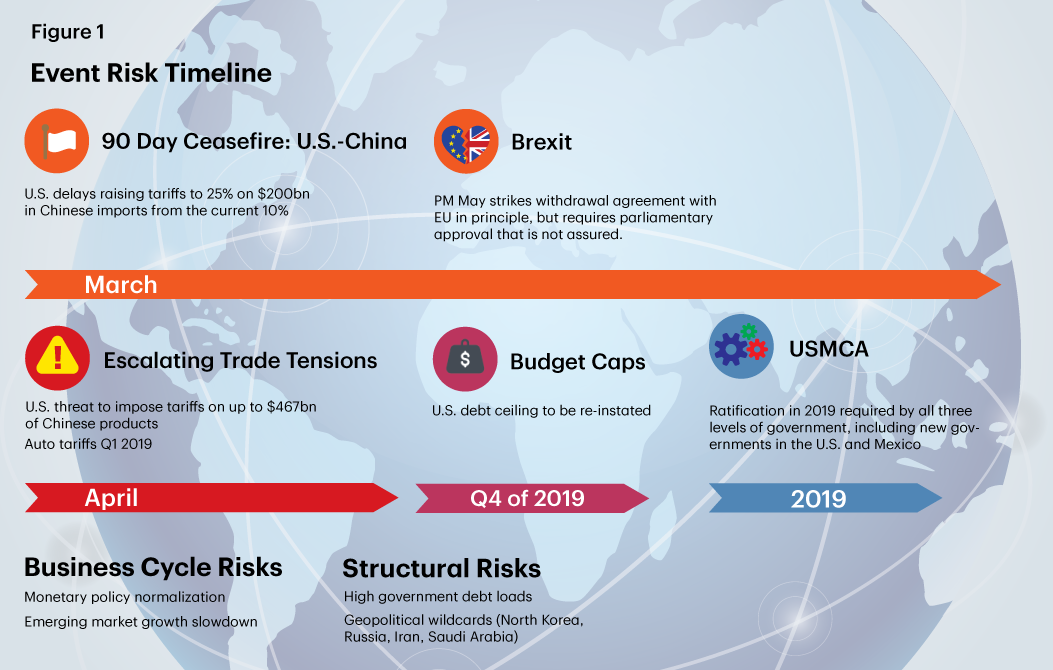
The next two risks under discussion fall into the “business cycle” category (monetary policy normalization and emerging market slowdown). Unlike event risks, these don’t have a defined expiration date, but are highly sensitive to the knock-on effects of event risks that can trigger the vulnerabilities they embed. The final bucket of risks falls under structural and geopolitical concerns that are constantly simmering in the background. This bucket tends not to trigger a downturn, but can certainly act as an “amplifier” once there’s a downturn in sentiment and economic momentum.
What follows is our expectation on how these risks will affect our outlook in the year ahead.
U.S.-China ceasefire doesn’t remove trade risks
The G20 summit ended with the U.S. and China agreeing to delay an escalation in trade tensions until April. Effective immediately, China has promised to import more agricultural, energy, and other products in order to mitigate the size of its trade deficit with the U.S. In addition, there’s also the possiblity of lower tariffs for some products, like autos. From China’s perspective, these promises amount to an extension of previous commitments already offered to other countries. What’s at greater stake is that these token promises do little to assuage a U.S. administration that seeks to address heavy-hitting issues related to intellectual property protection, coerced technology transfer, government subsidies, and non-trade issues such as cyber espionage. As such, the 90-day ceasefire does not dismiss the threat of eventual tariff escalation in the New Year. In fact, it is far easier for China to fulfill a request to increase U.S. product imports, than to show willingness to alter business practices.
Aside from China, the threat of auto tariffs remains in play. The U.S. administration is unhappy with trade imbalances with partners such as Europe and Japan. Auto tariffs remain under national security review using section 232. Should the administration follow through with action, it would likely prove more damaging to U.S. and global growth than all other tariffs, given the global integratation of the auto sector (Chart 1).
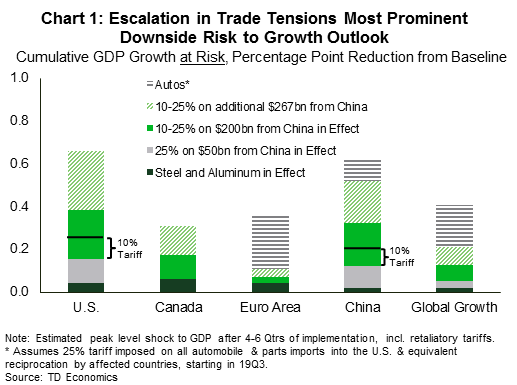
The direct impact of tariffs alone would be insufficient to cause a recession and nimble supply chains would adjust given sufficient time. But, the nerves of financial markets are already raw, and consumer purchasing power would suffer from higher prices, alongside a potentially outsized negative impact from weaker confidence and wealth. This would be a high-stakes game for unintended consequences. Moreover, any trade war escalation would likely have policymakers at the Fed and in China reevaluating their respective economic outlooks. For the Fed this could mean delaying or ceasing the rate hike cycle, while for China it could imply looser credit conditions and more government stimulus spending.
Temporary tariffs generally don’t cause much permanent damage to the global economy, but trade tensions are now running over a year old. The extension into 2019 offers a timespan that could have scarring impacts on global investment decisions and sentiment, more generally.
USMCA (the new NAFTA)
Although an agreement in principle was reached in early October and ceremoniously signed at the G20 summit in November, the USMCA has not been ratified by the newly elected U.S. Congress. In fact, there are already whispers that the Democrats want to revisit some areas related to environmental and labor protections within the agreement. If changes do come into scope and push to far into the year, the risks of a timely ratification could shift from the U.S. to Canada, which will be facing a Federal election in October. In addition, lingering trade uncertainty well into 2019 would weigh on the Canadian and Mexican business outlook and currencies. Lastly, as the steel and aluminum tariffs have proven, the USMCA does not guarantee immunity from U.S. tariffs, with past enactments remaining unresolved.
Once the USMCA is fully ratified, it will likely not be much of a game changer for the signatory countries. The recent GM announcement of the closure of production facilities in both the U.S. and Canada is a stark reminder of that reality. Strong global competitive forces can only be partially addressed by trade agreements. This leaves the balance of risks on USMCA ratification as fairly one-sided at this stage. Any delays or obstacles would re-inject business and investor uncertainty into the outlook, but ratification would not materially change the long-term growth prospects of the three countries where the course is set via strong structural forces.
Tick-tock on U.S. government finances
A rise in global debt, both government and corporate, since the Great Recession was an expected, even prescribed, by-product of years of ultra-low interest rates and loose lending conditions. With monetary policy options virtually exhausted, governments relied on boosting spending to stimulate economic activity in the recession’s aftermath. The problem with debt, however, is that short-term gains to growth eventually give way to deleveraging pain. More formally, governments must eventually address fiscal consolidation. G7 economies are being urged by international agencies to get their fiscal house in order. As a result, fiscal policy is no longer supporting growth to the same degree it used to, and could soon drag on growth in some regions.
The U.S. is the clear exception here and this upcoming March will be an early test of the new Congress. The U.S. debt ceiling will have to be re-instated. Although we expect a compromise to occur, history suggests that Democrats and Republicans will agitate for various political agendas in the lead-up to the deadline. This is likely to inject financial market volatility amidst the mix of event risks that we’ve already described. As always, unintended consequences can occur.
Once that’s resolved, markets will turn their attention to whether Congress will lift budget caps later in the year. Senate Republicans would like defense spending boosted to address emerging risks and to maintain technological superiority. On the other side, House Democrats would prefer to cut back spending to about $700bn from the $733bn proposed by Senate Republicans. The outcome will determine whether defense spending will provide additional economic stimulus in FY2019.
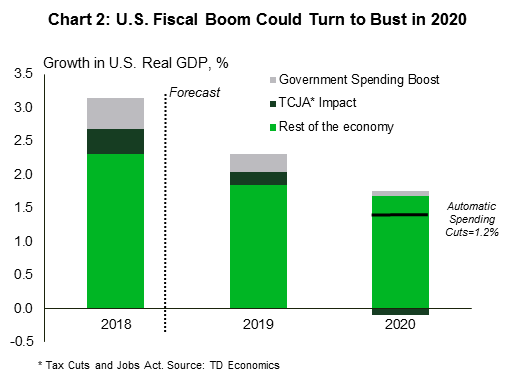
A reluctance to lift budget caps has more serious implications for the U.S. economic outlook relative to the debt-ceiling re-instatement noted above. That’s because failure to do so will cause a large step-down in government expenditures into the economy. To date, this has been adding roughly half a percentage point to GDP growth (Chart 2). In other words, the much-touted 3% growth for 2018 would look more like 2.5% in its absence. Should Congress permit budget spending to revert back to 2017 levels at the end of 2019, the impact would mark down our 2020 GDP growth forecast to a mere 1.2%.
Brexit: deal or no deal
A withdrawal agreement has been reached between the UK and the EU in principle, but still awaits parliamentary approval from the UK and EU. Recent events however, suggest the process is far from over. Next up comes a House of Commons vote, and a meaningful failure of support could trigger a reevaluation of the withdrawal agreement. A no-deal or hard Brexit could severely reduce UK economic activity after the March 2019 deadline, according to estimates provided by both the UK government and scenarios run by the Bank of England.
Deal or no deal, both near-term and longer run growth in the UK is likely to suffer as a result of leaving the EU. A Brexit deal before March outlining the terms of exit would alleviate some uncertainty, but a new trading arrangement between the UK and the EU will still need to be struck in upcoming years.
Ultimately, the long-run hit to the UK economy will depend on the architecture of the new trade agreement. The vote for Brexit was essentially a vote against the current trading arrangement between the two regions. What’s on offer from the EU in its place comes at a cost, not just the £39bn separation fee, but also with the loss of full passporting of financial services. With that comes the relocation of some business from the City to financial centers on the continent. In addition, the UK will be relegated to following EU rules and regulations rather than helping to design them. Lastly, with more friction at the borders and an uncertain future, travel to the UK, population, and labor force growth are all likely to take a hit as well. Combined, these factors forebode weaker growth in the UK, with potential knock-on effects to its trading partners.
Market jitters over policy normalization
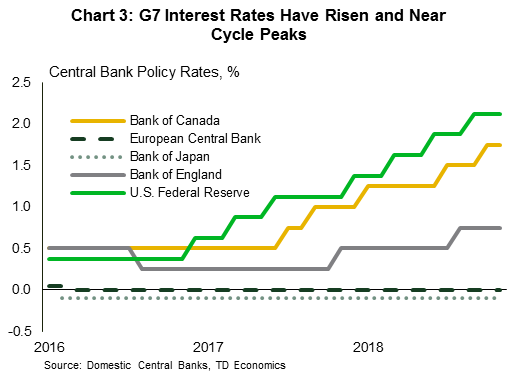
Recent events suggest that maybe central bank balance sheet normalization is not as boring as watching paint dry. The market selloff since October appears to have been at least partly driven by the prospect for higher U.S., and global, interest rates. The U.S. Federal Reserve is on the right track with interest rates given the strength of the economy and the labor market. But, there is a simple reality now in sight. The U.S. interest rate cycle is nearing a peak, which we believe will occur in 2019. This requires cautious stick-handling by the central bank to find the right level of interest rates that both supports economic growth and mitigates the risk of inflation acceleration. Past cycles have informed us that this period can result in some intensification in financial market volatility due to the debate on whether the central bank will correctly strike the right balance. And, don’t forget, their decisions are further complicated by the confluence of event-risks noted earlier that can cloud the economic outlook.
Similarly, the Fed’s peers in Canada, UK, Euro Area, and Japan are reevaluating their outlooks. With some exceptions (ECB, Bank of Japan), the liftoff in global interest rates has occurred (Chart 3). They too must walk the line between market anxiety and the risk of committing a policy error. This will keep central banks in cautious mode in terms of language and the speed of rate adjustments. If triggered, a shallow recession could be easily dealt with by most central banks using the conventional arsenal of interest rate cuts and asset purchases. However, a deeper recession would prove a greater challenge, especially for the ECB which has yet to move rates up from negative territory. Fiscal space is available, but the political environment may not be willing to utilize it (see our prior discussion on the risk from elevated government debt).
Emerging Market Slowdown
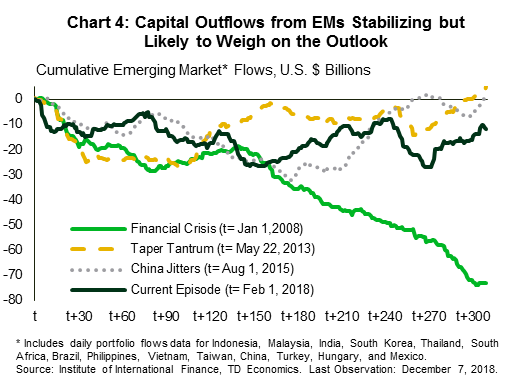
As the primary engine of global growth, emerging markets (EMs) continue to struggle with both common and idiosyncratic factors that are hampering efforts to keep growth at a long-run trend. Although capital outflows have recently eased, the high U.S. dollar and rising domestic and international interest rates will limit the ability of emerging market growth to re-accelerate (Chart 4). Debt sustainability concerns remain top of mind, particularly in countries that are in the throes of a balance of payment crisis, such as Argentina and Turkey. However, poor fiscal positions in Brazil, along with fiscal and banking sector concerns in India, raise the risk of further bouts of capital outflows and weaker economic growth as contagion fears spread.
More concerning is the risk that China’s economy decelerates more-than-anticipated over the next few years. The recent slowdown is evolving largely as prescribed by domestic policymakers, who are deliberately reining in credit growth in order to reduce future financial stability risks. But, U.S. tariffs are adding to that drag on growth, with related spillovers to China’s trading partners in South East Asia, such as Taiwan, Singapore, Hong Kong, and the ASEAN.
Slower growth in EM economies is anticipated to last for the next few quarters, after which we hope some of the near-term pressures lift. Even so, longer-term growth concerns are likely to remain. China and India account for just under 26% of global growth and face divergent challenges. China is aiming for a transition to a service-driven economy and a soft landing after an extended period of unprecedented credit-fueled investment. An engineered slowdown is always a difficult balance and will weigh on its trade partners and on the global commodity complex. On the other hand, India is unable to reform fast enough in order to achieve its full potential. When coupled with a banking sector overburdened with legacy non-performing loans, the outlook calls for comparatively strong (more than 7%) but well-below trend growth. Subpar performances in either of these large EM economies in combination with a structural slowdown in developed markets will pose challenges to faster growing emerging market economies that are heavily reliant on trade.
Geopolitical Wildcards
We end with a brief comment on an exceptionally complex topic: geopolitical outcomes. These can ultimately capture “tail-event risks”, marked by a low probability of occurrence, but a high impact should they unravel. They are purely political outcomes, and are thus difficult to appreciably embed within any economic outlook. Examples include threats of a North Korean nuclear missile launch, Russian aggression within and beyond Ukraine into Eastern Europe and the Baltics, a war with Iran, and the end of the Saudi alliance with the U.S., which could result in a positive oil price shock. Most likely these background concerns could serve as amplifiers to “event” and “business cycle” risks. But, should any one of these, in their extreme, be realized, all bets are off that the current outlook remains in play.
GBP/USD Outlook: Sterling Consolidates Above New 20-Month Low, Near Term Outlook Remains Negative
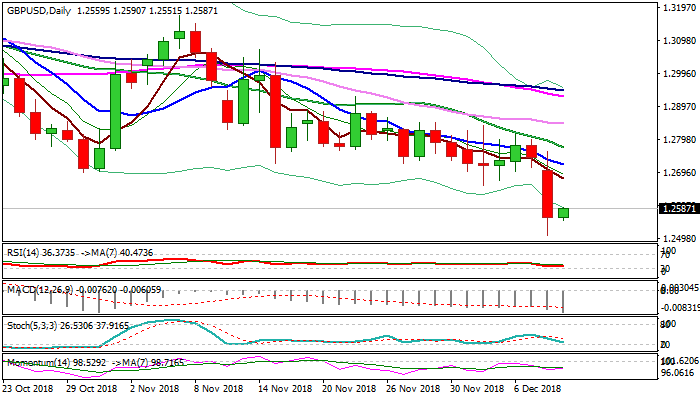
Cable consolidates above new 20-month low at 1.2506, posted on Monday, after 1.10% fall (the biggest one-day fall in Dec).
Pound fell sharply after UK PM Theresa May decided to postpone parliamentary vote on Brexit deal, with rising concerns about possible scenario of chaotic exit of the UK from the European Union, sparking strong sell-off.
Fresh bears met target at 1.2508 (Fibo 76.4% of 1.1930/1.4376, 2016/2018 recovery phase) and could travel lower as bearish sentiment soured further on rising uncertainty.
Fibonacci projections at 1.2418 and 1.2268 (138.2% & 161.8% of bear-leg from 1.3297, 20 Sep high) mark next targets, with 2016 post-Brexit vote lows at 1.20 zone, coming in focus.
Corrective upticks could be seen as positioning for fresh push lower and expected to be capped by former lows at 1.2661/95.
UK jobs data, due today, could provide fresh signals, as forecasts show increase in employment and fall in jobless claims in Nov, while another key indicator, average earnings is expected to show unchanged result at 3%.
Better than expected releases today could boost pound, but stronger bullish signals, which would neutralize strong downside risk, could be expected on break above 1.2719 (falling 10SMA) and 1.2773 (falling 20SMA).
Res: 1.2600, 1.2661, 1.2695, 1.2719
Sup: 1.2551, 1.2506, 1.2418, 1.2365