Sample Category Title
GBP/NZD Bearish Continuation Possible
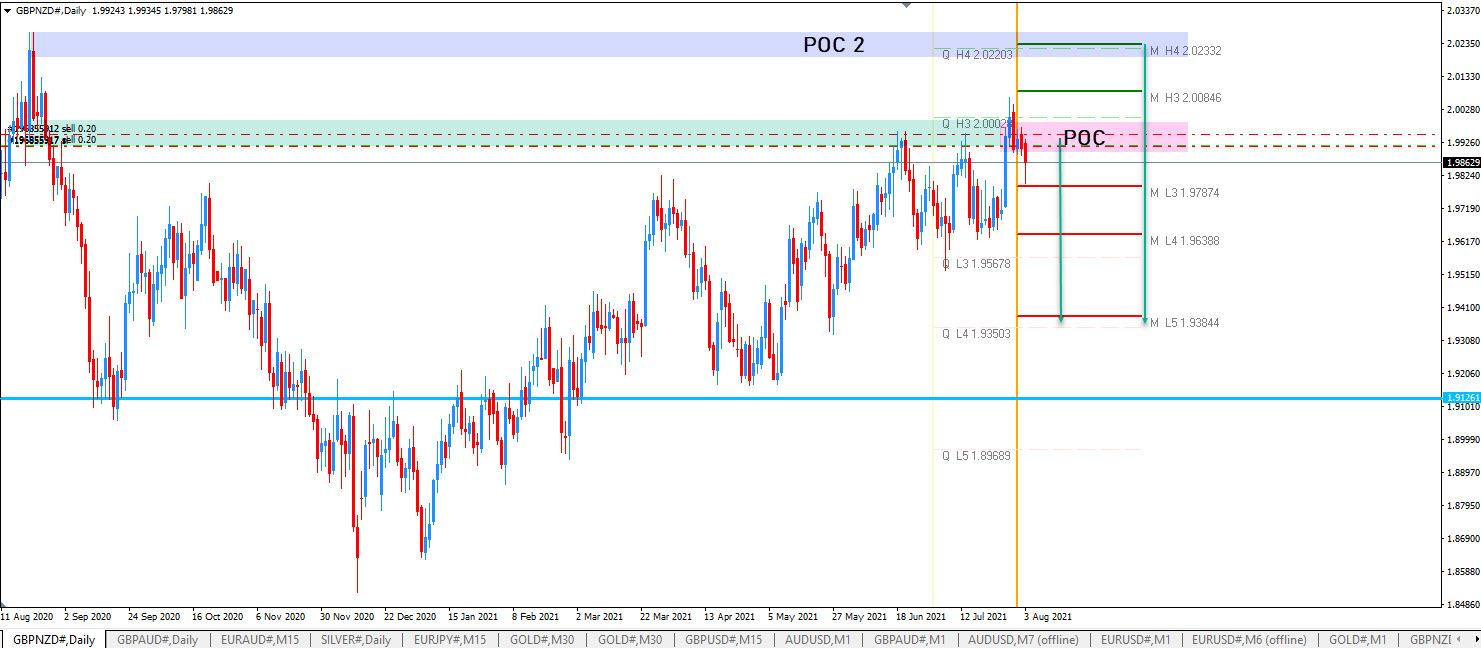
The GBP/NZD is bearish and sellers are taking over. The angle of a drop and retracement is diverging, hinting at a bearish move.
I am already short and have protected more than 350 pips. You can clearly see my shorting levels and the price is following. For the downside continuation, we need to see the market breaking below 1.9787. Targets are 1.9638 and 1.9384. In the case markets gets higher I will sell again (no brainer trade) 2.022 zone.
GBPUSD Advances Above 1.39, Neutral Outlook
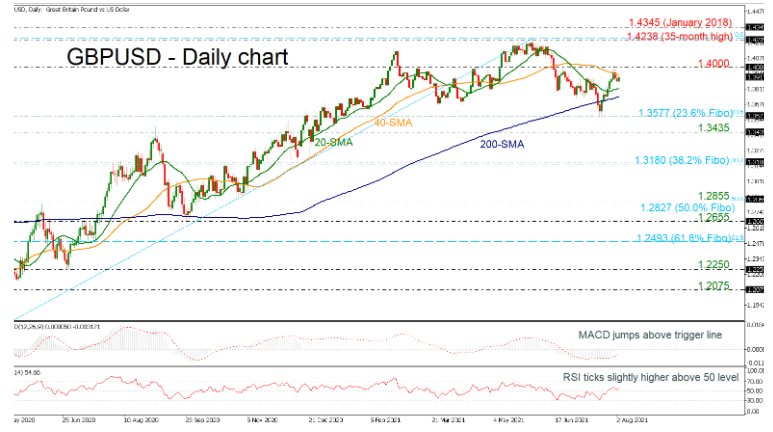
GBPUSD is heading up again after the pullback off the 1.4000 restrictive level and the 40-day simple moving average (SMA) last week. The RSI indicator is mirroring the latest upside correction in the price, while the MACD is also reflecting some improvement in buying interest, advancing above its trigger line and trying to surpass the zero level.
A decisive close above the nearby resistance of 1.4000 could boost buying pressure towards the 35-month peak of 1.4238. Stretching further up, the bulls may next haunt the 1.4345 barrier, taken from the top on January 2018.
In the event of a downside move the 20- and 200-day SMAs, which are currently near 1.3813 and 1.3740 respectively, may ease selling forces. Failure to bounce here, could bring the 23.6% Fibonacci retracement level of the up leg from 1.1405 to 1.4238 at 1.3577 into view ahead of the 1.3435 line.
In the bigger picture, the market has been trading within a consolidation area since February. A drop below the 1.3577 support would disturb this sideways trajectory, shifting the outlook to bearish.
Currency Markets Are Sleepless In Seattle
US dollar trading in tight range
Currency markets traded sideways overnight, with the US dollar remaining in tight ranges versus both developed and emerging currencies. The fall in US 10-year yields only really impacted USD/JPY, which has long been a pure rate differential play. Unsurprisingly, USD/JPY fell 0.37% to 109.35 overnight, edging lower to 109.20 this morning. It is now approaching support at 109.10, with this region having provided support since early May. Another leg down in US yields tonight should see USD/JPY breakthrough 109.00 on its way to 108.50 and potentially 107.00.
Otherwise, the dollar index was almost unchanged at 92.06. The dollar index remains mid-point between its breakout lower at 92.60 and structural support at 91.50, also home to its 100-day moving average. A break of either 91.50 or 92.60 will signal the dollar’s next directional move.
EUR/USD and GBP/USD remained steady at 1.1880 and 1.3895, as did the rest of the majors. USD/CNY remains anchored at 6.4650 with the Indian Rupee, Indonesian Rupiah, Malaysian Ringgit and Thai Baht enjoying a night of relative calm. The most significant currencies likely to show any volatility in the next 24 hours are the Australian and New Zealand Dollars. The RBA policy meeting was somewhat hawkish, as the central bank revised its economic forecasts upwards. RBA Governor Philip Lowe sounded positive about Covid, despite the current lockdowns, saying that “the experience to date has been that once virus outbreaks are contained, the economy bounces back quickly.”
On Wednesday, New Zealand releases key employment data, and robust numbers could potentially spur a 100 point rally to 0.7100 for the kiwi. The RBNZ is widely expected to hike interest rates at its August meeting, and strong job numbers will further solidify a hike.
For now, currency markets look for all the world to have entered an extended wait-and-see mode ahead of Friday’s US Non-Farm Payroll data. Only a spike in Covid-19 cases in China this week is likely to lift that lethargy, which should favour the US dollar.
Global Financial Markets Are Under Pressure Amid Rising Cases Of Delta Variant In China
The US stock market ended Monday's trading without a single dynamic. The Dow Jones index decreased by 0.28%, the S&P 500 index decreased by 0.19%, and the NASDAQ technology index increased by 0.06% at the close of the stock market. The number of stocks that fell in price exceeded the number that closed on the plus side (1,755 vs. 1,436). Investors did not like the data from the US manufacturing sector, as it raised concerns about further economic recovery. Positive reports from companies do not help indexes strengthen. More and more economists are inclined to the fact that at the annual symposium in Jackson Hole on August 27, the Federal Reserve representatives can announce the cutting of stimulus, which will cause a large sell-off in the stock market.
The US Republican Party released an investigation which states that all possible evidence they have collected points to a SARS-CoV-2 type coronavirus due to a leak. There is growing public confidence that the US should punish China for failing to warn the international community about the virus outbreak quickly and does not want to cooperate with the investigation.
European stock indexes grew on Monday. Germany's DAX increased by 0.15%, Britain's FTSE 100 added 0.70%, France's CAC 40 and Spain's IBEX 35 jumped by 1%. The European market was supported by good statistical data from Germany and the UK, as well as strong company reports. The British economy is gaining momentum. Almost all restrictions have been lifted in the country, and the vaccination rate among adults is 90% (1 dose). The International Monetary Fund (IMF) will allocate $650 billion from its reserves (the record amount of the fund's allocation of history) for the economic recovery of member countries. $275 billion will go to developing countries, while $375 billion will go to emerging market countries.
Oil prices fell more than 2.5% on Monday. Fears about the rapid spread of the Delta strain in Asian countries, including China, are still growing in the oil market and are likely to slow the global economic recovery and weaken global demand for raw materials. Many analysts think China's weak business activity statistics in the manufacturing sector result from the Delta's spreading.
The situation in the precious metals market remains unchanged. Recently, gold shows very weak dynamics and has been flat most of the time. Analysts expect the dollar index to rise in the coming days, which may cause a temporary decline in the price of gold and silver.
Asian stock indices are falling amid a rise of Delta strain in Asian countries, especially in China, which has restrained the spread of the virus for a long time. Investors have realized that China's economy is not invulnerable. In China, many factories and logistics firms are closing, hotels are also closing, and mass testing measures are rolled out. The Reserve Bank of Australia kept its interest rate unchanged and also left its quantitative easing program unchanged, despite the growing economic threat posed by restrictions to fight the pandemic coronavirus. RBA Governor Philip Lowe says that the economic outlook for the coming months is uncertain and depends on the development of the disease situation. Economists expect GDP to fall in September because of the impact of the restrictions.
Main market quotes:
- S&P 500 (F) 4,387.16 -8.10 (-0.18%)
- Dow Jones 34,838.16 -97.31 (-0.28%)
- DAX 15,568.73 +24.34 (+0.16%)
- FTSE 100 7,081.72 +49.42 (+0.70%)
- USD Index 92.07 -0.10 (-0.11%)
Important events for today:
- Australia RBA Interest Rate Decision at 07:30 (GMT+3);
- Australia RBA Rate Statement at 07:30 (GMT+3).
The Analytical Overview Of The Main Currency Pairs
The EUR/USD currency pair
Technical indicators of the currency pair:
Prev Open: 1.1862
Prev Close: 1.1868
% chg. over the last day: +0.05%
The business activity index in the manufacturing sector in Germany and the Eurozone slightly increased in June. Manufacturers remain optimistic about the next 12 months as the global economic recovery demonstrates positive dynamics amid growing vaccination while businesses adjust to restrictions.
Trading recommendations
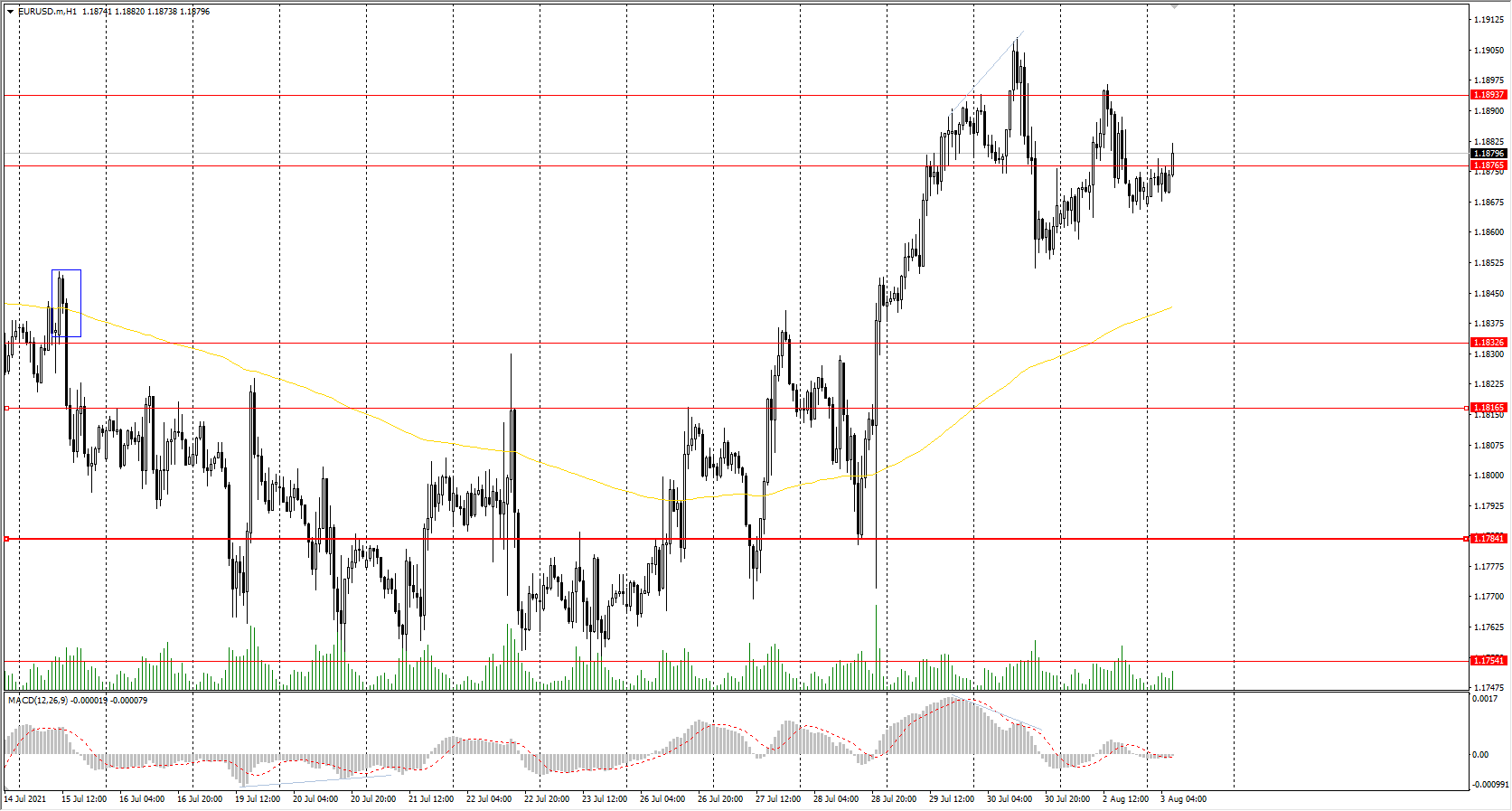
Support levels: 1.1833, 1.1817, 1.1784, 1.1754, 1.1609
Resistance levels: 1.1876, 1.1894, 1.1934, 1.1969
From the technical point of view, the general trend of the EUR/USD currency pair is bullish. The price is trading above the moving average now; the MACD indicator has become inactive. Under such market conditions, it’s better to consider intraday trading. Buy positions should be considered only after a pullback to the support level. Sell deals should be considered from the resistance levels, but only with short targets.
Alternative scenario: if the price breaks through the 1.1784 support level and fixes below, the mid-term uptrend is likely to be broken.
The GBP/USD currency pair
Technical indicators of the currency pair:
Prev Open: 1.3888
Prev Close: 1.3886
% chg. over the last day: -0.01%
According to government statistics, more than 90% of British adults have been vaccinated with the first dose. The number of COVID-19 cases is decreasing in the United Kingdom. Last week, the British pound was one of the best-performing currencies, which strengthened steadily and was dependent on the dynamic of the dollar index a bit. The level of business activity in the manufacturing sector remained unchanged.
Trading recommendations
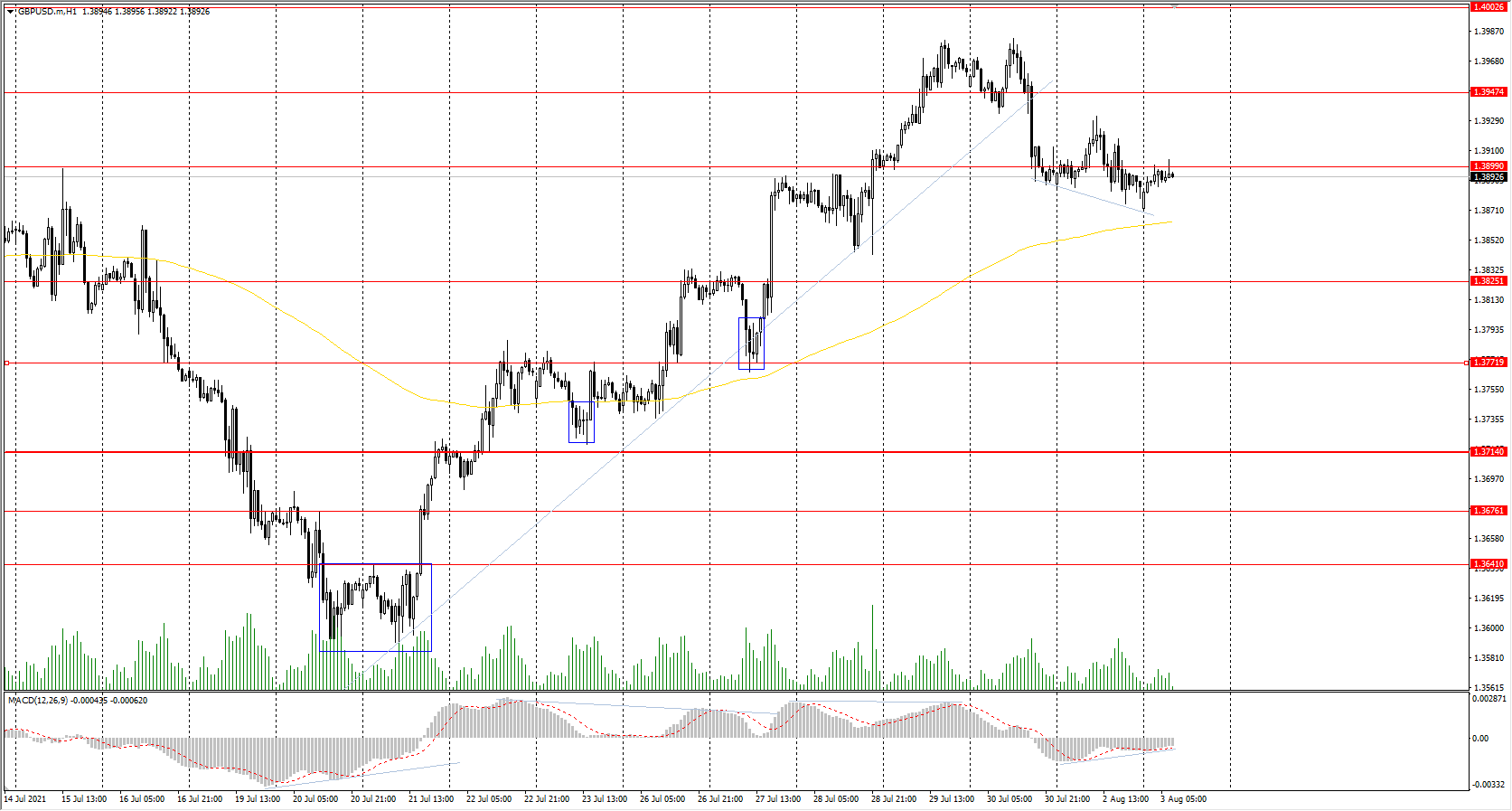
Support levels: 1.3825, 1.3772, 1.3714, 1.3676 ,1.3641, 1.3614, 1.3525
Resistance levels: 1.3900, 1.3947, 1.4002, 1.4075, 1.4101
The GBP/USD currency pair trend is bullish on the H1 timeframe. The MACD indicator went into the negative zone, but there are already first signs of a reversal. Under such market conditions, traders can look for buy positions after the buyers show initiative. There are no optimal points for sell positions right now. Traders can search for intraday sell entries from the resistance level with short targets, but they should understand that it will be trading against the main trend.
Alternative scenario: if the price breaks through the 1.3714 support level and consolidates below, the bearish scenario is likely to resume.
The USD/JPY currency pair
Technical indicators of the currency pair:
Prev Open: 109.67
Prev Close: 109.31
% chg. over the last day: -0.33%
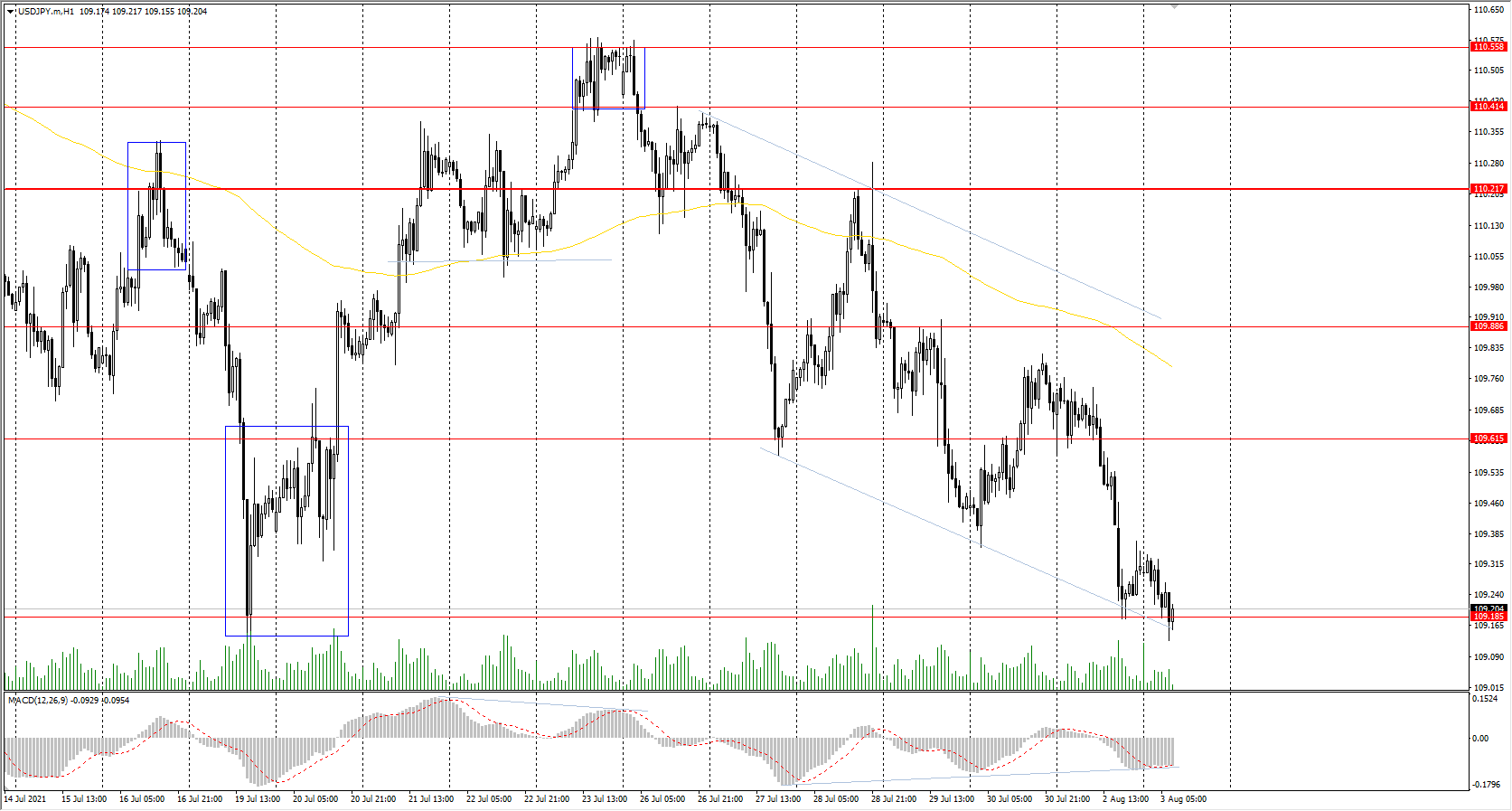
The USD/JPY currency pair decreased by 0.33% on Monday. The strengthening of the Japanese yen was primarily due to the rise in the 6J futures yesterday (inverse correlation). But now, the futures reached the resistance level, while the USD/JPY went to the support level. Considering the divergence on the MACD indicator, a corrective bounce is highly probable. The Japanese Ministry of Finance raised its economic estimates for 3 out of 11 regions of the country and also kept its positive outlook for the third quarter.
Trading recommendations
Support levels: 109.19, 108.65
Resistance levels: 109.61, 109.88, 110.22, 110.41, 110.56
The main trend of the USD/JPY currency pair is bearish. The price is trading below the moving average now, but it has deviated strongly from the average line. Considering the divergence on the MACD indicator, traders can look for buy positions, but only with short targets, as it will be trading against the main trend. For sell positions, it is necessary to wait for a pullback to the resistance level.
Alternative scenario: if the price rises above 110.22, the uptrend is likely to be resumed.
The USD/CAD currency pair
Technical indicators of the currency pair:
Prev Open: 1.2476
Prev Close: 1.2502
% chg. over the last day: +0.21%
The Canadian dollar is highly dependent on the dollar index and the oil price dynamics. Oil prices fell sharply yesterday, which caused a decline in the Canadian dollar futures and the growth of USD/CAD quotes (inverse correlation).
Trading recommendations
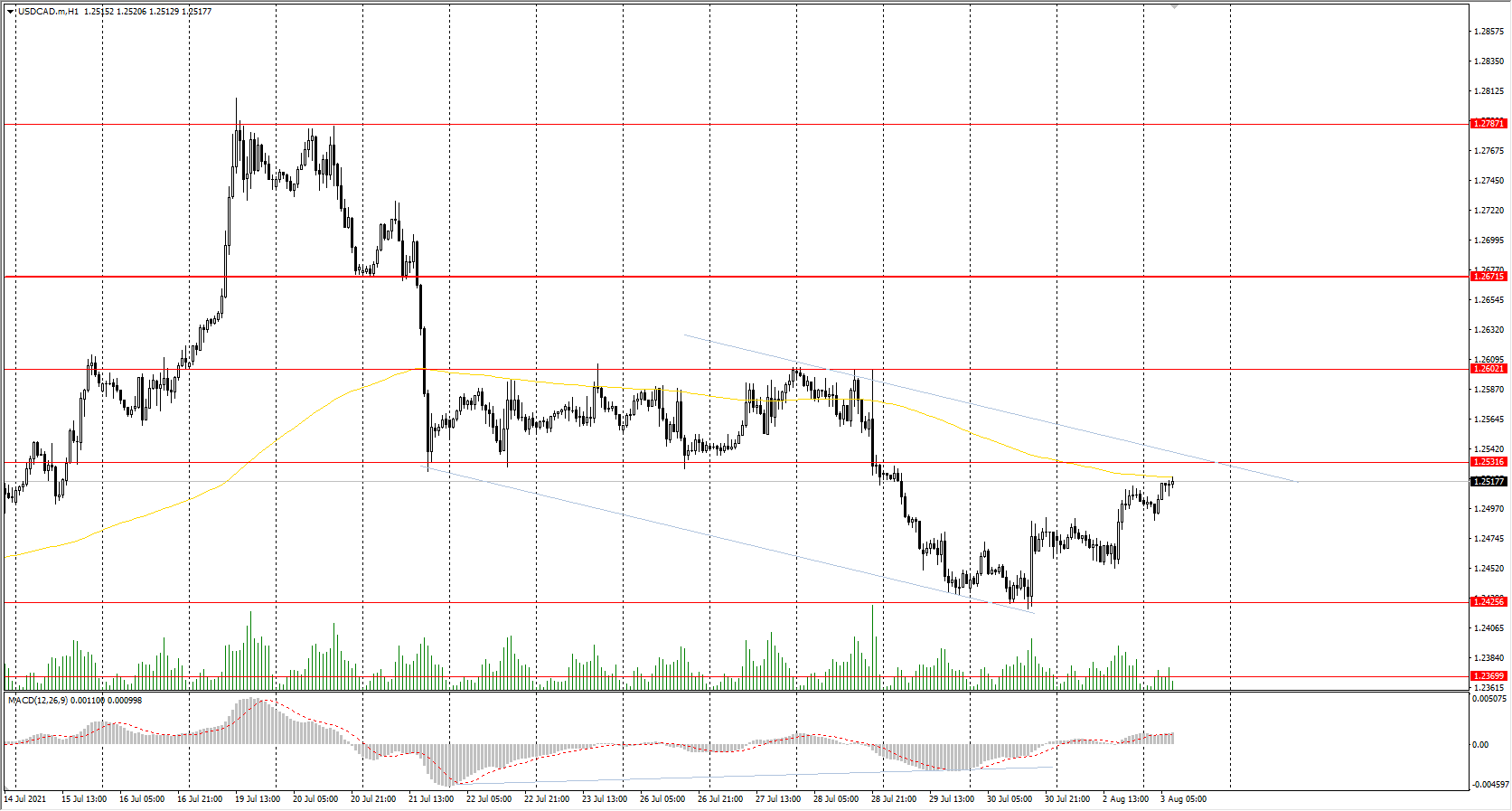
Support levels: 1.2425, 1.2370, 1.2312
Resistance levels: 1.2531, 1.2602, 1.2671, 1.2787, 1,2951
Considering technical analysis, the USD/CAD trend is bearish. The MACD went above the zero line, but there are the first signs of a reversal. Under such market conditions, traders should look for sell positions from the resistance levels after a small pullback. Buy positions can be considered only throughout the day and only with short targets.
Alternative scenario: if the price breaks through the 1.2671 resistance level and fixes above, the uptrend is likely to be resumed.
China’s Warnings Weigh On Asian Equities
Asian equities soft after mixed US session
Wall Street finished on a slightly negative note after softer than expected US PMI data. That saw some rotational flows out of cyclical, and tech with the S&P 500 falling 0.19% while the Nasdaq edged 0.06% higher and the Dow Jones fell by 0.29%. The selling pressure was limited by the fall in US yields providing some peripheral support.
US futures on all three indexes have risen in Asia by around 0.20%, but that has not been enough to stop Asian markets from falling into the red. The rise in Covid-19 cases and their geographical spread in mainland China is clearly spooking local investors today. That sees the Nikkei 225 falling by 0.85%, with the Kospi clinging to unchanged.
Covid-19 aside, the situation on the ground has got murkier in China this morning, with the Economic Information Daily likening online gaming to “spiritual opium,” cue Tencent shares and others being sold heavily. After the last few weeks, even oblique warnings from authorities are ignored at your peril, and it seems that regulatory risk is alive and well in China still.
The mainland's Shanghai Composite is unchanged, but the more tech-weighted CSI 300 has fallen by 0.60%, while the Hang Seng has fallen by 1.0%. After that article, the modest scope of the falls has me thinking that China's “national team” might be “smoothing” today.
Singapore has fallen 0.85%, with Kuala Lumpur down 0.30%, while Bangkok has risen by 0.40%. Taipei and Manila are flat, with Australia's All Ordinaries down 0.20% and the ASX 200 down 0.35%.
Europe is likely to take its cue from the rise in US futures this morning and start the day slightly positive. Only a spiralling Covid-19 caseload in Mainland China would likely spill over onto European markets, which has mostly ignored the China clampdown ructions so far. Yesterday we saw international investors piling into mainland stocks via the Hong Kong/Shanghai connect pipeline. The story mentioned above proves that bargain hunting in China remains fraught with risk still.
Swiss consumer climate surged to 8 in Q2, highest since 2010
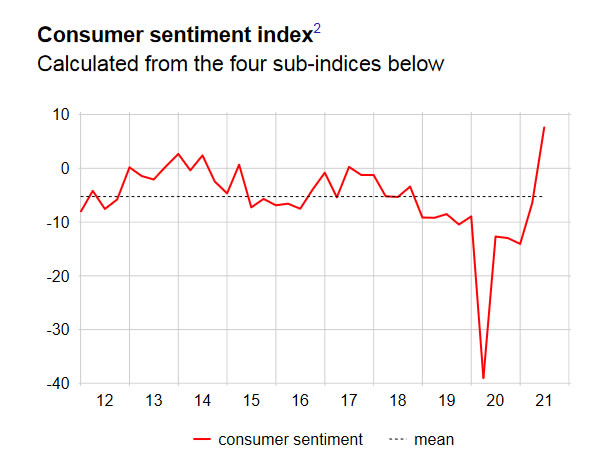
Swiss SECO Consumer Climate rose sharply from -7 to 8 in Q3. That's the highest level since July 2010, and well above long-term average of -5. Expectations of general economic growth rose to record 48. Employment expectations rose to 29, just slightly below pre-crisis level. Expected financial situation also rose to 3, back above long-term average for the first time in over six years.
Yield Meltdown Boosts Yen, RBA Holds The Line
- Yen shines, stock markets erase gains as bond yields slide
- Fed Governor Waller opens door for September tapering
- RBA sticks to tightening plan despite lockdowns, aussie jumps
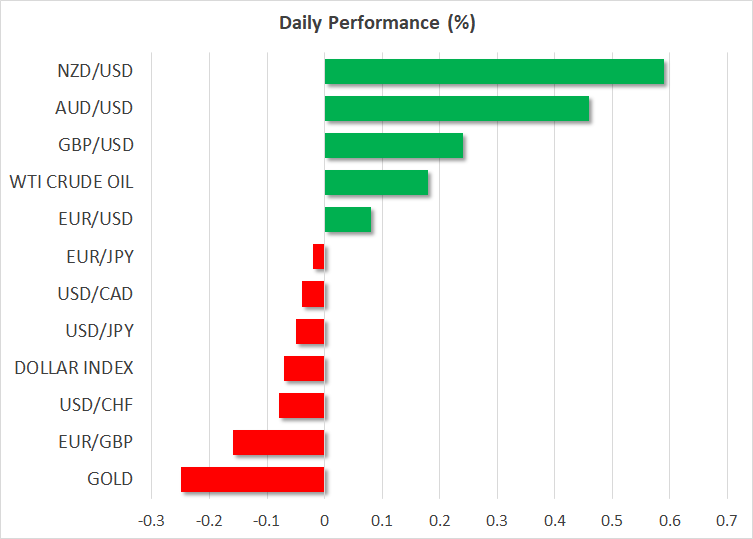
Bond market nerves lift yen
The sense of nervousness that haunted the bond market in recent months has returned, putting investors across every asset class on red alert. Yields on government bonds continue to melt down, indicating spectacular demand for safe assets even despite their negative real returns.
The question is whether the bond market is sensing something sinister ahead or whether the latest moves can be explained away as technical. There are solid arguments on both sides.
The rampaging Delta variant is being blamed for these jitters. It has started to infect China and it could hamper the recovery in unvaccinated economies, fueling the narrative that ‘peak growth’ is behind us. That said, central banks are still buying an absurd amount of bonds and some players like banks are simply forced to buy truckloads of Treasuries as top-tier collateral.
Therefore, it is difficult to say how much of the meltdown in yields is an economic signal and how much is just noise in a market heavily manipulated by central banks. For now, the global slide in yields is boosting the Japanese yen. The yen is one of the lowest-yielding currencies, so when foreign yields slide, its chronic interest rate disadvantage is reduced and it becomes more attractive.
Stocks take notice but don’t panic
The catalyst for this latest round of nerves seems to have been the ISM manufacturing survey from America. The index fell a little in July, amplifying concerns that global industrial momentum is slowing.
That sent chills through markets. The S&P 500 erased some early gains to close the session in the red and oil prices tanked. That said, this whole episode seems like an overreaction. The ISM index still stands at 59.5, which is very elevated by historical standards, and the Markit manufacturing index even hit a new record high.
Some hawkish remarks by Fed Board Governor Christopher Waller may have contributed to the reversal in sentiment. He stressed that if the next couple of employment reports are strong, around the 800k range for nonfarm payrolls, then the Fed could announce tapering in September already.
This is the most explicit any Fed official has been so far. Waller gave markets both an economic condition for tapering and a specific timeline. He is a permanent voter in the FOMC, so his views carry weight. The dollar got a small boost after his comments but nothing spectacular. Markets still think the Fed won’t pull the trigger so soon, which sets the stage for some powerful moves if the upcoming jobs data are truly impressive.
RBA refuses to backpedal on tapering
Elsewhere, the Reserve Bank of Australia kept policy unchanged today. Policymakers stuck to their earlier plans to trim asset purchases, even despite the onslaught of negative economic developments over the past weeks.
The overall message was that the RBA isn’t ready to hit the panic button yet, but it might if the situation escalates any further. That lifted the Australian dollar as most investors were expecting the Bank to put its tapering plans on ice immediately.
Meanwhile, the kiwi got its own boost overnight after the RBNZ announced it will begin to tighten mortgage lending standards soon to cool the housing market.
There isn’t much on the agenda for today, but there could be some more fireworks in the kiwi early on Wednesday, when New Zealand’s jobs numbers for Q2 will be released. This will be the last major dataset before the RBNZ meets on August 18, where markets are pricing in an 80% chance for a rate increase.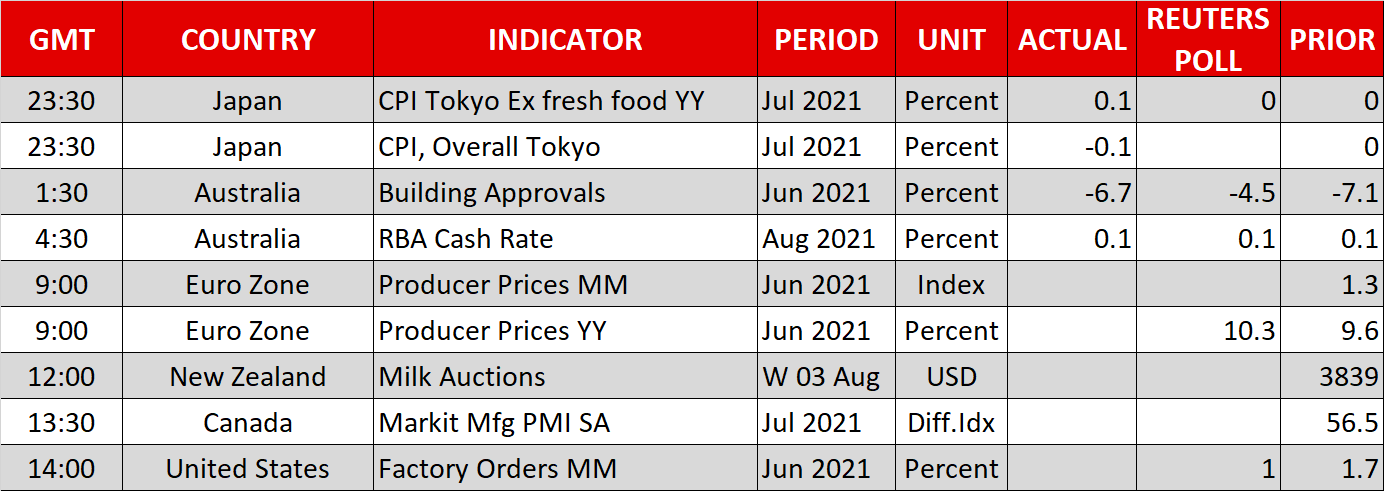
US And China Nerves Continue
US, Chinese markets fall on Covid worries
Financial markets wobbled overnight after the US Manufacturing PMI didn’t hit the heady heights expected by markets. To be fair, a print of 59.5 is still impressive, but like technology stocks, the bar is set high, and markets have itchy trigger fingers nowadays if the music isn’t playing loud enough. ISM Manufacturing New Orders also missed slightly, while ISM Manufacturing Prices slid to 85.7, still stratospheric, but less sub-orbital than June’s 92.1. Interestingly, markets completely ignored a rise in the Employment Index to 52.9.
Never one to say no to an opportunity to send yields lower, the “peak recovery” interpretation saw US 10-year yields shed ten basis points intra-day before settling under 1.20% at around 1.18%. To be fair to the bond market, the US data followed China’s PMIs earlier in the day, which also underwhelmed, reinforcing the peak recovery narrative.
We can also throw the Covid-19 delta-variant into the mixture, with concerns rising once again, that the global recovery could be thrown off track by the virus. The rise in US cases, and ASEAN’s situation, is well known, but what is spooking markets is China, which has seen a small number of cases popping up across a number of cities. It’s not a huge reach to extrapolate even more supply chain disruptions, especially if it proves as elusive to control for Chinese authorities as it has to officials globally.
Apart from a vigorously flattening US yield curve, the other big casualty was oil. Crude prices plunged overnight but nowhere near the same scale as the panicked “delta-dip” a couple of weeks ago. Somewhat surprisingly, the US dollar held its ground, and I suspect that support may be coming from haven flows, some of which were probably heading to US Treasuries.
So, the delta variant and its potential knock-on effect on the world’s two largest economies looks like it will temper animal spirits amongst the FOMO crown for now. Even that “bargain-hunting” seen in the China equity market yesterday might not be looking quite as rosy today. I have said previously that a resurgent virus is the number one threat to global recovery. I still hold to that view, albeit with the acceptance that it will be very uneven geographically. Readers should take their cues from China this week, though, where a sudden surge in delta variant cases across the mainland would potentially be a game-changer for that worldview. I am not saying this is what will happen, but we should be monitoring the situation in case it does happen.
Asian markets are off to a negative start today after the developments overnight, with the Reserve Bank of Australia’s latest policy decision at 1230 SGT the session’s highlight. We have already had South Korean Inflation and Tokyo CPI this morning. South Korean Inflation rose to 2.60% YoY for July, slightly above expectations. That leaves the Bank of Korea on track for a Q4 hike, although the won has not reacted, sinking under delta-variant nerves like the rest of Asia. Tokyo CPI YOY for July fell to -0.10%, leaving its 20-year trend intact. Nothing to see here; move along, please.
Today’s RBA decision is subject to much speculation as to whether the central bank will change its guidance and backtrack on its tapering schedule or even move to a “flexible” framework regarding tapering. With lockdowns having spread to greater Brisbane and no progress being seemingly made in Greater Sydney regarding case numbers, some downward adjustment in Australian GDP is inevitable. Qantas is putting 2,500 workers back into furlough as air travel domestically grinds o a halt, which won’t help matters. A dovish outcome seems inevitable, which is likely to be felt most keenly in the currency.
In contrast, a firm Global Dairy Trade auction later today or robust New Zealand Employment data tomorrow has the potential to make a rate hike by the Reserve Bank of New Zealand all but certain at its next meeting. The kiwi is already 0.35% higher today, and it is set to rally further under this scenario, notably versus its trans-Tasman neighbour.
The rest of the day’s data calendar is relatively quiet for this week. Eurozone PPI will be of passing interest, but most attention will be focused on US Factory Orders this evening, which are expected to ease to 1.0% in July from June’s 1.70% gain. Given the reaction to the PMI data overnight and the global recovery delta-nerves, a weaker than 1.0% print will likely spur another fall in US 10-year yields and probably see the Dow Jones and Russell 2000 under pressure. The US dollar may finally capitulate in this scenario as well if the US yields head south, and oil could see another wave of exit trades.
AUDUSD Bullish Bias
Technical analysis
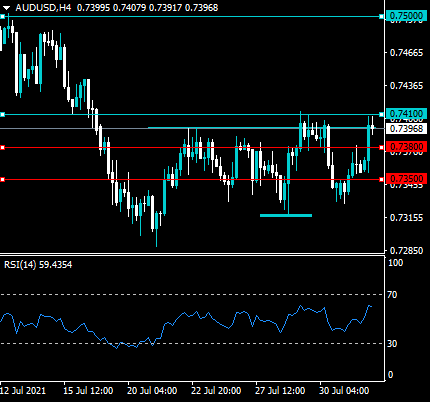
The four-hour time frame shows that the AUDUSD pair has formed a large inverted head and shoulders pattern, following the recent advance towards the 0.7400 level.
The Relative Strength Index indicator has turned bullish on the four-hour time frame and continues to generate a strong buy signal.
What the possible outcomes are
In our most likely scenario, the AUDUSD pair starts to rally towards the 0.7500 level once the bullish price pattern is activated.
Alternatively, the AUDUSD pair will correct back towards the 0.7350 support area and then start to rally towards the 0.7500 resistance area.
Key levels
Support 0.7380 0.7350
Resistance 0.7410 0.7500