


- US inflation data to guide Fed rate hike expectations.
- A hawkish BoJ summary of opinions could support the Yen.
- RBA could still sound hawkish amid sticky inflation.
- UK GDP and activity figures to shape sterling sentiment.
Dollar pulls back amid Hormuz deal hopes
The US dollar weakened against most of its major peers this week, following headlines suggesting progress in the Middle East conflict between the US and Iran. The greenback gained some ground only against the Japanese yen.
Over the previous weekend, US President Donald Trump said that negotiations with Iran about reopening the Strait of Hormuz were about to begin immediately, followed by talks on Iran’s nuclear program, remarks that signaled a de-escalation in recent hostilities.
Further enhancing peace hopes, US Treasury Secretary Scott Bessent said on Tuesday that there was a strong chance about an imminent deal on reopening the Strait of Hormuz, adding that talks about ending the conflict were to follow.
Oil prices opened the week with a large negative gap on Monday and dropped another 6% on Tuesday as the prospect of an imminent reopening of the strait eased inflation fears and prompted investors to scale back their rate hike bets.
From being nearly fully priced in ahead of last week’s FOMC decision, the probability of a September rate hike dropped to 58%. A quarter-point increase is not even fully penciled in for October. The chance of a rate increase in October is now hovering at around 85%.
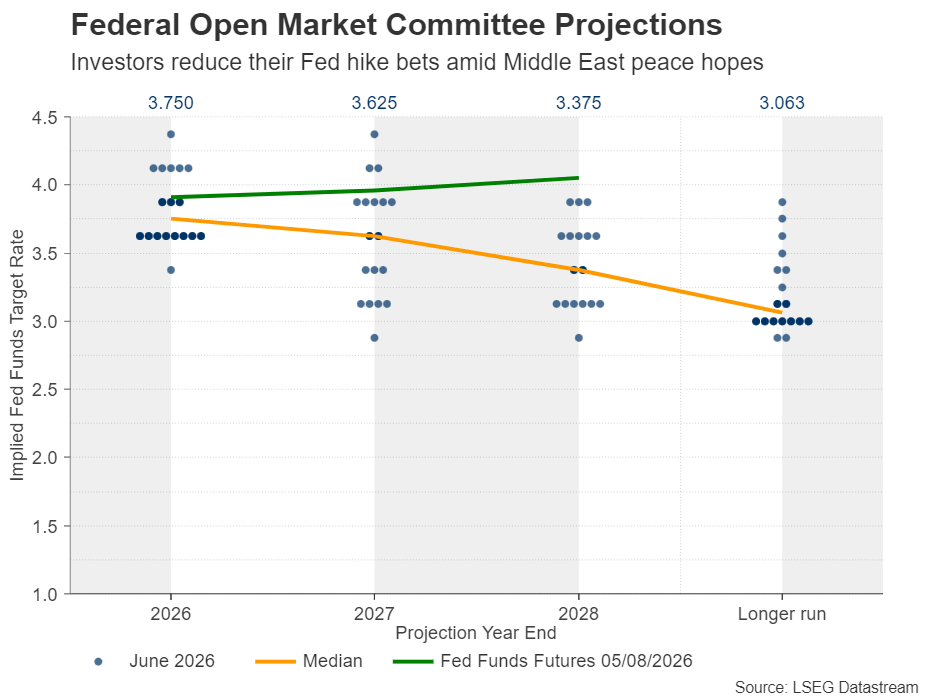
Could US inflation data revive September Fed hike bets?
Next week, dollar traders are likely to turn their attention to Wednesday’s US CPI inflation numbers for July, followed by the PPI numbers for the same month on Thursday and retail sales on Friday.
Despite the recent easing in tensions between the US and Iran and the drop in oil prices, there has been a major escalation in hostilities between the two nations in July, resulting in a strong rebound in oil prices. This means that there may be upside risks to next week’s inflation data.
Indeed, the rebound in the year-on-year change in WTI crude oil suggests that, at least the headline CPI rate may have rebounded. The headline PPI rate could also inch up as higher oil prices mean more expensive imports of raw materials for producers. On top of that, the prices subindex of the ISM non-manufacturing PMI rebounded in July, further supporting the view of upside risks to the CPI and PPI numbers.
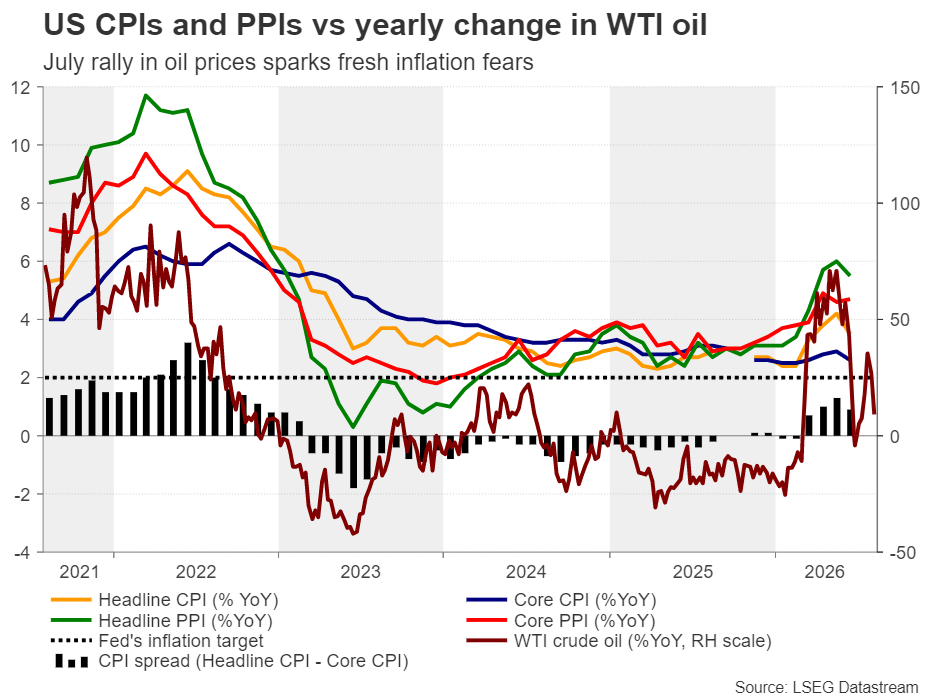
Nonetheless, even if the data help the dollar gain some ground, they are unlikely to significantly alter the broader Fed rate path outlook, especially if there is further progress in negotiations between the US and Iran. After all, the data concern a period before we got the latest headlines about a deal on reopening the Strait of Hormuz.
While the chance of a September hike could increase slightly, investors are unlikely to start pricing a second increase before year end. For the dollar to stage a strong and sustained recovery, military attacks would need to resume, dashing once again any peace hopes.
BoJ summary to reveal how willing policymakers are to hike
The yen gave back a decent portion of the gains it posted after the coordinated intervention by Japan and the US, with dollar/yen rebounding more than 1.6% from its Monday low of around 155.20.
US Secretary Bessent said he believes Bank of Japan Governor Ueda will “do what is best” for the country’s economy, implying that higher interest rates are the wisest strategy as a declining yen could increase inflation risks. Combined with remarks by a former BoJ official that more intervention episodes could occur if the yen shows signs of weakness, Bessent’s remarks could limit further declines in the yen.
On Monday, the Summary of Opinions from the latest BoJ decision will be released, and should it reveal that officials are increasingly leaning towards raising interest rates in coming months, the yen is likely to stage another recovery. In other words, dollar/yen could drop again.
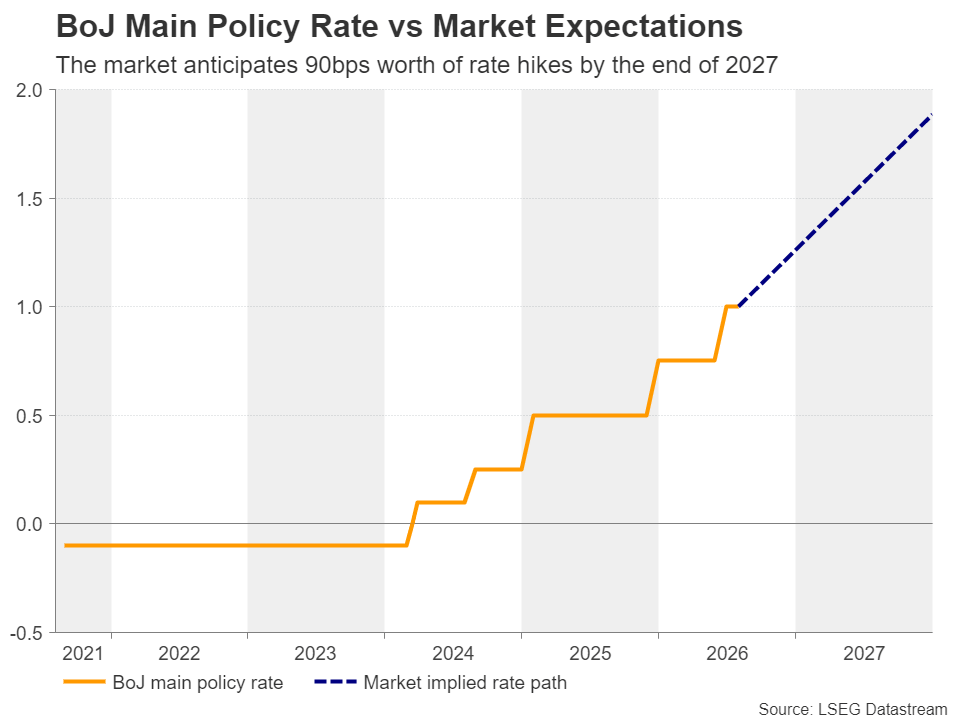
However, with 90bps worth of BoJ increases being priced in by the end of 2027, it may be hard to envision the BoJ turning even more hawkish and dollar/yen dropping below 155.00, especially with PM Takaichi opposing rate hikes and having the ability to tilt the scales to the dovish side through future appointments of doves within the Board.
Will the RBA sound hawkish enough to support the Aussie?
The Reserve Bank of Australia will announce its monetary policy decision on Tuesday. At its latest gathering in June, the Bank decided to keep interest rates unchanged after three quarter-point increases earlier in the year. That said, officials noted that inflation was still too high and that they remained prepared to raise rates again if needed to bring inflation under control.
Since then, the employment data beat estimates, revealing a strong 76.3k jobs growth in June, the largest increase since April 2025, giving the necessary freedom for policymakers to focus on inflation and raise interest rates further should it be deemed necessary.
However, the CPI figures came in below expectations, with the headline rate for Q2 dropping to 3.9% year-on-year from 4.1%, and the monthly y/y rate sliding to 3.8% from 4.0%. That said, the trimmed mean and weighted mean rates both ticked up to 3.6% from 3.5%.
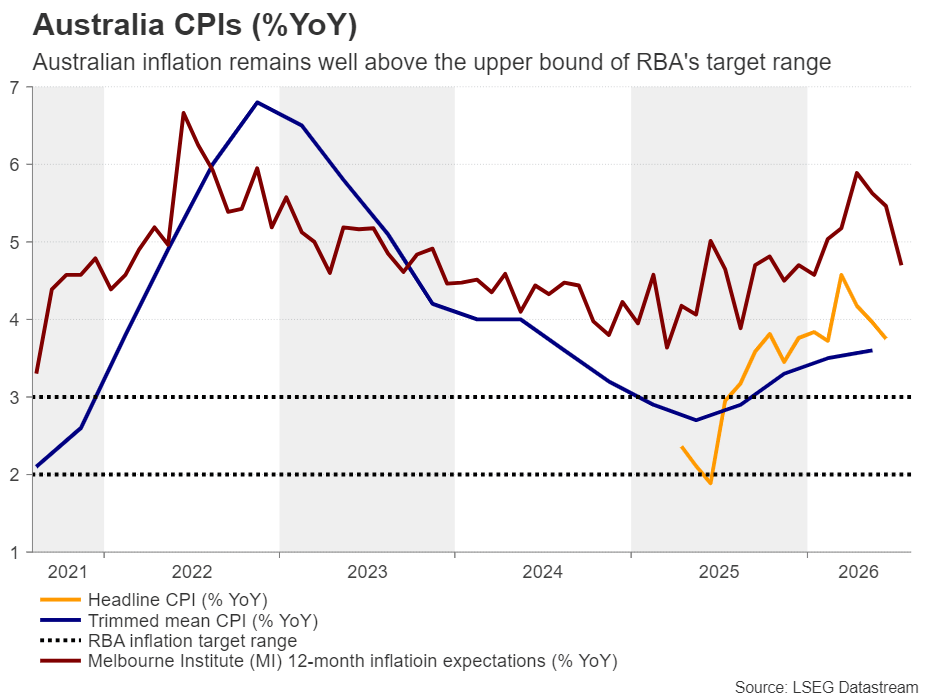
Despite the slowdown in headline prints, all metrics remain above the upper bound of the RBA’s target range of 2-3%, allowing investors to continue penciling in a decent 50% chance of another rate hike by the end of the year. Therefore, should RBA policymakers repeat their willingness to further raise borrowing costs to tame inflation, even in the midst of progress in US-Iran relations, the aussie is likely to receive another boost.
UK data awaited amid strong November BoE hike bets
In the UK, the preliminary GDP for Q2 is coming out on Thursday, alongside the industrial and manufacturing production rates for June, as well as the trade data for the same month.
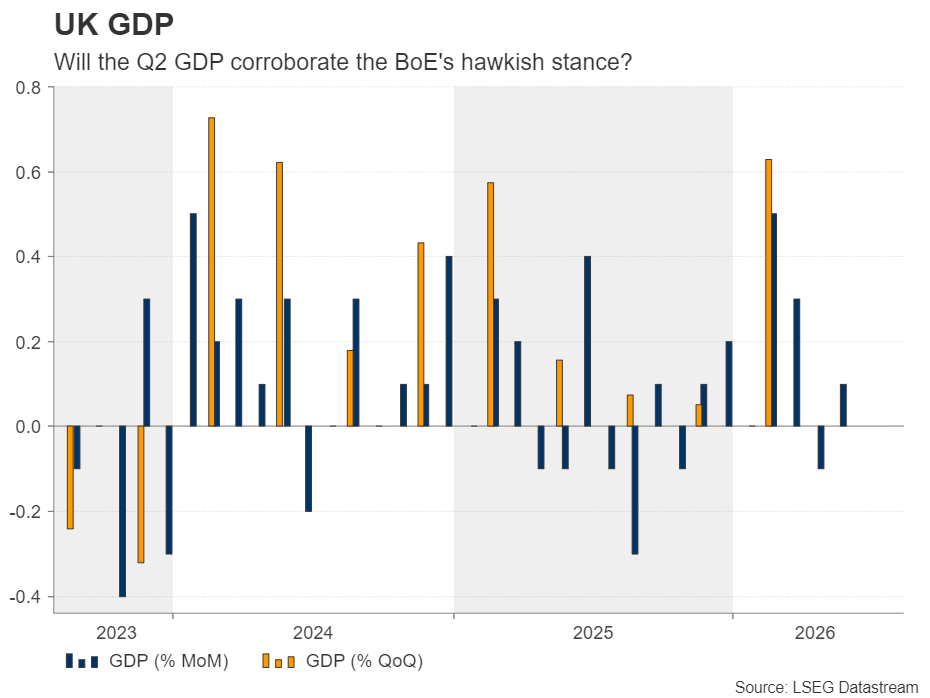
At its latest meeting, the BoE kept interest rates unchanged, but three members voted to raise interest rates by 25bps. Although the Committee acknowledged that inflation pressures have eased, they emphasized that upside risks have increased amid renewed geopolitical tensions and energy market uncertainty.
Although the market expects the Bank to remain sidelined in September as well, there is a strong 65% chance of a quarter-point hike in November, and this after the latest slide in oil prices amid Middle East peace hopes. Thus, strong data may encourage market participants to increase their November hike bets, thereby helping the pound to gain more ground.





