


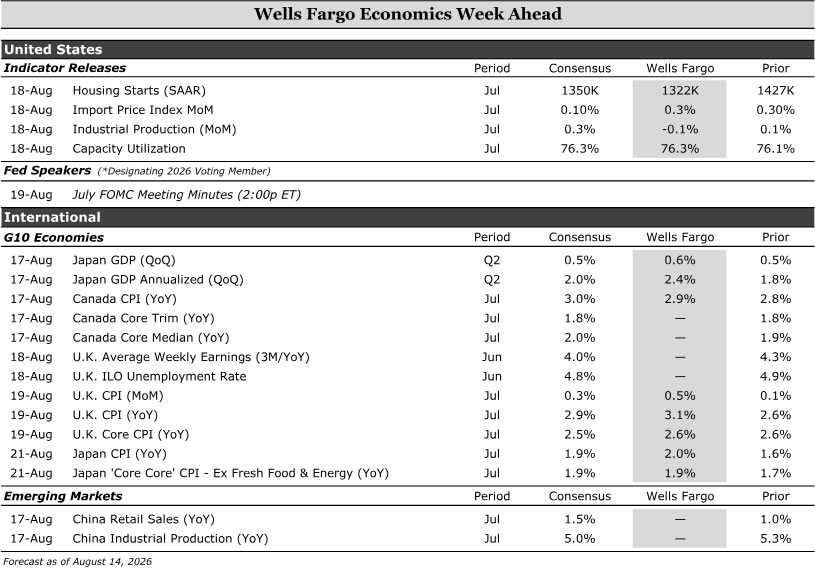
Next week is lighter on the domestic data front, with focus on Wednesday’s FOMC minutes, which will likely reiterate that most policymakers remain patient on adjusting rates, a posture validated by softer labor market and inflation data since the July meeting. On Tuesday, July housing starts are expected to edge lower, reflecting ongoing pressure from weak affordability and a challenging environment for builders.
Abroad, Japan’s GDP and CPI reports should reinforce the case for further BoJ normalization, while Canadian inflation is expected to remain contained enough to keep the Bank of Canada on hold. In the U.K., softer labor market conditions may be offset by firmer inflation, leaving the door open to additional BoE tightening later this year. Meanwhile, China’s July retail and industrial activity data will likely show further loss of momentum at the start of Q3.
- United States: Housing Starts (Tuesday), FOMC Meeting Minutes (Wednesday)
- Advanced Economies: Japan GDP & CPI (Monday & Friday), Canada CPI (Monday), UK Labor Force Survey & CPI (Tuesday & Wednesday)
- Emerging Markets: China Retail Sales & Industrial Production (Monday)
Source: Bloomberg Finance L.P. and Wells Fargo Economics
U.S. Week Ahead
Housing Starts • Tuesday
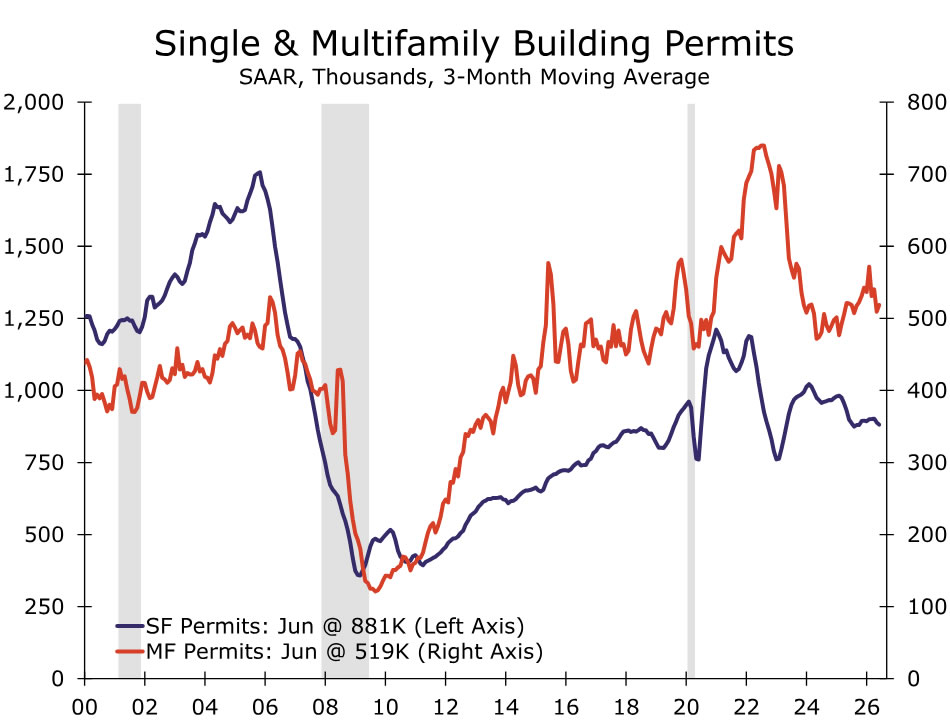
Residential construction looks set to continue scaling back. In June, starts surprised to the upside, rebounding from the prior month decline and largely reflecting a substantial rebound in the volatile multifamily category. However, the trend in housing construction has been hardly energetic. Over the past several months, single family starts generally have grinded lower. Multifamily starts have been relatively more resilient, but lacking upward momentum.
It’s difficult to see a catalyst for stronger growth on the near-term horizon. Forward-looking indicators such as building permits and builder confidence suggest activity remains tepid. Meanwhile, higher mortgage rates continue to exert pressure on affordability for buyers, who are also contending with a lackluster jobs market and slowing real income growth. Builders are navigating their own challenges, including higher construction costs, skilled labor shortages and elevated inventory relative to sales. In terms of multifamily, the apartment market is showing signs of improvement. However, vacancy rates remain elevated, largely due to still-elevated new supply. All told, we expect total housing starts to decline to a 1322K-unit pace in July.
Source: U.S. Department of Commerce and Wells Fargo Economics
FOMC Minutes • Wednesday
We expect next week’s FOMC minutes to reiterate that most Committee members are willing to be patient for now when it comes to further progress on inflation, but the bar is low for future rate hikes if inflation does not slow further. This has been the general theme among the Fed speakers who we believe are the swing votes on the Committee right now (Williams, Waller, Jefferson, Paulson, etc.), and the minutes from the June meeting signaled a low bar to hiking (we touched on this in a Daily at the time). We will be looking for any concrete guideposts that the FOMC has set that would trigger a rate hike this fall, whether that be the pace of inflation, its composition, the forward-looking outlook, etc.
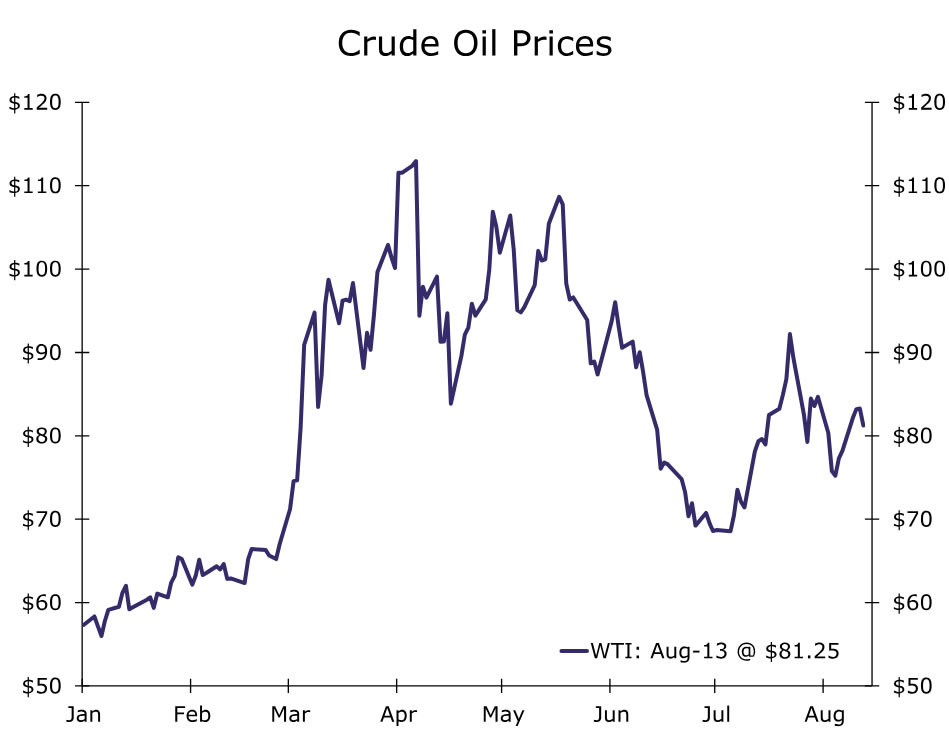
Since the July FOMC meeting, the latest employment report came in soft, with weak job growth and a further slowdown in wage growth, while the July inflation data provided further evidence that the boost to inflation from tariffs/energy/AI has peaked. As we go to print, the outlook for normalized traffic through the Strait of Hormuz remains as cloudy as ever, but oil prices are roughly unchanged since the FOMC last met. Accordingly, the minutes are probably a bit dated, and we suspect the median Committee participant is feeling slightly more dovish than they were at the time of the last meeting. Given that, why hike? Next month’s employment and inflation data will go a long way toward deciding the September FOMC meeting, but the path is clearly there for policymakers to once again leave the fed funds rate unchanged.
Source: Bloomberg Finance L.P. and Wells Fargo Economics
G10 Week Ahead
Japan GDP & CPI • Monday & Friday
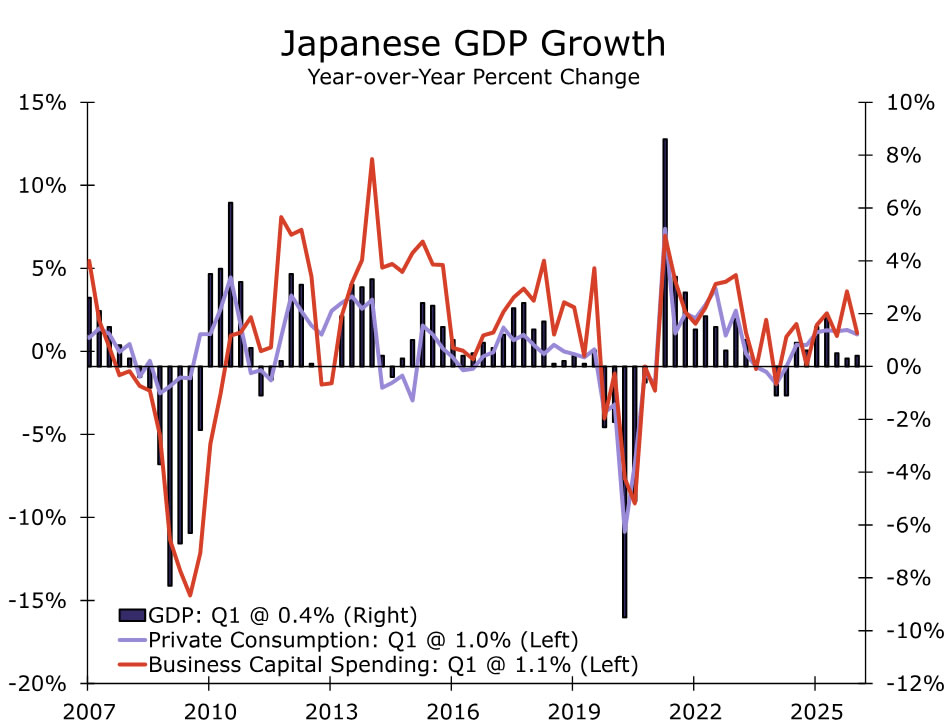
Japan’s Q2 GDP and July CPI reports are due next week and should support the case for further Bank of Japan (BoJ) tightening. We expect GDP to grow 0.6% quarter over quarter, or 2.4% on an annualized basis, as improving business activity and continued AI-related demand support investment. Machine tool orders have also strengthened, particularly due to stronger foreign demand. However, household consumption likely remained subdued despite stronger real wages. Higher oil prices likely weighed on net trade, though strong global demand for AI-related goods should have limited the drag.
We expect headline CPI to rise to 2.0% year over year in July, while ‘Core Core’ inflation (excluding fresh food and energy) increases to 1.9%. This expected pickup follows a similar increase in Tokyo CPI, which typically provides an early indication of nationwide price trends.
The stronger GDP growth and firmer inflation should give the BoJ further confidence to continue normalizing policy. Against this backdrop, we expect the central bank to raise its policy rate to 1.25% in Q4.
Source: Bloomberg Finance L.P. and Wells Fargo Economics
Canada CPI • Monday
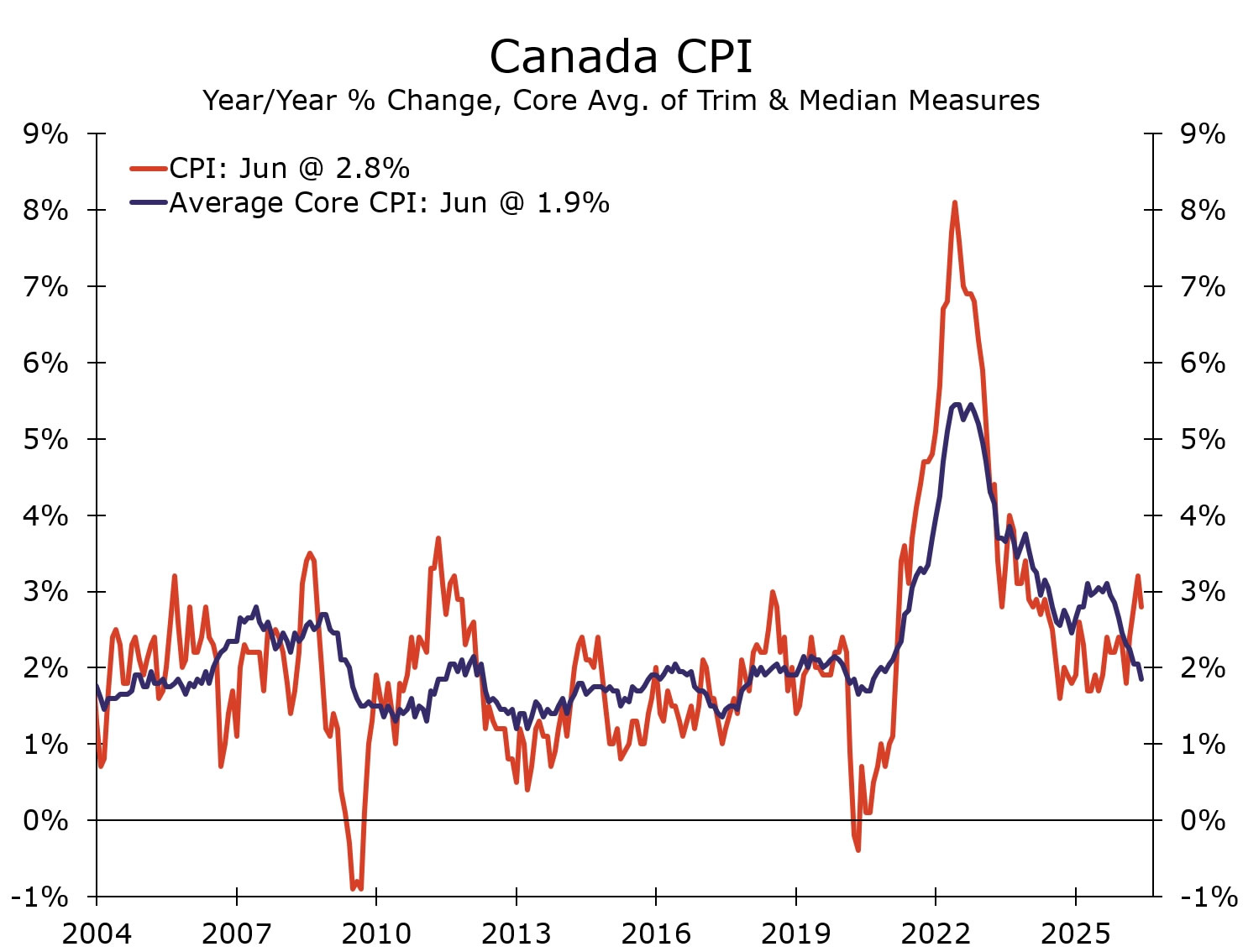
Canadian inflation pressures remain well contained, with the recent inflation flare-up in Canada continuing to look more like an energy story than a broadening inflation problem. June CPI brought headline inflation back down to 2.8% from 3.2% in May, while an average of the trim and median core measures slipped below 2% for the first time in several years. More importantly, there remains little evidence that higher energy costs are feeding through into broader price pressures. Inflation breadth has improved, consumer expectations remain reasonably well anchored and a still-modest pace of domestic demand suggests the backdrop remains supportive of contained underlying inflation.
We expect headline CPI to edge up modestly to 2.9% in July as gasoline prices recover some of June’s sharp decline. But underlying trends should remain largely unchanged, with core measures continuing to run near-2%. As such, we expect the Bank of Canada to continue looking through energy-driven price fluctuations in headline inflation and place greater weight on the still-benign trend in underlying price pressure, leaving it on hold in the near term.
Source: Bloomberg Finance L.P. and Wells Fargo Economics
UK Labor Force Survey & CPI • Tuesday & Wednesday
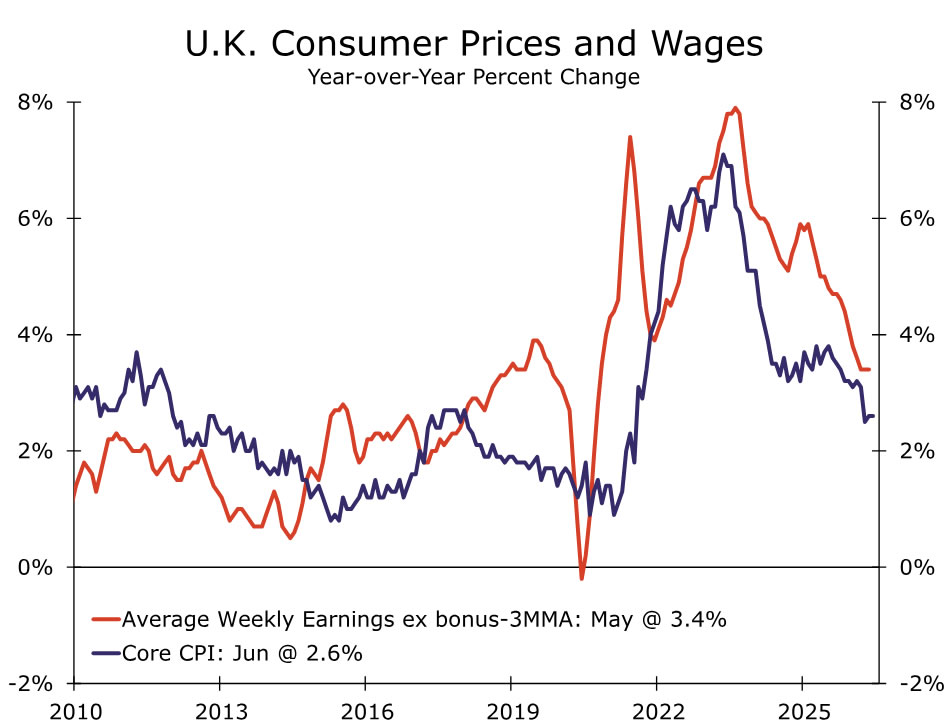
The U.K.’s labor force survey and inflation data are due next week and should present a mixed picture for the Bank of England (BoE). Labor market conditions likely remained subdued, while pay growth should ease further, although strength in public sector wages may limit the slowdown.
We expect headline CPI to rise to 3.1% year over year and 0.5% month over month in July from 2.6% year over year in June, largely due to the 13% increase in the Ofgem energy price cap. Lower petrol prices and further food disinflation should provide a partial offset. We expect core inflation to remain at 2.6% year over year, while services inflation stays elevated at 3.5%.
Stronger-than-expected H1 2026 GDP growth despite headwinds from the Middle East conflict, alongside the expected pickup in headline inflation and elevated services inflation should keep policy restrictive. Further pressure from food and energy costs could also raise inflation expectations and increase the risk of second-round effects. Against this backdrop, we continue to see a rate hike as possible later this year.
Source: Bloomberg Finance L.P. and Wells Fargo Economics
EM Week Ahead
China Retail Sales & Industrial Production • Monday
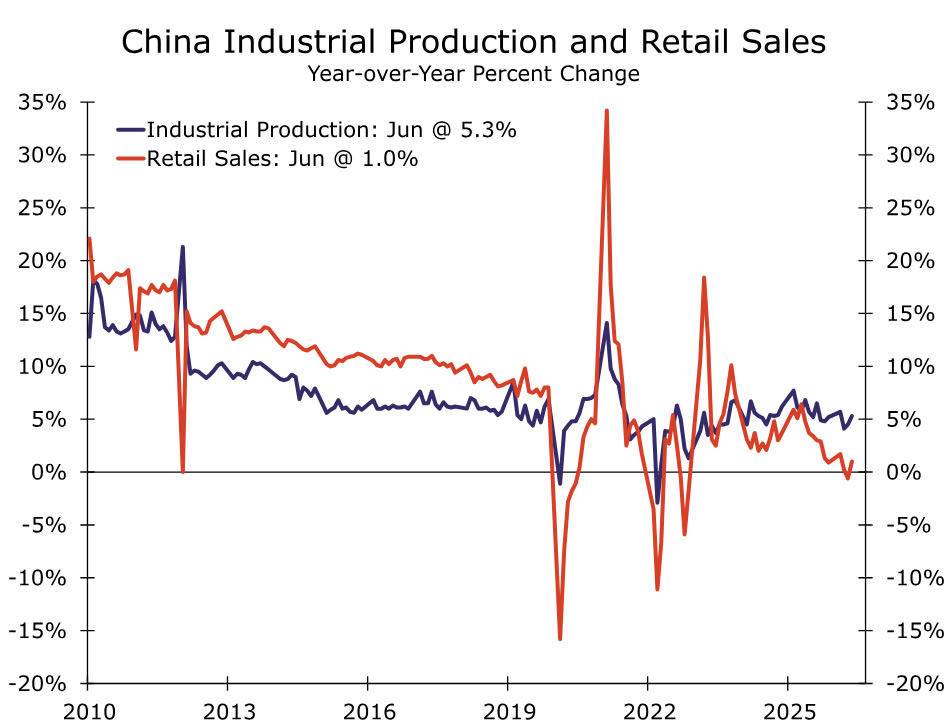
Next week’s economic activity indicators should provide further evidence that China’s growth lost momentum at the start of the third quarter. Consensus expectations are for industrial production to slow to 5.0% year over year from 5.3% in June, while retail sales to rise to 1.5% from 1.0%. However, July’s official PMIs point to weaker momentum across the economy. The manufacturing PMIs fell to 49.2 from 50.3, while the nonmanufacturing PMIs declined to 49.0 from 50.2. This suggests to us that both industrial production and retail sales could lose momentum. The weaker survey data follow a slowdown in Q2 GDP, as consumption and investment growth moderated and net exports provided little support. The Middle East conflict has had a limited effect on domestic activity so far, though higher producer prices remain a concern.
Authorities have pledged to accelerate fiscal spending on previously announced infrastructure projects through the rest of the year. However, weak consumer demand, subdued inflation and persistent structural imbalances are likely to limit the recovery. We continue to expect China’s GDP growth to slow to 4.5% in 2026 and 4.3% in 2027.
Source: Bloomberg Finance L.P. and Wells Fargo Economics





