


US Dollar
The US dollar has continued its advance amid a reduced likelihood of de-escalation in the Middle East conflict. The US has ruled out military action and intends to deprive Iran of oil revenues by blocking the Strait of Hormuz. This long-term game risks extending the rally in Brent and WTI. This will deal a blow to the eurozone, which is dependent on energy imports. Under these conditions, Germany has halved its 2026 GDP forecast, from 1% to 0.5%, and the EURUSD pair has retreated.
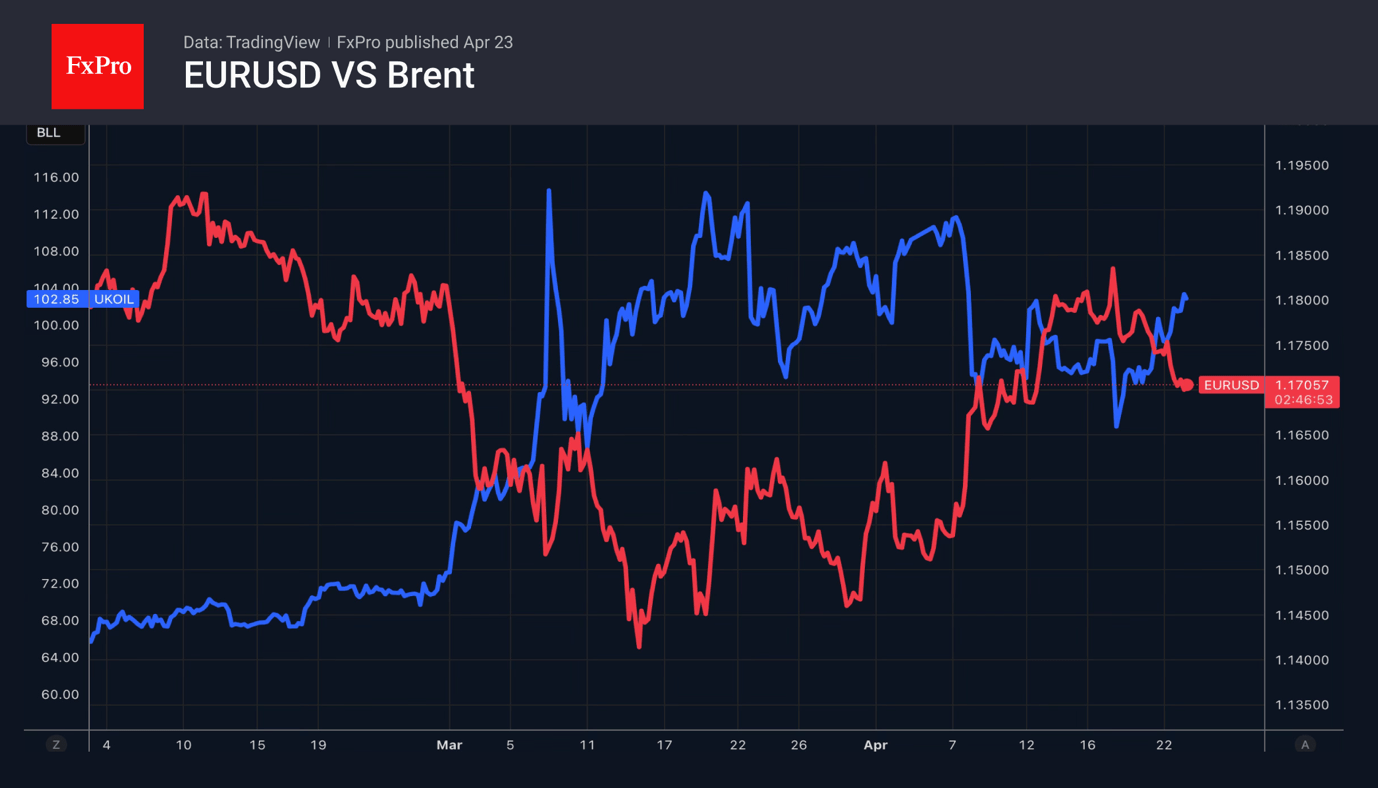
Rising oil prices are weighing on the euro due to deteriorating trade conditions within the currency bloc. However, for most of April, EURUSD rose as investors bought into rumours of productive talks between the US and Iran. As soon as it became clear that the opposing sides had reached a stalemate, the regional currency began to be sold off on the back of the facts.
The euro’s retreat is reinforcing the S&P 500’s rapid rally. The broad stock index has hit a new record high, driven by bargain-hunting by the market crowd amid expectations of strong corporate earnings. The US economy will suffer less from the closure of the Strait of Hormuz and high oil prices than the European economy. As a result, alongside FOMO (the fear of missing out), the theme of American exceptionalism may return to markets. Under such conditions, the USD index and equities will move in the same direction.
Stock indices
The US stock market has concluded that the worst of the conflict in the Middle East is behind us. Oil prices have not skyrocketed, and the rise has not triggered a global recession. Hostilities have given way to a ceasefire, and the parties are moving towards a diplomatic settlement of their disputes. So, it is time to put geopolitics aside and focus on fundamentals. Expectations of strong corporate earnings reports and attractive company valuations have catalysed the S&P 500 rally.
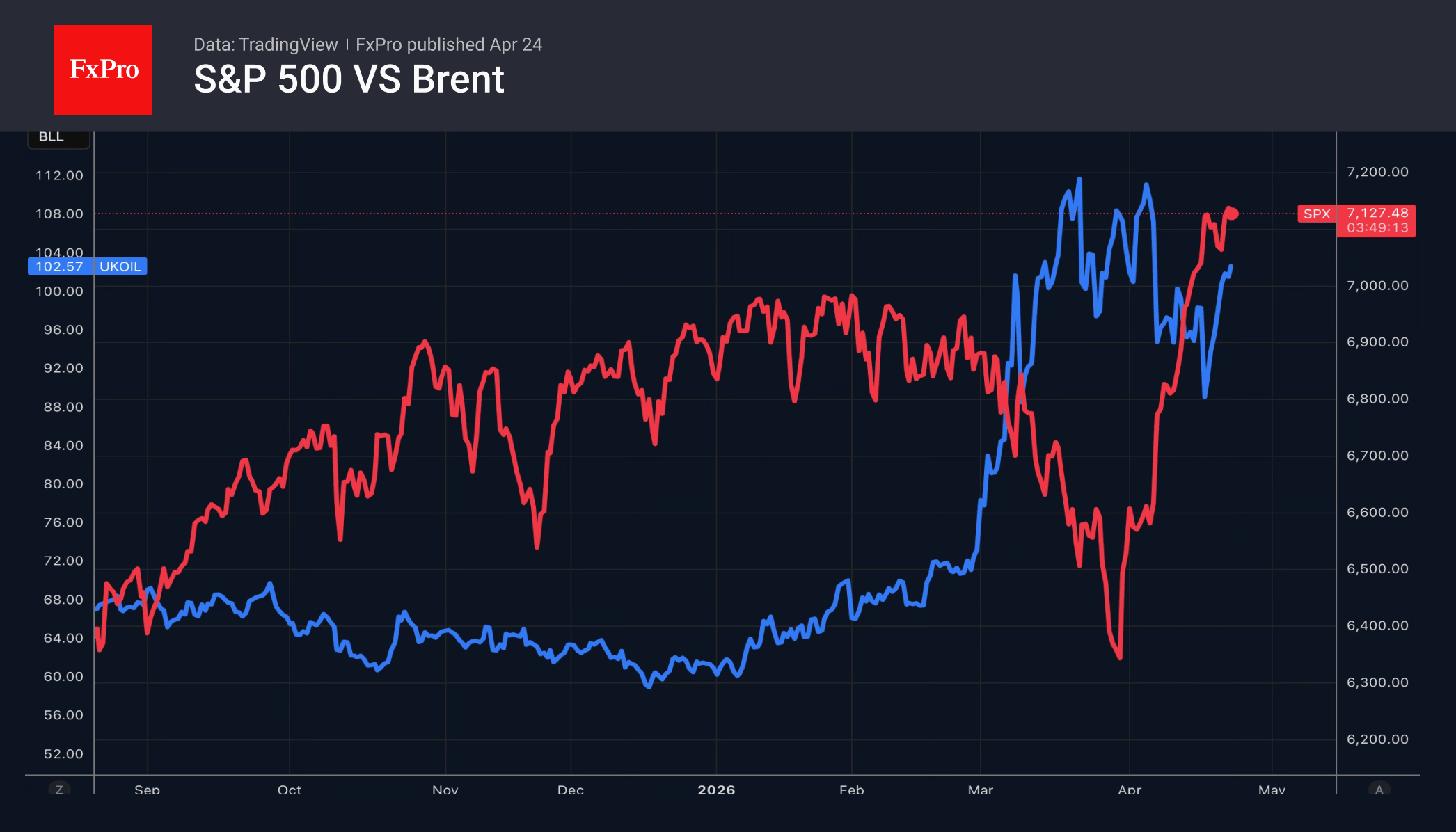
At first glance, the surge in the US stock market was driven by the success of a handful of large-cap companies. When the broad stock index hit a new October high, only 11 S&P companies reached 52-week highs. In the 2021 bull market, around 90% of issuers were trading above their 200-day moving averages. Now, only 60% are.
Nevertheless, the market always follows the leaders. This is likely to manifest as increased trading volumes in US shares. In April, these volumes were 11% below their average levels over the past six months. In March, by contrast, against the backdrop of the escalating conflict in the Middle East, they were 9.5% higher.
Gold
The strengthening of the US dollar is forcing gold into a defensive stance. The precious metal rose in the first half of April on expectations that the conflict’s peak had passed and that de-escalation would lead to lower oil prices. As this has not yet happened, investors have adopted a worrying scenario: that central banks will be forced to tighten monetary policy on a massive scale due to high inflation.
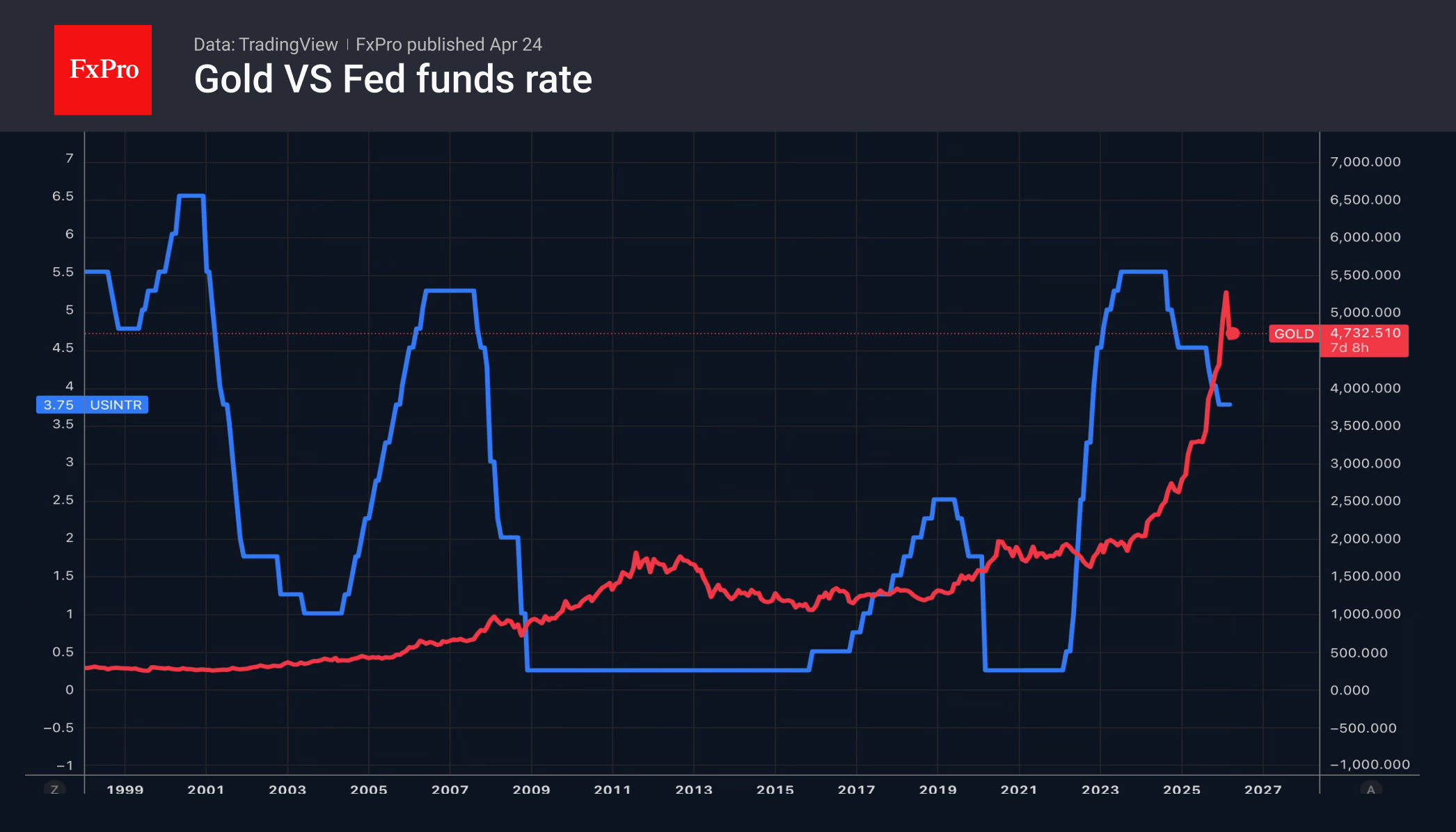
According to the Amundi asset management company, the surge in consumer prices triggered by the energy shock is likely to be temporary rather than permanent. Core inflation will be better contained than in 2022. This will reduce the need for central banks to adopt a more ‘hawkish’ stance, thereby supporting gold.
Central bank bullion sales could put pressure on the price of the precious metal. Since the start of the year, Russia has sold 22 tonnes to finance its budget deficit. As a result, the country’s gold reserves have fallen to 2,304 tonnes.
Cryptocurrency
Improved global risk appetite and new record highs for US stock indices have breathed new life into Bitcoin. Prices have reached their highest levels since late January, and the upward momentum stands a good chance of continuing following Donald Trump’s announcement of an indefinite extension of the ceasefire. Investors have concluded that the peak of the conflict escalation has passed and have begun buying risky assets.
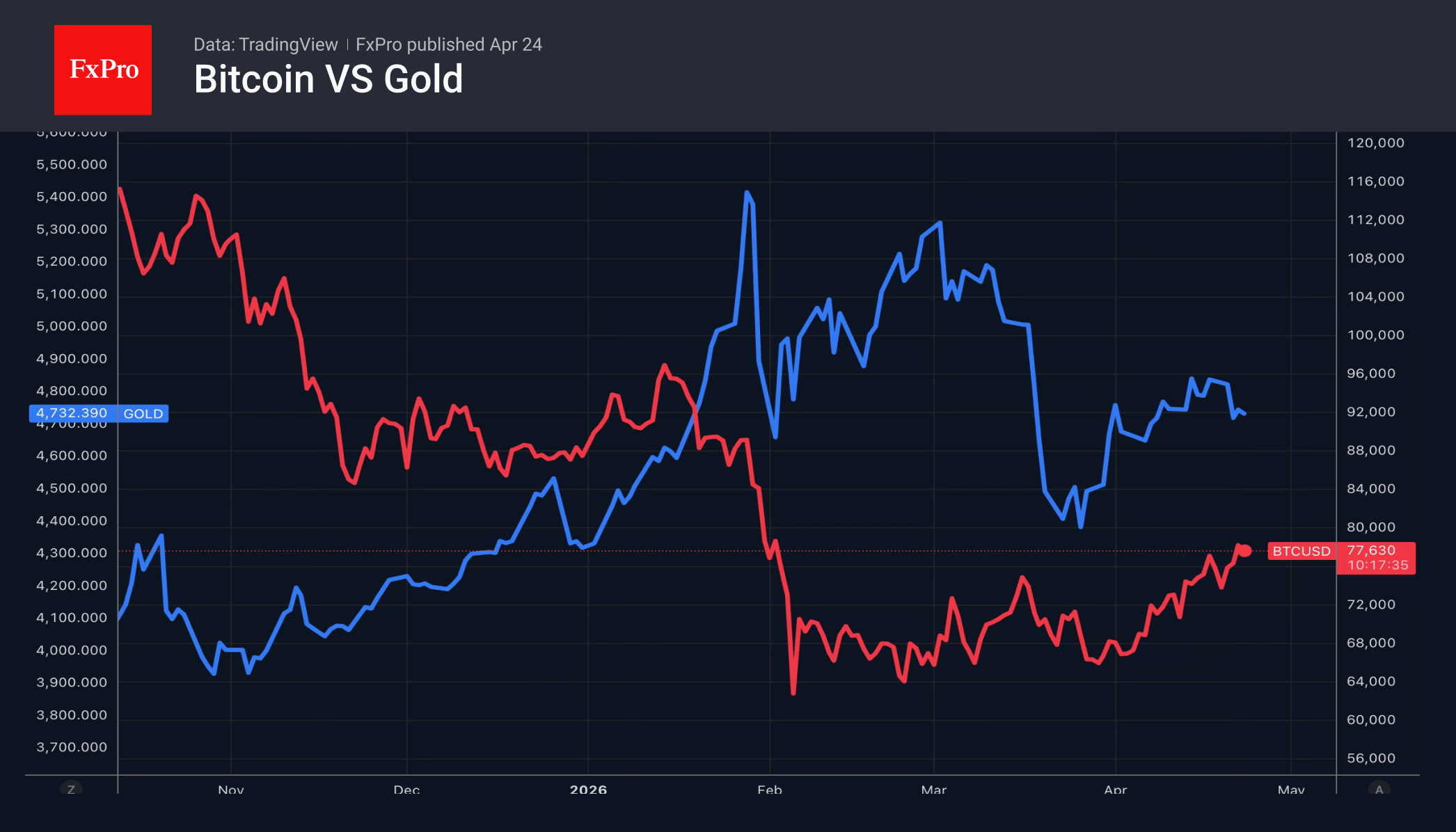
Geopolitics has helped Bitcoin outperform gold. The precious metal has lost around 10% of its value since the start of the bombing of Iran, whereas the cryptocurrency has risen by 15%. In recent days, Bitcoin has frequently ignored the bad news and focused solely on the good. This points to ‘bullish’ sentiment in the market.
The most steadfast Bitcoin supporters have come out on top. For instance, Michael Saylor’s Strategy has been to buy up tokens despite the price decline. By the end of the week on the 19th of April, it had acquired $2.54 billion worth of digital assets. This is the largest purchase since November 2024.
What next?
Markets are tired of geopolitics and will be keen to see how central banks respond to the first signs of rising inflation caused by the conflict in the Middle East and high oil prices. Japan, Canada, the UK and the eurozone will announce their interest rate decisions. Although no changes to monetary policy are expected, investors will be watching closely for ‘hawkish’ signals.
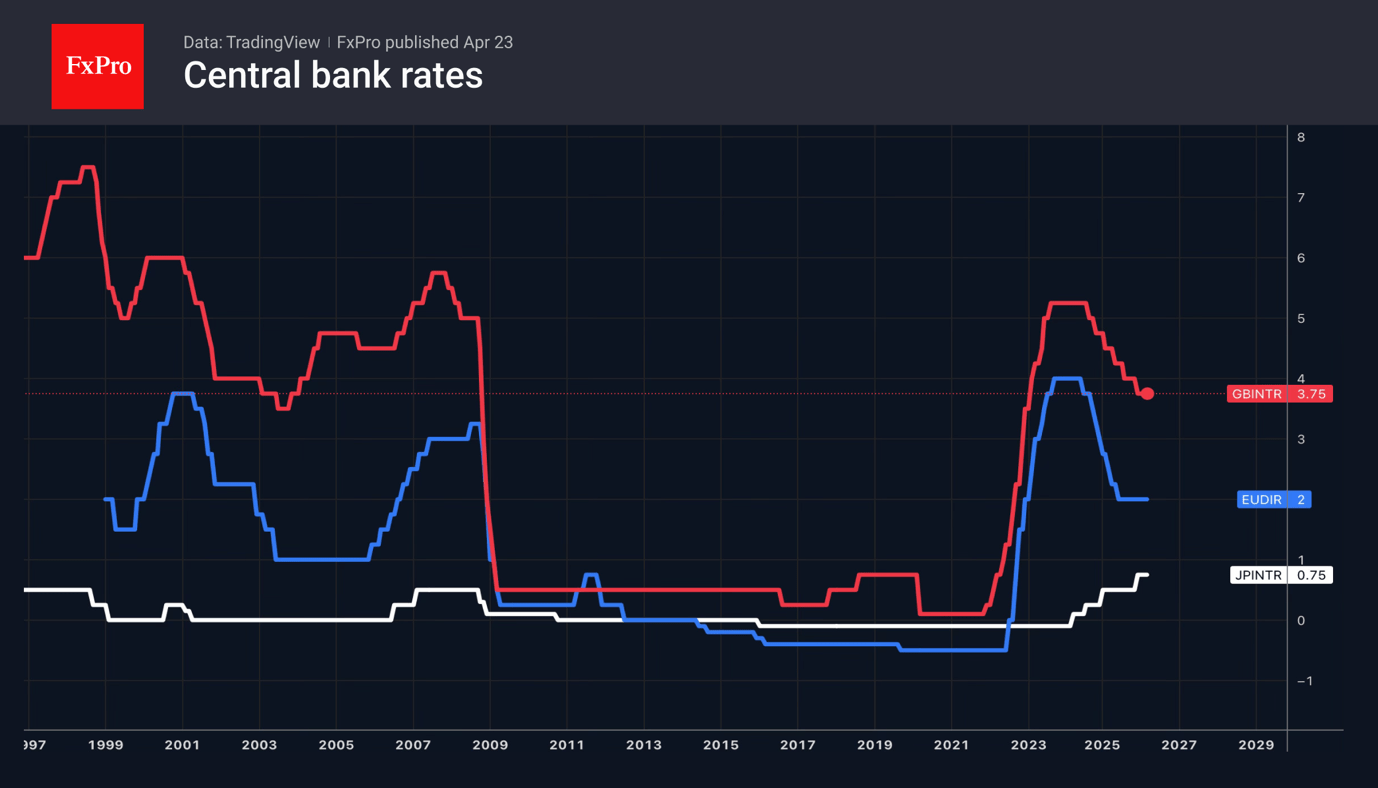
Central banks face a difficult choice. Accelerating inflation requires them to raise rates, whilst slowing economic growth calls for a loosening of monetary policy. Most likely, the ECB and other regulators will keep the door open to monetary tightening and continue to monitor developments in the Middle East.
In the meantime, Donald Trump never tires of talking about negotiations. If investors once again believe the US president, the fall in EURUSD risks coming to a halt.
Markets will not overlook the story of Congress’s consideration of Kevin Warsh’s nomination for the post of Fed Chair. The new central bank chief’s appointment may be delayed due to opposition from some Republicans.





