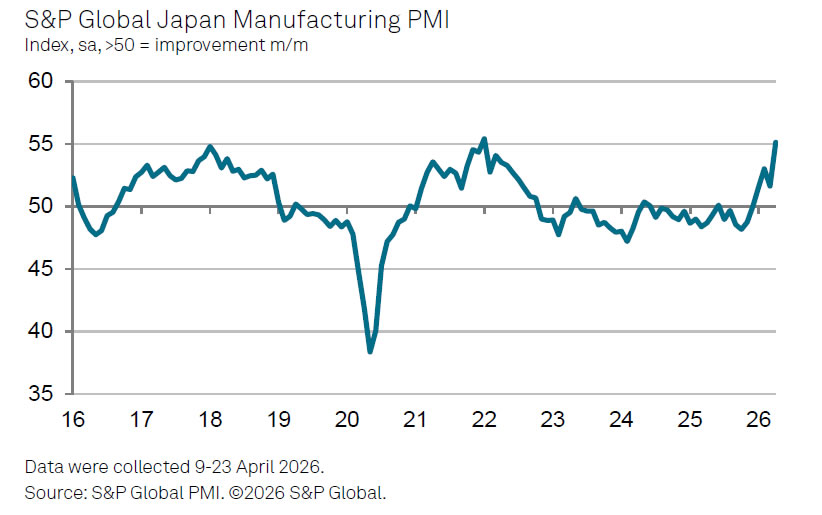
Japan’s PMI Manufacturing was finalized at 55.1 in April, up sharply from 51.6 in March and marking the strongest reading since January 2022. The data points to a robust rebound in factory activity, with output expanding at the fastest pace in over a year, supported by a surge in sales and increased production momentum.
The strength in activity, however, is being driven in part by precautionary behavior. According to S&P Global Market Intelligence, manufacturers have been boosting inventories amid growing supply chain disruptions linked to the Middle East conflict. Lead times for inputs deteriorated at the fastest rate in 15 years, while input cost inflation surged to a three-and-a-half-year high, highlighting mounting strain across production networks.
As noted by Annabel Fiddes, the current rebound may prove short-lived. “This suggests the current boost to manufacturing could soon fade unless we see reduced market uncertainty and more stable supply chain conditions,” she said, warning that the pickup in activity is tied to stock-building rather than sustained demand. Without an improvement in supply conditions, rising costs and weaker demand could weigh on the sector in the months ahead.
| Indicator | March | April | Change |
|---|---|---|---|
| PMI Manufacturing | 51.6 | 55.1 | ↑ +3.5 |
| Output Growth | — | Strongest since Jan 2022 | ↑ |
| Sales Growth | — | Fastest since Jan 2022 | ↑ |
Cost & Supply Chain Indicators
| Indicator | Level/Trend |
|---|---|
| Input Cost Inflation | Highest in 3.5 years |
| Supplier Delivery Times | Worst in 15 years |
| Inventory/Stock Building | Increased |