

Sample Category Title
Consumer Confidence Remains Buoyant
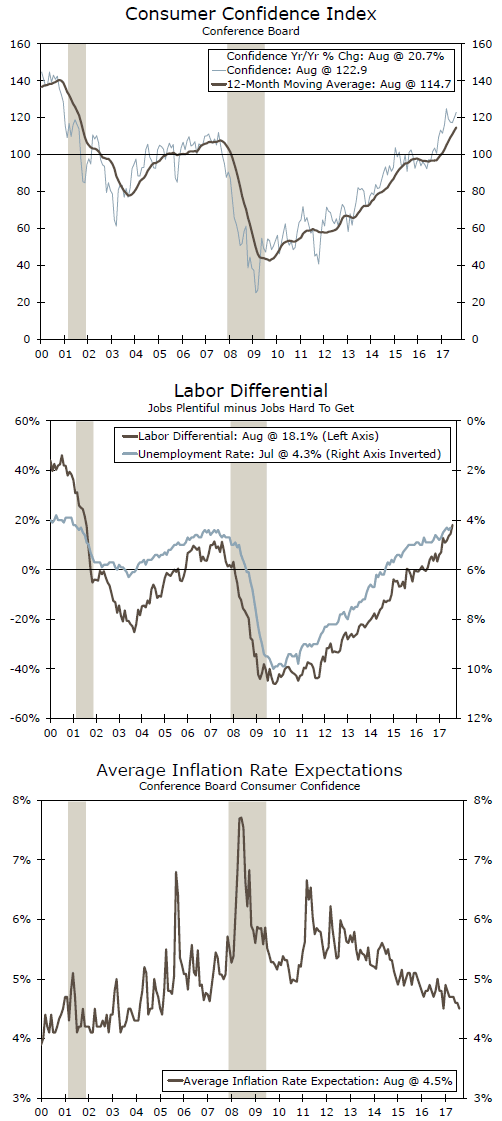
Consumer confidence climbed further in August as continued strengthening in the labor market bolstered views of current economic conditions. Inflation expectations edged down and remain a challenge for the Fed.
A Better Present and a Better Future
Consumer confidence remained buoyant in August according to the latest survey by the Conference Board. The Conference Board's index rose 2.9 points to 122.9, beating the market's expectations for a reading of 120.7. At this level, consumer confidence is just a shade below the 16-year high set in March and well above last year's average of 99.8.
Pushing the index higher this month were improved assessments of both current conditions and expectations about the future. The expectations component rose one point to 104.0, but remains below the cycle high set in March. While the expectations component surged in the wake of last year's election, assessments of the present situation have been improving more gradually. In August, however, the present situation index rose nearly 6 points, putting it at the highest level since 2001.
The Consumer Confidence Index puts more emphasis on labor market conditions than other sentiment measures, which is a major reason why the index remains at a high level. Views of the labor market continued to improve in August as hiring has remained strong and job openings are at record highs. The share of respondents reporting jobs as "plentiful" rose to 35.4 percent in August, while the share believing jobs were "hard to get" fell to 17.3 percent. The difference between these two series—the labor differential—jumped to 18.1 percentage points and suggests further tightening in the labor market. Views of business conditions also improved in August, with more respondents rating business conditions as "good."
The favorable view of labor market conditions has lent support to consumers' views of future income. The share of consumers expecting to see incomes increase over the next six months continued to move up, while the share expecting a decrease shrunk further.
Inflation expectations headed down a tick over the month and are back at the lows of this cycle. While expectations for higher income alongside weaker inflation imply consumers expect to see real income gains, depressed views of future inflation remain a hurdle for the Fed.
Harvey Headaches to Come
The cutoff date for the survey was August 16, ahead of the havoc wrought by Hurricane Harvey and continued rain fall along the Gulf Coast. As a result, we would not be surprised to see the index fall in September. In the month following Hurricane Katrina, the index tumbled 18 points. That said, the hit to confidence was relatively short lived. Within five months, the consumer confidence index rebounded to its pre-Katrina level. While it is still too early to tell the extent of the damage done by Hurricane Harvey, we expect continued strength in the labor market to help overcome the near term setbacks related to the storm.
Missile from North Korea Spikes Demand for Gold
The main event on the market came from the missile launched by North Korea that flew over Japanese air space and fell just East of the country. This resulted in a spike in volatility and demand for safe haven assets like the yen and gold has increased drastically.
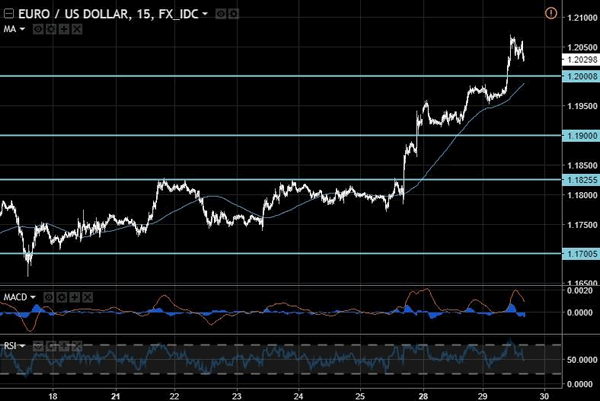
The EUR/USD overcame the psychologically important level of 1.2000 as interest rose in the euro as a funding currency. The positive impulse accelerated also due to the price hitting stop orders after breaking through 1.2000.
The German Gfk consumer climate index increased to 10.9 in September that is 0.1 above the expected level and the preliminary report on French GDP showed an increase of 0.5% for the second quarter which was in line with the forecast. The situation for the greenback slightly improved after the release of the Conference Board consumer confidence index, which has grown to 122.9 in August, 2.0 above the predicted figure.
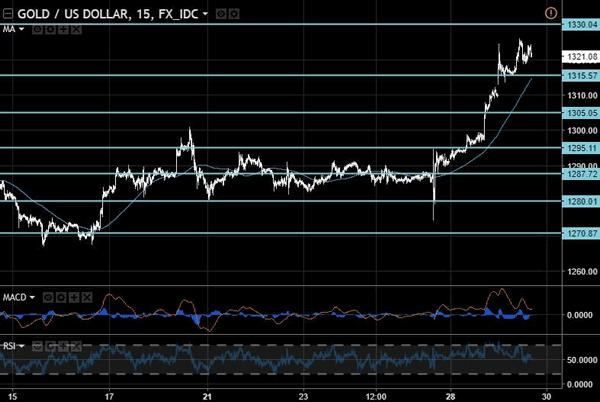
On the background of geopolitical tensions, investors have turned to gold as a defensive asset. Alongside we have the rising possibility of the Fed looking like it might not raise interest rates again this year and this stimulated the bulls to push the price far above the important level of 1,300 US dollars per troy ounce.
Tomorrow volatility on the currency markets will remain high due to the release of the preliminary report on US Gross Domestic Product for the second quarter of 2017 and from the Reserve Bank of New Zealand Governor's speech.
EUR/USD
The EUR/USD was able to overcome the important resistance line at 1.2000 that opened the way for the continued increase up to 1.2200. The RSI on the 15-minute chart has left the overbought zone and the upward dynamics may continue after the end of the current correction. In order to switch to a negative trend, the quotes need to break through the local low near 1.1950.
USD/JPY
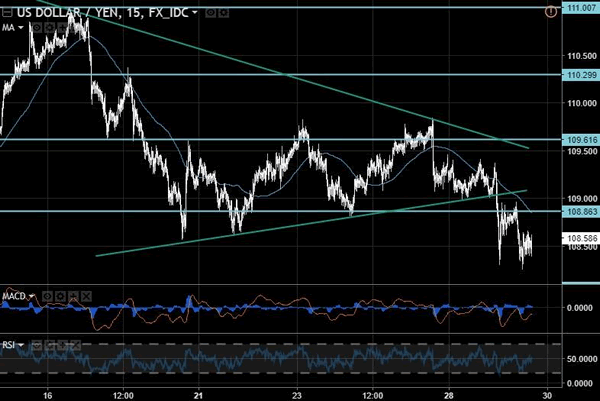
The USD/JPY broke through the inclined support line and the 108.85 mark, and fixing below it may lead to further drops to 108.00 and 106.60. On the 15-minute chart we see the divergence between the price and MACD signal line, this points to a possible increase, sooner rather than later. In this case the price may return to 109.60 and 110.30.
XAU/USD
After overcoming the psychologically important 1300 mark, we have seen growth accelerate and price fixing above 1315. This may become a signal to buy with the growth potential up to 1330 and 1350. On the other hand, breaking through 1315 and the SMA100 on the 15-minute chart may stimulate the bears to pull the quotes down to potential targets at 1305 and 1295.
Yen Posts Gains as Korea Tensions Climb
USD/JPY has posted gains for a third straight day on Tuesday. In North American trade, the pair is trading at 108.76, down 0.36% on the day. On the release front, Japanese Household Spending posted a strong gain of 0.8%, well above the forecast of -0.2%. The Japanese unemployment rate remained unchanged at 2.8%, matching the forecast. In the US, CB Consumer Confidence improved to 122.9, beating the estimate of 120.9 points. Later in the day, Japan releases Retail Sales, which is expected to slow to 1.1%. On Wednesday, there are two key events in the US – ADP Nonfarm Payrolls and Preliminary GDP.
North Korea is back in the news again, as the rogue country fired a missile over Japanese territory on Tuesday. Japan and the US have sharply condemned the missile launch, and with tensions once again climbing in the Korean peninsula, nervous investors have moved a way from stocks in favor of the safe-haven Japanese yen. If the crisis continues, the yen could make further gains against the greenback.
At the Jackson Hole meeting last week, Yellen did not discuss interest rate policy, choosing instead to emphasize that the financial regulations put in place since the financial crisis in 2008 should not be undermined. Her message appeared aim at Donald Trump, who has expressed his intention to relax banking and financial regulations which he has argued are hampering business. The markets remain skeptical about a third and final rate hike this year, as the odds of an increase in December have been falling – currently, the odds a December hike are at 35%, down from 42% a month ago.
Like other Western economies, Japan remains gripped with low inflation. This has resulted in the Bank of Japan keeping in place its ultra-accommodative monetary policy. Unlike the US and Europe, however, the BoJ has given no indications of tightening policy anytime soon, insisting that that inflation must first rise closer to its target of 2%. The economy is headed in right direction, as GDP has expanded for six consecutive quarters. In the second quarter, GDP impressed with a gain of 1.0%, well above the forecast of 0.6%. Still, with inflation nowhere near the BoJ's target, the bank's radical stimulus program is likely to remain in place for the foreseeable future.
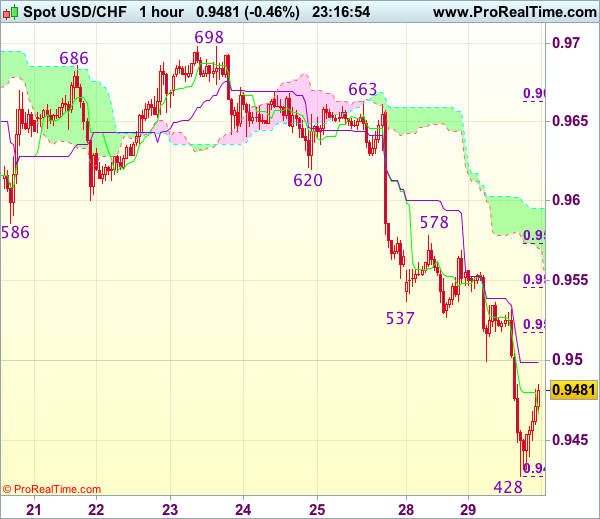
Trade Idea Wrap-up: USD/CHF – Sell at 0.9530
USD/CHF - 0.9475
Most recent candlesticks pattern : N/A
Trend : Down
Tenkan-Sen level : 0.9466
Kijun-Sen level : 0.9499
Ichimoku cloud top : 0.9595
Ichimoku cloud bottom : 0.9570
Original strategy :
Sell at 0.9520, Target: 0.9420, Stop: 0.9555
Position : -
Target : -
Stop : -
New strategy :
Sell at 0.9530, Target: 0.9430, Stop: 0.9565
Position : -
Target : -
Stop : -
As the greenback has recovered after falling to 0.9428, suggesting minor consolidation above this level would be seen and test of the Kijun-Sen (now at 0.9499) and then 0.9515-20 (38.2% Fibonacci retracement of 0.9663-0.9428), however, previous support at 0.9537 should limit upside and bring another decline later, below said support at 0.9428 would extend recent decline to 0.9400, however, loss of momentum should prevent sharp fall below 0.9370-75 and reckon 0.9350 would hold.
In view of this, would not chase this fall at current level and we are looking to sell dollar on recovery as previous support at 0.9537 should turn into resistance and limit dollar’s upside, bring another decline. Only above resistance at 0.9578-83 would abort and signal low is formed, bring a stronger rebound towards 0.9620.
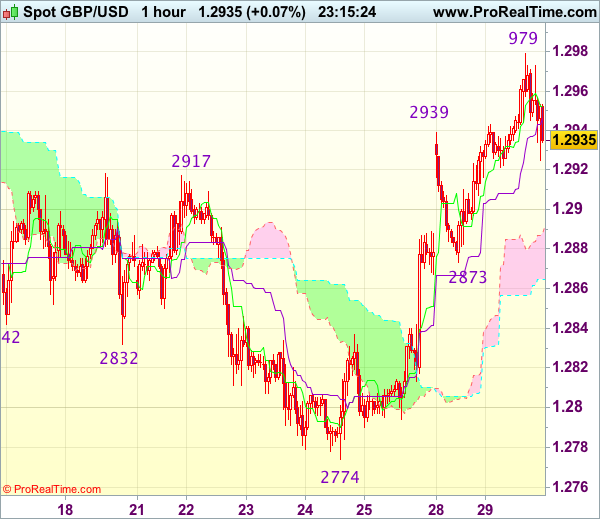
Trade Idea Wrap-up: GBP/USD – Buy at 1.2880
GBP/USD - 1.2940
Most recent candlesticks pattern : N/A
Trend : Near term up
Tenkan-Sen level : 1.2952
Kijun-Sen level : 1.2946
Ichimoku cloud top : 1.2888
Ichimoku cloud bottom : 1.2865
Original strategy :
Buy at 1.2900, Target: 1.3000, Stop: 1.2865
Position : -
Target : -
Stop : -
New strategy :
Buy at 1.2880, Target: 1.2980, Stop: 1.2845
Position : -
Target : -
Stop : -
As cable has eased after intra-day rise to 1.2979, suggesting minor consolidation below this level would be seen and pullback to 1.2920 and then 1.2900 cannot be ruled out, however, still reckon support at 1.2873 would contain downside and bring another rise later, above said resistance would add credence to our view that a temporary low has been formed at 1.2774 last week and extend this rise for retracement of recent decline to 1.3000 and later towards previous resistance at 1.3032 which is likely to hold from here.
In view of this, we are looking to buy sterling on pullback as support at 1.2873 should limit downside. Below the lower Kumo (now at 1.2865) would defer and signal first leg of upmove from 1.2774 has ended, risk weakness to 1.2840-45 but support at 1.2813 should remain intact, bring another rebound later.
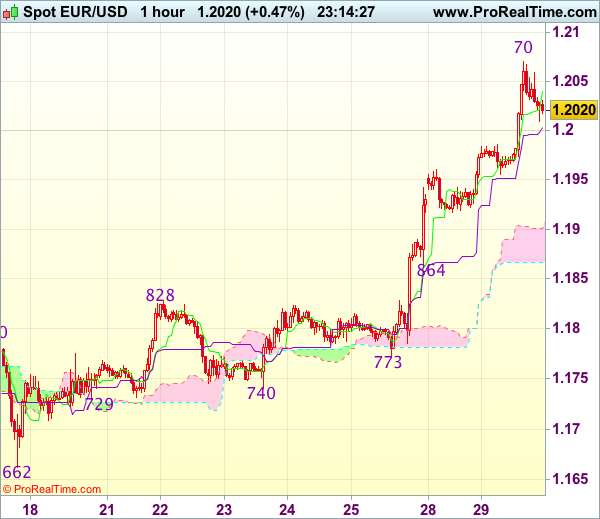
Trade Idea Wrap-up: EUR/USD – Buy at 1.1965
EUR/USD - 1.2025
Most recent candlesticks pattern : N/A
Trend : Up
Tenkan-Sen level : 1.2040
Kijun-Sen level : 1.2003
Ichimoku cloud top : 1.1901
Ichimoku cloud bottom : 1.1867
Original strategy :
Buy at 1.1965, Target: 1.2065, Stop: 1.1930
Position : -
Target : -
Stop : -
New strategy :
Buy at 1.1965, Target: 1.2065, Stop: 1.1930
Position : -
Target : -
Stop : -
As euro’s upmove accelerated after last week’s anticipated rally above previous resistance at 1.1910 (now support), adding credence to our bullish view that recent upmove is still in progress and may extend headway to 1.2070 and then 1.2095-00, however, near term overbought condition should limit upside and reckon 1.2150-55 (61.8% projection of 1.1119-1.1910 measuring from 1.1662) would hold from here, bring retreat later.
In view of this, would not chase this rise here and would be prudent to reinstate long on pullback as 1.1955-65 should limit downside. Only below 1.1930 would defer and risk test of support area at 1.1910-13 which is likely to hold from here.
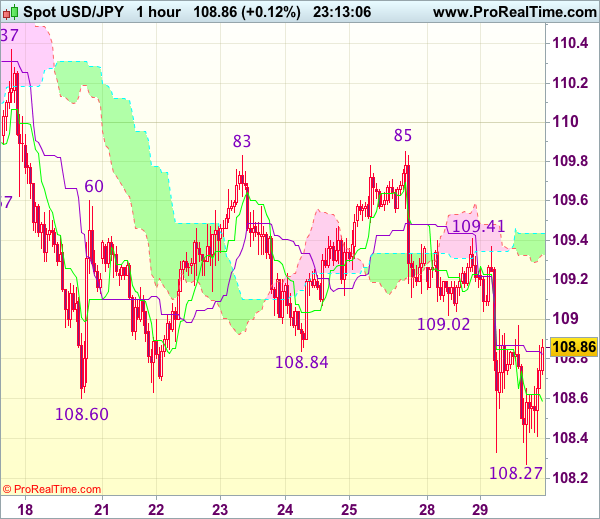
Trade Idea Wrap-up: USD/JPY – Stand aside
USD/JPY - 108.85
Most recent candlesticks pattern : N/A
Trend : Near term down
Tenkan-Sen level : 108.59
Kijun-Sen level : 108.82
Ichimoku cloud top : 109.44
Ichimoku cloud bottom : 109.33
Original strategy :
Sell at 109.15, Target: 108.15, Stop: 109.50
Position : -
Target : -
Stop : -
New strategy :
Stand aside
Position : -
Target : -
Stop : -
Although the greenback fell marginally to 108.27, as dollar has rebounded after holding above previous support at 108.13, suggesting consolidation above this level would be seen and another corrective bounce to 109.15-20 cannot be ruled out, however, reckon resistance at 109.41 would limit upside and bring another decline later, below said support at 108.27 would bring retest of 108.13 but only break of this 2017 low confirm early decline from 118.66 top has resumed and bring subsequent fall to 108.05-06 (50% projection of 114.50-108.73 measuring from 110.95) and later 117.70, having said that, 117.35-40 (61.8% projection) would hold.
In view of this, would not chase this fall here and would be prudent to stand aside for now. Only break of resistance at 109.41 (yesterday’s high) would signal low is formed, bring a stronger rebound to 109.60, then towards resistance at 109.85.
Trade Idea: EUR/GBP – Buy at 0.9200
EUR/GBP - 0.9285
Original strategy :
Buy at 0.9155, Target: 0.9295, Stop: 0.9115
Position : -
Target : -
Stop : -
New strategy :
Buy at 0.9200, Target: 0.9320, Stop: 0.9160
Position : -
Target : -
Stop : -
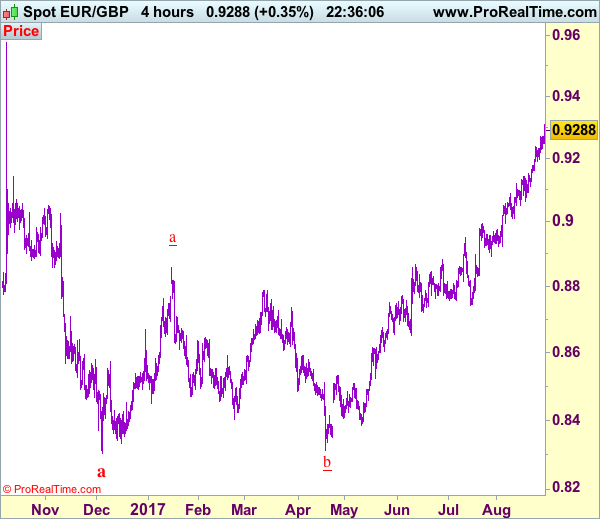
As the single currency has risen again after brief pullback, adding credence to our bullish view that the major rise from 0.8304 is still in progress and may extend further gain to 0.9310-20, then 0.9335-40 but weakening of near term upward momentum should prevent sharp move beyond 0.9365-70 and price should falter below 0.9395-00, risk from there has increased for a retreat to take place later.
In view of this, would not chase this rise here and would be prudent to buy euro on subsequent pullback as 0.9200 would limit downside. Below support at 0.9189 would defer and suggest a temporary top is possibly formed, risk test of 0.9150-60, however, break there is needed to add credence to this view, bring retracement of recent upmove towards 0.9100.
Our preferred count is that, after forming a major top at 0.9805 (wave V), (A)-(B)-(C) correction is unfolding with (A) leg ended at 0.8400 (A: 0.8637, B: 0.9491 and 5-waver C ended at 0.8400. Wave (B) has ended at 0.9413 and impulsive wave (C) has either ended at 0.8067 or may extend one more fall to 0.8000 before prospect of another rally. Current breach of indicated resistance at 0.9043 confirms our view that the (C) leg has ended and bring stronger rebound towards 0.9150/54, then towards 0.9240/50.
Trade Idea: USD/CAD – Sell at 1.2595
USD/CAD - 1.2500
Trend: Down
Original strategy :
Sell at 1.2550, Target: 1.2350, Stop: 1.2610
Position: -
Target: -
Stop: -
New strategy :
Sell at 1.2595, Target: 1.2395, Stop: 1.2655
Position: -
Target: -
Stop:-
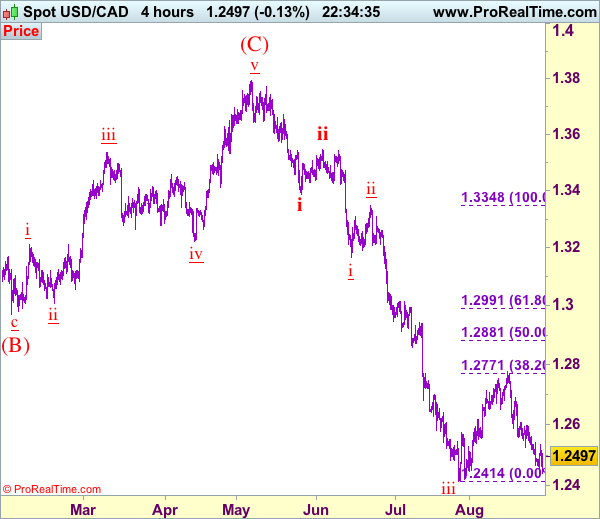
As the greenback has recovered after holding above previous support at 1.2414, suggesting further consolidation above this level would be seen and another bounce to 1.2540-50 cannot be ruled out, however, reckon upside would be limited to 1.2600 and bring another decline later, below said support at 1.2414 (wave iii trough) would confirm recent decline has finally resumed and extend weakness to 1.2350, then towards 1.2300. We are keeping our count that wave v as well as wave (C) ended at 1.3794 and impulsive wave (i ii, i ii) is now unfolding with minor wave iii ended at 1.2414, followed by wave iv correction possibly ended at 1.2778, wave v should extend towards 1.2300.
In view of this, we are looking to sell again on recovery as 1.2600 should limit upside. Only above 1.2630-35 would defer and prolong consolidation, risk rebound to 1.2660 but resistance at 1.2691 should hold from here, bring further consolidation. Above 1.2691 resistance would risk a stronger rebound to 1.2740-50, however, said resistance at 1.2778 should hold. In the event the pair breaks said resistance at 1.2778, this would abort and signal the rebound from 1.2414 is still in progress for retracement of recent decline to 1.2825-30 but still reckon upside would be limited to 1.2880-85 (50% Fibonacci retracement of wave iii) and price should falter well below 1.2990-95 (61.8% Fibonacci retracement), bring retreat later.
To recap, wave B from 1.3066 is unfolding as an a-b-c and is sub-divided as a: 1.2192, b: 1.2716 and wave c is a 5-waver with i: 1.1983, ii: 1.2506, extended wave iii with minor iii at 1.0206, wave iv ended at 1.0781 and wave v as well as wave iii has ended at 0.9931, hence the subsequent choppy trading is the wave iv which is unfolding as (a)-(b)-(c) with (a) leg of iv ended at 1.0854, followed by (b) leg at 1.0108 and (c) leg as well as the wave iv ended at 1.0674. The wave v is sub-divided by minor wave (i): 0.9980, (ii): 1.0374, (iii): 0.9446, (iv): 0.9913 and (v) as well as v has possibly ended at 0.9407, therefore, consolidation with upside bias is seen for major correction, indicated target at 1.3700 and 1.4000 had been met and further gain to 1.4700 would be seen later.
Dollar Remains Under Pressure; Euro and Gold Extend Gains
The US dollar remained under pressure in European trading today, extending its Asian session losses, while the euro and gold added to their earlier gains. The risk aversion brought on from North Korea's latest missile tests, which violated Japanese airspace, showed little sign of dissipating, with major European indices falling deep into the red. Dollar weakness lifted other majors however, with sterling, and the Canadian, Australian and New Zealand dollars all rising on the back of the greenback's slide.
The absence of major data didn't help sentiment either with only the US consumer confidence indicator able to distract investors' attention away from geopolitical concerns. US President Donald Trump fuelled market anxiety by saying that "all options are on the table". The dollar got only a modest boost from better-than-expected consumer confidence data. The Conference Board's gauge of consumer confidence improved to 122.9 in August, beating forecasts of 120.3, although July's figure was revised down from 121.1 to 120.0. Reaction to the S&P CoreLogic Case-Shiller 20-City house price index was also muted. The index rose by 5.7% year-on-year in June, in line with expectations.
The dollar recovered from its four-month low of 108.25 yen to climb towards 108.80 yen after the data. The dollar index also came off its lows to rise to 91.92, having touched a 2½-year low earlier in the day. Against the Swiss franc, the dollar recovered marginally to 0.9463, though this was still 0.9% down on the day.
The euro continued to charge higher, achieving yet another 2½-year high as it hit $1.2069. The single currency also made new highs against the pound, climbing to a near 10-month high of 0.9306 pounds, and even managed to resist the yen's strong advance to stand flat on the day at 130.88 yen. The next big focus for the euro is Thursday's flash Eurozone inflation data.
Sterling was mixed on Tuesday as it fell against the euro and the yen but was firmer against the dollar. The pound rose to a two-week high of $1.2978 despite growing doubts about the UK's progress in the Brexit negotiations with the EU. As the third round of Brexit talks got underway between Britain and the EU, European Commission President Jean-Claude Juncker said the UK government's Brexit position papers were not satisfactory, insisting that the divorce bill must be settled first before trade discussions can begin. Meanwhile, there was irritation on the British side following the EU chief negotiator Michel Barnier's comments aimed at the UK to start "negotiating seriously".
The risk-sensitive Australian and New Zealand dollars both edged higher versus their US counterparts, even as investors fretted about the latest fallout over North Korea's actions. The aussie was up 0.1% at $0.7972 as traders awaited Australian building approvals and capital expenditure figures due on Wednesday and Thursday respectively. The kiwi was up a more solid 0.5% at $0.7290 in afternoon European trading hours.
The Canadian dollar was also firmer, though it gave up some of its earlier gains following the release of producer price data out of Canada. Producer prices fell from a downwardly revised 3.1% to 1.3% y/y rate in July. Dollar/loonie bounced off a one-month low of 1.2438 to rebound to around 1.2490 after the release.
In commodities, gold extended its gains, reaching a fresh 9½-month of $1325.94 an ounce before easing to around $1320. Oil prices remained weighed by concerns over the impact on demand of the refinery closures in the US as a result of the tropical storm Harvey hitting the state of Texas. WTI and Brent crude were both mostly flat in late European trading at $46.60 and $51.88 a barrel respectively.