Fri, Apr 17, 2026 08:30 GMT
More

    Sample Category Title

    Dollar Look Past Soft US Data, 10-Year Yield Dips

    ActionForex

    Dollar stayed heavy in early US trade, but muted price action suggested there was little reaction to the disappointing retail sales data. Elsewhere, conditions were also listless. US stock futures edged sideways and broader risk sentiment stayed calm.

    While the retail sales miss was discouraging, traders appear content to hold positions steady. Attention remains firmly on tomorrow's delayed non-farm payrolls report, widely seen as the key determinant for near-term Fed easing expectations. Markets were likely viewing labor market signals as more policy-relevant than consumption prints at this stage of the cycle.

    Nevertheless, one notable development beneath the surface is the decline in US Treasury yields this week. 10-year yield slipped back below 4.2%. That move has unfolded alongside reports that Chinese regulators have advised domestic financial institutions to curb holdings of US Treasuries. While eye-catching, the bond market reaction suggests little belief in an abrupt or disorderly shift.

    Even so, a debate among economists is centered around longer-term structural outflows from US assets. Whether this represents a genuine regime shift remains an open question.

    In Europe, French President Emmanuel Macron warned that Europe should brace for further confrontations with Washington, framing recent disputes as evidence of a more hostile US posture. Macron accused the Trump administration of pursuing policies aimed at weakening Europe, arguing that compromise had failed and that the EU should prepare for sustained friction rather than episodic disputes.

    In currency markets, Dollar remains the week’s weakest major, followed by Sterling and Kiwi. Yen leads gains and looks to be gathering traction, with Swiss Franc and Loonie also firm. Euro and Aussie trade broadly in the middle of the pack.

    In Europe, at the time of writing, FTSE is down -0.38%. DAX is down -0.12%. CAC is up 0.09%. UK 10-year yield is down -0.038 at 4.496. Germany 10-year yield is down -0.024 at 2.819. Earlier in Asia, Nikkei rose 2.28%. Hong Kong HSI rose 0.58%. China Shanghai SSE rose 0.13%. Singapore Strait Times rose 0.07%. Japan 10-year JGB yield fell -0.057 to 2.237.

    US retail sales stall in December, consumption ends 2025 on softer note

    US retail sales stalled in December, adding to signs that consumer momentum cooled into year-end. Headline sales were flat month-on-month at USD 735B, undershooting expectations for a 0.4% rise and marking a clear slowdown after earlier resilience.

    The softness was broad-based. Retail sales excluding autos were also unchanged at USD 596B, missing forecasts for a 0.4% increase. Ex-gasoline sales were flat at USD 682B.

    That said, the broader trend remains less alarming. Total retail sales for the October–December 2025 period were up 3.0% year-on-year, pointing to moderation rather than contraction.

    ECB's de Guindos plays down CPI undershoot, shrugs off Euro strength

    ECB Vice President Luis de Guindos downplayed concerns over January’s softer inflation print. In an interview with Econostream Media, he said that headline inflation dipping below 2% in early 2026 had been clearly signalled well in advance. He cautioned against overreacting to individual releases, arguing that markets tend to fixate on small deviations. However, "the overall trend is in line with what we had projected," he emphasized

    Energy prices came in lower than expected, but de Guindos highlighted elevated volatility in that component. Services inflation continues to move in the “right direction.” Minor downside surprises in services, he said, are not policy-relevant.

    On the currency side, de Guindos reiterated that the ECB does not target EUR/USD, but acknowledged its importance for an open economy. Euro’s pullback toward the long-standing 1.16–1.18 range was described as unsurprising and fully embedded in the ECB’s projections.

    Even with recent euro gains largely reflecting US dollar weakness, de Guindos played down the implications. The move, he said, “deserves attention” but is far from "dramatic", signalling that exchange-rate developments are unlikely to disrupt the ECB’s wait-and-see stance unless they become materially more persistent or disorderly.

    ECB research sees tariffs as disinflationary shock

    ECB research published in a blog post argued that tariffs are more likely to drag on inflation than fuel it, as the hit to demand outweighs any inflationary impact from disrupted supply chains. ECB economists found that weaker export demand exerts a net disinflationary effect on the Eurozone economy.

    According to the study, a tariff-related shock that reduces Eurozone exports to the US by 1% ultimately lowers the consumer price level by around 0.1%, with the effect peaking roughly one and a half years after the shock. The analysis comes as trade data already show material deterioration. In the latest three months for which figures are available, Eurozone exports to the U.S. were down around 6.5% compared with a year earlier.

    For policy, the ECB noted that sectors hit hardest by tariffs — including machinery, autos and chemicals — are also among the most sensitive to interest rate changes. Output in these industries may fall sharply after trade shocks, but responds strongly to lower borrowing costs.

    "We find that this pattern holds for about 60% of the sectors we study – representing roughly 50% of total average euro zone industrial output and of total goods exports to the United States," the economists said.

    Australia Westpac consumer sentiment dips -2.6% mom after RBA hike, but impact contained

    Australia’s Westpac Consumer Sentiment Index fell -2.6% mom to 90.5 in February, reflecting the immediate impact of the RBA’s first rate hike in more than two years. However, Westpac noted that the overall hit to confidence was "relatively mild" by historical standards. The February decline was smaller than the average fall typically seen after rate hikes, and sentiment remains well above the extreme lows recorded through much of 2022–2024.

    Looking ahead, Westpac expects the RBA to remain cautious. While another hike at the March meeting cannot be ruled out, the more likely outcome is a pause as policymakers wait for additional data, particularly quarterly inflation updates.

    With the RBA placing greater weight on trimmed-mean inflation and the next quarterly CPI report due in late April, Westpac continues to see May as the more probable window for a follow-up 25bp rate hike if inflation remains uncomfortably high.

    Australia NAB business confidence rises to 3, costs ease as activity momentum holds

    Australia’s NAB Business Conditions index slipped modestly from 9 to 7 in January, while Business Confidence edged up from 2 to 3. For the RBA, the report showed a clear easing in inflation pressures. Measures of labor and input costs both softened during the month, while quarterly growth in retail prices slowed sharply to 0.3%, down from 0.5% in December.

    NAB economist Michael Hayes noted that cost and price indicators have now fallen to "new post-pandemic lows", reinforcing the view that underlying inflation dynamics are continuing to cool.

    At the same time, the survey indicates that the broader economy has not lost much traction. Hayes highlighted that activity has "retained most of its momentum gained through the past year" , even as capacity utilization eased slightly.

    USD/CHF Mid-Day Outlook

    Daily Pivots: (S1) 0.7623; (P) 0.7698; (R1) 0.7738; More….

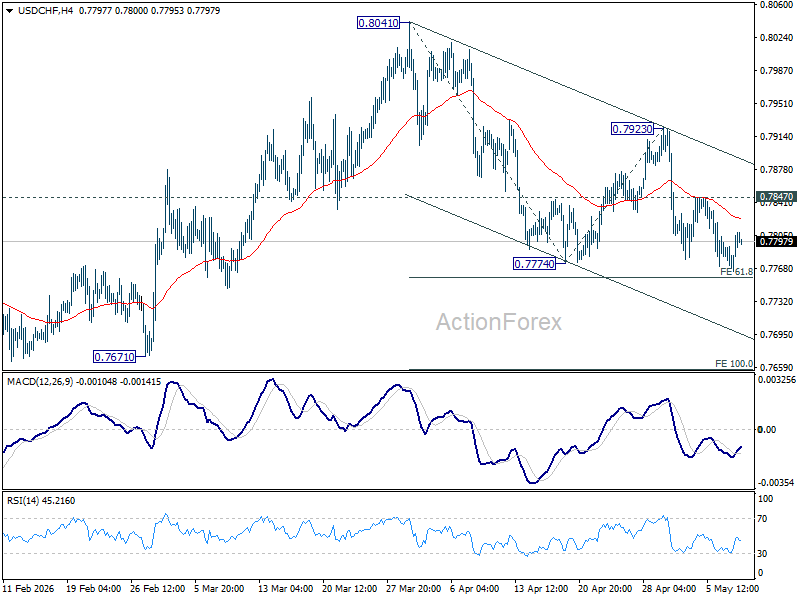
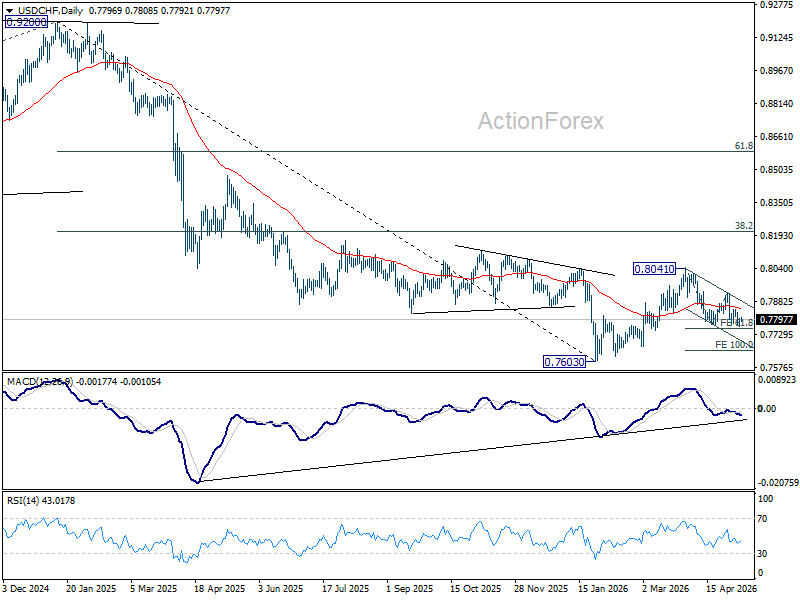
    USD/CHF's fall from 0.7816 is in progress and intraday bias stays on the downside for retesting 0.7603 low. Decisive break there will resume larger down trend to 0.7382 projection level next. On the upside, though, above 0.7737 minor resistance will delay the bearish case and extend the corrective pattern from 0.7603 with another leg.

    In the bigger picture, larger down trend from 1.0342 (2017 high) is still in progress. Next target is 100% projection of 1.0146 (2022 high) to 0.8332 from 0.9200 at 0.7382. In any case, outlook will stay bearish as long as 55 W EMA (now at 0.8152) holds.


    Economic Indicators Update

    GMT CCY EVENTS Act Cons Prev Rev
    23:30 AUD Westpac Consumer Confidence Feb -2.60% -1.70%
    23:50 JPY Money Supply M2+CD Y/Y Jan 1.60% 1.80% 1.70%
    00:01 GBP BRC Retail Sales Monitor Y/Y Jan 2.30% 1.20% 1.00%
    00:30 AUD NAB Business Confidence Jan 3 3 2
    00:30 AUD NAB Business Conditions Jan 7 9
    11:00 USD NFIB Business Optimism Index Jan 99.3 99.9 99.5
    13:30 USD Retail Sales M/M Dec 0.00% 0.40% 0.60%
    13:30 USD Retail Sales ex Autos M/M Dec 0.00% 0.40% 0.50% 0.40%
    13:30 USD Employment Cost Index Q4 0.70% 0.80% 0.80%
    13:30 USD Import Price Index M/M Dec 0.10% 0.10% 0.40%
    15:00 USD Business Inventories Nov 0.20% 0.30%


    US retail sales stall in December, consumption ends 2025 on softer note

    US retail sales stalled in December, adding to signs that consumer momentum cooled into year-end. Headline sales were flat month-on-month at USD 735B, undershooting expectations for a 0.4% rise and marking a clear slowdown after earlier resilience.

    The softness was broad-based. Retail sales excluding autos were also unchanged at USD 596B, missing forecasts for a 0.4% increase. Ex-gasoline sales were flat at USD 682B.

    That said, the broader trend remains less alarming. Total retail sales for the October–December 2025 period were up 3.0% year-on-year, pointing to moderation rather than contraction.

    Full US retail sales release here.

    ECB research sees tariffs as disinflationary shock

    ECB research published in a blog post argued that tariffs are more likely to drag on inflation than fuel it, as the hit to demand outweighs any inflationary impact from disrupted supply chains. ECB economists found that weaker export demand exerts a net disinflationary effect on the Eurozone economy.

    According to the study, a tariff-related shock that reduces Eurozone exports to the US by 1% ultimately lowers the consumer price level by around 0.1%, with the effect peaking roughly one and a half years after the shock. The analysis comes as trade data already show material deterioration. In the latest three months for which figures are available, Eurozone exports to the U.S. were down around 6.5% compared with a year earlier.

    For policy, the ECB noted that sectors hit hardest by tariffs — including machinery, autos and chemicals — are also among the most sensitive to interest rate changes. Output in these industries may fall sharply after trade shocks, but responds strongly to lower borrowing costs.

    "We find that this pattern holds for about 60% of the sectors we study – representing roughly 50% of total average euro zone industrial output and of total goods exports to the United States," the economists said.

    Full ECB's blog post here.

    ECB’s de Guindos plays down CPI undershoot, shrugs off Euro strength

    ECB Vice President Luis de Guindos downplayed concerns over January’s softer inflation print. In an interview with Econostream Media, he said that headline inflation dipping below 2% in early 2026 had been clearly signalled well in advance. He cautioned against overreacting to individual releases, arguing that markets tend to fixate on small deviations. However, "the overall trend is in line with what we had projected," he emphasized

    Energy prices came in lower than expected, but de Guindos highlighted elevated volatility in that component. Services inflation continues to move in the “right direction.” Minor downside surprises in services, he said, are not policy-relevant.

    On the currency side, de Guindos reiterated that the ECB does not target EUR/USD, but acknowledged its importance for an open economy. Euro’s pullback toward the long-standing 1.16–1.18 range was described as unsurprising and fully embedded in the ECB’s projections.

    Even with recent euro gains largely reflecting US dollar weakness, de Guindos played down the implications. The move, he said, “deserves attention” but is far from "dramatic", signalling that exchange-rate developments are unlikely to disrupt the ECB’s wait-and-see stance unless they become materially more persistent or disorderly.

    Full interview of ECB's de Guindos here.

    GBP/USD Slows Near 1.3700 as Politics Muddy the Outlook

    • GBP/USD pivots near 20-day SMA but stalls soon after, around 1.3700.
    • Short-term tone stays bullish, though uncertainty hasn’t evaporated.

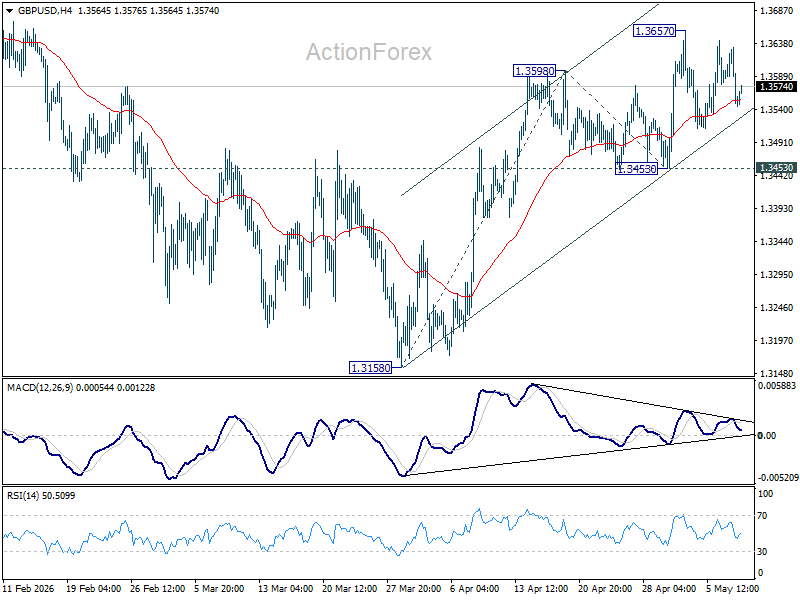
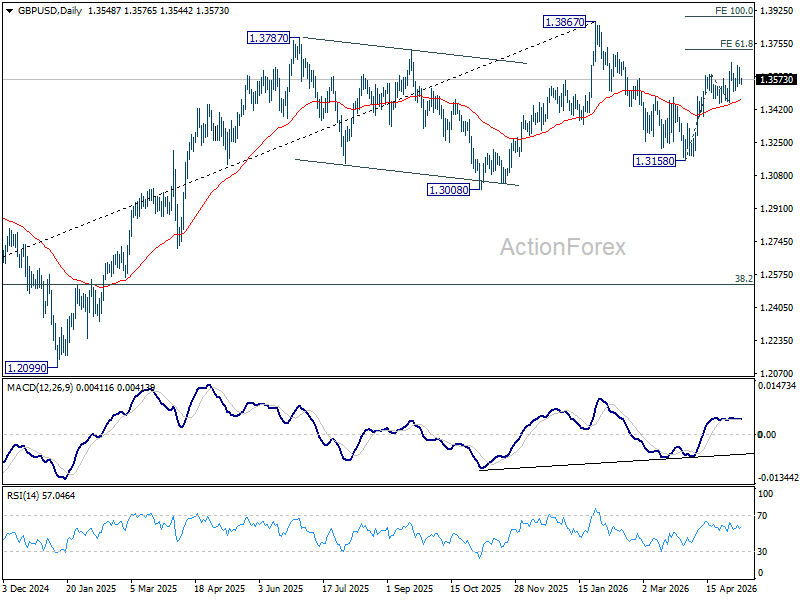
    GBP/USD put together a solid two-day rally, gaining over 1.0% and pushing close to the 1.3700 level. The move helped the pair to recover about half of the drop from the 4½-year peak at 1.3868 reached at the end of January, thanks largely to renewed dollar weakness. That said, with the U.K. Prime Minister facing another leadership challenge, the pair couldn't match the strength seen in other FX majors like EUR/USD.

    For now, the pair is hovering just below 1.3700 and well short of the 1.3730–1.3760 resistance zone. The bulls will need to pass through this area to gain access to the 1.3815–1.3840 region. If momentum really picks up, the 1.3950 zone could come into play next.

    The momentum indicators are still pointing in the right direction. The RSI is comfortably above 50 and the stochastic oscillator continues to grind higher, suggesting there may be more upside left. Still, it’s worth keeping an eye on the RSI, which hasn’t yet managed to print a fresh higher high, suggesting some caution is necessary.

    On the downside, initial support sits around 1.3615, backed up by the 20-day SMA. A break lower could shift focus towards the 1.3540 area, where the 38.2% Fibonacci retracement of the October–January rally lines up. Below that, the trendline near the 50-day SMA may prevent any deeper pullback near 1.3480, while the 200-day SMA around 1.3425 should help prevent a broader bearish turn.

    Overall, GBP/USD is still leaning bullish, but with heavy resistance overhead and political risks in the background, the bulls will need a clear catalyst to push the pair decisively above 1.3840.

    Dollar Losing Fans

    • China is getting rid of US Treasury bonds.
    • The president is actively promoting Kevin Warsh.

    While the IMF is urging investors not to focus on the dollar's short-term weakness, EURUSD is posting its best daily gain since the end of January. According to the International Monetary Fund, the greenback will retain its power on the Forex market thanks to the size of the US economy, entrepreneurial spirit, and the depth and liquidity of the US capital market. However, confidence in the latter has been seriously shaken, which makes the outlook for the USD index bleak.

    The threat to the independence of the Federal Reserve has not gone away. Donald Trump is so keen to promote his own candidate for the position of Fed chair that he is making some surprising statements. According to the president, Kevin Warsh will help boost the US economy by 15%. Over the past five decades, US GDP has grown by an average of 2.8% per year. A 15% growth rate has been extremely rare since the 1950s. The last time it happened was during the pandemic recovery, so he probably just means cumulative growth over several years.

    Meanwhile, the strength of the US economy is no guarantee of a stronger dollar. The White House intends to accelerate GDP growth through aggressive rate cuts, which will undoubtedly weaken the US currency. At the same time, uncertainty surrounding Donald Trump's policies is prompting some countries to divest from Treasury bonds. Beijing's recommendation to Chinese banks not to buy these securities has catalysed a rally in Treasury yields and the EUR/USD.

    Even the extremely vulnerable Pound Sterling took advantage of the dollar's weakness. The Bank of England could ease monetary policy as early as March, and a political scandal has erupted in Britain. As a result, Prime Minister Keir Starmer's position has once again become unstable. EURGBP has soared amid this political uncertainty. However, GBPUSD bulls are going on the offensive thanks to shaken confidence in the dollar.

    Unlike the Pound, Gold has been unable to capitalise on the fall in the USD index. This is an alarming sign for the precious metal. This is especially true given that so-called smart money is currently on the side of the bears. Hedge funds and asset managers have reduced their net long Gold positions to their lowest since October.

    Ethereum Stares into the Abyss

    Market Overview

    The crypto market cap fell by 1.7% to $2.35T, returning to the lower end of the range of the last three days. Cryptocurrencies remain under pressure with local resistance just above $2.40T, contrasting with the upward movement of stock indices. This divergence can be easily explained by the shift in leadership to the classic broad market economy instead of tech stocks, with which cryptocurrencies have a high correlation.

    Bitcoin is losing over 2.2%, trading just below $69K. Intraday dynamics indicate a loss of recovery momentum. A possible failure below $68K will signal the end of consolidation after the rebound. Technically, this will open the way to local lows of $60-63K. At the same time, we still assume that the main scenario will be a prolonged consolidation in the $55-65K range, as this is an area of multiple extremes.

    Ethereum is performing slightly worse than the market, losing about 3% and trying to hold on to levels above $2000. Over the past three weeks, the price has fallen below the 50- and 200-week moving averages, indicating a serious bearish sentiment. Last week, the second-largest cryptocurrency by market capitalisation touched the long-term support line of the last four years. A break below this line near $1,600 could trigger a dramatic capitulation of long-term buyers.

    News Background

    According to Google Trends, global user interest in cryptocurrencies has fallen to annual lows. Santiment describes the crowd sentiment as “fiercely bearish.”

    The Sharpe ratio for Bitcoin fell to minus 10, to its lowest since March 2023, indicating the final stage of a bear market, according to CryptoQuant. Similar values were recorded at the bottom of the cycles at the end of 2018 and 2022. However, the final phase could last for several months.

    Bitwise calls the recent drop in Bitcoin a chance for new investors to buy more coins.

    The current drawdown is the weakest in the history of the bear market and reflects only a crisis of confidence among market participants, rather than fundamental problems with the asset, Bernstein notes. Analysts have confirmed their long-term forecast for Bitcoin, with a target price of $150K by the end of 2026.

    According to Jefferies, Tether’s gold reserves reached 148 tons, with an estimated value of $23 billion. The issuer of the USDT stablecoin entered the top 30 largest gold owners in the world, purchasing 26 tons of the precious metal in the fourth quarter and adding another 6 tons in January.

    USD/JPY Drops by More Than 1% At the Start of the Week

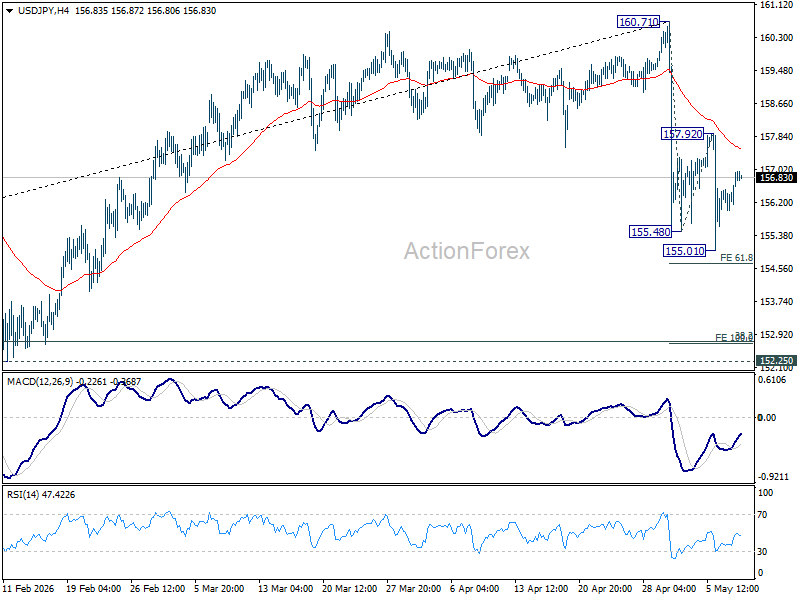
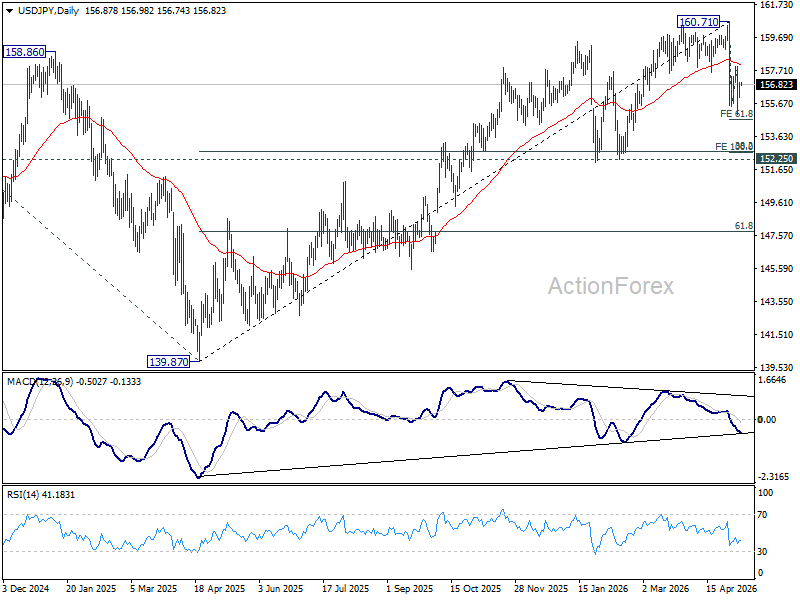
    As the USD/JPY chart shows, the pair has been exhibiting bearish momentum since the beginning of the week. This move has been driven by a combination of factors:

    • → Yen strength on political news. Prime Minister Sanae Takaichi secured a decisive victory in Sunday’s snap election (8 February), winning a parliamentary majority. Although Takaichi has pledged large-scale fiscal stimulus of around ¥21 trillion, the prospect of increased money printing has not weakened the currency, as the market may (a) welcome political stability and (b) believe that the Bank of Japan will be forced to respond to inflation by raising interest rates.
    • → US dollar weakness ahead of economic data releases. This reflects market sentiment ahead of labour market data due on Wednesday and the CPI report scheduled for Friday. In addition, the dollar’s status has come under pressure after Chinese regulators reportedly recommended limiting investments in US Treasuries.

    On 26 January, when analysing fluctuations in the dollar–yen exchange rate, we:

    • → noted that the long-term ascending channel had been broken near the 157.700 level;
    • → constructed a parallel channel below and suggested that, following the sharp drop in USD/JPY (triggered by the possibility of coordinated currency intervention by the Bank of Japan and the Federal Reserve), a rebound could occur.

    Indeed, since then (as indicated by the arrow):

    • → on 28 January, the market formed a low slightly below the lower boundary of the parallel channel;
    • → the pair subsequently rebounded towards the 157.700 level.

    Technical Analysis of the USD/JPY Chart

    The bearish tone of the current week allows us to highlight the following:

    • → local support levels of the parallel channel (shown by thick blue lines) have been broken, and bulls may now have to rely on its lower boundary;
    • → lower highs A–B–D have formed on the USD/JPY chart, with a bearish trend line drawn through them.

    In this context, it is reasonable to assume that:

    • → the sharp B→C impulse has disrupted the market’s multi-month bullish structure;
    • → the C→D recovery (towards the 78.6% Fibonacci level) was an interim move within a broader bearish reversal.

    The ability of the red A–B–D trend line to remain relevant over time would further support this hypothesis.

    Trade over 50 forex markets 24 hours a day with FXOpen. Take advantage of low commissions, deep liquidity, and spreads from 0.0 pips (additional fees may apply). Open your FXOpen account now or learn more about trading forex with FXOpen.

    This article represents the opinion of the Companies operating under the FXOpen brand only. It is not to be construed as an offer, solicitation, or recommendation with respect to products and services provided by the Companies operating under the FXOpen brand, nor is it to be considered financial advice.

    EUR/USD Set for Growth: Dollar Fears Demand Slump

    EUR/USD rose to 1.1911 on Tuesday. Pressure on the USD increased amid concerns that external demand for dollar-denominated assets could decline significantly.

    The reason behind this shift was reports suggesting that Chinese regulators have advised financial institutions to reduce their holdings of US government bonds. This move could help diversify risks and mitigate the impact of uncertain US economic policies.

    Investors are awaiting delayed reports on the US labour market and inflation this week. These figures could adjust expectations regarding the Federal Reserve’s future policy direction.

    White House economic adviser Kevin Hassett noted that the pace of US employment growth may slow in the coming months due to weaker labour and productivity growth.
    The Fed is expected to leave interest rates unchanged in March, with markets still pricing in two rate cuts for the remainder of the year.

    Technical Analysis

    On the H4 chart for EUR/USD, after a momentum rally in late January, the pair entered a phase of correction and consolidation. The price has recovered above the 1.1760 support level and is now testing the 1.1920-1.1950 area. The Bollinger Bands are narrowing, indicating stabilisation and preparation for the next move. The medium-term structure remains moderately bullish as long as prices stay above 1.1760.

    On the shorter-term H1 time frame, upward momentum remains confined to the short term. The price is moving along the upper Bollinger band after a sharp upward acceleration. It is now consolidating just below resistance at 1.1920-1.1950. Oscillators are in the overbought zone, raising the risk of a pause or shallow pullback, although the overall structure remains intact.

    Conclusion

    EUR/USD is poised for gains, driven by concerns about USD demand and a cautious outlook for US economic growth. While short-term fluctuations are expected, the medium-term trend remains bullish as long as key support levels hold. Investors will be closely watching upcoming data on inflation and employment, which could influence future Federal Reserve policy decisions.

    Starmer Lives to Fight Another Day

    Markets

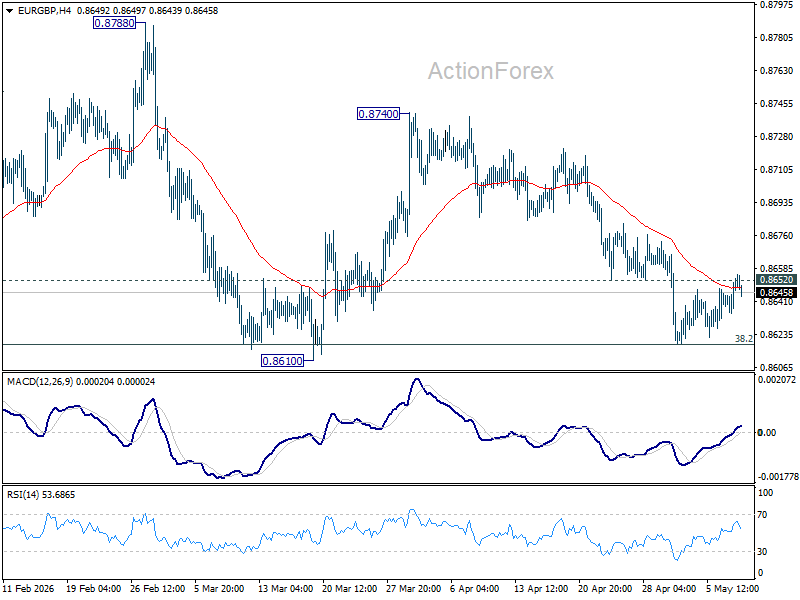
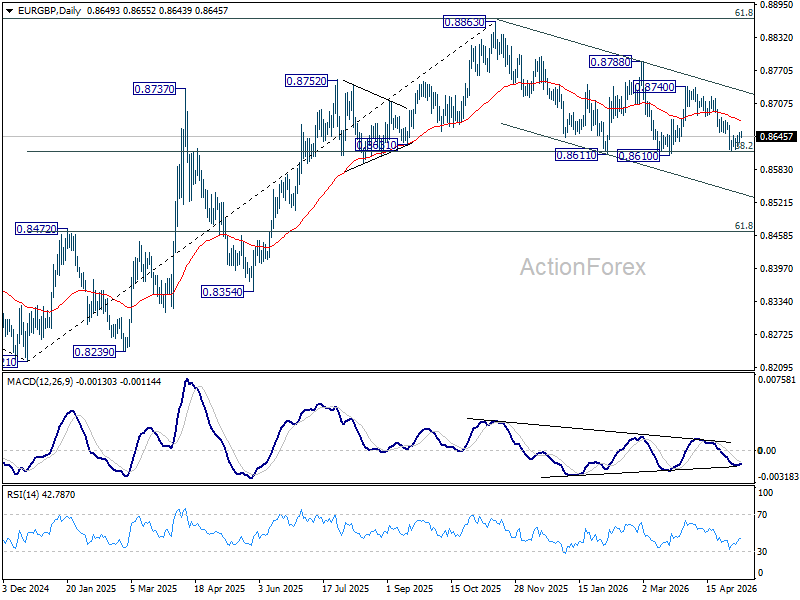
    Keir Starmer lives to fight another day. The embattled UK prime minister drew support from several key ministers yesterday and said he would not step away. Starmer resigning in the very short term, and thereby paving the way for a successor with unknown fiscal credentials, became less likely. Speculation rose to a high when the Scottish Labour leader Anas Sarwar called for Starmer’s exit. But calm returned in the pound and gilts after health secretary Wes Streeting said this was not necessary. Streeting has long been considered a contender for the Labour leadership. His name also emerged as the linchpin in late last year’s leadership plot. Long-term gilt yields pared gains (risk premia) of more than 9 bps to no more than 1.5 bps. EUR/GBP backed away from intraday highs around 0.874 to finish just shy of the 0.87 big figure. GBP/USD jumped to 1.37 from 1.36 with general dollar weakness helping the move higher. Greenback depreciation kicked in after reports from Chinese regulators instructing banks to trim US Treasury exposure, even though the officials made clear it had nothing to do with (geo)politics or a fundamental confidence loss. The director of the US National Economic Council Kevin Hassett extended the downleg by warning for slightly smaller jobs numbers in Wednesday’s delayed payrolls report. Him adding that this is consistent with higher GDP growth due to a productivity increase got lost in the market. DXY slid to sub 97 & EUR/USD rose beyond 1.19. USD/JPY fell from as high as 157.76 to 155.88 with markets taking the landslide victory of PM Takaichi’s LDP in snap elections well. Core bonds traded with a minor positive bias. The US curve bull steepened with net daily changes varying between -1.2 bps (2-yr) to +0.7 bps (30-yr). German Bunds marginally underperformed. Stock markets in the US and Europe started the week in good spirits.

    Some of yesterday’s storylines are still setting the tone for Asian dealings today. Japanese long term bonds surge, pushing yields at the 30-yr and 40-yr tenor 6-8 bps lower. It follows a speech from Takaichi after Japanese closing hours yesterday in which she sought to ease fiscal concerns. The yen’s rebound stretches into a second day. USD/JPY further unwinds the pre-election rally by dropping to 155.37. We’re also seeing some more fall-out from the Chinese report on the USD/CNY cross rate. At 6.91 the pair is trading at the weakest level since April 2023. We remain cautious on the dollar today. Last week’s US economic data exposed vulnerability. Today’s batch (ADP, retail sales) is unlikely to change that going into the payrolls and with Fed’s Waller and Hassett’s comments in mind. The front-end of the US curve may outperform.

    News and views

    Earnings, job loss and job finding expectations improved modestly in the New York Fed’s January consumer expectations survey. Inflation expectations are easing short-term, while holding unchanged at medium- and longer-term horizons. For the one-year ahead inflation expectations declined 0.3 ppts to 3.1%. They remained stay at 3% for the three and five-year horizon. Median one-year-ahead earnings growth expectations increased 0.2% to 2.7%, driven by those with a household income under $50.000. The mean perceived probability of losing one’s job in the year ahead decreased 0.4% to 14.8%,but stays slightly above the trailing average. The perceived probability of finding a job in the next three months if one’s current job was lost, rose by 2.5 ppts to 45.6%, but also remained below the trailing 12-month average (48.6%). Perceptions about households’ current financial situations and expectations about households’ financial situations deteriorated, with a smaller share expecting to be better off a year from now and a larger share expecting to be worse off.

    January retail sales data as published by the British Retail Consortium (BRC) showed an improvement in sales momentum at the start of the year. Total retail sales were up 2.7% Y/Y improving from a (disappointing) December performance (1.2%). The January figure was also a above the 12 month average (2.3%). Food sales improved from 3.1% to 3.8%, returning to the 12 month average. Non-Food sales gained 1.7% Y/Y from a 0.3% Y/Y decline in December. Same store sales also improved from 1.0% Y/Y to 2.3%, the best reading since August of last year.