

Sample Category Title
USD/JPY Mid-Day Outlook
Daily Pivots: (S1) 140.88; (P) 141.35 (R1) 141.94; More...
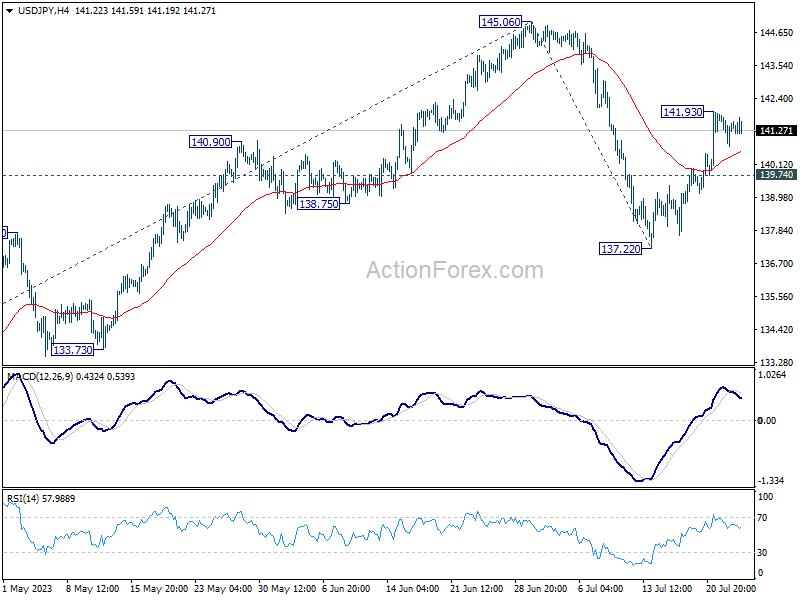
USD/JPY is staying in consolidation below 141.93 temporary top and intraday bias remains neutral. But further rally is mildly in favor. On the upside, above 141.93 will resume the rebound from 137.22 to 145.06 first. Firm break there will target 61.8% projection of 129.62 to 127.22 from 145.06 at 146.76 next. On the downside, below 139.74 minor support will bring retest of 137.22 instead.
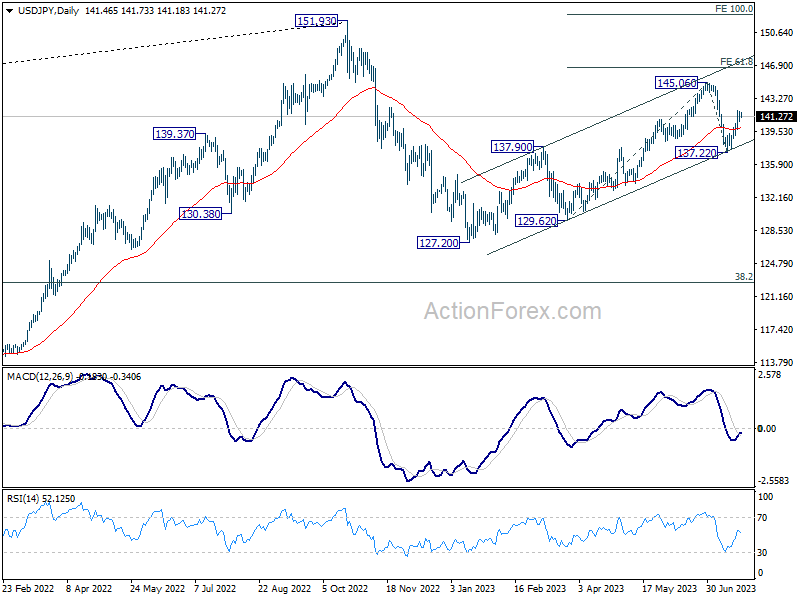
In the bigger picture, overall price actions from 151.93 (2022 high) are views as a corrective pattern. Current development suggests that the second leg (the rise from 127.20) might not be over yet. But even in case of extended rise, strong resistance should be seen from 151.93 to limit upside. Meanwhile, break of 137.22 support should confirm the start of the third leg to 127.20 (2023 low) and below.
Sunset Market Commentary
Markets
The ECB’s Bank Lending Survey was in the spotlights today. The quarterly questionnaire involving 158 banks showed credit standards for loans or credit to enterprises (commercial real estate and energy-intensive manufacturing in particular) and households – both for house purchases and other purposes – have tightened further in 2023Q2. “Higher risk perceptions related to the economic outlook and borrower-specific situation, lower risk tolerance as well as banks’ higher cost of funds contributed to the tightening”, the ECB explained. The financial sector for the current quarter expects a further, albeit more moderate net tightening of credit standards on enterprise loans while those for loans to households for house purchases are expected to be unchanged. Loan demand from firms dropped to an all-time low since the start of the survey in 2003. The net decrease was substantially stronger than banks expected in Q1 and driven by rising interest rates and lower financing needs for fixed investments. The respondents also pointed out a strong net decrease in household demand for housing loans. The demand decline is seen continuing in Q3 too, but at a much smaller pace. Today’s published survey is another sign that the ECB’s rapid tightening cycle is filtering through the economy as intended. Published simultaneously was the German July Ifo indicator. The headline figure missed the bar, coming in at 87.3 vs 88 expected and down from 88.6 in June. Things got particularly worse in the assessment of the current situation (93.7 to 91.3) by manufacturing, services and construction. The outlook was little changed, from 83.8 to 83.5 but with sectoral differences (worse in manufacturing, trade and construction but less pessimistic in services). German Bunds very briefly jumped higher in a Pavlov-reaction but soon pared those gains. Daily net changes vary between +1.4 to 2.3 bps across the curve. US yields slightly underperform, adding 2.1-3.2 bps with sharper than expected house price rises helping the move higher. FX markets trade muted ahead of key events including the Fed and ECB later this week. An (unconvincing) attempt by EUR/USD to recoup some of yesterday’s losses failed. The pair instead turned further south to test 1.1033 support zone. DXY ekes out a small gain to 101.58. EUR/GBP is testing 0.86 support after stronger-than-expected UK data (see below). The yuan is profiting from the measures announced by China to stimulate the economy/property sector. Australia and its Aussie dollar as a main trading partner got caught in the slipstream. A strong Asian equity performance barely filtered through in western dealings. The EuroStoxx50 trades flat, Wall Street adds no more than 0.3% (Nasdaq).
News & Views
Data published today by the Confederation of British industry painted a more benign/mixed picture compared to yesterday’s UK July PMI release. According to the quarterly trends survey, business optimism in July improved further from -2 in April to 6 reaching the highest level in two years. At the same time CBI warned on worrying signs that a margin squeeze and higher financing costs are hurting investment plans. The quarterly subseries on plant investment over the next twelve months declined from 14 to -1. In the monthly survey, orders also improved from -15 to -9, the best reading this year and above the long run average of -13. Both volume of output over the past 3 months (3 from -6) and expected output over the next three months (9 from 4) also improved. Expectations on average selling prices over the next three months eased slightly further from 19 to 18, but remain elevated.
According to the monthly business survey of the National Bank of Belgium, business sentiment in July deteriorated for the fourth consecutive month. The overall synthetic curve declined from -12.1 in June to -14.8 in July. The building sector was the only sector escaping the deterioration, more or less stabilizing at -5.8 (from -6.0). In business-related services, general market demand expectations have been sharply revised downwards for the second month in a row. Business leaders, turned extremely pessimistic on activity expectations last month and did not revise their assessment this month. They remain very wary, expressing an even more unfavourable view of their current activity levels. In the trade sector, the decline in the indicator is attributable to a marked downward revision of demand expectations and, to a lesser extent, employment expectations. In the manufacturing industry, all underlying components of the indicator are down, with the exception of the assessment of stock levels. The loss of confidence has particularly impacted employment expectations and demand expectations. The industry capacity utilization declined to 75.3 in July, compared to 77.7 in April.
IMF raises global growth forecast for 2023, cautions on central bank rates
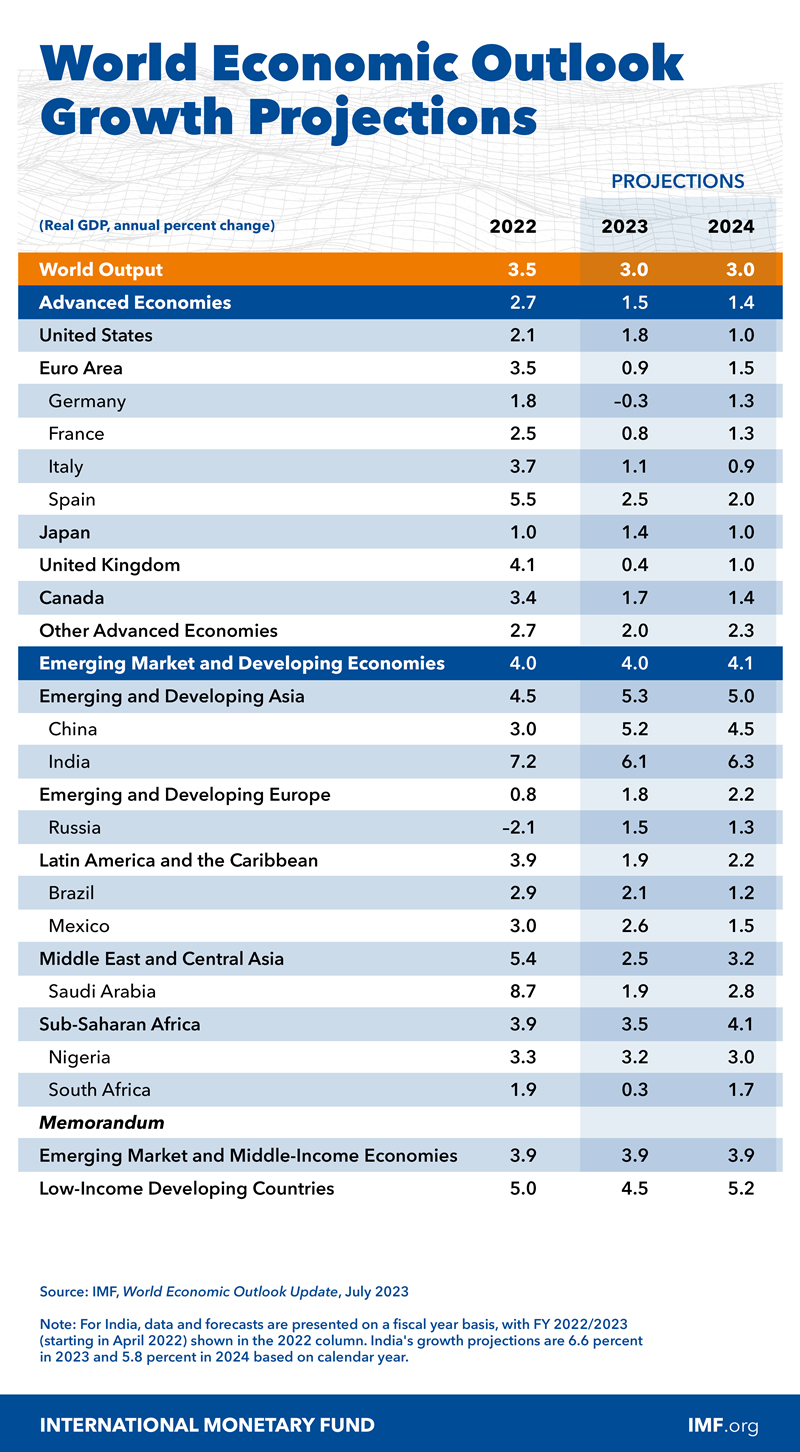
In the World Economic Outlook Update, IMF raised its forecast for global GDP growth in 2023 by 0.2% to 3.0%, while leaving the 2024 projection steady at 3.0%.
The IMF increased 2023 growth estimate for the United States by 0.2% to 1.8%, but pared back 2024 forecast by -0.1% to 1.0%. Eurozone growth forecasts received a slight boost of 0.1% for both 2023 and 2024, bringing them to 0.9% and 1.5% respectively.
On the inflation front, global headline inflation is expected to decline from 8.7% in 2022 to 6.8% in 2023, and further to 5.2% in 2024.
The IMF statement noted that although the 2023 forecast is marginally higher than what was predicted in the April 2023 World Economic Outlook. it still remains "weak by historical standards."
Furthermore, the IMF drew attention to the impact of rising central bank policy rates used to combat inflation, stating, "The rise in central bank policy rates to fight inflation continues to weigh on economic activity."
It also emphasized that most economies should prioritize achieving sustained disinflation while ensuring financial stability. Therefore, the IMF urged central banks to "remain focused on restoring price stability and strengthen financial supervision and risk monitoring."
Markets Steady Ahead of Fed and ECB, China Stimulus Promise, Unilever Rallies after Results
It's been another relatively flat session for equity markets, with investors seemingly having one eye on the Fed and ECB later in the week despite a strong showing in Chinese stocks earlier in the day.
They were lifted by the promise of Chinese stimulus following the Politburo meeting this week and some potential relief for the property market. It's been a tougher re-emergence from zero-Covid than many anticipated, with consumers still seemingly holding back and the property sector still reeling from the previous crackdown.
The enthusiasm hasn't filtered through to Europe and the US though, perhaps due to the lack of detail currently on the stimulus measures, but also the distraction of the central bank meetings over the next 48 hours. Progress on inflation could mean both the Fed and ECB are about to announce their final rate hikes of the tightening cycle; the question is will they acknowledge that or maintain a hawkish position over the rest of the summer?
Unilever rallies amid hints at price pressures easing
Unilever is among the top performers on the FTSE 100 today, buoyed by a surge in profits in the last quarter. It comes at a challenging time when high inflation is pushing up costs and there is a growing spotlight on producers and supermarkets amid claims of profiteering.
What's more, the cost-of-living crisis is pushing consumers toward cheaper own-brand products which partly contributed to a decline in sales volumes. The company did reassure investors that pressures are easing though which should be good news for households and the share price is also reaping the rewards, up around 5%.
Chinese stimulus hints do little to boost Oil prices further
Oil prices barely changed on Tuesday, after appearing to have been little impacted by the promise of new Chinese stimulus. This further supports the view that the lack of detail is stalling any reaction in the markets and that only once we get that can we determine how effective it will be in stimulating demand.
We've already seen some powerful gains over the last four weeks, with Brent up almost 15% from its late June lows. That was driven by cuts from Saudi Arabia and Russia and then better economic readings elsewhere that supported the case for a soft landing following a very aggressive monetary tightening cycle.
Gold pares gains as traders await Fed position on further rate hikes
Gold is hovering around $1,960 ahead of the Fed decision, having pared recent gains over the last four sessions. It came close to $2,000 but traders appear to have opted to hold off considering how influential the central bank could be in the next big move in the yellow metal.
Another 25 basis point rate hike is basically fully priced in at this stage, it's now a question of whether they will signal more to come or adopt a less hawkish position. The dot plot last month indicated two more rate hikes were likely, with one policymaker favouring four, but recent data may have changed that. They won't close the door entirely on tightening further but they could hint at being done for now.
EUR/GBP Mid-Day Outlook
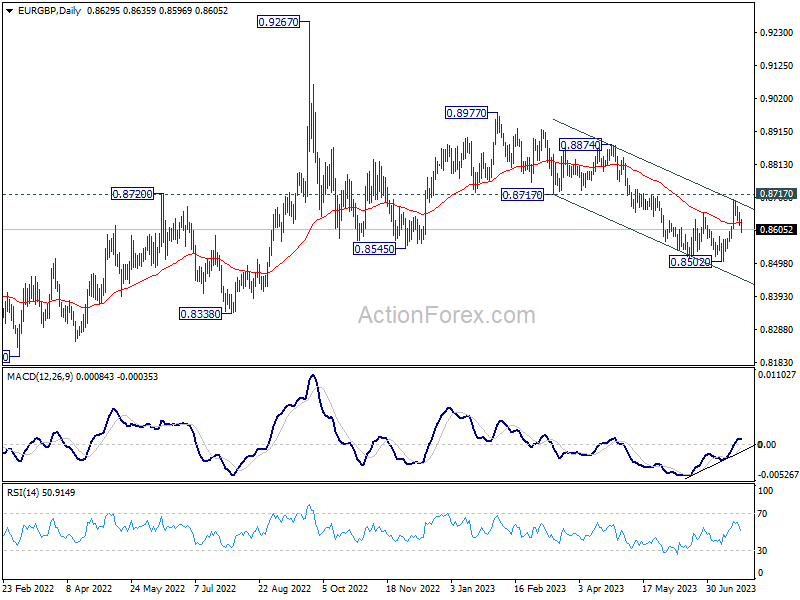
Daily Pivots: (S1) 0.8612; (P) 0.8636; (R1) 0.8653; More...
EUR/GBP's break of 0.8619 minor support argues that rebound from 0.8502 has completed at 0.8700, ahead of 0.8717 support turned resistance. Intraday bias is back on the downside for retesting 0.8502 low. Firm break there will resume larger decline form 0.8977. Nevertheless, break of 0.8700 will revive near term bullishness for another take on 0.8717.
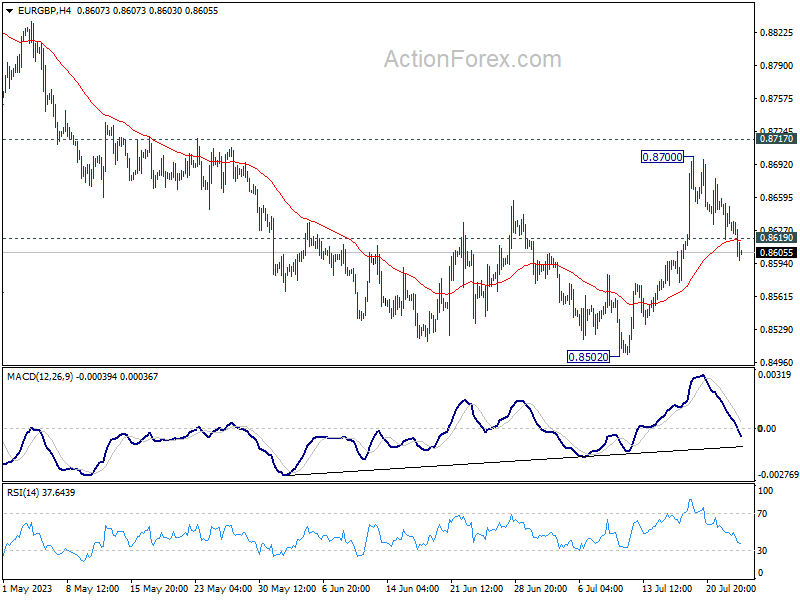
In the bigger picture, the down trend from 0.9267 (2022 high) is seen as part of the long term range pattern from 0.9499 (2020 high). Firm break of 0.8717 support turned resistance will argue that it has completed with three waves down to 0.8502. Further break of 0.8977 will bring retest of 0.9267 high. Nevertheless, rejection by 0.8717, followed by break of 0.8502 will resume the decline towards 0.8201 (2022 low).
Euro Trades Lower on Disappointing German Ifo Data
Euro falls broadly today following release of weaker than expected German Ifo business climate data, although losses remain somewhat contained for the moment. It appears traders are holding their bets in anticipation of the upcoming FOMC and ECB rate decisions. Further, with July drawing to a close and the markets in a characteristic summer lull, significant movements are somewhat restrained.
Australian Dollar holds onto its position as the strongest performer of the day, bolstered by earlier gains and closely trailed by New Zealand dollar. Swiss Franc claims the third spot, given a boost by the weakening Euro. On the other end of the spectrum, Canadian dollar follows the common currency as the next weakest, while Dollar trails behind. Japanese Yen presents a mixed picture, with traders also keenly awaiting BoJ's decision due on Friday.
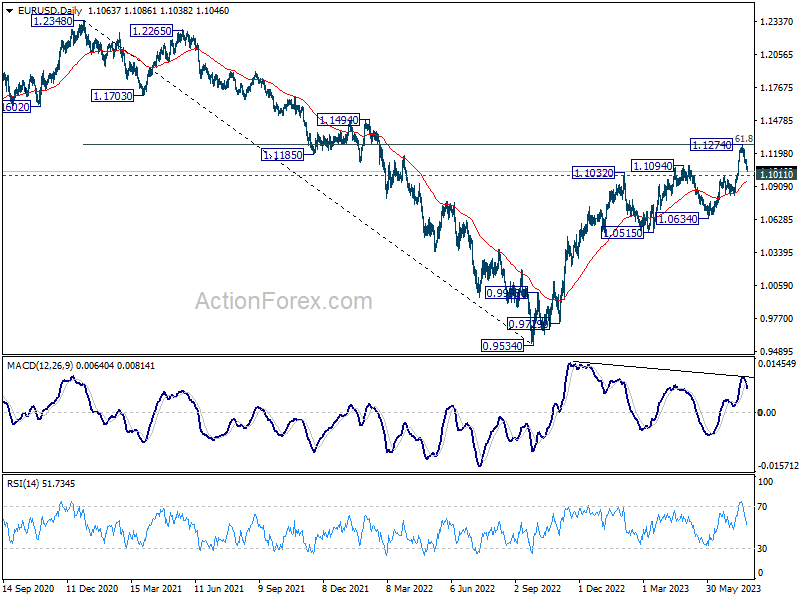
All eyes in the forex market will be on EUR/USD in the coming days. From a technical perspective, the pair could have peaked at 1.1274, after reaching the 61.8% retracement of 1.2348 (2021 high) to 0.9534 (2022 low) at 1.1273. However, decisive break through 1.1011 resistance-turned-support level would be needed for confirmation. Should this occur, deeper decline could be seen to 1.0634 support level before a rebound sets up the medium-term range.
In Europe, at the time of writing, FTSE is up 0.16%. DAX is up 0.05%. CAC is up 0.07%. Germany 10-year yield is up 0.0177 at 2.444. Earlier in Asia, Nikkei dropped -0.06%. Hong Kong HSI rose 4.10%. China Shanghai SSE rose 2.13%. Singapore Strait Times rose 0.64%. Japan 10-year JGB yield rose 0.0159 to 0.467.
Germany's Ifo business climate fell to 87.3, economy turning bleaker
Germany's Ifo Business Climate Index has fallen for the third consecutive month in July, from 88.6 to 87.3, slightly missing expectation of of 88.0. Both the Current Assessment Index and Expectations Index noted a drop, signaling a potential slowdown in Europe's largest economy.
Current Assessment Index, which measures the present business conditions, dropped from 93.7 to 91.3, falling short of the expected 93.0. Meanwhile, Expectations Index, which gauges future business prospects, slipped from 83.8 to 83.5, although it managed to outperform the expectation of 83.0.
Ifo, the institute that conducts the survey, delivered a grim prognosis for the German economy. "The situation in the German economy is turning bleaker," they said in their statement.
A breakdown by sectors shows a similar trend, with all reporting lower figures. Manufacturing took a hit, dropping from -9.7 to -14.2. Services sector also posted a decline, falling from 2.7 to 0.9. Trade sector suffered a fall from -20.2 to -23.7, and construction, too, saw a downturn, from -20.5 to -24.0.
AUD/CAD recovering, head and shoulder in the making?
AUD/CAD is one of the top movers today, riding on Aussie's broad based recovery. Immediate focus is on 55 4H EMA (now at 0.8191). Sustained trading above there will indicate that the pull back from 0.9054 has completed at 0.8859, and bring stronger rise back to 0.9054 resistance.
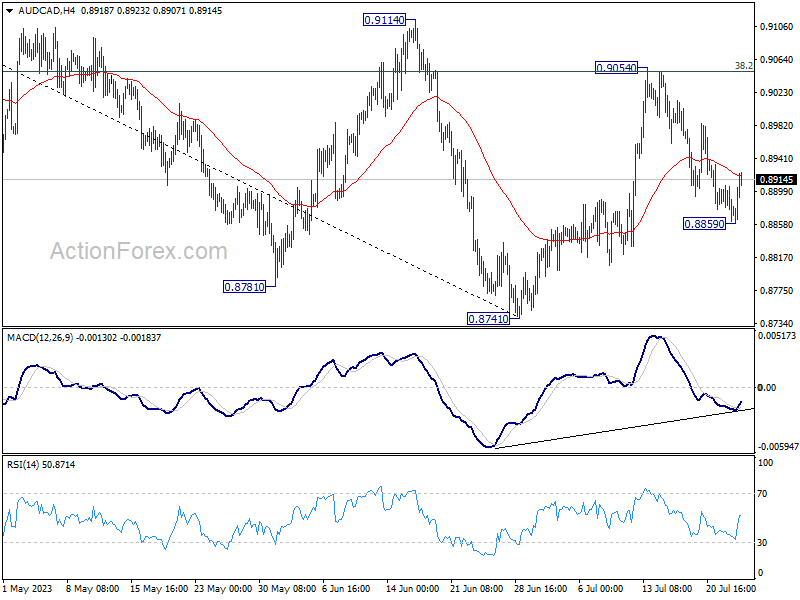
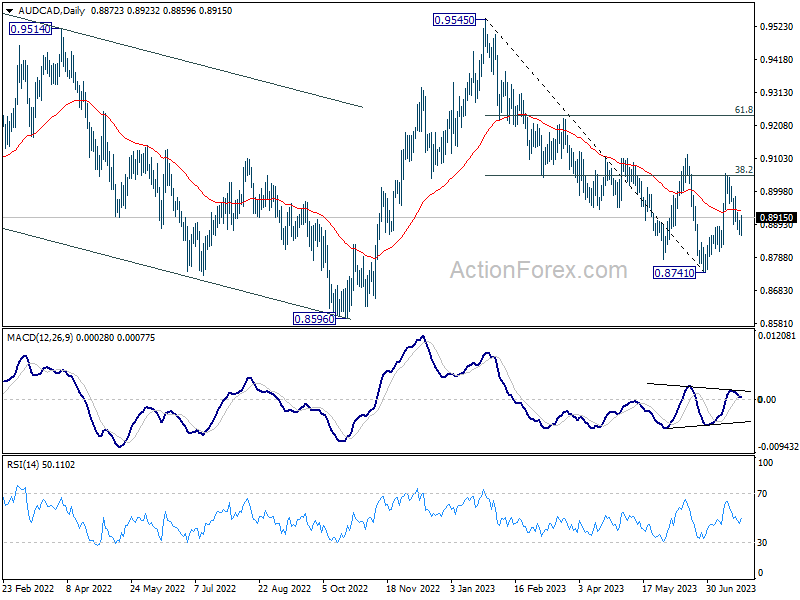
While it's still a bit early, it's worth to point out that AUD/CAD could be forming a head and shoulder bottom pattern (ls: 0.8781; h: 0.8741; rs: 0.8859). Decisive break of 0.9054 cluster resistance (38.2% retracement of 0.9545 to 0.8741 at 0.9048) will be a strong signal of bullish reversal. That would set the stage for further rise to 61.8% retracement at 0.9238 next.
EUR/GBP Mid-Day Outlook
Daily Pivots: (S1) 0.8612; (P) 0.8636; (R1) 0.8653; More...
EUR/GBP's break of 0.8619 minor support argues that rebound from 0.8502 has completed at 0.8700, ahead of 0.8717 support turned resistance. Intraday bias is back on the downside for retesting 0.8502 low. Firm break there will resume larger decline form 0.8977. Nevertheless, break of 0.8700 will revive near term bullishness for another take on 0.8717.
In the bigger picture, the down trend from 0.9267 (2022 high) is seen as part of the long term range pattern from 0.9499 (2020 high). Firm break of 0.8717 support turned resistance will argue that it has completed with three waves down to 0.8502. Further break of 0.8977 will bring retest of 0.9267 high. Nevertheless, rejection by 0.8717, followed by break of 0.8502 will resume the decline towards 0.8201 (2022 low).
Economic Indicators Update
| GMT | Ccy | Events | Actual | Forecast | Previous | Revised |
|---|---|---|---|---|---|---|
| 08:00 | EUR | Germany IFO Business Climate Jul | 87.3 | 88 | 88.5 | 88.6 |
| 08:00 | EUR | Germany IFO Current Assessment Jul | 91.3 | 93 | 93.7 | |
| 08:00 | EUR | Germany IFO Expectations Jul | 83.5 | 83 | 83.6 | 83.8 |
| 13:00 | USD | S&P/Case-Shiller Home Price Indices Y/Y May | -1.70% | -1.40% | -1.70% | |
| 13:00 | USD | Housing Price Index M/M May | 0.70% | 0.60% | 0.70% | |
| 14:00 | USD | Consumer Confidence Jul | 112.1 | 109.7 | ||
| 14:00 | USD | Richmond Fed Manufacturing Index Jul | -10 | -7 |
AUD/CAD recovering, head and shoulder in the making?
AUD/CAD is one of the top movers today, riding on Aussie's broad based recovery. Immediate focus is on 55 4H EMA (now at 0.8191). Sustained trading above there will indicate that the pull back from 0.9054 has completed at 0.8859, and bring stronger rise back to 0.9054 resistance.
While it's still a bit early, it's worth to point out that AUD/CAD could be forming a head and shoulder bottom pattern (ls: 0.8781; h: 0.8741; rs: 0.8859). Decisive break of 0.9054 cluster resistance (38.2% retracement of 0.9545 to 0.8741 at 0.9048) will be a strong signal of bullish reversal. That would set the stage for further rise to 61.8% retracement at 0.9238 next.
Gold Technical: Holding Above 50-Day Moving Average
- Medium-term uptrend of Gold (XAU/USD) remains intact.
- Its recent slide of -1.7% from the 20 July 2023 high of US$1,987.53 has pull-backed close to its 50-day moving average.
- Short-term elements suggest a potential bullish reversal for Gold (XAU/USD) with key support at US$1,939.
Gold (XAU/USD) has staged the bullish breakout above US$1,940 and rallied to an intraday high of US$1,987.53 on 20 July 2023, just a whisker away from the US$1,990 resistance (former congestion support zone from 10 April 2023 to 16 May 2023).
The medium-term uptrend remains intact
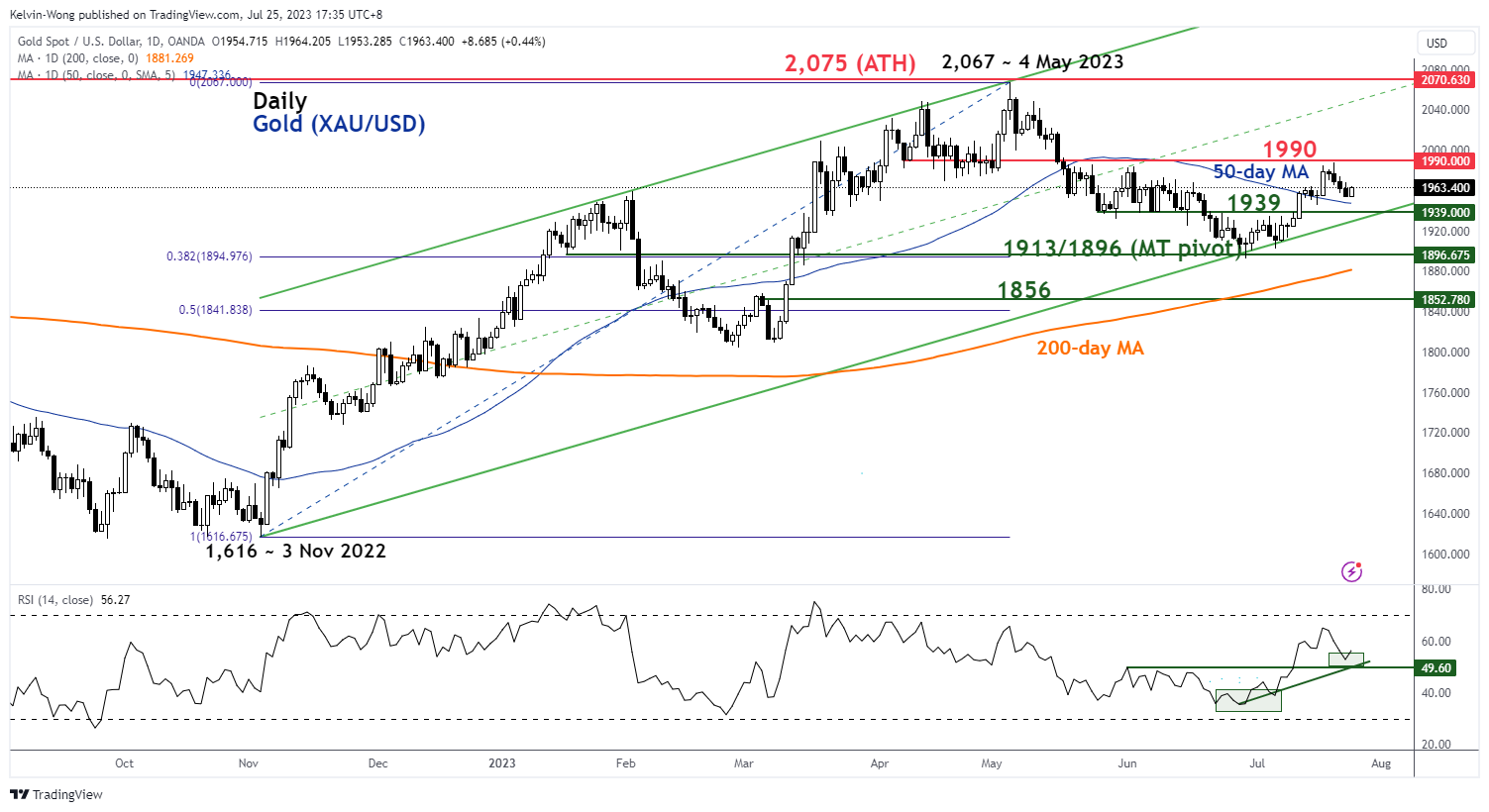
Fig 1: Gold (XAU/USD) medium-term trend of 25 Jul 2023 (Source: TradingView, click to enlarge chart)
Despite the recent slide of -1.7% from the 20 July 2023 high to print an intraday low of US$1,953.28, the medium-term uptrend phase of Gold (XAU/USD) in place since the 3 November 2022 low of US$1,616 remains intact as it price actions held right above the 50-day moving average at this time of the writing.
Short-term downside momentum has waned
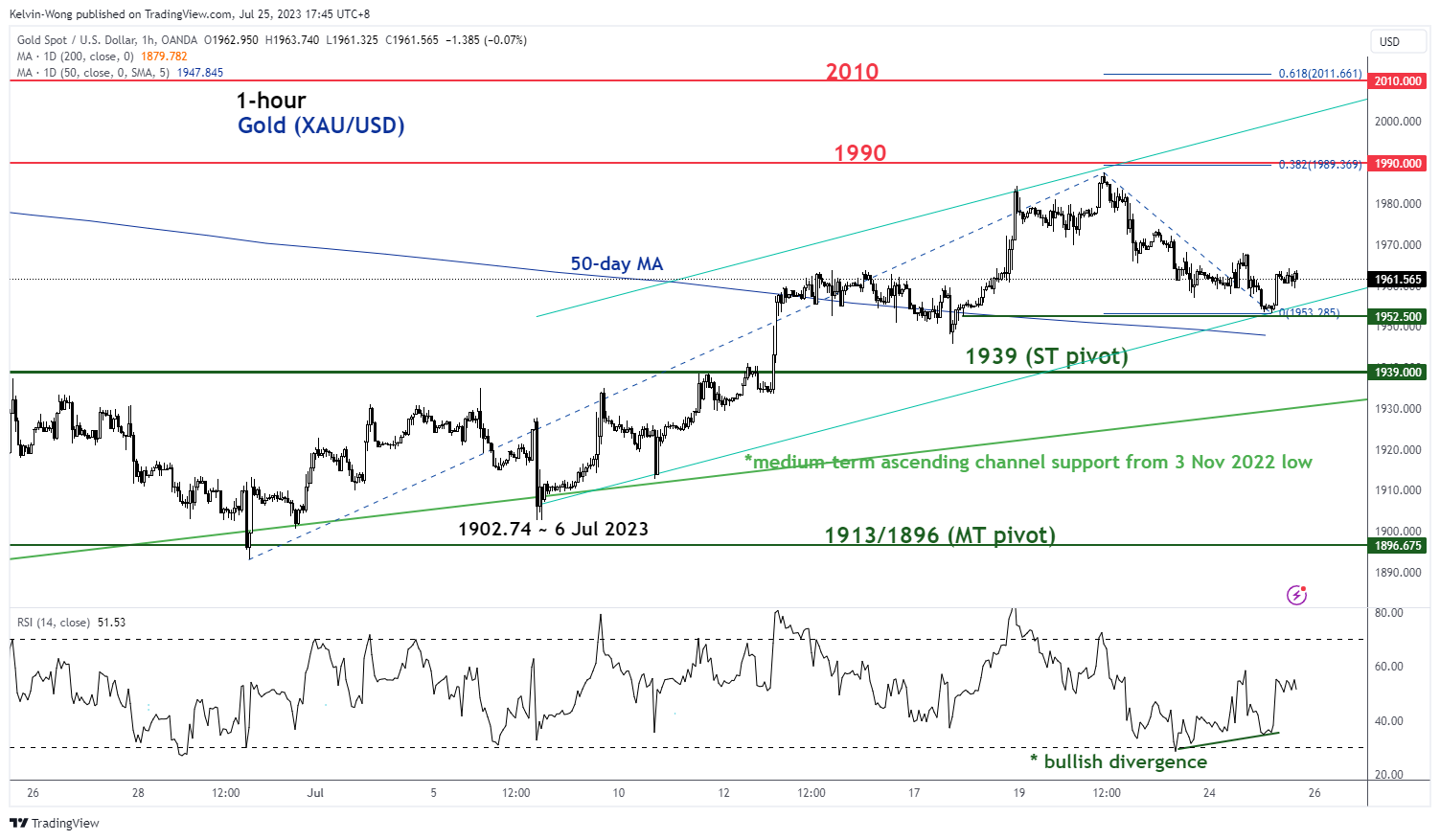
Fig 2: Gold (XAU/USD) minor short-term uptrend of 25 Jul 2023 (Source: TradingView, click to enlarge chart)
As seen on the 1-hour chart of Gold (XAU/USD), its recent slide from its 20 July 2023 high of US$ US$1,987.53 has reached the lower boundary of a minor ascending channel from 6 July 2023 low now acting as near-term support at US$1,952.50.
In addition, the hourly RSI oscillator has flashed a bullish divergence signal at its oversold region. These observations suggest that the downside momentum of the 5-day slide from the 20 July 2023 high has started to wane where a potential short-term bullish reversal may take shape.
Watch the US$1,939 key short-term pivotal support (also close to the 50-day moving average) with the intermediate resistance at US$1,990, and clearance above it sees US$2,010 next (the upper boundary of the minor ascending channel).
However, a break below US$1,939 invalidates the bullish reversal scenario to expose the medium-term support zone of US$1,913/1,896.
Japanese Yen Shrugs as BoJ Core CPI Ticks Lower
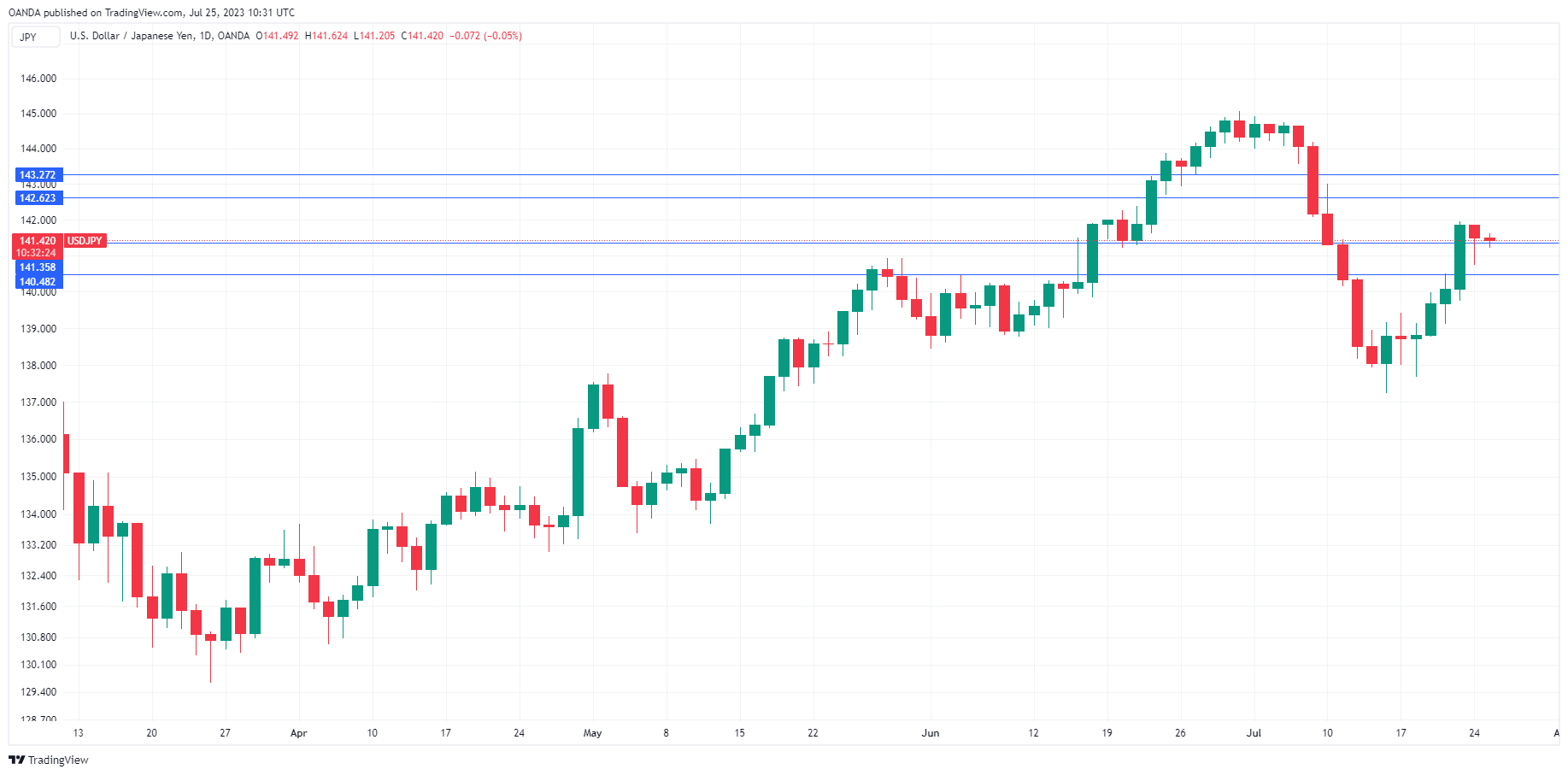
The Japanese yen has taken traders on a roller-coaster ride for much of July, but the yen has been calm so far this week. In Tuesday’s European session, USD/JPY is trading at 141.36, down 0.08% on the day.
BoJ’s inflation gauge dips to 3.0%
The Bank of Japan’s preferred inflation indicator, BoJ Core CPI, ticked lower to 3.0% in June, down from 3.1% in May and matched the consensus estimate. The Japanese yen’s reaction was muted, but traders continue to keep a very close eye on inflation reports ahead of Friday’s BoJ meeting.
Inflation has become a hot topic in Japan, even though inflation is running around 3%, which is quite low compared to most other major economies. It wasn’t that long ago that Japan was grappling with deflation and inflation reports had little impact on monetary policy. The war in Ukraine has changed all that and inflation continues to hover above the 2% target, which is putting pressure on the BoJ to tighten policy. In June, headline inflation rise to 3.3%, compared to 3% in the US. This was the first time since 2015 that inflation was higher in Japan than in the US.
The Bank of Japan is expected to maintain policy settings at Friday’s meetings, but the BoJ has caught the markets by surprise in the past, and a Reuters report on Friday stated that the decision on whether to shift policy or not could be a close call. If the BoJ were to make a move, it would likely be a tweak to its yield curve control (YCC) policy. The central bank widened the target band on government bonds from 0.25% to 0.50% late last year, and the yen climbed sharply in response. If the BoJ were to widen the band to 0.75%, we would likely see the yen, which has been struggling, rise sharply.
The US releases consumer confidence and manufacturing data later on Tuesday, with both expected to improve. The Conference Board Consumer Confidence index, which rose sharply in June to 109.7, is expected to rise to 111.8 in July. The Richmond Fed Manufacturing index, which has been mired in negative territory, is expected to improve in July to -2, up from -7 in June.
USD/JPY Technical
- USD/JPY is testing support at 141.35. Below, there is support at 1.4049
- There is resistance at 142.62 and 143.27
All Eyes on Bitcoin’s Next Move
Market picture
The crypto market has lost 1.8% over the past 24 hours, falling back to a cap of $1.17 trillion and out of the trading range since mid-month. Bitcoin is down 2.1%, Ethereum is -1% and other top altcoins fluctuate between -5% (XRP) and +4% (Dogecoin).
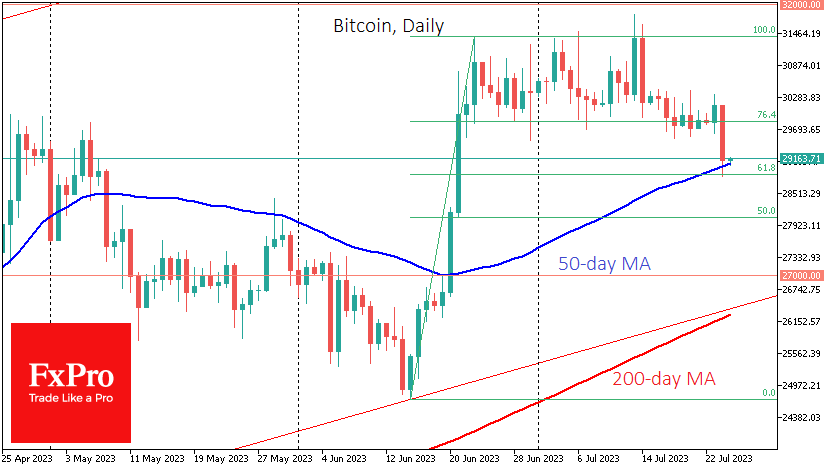
Bitcoin fell below $29K on Monday for the first time since 21 June. Monday afternoon saw the rapid implementation of a deepening correction. The first cryptocurrency fell to its 50-day moving average and touched the 61.8% Fibonacci retracement of the rally from the June lows. Now Bitcoin is cooled enough, so its next move could be the prologue to a relatively long trend. Consolidation below $29K could signal the break of the medium-term bull trend.
However, the downside is not the main scenario, and there are more chances for Bitcoin’s growth to recover after profit-taking. Increased risk appetite in global markets following China’s stimulus measures and multi-month highs in US indices is also playing into the hands of institutional demand for Bitcoin.
News background
According to CoinShares, investments in crypto funds fell by $7 million last week after four weeks of inflow. Bitcoin investments decreased by $13 million, while Ethereum rose by $7 million.
Investor attention shifted to altcoins: XRP (+$2.6 million), Solana ($1.1 million), Uniswap ($0.7 million), and Polygon ($0.7 million).
The wallet, inactive for over 11 years, moved all its 1,037 BTC once bought by $4.92 per BTC, now worth more than $31 million.
The Bitcoin network mined 800,000th block on Monday. A new block is created approximately every 577 seconds. There are only 40,000 blocks left to be mined before the next halving, which will take place around 16 April 2024.
According to a CryptoVantage survey, 70% of Americans expect Bitcoin to reach record highs within the next five years, while 46% believe Ethereum has the potential to overtake BTC in capitalisation.
The launch of BlackRock’s bitcoin ETF will push bitcoin towards $100,000, according to Bloomberg strategist James Seyffart. The probability of BlackRock’s application being approved is around 50% and could rise significantly soon.