Sample Category Title
The Weekly Bottom Line: Fed Lifts Policy Rate to a 16-year High
U.S. Highlights
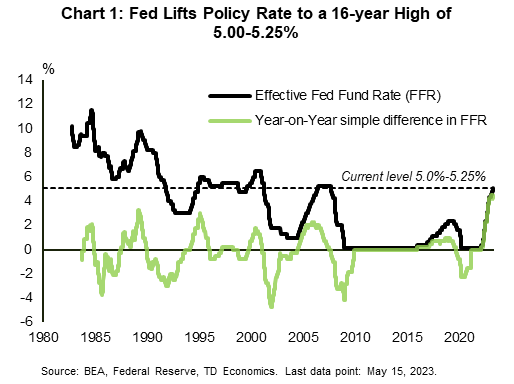
- The Federal Reserve hiked the policy rate 25 basis points this week, lifting it to a 16-year high of 5.00-5.25%. Changes in FOMC statement hinted at the potential for a pause, though Chair Powell stated that such a decision had not been made.
- The banking stress continues to fester, with this week marking the failure of another bank (First Republic).
- Though still slowing on a trend basis, hiring ticked up in April, with the economy adding 253k jobs. That was above market expectations for a gain of 180k, but downward revisions to the prior months tempered the optimism.
Canadian Highlights
- Oil prices slid this week on growth concerns, pressuring equities lower. However, we think that oil prices will ultimately rise as the year wears on.
- This week’s data flow skewed positive, highlighted by a jobs report where headline employment growth was healthy. However, job markets didn’t tighten further, as labour force growth was also robust.
- The jobs report reinforced our view that the Bank of Canada will likely keep interest rates unchanged this year, as it showed that healthy job gains can manifest without materially tighter conditions.
U.S. - Fed Lifts Policy Rate to a 16-year High
The Fed followed through with its highly anticipated decision to hike the policy rate by 25 basis points (bps) this week. This lifted the fed funds rate to 5.00-5.25% – the highest level in 16 years – in what has been a historically aggressive hiking cycle (Chart 1). Changes in the FOMC statement hinted at the potential for a pause, so this could very well be the last hike of this cycle. But, stating this explicitly would not serve the Fed well at this point. In the press conference, Chair Powell tried to keep his options open, stating bluntly that a decision on a pause had not been made.
The Fed’s communication is at odds with market expectations. Markets are dismissing the possibility of further rate hikes and are instead signaling that after a brief pause the Fed will begin cutting rates. Market odds as tracked by the CME Group point to 75 bps in cuts over the last few months of the year. Asked about this divergence, Powell pushed back against the notion of soon-to-come cuts. In his words, the reasoning is that the Fed sees inflation coming down “not so quickly”, and that if that outlook proves to be broadly correct then “it would not be appropriate to cut rates”.
Fed Chair Powell noted that upcoming policy rate decisions would ultimately be data-dependent, mentioning the usual suspects (i.e., inflation and labor market metrics), while also putting a focus on credit conditions. Tighter credit conditions ultimately serve a similar purpose to rate hikes when it comes to cooling economic growth and inflation. This is something that the Fed considers in setting monetary policy, especially in light of the recent banking stress, with this week marking the failure of another regional bank. Powell had access to the Senior Loan Officer Opinion Survey (SLOOS), due to be released publicly on Monday, and noted that it would show a tightening in credit conditions among small and medium sized banks.
Factoring in the banking stress and tighter credit conditions suggests that the Fed has done enough, but labor market resilience continues. On the one hand, the pace of job creation continues to trend down on a three-month moving average basis. On the other hand, it’s hard to discount the strength in the April jobs report. The economy added 253k jobs last month – well above expectations for 180k. Gains were concentrated in service sectors (+197k). The labor force participation rate held flat at post-pandemic high of 62.6%, while the unemployment rate ticked down to 3.4%, matching January’s multi-decade low. Amidst the ongoing tightness in the labor market, growth in average hourly earnings accelerated both on a year-on-year and month-on-month basis, while other wage measures also point to some resilience (Chart 2).
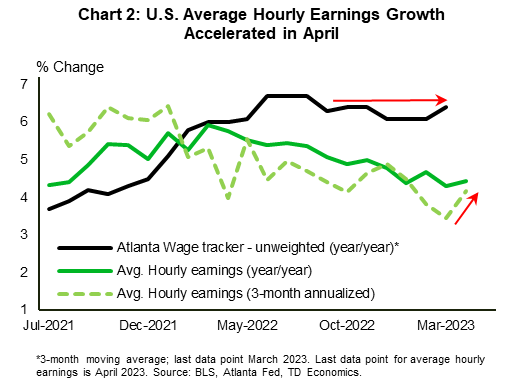
Should the strength seen in April extend in the months ahead, it could push the Fed to hike a bit more. However, other labor market indicators – such as job openings, which are trending down, and initial jobless claims, which continue to trend up – are not in tune with this view. All told, the upcoming data will continue to bear careful watching, with next week’s CPI report next under the magnifying glass.
Canada – Canada's Goldilocks Jobs Market
In a week that was chock full of U.S. developments, Canadian markets largely took their cues from south of the border. Pessimism reigned for much of the week, as investors fretted over the economic outlook, on-going turmoil in the U.S. banking sector, and unsettling news that the so-called "x-date" on the U.S. debt ceiling could be fast approaching. At one point, the Canadian 10-year bond yield had fallen about 30 bps from its Monday high. However, much of this gloom was undone at the end of the week by a pair of solid job reports in the U.S. and Canada. This shift in sentiment wasn't enough to pull WTI higher, as it slid about 7% this week (as of writing). However, we see it rising through the rest of the year, supported by Chinese economic growth.
As for the Canadian economic outlook, this week's data reinforced the narrative that near-term resilience is in the cards, despite some indications that activity could be easing. On the negative side, the Canadian manufacturing PMI indicated only modest growth in April, and forward-looking indicators were soft. In addition, import volumes fell again in March, suggesting flagging domestic demand.
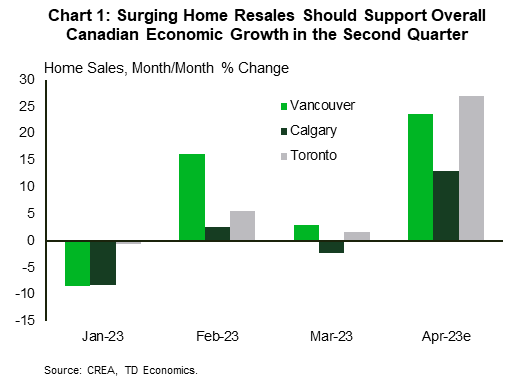
On the other hand, housing data from local boards released during the week pointed to surging home sales in April (Chart 1). This result was supported by lower interest rates, solid job markets and the jolt to buyer psychology sent from a central bank that's currently on pause. Furthermore, the rapid run up in interest rates had pushed sales to levels far below any reasonable long-run trend – given fundamentals (like household income) – and so some recovery to trend is likely to continue.
However, what's most germane for the outlook is the fact that Canada's jobs market continues to be firm. This morning's employment report showed that 41k net new positions were added last month and that solid growth was recorded in highly cyclical industries. Hours worked even managed to climb 0.2% m/m, despite job gains being driven by part-time work. It also helped that the federal worker's strike fell outside of the survey week. Notably, the strike ended this week and while it should weigh on GDP growth in April, a bounce back in May will likely follow.
Strikingly, what would have been considered a very robust headline employment in the past didn't flow through to a materially tighter job market. Indeed, the unemployment rate was unchanged and wage growth (while remaining robust) decelerated slightly during the month. This speaks to yet another solid gain in Canada's labour force (Chart 2) which, in turn, is being driven by robust population growth.
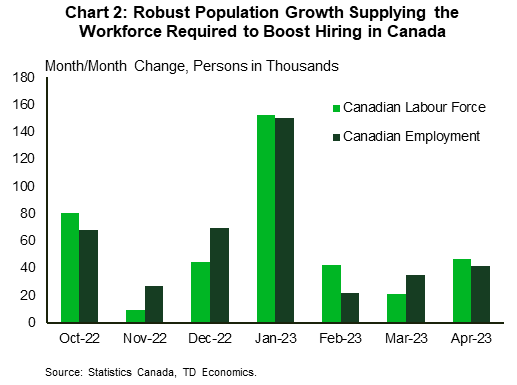
In terms of the outlook for interest rates, the jobs report makes us more confident in our view that the Bank of Canada will keep its policy rate unchanged this year. On the one hand, the positive indications for growth flowing from the report argue against the notion of rate cuts. On the other, the fact that healthy job growth didn't result in a tighter labour market likely discourages any lean towards tighter policy.
U.S. Inflation Continues to Slow as Credit Risks Build
Next week’s April U.S. inflation report is expected to show headline inflation unchanged at 5%, matching the annual rate in March. This would be the first time that the U.S. inflation rate didn’t post a decline since peaking in June 2022. But the underlying details should be more encouraging. A 3% monthly increase in gasoline prices (on a seasonally adjust basis) likely pushed April energy prices up slightly, to -4.5% on a year-over-year basis. But with oil prices running well below year-ago levels, energy prices should continue to lose steam. And though food inflation is still high, it likely slowed again in April. We expect this measure to slip to ~8% from a year ago.
Outside of food and energy products, “core” CPI growth also likely slowed. We expect this measure to fall to 5.4% from 5.6% in March on a year-over-year basis or increase 0.3% from March. That would mark the smallest month-over-month increase since November. Higher rent prices have been driving the majority of core price growth in recent months, as earlier hikes feed through to the consumer price index. But that surge has probably run its course. Measures of current market rent inflation peaked more than a year ago.
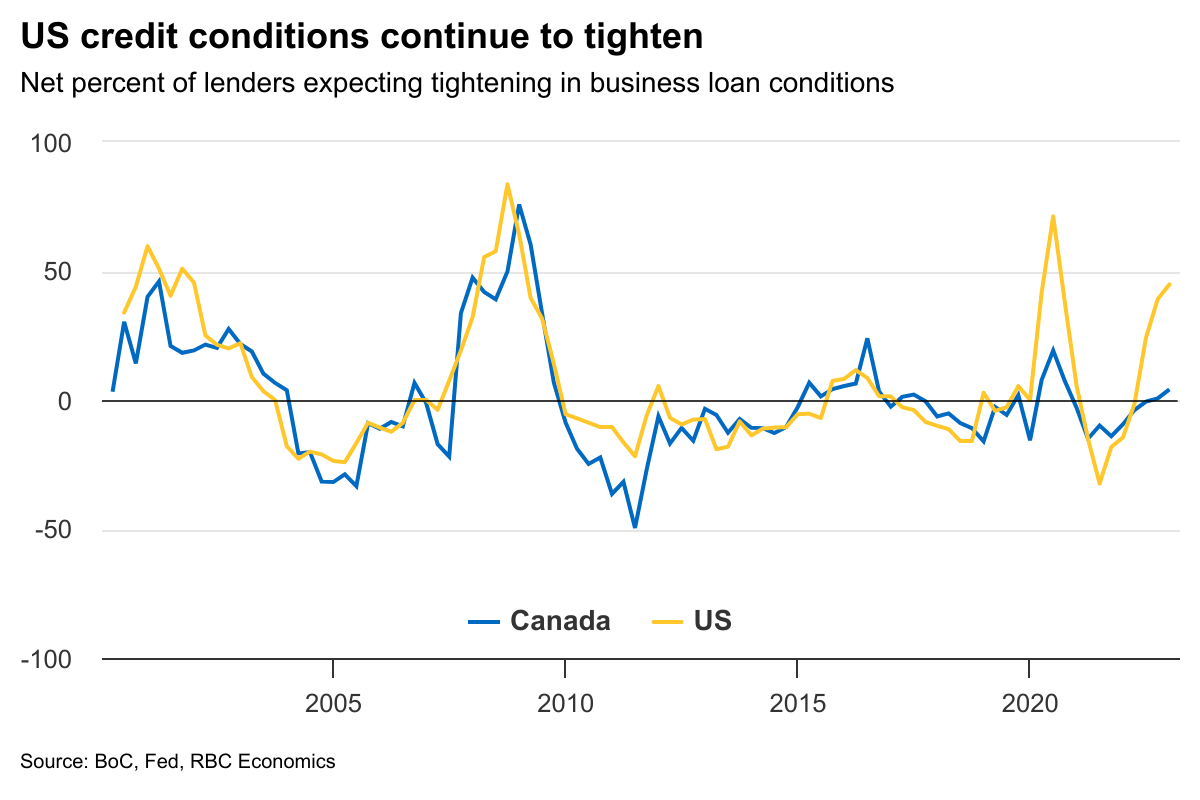
Inflation is still a concern for Federal Reserve officials, and U.S. price pressures, while easing, have been sticky. But there is a growing list of signs that economic momentum is slowing under the surface and higher interest rates are cutting into household purchasing power. Employment is still rising, but job openings are down. Lower quit rates and slowing wage growth suggest workers aren’t as confident in labour markets as they once were. And credit markets have tightened as the list of U.S. regional banks struggling to calm investor worries continues to grow. The Senior Loan Officer Opinion Survey—on tap next week—should provide an update on lending practices in the U.S., where tighter standards and weaker demand for commercial and industrial (C&I) and consumer loans are expected to have continued.
Week ahead data watch
Week Ahead – US CPI Data Eyed While BoE Seeks to Get Inflation Back Below 10%
US
The labor market is showing signs of resilience, but now the focus shifts back to inflation, with a close eye staying on the banking space. The banking system does not look ‘sound and resilient’ as more banks come under stress. US regulators will eventually be forced to act as the banking crisis worsens and that could mean the further unwinding of more banks.
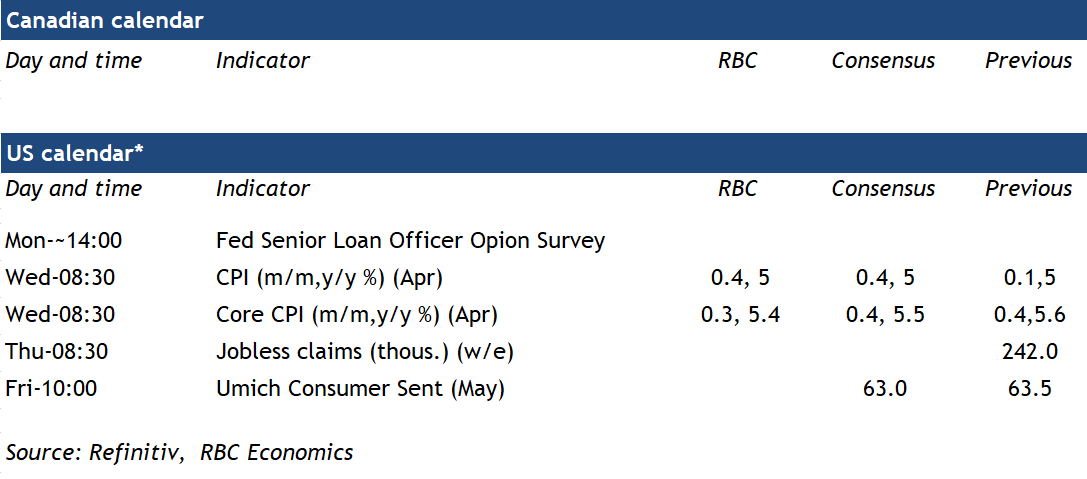
The April inflation report is expected to show that the disinflation process is starting to lose momentum, which could delay some Fed rate cut bets. Headline inflation is expected to remain stuck at 5.0%, which is the slowest pace in almost 2 years. The month-over-month reading is expected to rise from 0.1% to 0.4%. Core inflation might only slow a bit, but that should start to fall more quickly in the coming months as the housing lag will better reflect softening rent and home prices.
President Biden will also meet with four top congressional leaders on May 9th to discuss the budget which will definitely impact debt ceiling negotiations.
Peak earnings are behind us but we still get some important results. Corporate updates for the week: Bayer, Credit Agricole, Devon Energy, Duke Energy, Engie, Honda Motor, PayPal Holdings, Saudi Arabian Oil, SoftBank, Toyota Motor, Walt Disney, and Westpac Banking.
Eurozone
It’s all looking a bit quiet for the euro area next week with the few data releases we do have being tier three and therefore not particularly impactful. The ECB slowed its tightening cycle in May but further hikes are likely over the next few meetings with markets pricing in another one or two before the end of the year.
UK
The Bank of England may be convinced that inflation is about to fall sharply but I doubt it will be brave enough to pause the tightening cycle while inflation is still above 10%. A 25 basis point hike is priced in for Thursday, after which markets expect one more to follow before then easing next year. GDP data then follows on Friday and is expected to show the economy growing marginally again which is probably the best we can hope for over the coming quarters.
Russia
Inflation data will be in focus next week as the CBR looks for evidence of price pressures easing on a sustainable basis which will allow for further rate cuts in the future. But it is being cautious and has signaled that rate cuts are neither guaranteed or even necessarily on the horizon. The CBR releases its monetary policy report on Thursday which may shed further light on the path for interest rates.
South Africa
There are a few notable economic releases next week but mostly tier-two or three data. Manufacturing production on Thursday is one standout, while business confidence on Wednesday could also be of interest.
Turkey
There’s just over a week to go until the election so there may not be a huge amount of interest in what the economic data has to say, despite there being some interesting releases. Ultimately, the outcome of the election is what will dictate future interest rate moves and the path of travel for the economy, not whether unemployment can fall below 10%. Can President Erdogan cling to power after such a turbulent few years?
Switzerland
There are no noteworthy events over the next week.
China
Consensus estimates expect the balance of trade for April, released on Tuesday to show a decline to US$74.3 billion from $88.19 billion in March with exports growth decline to 8% year-on-year in April from 14.8% printed in March while zero growth in imports growth after it contracted by -1.4% year-on-year in March, its 6th consecutive month of negative growth.
Credit growth data will be on the radar where new yuan loans are expected to decline to CNY 3.10 trillion in April from CNY 3.89 trillion in March, a slight dip in outstanding loan growth is being forecasted at 11.6% year-on-year in April from the 11.8% in March, its fastest pace of increase since October 2021. In addition, the M2 money supply is expected to dip slightly as well to 12.6% year-on-year in April from 12.7% in March.
Next up on Thursday, key inflation data is the focus where the consumer inflation rate for April is expected to come in at a slight increase to 0.9% year-on-year from 0.7% in March, its lowest reading since September 2021. Meanwhile, the slump in producer prices is expected to slow down slightly to -2.1% year-on-year in April from -2.5% in March, its 6th consecutive month of production deflation and steepest contraction since June 2020. If such forecasts turn out as expected, inflationary pressures in China are way below an average gauge of inflation rate among emerging and developed countries which suggests that China’s central bank, the PBoC, has more leeway to conduct accommodating monetary policy.
India
The key data to focus will be on industrial production and CPI out on Friday. Growth in industrial production is forecasted to shrink to 3.2% year-on-year in March from 5.6% in February.
Meanwhile, consumer price inflation for April is expected to ease further to 5.50% year-on-year from 5.66% in March, its lowest since December 2021; below RBI’s upper tolerance limit of 6%.
Australia
On Monday, data on building permit growth for March is forecast to show a decline to 2.6% month-on-month from 4.0% in February.
The Westpac Consumer Confidence Index for May out on Tuesday is forecasted to decline to 82.1 (-4.3% month-on-month) from 85.8 in April.
New Zealand
The key data to focus on will be food inflation for April out on Thursday where it is expected to ease to 11.4% year-on-year after the biggest increase of 12.1% in March since September 1989.
To round up the week, the manufacturing PMI for April out on Friday is forecasted to decelerate further to 47.0 from 48.1 in March.
Japan
A couple of key releases to take note of; household spending for March out on Tuesday where it is expected to show a slowdown in growth to 0.4% year-on-year from 1.6% in February while expanding 1.5% month-on-month in March from a contraction of -2.4% printed in February.
On Thursday, market participants will be able to have some clues on the thinking of BoJ officials via the release of its Summary of Opinions from the most recent April monetary policy meeting where it maintained its dovish stance despite upgrading its inflation forecasts for FY 2023 and 2024.
Lastly, the current account surplus for March is forecasted to expand to JPY 2,947.3 billion from JPY 2,197.2 billion, and growth in bank lending is expected to be almost unchanged at 2.9% year-on-year in April versus 3% in March.
Singapore
No key data.
Economic Calendar
Saturday, May 6
Economic Events
- German Chancellor Scholz is in Kenya
- Taliban’s top diplomat, Amir Khan Muttaqi to discuss extending Belt and Road initiative in Afghanistan with Chinese counterpart Qin Gang in Pakistan
Sunday, May 7
Economic Data/Events
- China data expected this week includes forex reserves, Money Supply, Trade Balance, New yuan loans, Aggregate financing
- Japan PM Kishida to visit South Korea
Monday, May 8
Economic Data/Events
- US wholesale inventories
- Australia building approvals
- Chile copper exports, CPI, trade
- Germany industrial production
- Taiwan trade
- UK bank holiday honoring coronation of Charles III
- Meeting on Indo-Pacific trade pact in Singapore
- ECB Chief Economist Lane speaks at Forum New Economy conference in Berlin
- Riksbank Deputy Governor Floden speaks on competition and inflation
Tuesday, May 9
Economic Data/Events
- Australia consumer confidence
- China aggregate financing, trade, money supply, new yuan loans
- France trade
- Japan household spending
- Mexico international reserves, CPI
- President Joe Biden to meet with congressional leaders on the debt limit.
- Victory Day in Russia as war rages in Ukraine
- French finance minister Le Maire, Bank of France Governor Villeroy, ESMA director Cazenave, and EU climate chief Frans Timmermans speak at Bloomberg Future of Finance Conference in Paris
- ECB Governing Council member Rehn speaks at the Bank of Finland event on digital euro
- ECB Chief Economist Lane participates in a panel at the IMF event ‘Europe’s Balancing Act: Taming inflation without a recession’
- Riksbank issues minutes of April monetary policy meeting
- Riksbank Deputy Governor Floden speaks on monetary policy
Wednesday, May 10
Economic Data/Events
- US Apr CPI M/M: 0.4%e v 0.1% prior; Y/Y: 5.0%e v 5.0% prior; CPI ex Food & Energy M/M: 0.3%e v 0.4% prior; Y/Y: 5.4%e v 5.6% prior
- Poland rate decision: Expected to keep the base rate steady at 6.75%
- Germany CPI
- Italy industrial production
- New Zealand home sales
- Poland rate decision
- South Korea jobless rate
- Hungary CPI
- Turkey industrial production
- NATO defense chiefs meet in Brussels
- Italy’s Istat monthly economic note
- Sweden Riksbank Deputy Governor Bunge speaks on economic development
- ECB Governing Council member Centeno makes closing remarks at a conference in Lisbon on “Digital Financial Literacy: a Strategy for Portugal”
Thursday, May 11
Economic Data/Events
- US PPI, initial jobless claims
- BOE rate decision: Expected to raise rates by 25bps to 4.50%
- China PPI, CPI
- New Zealand food prices
- Peru rate decision
- Philippines GDP
- South Africa manufacturing production
- Turkey current account
- UK industrial production, GDP
- G7 Finance minister and central bank governors meet in Japan
- BOJ releases Summary of Opinions from April monetary policy meeting
- Sweden Riksbank’s Floden speaks on monetary policy
- German Finance Minister Lindner begins a five-day trip to Japan and China
Friday, May 12
Economic Data/Events
- US University of Michigan consumer sentiment and inflation expectations
- France CPI
- India industrial production, CPI
- Japan M2 money stock
- Mexico industrial production
- New Zealand PMI
- Norway GDP
- Russia CPI
- Spain CPI
- Fed’s Jefferson and Bullard participate in a panel discussion on monetary policy at Stanford University
- EU foreign ministers meet in Stockholm
- President Biden hosts Spanish Prime Minister Sánchez at the White House
- Sweden Riksbank Deputy Governor Jansson speaks
- Bank of England Chief Economist Pill speaks
- Bank of Canada issues Senior Loan Officer Survey
Sovereign Rating Updates
- Denmark (Fitch)
- Italy (Fitch)
- Sweden (Fitch)
- European Union (DBRS)
- Luxembourg (DBRS)
Week Ahead – BoE Takes the Central Bank Torch, US CPI Data Also in Focus
Following the FOMC and ECB decisions last week, the central bank torch will now be passed to the BoE, which will deliver its decision on Thursday. A 25bps hike is mostly priced in, so the spotlight will fall on clues and hints on how officials are planning to move forward. The US CPIs will also attract special attention as investors are trying to figure out whether the Fed will pause or hike once more in June.
Will the BoE hint at more hikes?
At its latest meeting in March, the BoE raised interest rates by 25 basis points, marking the 11th consecutive hike for this Bank. However, officials played down the surprise surge in inflation during February and maintained a careful view regarding their future course of action, saying that further tightening would be required if there is evidence of more persistent price pressures.
Since then, data showed that inflation slowed by less than expected, with the headline year-over-year rate staying fractionally above 10%, which is allowing investors to price in around 60bps worth of additional rate increases until the end of this year. For this gathering, they are assigning a nearly 85% chance for another quarter-point hike, with the remaining 15% pointing to no action.
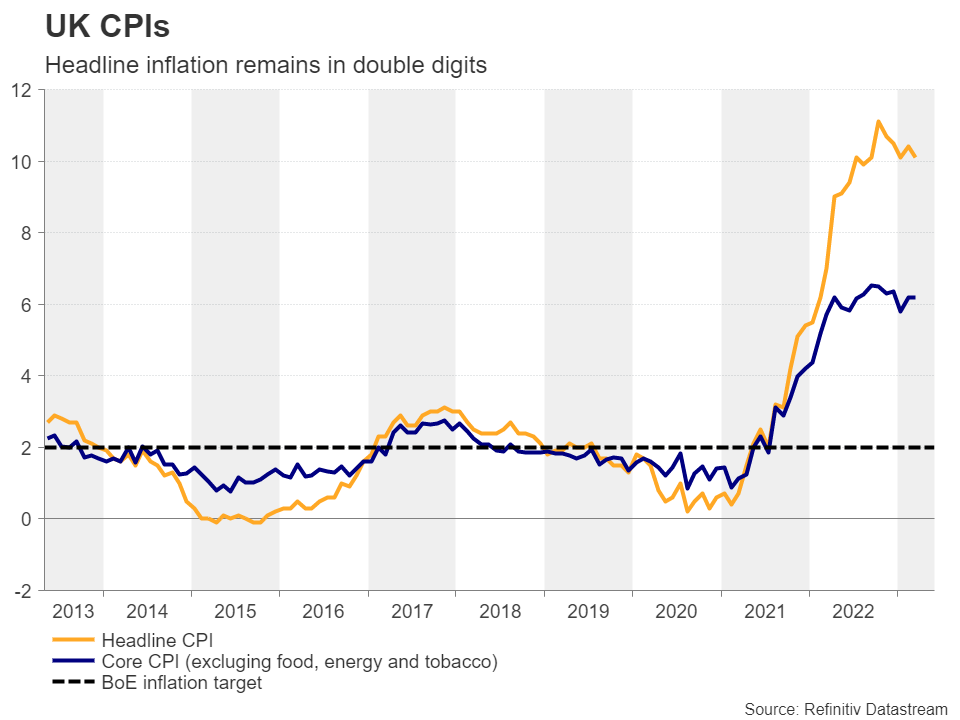
Therefore, a 25bps hike by itself is unlikely to shake the pound. Any market reaction may come from the statement, the minutes and/or the updated economic projections. Back in February, the Bank projected that CPI inflation would end the first quarter at 9.7% and slow to 3.0% in 12 months. So, revising higher, or even maintaining that same path may allow investors to continue pricing more hikes, even if officials repeat the same cautious guidance.
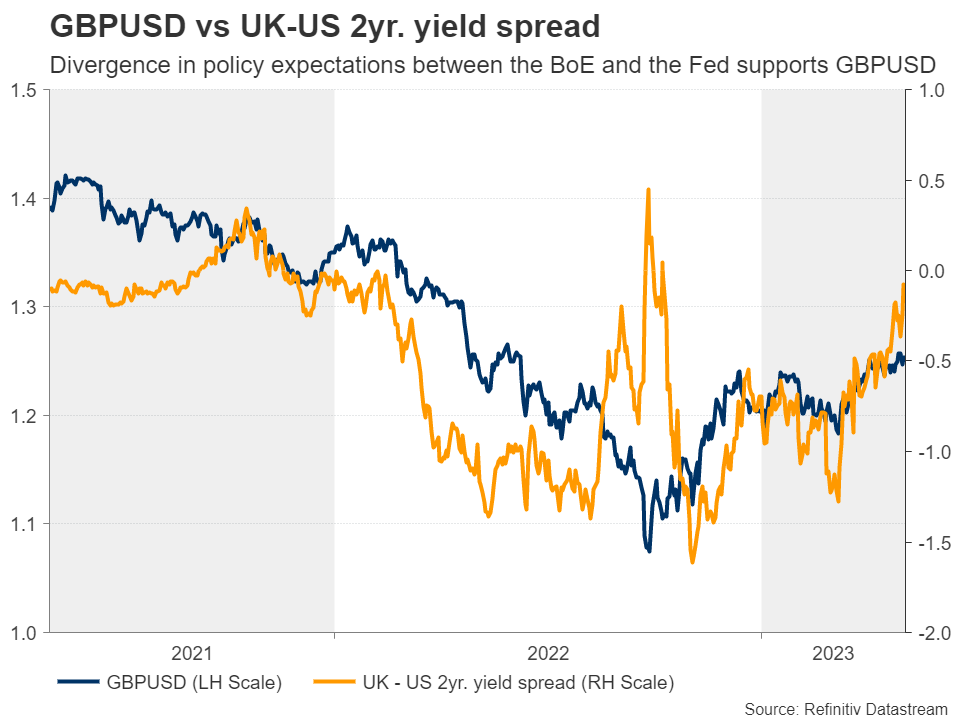
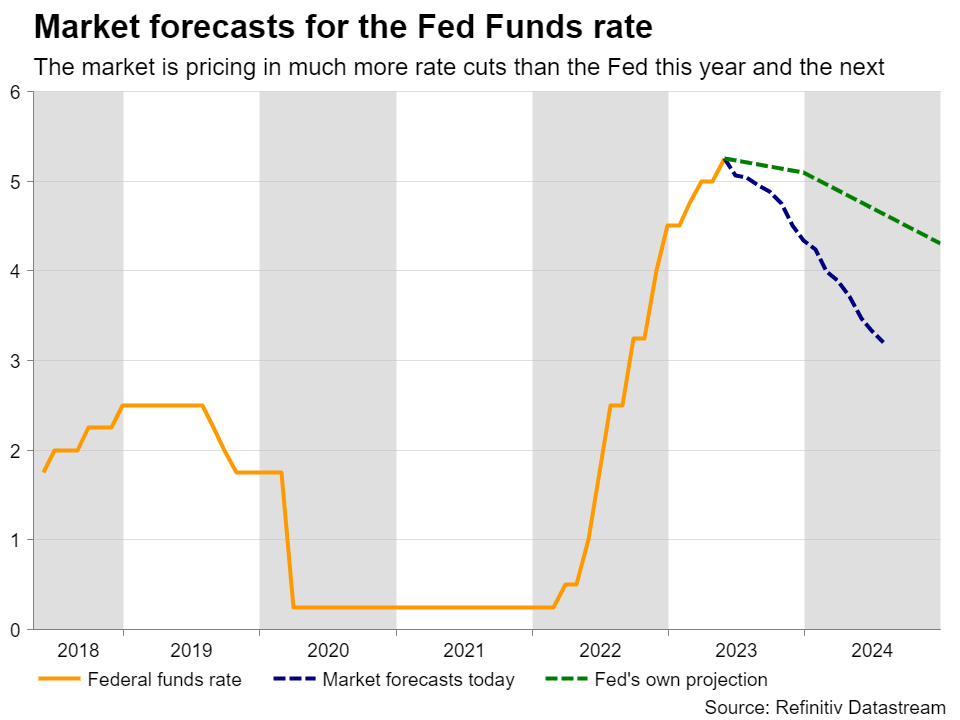
With the Fed expected to cut rates by around 75bps by the end of the year, the path of least resistance for pound/dollar will likely remain to the upside, even if a reiteration of the prior guidance results in a small setback. What could distort the outlook may be a larger-than-expected slowdown in the first estimate of the UK GDP for Q1, which is scheduled to be released on Friday, alongside the nation’s trade data for March.
Will the US CPI numbers spark speculation for a June hike?
In the US, the highlight will probably be the US CPI numbers for April, due out on Wednesday. The headline rate is forecast to have rebounded to 5.2% y/y from 5.0%, while the core one is expected to have held steady at 5.6% y/y, more or less confirming the ISM and S&P global PMI surveys, which showed that output prices accelerated during the month.
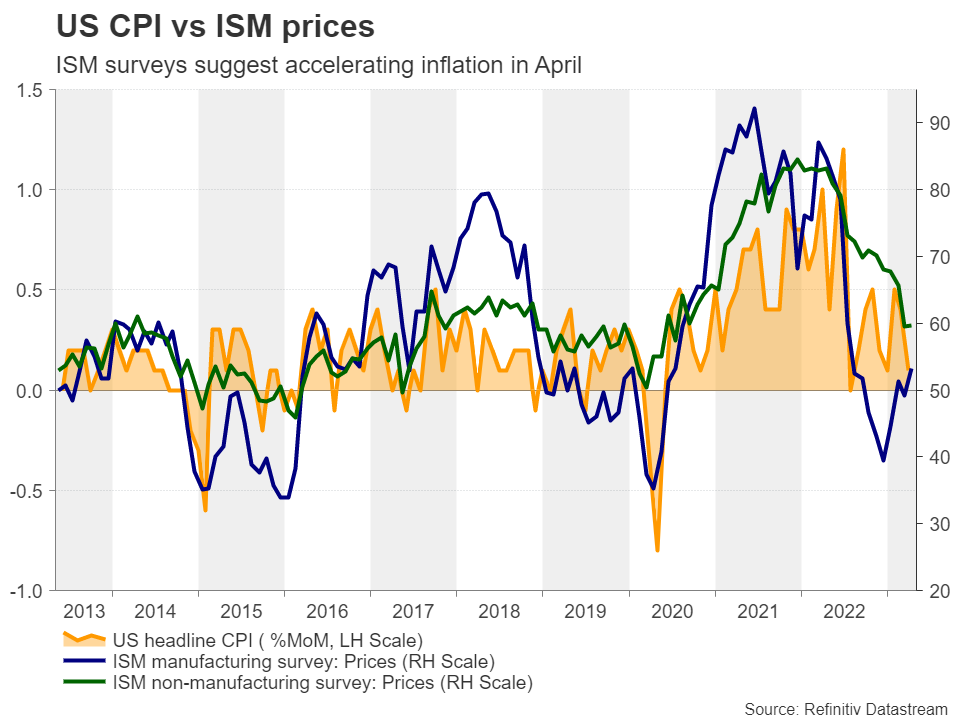
However, such results are unlikely to spark strong speculation about a potential Fed hike in June. After all, the PMI reports were available ahead of Wednesday’s FOMC decision, and yet, even after Powell refused to close the door to a June hike, investors are still pricing in a 90% probability for no action, with the remaining 10% pointing to a quarter-point cut. They are also expecting more than 75bps worth of rate reductions towards the end of the year.
For the pricing to change and start indicating a decent probability for another hike in June, a strong upside surprise may be needed. That could add fuel to the dollar’s engines, but calling for a bullish reversal may still be premature. For a full-scale reversal to start being examined, inflation must continue to accelerate, data may need to reveal that the US economy is in a better shape than many are anticipating, and the Fed might need to prove market expectations wrong, either by raising rates in June or by keeping them untouched through and beyond summer.
China trade data and BoJ Summary of Opinions also on tap
Flying to Asia, China’s trade data, due out on Tuesday, may attract some attention from aussie and kiwi traders, as the world’s second largest economy is the main trading partner of both Australia and New Zealand. Following this week’s disappointing PMIs, weak trade data could corroborate the idea that after the post-reopening boost, the engines of the Chinese economy are now struggling to gather momentum. China’s CPI and PPI numbers are coming out on Thursday.
Regarding Japan and the yen, traders could pay some attention to the BoJ’s Summary of Opinions, as this would be the summary concerning the first gathering under Kazuo Ueda’s leadership. At that meeting, officials decided to keep their policy settings unchanged, and although they removed the pledge to keep interest at “current or lower levels”, they decided to conduct a monetary policy review with a planned time frame of around one and a half years.
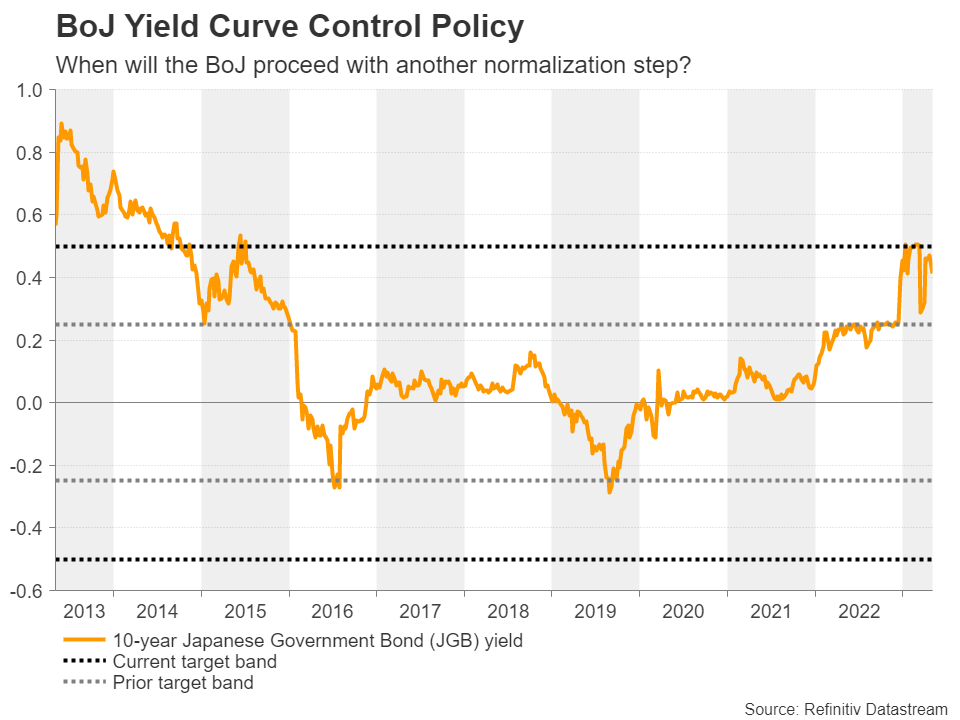
The yen tumbled at the time of the announcement as the review’s time frame may have raised some speculation that the Bank is unlikely to proceed with any changes during that period. However, with no clear clues on when the Bank may proceed another normalization step, traders may dig into the summary to see whether there is still a chance for that to happen before the end of the year.
RBA Hopes for Stronger Data to Avoid “Policy Mistake” Discussion
With the market still digesting the recent central banks’ announcements, the focus in Australia now shifts to incoming economic data. Next week will give us more information on the consumer sector, with the RBA hoping that these data releases justify its recent surprise rate hike. In the meantime, the aussie would clearly love another push, especially as most of the gains recorded after the May 2 move have evaporated.
RBA probably feels better after various rate hikes globally
The RBA managed to pull a surprise at its most recent meeting by announcing a 25 bps rate hike and keeping the door open for further rate moves. This action was partly a reversal of the April meeting, but in our book, there was sufficient justification for this announcement. The rate hikes that ensued by both the Fed and ECB, and the hawkish commentary from the latter, are bound to have lifted the spirits in the RBA halls.
In the meantime, the statement of Monetary Policy published early on Friday, May 5 gave a bit more insight into the RBA’s decision. The updated forecasts point to inflation at 3%; the upper boundary set by the RBA, in 2025 and thus justifying the recent rate announcement. The market should probably pay more attention to this publication as the overall tone is not conducive to a stop in the rate hiking cycle.
As we are getting close to the peak of the current hiking cycle, central banks are afraid of repeating the famous “rate hike mistake” by Trichet et al in 2008. Therefore, incoming data remain extremely important for the monetary policy outlook, especially as we are clearly entering a critical phase with the market pricing in rate cuts for the key central banks over the next 12-15 months. In the case of the RBA, the market assigns a 40% change for another 25 bps rate increase by August, but then expects almost 53 bps of rate cuts by May 2024.

The consumer sector in the spotlight
The monthly Consumer inflation expectations will be released on Friday, May 12 with the market looking for a small acceleration. This indicator has actually been on an aggressive downwards path since June 2022, but remains elevated at a 4.6% year-on-year change. This recent drop has been captured by the Westpac consumer confidence survey jumping last month to the highest level since October 2020. Another strong set of consumer-related data would offer some early confirmation about the appropriateness of the recent RBA rate hike.
Housing data and business survey kick off the week
The week though starts on an equally high note. The building permits print for March is unlikely to be an easy reading for the RBA as this indicator is flirting with the multi-decade low print recorded in May 2022. The housing sector is the black spot globally, especially in regions like the euro area where the floating rate mortgages dominate the housing market.
Also on Monday, we get another business survey. The NAB business confidence survey has been stabilizing lately in negative territory, but the Business Conditions subcomponent is portraying a more positive picture. This move could be the result of some initial impact from the Chinese reopening, but it is evident that both the market and regional central banks were clearly expecting a stronger impact on their export volumes from China.
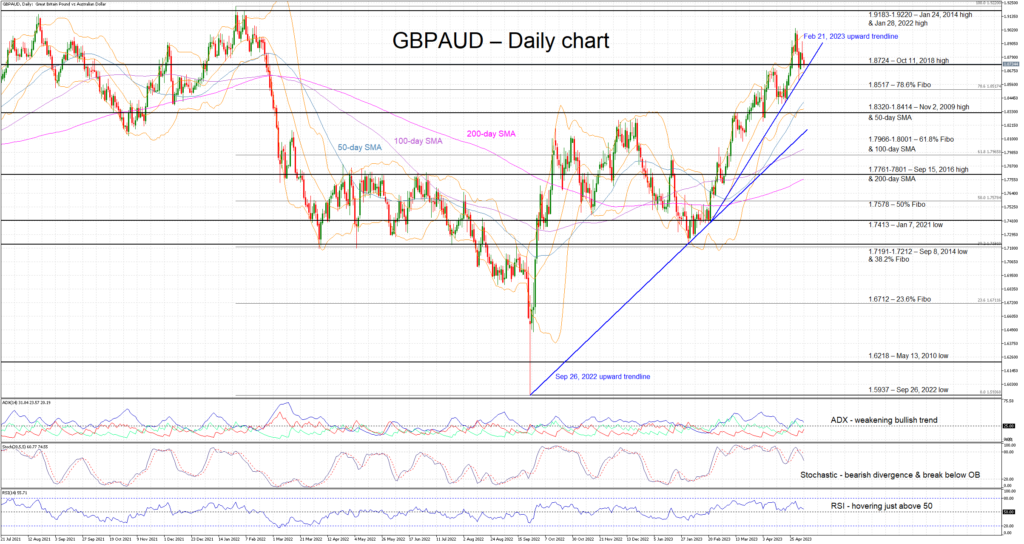
GBPAUD retreating from 15-month high
The aussie has had an interesting week following the RBA surprise announcement on Tuesday, May 2. The GBPAUD pair managed to retreat from the 15-month high, but it has come up against the February 21, 2023 upward sloping trendline. The recent upleg since mid-February has been very aggressive and hence a more sizeable pullback could be on the cards. A positive set of data releases could infuse some confidence into the aussie bears and help them stage a move towards the 1.8517 area.
On the other hand, a combination of weak economic figures and the growing expectations for another rate hike by the BoE on Thursday, 11 May could open the door for a retest of the April highs, and potentially a more convincing move towards the 1.90 area.
Bank of England Preview – 25 and Priming the Markets for a Pause
- We expect the Bank of England (BoE) to hike the Bank Rate by 25bp.
- We expect this to mark the peak in the Bank Rate of 4.50% as the BoE is set to signal a pause in the hiking cycle.
- EUR/GBP is set to remain rather unchanged but move slightly higher during the press conference on dovish remarks.
BoE call. We expect the Bank of England (BoE) to hike the Bank Rate (key policy rate) by 25bp on 11 May bringing it to 4.50%. This is in line with markets expectations.
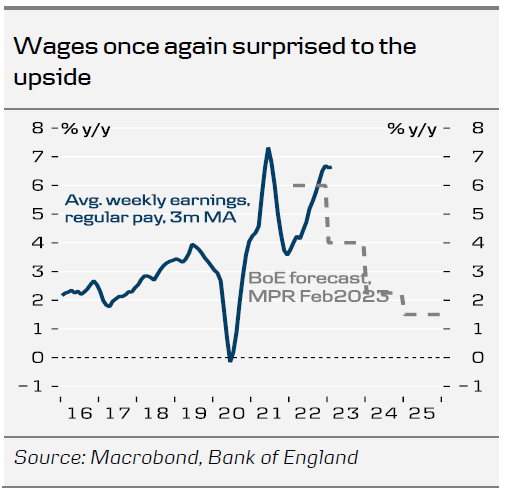
Since the last monetary policy decision in March, both wage growth and inflation releases have surprised to the upside. The latest labour market report showed a slightly higher unemployment rate at 3.8% (up from 3.7%), but unfilled vacancies remained markedly above pre-pandemic levels. However, wage growth excluding bonuses surprised largely to the upside at 6.6% (consensus: 6.2%) with wage growth levelling off in the private sector but continues to accelerate in the public sector. The MPC have expressed the importance of wage growth and hence this supports the view of another 25bp hike.
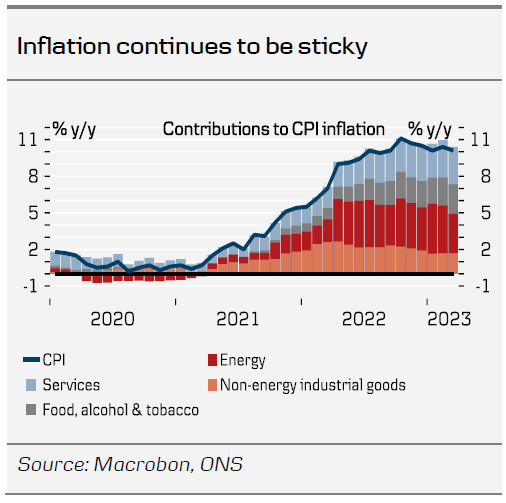
BoE's forecast of 9.2% from the February report as well as the consensus view. The contribution from the services sector remained unchanged at 3.07%. Hence, the inflation remains stickier than expected but with the large drop in shipping prices, lower agricultural commodity prices and the slowing rate of producer prices all points to lower goods inflation from here we believe this will drag the inflation lower despite the stickier services inflation. The latest BoE's monthly Decision Maker Panel survey showed that inflation expectations continued the trend lower seen over the recent months. Combined with core inflation, this remains a key release for the MPC in order to determine persistency of inflation pressures.
All in all, we expect this to be the final hike from the BoE but note that the BoE most likely will repeat the message that they will tighten further if there is evidence of further persistence in inflation. Hence, their approach remains increasingly data dependent. Markets pricing has increased the previous months to a peak rate of 4.8%, up from 4.5% at the end of March. At the same time, markets seems to see the probability for rate cuts this year as lower than previously. We expect no rate cuts until 2024.
Growth outlook. The UK economy seems to narrowly avoid a negative GDP growth in Q1 as well as the February print showed +0.1% on a 3M/3M basis at same time as the data from January was revised higher. PMI data also suggest a pick up in the activity with the composite index reached a 12 month high in April. The recession outcome that in October last year felt as a done deal for the UK economy is now on the course to be avoided.
FX. In our base case of a 25bp hike, we expect EUR/GBP to remain rather unchanged on the release but move slightly higher during the press conference. In its statement we expect the BoE to prime markets for a pause in the hiking cycle as the central banks want to fully evaluate the effect from previous Bank Rate increases. Overall, we regard the relative central bank outlook to be a positive for EUR/GBP but with other factors acting as a headwind, we increasingly see a case for continued range trading in the cross.
Sunset Market Commentary
Markets
Subsequent waves of investor uncertainty on the health of smaller/regional US banks this week unsettled the market dynamics, often overshadowing the impact of key economic data releases or even high profile central bank policy decisions, even from the likes of the Fed and the ECB. Another blip during the US session yesterday triggered a new safe haven run on core bonds. German/EMU yields closed at intraday lows while US yields rebounded later as panic subside again, laying the groundwork for a comeback in EMU yields this morning. First ECB speakers after yesterday’s ECB policy meeting (Villeroy, Simkus, Muller) joined Lagarde’s narrative that even as the ECB slowed the pace of rate hikes from 50 to 25 bps, additional steps should be expected at upcoming meetings. German yields rebound 7-8 bps this morning, with the focus shifting to the US April payrolls. The report showed little signs of a cooling in the US labour market. The economy in April added 253k jobs (vs 185k expected), admittedly with a cumulative 2-month downward revision of 149K. However other details of the report were also strong. AHE jumped 0.5% M/M (to 4.4%) vs 0.3% expected. The unemployment rate (based on the household data) declined from 3.5% to 3.4% (3.6% expected). The participation rate stabilized at 62.6% as employment according to this survey rose modestly combined with a small decline in the labour force. At least for now, there is no additional interference from financial stability issues. US yields are rising 8 bps (2-y) and 5 bps (30-y). Expectations on Fed interest rate cuts eased a bit post the report. Still, the market discounts about 75 bps of rate cuts by the December meeting. German yields add 9-10 bps across the curve with the short end outperforming (+6 bps). Good eco news this times is also seen as good for equities, with Eurostoxx50 rebounding 0.8%. US indices open with gains of about 1.0%. Easing fears on an imminent (US) recession, also support a bottoming process (Brent) oil, rebounding to $75 p/b compared to a correction low just north $ 71 p/b earlier this week.
After nearing (DXY) or outright testing (EUR/USD) key support levels yesterday, the dollar gained some further traction, but gains are far from impressive. DXY trades at 101.65 (from 101.34). EUR/USD eased to 1.098. Still the technical picture for the greenback hasn’t improved in any profound way. Even the gain in USD/JPY remains disappointing (134.80, with the week top still at 137.77). Despite higher core yields most smaller currencies perform well (EUR/SEK 11.22 from 11.286, EUR/NOK 11.65 from 11.8). This also applies to the CE currencies (EUR/CZK 23.40, EUR/HUF 372, EUR/PLN 4.575).
News & Views
The FAO Food Price Index by the UN showed a slight rebound in April (+0.6%) – the first increases since March 2022 – led by a steep increase in the sugar price index (+17.6%), along with an upturn in the meat price index (+1.3%), while the cereals (-1.7%), dairy (-1.7%) and vegetable oil price index (-1.3%) continued to drop. The Sugar Price Index rose for a third consecutive month to the highest level since October 2011. The increase was mostly related to heightened concerns over tighter global availabilities for India and China, along with lower-than-earlier-expected outputs in Thailand and the EU. The Cereal Price Index is down 19.8% Y/Y. A decline of in world prices of all major grains outweighed an increase in rice prices month on month. International wheat prices declined to their lowest level since July 2021.
Canadian payrolls beat market consensus. Employment grew by 41.4k in April (vs 20k expected). Details were more mixed with part time employment completely responsible for job gains (+47.6). Full time occupations dropped by 6.2k. The unemployment rate and participation rate both stabilized at respectively 5% and 65.6%. Interestingly, hourly wages for full time FTE rose by 5.2% Y/Y (vs 4.8% Y/Y). The loonie holds on to its daily gains against the dollar even as the greenback profits from strong US payrolls. CAD strength on today’s data has much to do with relatively hawkish comments by BoC governor Macklem yesterday who suggested that more work had to be done even as the BoC paused its tightening cycle since January. USD/CAD fell from 1.354 to 1.3475. First support remains far at 1.3302. Canadian swap yields rise around 10 bps across the curve today.
Swiss Franc is Losing Ground Due to Low Inflation
The Swiss franc declined, losing about 1% to 0.8920 after a fresh batch of macroeconomic data. The unemployment rate remains at 1.9%, a historic low. But at the same time, inflation is surprising, falling short of forecasts.
The consumer price index was virtually unchanged over the past month, and the annual inflation rate fell from 2.9% to 2.6%, while economists, on average, expected growth of 0.2% m/m and 2.8% y/y, respectively. The current inflation rate is the lowest in the last 11 months and very close to the SNB target.
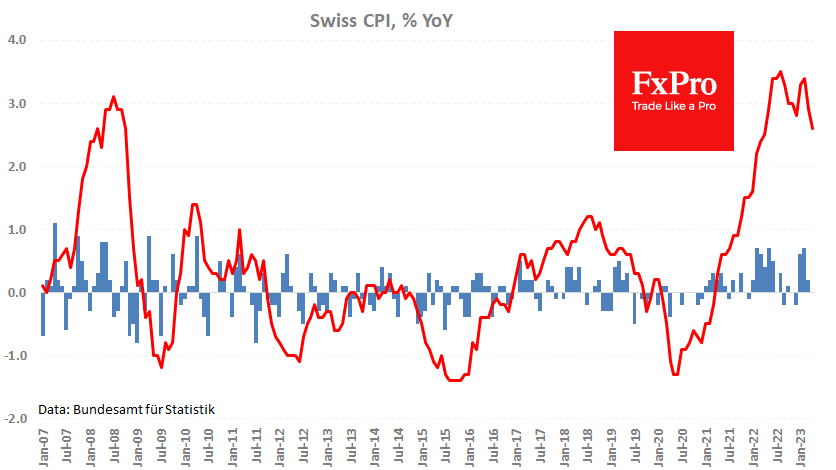
The latter fact has spurred speculation that the country’s central bank will refrain from further tightening policy after raising rates by 225 points in the current monetary cycle. However, the head of SNB Jordan is in a hurry to moderate these expectations, not ruling out further rate hikes.
Switzerland’s significantly lower inflation is mainly due to the performance of the franc, which is now close to the same levels from which it began its decline against the dollar in early 2021. For comparison, the EURUSD is now 10% lower; at the worst point, it exceeded 22%.
The franc’s strengthening accelerated in March, apparently due to the problems of US banks, which caused steady demand for safe havens such as Switzerland. However, having slipped below 0.8900, USDCHF was close to the levels from which the SNB turned the pair to growth over the past 11 years.
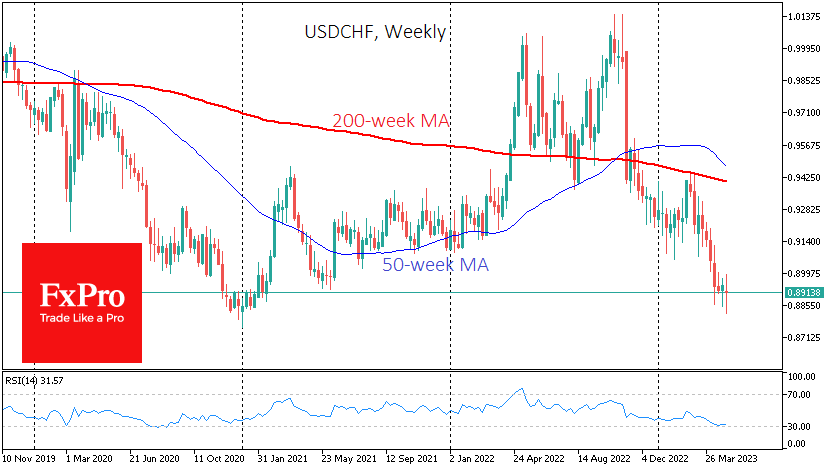
It is hard to believe that this time the exchange rate will be reversed again by the intervention of the Central Bank since this would contradict the primary policy course. But over the years, support has been formed in this area, which will take a lot of work to pass.
US: Job Growth Surprised to the Upside in April, But Prior Months See Sizeable Downward Revisions
The U.S. economy added 253k jobs in April, well above the consensus forecast of 180k. Revisions to the two months prior were significant, subtracting 149k from the previously reported figures. Hiring over the last three-months averaged 222k, a meaningful stepdown from the 295k registered in March.
Employment gains on the service side (+197k) were concentrated in healthcare (+64k), professional & business services (+43k) and leisure & hospitality (+31k). Goods producing industries (+33k) added jobs on the month, with both construction (+15k) and manufacturing (+11k) chipping in with modest gains. Hiring across the public sector moderated, but still added 23k jobs.
In the household survey, civilian employment rose by a modest +139k, while the labor force shrank by 43k, resulting in the unemployment rate falling by 0.1%-pts to 3.4%. The participation rate held steady at 62.6%.
Average hourly earnings were up 0.5% month-on-month (m/m) – accelerating from March's gain of 0.3% m/m. Both the 12 and 3-month (annualized) moved higher, rising to 4.4% and 4.2%, respectively.
Key Implications
Job growth accelerated in April, but there were certainly some indications in the report suggesting that the labor market is softening. Revisions to the two prior months were significantly lower, which after smoothing through the monthly noise, the three-month moving average shows the pace of hiring has continued to decelerate. Moreover, the breadth of hiring – while having ticked higher in April – remains well below year ago levels.
The uptick in average hourly earnings comes as little surprise. We have been saying that the recent downward drift in average hourly earnings is likely more to do with the fact that this measure doesn't adjust for compositional shifts in the labor force. This distinction has been particularly key in recent months where leisure & hospitality– one of the lowest paying industries – has accounted for an outsized share of recent job creation. But with its contribution having significantly receded last month, we were bound to some acceleration in wage growth.
Taking this morning's report in conjunction with other recent labor market metrics (e.g., rising jobless claims, downward trend in job openings, and the uptick in layoffs) there are certainly some early signs of softening in the labor market. However, it's unclear if things are progressing fast enough. The FOMC has left the door open to another rate hike in June, and they may need to follow through on that if we don't see a more meaningful cooling in labor market conditions over the next few months. Let's see what next week's inflation report brings!
EUR/USD Mid-Day Outlook
Daily Pivots: (S1) 1.0968; (P) 1.1030; (R1) 1.1073; More...
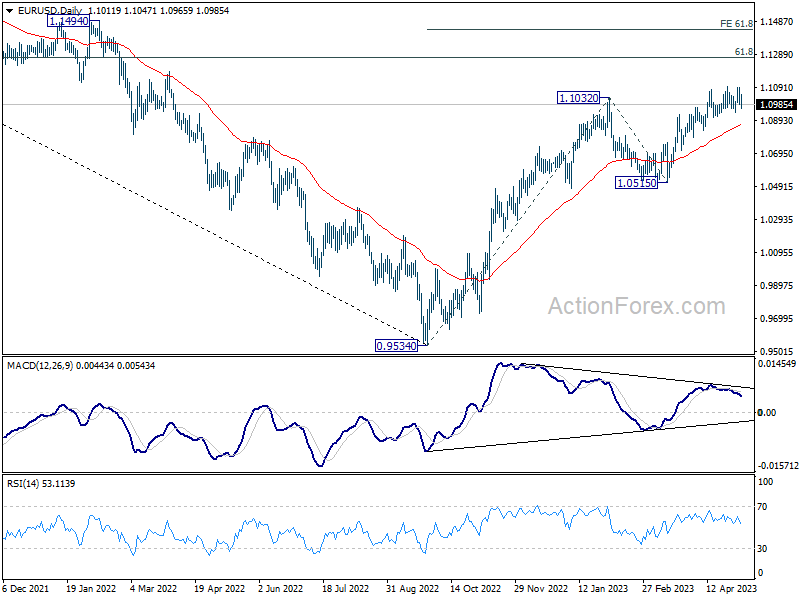
EUR/USD drops notably again today but stays in range of 1.0908/1094. Intraday bias remains neutral at this point. Outlook stays bullish as long as 1.0908 support holds. Further rally remains in favor for now. On the upside, firm break of 1.1094 will resume larger up trend to 1.1273 fibonacci level. Break there will target 61.8% projection of 0.9534 to 1.1032 from 1.0515 at 1.1441 However, considering bearish divergence condition in 4H MACD, break of 1.0908 support will indicate short term topping and turn bias back to the downside.
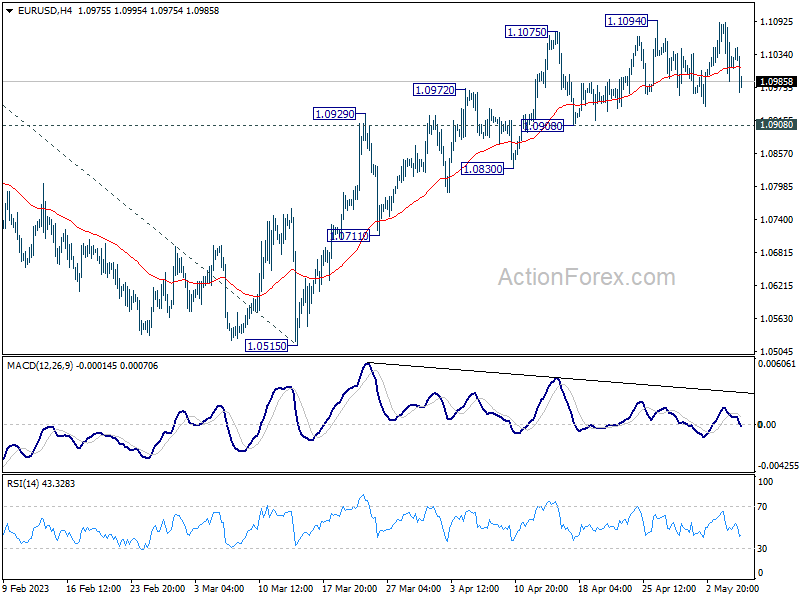
In the bigger picture, rise from 0.9534 (2022 low) is in progress for 61.8% retracement of 1.2348 (2021 high) to 0.9534 at 1.1273. Sustained break there will solidify the case of bullish trend reversal and target 1.2348 resistance next (2021 high). This will now remain the favored case as long as 1.0515 support holds, even in case of deeper pull back.