Sample Category Title
Resilient Labor Market Suggests FOMC Will Need to Raise Rates by 50bps Later This Month
The U.S. economy added 311k jobs in February, well ahead of the consensus forecast of 225k. Revisions to the two months prior were slightly negative, subtracting 34k from the previously reported figures.
Employment gains on the service-side (+245k) remained strong and were concentrated in leisure & hospitality (+105k), health care (+63k), professional & business services (+45k) and transportation & warehousing (+50k). Goods producing industries (+20K) chipped in with modest gains, with job growth entirely concentrated in construction (+24k). Public sector hiring also had another solid month, adding 46k.
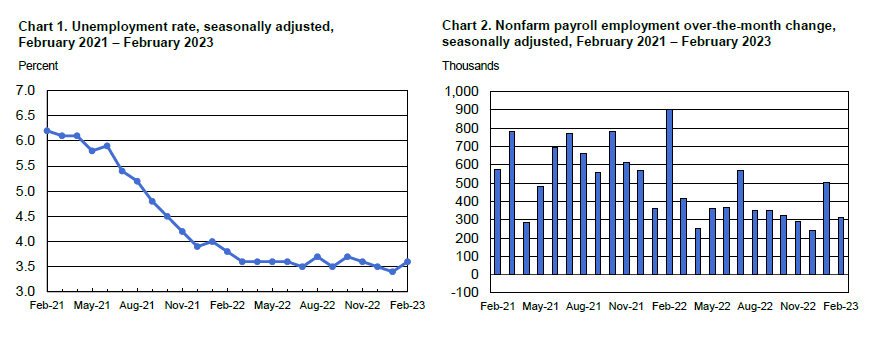
In the household survey, civilian employment rose by 177k workers, while the labor force expanded by a robust 419k. As a result, the participation rate edged higher by 0.1%-pts, reaching a new cyclical high of 62.5%. The unemployment rate ticked higher by 0.2%-pts, returning to 3.6%.
Average hourly earnings rose 0.2% month-on-month (m/m) – a deceleration from January's 0.3% m/m gain. Favorable base effects pushed the 12-month change on average hourly earnings to 4.6%, though the 3-month (annualized) change slipped to 3.6% – marking the second consecutive month of deceleration.
Key Implications
Wow, another exceptionally strong month of hiring! Job growth again far exceeded expectations, while revisions to prior months did little to take the shine of previously reported figures. As a result, the three-month average on hiring ticked up to 351k, highlighting the considerable strength that remains in today's labor market. It has become clear that the anticipated adjustment that needs to occur to tame inflation is unlikely to take hold until at least the second half of this year.
While the optimist may point to the fact that the three-month change on hourly earnings slipped to slowest pace of growth in nearly two-years, we would caution reading too much into this. For starters, the labor market remains incredibly tight and given the recent strength in hiring activity, we are unlikely to see much more slowing in the months ahead. Second, hourly earnings don't adjust for compositional effects across sectors, and as a result, have been running well below most other wage growth metrics in recent months.
With economic data largely surprising to the upside to start the year, Fed officials have struck a decisively more hawkish tone in recent weeks. This sentiment was echoed by Chair Powell in his joint testimony to Congress earlier this week where he hinted at rates needing to go higher and possibly faster over the coming months. Given the strength in this morning's employment report, it now seems that a 50-bps hike is the most likely outcome when the FOMC next meets on March 22nd.
Canada’s Labour Market Continues to Roll
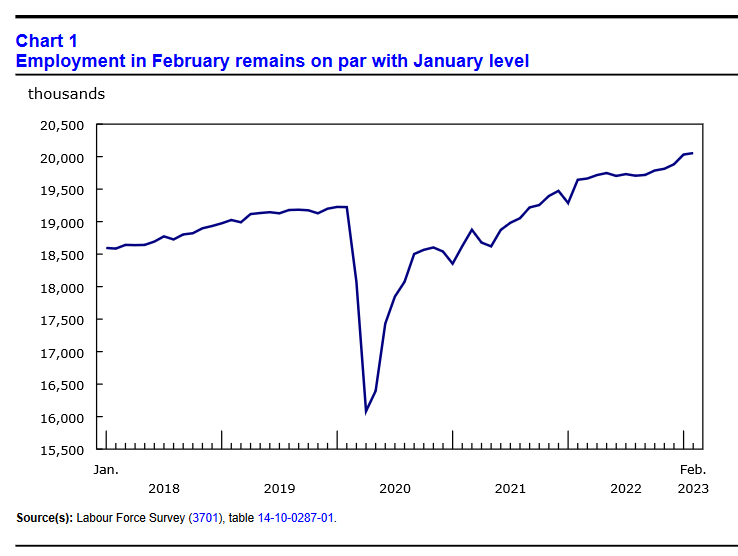
The Canadian labour market added 22k positions in February, with full-time employment up 31.1k and part-time employment down 9.3k.
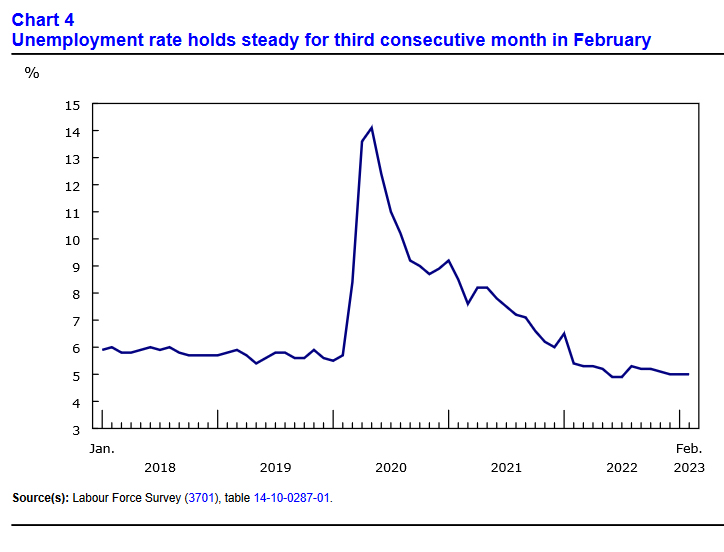
The unemployment rate held steady at 5.0%. The participation rate also held at 65.7%.
By industry, employment was up in health care (+15k), public administration (+10k), and utilities (+7.5k). Losses were seen in business, building and other support services (-11k).
Lastly, total hours worked were up 0.6% month-on-month and wage growth accelerated, up 5.4% year-on-year (vs 4.5% in January).
Key Implications
The jobs market in Canada continues to roll. The employment gain alongside higher wages and people working more hours points to a labour market that refuses to cool. Not to mention, all the job gains were in the private sector where cyclical strength is most apparent. All this means that Canadian incomes are seeing a boost, which will drive more consumer spending, presenting further upside to GDP growth for the first quarter.
For the Bank of Canada, the headline print might be more 'normal' compared to prior months, but it is still too high. Although the BoC has been effective at slowing the parts of the economy most sensitive to interest rates, and it has seen inflation decelerate confidently, a more decisive turn is needed. Given that the BoC is in wait-and-see mode with its conditional pause, it believes that it is only a matter of time before a slowdown shows up in the broader economy. But with today's labour market report, it will have to wait a little while longer.
USD/CHF Mid-Day Outlook
Daily Pivots: (S1) 0.9291; (P) 0.9359; (R1) 0.9395; More...
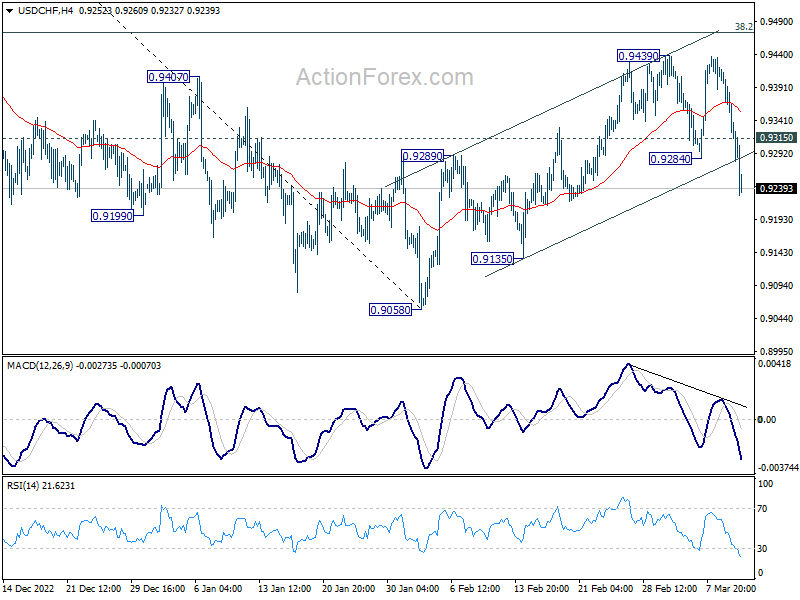
USD/CHF's strong break of 0.9284 support should now confirm that corrective rebound from 0.9058 has completed at 0.9439. That came ahead of 38.2% retracement of 1.0146 to 0.9058 at 0.9474. Intraday bias is back on the downside for retesting 0.9058 low. Firm break there will resume larger down trend from 1.0146. On the upside, however, break of 0.9315 minor resistance will mix up the outlook and turn bias neutral again.
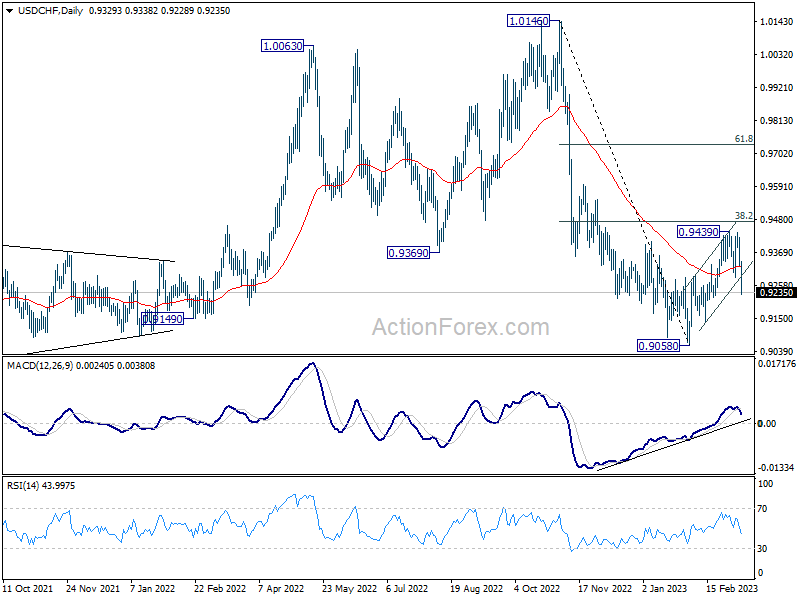
In the bigger picture, decline from 1.0146 is seen as part of a long term sideway pattern. As long as 38.2% retracement of 1.0146 to 0.9058 at 0.9474 holds, another fall is in favor through 0.9058. However, sustained trading above 0.9474 will indicate that the medium term trend has reversed, and open up further rally to 61.8% retracement at 0.9730 and above.
Mixed NFP Report Weighs on Dollar For Now, Swiss Franc Shines
Dollar experienced a significant fall during early US trading hours following a mixed non-farm payroll report. Although the headline job growth was strong, the increase in the unemployment rate and the slowdown in wage growth could give the Federal Reserve something to think about beyond March. Meanwhile, Canadian dollar did not receive much support from better-than-expected job data.
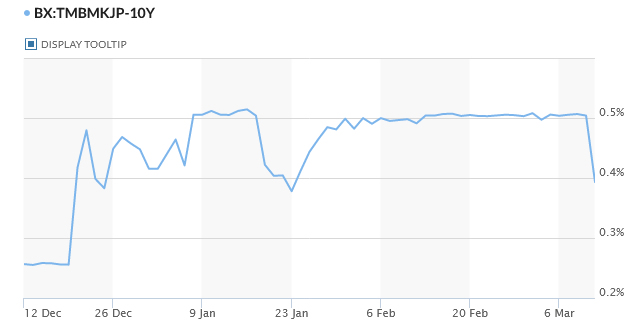
On the other hand, Swiss Franc was the star of the day, buoyed by risk aversion and falling US and European benchmark yields. In contrast, Yen was the second-worst performer of the day after the BoJ left its ultra-loose monetary policy unchanged. 10-year JGB yield also tumbled sharply away from the 0.5% cap.
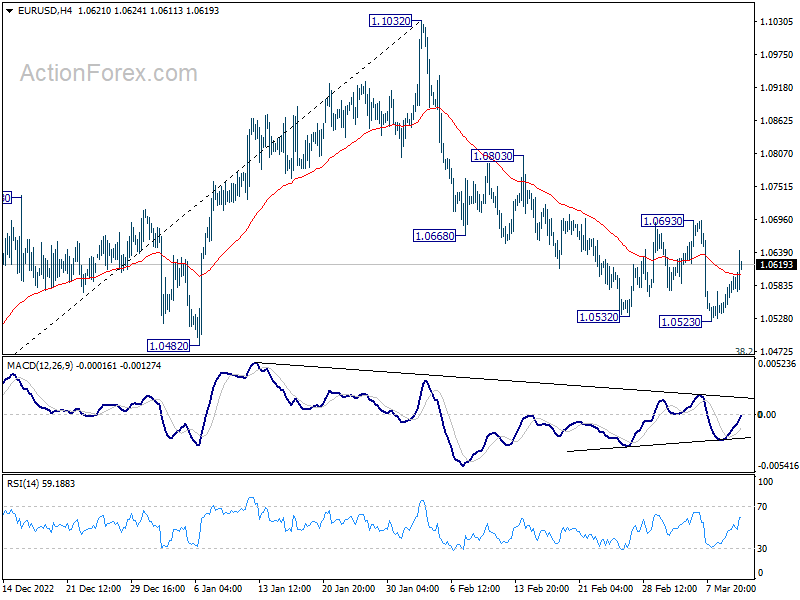
From a technical perspective, the break of 0.9284 support in USD/CHF is a signal of a deeper selloff in Dollar, but other currencies need to follow suit. Key levels to watch include 1.0693 resistance in EUR/USD, 0.6694 resistance in AUD/USD, 135.35 support in USD/JPY, and 1.3751 support in USD/CAD. As long as these levels hold, the selloff in the greenback may only be temporary.
In Europe, at the time of writing, FTSE is down -1.42%. DAX is down -0.99%. CAC is down -0.88%. Germany 10-year yield is down -0.1283 at 2.517. Earlier in Asia, Nikkei dropped -1.67%. Hong Kong HSI dropped -3.04%. China Shanghai SSE dropped -1.40%. Singapore Strait Times dropped -1.15%. Japan 10-year JGB yield dropped -0.1107 to 0.393.
US NFP rose 311k, unemployment rate rose to 3.6%
US non-farm payroll employment rose 311k in February, well above expectation of 200k. January's figure was revised just slightly down from 517k to 504k. That compared with average monthly gain of 343k over the prior 6 months.
Unemployment rate rose from 3.4% to 3.6%, above expectation of 3.4%. Participation rate rose from 62.4% to 62.5%.
Average hourly earnings rose 0.2% mom, below expectation of 0.3% mom. Average workweek edged down by -0.1 hour to 34.5 hour.
Canada employment rose 21.8k, unemployment rate unchanged at 5.0%
Canada employment rose 21.8k in February, well above expectation of 2.5k. Unemployment rate was unchanged at 5.0%, versus expectation of 5.1%. But that's just shy of record-low 4.9% in June and July 2022. Labor force participation rate held steady at 65.7%. Total hours worked rose 0.6% mom. Average hourly waves rose 5.4% yoy
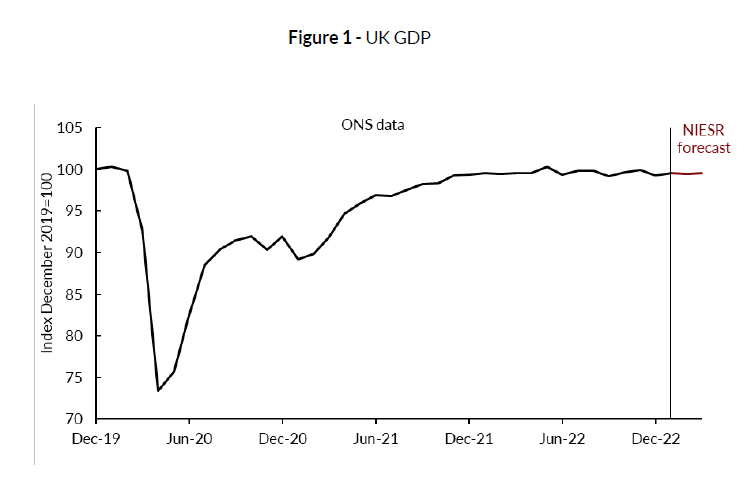
UK GDP grew 0.3% mom in Jan as services rose 0.5%
UK GDP grew 0.3% mom in January, better than expectation of 0.1% mom. Services rose 0.5% mom. Production declined -0.3% mom. Construction fell by -1.7% mom.
For the three months to January, however, GDP was flat. Services was flat. Production grew by 0.3% while construction contracted -0.7%.
Also published, manufacturing production came in at -0.4% mom, -5.2% yoy in January, versus expectation of -0.1% mom, -5.0% yoy. Industrial production was at -0.3% mom, -4.3% yoy, versus expectation of -0.1% mom, -4.0% yoy. Goods trade deficit narrowed from GBP -19.3B to GBP -17.9B, versus expectation of GBP -17.5B.
NIESR forecasts UK GDP to contract -0.1% in Q1, outlook continues to improve
NIESR forecasts UK GDP to contract -0.1% in Q1, a shallower contraction of -0.2% in prior forecast.
Paula Bejarano Carbo, Associate Economist, NIESR, said "The outlook for the first quarter of 2023 continues to improve as higher-frequency data, including the services and construction February PMIs, indicate that activity will continue to pick-up in February, suggesting that any contraction we might see over Q1 is likely to be shallow."
BoJ stands pat and maintains easing bias
As anticipated, BoJ left its monetary policy unchanged today, maintaining its easing bias. Despite a rise in inflation expectations, CPI is projected to slow down during the current fiscal year before experiencing a moderate increase once again.
Under yield curve control, short-term policy rate was held at -0.10%. Long-term interest rate will remain at around 0% with necessary purchase of JGBs without an upper limit. The band for 10-year JGB yield to fluctuate stayed at plus and minus 0.5%.
BoJ maintained the pledge to continue with QQE with YCC for "as long as it is necessary". It "will not hesitate to take additional easing measures if necessary". It also expects "short- and long-term policy interest rates to remain at their present or lower levels".
BoJ said the economy "has picked up" with exports and industrial production "more or less flat". The economy is projected to "continue growing at a pace above its potential growth rate" as a virtuous cycle form income to spending intensifies gradually.
Inflation expectations "have risen". But, CPI is "likely to decelerate toward the middle of fiscal 2023", then "accelerate moderately" on the back of improvement in output gap, rises in medium- to long-term inflation expectations in wage growth, and waning down of energy prices measures."
The meeting was the last one to be chaired by Governor Haruhiko Kuroda. Kazuo Ueda was approved by both houses of the parliament this week as the next BoJ Governor.
New Zealand BNZ manufacturing rose to 52, gearshift but not strong
New Zealand BusinessNZ Performance of Manufacturing Index rose from 51.2 to 52.0 in February, signalling further increase in expansion. But the reading was still below its long-term average of 53.0.
Looking at some details, production dropped from 52.0 to 49.4. Employment rose from 51.6 to 54.0. New orders rose from 49.2 to 52.0. Finished stocks rose from 52.7 to 55.8. Deliveries was unchanged at 51.8.
BNZ Senior Economist, Craig Ebert stated that "it's been a New Year gearshift, out of reverse. However, these are not what you'd call strong results – in total, and especially when delving into the details. That said, February's PMI, like January's, did denote expansion, overall, and is not all that far shy of its long-term average of 53.0".=
USD/CHF Mid-Day Outlook
Daily Pivots: (S1) 0.9291; (P) 0.9359; (R1) 0.9395; More...
USD/CHF's strong break of 0.9284 support should now confirm that corrective rebound from 0.9058 has completed at 0.9439. That came ahead of 38.2% retracement of 1.0146 to 0.9058 at 0.9474. Intraday bias is back on the downside for retesting 0.9058 low. Firm break there will resume larger down trend from 1.0146. On the upside, however, break of 0.9315 minor resistance will mix up the outlook and turn bias neutral again.
In the bigger picture, decline from 1.0146 is seen as part of a long term sideway pattern. As long as 38.2% retracement of 1.0146 to 0.9058 at 0.9474 holds, another fall is in favor through 0.9058. However, sustained trading above 0.9474 will indicate that the medium term trend has reversed, and open up further rally to 61.8% retracement at 0.9730 and above.
Economic Indicators Update
| GMT | Ccy | Events | Actual | Forecast | Previous | Revised |
|---|---|---|---|---|---|---|
| 21:30 | NZD | Business NZ PMI Feb | 52 | 50.8 | 51.2 | |
| 21:45 | NZD | Manufacturing Sales Q4 | -0.40% | 5.10% | ||
| 23:30 | JPY | Household Spending Y/Y Jan | -0.30% | -0.20% | -1.30% | |
| 23:50 | JPY | PPI Y/Y Feb | 8.20% | 8.60% | 9.50% | |
| 02:31 | JPY | BoJ Interest Rate Decision | -0.10% | -0.10% | -0.10% | |
| 07:00 | EUR | Germany CPI M/M Feb F | 0.80% | 0.80% | 0.80% | |
| 07:00 | EUR | Germany CPI Y/Y Feb F | 8.70% | 8.70% | 8.70% | |
| 07:00 | GBP | GDP M/M Jan | 0.30% | 0.10% | -0.50% | |
| 07:00 | GBP | Manufacturing Production M/M Jan | -0.40% | -0.10% | 0.00% | |
| 07:00 | GBP | Manufacturing Production Y/Y Jan | -5.20% | -5.00% | -5.70% | |
| 07:00 | GBP | Industrial Production M/M Jan | -0.30% | -0.10% | 0.30% | |
| 07:00 | GBP | Industrial Production Y/Y Jan | -4.30% | -4.00% | -4.00% | |
| 07:00 | GBP | Goods Trade Balance (GBP) Jan | -17.9B | -17.5B | -19.3B | |
| 11:40 | GBP | NIESR GDP Estimate (3M) Feb | -0.10% | -0.10% | ||
| 13:30 | USD | Nonfarm Payrolls Feb | 311K | 200K | 517K | 504K |
| 13:30 | USD | Unemployment Rate Feb | 3.60% | 3.40% | 3.40% | |
| 13:30 | USD | Average Hourly Earnings M/M Feb | 0.20% | 0.30% | 0.30% | |
| 13:30 | CAD | Net Change in Employment Feb | 21.8K | 2.5K | 150.0K | |
| 13:30 | CAD | Unemployment Rate Feb | 5.00% | 5.10% | 5.00% | |
| 13:30 | CAD | Capacity Utilization Q4 | 83.30% | 82.60% |
Canada employment rose 21.8k, unemployment rate unchanged at 5.0%
Canada employment rose 21.8k in February, well above expectation of 2.5k. Unemployment rate was unchanged at 5.0%, versus expectation of 5.1%. But that's just shy of record-low 4.9% in June and July 2022. Labor force participation rate held steady at 65.7%. Total hours worked rose 0.6% mom. Average hourly waves rose 5.4% yoy
US NFP rose 311k, unemployment rate rose to 3.6%
US non-farm payroll employment rose 311k in February, well above expectation of 200k. January's figure was revised just slightly down from 517k to 504k. That compared with average monthly gain of 343k over the prior 6 months.
Unemployment rate rose from 3.4% to 3.6%, above expectation of 3.4%. Participation rate rose from 62.4% to 62.5%.
Average hourly earnings rose 0.2% mom, below expectation of 0.3% mom. Average workweek edged down by -0.1 hour to 34.5 hour.
NIESR forecasts UK GDP to contract -0.1% in Q1, outlook continues to improve
NIESR forecasts UK GDP to contract -0.1% in Q1, a shallower contraction of -0.2% in prior forecast.
Paula Bejarano Carbo, Associate Economist, NIESR, said "The outlook for the first quarter of 2023 continues to improve as higher-frequency data, including the services and construction February PMIs, indicate that activity will continue to pick-up in February, suggesting that any contraction we might see over Q1 is likely to be shallow."
Canadian Dollar at Extremums
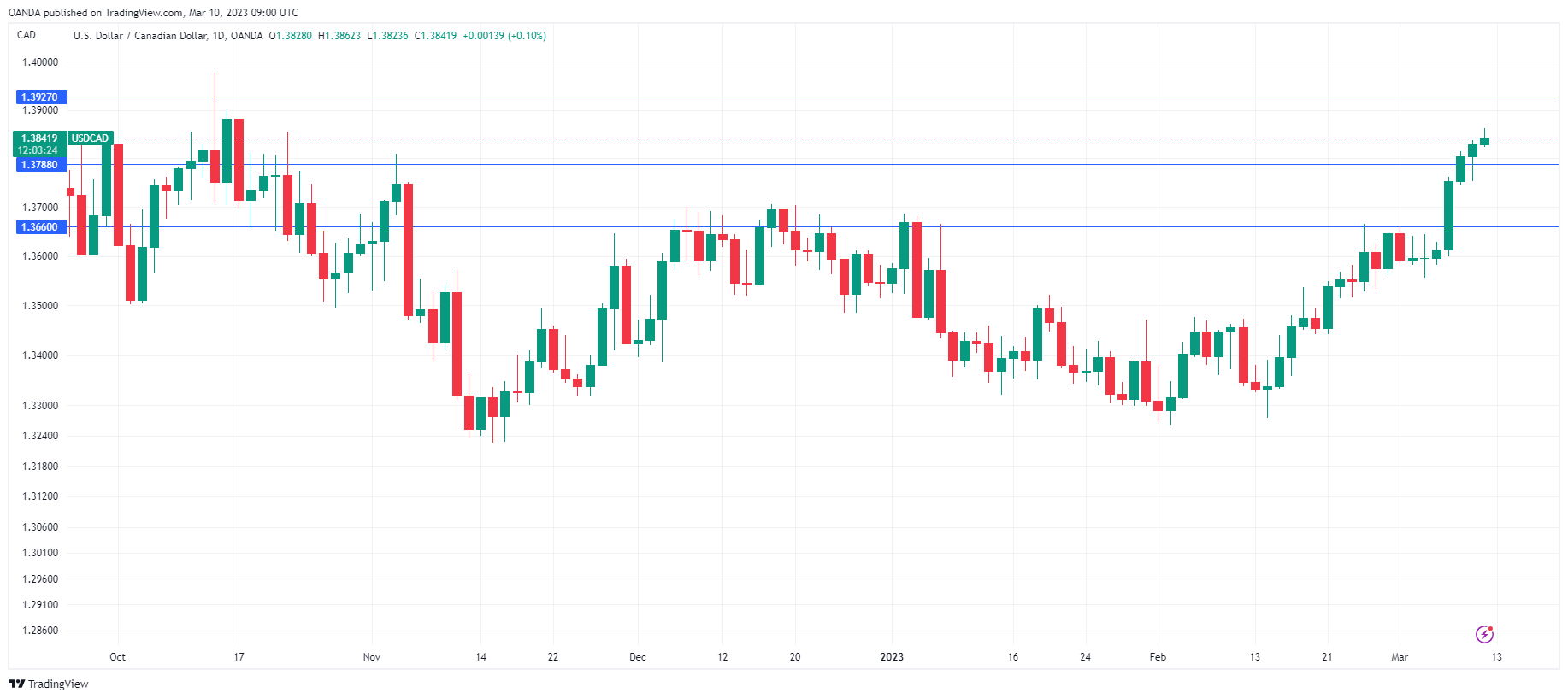
USDCAD has been rallying this week, gaining 1.7% since Tuesday and testing the five-month high of 1.3850. The pair looks vulnerable to both a short-term correction and the potential for a longer-term reversal.
The US Dollar has enjoyed gains after Powell’s hawkish rhetoric forced the markets to consider a 50-point rate hike on 22 March seriously. This is significant because the markets were pricing in 2-3 more 50-point hikes before that. And even earlier in the year, they were already pricing in a rate cut before the end of the year.
Almost simultaneously, the Bank of Canada avoided surprises by leaving its policy rate unchanged, as it had warned in its commentary on the January decision. This starkly contrasts the Fed’s stance, which changed after strong reports on employment and consumer spending inflation.
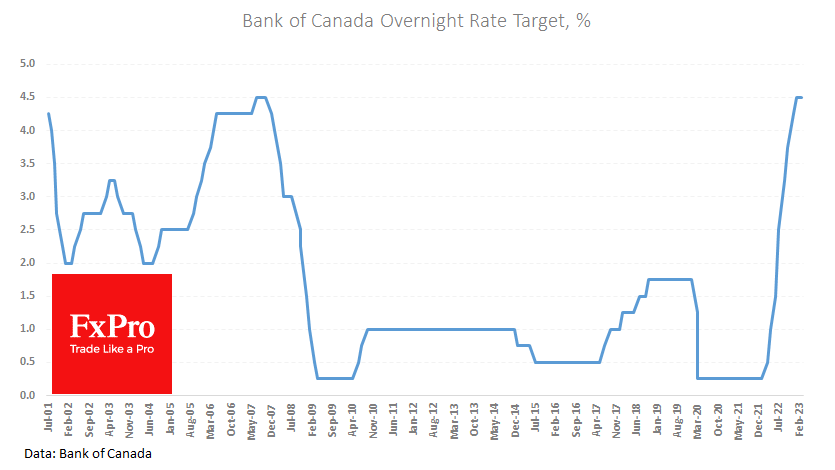
The only change the Bank of Canada decided to make was to warn at the end of the commentary on the decision that further hikes from the current 4.5% were possible. Canada’s reluctance is easy to understand as it has only been at the current rate since 2001, from July to October 2007, when it was cut to 0.25%.
The acceleration of rate hikes in the US and the pause after the slowdown in Canada is a major driver for the USD against the CAD. This difference promises to be unprecedented in modern history, with the G7 central banks acting almost in sync and moving in the same direction.
The divergence may exist only in the minds of currency speculators, not central bankers. Powell’s speech contained the typical caveats used by the Fed since Greenspan, leaving the door open for future action. The actual actions of the US and Canadian central banks have been at least in the same direction, if not identical.
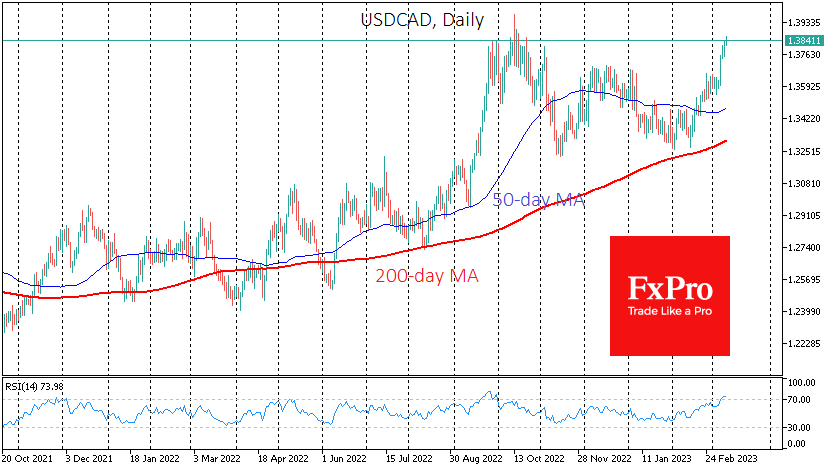
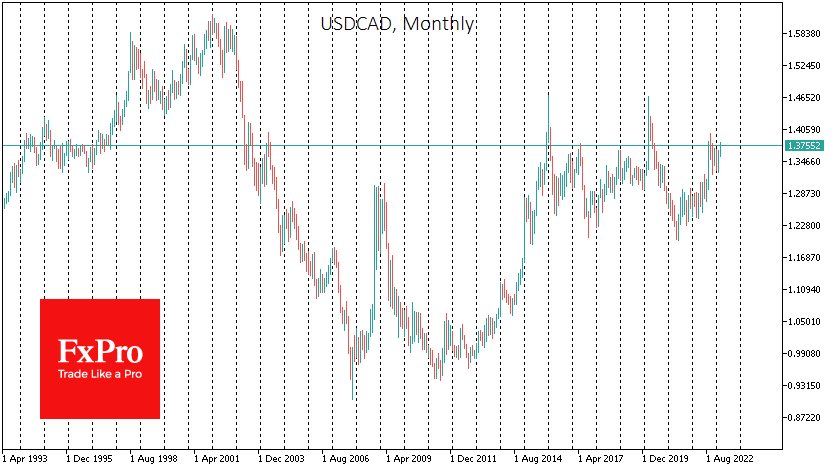
The USDCAD has reached overbought territory in the currency market on the daily RSI. The exchange rate has now reached levels where selling intensified in October and November last year. The pair have not traded consistently above 1.40 in the past 20 years. Short rallies have only been associated with periods of extreme market volatility and plunging oil prices, which is not the case here.
A pullback from current levels means the pair could slide as low as 1.36, completely erasing the latest growth impulse. However, it is unlikely that the pair will stop there, as it will be a move from the top of the multi-year trading range to its bottom around 1.20–1.25.
Canadian Dollar Eyes US, Canadian Job Reports
The Canadian dollar continues to sag and has dropped 1.9% this week. Hold onto your hats, as we could have some further volatility from USD/CAD in the North American session, with the release of the US and Canadian employment reports.
All eyes on NFP
The highlight of the day is the US nonfarm payrolls report, which is expected to head back to earth after a blowout gain of 517,000 in January. The consensus for February stands at 205,000 and a wide miss of this figure on either side will likely shake up the US dollar. A weak reading would fuel speculation of a Fed pivot and likely weigh on the US dollar, while a strong figure would support the Fed’s hawkish stance and should be bullish for the greenback.
The ADP payroll report, which precedes the nonfarm payroll release, improved to 242,000, up from an upwardly revised 119,000 and above the estimate of 200,000. The ADP reading is not considered all that reliable at forecasting the nonfarm payrolls report so I wouldn’t read too much into it. Still, the US labour market remains strong despite the Fed’s tightening, and I would not be surprised to see nonfarm payrolls follow the ADP’s lead and beat the estimate.
In addition to nonfarm payrolls, the Fed will also be keeping a close eye on wage growth. Average hourly earnings is expected to rise to 4.7% y/y in February, up from 4.4% y/y in January. The Fed is focussed on lowering inflation and an acceleration in wage growth could prompt the Fed to be more aggressive with its pace of rate increases.
Canada also recorded a sharp gain in new jobs in January, with a reading of 150,000, up from 104,000 prior. The markets are braced for a small gain of 10,000 in February, and a soft print of 5,000 or lower would likely weigh on the Canadian dollar. The unemployment rate is expected to tick up to 5.1%, up from 5.0%.
USD/CAD Technical
- There is support at 1.3787 and 1.3660
- 1.3927 and 1.4190 are the next resistance lines
Yen Slips after BoJ Maintains Policy Settings, US Nonfarm Payrolls Loom
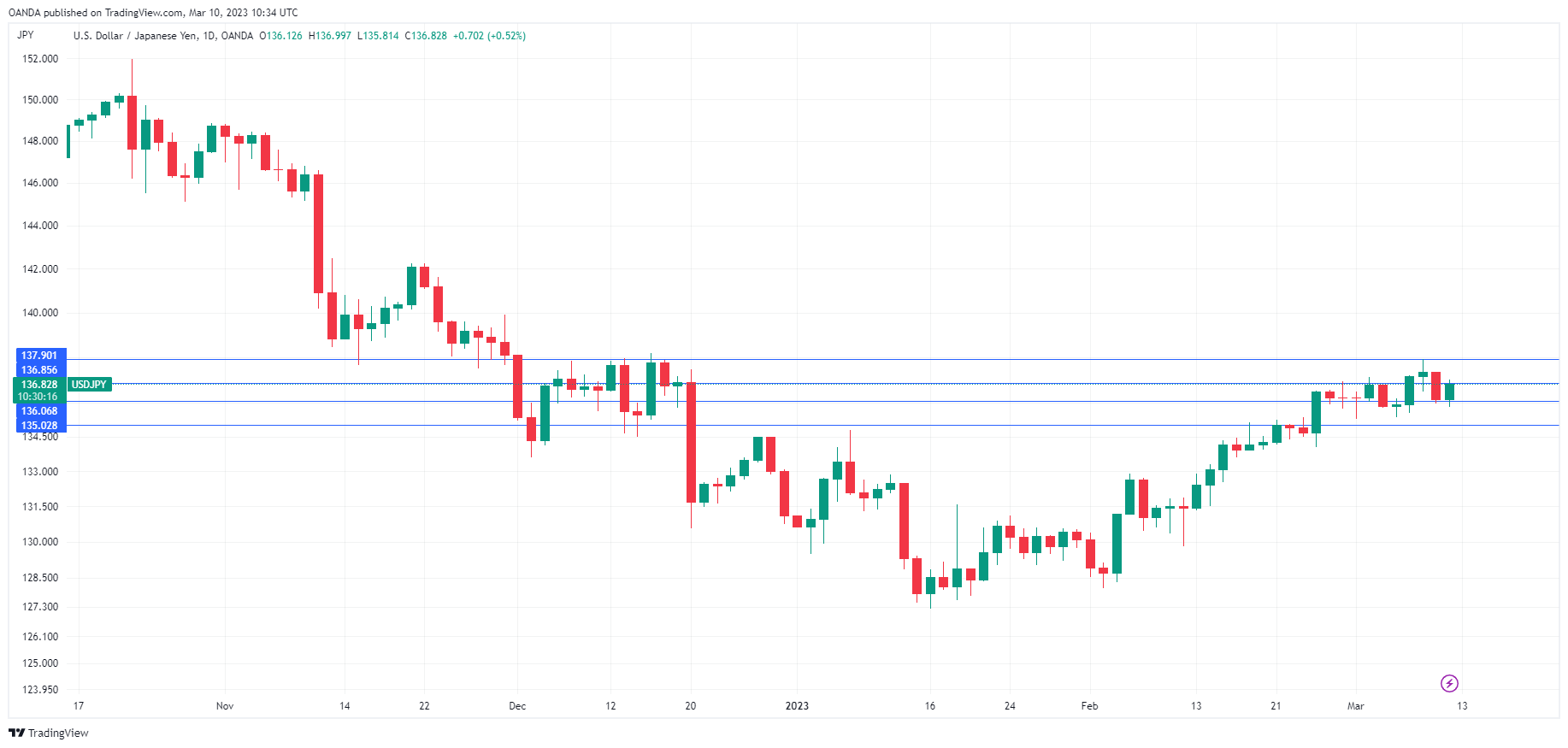
The Japanese yen is trading at 1.36.83 in the European session, down 0.52%. USD/JPY fell 0.90% on Thursday but has recovered much of those losses today.
Kuroda exits with a whimper
Bank of Japan Governor Kuroda didn’t fire any final shots at his final meeting today. The BoJ maintained interest rates at -0.1%, where they have been pegged since 2016, and didn’t make any changes to its to yield curve control (YCC) policy. Traditionally, BoJ governors do not make waves at their final meeting, but there was an outside chance that Kuroda might buck the trend. Kuroda has surprised the markets in the past, most notably when he widened the yield curve band in December and jolted the markets. This time, Kuroda stayed on the sidelines and the yen responded with losses as some investors were disappointed that he didn’t tweak the YCC.
Kazuo Ueda takes over as BoJ Governor next month, and there is growing speculation that Ueda will change forward guidance and tweak or even abandon YCC, as distortions in the yield curve are damaging the bond markets. Ueda may not press the trigger when he chairs his first meeting in April but is expected to shift policy in the coming months.
The US releases its February employment report, highlighted by nonfarm payrolls, later today. The blowout January reading of 517,000 is widely seen as a blip, although the labour market remains surprisingly resilient, despite the bite of rising interest rates. The estimate for February stands at 205,000 and a wide miss of this figure on either side will likely shake up the US dollar. A weak reading would fuel speculation of a Fed pivot and likely weigh on the US dollar, while a strong figure would support the Fed’s hawkish stance and should be bullish for the greenback.
The Fed will also be keeping a close eye on wage growth, in addition to nonfarm payrolls. Average hourly earnings are expected to rise to 4.7% y/y in February, up from 4.4% y/y in January. Higher wages drive inflation higher and an acceleration in wage growth would complicate the Fed’s battle to curb inflation.
USD/JPY Technical
- 136.06 is under pressure in support. 13502 is next
- 136.86 and 1.37.90 are the next resistance lines