

Sample Category Title
GBP/USD Mid-Day Outlook
Daily Pivots: (S1) 1.0381; (P) 1.0655; (R1) 1.0962; More...
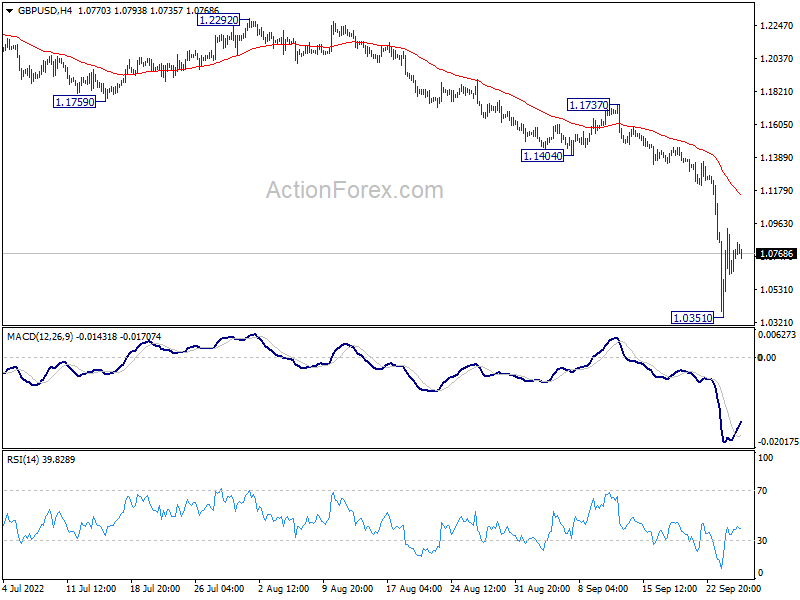
GBP/USD is staying in consolidation above 1.0351 temporary low. Intraday bias stays neutral first. While stronger recovery cannot be ruled out, risk will stay on the downside as long as 1.1404 support turned resistance holds. Break of 1.0351 will resume larger down trend towards parity next.
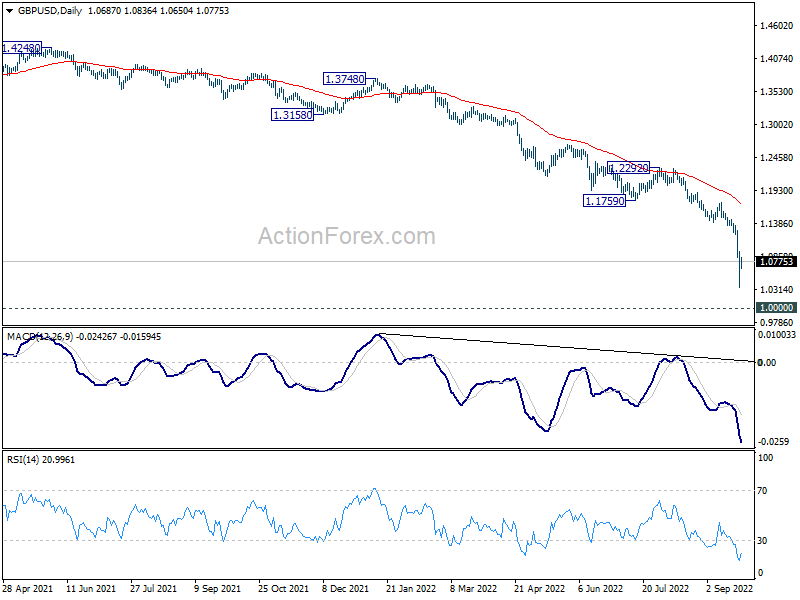
In the bigger picture, fall from 1.4248 (2018 high) is resuming long term down trend from 2.1161 (2007 high). Next target is 100% projection of 2.1161 to 1.3503 from 1.7190 at 0.9532. There is no scope of a medium term rebound as long as 1.1759 support turned resistance holds.
USD/CHF Mid-Day Outlook
Daily Pivots: (S1) 0.9832; (P) 0.9899; (R1) 1.0006; More
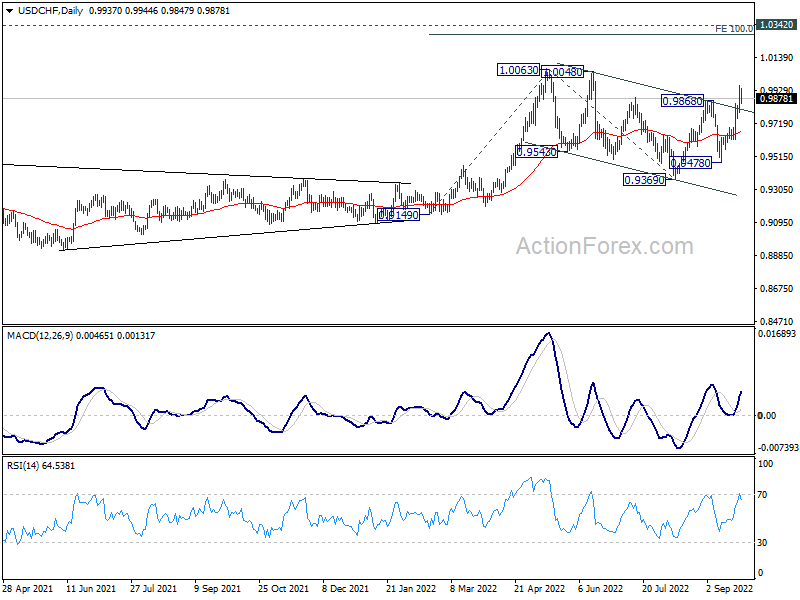
Intraday bias in USD/CHF is turned neutral with a temporary top formed at 0.9964. Some consolidations could be seen. But downside should be contained by 4 hour 55 EMA (now at 0.9755). Break of 0.9964 will target 1.0063 high. Decisive break there will confirm resumption of larger up trend.
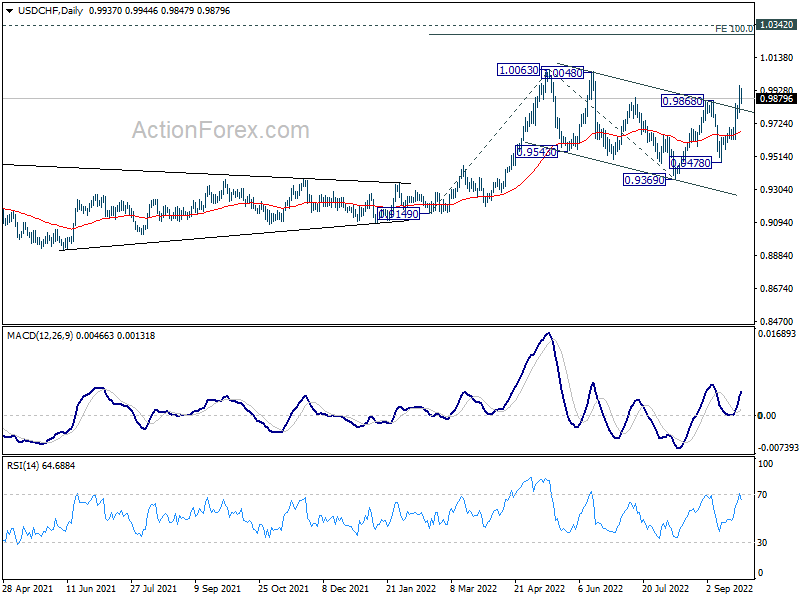
In the bigger picture, current development suggests that up trend from 0.8756 (2021 low) is still in progress. Sustained break of 1.0063 will target 100% projection of 0.9149 to 1.0063 from 0.9369 at 1.0283, and then 1.0342 (2016 high). For now, this will remain the favored case as long as 0.9369 support holds, even in case of deep pull back.
USD/JPY Mid-Day Outlook
Daily Pivots: (S1) 143.71; (P) 144.25; (R1) 145.27; More...
Outlook in USD/JPY remains unchanged as range trading continues. Intraday bias stays neutral at this point. Further rally is expected as long as 139.37 resistance turned support holds. Break of 145.89 will target 147.68 long term resistance. On the downside, however, decisive break of 139.37 will confirm short term topping. Deeper decline would be seen back towards 130.38 support.
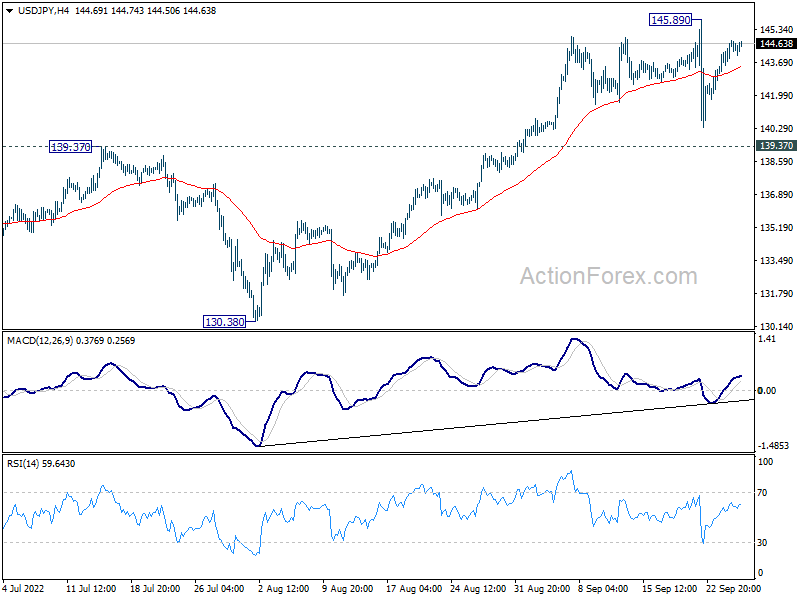
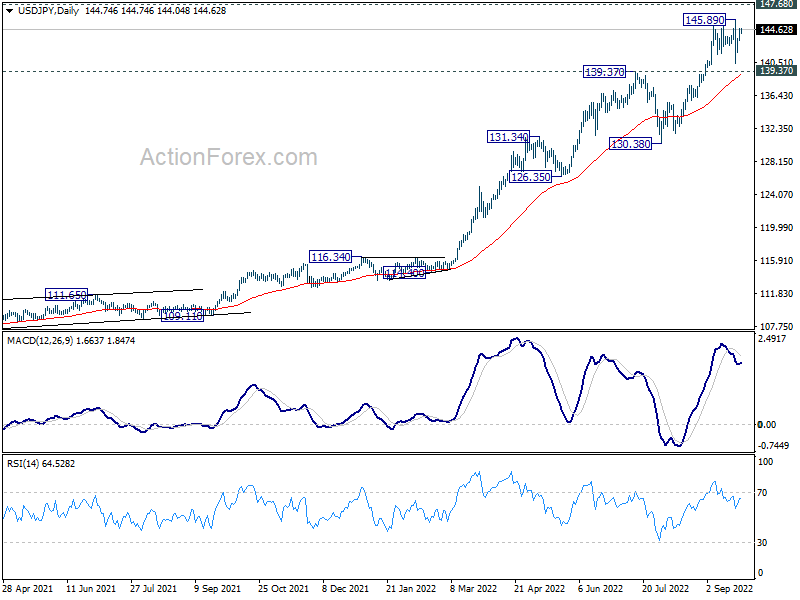
In the bigger picture, up trend from 101.18 is still in progress, as part of the whole up trend from 75.56 (2011 low). Further rise should be seen to 147.68 (1998 high). For now, break of 130.38 support is needed to be the first indication of medium term topping. Otherwise, outlook will stay bullish even in case of deep pull back.
BoE Pill: Recent significant fiscal news require a significant monetary policy response
BoE chief economist Huw Pill said at a conference, "We have all seen recent significant fiscal news in the past few days. That has had significant market consequences as well as significant implications for the macro outlook…
"It's hard not to draw the conclusion that all this will require a significant monetary policy response," he added.
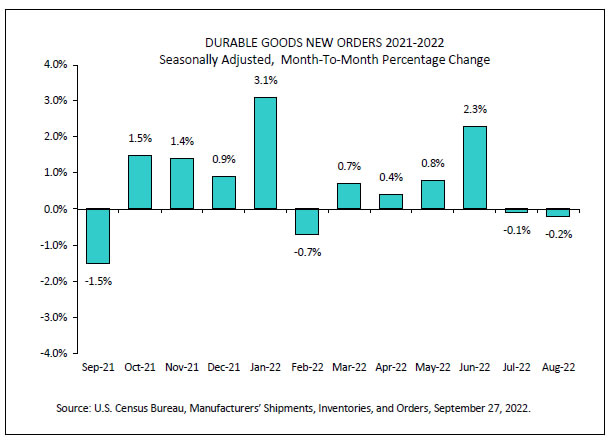
US durable goods orders dropped -0.2% mom in Aug, ex-transport orders up 0.2% mom
US durable goods orders dropped -0.2% mom to USD 272.7B in August, slightly worse than expectation of -0.1% mom. Ex-transport orders rose 0.2% mom, below expectation of 0.3% mom. Ex-defend orders dropped sharply by-0.9% mom. Transportation equipment dropped -1.1% mom to USD 92.0B.
FX Intervention: Risks for Solos, Not Yet for Accords
The US dollar is under some pressure on Tuesday morning, which can be attributed to the dollar’s local profit-taking after substantial gains on previous days. European equities and US index futures are also getting some relief, pulling back from lows.
However, until we see a change in the fundamentals, bounces like today’s are likely to be nothing more than local retracements of established trends – bullish for the dollar and bearish for equities.
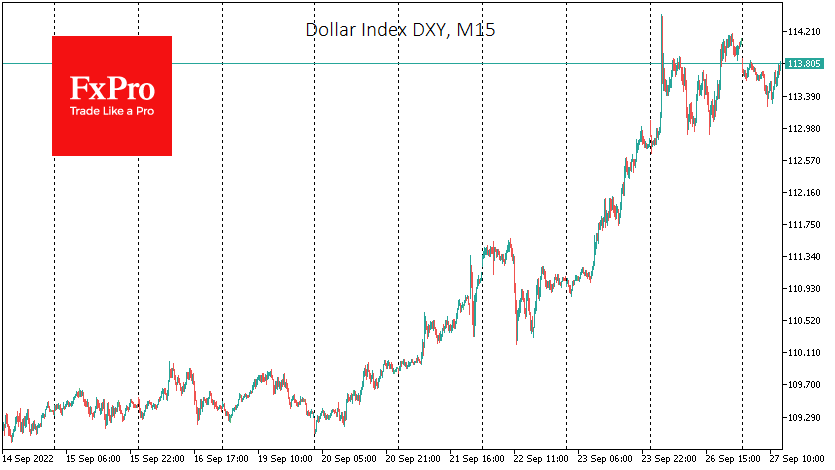
There is little doubt in the markets now that the main driving force behind the markets is the continuing tightening of current and, most notably, expected conditions. The dollar has been in increasing demand in recent months, as comments from the Fed are methodically pushing higher the expected interest rate ceiling and for longer.
Not all major central banks have the ability or the courage to maintain the same pace, which is taking the dollar’s main competitors out of the game. But these same conditions require regulators to act more aggressively.
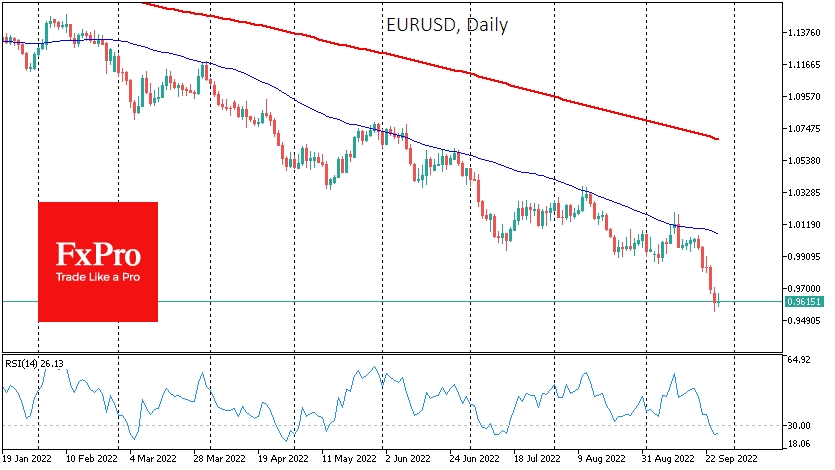
Last week, Japan began its interventions to defend the yen exchange rate. The Swiss National Bank has repeatedly warned that it is ready to intervene. Observers have also demanded action from the Bank of England. But the latter has yet to budge, taking a week to assess the situation.
In the words of the ECB officials, there is more and more evident dissatisfaction with the ongoing weakening of the euro.
Because a sharp rise in interest rates in over-leveraged economies may come as a shock, the central bank may intervene to stop the unilateral weakening of national currencies.
Right now, it seems unlikely that the major central banks would be willing to press on the dollar in a coordinated way as they did in 1985 with the secretly prepared so-called Plaza Accord. It hardly fits with US priorities to lower inflation and weaker commodity prices.
At the same time, there are increasing risks that the major central banks, one by one and acting on the situation, may use this almost forgotten instrument to stop unilateral speculation against their currencies.
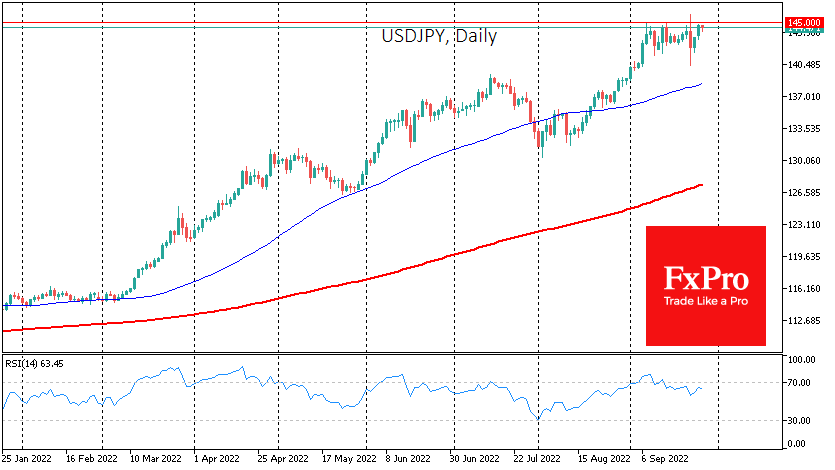
In our view, since last week and for the foreseeable future, Japan has already included interventions in its active policy, potentially limiting the USDJPY from rising above 145. It is unlikely to be an easy ride for Japan’s Ministry of Finance, but it has the strength to fight back.
Among the other majors, the GBP has the highest currency intervention risks right now, with EUR and CHF slightly less so. In Canada and China, the monetary authorities are not concerned about the exchange rate, as inflation is slowing down there. Hence, it is unlikely that we will see interventions in the CAD and the CNY. Although the Australian dollar has lost 6% since the beginning of the month, it is now 18% above the 2020 ‘bottom’, so in our view, monetary authorities can use traditional rate hikes and quantitative tightening for now.
Eurozone Inflation and Future of Rate Hike Cycle
The ECB has only two more meetings for the rest of the year. Which means that the space to get inflation under control by the end of December is getting tight. The common bank is behind other major central banks in raising policy, which has kept the shared currency relatively weak. Therefore, there is a lot of expectation on what will happen with inflation.
Though, it should be noted that the next ECB meeting isn't until late October, meaning that there is still another round of CPI data coming out before they meet. So, that is likely to have a much bigger impact on what the bank actually decides to do. On the other hand, the series of CPI figures expected later in the week are expected to shape interest rate expectations. And that, in the end, is the main driver of the currency.
Restoring credibility
A series of ECB officials have come out to talk in a way that suggests potentially stronger action. Rumors of a 75bps hike in October are starting to grow. This is because of the going theory among central bankers that inflation is shaped by the "credibility" of the central bank. That is, it's how confident the market is that it will raise rates as needed to get inflation down.
Both Nagel and de Cos made comments to that effect yesterday. But they need to be contextualized within the ECB's Chief Economist Lane's views expressed also yesterday. That is, expecting a significant decrease in inflation through the course of next year. In other words, the ECB might be coalescing around the idea of a sharp rate hiking through the next couple of months to force CPI figures to turn around.
It's out of their hands
The thing is, while the ECB did expand the monetary base by around 10% during the pandemic, a larger chunk of the inflationary effects come from external factors. Higher energy costs, and increased cost of imported goods from China due to lockdowns, are the two main ones. That isn't something monetary policy can fix.
On the other hand, China is seen relaxing some of the covid restrictions, and energy prices have been falling (although over fears of a pending global recession). That could contribute to lower inflation next year regardless of what the ECB does. So, it might come down to a matter of whether the ECB thinks it can control prices.
What to look out for
On Thursday, Germany reports Inflation figures, which are expected to set the tone for the rest of the shared economy. German September monthly inflation is expected to accelerate to 1.1% from 0.3% prior. That would contribute to annual inflation jumping to 9.5% compared to 7.9% prior.
Then on Friday we get EuroZone headline inflation rate expected to move up to 9.6% from 9.1% in August. Of course what the ECB pays the most attention to is the core rate, which is also expected to accelerate, though not as sharply. Core September inflation is forecast at 4.7% compared to 4.3% prior.
USD/JPY Outlook: Extended Consolidation to Precede Fresh Bulls
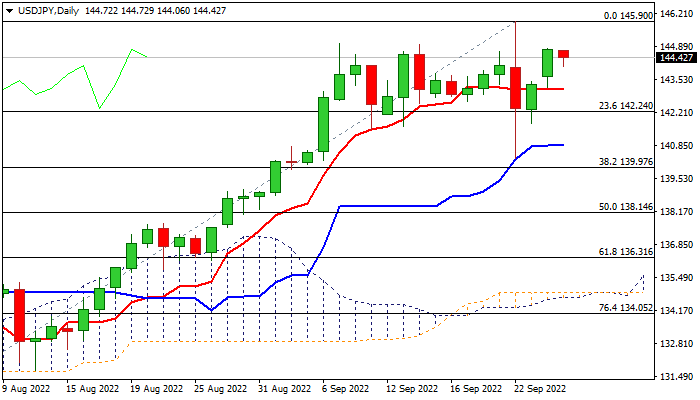
The USDJPY edges lower in Asian/early European session on Tuesday, after two-day rally lost steam on approach to initial barrier at 145.00 (former tops), as risk appetite starts to return to play.
Overall picture remains bullish, but near-term action is losing momentum, after large swings on Japan’s intervention failed to register a clear break out of near-term congestion, suggesting that the intervention did not manage to provide a substantial support to Japanese yen, while the dollar remains well supported by safe-haven flows and hawkish Fed.
Daily Tenkan-sen and Kijun-sen are in bullish setup but turned sideways, signaling prolonged consolidation before bulls regain full control.
Daily Tenkan-sen offers initial support at 143.12, followed by 142.24 (Fibo 23.6% of 130.39/145.90 rally), where dips should find solid ground.
Only break below daily Kijun-sen (140.85) would weaken near-term structure and risk test of pivotal 140.00 support zone (psychological/Fibo 38.2% of 130.39/145.90.
Res: 144.78; 145.00; 145.90; 146.76.
Sup: 144.06; 143.54; 143.12; 145.55.
Update to Our Fed Funds Forecast: When the Facts Change, We Change Our Minds
Summary
- We had been forecasting that the FOMC would raise its target range for the federal funds rate by 100 bps more between now and early next year. But two developments have caused us to revise our forecast higher.
- First, the economy is showing signs of resiliency, which will necessitate more monetary tightening to slow growth sufficiently to bring inflation back toward the Fed's target of 2%.
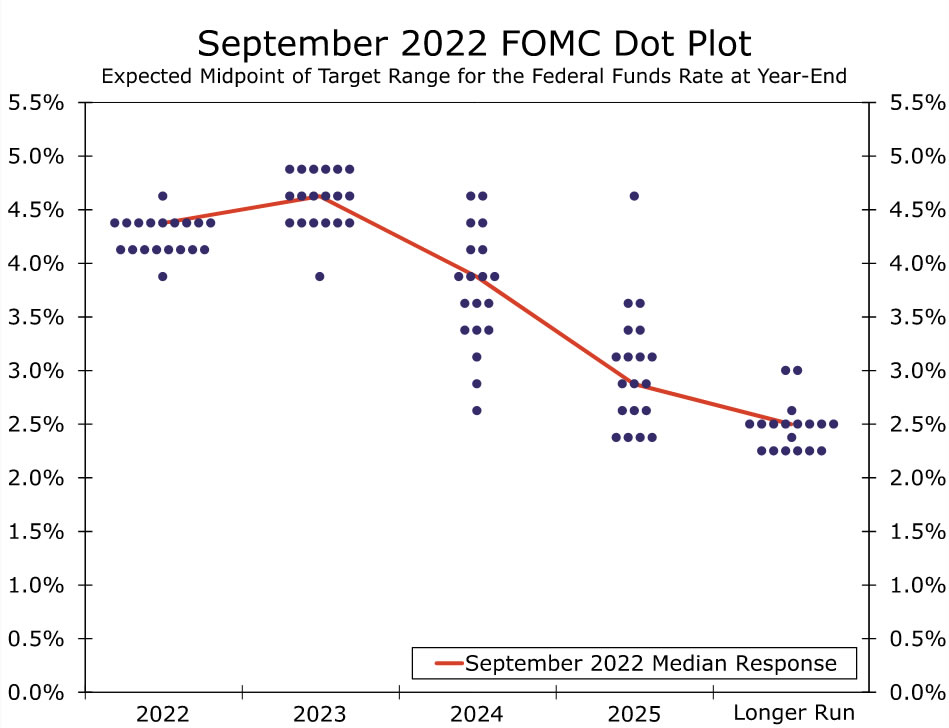
- Second, the FOMC appears willing to do "whatever it takes" to rein in inflation. In that regard, the so-called dot plot now shows that the vast majority of Committee members believe that 100 bps to 125 bps of further tightening is warranted by the end of the year. Furthermore, most policymakers expect a few more rate hikes early next year.
- We now look for the FOMC to hike its target range for the fed funds rate by 75 bps at the November 2 meeting and by 50 bps at the policy meeting on December 14. We think the Committee will tighten further early next year with 25 bps rate hikes at both the February 1 and the March 22 meetings. If realized, the target range for the fed funds rate would top out at 4.75%-5.00% in March 2023.
- In our view, the FOMC will not cut rates at the first sign of economic weakness to ensure that inflation is moving convincingly back toward target. But with the economy in recession, the unemployment rate rising and inflation receding considerably, we expect the FOMC will reverse course in the fourth quarter of next year. Specifically, we look for the Committee to cut rates by 50 bps in Q4-2023 with another 175 bps of easing by Q3-2024.
Skyrocketing inflation has caused the Federal Open Market Committee (FOMC) to tighten monetary policy significantly this year. Specifically, the FOMC has raised its target range for the federal funds rate by 300 bps since March, the fastest pace of rate hikes in more than 40 years. We had been looking for the Committee to hike rates by another 100 bps by early next year. But recent developments have led us to believe that even more tightening lies ahead, and we now forecast that the FOMC will raise rates by another 175 bps before it is finished tightening policy.
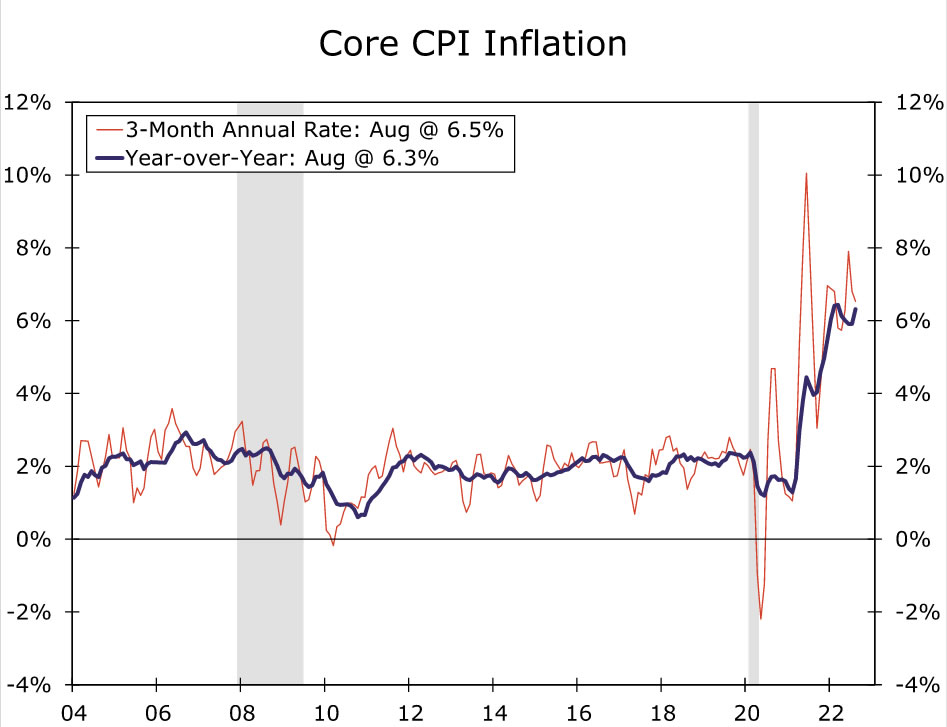
The update to our forecast reflects, at least in part, the apparent resiliency of the U.S. economy in recent weeks. Nonfarm payrolls rose by 315K in August, well above the average monthly increase of roughly 190K that the economy generated during the long expansion of 2010-2019. Tightness in the labor market has pushed wages significantly higher, with average hourly earnings up more than 5% over the past year. Not only have sizable wage gains helped to sustained consumer spending—real consumer spending likely rose again in August—but they are not consistent with an inflation rate of 2%, which is the Fed's target rate. In that regard, the core CPI rose at an annualized rate of 6.5% between May and August (Figure 1).
Our updated forecast for the fed funds rate also reflects the Fed's apparent willingness to do "whatever it takes" to rein in inflation. As expressed by Fed Chair Jerome Powell in his August 26 speech in Jackson Hole, "the FOMC's overarching focus right now is to bring inflation back down to our 2 percent goal." This commitment was visibly expressed in the "dot plot" that the Committee released at the conclusion of its policy meeting on September 21. The vast majority of FOMC members see the target range for the fed funds rate ending the year at either 4.00%-4.25% or 4.25%-4.50% (Figure 2). In short, the vast majority of policymakers envision either 100 bps or 125 bps of rate hikes over the final two policy meetings of 2022. Furthermore, most Committee members envision more tightening in 2023. Our previous forecast does not seem to be consistent with the FOMC's most recent thinking and increased resolve to wring out inflation.
Our updated forecast for the federal funds rate is shown in Figure 3. We now look for the Committee to raise rates by 75 bps at the November 2 meeting and by another 50 bps at the December 14 meeting, which would take the range for the federal funds rate to 4.25%-4.50% by mid-December. But with the core rate of PCE inflation also up 4.5% in December by our estimates, the real federal funds rate (i.e., the nominal fed funds rate deflated by the rate of core PCE inflation) would still not be positive. In our view, the FOMC would need to get the real fed funds rate into positive territory to slow the economy sufficiently to bring inflation convincingly back toward 2%. This movement into positive territory occurs early in 2023 as the FOMC continues to tighten policy—we look for 25 bps rate hikes at the meetings on February 1 and March 22—and as inflation slowly recedes. We look for the real fed funds rate to climb to about 1% in the second quarter, which we estimate will be restrictive enough to push the economy into recession by mid-year.
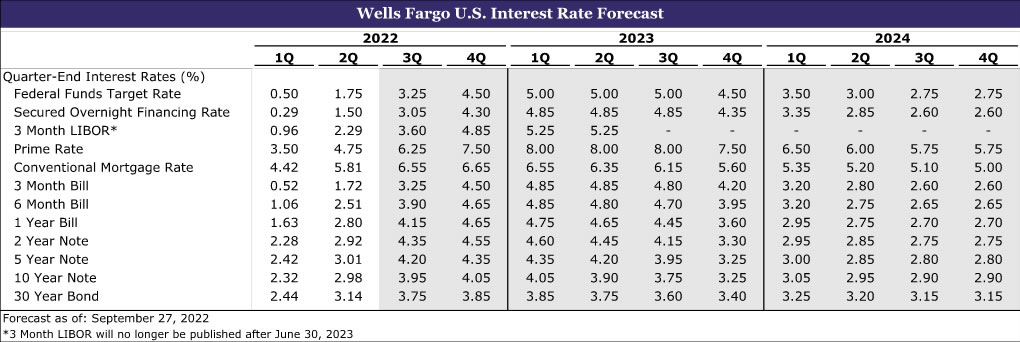
As we noted in our last monthly U.S. Economic Outlook, the FOMC has been quick to cut rates at the first signs of trouble during the past few cycles. However, we believe the Committee will be slower to ease policy during this cycle to ensure that inflation is indeed moving unmistakably back toward the Fed's target of 2%. But with the economy in recession, the unemployment rate rising and inflation receding considerably, we look for the FOMC to reverse course in the fourth quarter of next year. Specifically, we look for the Committee to cut rates by 50 bps in Q4-2023 with another 175 bps of easing by Q3-2024. Without rate cuts, the real fed funds rate would rise further, which would not be warranted in recession, as inflation continues to recede.
We plan to publish a full forecast revision, which will include some tweaks to our growth and inflation projections, on September 30. This forecast will be posted on our website.
Fed Evans agrees to get to the peak funds rate by March
Chicago Federal Reserve President Charles Evans told CNBC, "There are lags in monetary policy and we have moved expeditiously. We have done three 75 basis point increases in a row and there is a talk of more to get to that 4.25% to 4.5% by the end of the year, you're not leaving much time to sort of look at each monthly release. "
"I still believe that our consensus, the median forecasts, are to get to the peak funds rate by March — assuming there are no further adverse shocks. And if things get better, we could perhaps do less, but I think we are headed for that peak funds rate," Evans said.
"That offers a path for employment, you know, stabilizing at something that still is not a recession, but there could be shocks, there could be other difficulties," he added.