

Sample Category Title
The Crypto Market Has Laid Low
Market picture
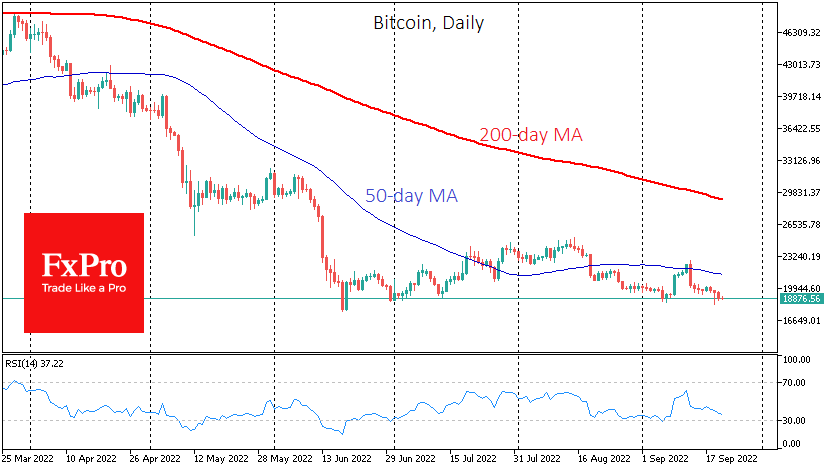
Bitcoin fell 2% to $19K in the past 24 hours as the US dollar rose and stock indices resumed their decline. Despite unfavourable market sentiment ahead of Wednesday’s Fed rate decision, BTC managed to hold off from updating the previous day’s low.
Ethereum lost 1.7% to $1335, with prices for the top altcoins ranging from -2.7% (Shiba Inu) to + 7% (XRP), while total capitalisation fell 1.2% to $927bn, according to CoinMarketCap estimates.
BTCUSD has been trading near the lower end of the trading range for the last three months. The market’s reaction to the Fed’s decision later today will determine whether we see a renewal of lows or a retreat from the bottom. The trend of the last month and a half makes a bearish scenario the main one, but still, surprises are not excluded.
News background
MicroStrategy bought an additional 301 BTC for $6 million at an average price of $19,851 in early August, according to a report filed with the SEC. MicroStrategy’s previous investment in the first cryptocurrency was in June when the firm acquired 480 BTC worth around $10m.
Famous cryptocurrency expert Willie Wu said that futures on the CME exchange are putting significant pressure on bitcoin, and this is, to a large extent, political pressure. The SEC approves cryptocurrency futures ETFs but prohibits the launch of spot funds. That said, hedge funds can short BTC with leverage.
Real Vision founder Raul Pal believes that Solana and Avalanche, cryptocurrencies with their original blockchains, will repeat the dynamics of Ethereum in the previous cycle in the next bullish cycle.
The US exchange Nasdaq is launching a cryptocurrency division that will offer customers digital asset custody services and tools to secure crypto companies.
EURGBP Rally Overbought But Still Supported
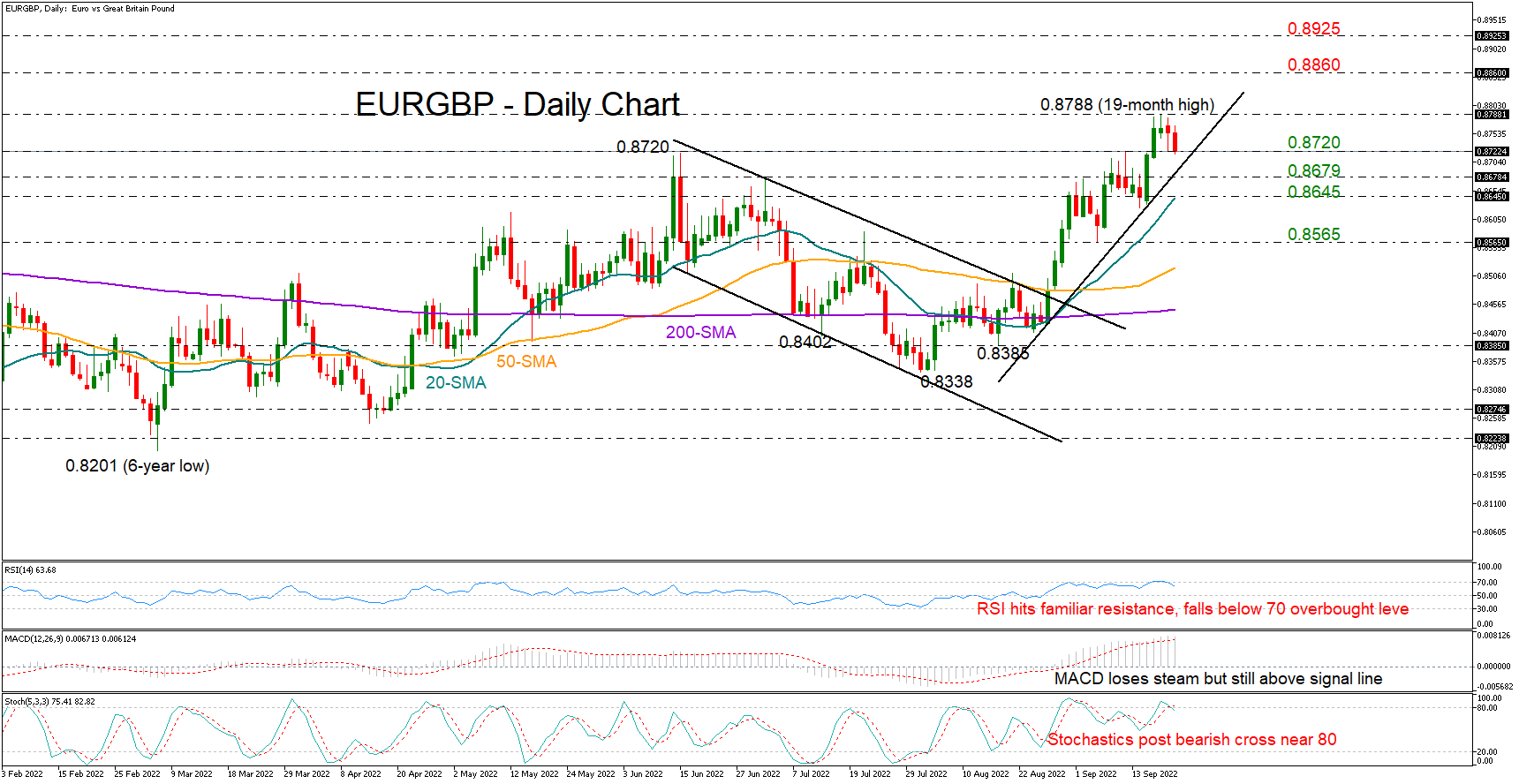
EURGBP started the week on the back foot after securing seven consecutive green weeks, with the price gradually retreating from Monday's 19-month high of 0.8788.
The 0.8720 level, which switched from resistance to support on Tuesday, is currently under examination on the downside, along with the steep tentative ascending trendline. Should the bears breach that base, selling pressures could intensify towards the 0.8679 bar. Slightly lower, the 20-day simple moving average (SMA) at 0.8645 may cancel any extensions towards the intra-swing low of 0.8565.
According to the momentum indicators, the market is looking overbought and further deterioration is possible as the RSI has slipped back below 70 after hitting a wall near May’s ceiling for the third consecutive time. Meanwhile, the stochastics have posted a bearish cross above their 80 level, while the MACD, although above its red signal line, is showing some signs of weakness as well.
Nevertheless, if buyers defend the pair above 0.8720, the price may attempt to surpass the 0.8788 top and run towards the key 0.8860 constraining zone, which has been a strong barrier to upside and downside moves during April 2020 – January 2021. A decisive close above it may prompt an exciting rally up to the 0.8925 number, last active in January 2021.
Summarizing, EURGBP seems to have reached overbought conditions, backing the current selling forces in the market. However, hopes for an upturn will remain in place as long as the 0.8720 floor stands firm.
USDJPY Struggles to Surpass 145.00; Consolidates in Short-Term
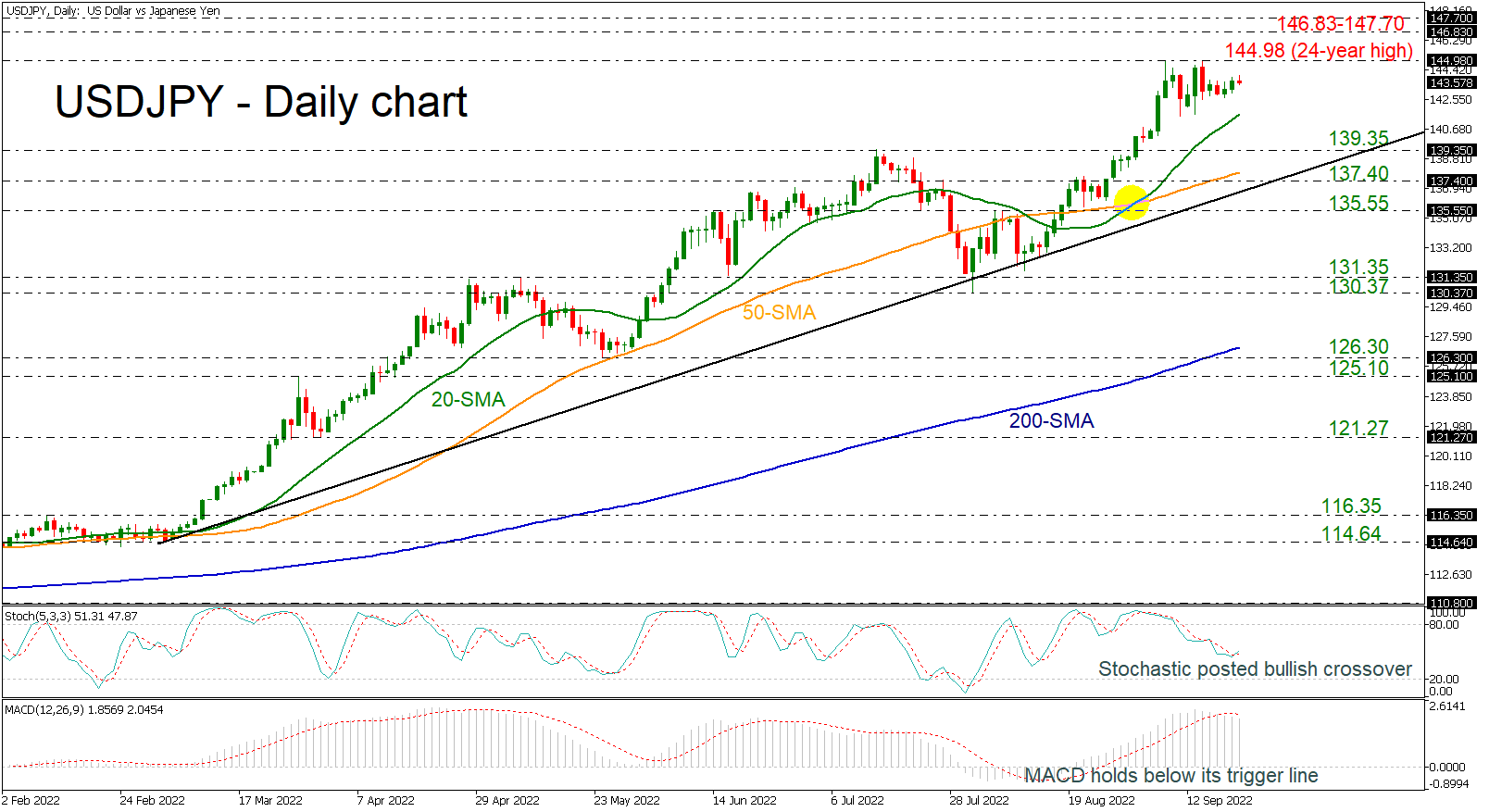
USDJPY is moving sideways below the 24-year high of 144.98 but remains well above the bullish crossover within the 20- and 50-day simple moving averages (SMAs) and the long-term uptrend line.
Technically, the stochastic oscillator is heading north after the positive cross of the %K and %D lines; however, the MACD oscillator is holding beneath its trigger line in the bullish region.
Immediate resistance to further gains would likely come from the multi-year high of 144.98 that is proved to be a potentially difficult hurdle for the pair to overcome. If there is a successful break above this area, further resistance could be met around the 146.83-147.70, which was a congested region during 1998.
If, however, the strong upside momentum was to lose steam and the pair reversed lower, support would initially come from the 20-day SMA at 141.50. Slipping below this level could take prices towards the 139.35 barrier ahead of the 50-day SMA at 137.90. Failure to hold above the 137.40 support and the uptrend line would switch the focus back to the downside and attention would increasingly turn to the 135.55 barrier.
In the short-term picture, the price is currently moving sideways and is likely to stay as long as prices remains close to the 24-year peak. Any advances above this hurdle would endorse the bullish outlook.
Gold Rebounds from 1,660 Again But Stays in Downtrend
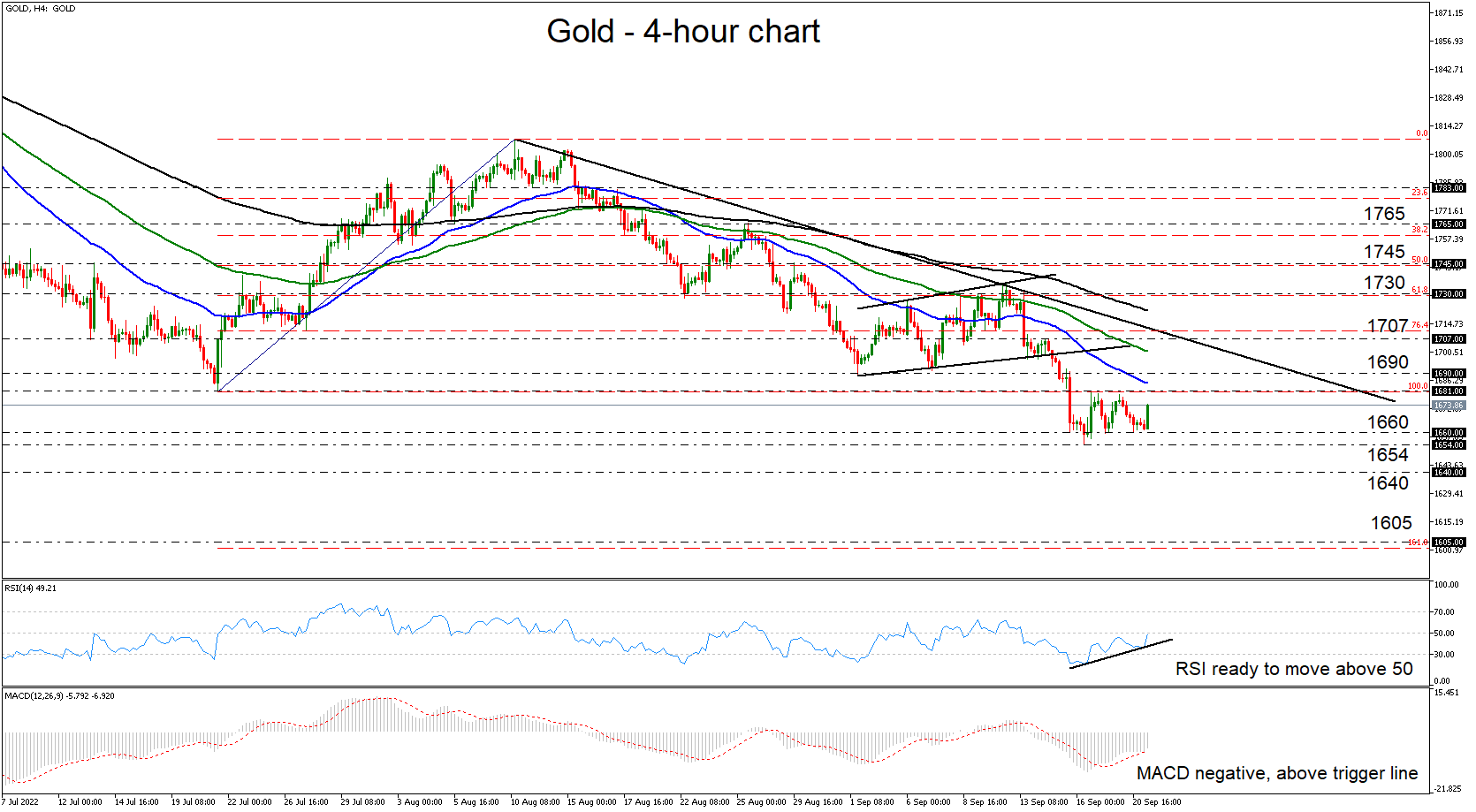
Gold spiked up today, after finding support once again near the 1,660 zone yesterday. Although some further recovery may be on the cards, the precious metal remains in a downtrend and this is supported by the fact that it is trading below a downside line drawn from the high of August 10, as well as below all three of the plotted moving averages.
The short-term oscillators detect diminishing downside speed and add to the idea of some further recovery before the next leg south. The RSI appears ready to poke its nose above its equilibrium 50 line, while the MACD, although negative, has crossed above its trigger line.
The bears may recharge from near the 1681 barrier or from slightly higher at 1,690, a resistance marked by the inside swing low of September 1. If so, a slide and a break below 1,660 may occur, which could result in another test at the 29-month low of 1,654 hit on Friday, or near the 1,640 hurdle. If the latter zone doesn’t hold, then a larger slide may be on the cards, perhaps towards the low of April 6, 2020, at 1,605, which coincides with the 161.8% Fibonacci extension level of the July 21 – August 10 recovery.
On the upside, the move signaling that the bulls have stolen all the bears’ weapons may be a break above 1,707, the September 14 high. This could validate the break above the downside line and may pave the way towards the 1,730 territory, the break of which could see scope for extensions towards the August 29 high at 1,745.
Wrapping up, gold rebounded again from the 1,660 key support but even if it continues a bit higher, as long as it is trading below a downtrend line and all the moving averages, the broader picture remains negative.
Daily Technical Analysis
EUR/USD
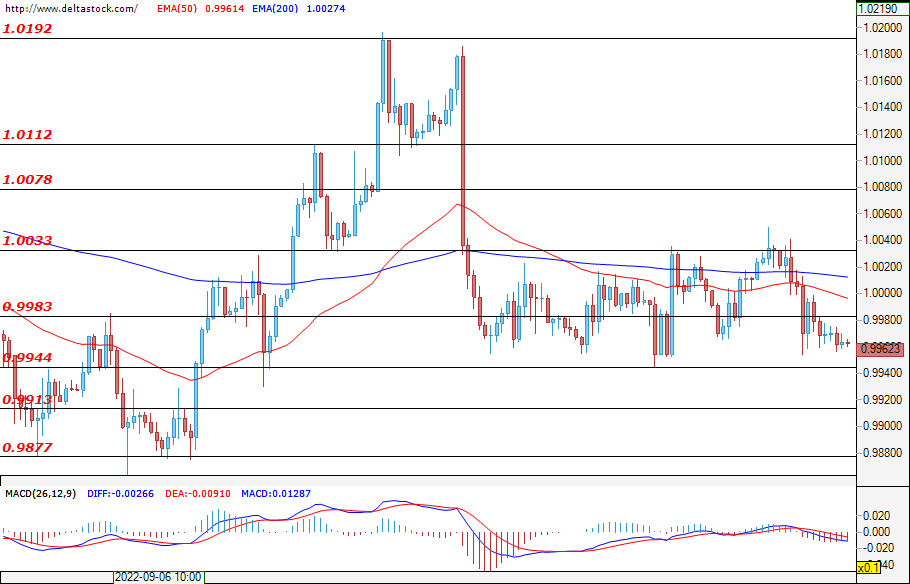
The support at 0.9988 was overcome in the past session. Afterwards, the movement of the currency pair remained in a narrow range, given the expected important economic data later today. The next support at 0.9944 was not tested and the price managed to hold above it. This does not mean that the downward movement is over, but it is very likely that traders will be cautious and not take any unnecessary risks until the Federal Reserve's decision on the main interest rate comes out at 18:00 GMT and the follow-up press conference at 18:30 GMT. Please note that our analysts will not be publishing technical analysis reports for the rest of the week due to some well-deserved time off.
USD/JPY
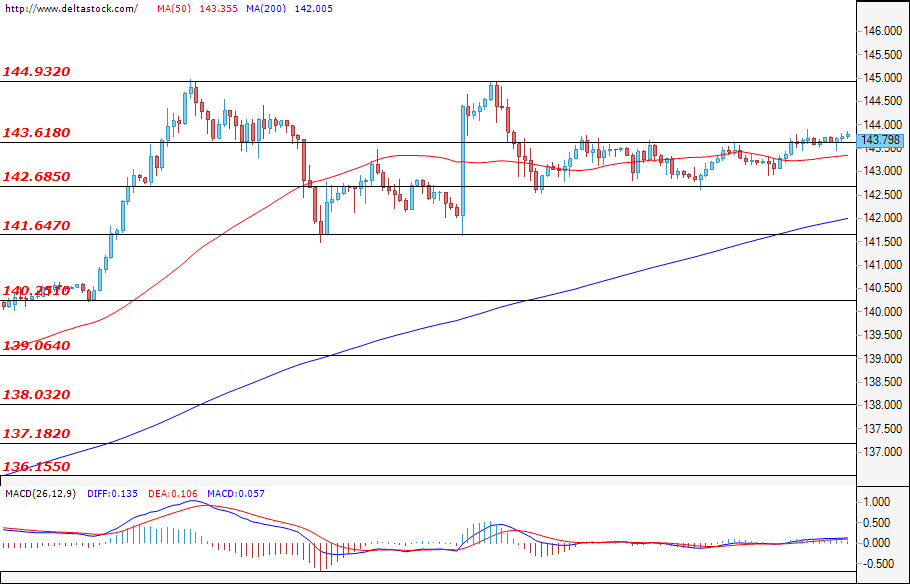
The consolidating move in the currency pair between the support at 142.68 and the resistance at 143.61, that we saw in the past trading session, continued at the start of today’s session as well. The bulls are in control of the market and so a successful breach of the 143.61 level would not be a surprise to anyone. Their next target is the resistance at 144.93. Conversely, if the level that has now become a support at 143.61 and the next target at 142.68 are both overcome, then this would open the way for the bears towards the zone at 141.64, where the bulls should intervene and stop them.
GBP/USD
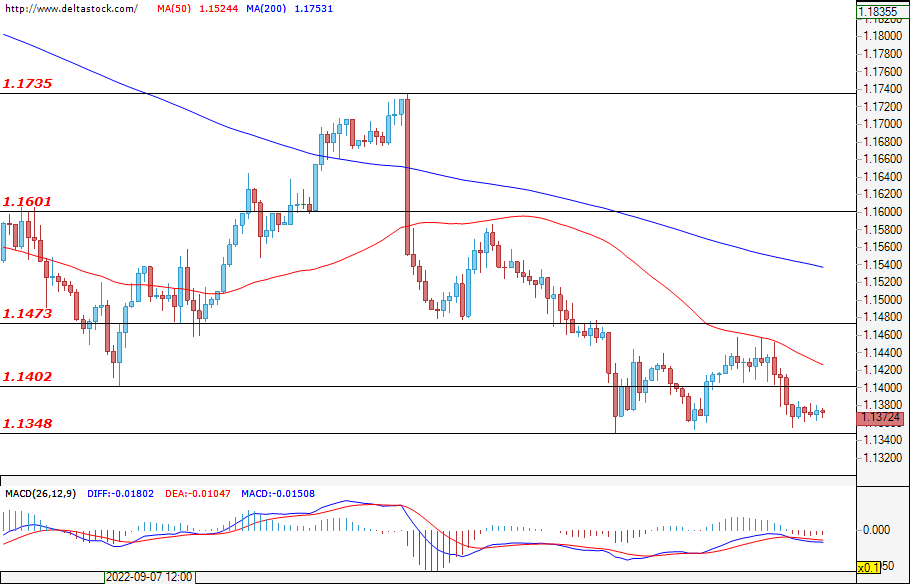
The support at 1.1348 is stopping the bears for now, but that doesn't mean they've given up hope just yet. The bulls need to break through at least three important resistances: 1.1402, 1.1474 and 1.1600, before it could be said that they have achieved any temporary success. We could also witness new record lows for the pound against the dollar.
EUGERMANY40
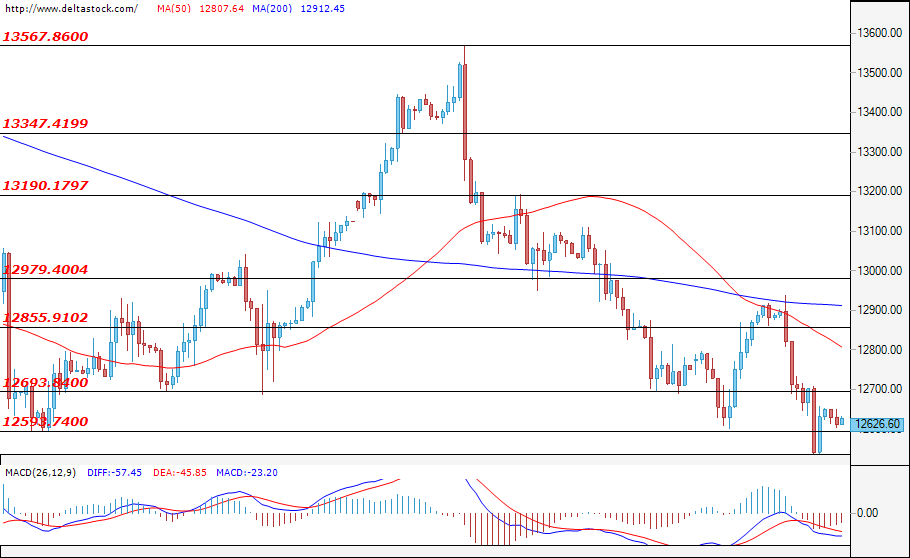
The German index's downward movement has been limited for now as the bears failed to reach the support at 12593. However, they are dominating the market at the moment. The bulls need to overcome at least three targets: the resistances at 12694, 12856, and at 12979, if their push is to be deemed successful. If this does not happen, then it is very likely that the bears will settle in the market for longer than expected.
US30
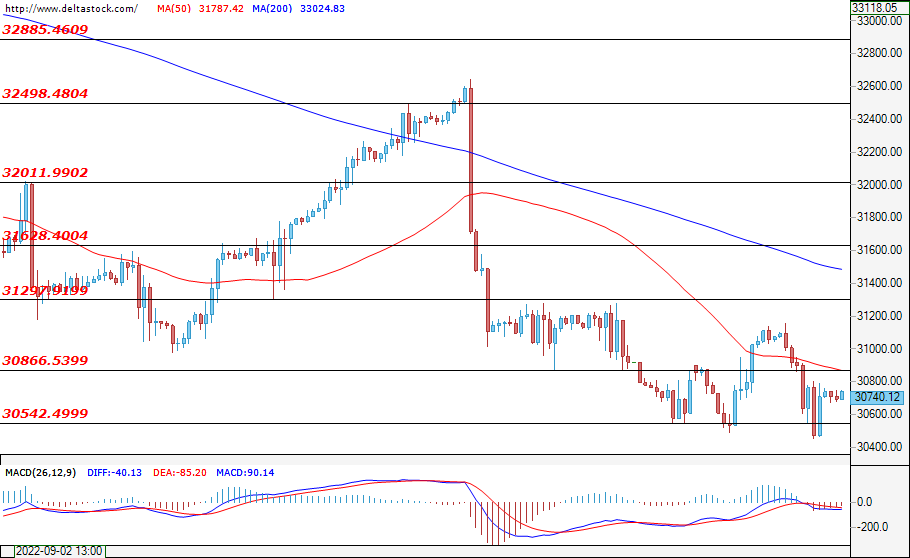
The past session was not successful for the U.S. blue-chip index. It managed to stop its fall only after the bears tested the important support at 30555. At the time of writing, the price is parked at 30725, but if it moves towards the resistance level at 31291 and overcomes it, then it would be possible for the bulls to return to the market.
UK 100 Struggles for Bids
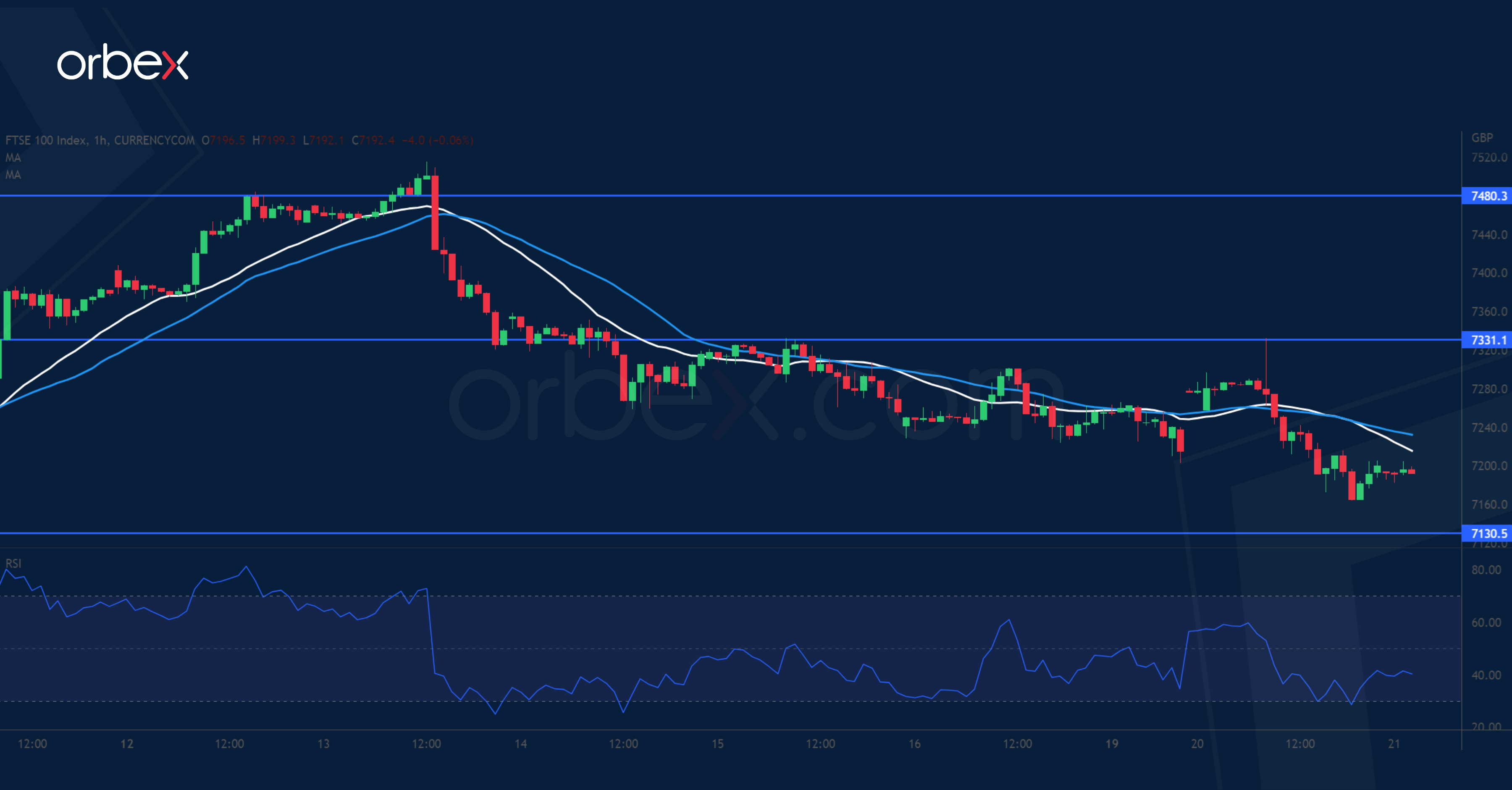
The FTSE 100 slips as expectations of a hawkish BoE weighs on the growth prospect. Buyers’ struggle to hold onto their recent gains above 7230 weighs on sentiment. The latest optimism has waned after a bounce failed to secure 7330, leaving the index vulnerable to another round of sell-off if the bulls start to pull out. 7130 is an important support and its breach could attract momentum sellers and extend losses to July’s lows around 7020. There the FTSE would face the risk of a bearish reversal in the medium-term.
USD/CAD Tests Key Resistance
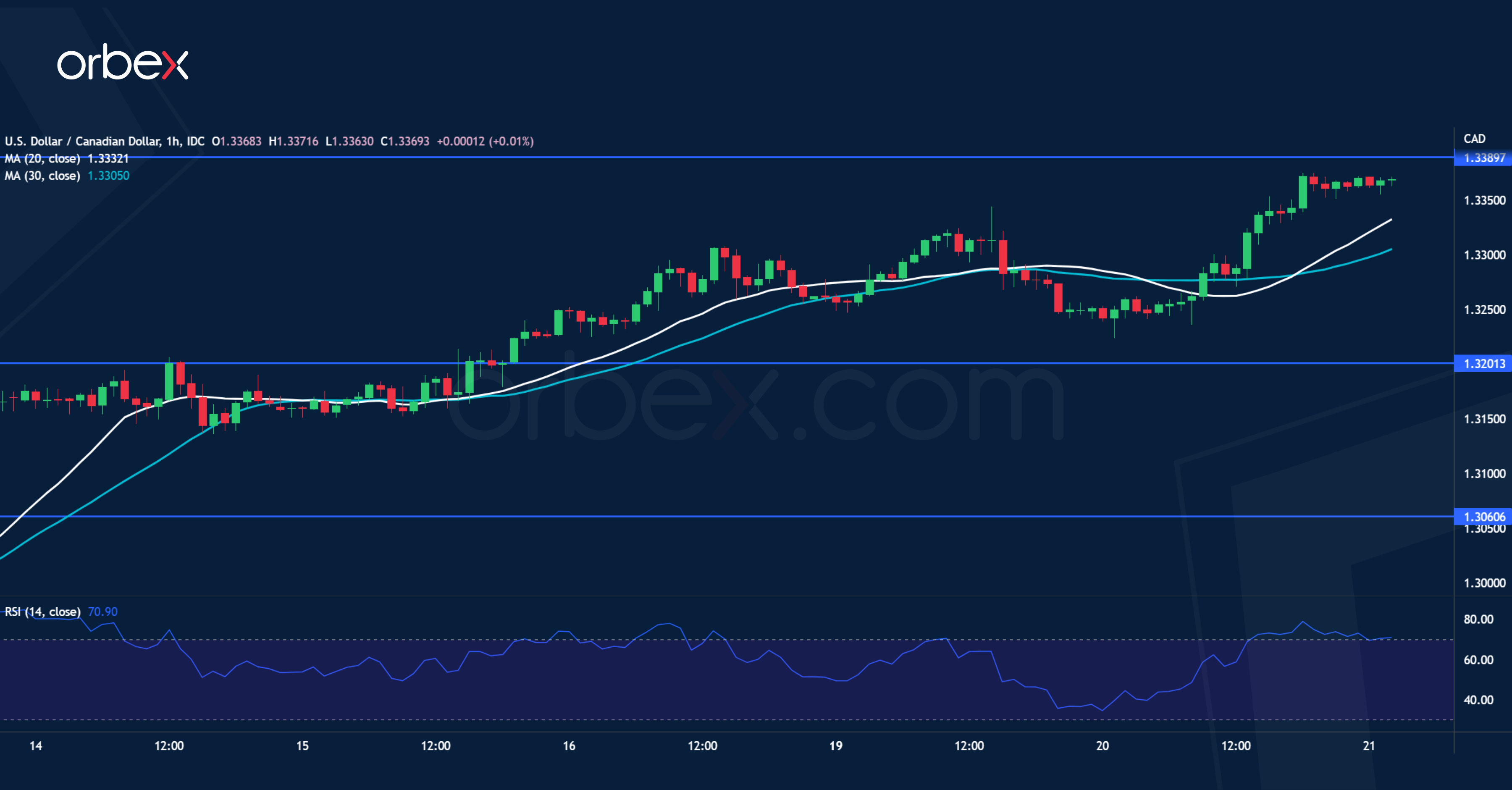
The Canadian dollar retreated as August’s inflation data fell short of expectations. The rally has gained traction after the pair cleared the double top at 1.3200. Diverging moving averages on the daily chart indicates an acceleration to the upside. As the pair hovers under November 2020’s high at 1.3390, the RSI’s overbought condition may trigger some profit taking, driving the greenback lower momentarily. Buying interest could be expected around 1.3200 from the base of the bullish breakout.
EUR/USD Awaits Breakout
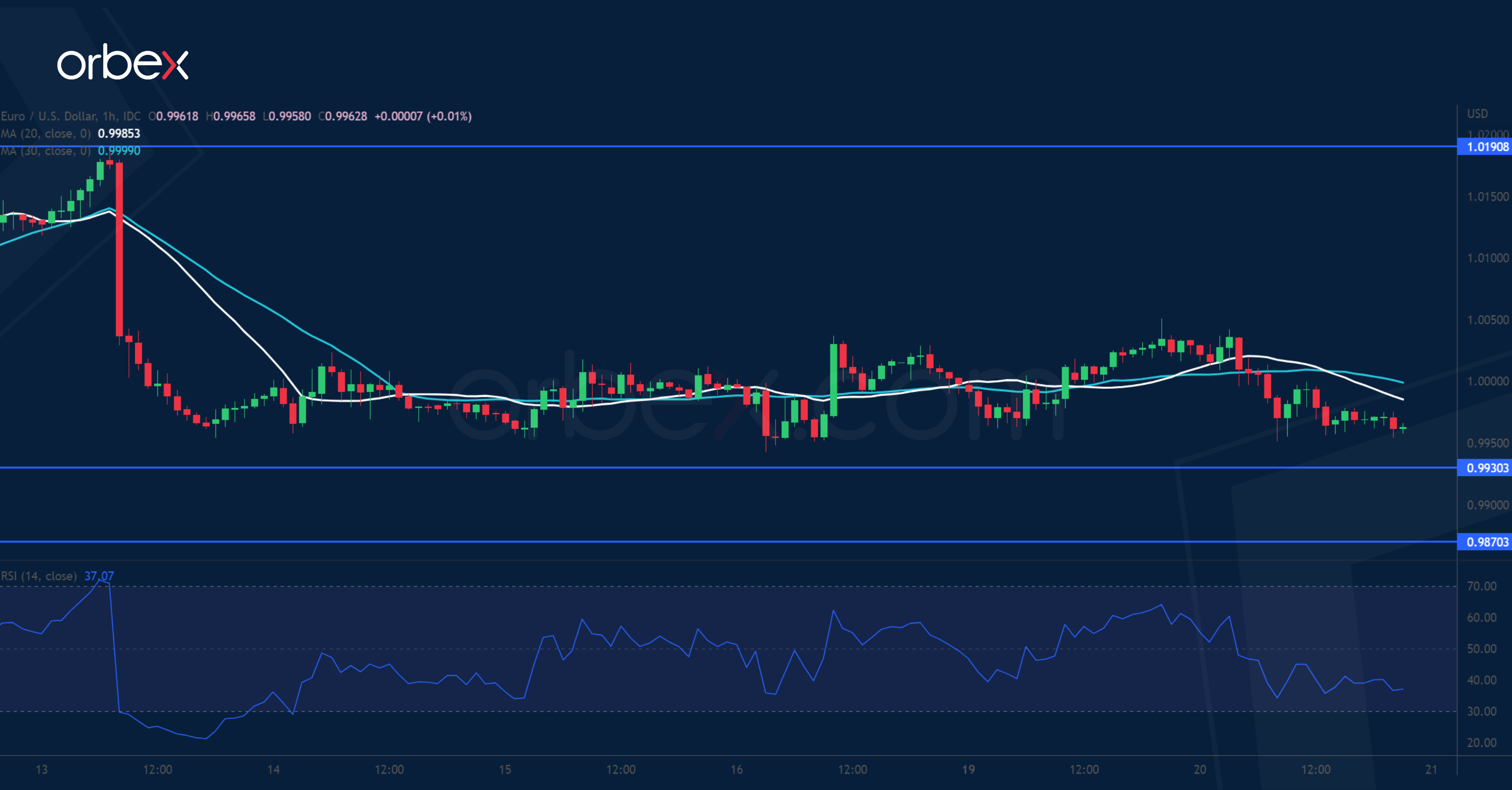
The US dollar consolidates ahead of the FOMC. A tentative break above 1.0190 prompted sellers to cover their bets, easing the downward pressure. The bulls will need to lift offers in this key supply zone before they could hope for a sustained recovery. In the meantime, the price action is consolidating above 0.9930. The narrowing range shows indecision before a catalyst leads to a breakout which would decide whether the euro stays north or south of parity. A fall below 0.9930 may resume the downtrend below 0.9870.
Markets Brace for Fed’s Next Moves
All eyes are on the Fed’s incoming policy signals due later today, with US interest rates set to be raised to their highest levels since 2008.
With a 75bp hike already fully priced in, a dovish, smaller 50bp hike is likely to translate into strong dollar selling while offering some immediate relief for risk assets.
On the flip side, a gargantuan 100bp hike may inject fresh vigour into dollar bulls, while also dragging equities and gold prices even lower.
Market participants will also be looking beyond the size of today’s hike, ready to parse through the latest rates projections.
The Fed’s previous dot plot in June had earmarked a peak of 3.75% for the ongoing rate-hike cycle. Since then, after further evidence of stubbornly high inflation and sustained resilience in the US labour market, money markets are now expecting rates to peak around 4.5% in March.
Should the Fed steer markets into expecting larger salvos of incoming hikes, with rates perhaps moving beyond the 4.5% forecasted peak and staying elevated for longer, then we are likely to see another risk-off wave across global financial markets.
Fed to Hike by 75bp
Market movers today
The big focus of the day is the FOMC meeting tonight, where we expect a 75bp hike. Financial markets agree with this view with about 78bp priced in as of yesterday. For more details see our Fed preview Research US - Fed preview: Fast pace hiking cycle continues, 16 September.
The strategic oil reserve release in the US may also attract some attention as the Biden administration has been selling a lot of oil reserves to keep the oil price in check.
Overnight, Bank of Japan announces its policy decisions. We expect the central bank to stick to its yield curve control, highlighting that underlying inflation pressures are still relatively muted, despite the latest uptick in inflation.
The 60 second overview
Riksbank: The Riksbank increased the repo rate by 100bp to 1.75% while QE reinvestment levels were announced to be unchanged for the remainder of the year, in contrast to our expectation of a 75bp hike and a stop of QE reinvestments. The new rate path signals a slowdown in hiking pace for the November meeting (c. 45bp) and the rate path peaks around 2.5% in Q2 2023. Market is unlikely to buy into that story (FRA curve peaks around 3.6%) and we for now stick to our forecast of 75bp in November. As we said earlier, a February 2023 hike cannot be ruled out but it is not our base case for the moment.
Fed: While longer UST yields continued to move higher yesterday, the market seems well priced for a 75bp hike by the Fed this evening. Despite the high August CPI print, real yields have already risen clearly over the past weeks following Powell's hawkish Jackson Hole speech, and last Friday the easing in University of Michigan's consumers' longer-term inflation expectations further decreased the likelihood of a 100bp move. Despite this, we think Fed cannot yet afford to signal a 'pivot', as the economy is still performing relatively strongly, and the tight labour markets continue to support broad-based price pressures. Instead of a larger 100bp hike, we see risks tilted towards Fed continuing the streak of 75bp hikes also in the coming meetings.
War in Ukraine: The Russian-installed administrations in four Eastern Ukrainian areas announced plans to hold referendums on joining Russia over the next week. The announcements come after several weeks of Ukraine making progress towards recapturing areas in the east. Ukrainian foreign minister Kuleba commented that the plans have little effect on Ukraine's efforts, saying that "Ukraine has every right to liberate its territories and will keep liberating them whatever Russia has to say". Yesterday, the Russian Duma also passed laws increasing penalties for desertion in case of a general mobilisation, and the referendums could be used to justify an all-out war towards Ukraine, compared to what Russia continues to call a 'special military operation'. Russia would likely face several practical challenges with a mass mobilisation, given that implementing martial law would likely be a highly unpopular move among the general public. In any case, it is clear that it would mark a significant escalation in the war in Ukraine. Read our latest take from Research Russia-Ukraine: The underdog has the upper hand now - what's next? 12 September.
FI: The main event today is the Federal Reserve meeting tonight and whether they will tighten by 100bp rather than 75bp. Currently, the consensus forecast is 75bp, but the risk is clearly a 100bp rate hike given the solid US inflation data and despite the risk of recession. However, the continued front-loading of tighter monetary policy is increasingly becoming the consensus among central banks as shown by the 100bp rate hike by the Riksbank yesterday. Hence, we continue to favour 2-5Y flatterners especially for the Euro swap curve as it is still lagging both US and Sweden, where the 2-5Y curves are significantly more "inverse" as the central banks keep frontloading rate hikes.
FX: Another red day in equity space amid higher yields where US10Y breached 3.50% by a margin pulled EUR/USD below parity, pushed USD/JPY from low to high 143 while NOK and SEK were under pressure through the European session and most of the US session. EUR/SEK dropped instantaneously after the Riksbank but soon reversed while, for instance, further tightening is perceived to have adverse effects on real assets and the economy.
Credit: Credit markets were increasingly negative yesterday with new iTraxx series active, Main going 8.1bp wider to 120.4bp. In addition, Xover was 44bp wider ending the session at 596.8bp.