Sample Category Title
Japanese Yen’s Drop Sparks MOF Warning
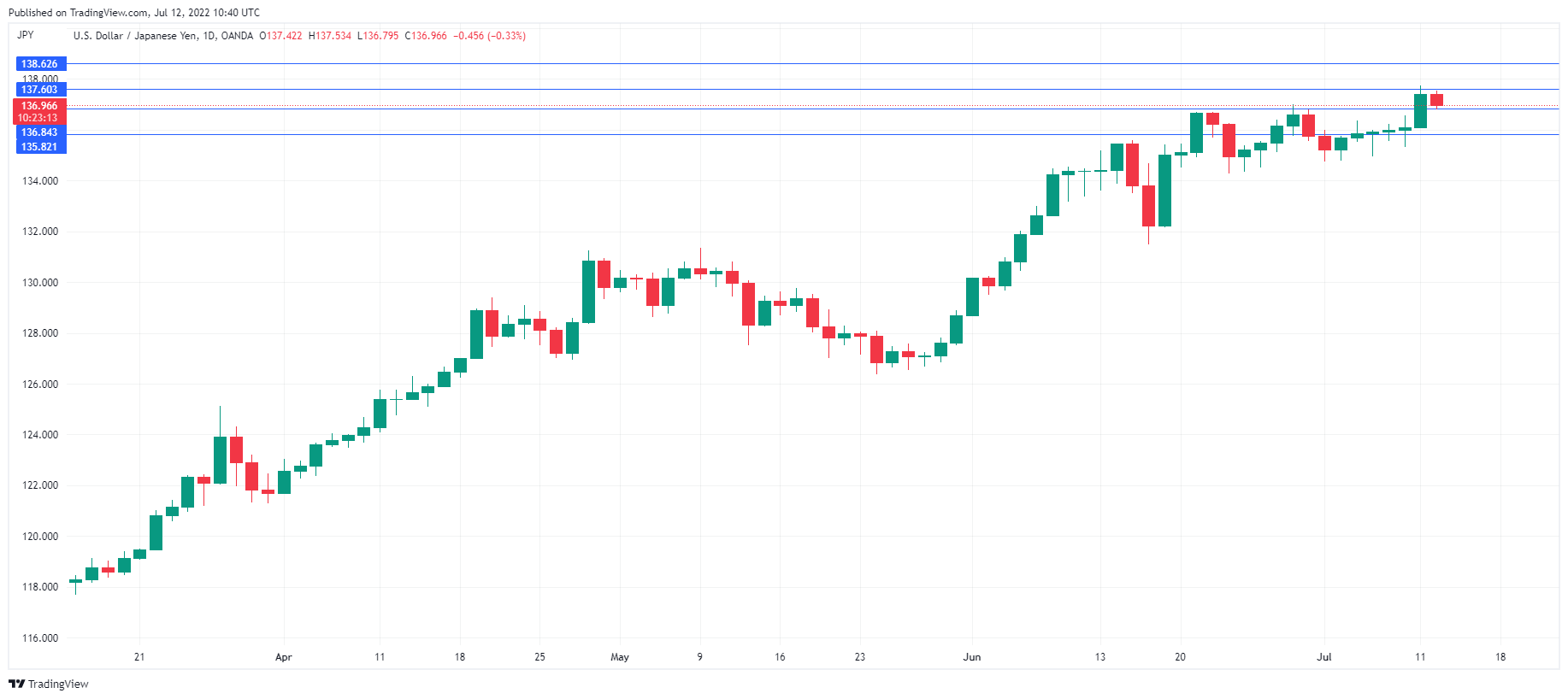
The Japanese yen has stabilized on Tuesday, after taking a nasty tumble at the start of the week. In the European session, USD/JPY is trading at 136.91, down 0.35%.
USD/JPY punches above 137
The US dollar went on a tear on Monday, as an excellent non-farm payroll report paved the way for the Fed to proceed with another supersize 75bp increase at the July meeting. CME’s FedWatch has pegged a 75bp move at 90%, with a 10% likelihood of a full 100bp increase. The Fed is in an ultra-aggressive mode in its battle against inflation and clearly willing to deliver 75bp salvos. It wasn’t long ago that a 50bp hike was considered a massive move; now such an increase would barely raise an eyebrow.
The US releases inflation on Wednesday, which could have a sharp impact on the dollar. Headline CPI is expected to rise from 8.6% to 8.8%, and if inflation does move higher, it would likely cement a 75bp move from the Fed and send the dollar higher. Conversely, a surprise drop in inflation would raise hopes that inflation has peaked and the Fed might resort to a 50bp increase, sending the dollar lower.
The Japanese yen continues its march towards the symbolic 140.00 line, and fell to 137.75 on Monday after USD/JPY soared by 1.01%. This triggered a response from Japan’s Finance Minister Suzuki, who expressed his concern about the exchange rate at a meeting with US Treasury Secretary Yellen. For her part, Yellen stated that she did not discuss currency intervention with Suzuki, and it appears that Suzuki is engaged in the usual jawboning whenever the yen takes a fall. BoJ Governor Kuroda’s stance doesn’t seem to be helping the yen at all, as he stated on Monday that the central bank would take additional monetary easing steps as necessary in order to boost the fragile economy.
USD/JPY Technical
- USD/JPY is putting pressure on support at 1.3684, followed by 135.82
- There is resistance at 137.60 and 138.62
EUR/USD: Euro Touches Parity for the First Time in Two Decades But So Far Without Break Lower
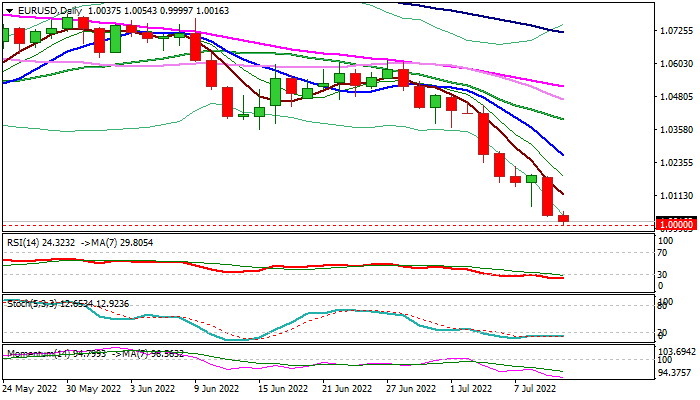
The Euro is wobbling at parity level, but so far without clear break lower.
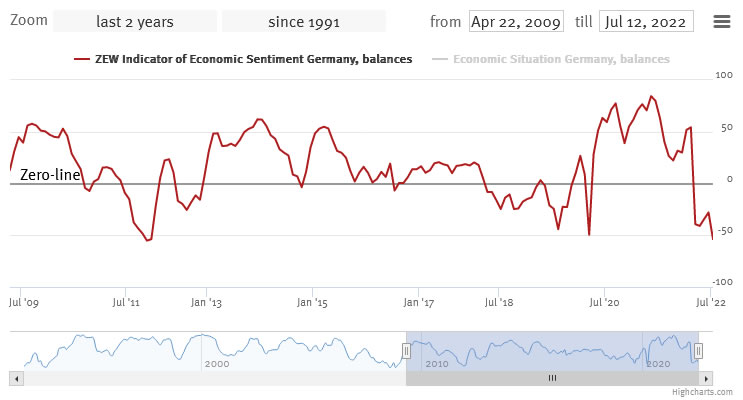
The sentiment remains very negative and was additionally hit by terrible German ZEW data which showed investor morale collapsed in July.
Traders also focus on Wednesday’s release of US June CPI data, with forecast for further rise of inflation to add to Fed’s firmly hawkish stance and further additionally boost the greenback.
Dollar’s rise seems to be unstoppable that heavily weighs on the single currency, which is hesitating at critical psychological support (the Euro was last time below parity in Dec 2002).
Oversold studies contribute to the headwinds that bears face at this zone, though mild reaction can be expected, as downside pressure is massive, with deteriorating economic conditions in the bloc to keep the downside at strong risk.
Potential upticks are likely to remain under falling 10DMA (1.0261) to keep bears fully in play for final break through parity level and offer better selling opportunities.
Eventual break of parity level would open way for deeper drop and expose next target at 0.9607 (Sep 2002 low).
Res: 1.0054; 1.0116; 1.0183; 1.0221.
Sup: 1.0000; 0.9944; 0.9859; 0.9607.
GBP/USD: Pound Extends Weakness, Pandemic Low Comes in Focus
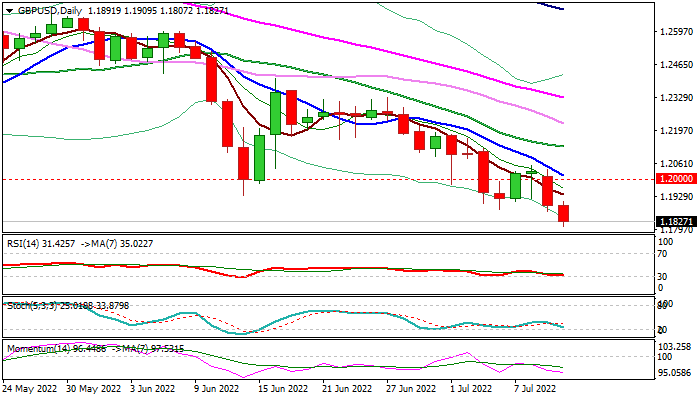
Cable hit new lowest since March 2020, in extension of Monday’s 1% drop, with close well below 1.20 handle and former lows at 1.1958/30 (Sep 2019 / Oct 2016 lows respectively) and fresh extension lower on Tuesday, signaling that bears regained control.
Pound is pressured by rising dollar and risk aversion, which add to negative internal factors – political turmoil and slowing economic growth in Britain that raises threats of recession.
Daily techs show rising negative momentum and moving averages in full bearish setup that supports the action for final push towards Mar 2020 low (1.1409).
Price adjustments are expected to remain below strong barriers at 1.2000/13 (psychological / falling 10DMA) and offer better levels to re-enter bearish market.
Res: 1.1909; 1.1939; 1.2013; 1.2055
Sup: 1.1807; 1.1727; 1.1669; 1.1611
Germany ZEW economic sentiment dropped to -53.8, even worse than pandemic low
Germany ZEW Economic Sentiment dropped from -28 to -53.8 in July, well below expectation of -38.0. Current Situation Index dropped from -27.6 to -45.8, below expectation of -33.5. Both readings were even worse than the values recorded at the beginning of the COVID-19 pandemic.
Eurozone ZEW Economic Sentiment dropped form -28.0 to -51.1, below expectation of -40.0. Current Situation Index dropped -18.0 to -44.4. Inflation expectations rose 6.8 pts to -25.6, remaining clearly in negative territory.
ZEW President Professor Achim Wambach: "The current major concerns about the energy supply in Germany, the ECB's announced interest rate hike and further pandemic-related restrictions in China have led to a considerable deterioration in the economic outlook.
"The experts assess the current economic situation significantly more negatively than in the previous month and have further lowered their already unfavourable forecast for the next six months.
"Expectations for energy-intensive and export-oriented sectors of the economy have fallen particularly sharply, and private consumption is also assessed as significantly weaker."
BoE Cunliffe on four lessons learned from crypto winter
BoE Deputy Governor Jon Cunliffe talked about the lessons learned from recent "instability and losses in crypto markets", also called the "crypto winter".
He said, "a widespread collapse of crypto-asset valuations has cascaded through the crypto ecosystem and generated a number of high-profile firm failures," which also resulted in Bitcoin losing 70% of its value.
The four lessons learned include:
- Technology does not change the underlying risks in economics and finance;
- Regulators should continue and accelerate their work to put in place effective regulation of the use of crypto technologies in finance;
- This regulation should be constructed on the iron principle of 'same risk, same regulatory outcome' ;
- Crypto – technologies offer the prospect of substantive innovation and improvement in finance. But to be successful and sustainable innovation has to happen within a framework in which risks are managed: people don't fly for long in unsafe aeroplanes.
Cryptocurrency Rebound Deflated; Enthusiasts Asking for Regulation?
Bitcoin was down 2.5% on Monday and, continuing its decline on Tuesday morning, was back at $20,000. Ethereum has lost 5.2% in the past 24 hours to $1090. Altcoins in the top 10 fell from 1.1% (XRP) to 5.2% (Solana).
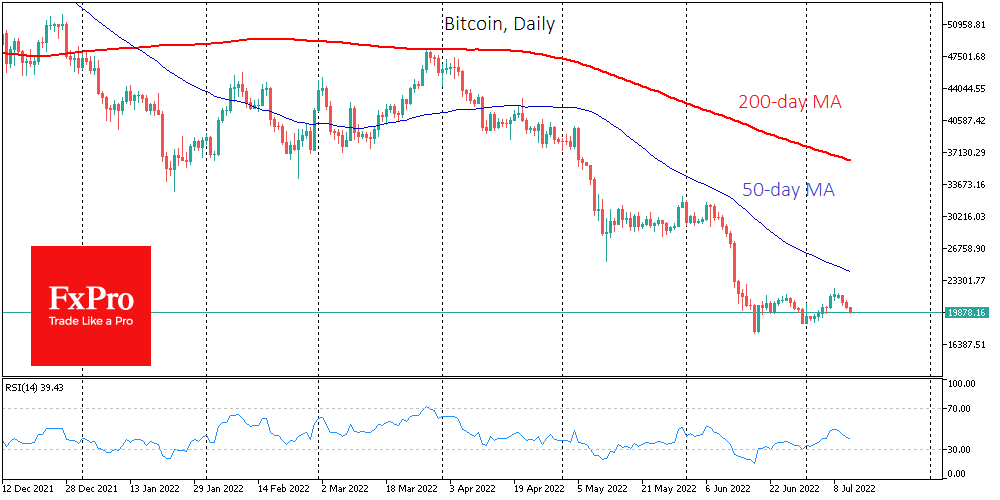
Total cryptocurrency market capitalisation, according to CoinMarketCap, sank 2.6% overnight to $891bn. The Cryptocurrency Fear and Greed Index lost 6 points, dropping to 16, and has been cruising through “extreme fear” territory for over two months.
The rising dollar and a new wave of pressure on stock indices did not escape Bitcoin on Monday amid a renewed fall in stock indices. Market dynamics indicate that sellers have been taking a pause to sell some assets at a higher price but remain the dominant force in the markets.
Investors are demonstrating a similar sentiment. More than 60% of major US crypto investors surveyed by Bloomberg MLIV Pulse expect bitcoin to fall to $10,000. If the collapse of the industry’s major projects results in significant losses for investors and causes a domino effect, the industry could face increased regulation.
Fed Vice Chair Lael Brainard said that the situation with the wave of defaults of cryptocurrency companies requires more oversight of the crypto industry. Bank of England spokesman Jon Cunliffe said the crypto industry regulation should be like traditional finance.
A remarkable transformation as cryptocurrencies emerged and were seen by enthusiasts as self-regulating instruments, rejecting, and resisting any interference and centralisation. However, if investors lose a lot of money or suspect the creators of fraud, they will likely seek protection and regulation themselves.
According to investment strategist Lyn Alden, the worst part of the crypto market’s bearish trend ended in the first half of 2022, when bitcoin lost more than 56% of its value. The massive sell-off in BTC has stopped, but further declines cannot yet be ruled out.
MicroStrategy CEO Michael Saylor said Ethereum, and other altcoins are securities because of the cryptocurrency issuer. And only bitcoin is a commodity because its blockchain cannot be changed, like the physical composition of gold.
GBPUSD Drives Down a Slippery Road; 1.1700 Next in Focus
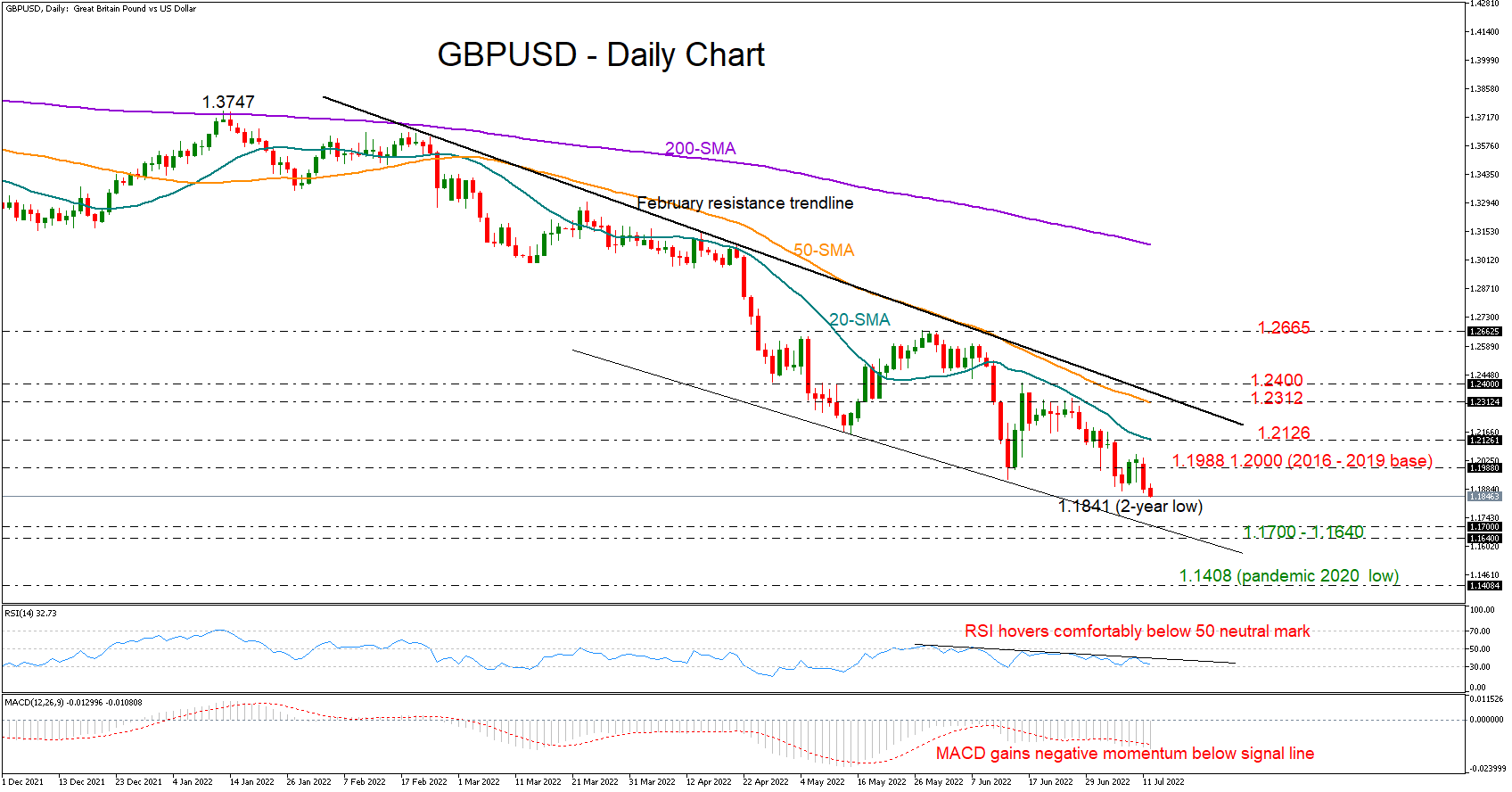
GBPUSD could not close successfully above the 1.1988 – 1.2000 bar (2016 – 2019 base) last week, with the price erasing its latest bullish attempt to chart a new two-year low at 1.1844 early on Tuesday.
The market is lacking conviction for a meaningful bounce back as the RSI keeps hovering comfortably below its 50 neutral mark, while the MACD is displaying stronger bearish dynamics, extending its negative trajectory below its red signal line.
Hence, the base scenario is for the one-year-old downtrend to see further continuation, likely testing the tentative support line somewhere between 1.1700 and 1.1640, with the latter representing the 161.8% Fibonacci extension of the latest upside correction. If the bears snap that floor, the next destination will be the pandemic 2020 bottom of 1.1408.
In the event of an upside reversal, the pair may re-challenge the 1.1988 – 1.2000 ceiling before meeting the 20-day simple moving average (SMA) at 1.2132. Another advance from here could last until the 1.2300 zone, where the 50-day SMA and the resistance trendline from February reside. Should the bulls reclaim the previous high of 1.2400 as well, the recovery may pick up steam towards May’s high of 1.2665.
Summarizing, downside forces are expected to dominate in the coming sessions, with traders likely looking for support within the 1.1700 – 1.1640 region.
Daily Technical Analysis
EUR/USD
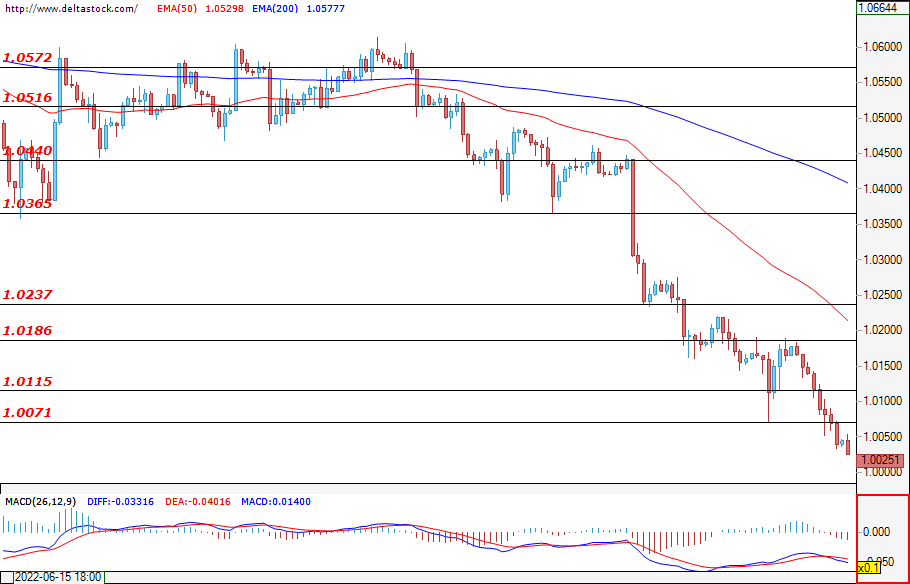
The euro lost ground against the dollar, and after the successful breach of the support at 1.0071, the currency pair slipped into a new 19-year low. If trading remains limited under the mentioned zone, then a continued depreciation could easily lead to a test of the psychological support at 1.0000 and could strengthen the negative expectations for the future path of the EUR/USD. The first target for the bulls is the zone at 1.0071, which is now acting as resistance, followed by the upper level at 1.0115.
USD/JPY
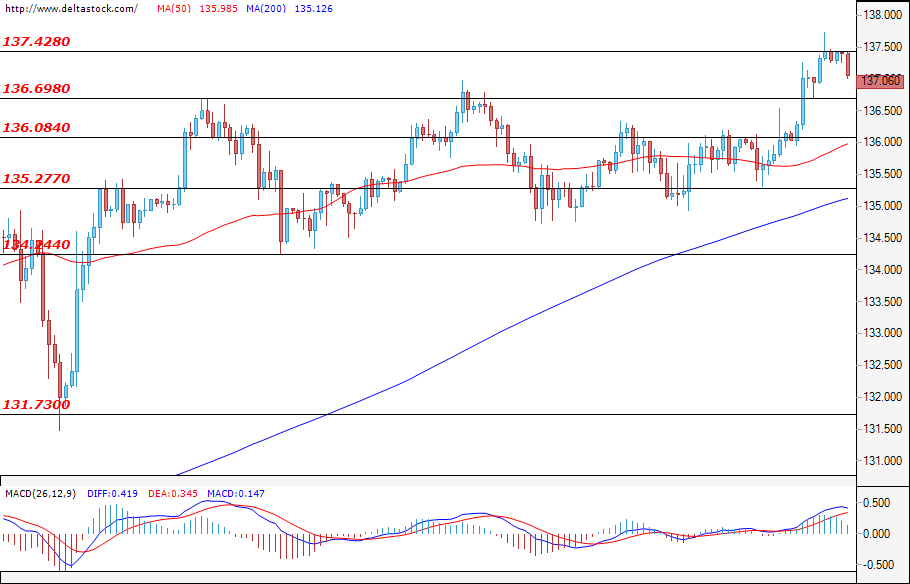
The bulls did not gain enough momentum for a successful breach of the resistance at 137.42, and during the early hours of today`s trading, the price consolidated around the current level of 137.06. If the bears prevail, then the violation of the support at 136.69, followed by a breach of the lower target at 136.08, could easily deepen the correction towards the important zone at 135.27. If the bulls re-enter, however, then a new successful test of the resistance at 137.42 could lead to a new rally for the dollar against the yen and head the price towards the upper level at 138.00.
GBP/USD
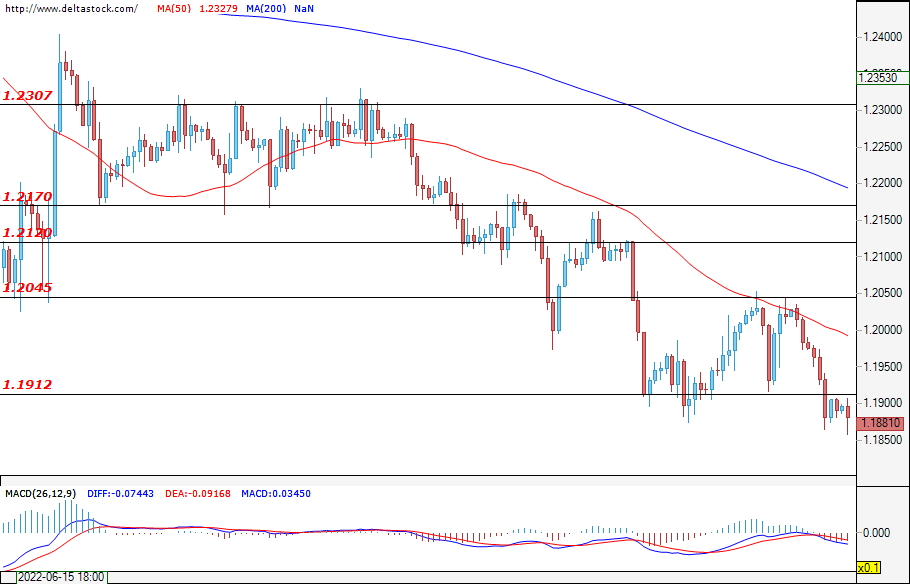
Тhe appreciation of the dollar against the world currencies helped the bears prevail. The Cable tested the support at 1.1912, and at the time of writing the analysis, the pair is holding positions just under the mentioned zone. A confirmation of the breach here could lead to new losses and could easily head the price towards the lows at around 1.1877. If the bulls re-enter the market instead, then a violation of the resistance at 1.2045, followed by a successful attack on the upper zone at 1.2120, could result in a rally and a test of the important target at 1.2170.
EUGERMANY40
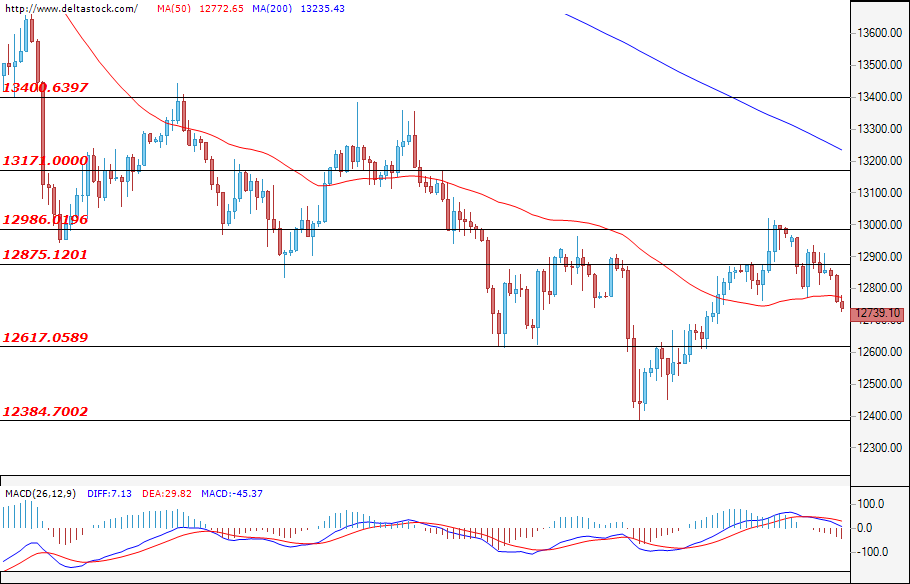
After the unsuccessful attempt to breach the resistance zone at 13000, the German index erased some of its recent gains and successfully violated the support zone at 12875. If the bearish attack continues, then a breach of the lower target at 12617 could easily lead to new losses and could pave the way for a test of the zone at 12384. Better-than-expected German data for the ZEW Economic Sentiment (today; 08:00 GMT) could encourage the bulls to re-enter the market. If they succeed to retake the zone at 12875, which is currently acting as resistance, and later violate the upper level at 13000, then all of this could lead to a recovery of the EUGERMANY40 towards 13171.
US30
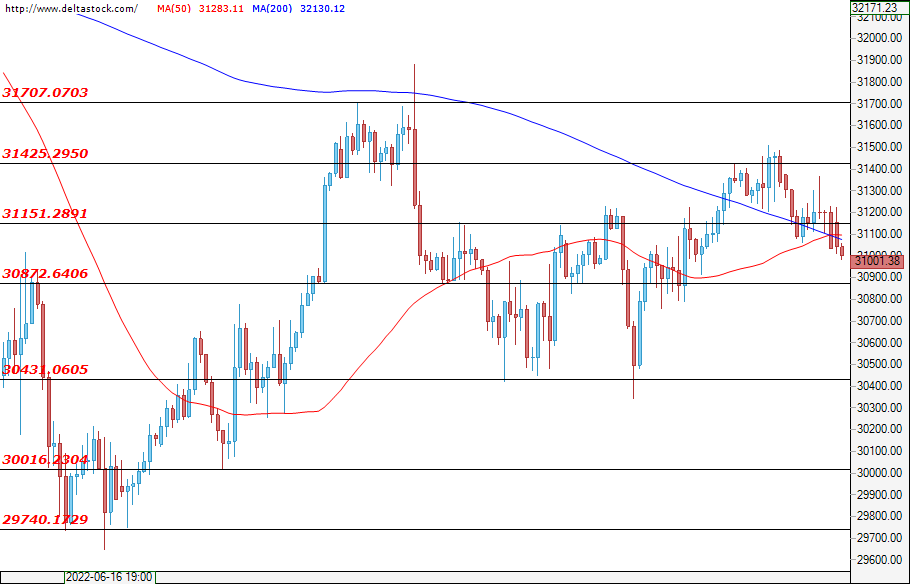
After the breach of the support zone at 31151, the American index continued its decline, and during the early hours of today, the price is headed for a test of the lower target at 30872. Success for the bears here could enhance the sell-off and could easily nudge the US30 towards the important zone at 30431. If the bulls take control instead, then their first resistance can be found at 31151. A violation of the upper level at 31425 could lead to a rally towards the high at 31707.
Nasdaq 100 Forms a Cup and Handle ahead of Earning Season
The British pound remained on edge as investors waited for clarity on who will become the next prime minister after Boris Johnson’s resignation. It has already become a crowded race, with many influential leaders declaring interest. Rishi Sunak, the former treasury chief, has taken an early lead. Other notable leaders are Liz Truss, the former Foreign Secretary, and Nadhim Zahawi, the current Chancellor of the Exchequer. Conservative members will vote on their preferred candidates on Tuesday. After that, the two will tour the country seeking to win a majority of the 150k members of the Conservative Party.
The euro continued dropping against the US dollar as a carry trade between the two currencies emerged. The Federal Reserve has already hiked interest rates by 150 basis points this year. With the labor market strong and inflation rising, analyst believe that the bank will continue hiking interest rates. On the other hand, the ECB has maintained negative interest rates and hinted that it will hike by just 0.25% this month. This means that there is more demand for the US dollar than the euro. The euro will react to the latest euro area economic forecast by the European Commission. In Germany, ZEW will publish the latest economic sentiment data.
US stocks retreated slightly as investors waited for the latest American consumer inflation data scheduled for Wednesday. Analysts expect the data to reveal that the country’s headline CPI rose by 8.8% while core inflation retreated slightly. These numbers will come a few days after the US published strong jobs numbers. As a result, investors have priced in more tightening by the Fed. Most importantly, equities declined ahead of the upcoming quarterly results by top American firms. Some of the companies to watch will be Morgan Stanley, JP Morgan, Blackrock, and UnitedHealth.
GBPUSD
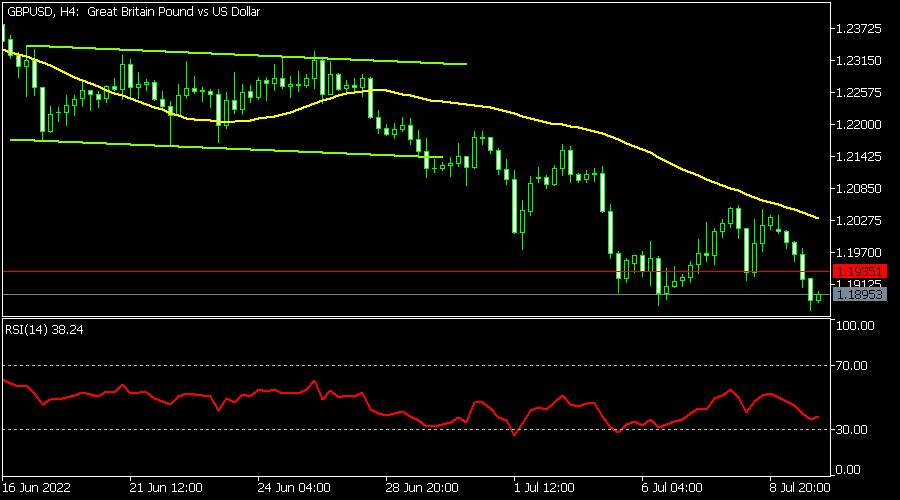
The GBPUSD pair dropped to a low of 1.1890 as the sterling sell-off continued. On the four-hour chart, the pair is below the 25-day moving average. It has also moved below the important resistance point at 1.1935, which was the lowest point on June 14. The Relative Strength Index (RSI) has moved below the neutral point. Therefore, the pair will likely have a relief rally since it has formed a double-bottom pattern.
EURUSD
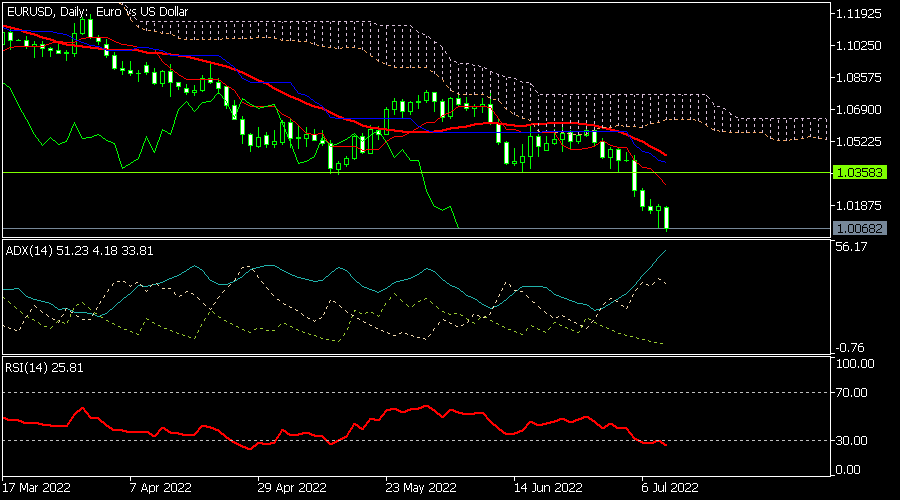
The EURUSD pair continued retreating during the American and Asian sessions. On the daily chart, it has moved below the Ichimoku cloud and the 25-day and 50-day moving averages. At the same time, the Average Directional Index (ADX) has moved to the highest point in months. The ADX is used to measure the strength of a trend. The Relative Strength Index has moved to the oversold level. Therefore, the pair will likely break parity on Tuesday.
NAS100
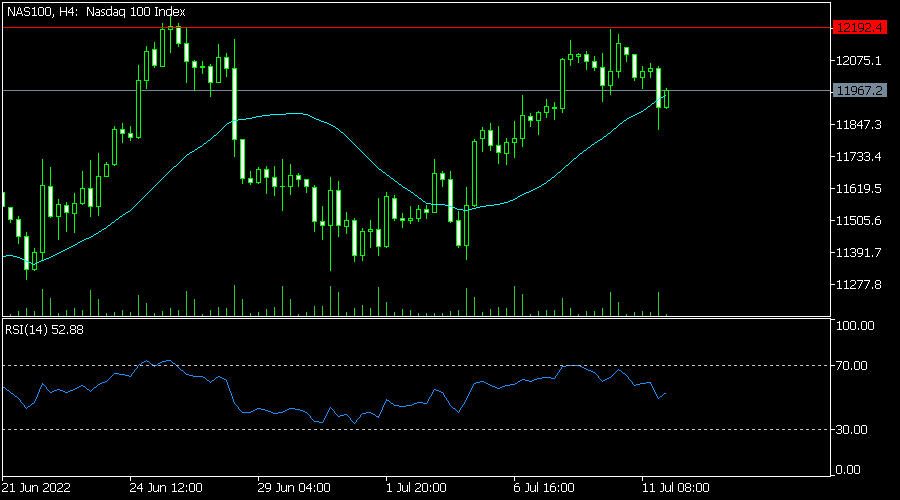
The Nasdaq 100 index pulled back as investors waited for the upcoming earnings. It is trading at $11,968, which is slightly below last week’s high of $12,192. The index has formed a cup and handle pattern while the Relative Strength Index (RSI) has moved below the overbought level. Therefore, because of the C&H pattern, there is a likelihood that it will continue rising as bulls target the key resistance at $12,200.
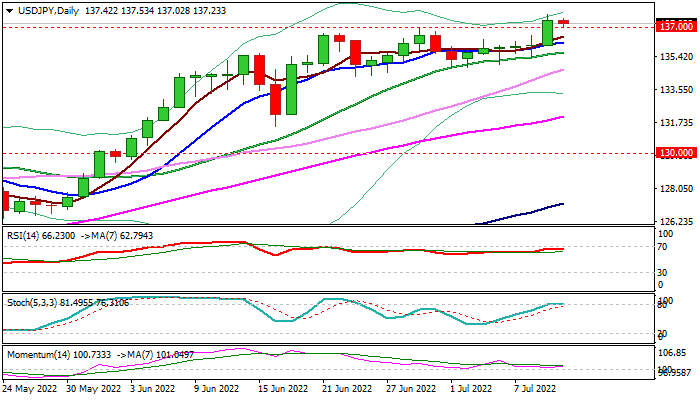
USD/JPY: Dollar On Track for Further Advance, Consolidation Likely to Precede Rally
The USDJPY is consolidating under new highest level since Sep 1998 (137.75) in early Tuesday’s trading, following Monday’s bullish signal on 2.6% advance (the biggest one-day advance since June 17) and close above previous top at 137.00.
The dollar remains supported on expectations that Fed will remain aggressive in its monetary policy, short/medium inflation outlook remains pessimistic, with migration from risky assets to the safety on growing uncertainty over economic and geopolitical situation, additionally underpins the greenback.
Overbought conditions of firmly bullish daily studies, suggest that bulls may take a breather for consolidation before resuming towards Fibo projections at 138.21 and 138.57, violation of which would open way for attack at psychological 140 barrier.
Broken 137.00 level reverted to support whish so far holds, with dips expected to find ground above rising 10DMA (136.16) to bulls intact.
Res: 137.75; 138.21; 138.57; 139.14.
Sup: 137.00; 136.52; 136.16; 135.60.