

Sample Category Title
Fed Bostic supports another 75bps rate hike in Jul
Atlanta Fed president Raphael Bostic said yesterday, "the data that came in the last several months really pointed to a need for us to get closer to that neutral stance faster,"
"I'm confident that the economy will be able to withstand this next move. I would support a 75 basis point" rate hike at the July FOMC meeting, he added.
Beyond July, the decisions will depend on incoming economic data. "If demand comes down much faster than we expected or supply comes back, I will be comfortable pulling off" further rate increases, Bostic said.
Separately, St. Louis Federal Reserve president James Bullard said, "now we have lots of inflation, but the question is, can we get back to 2% without disrupting the economy? I think we can."
Bojo Leaves, What’s Next?
The UK prime minister saw his career suddenly collapsing last week at the most burdensome period for the economy. While the race to replace him is already heating up, his unfinished political goals suggest his successor will have to make herculean efforts to put the country back in the right direction. The British pound may also face a tough time along the way despite its initial positive reaction to the political chaos, as GDP growth figures will probably revive fresh recession fears on Wednesday at 07:00 GMT.
Success before failure
Boris Johnson was about to fight for his leadership if only several dozens of ministers from his own cabinet had not resigned, abandoning him in solitude more or less two years before his term officially ends. But that was not the first time he went defensive. He was actually determined to do whatever it takes from the first days in office when he was accused of suspending parliament unlawfully for a month with the goal of preventing ministers from blocking a no-deal Brexit until the October 31 2019 deadline.
Then, after just six months in office, he managed to resolve the Brexit paralysis that his predecessor Theresa May had been long struggling to achieve without success, helping the buttered British pound to experience a much needed rally against the US dollar. Following up, after a year at the end of 2020, he signed a trade deal with the EU.
The coronavirus crisis was supposed to be another win for Boris given the first administration of a Covid-19 vaccine and the immunization of a large share of population while releasing a huge amount of stimulus to safeguard consumption and business activities. His victory, however, did not last long as the media unearthed his many partygate scandals during lockdown periods, provoking distrust and then a no-confidence vote against him. Of course, the prime minister survived, but his political reputation was badly bruised, even within his own party.
Post-Brexit problems
The health crisis was also the time when problems in the UK-EU trade and cooperation agreement started to resurface, further questioning the PM’s pledge of taking back control of fisheries and minimal bureaucracy at the border with Northern Ireland. The former promise fell apart when the UK and France entered a dispute over post-Brexit fishing rights in mid-2021, followed by detentions of non-licensed boats and retaliations that even threatened the UK’s energy supply.
Soon after the two sides found a compromise, new tensions with Brussels popped up on the Northern Ireland protocol, signaling once again that Brexit arrangements are fragile to preserve peace in the neighbouring island. A government change in Northern Ireland requested for the protocol to be altered to respect the Good Friday Agreement and see power-sharing restored in the area. Consequently, Boris Johnson’s government introduced a bill that would scrap post-Brexit checks and standards for companies selling goods from Great Britain destined for Northern Ireland rather than the EU. And of course, once again his new proposal faced imminent opposition from Brussels and fresh legal threats.
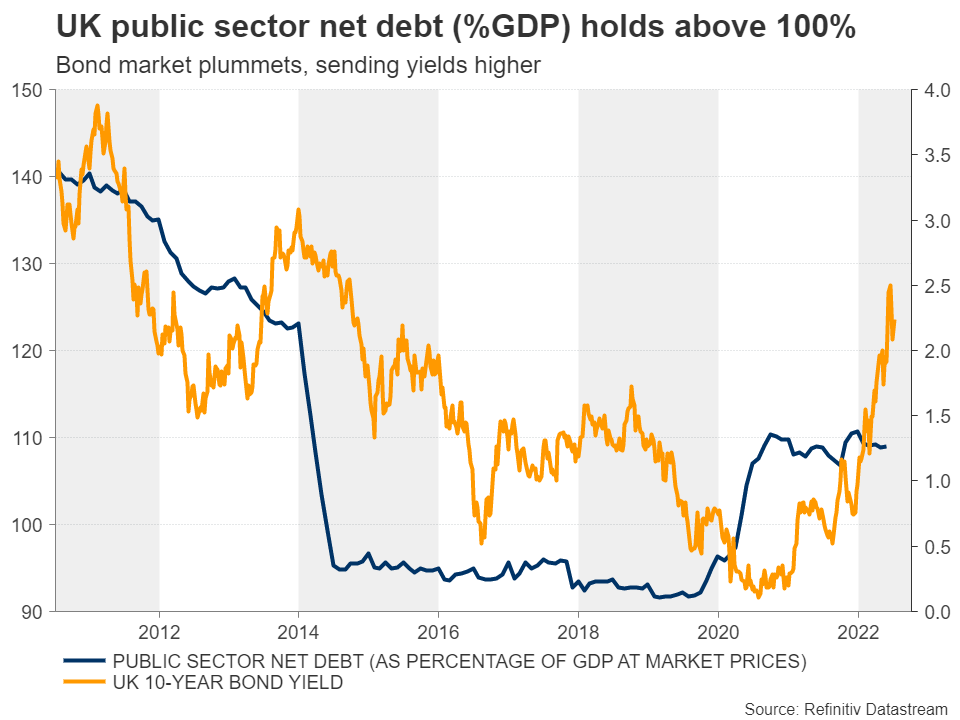
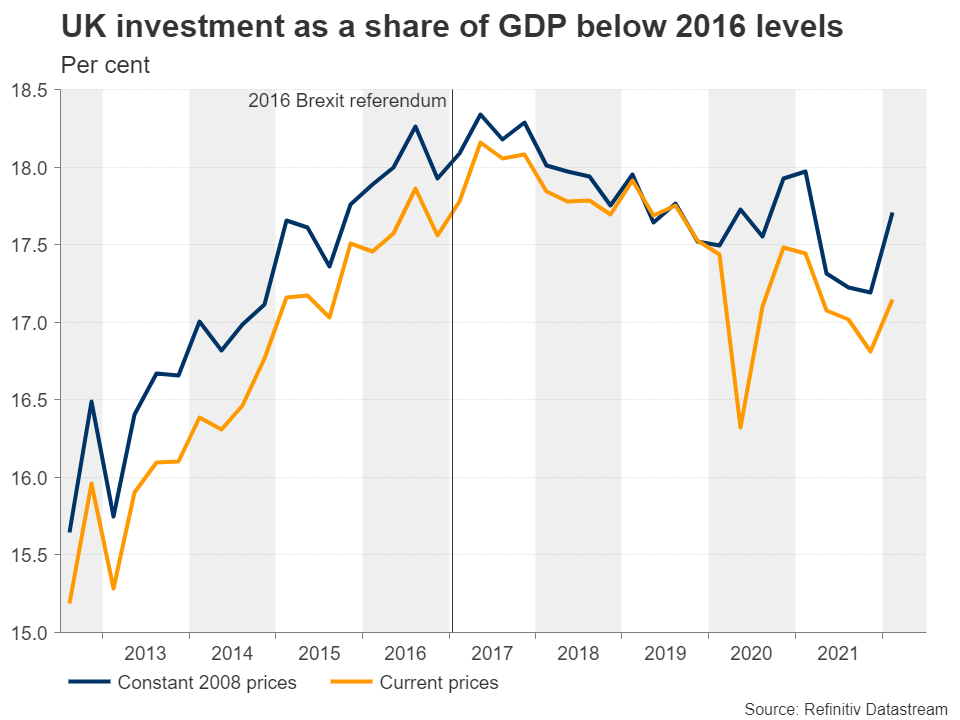
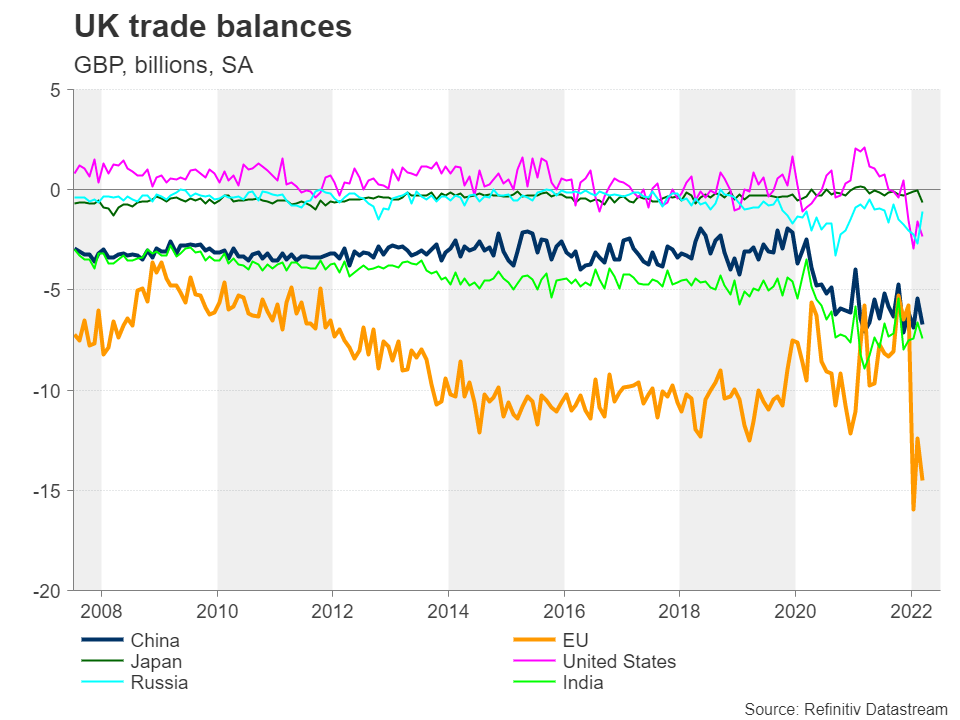
Well, Brexit was not the reason that ousted Boris out of leadership, but it has definitely cost the UK a huge loss in political stability, having witnessed two prime ministerial resignations in its recent history, while exacerbating headwinds in other areas too. Besides the shortage of workers, the UK’s trade balance with the EU and non-EU economies deteriorated significantly, inflation is now among the highest within the G7 group and is forecast to reach 11% y/y in autumn, while investment as a share of GDP has been trending downwards since the 2016 referendum. Notably, studies from the Centre for European Reform also reported that the UK economy was smaller by 5.2% or 31 billion pounds by the end of 2021 than it would have been had it stayed in the union.
How could the pound perform?
Turning to the FX markets, the question that arises at this point is whether an accommodative fiscal policy will help the pound to finally find its feet before the next election in January 2025. Well, first of all, the divided Conservative party will need to achieve unity before it passes through more spending in parliament. If they prove successful, that will simultaneously signal more persisting inflation ahead because demand is not the economy’s problem so far, but supply is. In this case, the Bank of England may find itself alone in the fight against a prolonged period of inflation, likely calling for faster rate increases, which theoretically could be pound positive.
On the other hand, if the next prime minister postpones his rate cut promises for another day and sacrifices some growth for the sake of inflation, cable could suffer more selling, especially if the trade war with the EU intensifies alongside the Ukrainian war, and the interconnection between the UK nations (Wales, Scotland, Northern Ireland, England) further worsens.
UK economy to diminish in May
In the meantime, monthly GDP figures for May could renew the pound’s sell-off earlier on Wednesday if they arrive significantly worse than expected. The three-month average gauge is projected to show no expansion in the economy for the first time since March 2021 after barely rising by 0.2% in April. The annual change is also forecast to ease to 2.7% y/y from 3.4%, with the trade deficit likely widening in the same month to -21.20 billion pounds.
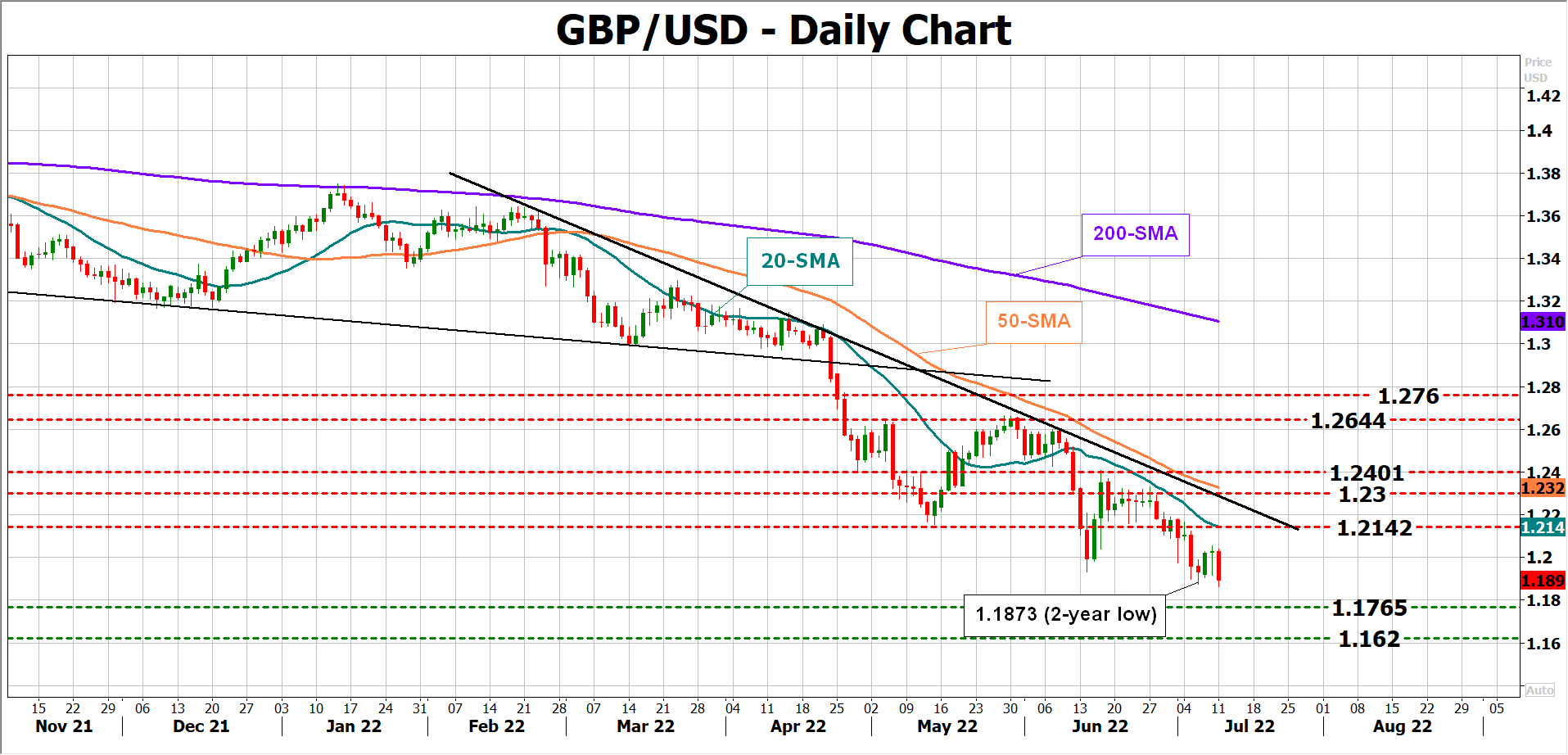
Investors are still somewhat skeptical about a 50 bps rate increase from BoE on August 4, providing a 68% probability for that scenario, which gives room for more downside for the pound if the figures bolster recession concerns. In this bearish scenario, pound/dollar could dive below the two-year low of 1.1874 and towards the 1.1765 region.
For an outlook improvement, cable will have to step above its 20-day simple moving average at 1.2127 and then stage a durable rally above its previous high of 1.2400 to raise buying appetite.
RBNZ Set to Hike Rates Again But Kiwi Slumps as Outlook Gets Cloudier
The Reserve Bank of New Zealand is widely anticipated to stay on its rate hike course on Wednesday when it announces its latest policy decision at 02:00 GMT. A 50-basis-point rate increase is fully priced in by the markets so what investors will be on the lookout for is any changes to the rate outlook amidst all the talk of a recession. There is no press conference scheduled for the July meeting and the RBNZ will not be publishing any new forecasts, so the focus will be entirely on the language of the statement. Any hints on the future rate path could be significant for the local dollar.
Growth outlook is diminishing
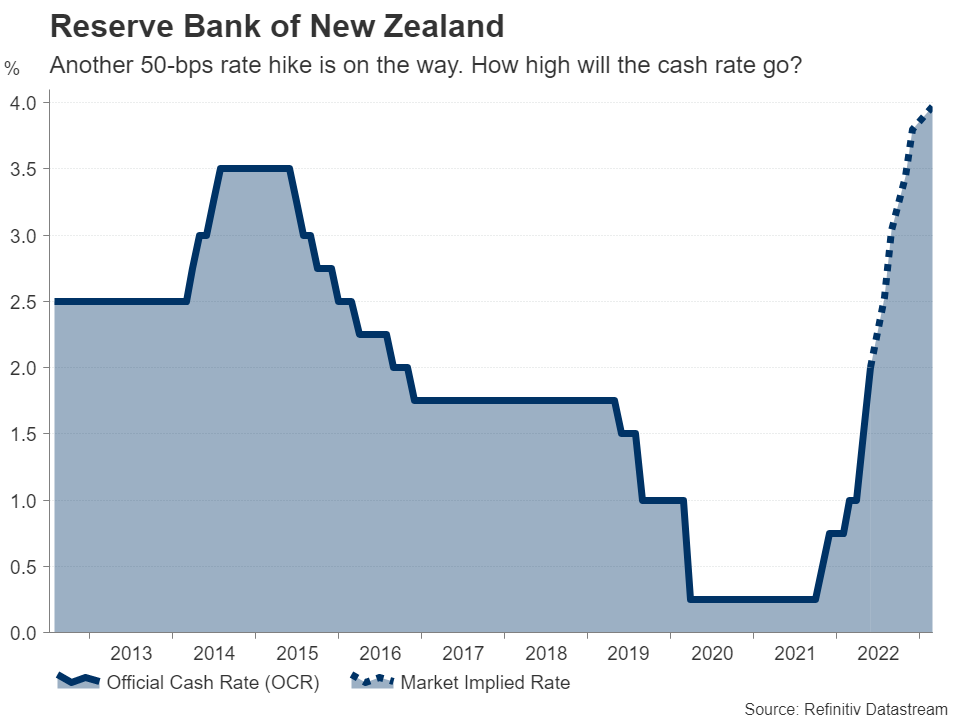
Having pushed up the official cash rate (OCR) consecutively at every meeting since October last year, borrowing costs in New Zealand have already reached what the RBNZ considers to be a neutral level at 2.0%. The neutral rate of interest is the level thought to be neither contractionary nor expansionary for the economy. But as fears of a global recession run rampant, is the risk of one more pronounced in New Zealand?
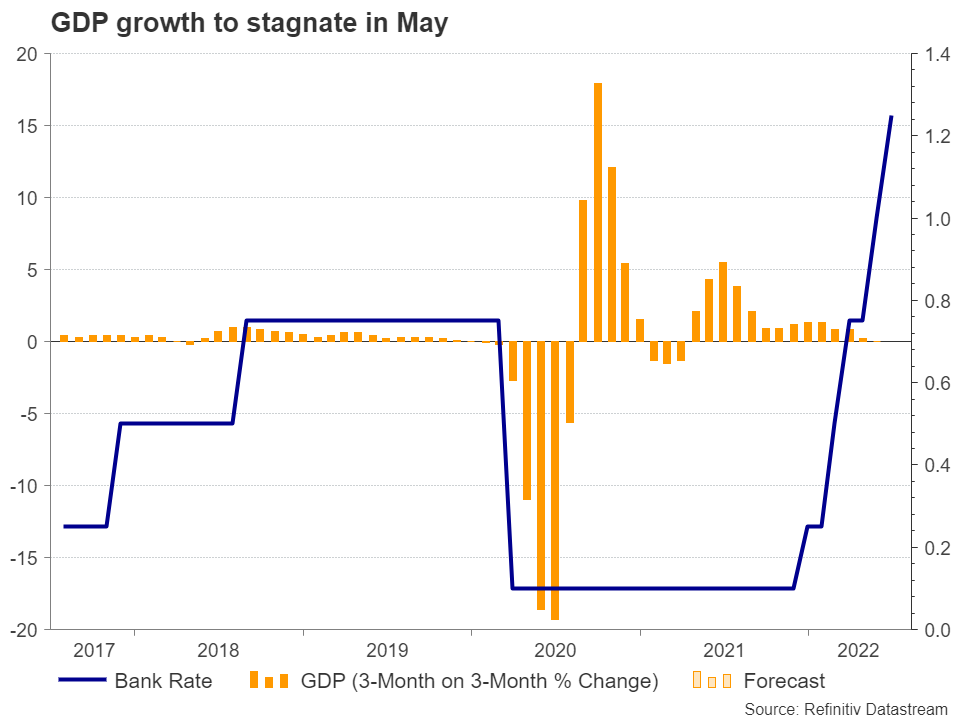
After an initial swift and robust recovery from the pandemic, New Zealand’s economic growth has stalled since the second half of 2021. GDP unexpectedly declined by 0.2% q/q in the first three months of the year, mainly due to Omicron and softer exports, and although a rebound is likely in the second quarter, the outlook for the rest of 2022 is diminishing.
Business confidence has plunged
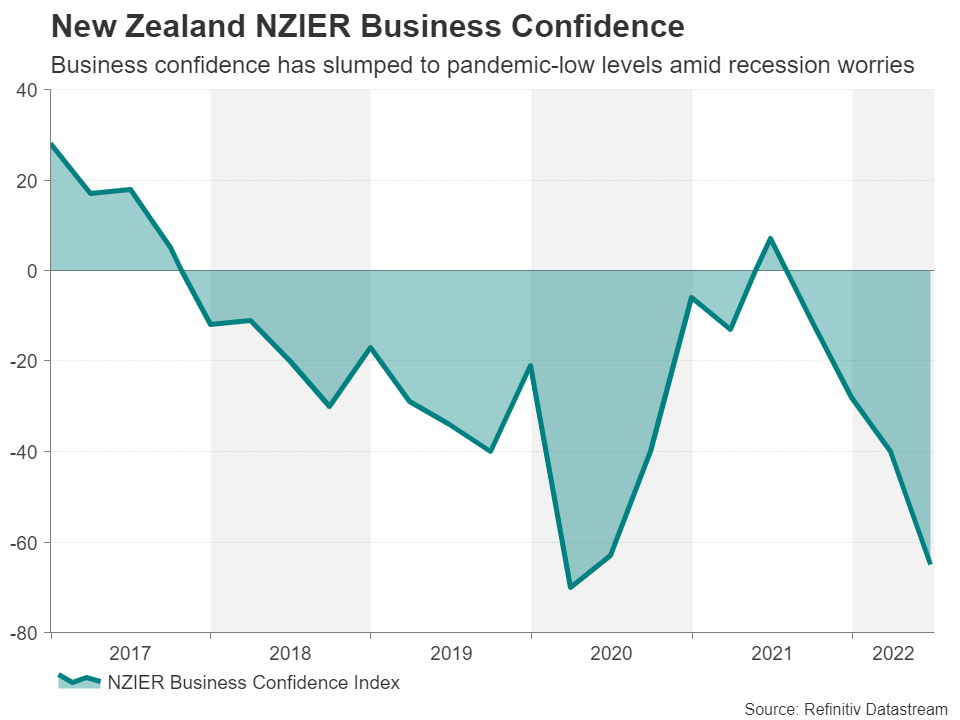
The RBNZ’s aggressive tightening of monetary policy, soaring inflation and weakening demand from New Zealand’s largest trading partners such as China are weighing on business sentiment. The NZIER business confidence index – a closely watched gauge – slumped in Q2 to the lowest since the height of the pandemic crisis in 2020.
But as businesses face rising interest rates at a time when energy and other input costs are skyrocketing and the demand picture globally is faltering, the biggest impact of the RBNZ’s tightening blitz has been on the housing sector. The combined fiscal and monetary stimulus that was launched to support the economy during the lockdowns fuelled an already hot property market. But now that the stimulus has been withdrawn and the RBNZ is about to push rates into restrictive territory, house prices are sliding.
A downturn in the housing market
Whilst it’s true that New Zealand has an ongoing housing shortage and this will likely put a floor under prices at some point, the huge size of the property bubble means that the correction could nonetheless be quite steep. If house prices don’t stabilize soon, the effect of declining household wealth could knock consumer confidence further. A measure of consumer confidence by a Westpac survey fell to the lowest on record in the second quarter as households felt the squeeze from surging living costs.
The deteriorating backdrop has led investors to scale back their expectations of how high rates will go, shaving off about 50 basis points from futures markets. The question is, are policymakers at the RBNZ having a rethink too?
RBNZ is eying more rate hikes
At its last meeting in May, the RBNZ predicted that the cash rate will peak sooner but at a higher level, forecasting a terminal rate of 3.95%. But before the latest repricing, investors were even more aggressive with their expectations and so the current market-implied path is now much better aligned with the RBNZ’s own guidance. Hence, the impact of all this on the New Zealand dollar has been minimal, and the currency has been trading mostly as a function of global risk sentiment.
With inflation hitting a three-decade high of 6.9% in Q1, the RBNZ is unlikely to sound more cautious just yet, even as the economy might be entering a major storm. The next quarterly CPI data is due on July 18 and it could well have ramifications for the August policy decision.
Kiwi looking vulnerable after drop to $0.61
But for the meeting on Wednesday, the bank is highly likely to hike rates by 50 bps for the third time and maintain its hawkish tone. This could help the kiwi to steady above the $0.61 level, which it tested today for the first time in two years. If a hawkish statement coincides with an improvement in risk appetite, the kiwi could claw back above the $0.62 handle. However, a recovery towards the neutral setting of the 50-day moving average located slightly below the 61.8% Fibonacci retracement of the May-June upleg at $0.6352 seems some distance away.
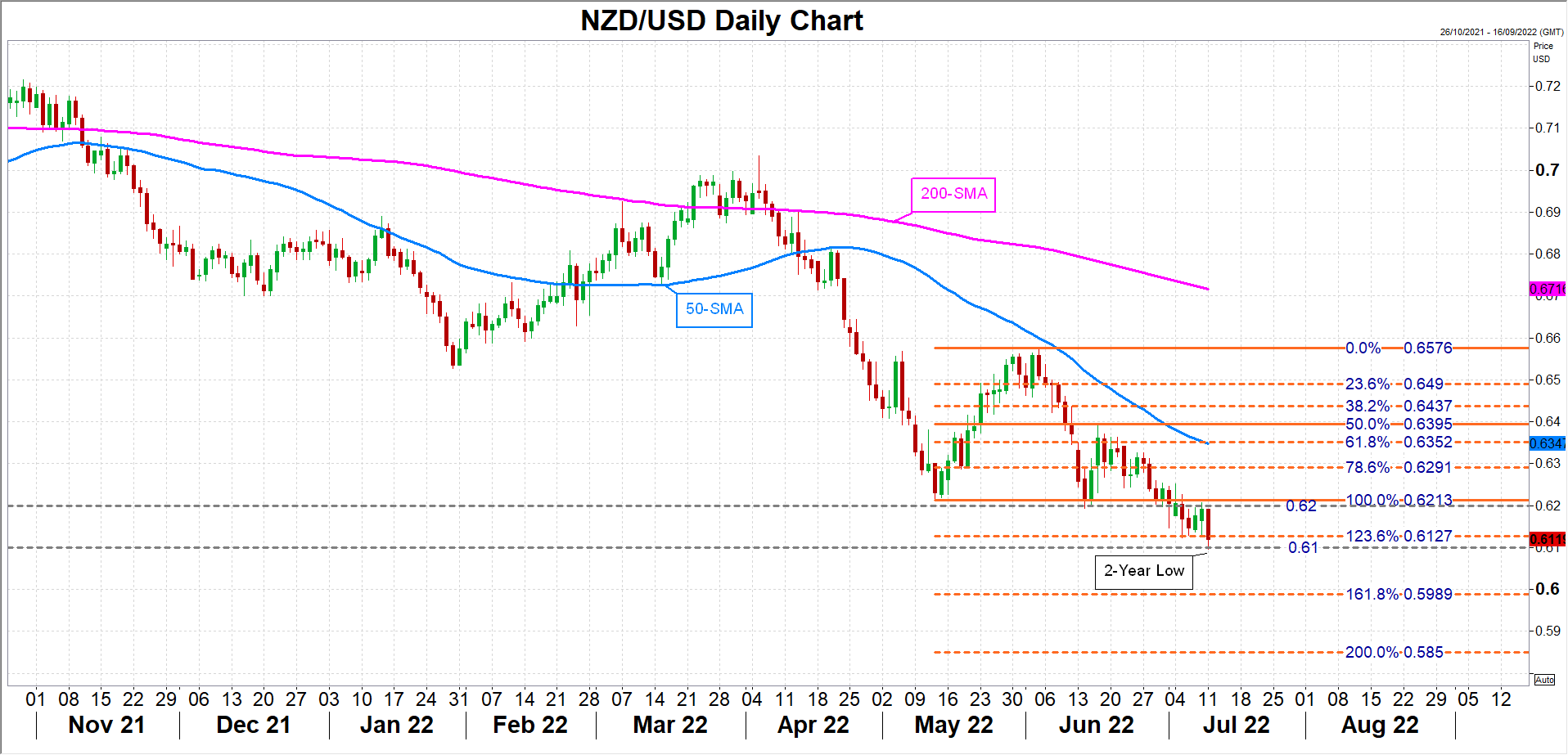
In the event, though, that the RBNZ cites some elevated downside risks to growth, markets might interpret that as a dovish tilt. Renewed selling pressure could pull the kiwi down to the 161.8% Fibonacci extension of $0.5989 before the bears set their sights on the 200% Fibonacci of $0.5850.
Technical Outlook and Review
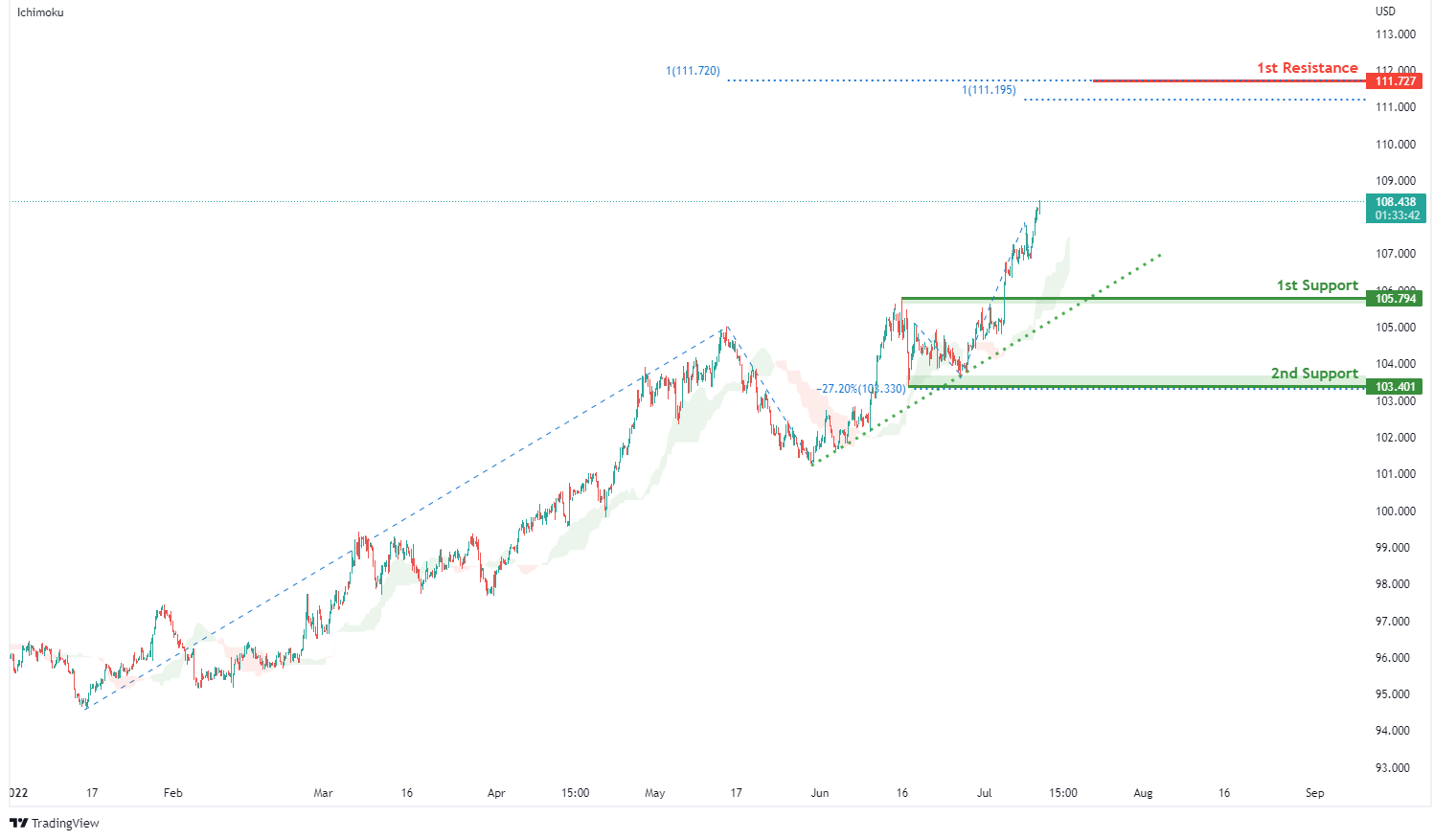
DXY:
On the H4, with prices moving above the ichimoku indicator and along the ascending trendline, we have a bullish bias that prices will drop and rise from 1st support at 105.794 where the pullback support is to 1st resistance at 111.727 in line with 100% fibonacci projection and 100% fibonacci projection. Alternatively, price may break 1st support structure and drop to 2nd support at 103.401 where the horizontal swing low support and -27.2% fibonacci expansion are.
Areas of consideration:
- H4 time frame, 1st resistance at 111.727
- H4 time frame, 1st support at 105.794
XAU/USD (GOLD):
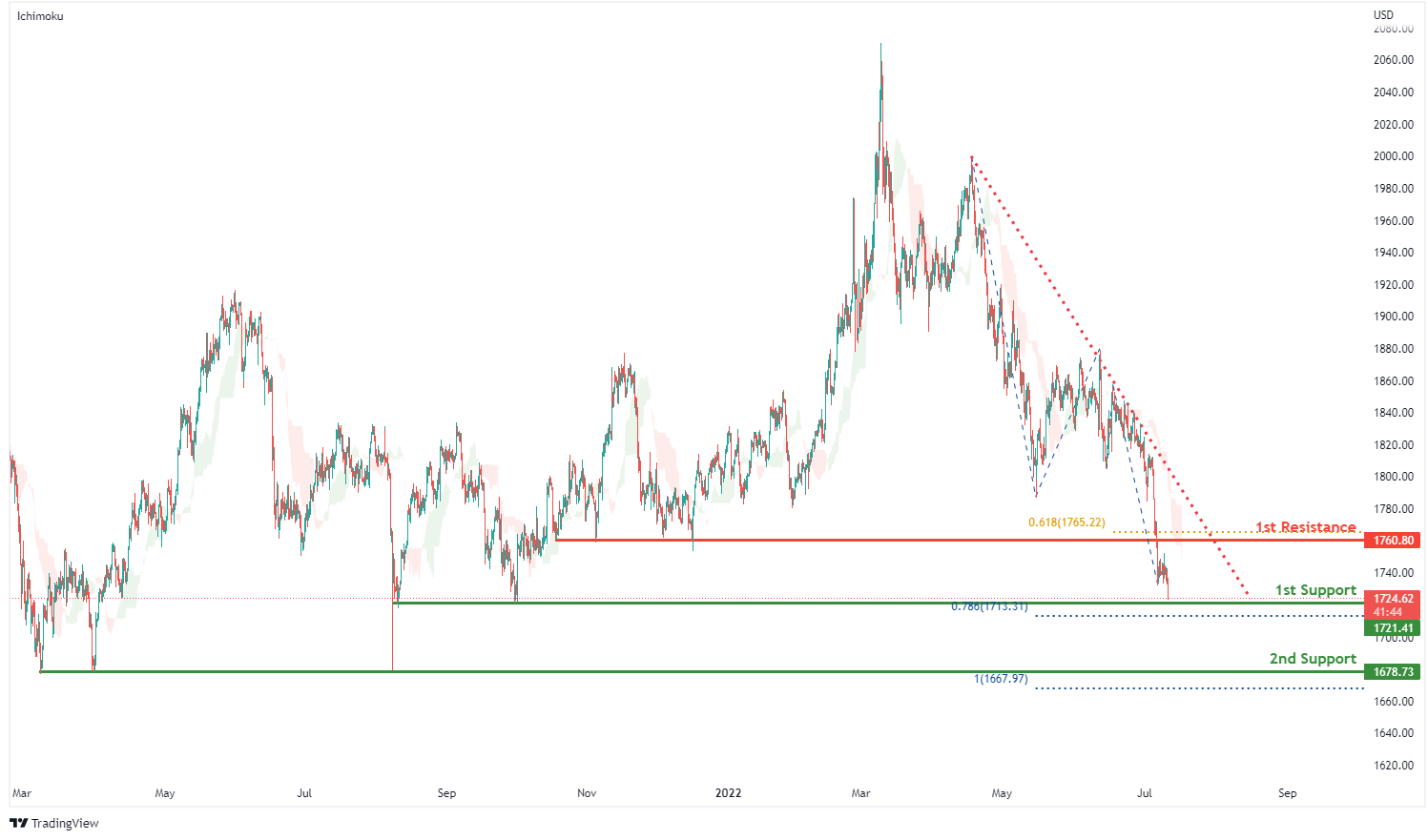
On the H4, with prices moving below the ichimoku indicator and along a descending trendline, we have a bearish bias that prices will drop to our 1st support at 1721.41 where the horizontal swing low support and 78.6% fibonacci projection are. Once we have downside confirmation of price breaking 1st support structure, we would expect bearish momentum to carry price to 2nd support at 1678.73 in line with swing low support and 100% fibonacci projection. Alternatively, price could rise to our 1st resistance at 1760.80 in line with overlap resistance and 61.8% fibonacci projection.
Areas of consideration:
- H4 time frame, 1st Resistance at 1760.80
- H4 time frame, 1st Support at 1721.41
GBP/USD:
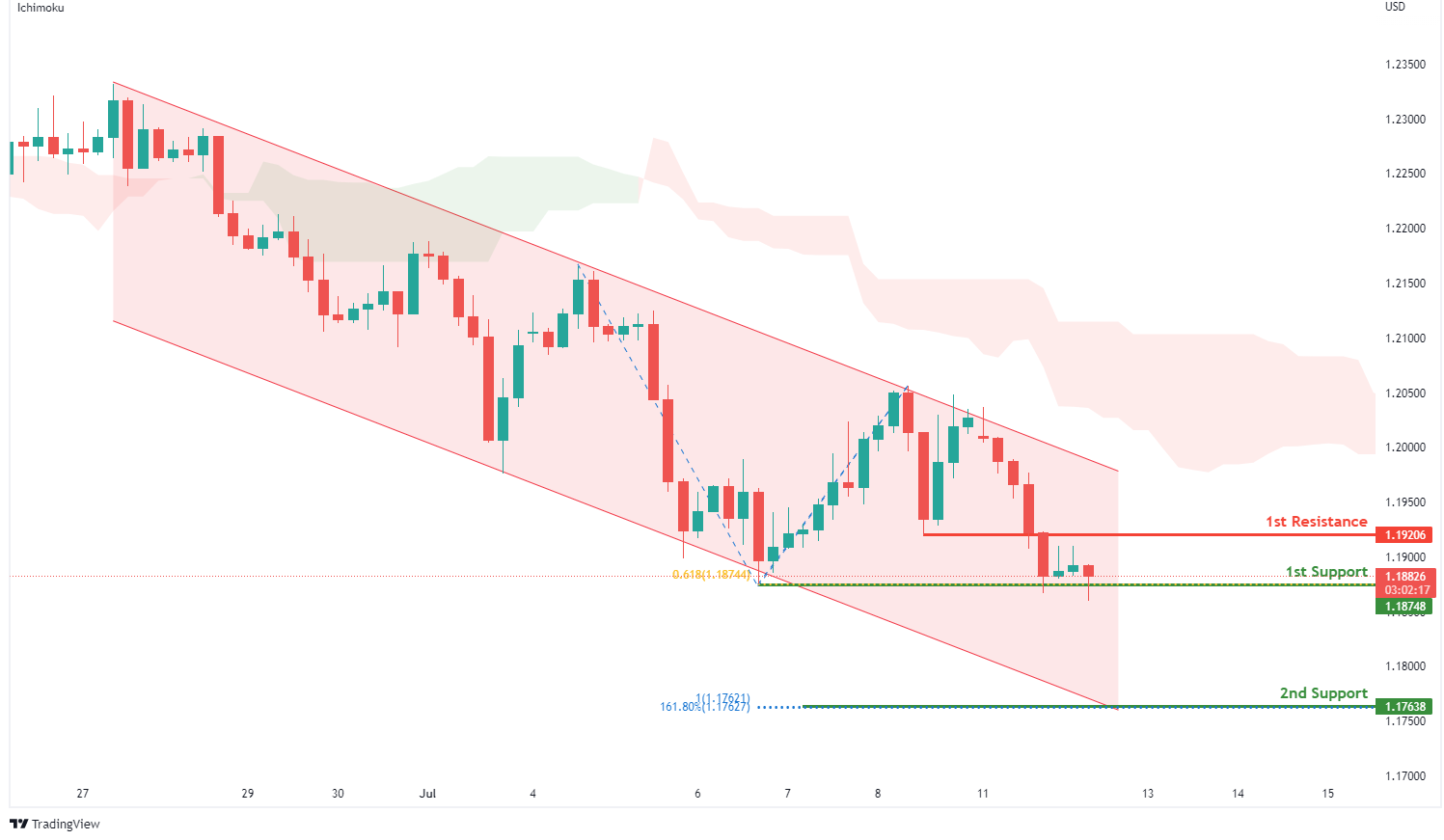
On the H4, with prices moving below the ichimoku indicator and within the descending channel, we have a bearish bias that price will drop to our 1st support at 1.18748 where the swing low support and 61.8% fibonacci projection are. Once there is downside confirmation of price breaking 1st support, we would expect bearish momentum to carry price to our 2nd support at 1.17638 where the 100% fibonacci projection and 161.8% fibonacci extension are. Alternatively, price could rise to 1st resistance at 1.19206 in line with the pullback resistance.
Areas of consideration:
- H4 1st resistance at 1.19206
- H4 1st support at 1.18748
USD/CHF:
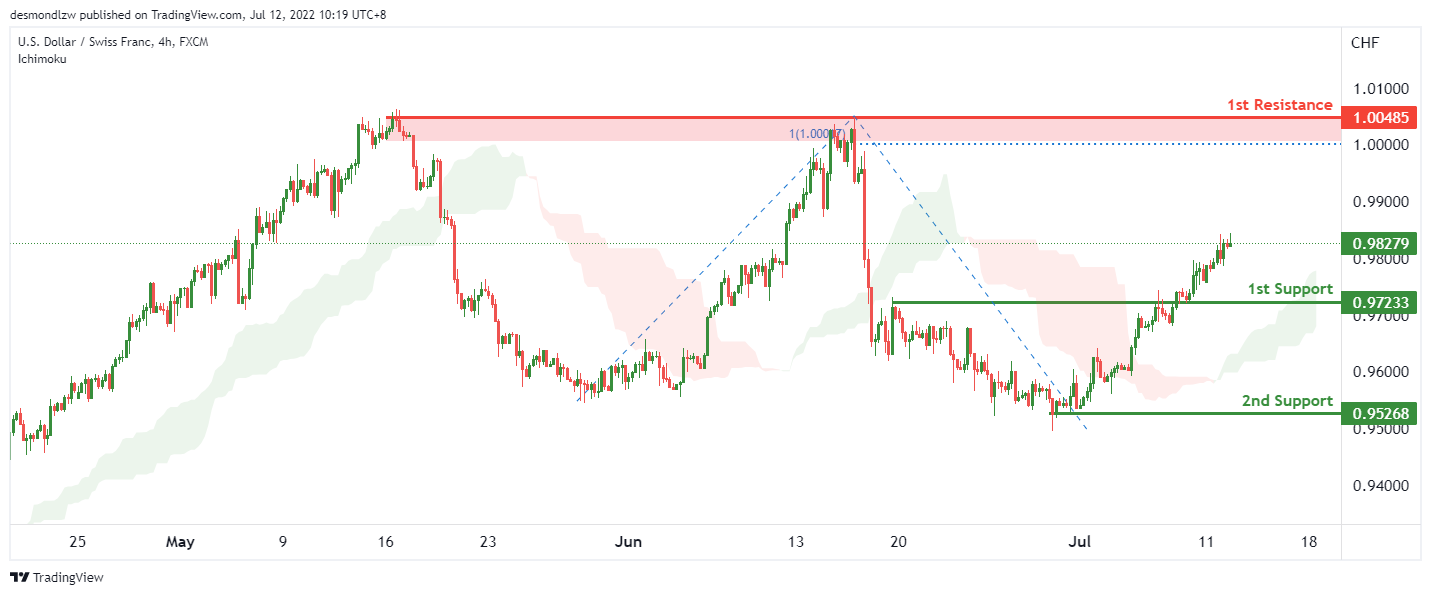
On the H4, with price moving above the ichimoku cloud, we have a bullish bias that price will rise from our 1st support at 0.97233 where the horizontal pullback support is to our 1st resistance at 1.00485 in line with the 100% Fibonacci projection is. Alternatively, price may not break 1st support and head for 2nd support at 0.95268 where the horizontal pullback support.
Areas of consideration
- 1st support level at 0.97233
- 1st resistance level at 1.00485
EUR/USD :
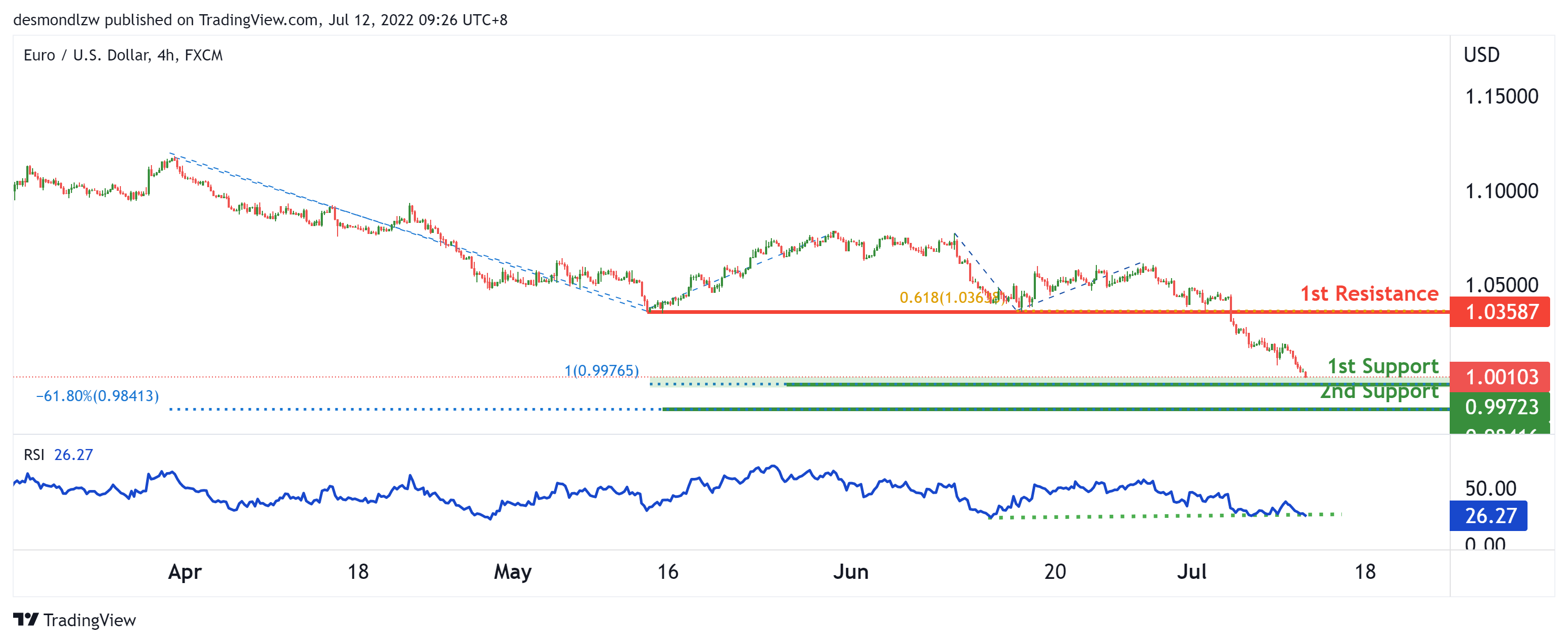
On the H4, with price moving in an ascending trendline on our RSI, we have a bullish bias that price will rise from our 1st support at 0.99723 in line with the swing low and 100% fibonacci projection to the 1st resistance at 1.03587 at the pullback resistance. Alternatively, price may break the support structure at 1st support and drop to the 2nd support at 0.98416 in line with the -61.8% fibonacci expansion.
Areas of consideration :
- H4 1st resistance at 1.03587
- H4 1st support at 0.99723
USD/JPY:
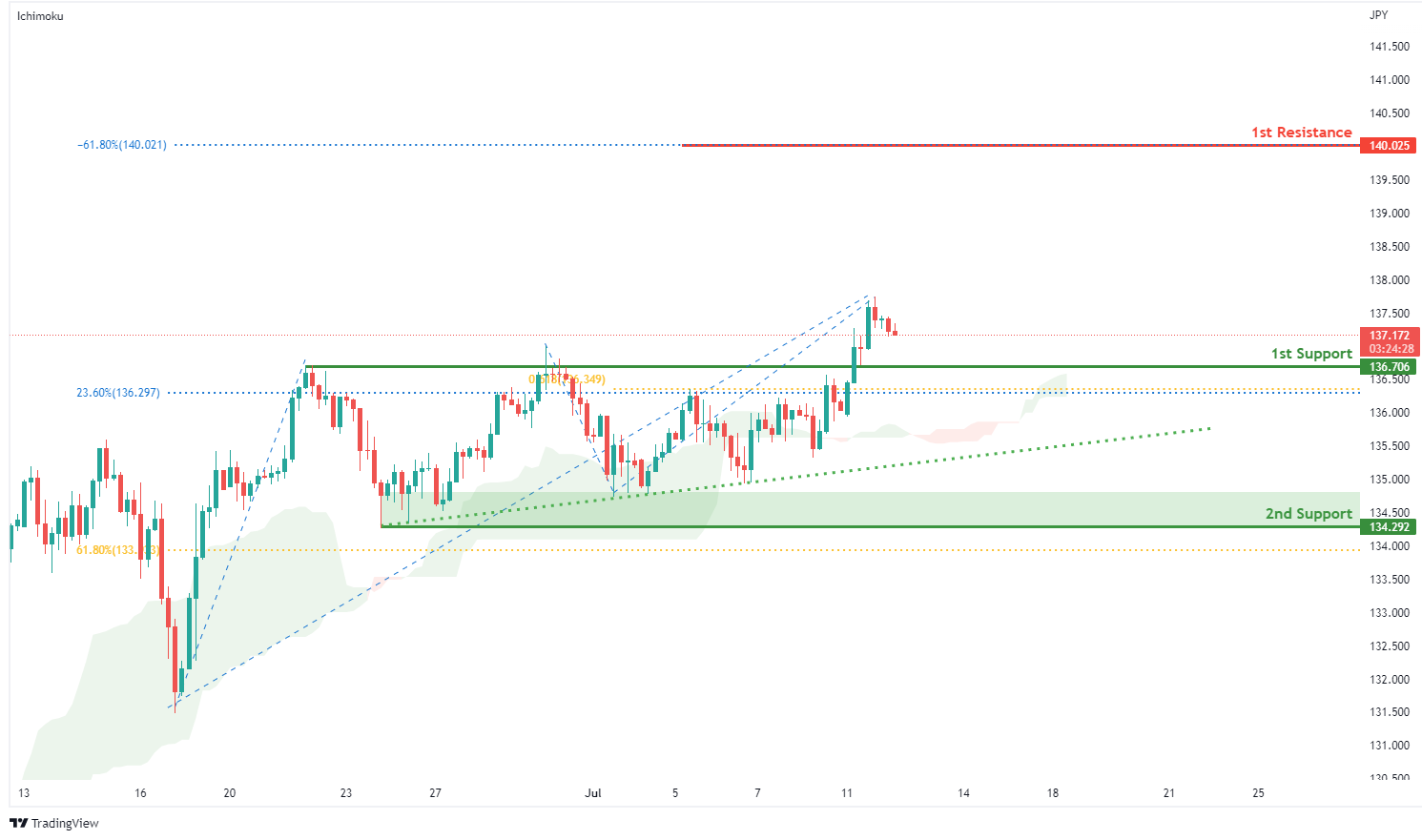
On the H4, with price moving along an ascending trendline and above the ichimoku indicator, we have a bullish bias that price will rise from our 1st support at 136.706 where the overlap support, 23.6% fibonacci retracement and 61.8% fibonacci projection are to our 1st resistance at 140.025 in line with the -61.8% fibonacci expansion. Alternatively, price could break 1st support and drop to 2nd support at 134.292 in line with the swing low support and 61.8% fibonacci retracement.
Areas of consideration:
- H4 time frame, 1st resistance at 140.025
- H4 time frame, 1st support at 136.706
AUD/USD:
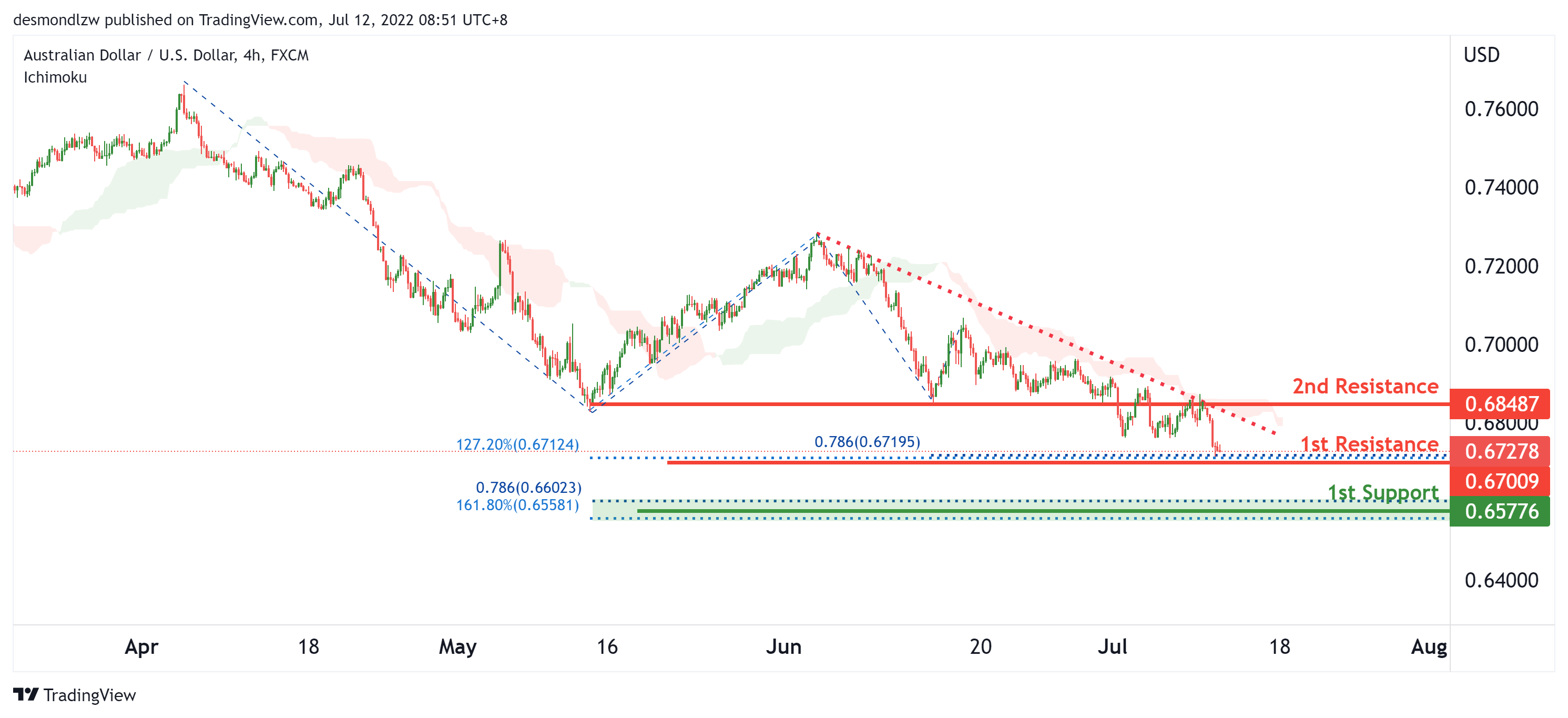
On the H4, with price moving below the ichimoku cloud and in a descending trendline, we have a bearish bias that price will continue to drop from the 1st resistance at 0.67009 in line with the 127.2% fibonacci extension and 78.6% fibonacci projection to the 1st support at 0.65776 in line with the 161.8% fibonacci extension and 78.6% fibonacci projection. Alternatively, price may reverse off the 1st resistance and rise to the 2nd resistance at 0.68487 in line with the overlap swing high.
Areas of consideration
- H4 1st resistance at 0.67009
- H4 1st support at 0.65776
NZD/USD:
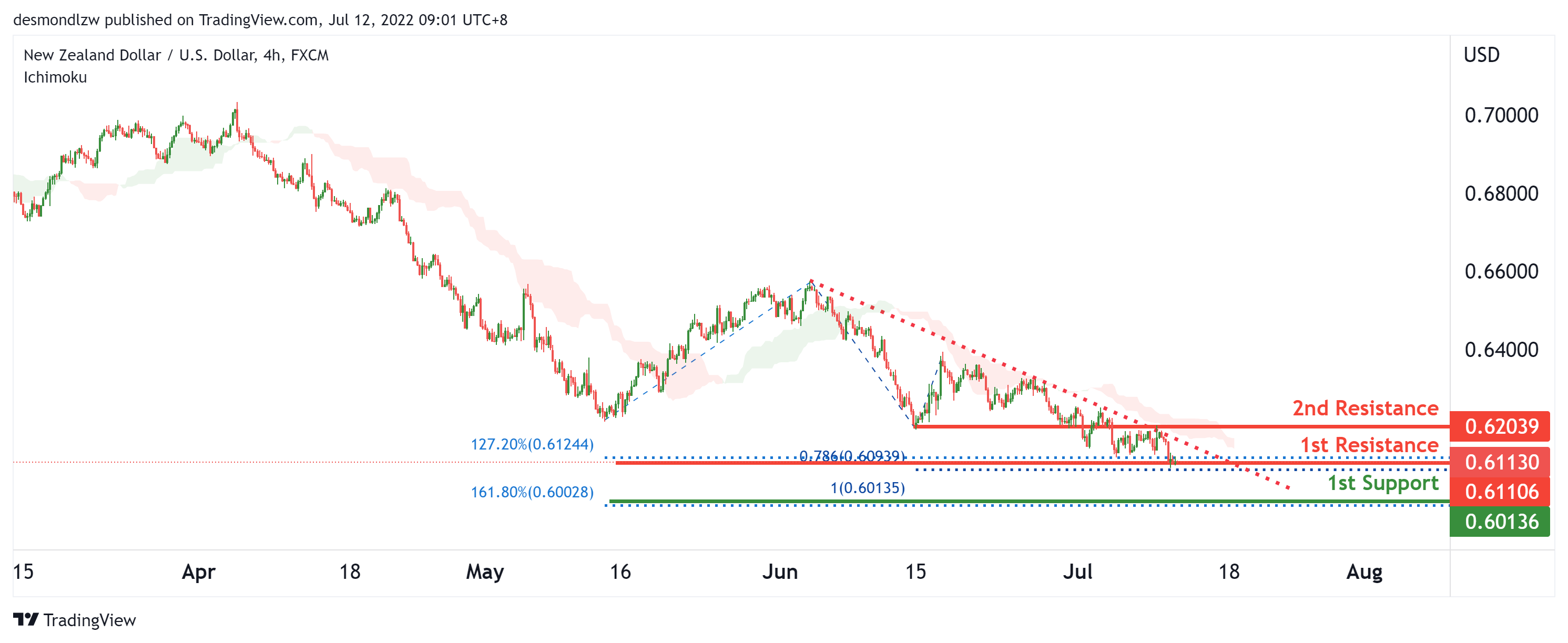
On the H4, with price moving below the ichimoku cloud and in a descending trendline, we have a bearish bias that price will continue to drop from the 1st resistance at 0.61138 in line with the 127.2% fibonacci extension and 78.6% fibonacci projection to the 1st support at 0.61106 in line with the 161.8% fibonacci extension and 100% fibonacci projection. Alternatively, price may reverse off the 1st resistance and rise to the 2nd resistance at 0.62039 in line with the overlap swing high.
Areas of consideration:
- H4 time frame, 1st support at 0.61106
- H4 time frame, 1st resistance at .61138
USD/CAD:
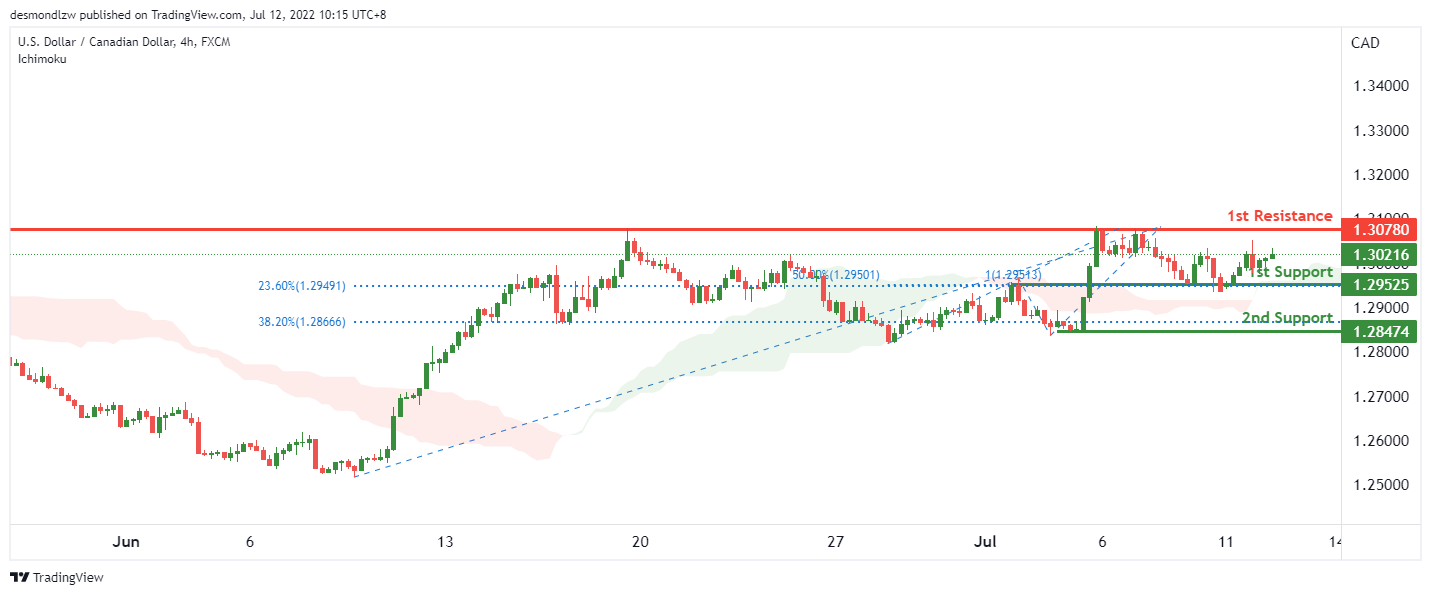
On the H4, with price moving above the ichimoku cloud, we have a bullish bias that price will rise from our 1st support at 1.29525 where the horizontal pullback support and fibonacci confluence are to our 1st resistance at 1.30780 in line with the horizontal swing high resistance. Alternatively, price may not break 1st support and head for 2nd support where the horizontal swing low support is
Areas of consideration:
- H4 time frame, 1st resistance at 1.30780
- H4 time frame, 1st support at 1.29525
OIL:
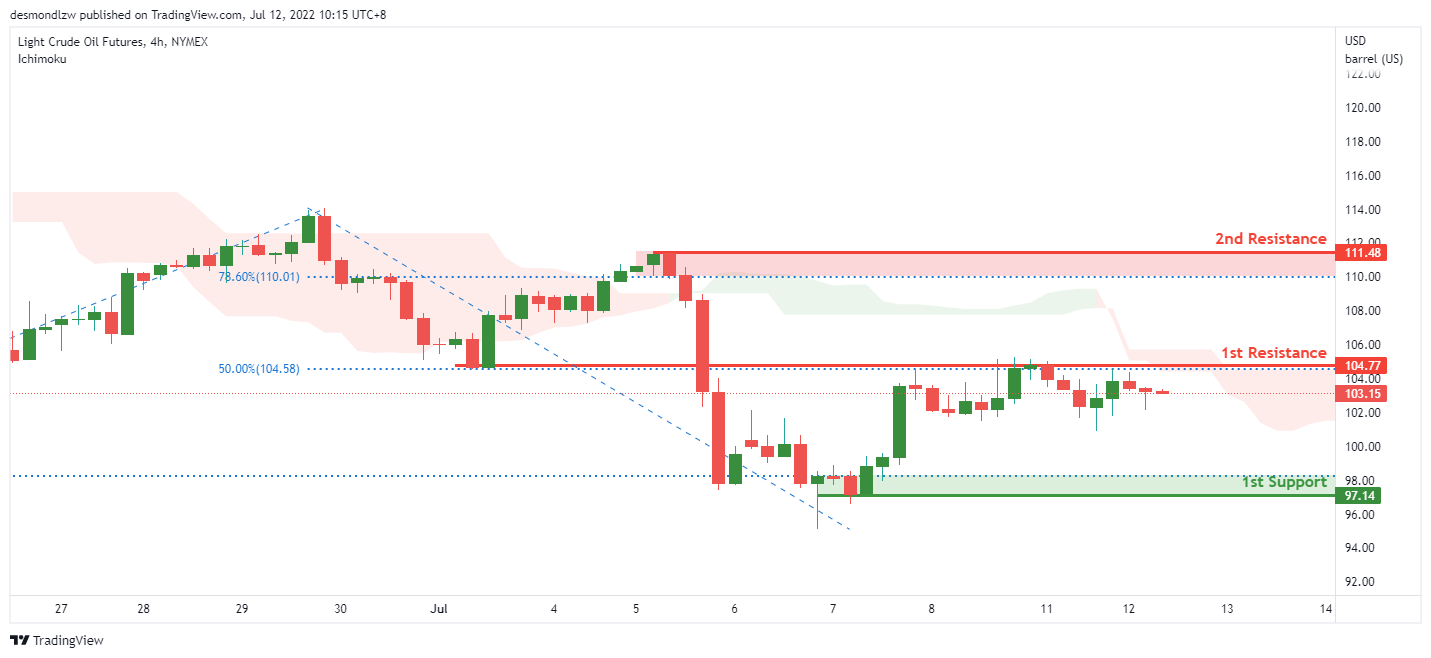
On the H4, with price moving below the ichimoku cloud, we have a bearish bias that price will drop to our 1st support at 97.1 where the horizontal swing low support is from our 1st resistance at 104.77 in line with the horizontal pullback resistance and 50% Fibonacci retracement. Alternatively, price may break 1st resistance and head for 2nd resistance at 111.48 where the horizontal swing high resistance and 78.6% Fibonacci retracement is.
Areas of consideration:
- H4 time frame, 1st resistance of 104.77
- H4 time frame, 1st support of 97.1
Dow Jones Industrial Average:
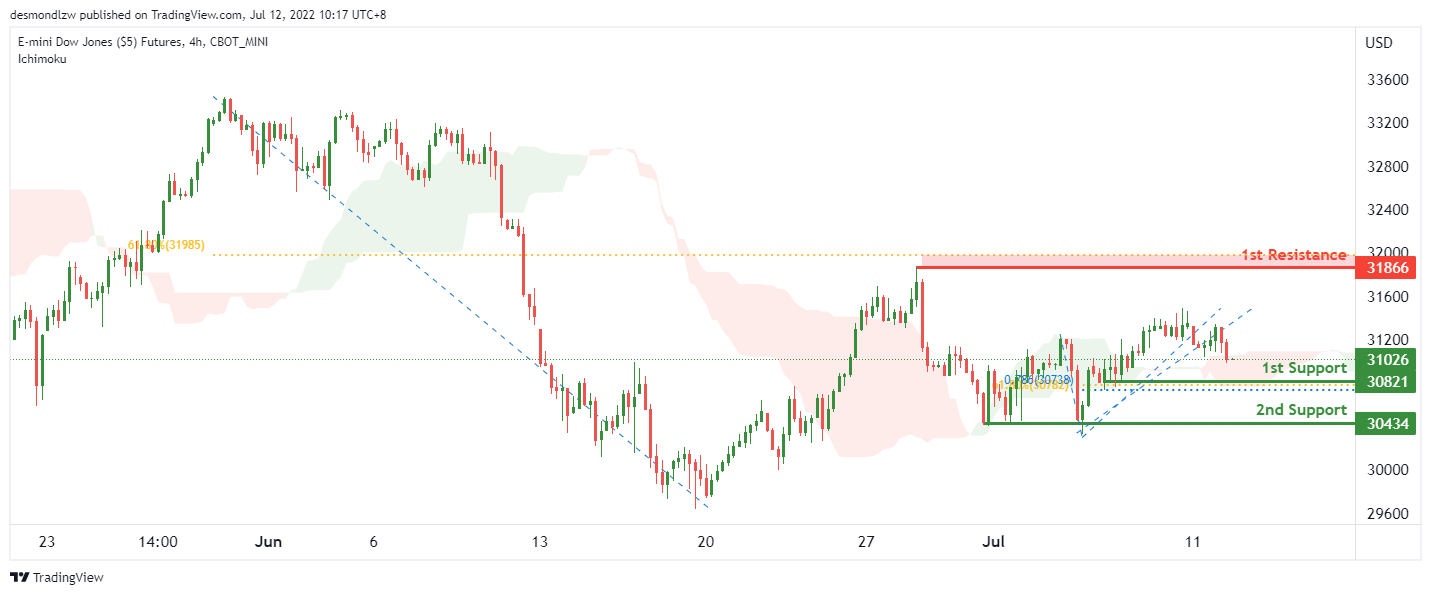
On the H4, with price moving above the ichimoku cloud, we have a bullish bias that price will rise from our 1st support at 31218 where the horizontal pullback support is to our 1st resistance at 31866 in line with the horizontal swing high resistance. Alternatively, price may not break 1st support and head for 2nd support at 30434 where the horizontal swing low support is.
Areas of consideration:
- H4 time frame, 1st resistance of 31866
- H4 time frame, 1st support of 31218
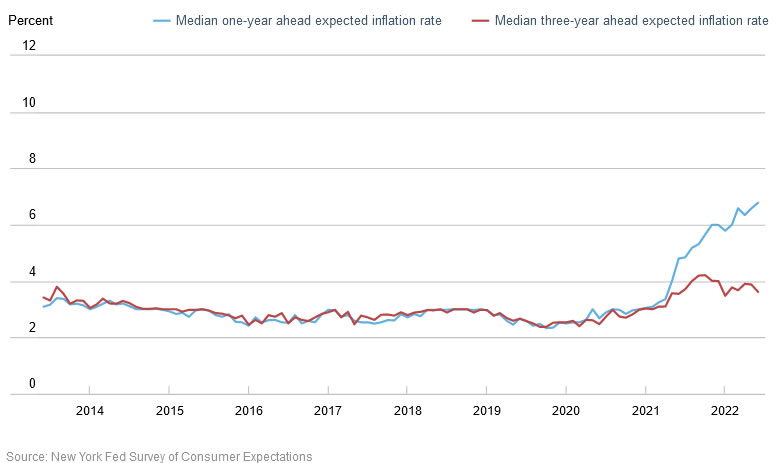
NY Fed 1-yr inflation expectations rose to 6.8%, but 3-yr expectations down
According to New York Fed's survey of consumer expectations, median one-year-ahead inflation expectations rose from 6.6% to 6.8% in June, hitting a new series high. However, three-year ahead inflation expectations dropped from 3.9% to 3.6%.
Median expected one-year-ahead change in home prices dropped sharply from 5.8% to 4.4%. Median year-ahead household spending growth expectations retreated from a series high in May, declining -0.6% point to 8.4%.
New York Fed added, "households' assessments of their current financial situation deteriorated in June as more respondents reported being financially worse off than they were a year ago."
Euro Above Parity by a Thread
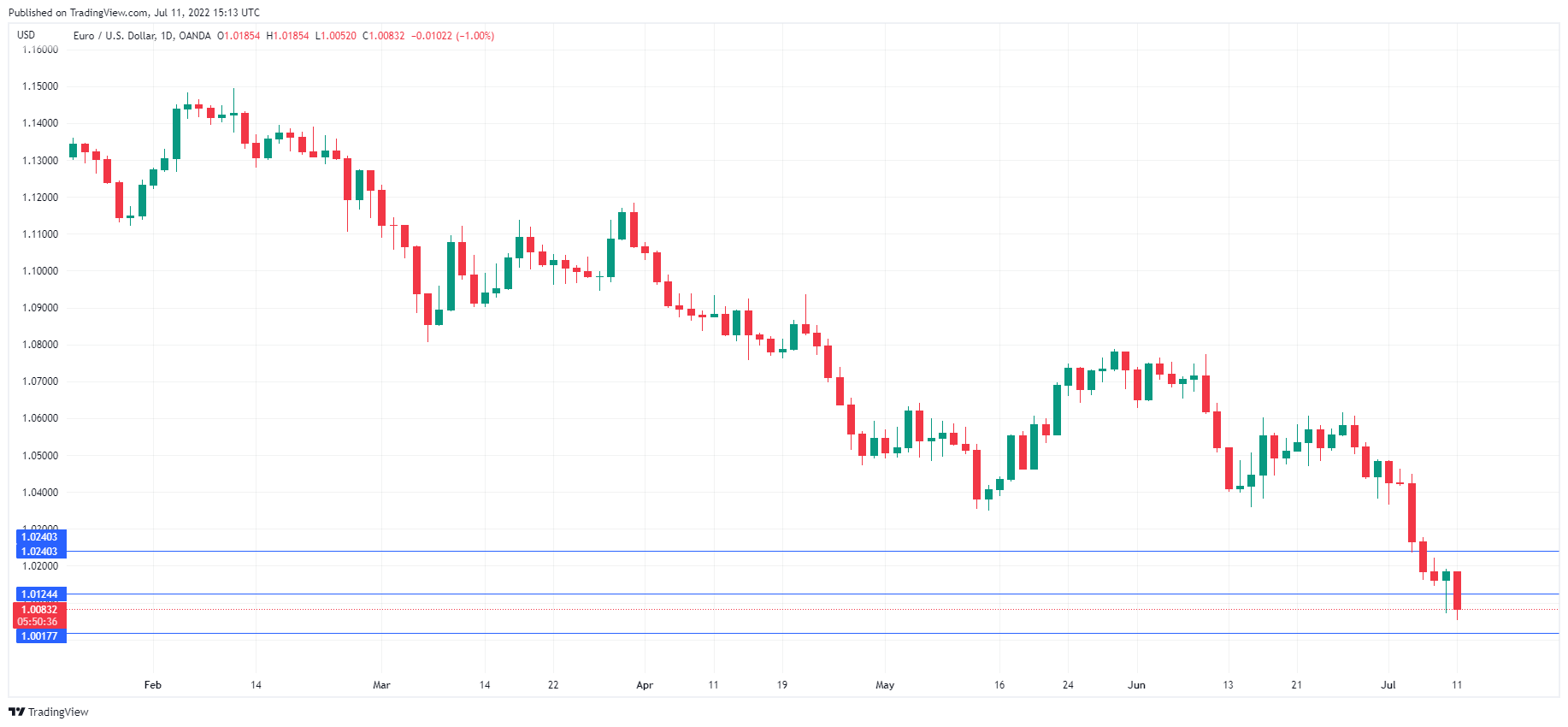
It is looking like July 2022 could be a memorable month for the euro, but unfortunately not for the right reasons. EUR/USD is within a whisker of dropping below parity with the US dollar for the first time since 2002, when the euro was just three years old. In the North American session, EUR/USD is trading at 1.008, down 1.00%.
Euro slides after solid US jobs report
The euro, along with all the other majors, is seeing red against the US dollar today. The markets have reacted to the surprisingly strong non-farm payroll report on Friday, as the June gain of 381 thousand surpassed the May reading of 336 thousand and easily beat the consensus of 240 thousand. The unemployment rate remained steady at 3.6%, while wage growth grew by 0.3%. The solid employment report has raised expectations of another 75bp hike by the Fed at the end of July. A 75bp move will substantially widen the Europe/US rate differential, which is contributing to the euro’s sharp descent today.
The ECB holds its policy meeting six days ahead of the Federal Reserve, on July 21st. This meeting will likely mark the lift-off for ECB rate hikes, with another increase expected in September. The ECB has been scrambling to catch up to the inflation curve, as it badly misjudged the staying power of high inflation. ECB interest rates are in negative territory, and a modest 0.25% hike, the most likely scenario at the July meeting, may not do much to boost the euro, although perhaps the perception that the ECB is finally tightening will provide some support to the ailing currency.
On Tuesday, Germany releases ZEW Economic Sentiment. The index has been mired in negative territory for months, indicative of strong pessimism about the economic outlook. In June, the index came in at -28.0 and this is expected to worsen to -40.0 in July.
EUR/USD Technical
- EUR/USD is putting strong pressure on support at 1.001, just above parity. Below, there is support at 0.9849
- There is resistance at 1.0124 and 1.0221
AUD/USD: Aussie Hits New 2-Year Low on Fresh Risk Aversion
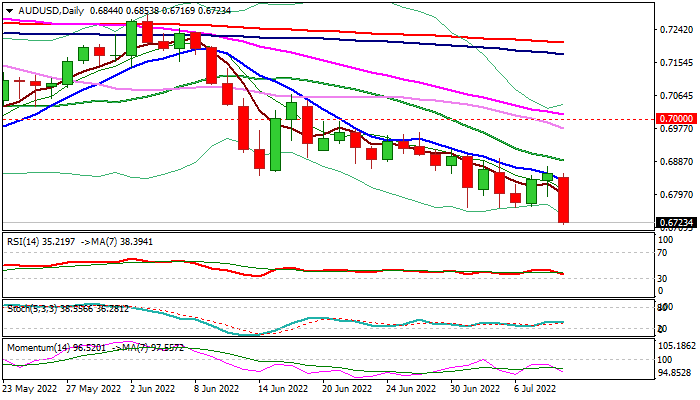
Australian dollar accelerated lower on Monday, driven by fresh risk aversion that inflated its US counterpart.
The Aussie hit new two-year low and generate strong bearish signal on break through important Fibo support at 0.6758 (50% retracement of 0.5509/0.8007, 2020/2021 rally) with close below this level to verify the signal and open way for further easing.
Round-figure support at 0.6700 and June 2020 low at 0.6647 mark next targets, violation of which would unmask 0.6463/39 (Fibo 61.8% of 0.5509/0.8007 / monthly cloud base).
Daily studies are at full bearish setup and support the action, with limited upticks to be capped by falling 10DMA (0.6835) which tracks downtrend for one month, to offer better selling opportunities.
Res: 0.6761; 0.6798; 0.6835; 0.6874
Sup: 0.6700; 0.6647; 0.6601; 0.6547
Fed George: More abrupt changes in interest rates could create strains
Kansas City Fed president Esther George said, "this is already a historically swift pace of rate increases for households and businesses to adapt to, and more abrupt changes in interest rates could create strains, either in the economy or financial markets,"
"I find it remarkable that just four months after beginning to raise rates, there is growing discussion of recession risk, and some forecasts are predicting interest rate cuts as soon as next year. Such projections suggest to me that a rapid pace of rate increases brings about the risk of tightening policy more quickly than the economy and markets can adjust," she added.
Dollar Index Seems Unstoppable Now
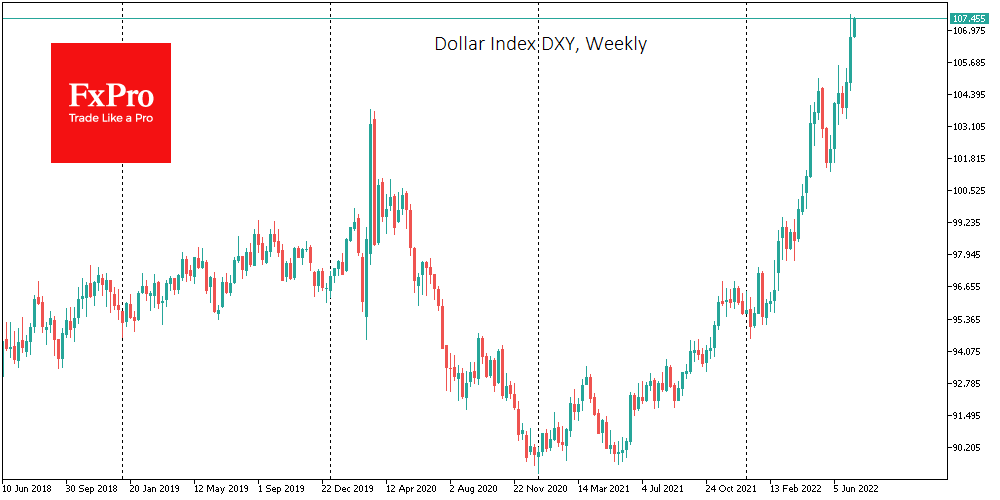
The dollar index is making new highs, rising to 107.6 on Friday afternoon, and by the start of active trading in Europe, trading at 107.45. This is the highest rate since October 2002. The dollar index has added about 20% to its 2021 low.
The strengthening dollar carries positive secondary effects for the US, from reducing inflationary pressures through imports to ending the talk of dollar weakness that has been prevalent since late 2020.
Nevertheless, central bankers are not welcome too sharp currency fluctuations in either direction, although they blatantly ignore the absolute value of the exchange rate against another currency or trade-weighted basket.
So far, the Fed has paid little attention to dollar appreciation, but it is worth being prepared that this approach would change in the coming days and weeks to avoid causing an uncontrolled rise in the dollar that could prove devastating.
In the past fortnight, the Fed has begun selling assets off its balance sheet, reducing it by $42.5B. The ECB stopped net buying in July, but active Fed-like selling is a matter of uncertainty.
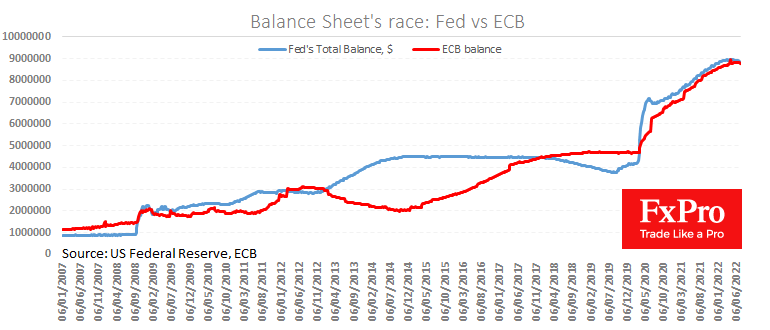
Other key central banks are also a step or two behind the Fed, or moving slower, from full-blown QE from the Bank of Japan to the Reserve Bank of Australia, which raised its rate by 50 points against +75 from the Fed last month and forecasts another such hike at the end of July.
The dollar’s strengthening so far looks controlled. Still, after last week’s substantial rise to multi-year highs, the markets could start a wave of an exodus from Europe and Asia, underpinned by the news and macroeconomic backdrop and current exchange rate movements.
In our view, the currency market has reached the point where it can become a one-way street, and we are witnessing a massive capitulation on one side. In such cases, it is hard to say which levels could be the real turning point. Suffice it to recall the negative oil prices in April 2020 and the EURCHF dip from 1.20 to 0.78 in January 2015.
Such a point could be a EURUSD drop below parity if it occurs in the next couple of weeks. To sustainably turn the euro upwards or stop further dangerous dollar appreciation, it may take the resolve of monetary and government officials, which we lack now.
Perhaps only the Fed is now able to stop the dollar by starting to mention a slowdown in the pace of policy tightening, a potential rate hike limit in this cycle and a rate cut condition. And all this may not be as distant a prospect as the markets now seem to think.